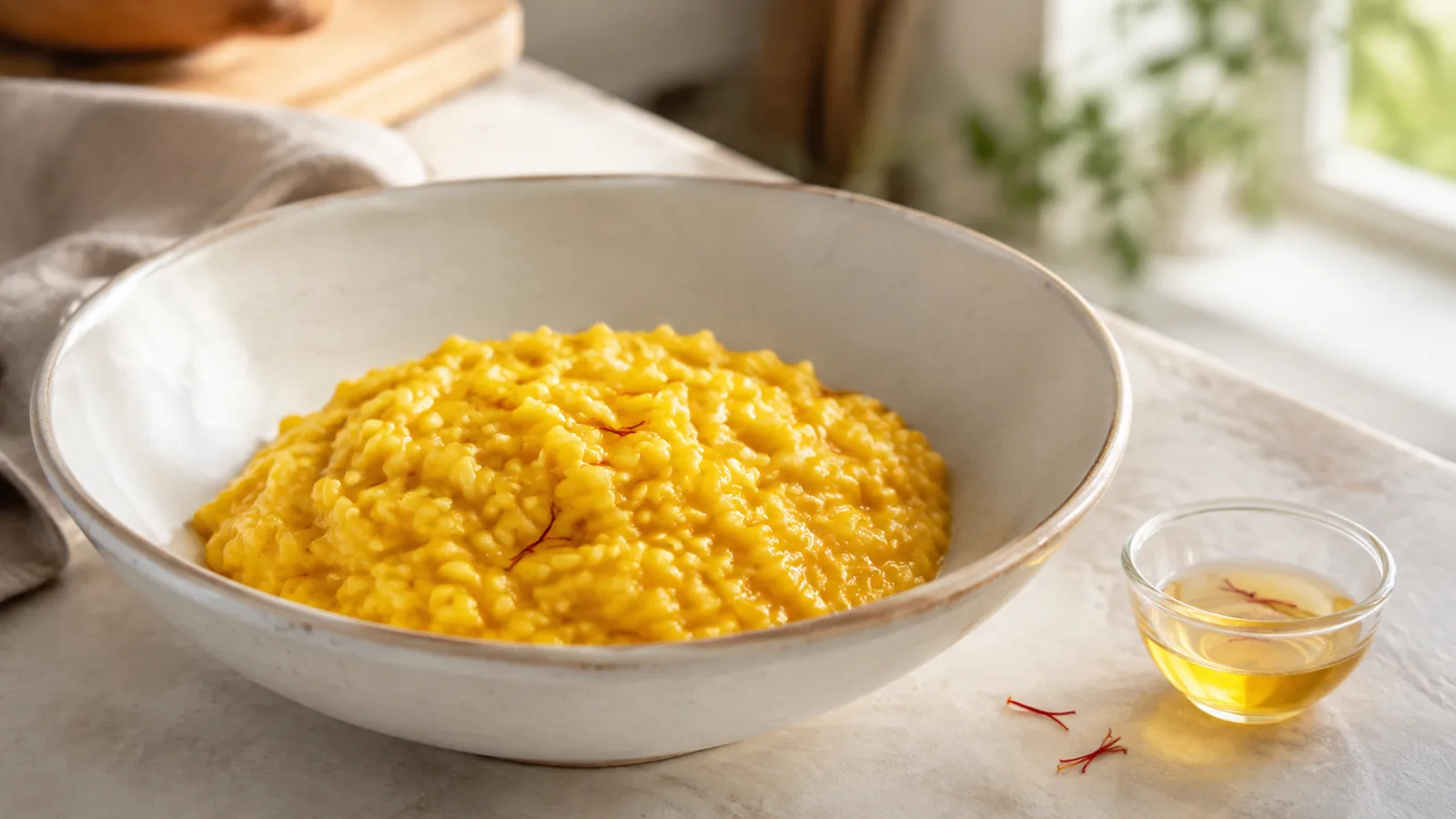
Saffron in cooking is less about using a large amount and more about preparing a small amount well. Bloomed correctly, the threads bring a clear golden colour, a floral aroma and a warm, slightly earthy flavour to rice, sauces, soups, breads and desserts.
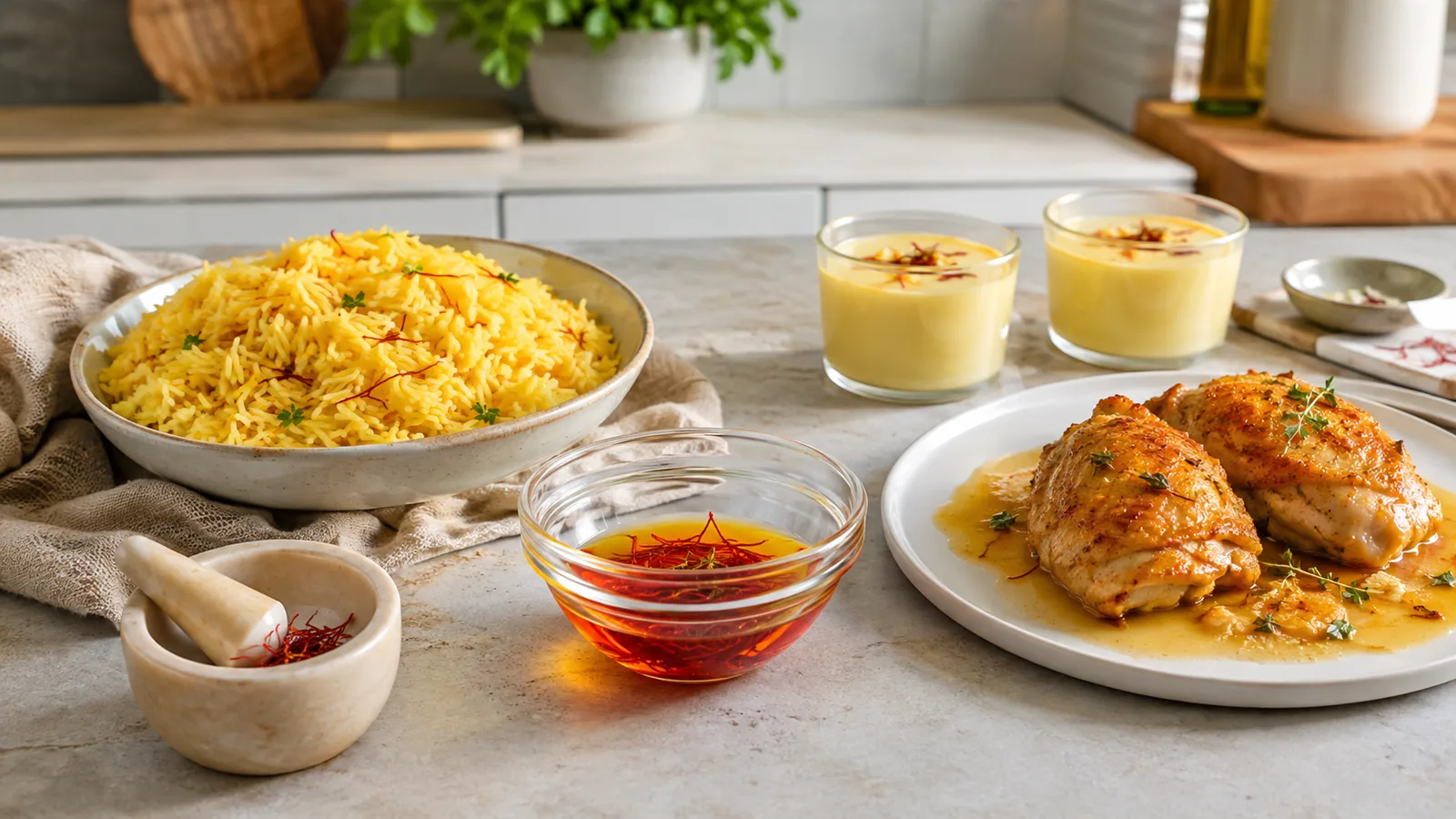
What does saffron taste like?
A balanced saffron flavor is delicate but distinctive. It can seem floral, honeyed and lightly grassy, with a faint bitter edge that keeps sweet dishes from tasting flat. It is not hot like chilli and it does not taste like turmeric, despite the fact that both can colour food yellow.
A good saffron flavour should sit within the dish rather than cover everything else. Too little preparation can leave the threads unevenly distributed; too much saffron can make a dish medicinal or bitter. Start modestly, taste where practical, and remember that the aroma continues to develop as the infused liquid moves through warm food.
How to prepare saffron for cooking
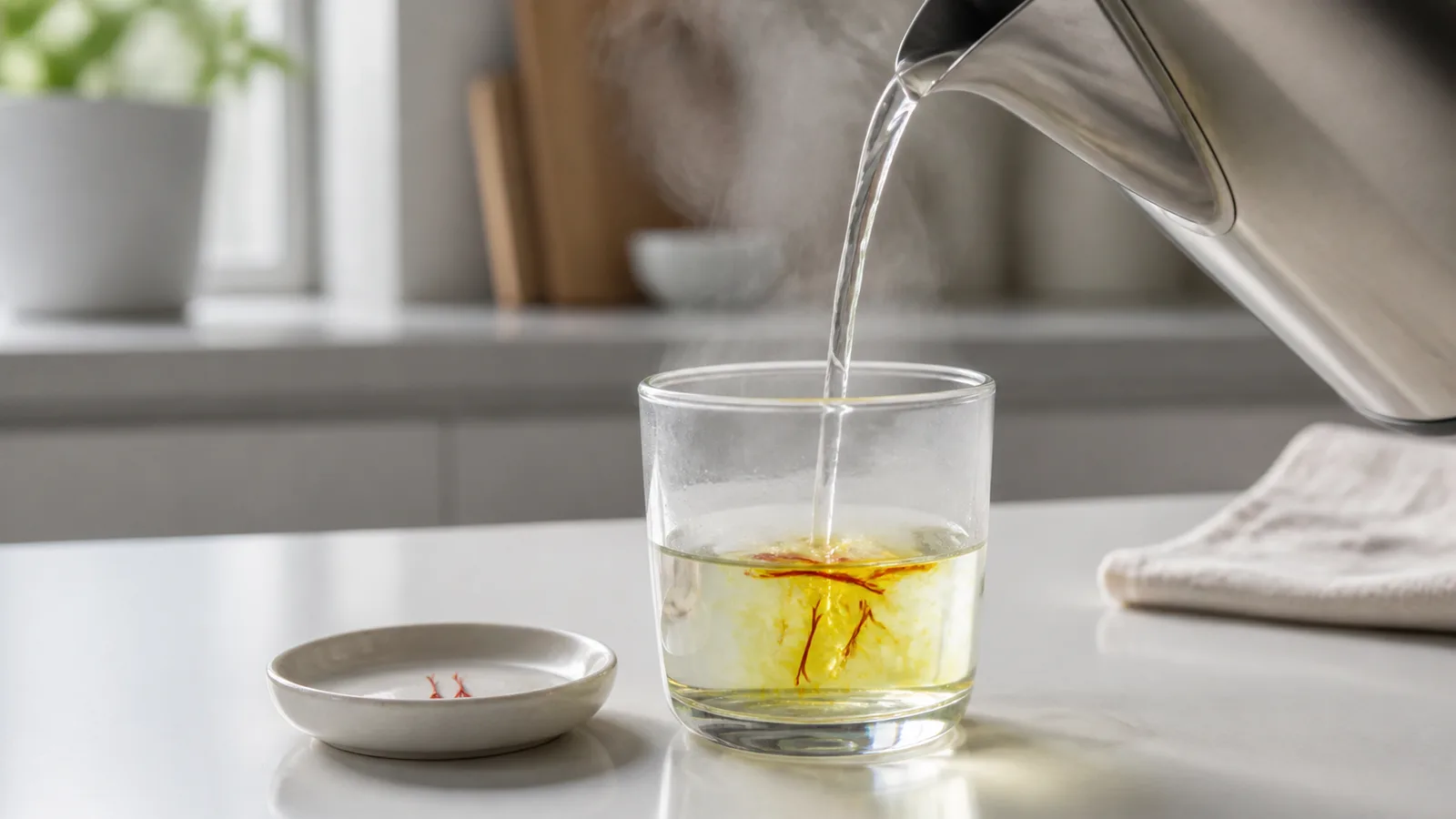
For most recipes, lightly crush the threads and bloom them before they enter the main dish. This is the most reliable way to spread both colour and flavour.
- Measure about 1/4 teaspoon of saffron threads for a dish serving four to six people.
- Crush them gently with a small mortar and pestle or between clean fingertips. They do not need to become a fine powder.
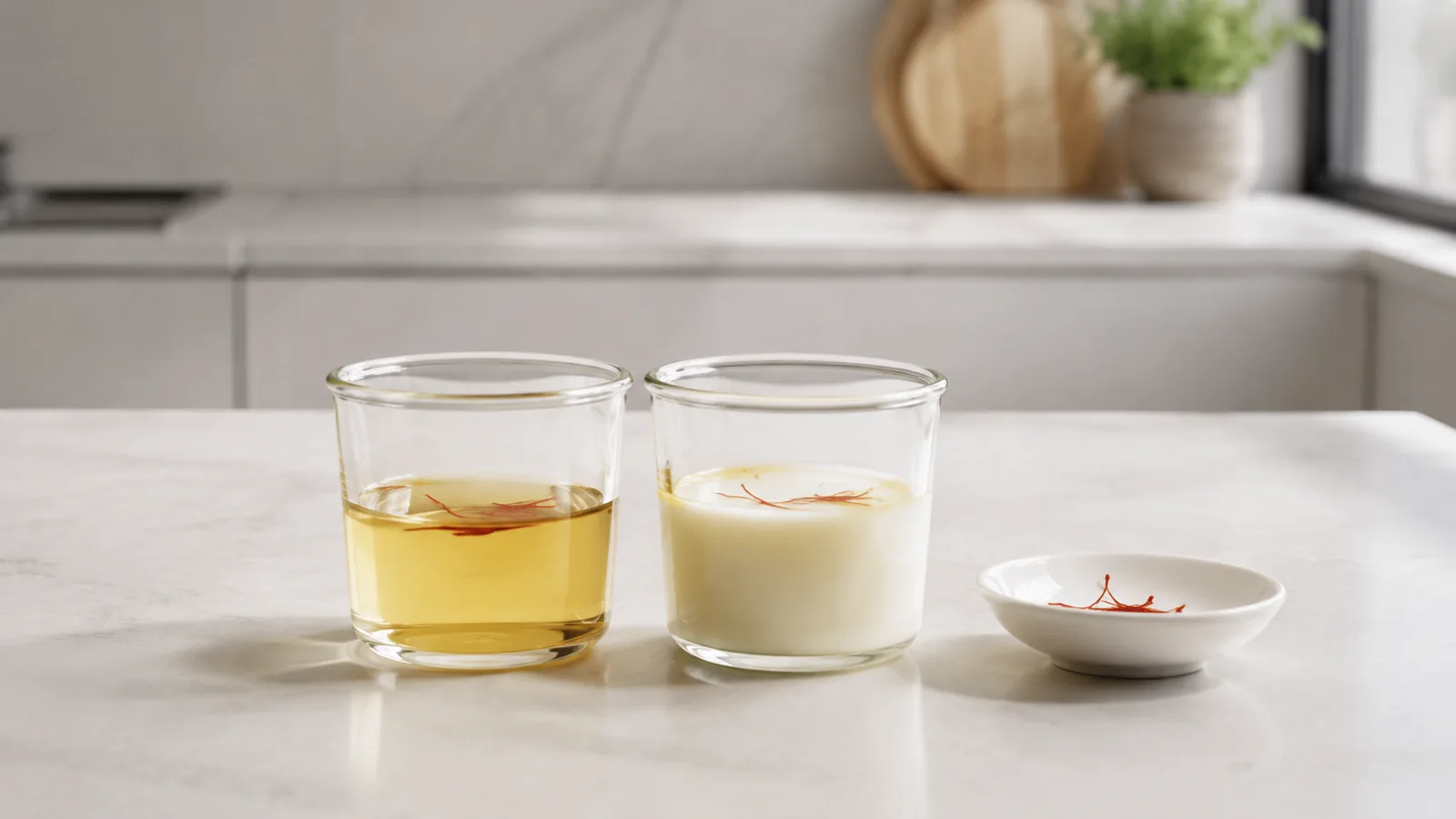
- Add two to three tablespoons of warm water, milk or stock. The liquid should be warm, not vigorously boiling.
- Leave the infusion for 10 to 20 minutes, then add both the liquid and the threads to the recipe.
Water is the most flexible blooming liquid. Milk works well for custards and cakes, while stock is suitable for savoury dishes. For a closer look at timing and alternative methods, read our guide to brewing saffron.
What is saffron used for in cooking?
Saffron is used in food across a wide range of cuisines. It is closely associated with Persian rice dishes, Indian biryani, Spanish paella and Italian risotto alla milanese, yet those well-known examples are only a starting point. The spice also works in braises, seafood, soups, sauces, doughs and dairy-based sweets.
The most practical saffron uses in cooking fall into a few broad groups: rice and grains, mild proteins, vegetables, liquid dishes and desserts. The sections below explain where to add the infusion in each case.
Rice and grains
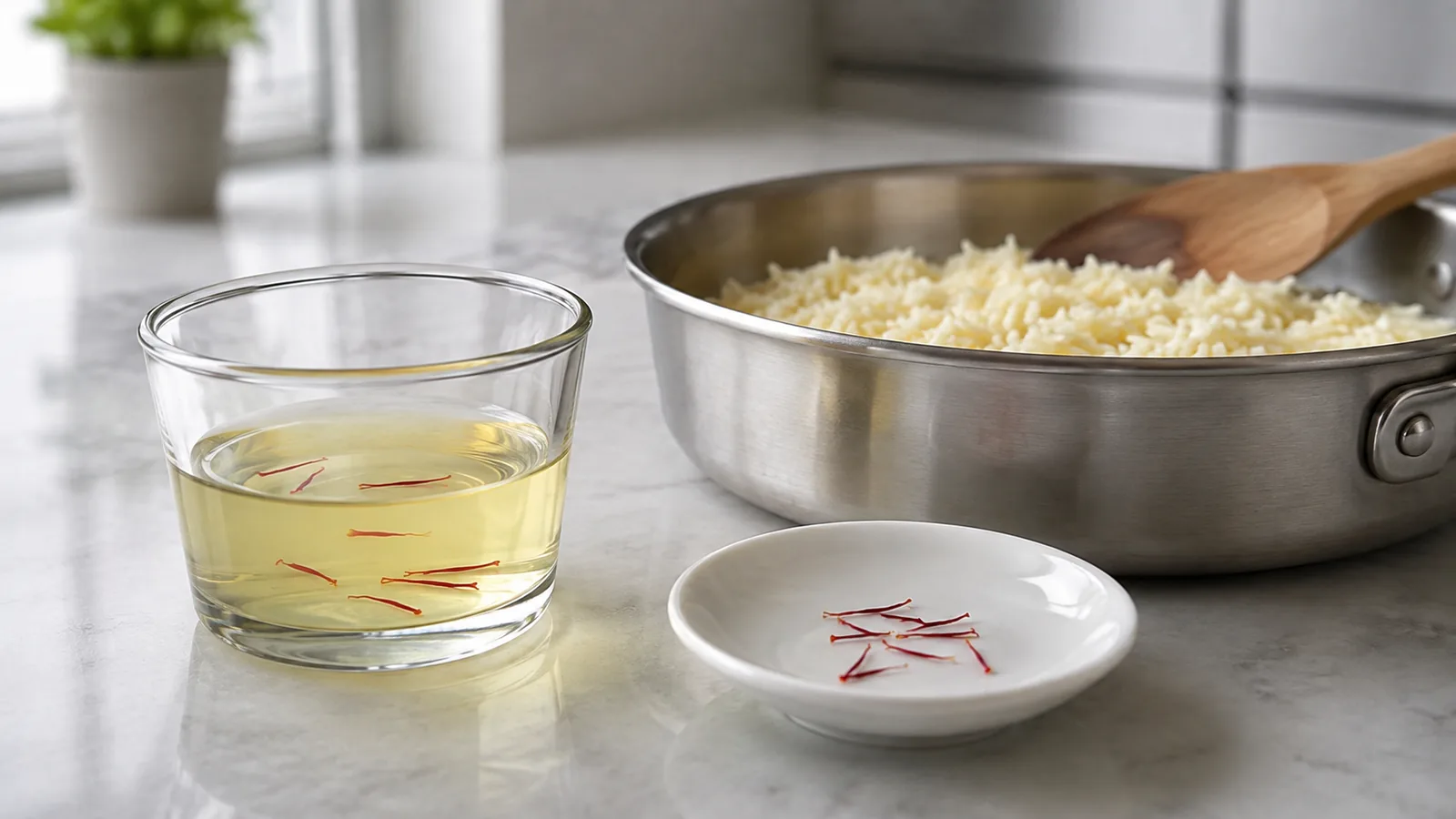
Rice is one of the clearest ways to see what saffron contributes. Add the infusion near the end of cooking for an even golden colour, or spoon it over a portion of cooked rice and fold that rice back into the dish to create contrasting white and yellow grains. The latter approach is common when appearance matters as much as aroma.
Paella and biryani use saffron differently. In paella, it usually seasons the cooking liquid so the flavour reaches the whole pan. In biryani, saffron-infused milk may be drizzled between layers, producing fragrant pockets rather than one uniform colour. Couscous, bulgur and pearl barley can take the spice in the same measured way.
Chicken, seafood and vegetables
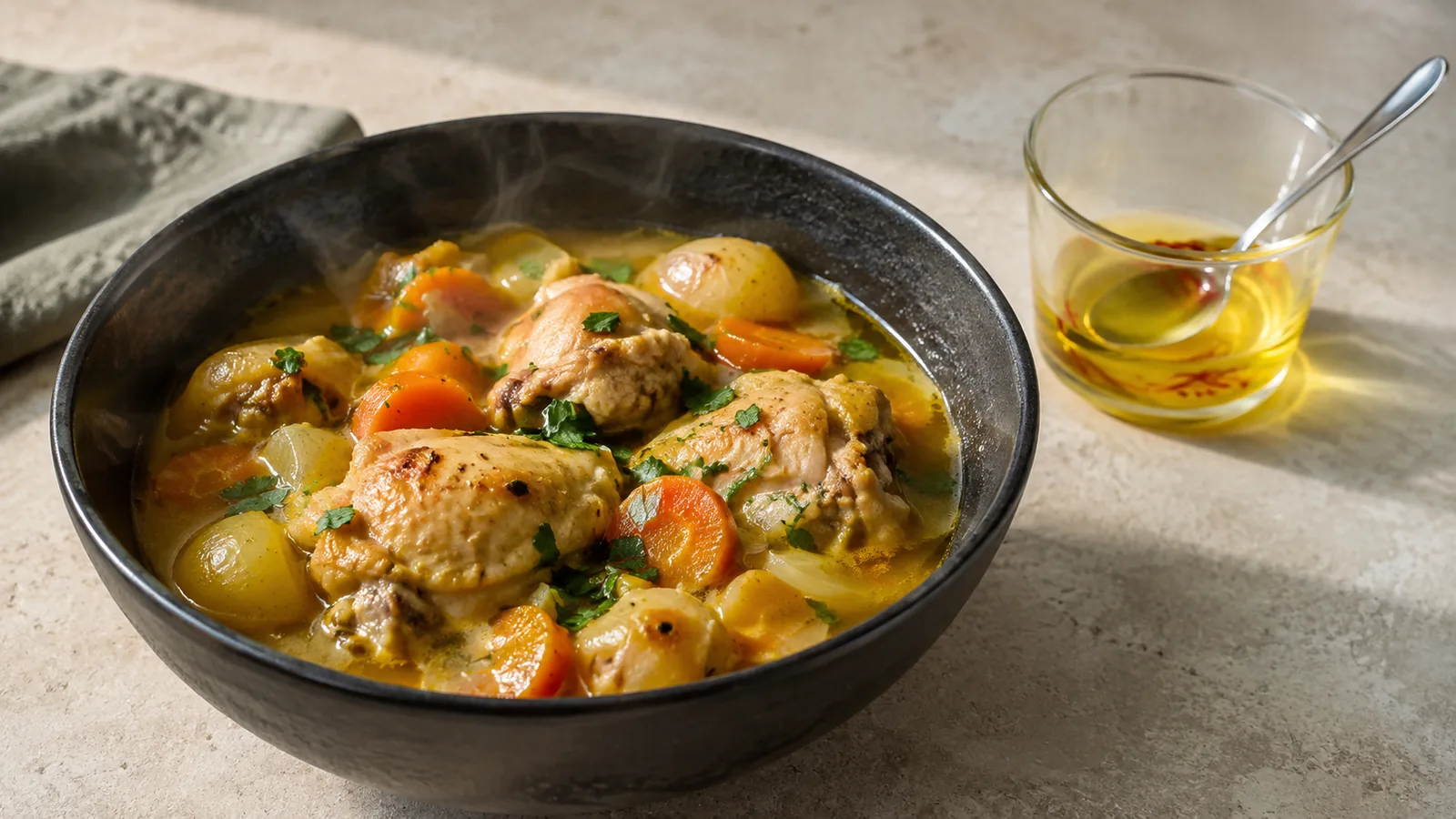
Chicken and saffron are a natural pairing because the meat provides a mild base for the spice. Stir the infusion into a braising liquid, yoghurt marinade or pan sauce. With fish or shellfish, add it to stock, cream or a tomato base rather than rubbing dry threads onto the surface.
Vegetables with a gentle sweetness also suit saffron. Try it with carrots, pumpkin, cauliflower, leeks or potatoes. A small amount in vegetable stock can give a simple soup more depth without turning it into a heavily spiced dish.
Soups, stews and sauces
When using saffron in a soup or stew, add the bloomed mixture during the final third of cooking. This gives it time to disperse while protecting more aroma than a long, hard boil. In a quick pan sauce, it can go in with stock or cream and simmer briefly.
Saffron pairs especially well with onion, garlic, tomato, citrus, fennel and mild stocks. Strong smoke, excessive chilli or a large amount of bitter spice can obscure it, so build the surrounding seasoning with a light hand.
Using saffron in desserts
Saffron works in desserts because cream, milk, rice and butter carry its aroma. Vanilla, cardamom, pistachio, almond, citrus and rosewater can support it, but using all of them at once often produces a muddled result. Choose one or two companions and let the saffron remain recognisable.
Panna cotta and custards
For panna cotta, custard or ice cream, bloom the saffron in a spoonful of warm milk and stir it into the dairy base. Do this early enough for the colour to spread, but avoid repeatedly boiling the mixture. A few visible threads can be attractive; a dense tangle usually means more saffron than the dessert needs.
Rice pudding
Both dairy and dairy-free rice puddings can carry saffron. Add the infusion once the rice has begun to soften so it colours the mixture evenly. Cardamom or cinnamon may be included, but neither is required. Turmeric is not a substitute here: it changes the flavour and can make it difficult to judge the saffron itself.
Cakes and festive breads
A saffron cake may use an infusion in milk, melted butter or another liquid already present in the batter. Swedish saffranskaka and saffron buns are familiar holiday examples, while Persian-inspired cakes often pair the spice with rosewater and pistachio. Keep the recipe’s total liquid unchanged when adding an infusion; simply count the blooming liquid as part of the milk or water.
For more ideas rather than a one-size-fits-all formula, see our guide to saffron desserts.
When should saffron be added?
The best moment depends on the dish. In rice, add it to the cooking liquid or during the final steaming stage. In a slow-cooked stew, putting the infusion in during the final third of cooking protects its aroma. In custards and batters, mix it into a liquid ingredient before combining the recipe.
Dry threads scattered on top can provide colour and visual interest, but they do not season a whole dish evenly. If you want a garnish, bloom most of the measured saffron and reserve only a few threads for the finish.
Common mistakes with saffron in cooking
- Using too much: more saffron does not automatically mean a better dish. Excess can bring a bitter or medicinal edge.
- Skipping the infusion: whole dry threads release unevenly, especially in short-cooked recipes.
- Adding it to smoking-hot oil: high direct heat can damage the aroma. Mix the infusion into a liquid component instead.
- Using turmeric for extra colour: turmeric has its own assertive flavour and changes the intended balance.
- Hiding it under strong seasonings: saffron is easiest to appreciate when the surrounding flavours leave it room.
- Leaving the jar open near steam: heat and moisture shorten the useful life of the spice.
How to store saffron for cooking
Keep saffron threads in an airtight container in a cool, dark, dry cupboard. Do not store the jar above the stove or beside a sunny window. Open it only as long as needed and use a dry utensil when removing threads. Our detailed saffron storage guide covers containers, light, heat and moisture.
Brewed saffron is different from dry threads. Refrigerate an unused infusion promptly in a clean, covered container and use it within a short period rather than treating it as shelf-stable. Prepare only what the current recipe needs whenever possible.
A simple rule for cooking with saffron
Choose a dish with a clear role for the spice, bloom the threads, and add the infusion at a point that preserves its aroma. That approach matters more than chasing a dark yellow colour. When saffron is prepared carefully, even a modest amount can give a dish its characteristic fragrance and a clean, warm finish.