A saffron and rosewater cake should taste gently floral, not perfumed, with enough saffron to give the crumb a warm golden colour. This recipe uses whipped egg whites for a light texture and measured amounts of both aromatics, so neither one overwhelms the cake.
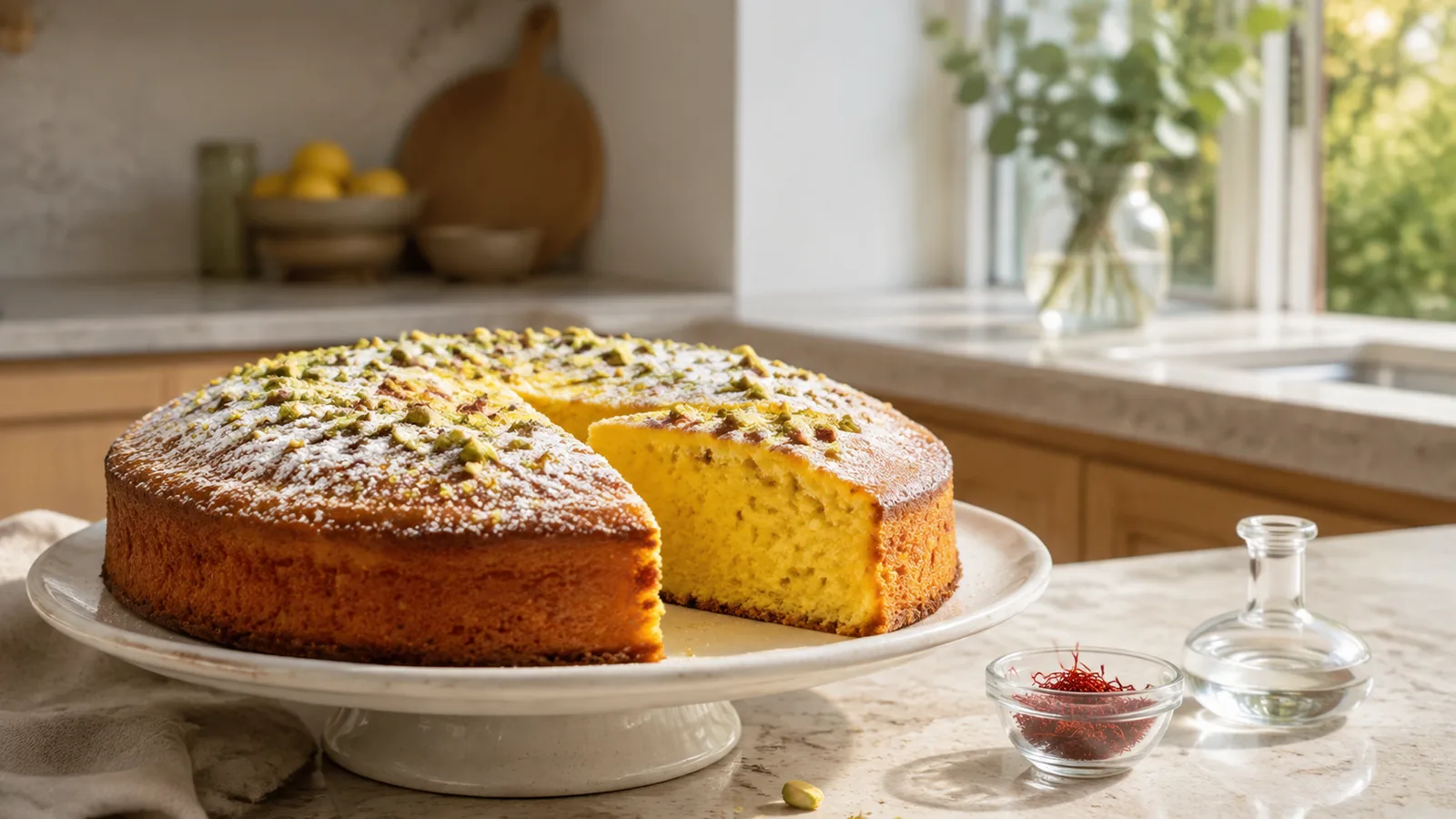
Saffron and rosewater cake ingredients
This recipe makes one 20 cm (8-inch) round cake, or about eight generous slices.
- 1/4 teaspoon saffron threads
- 2 tablespoons warm water
- 240 g (2 cups) all-purpose flour
- 2 teaspoons baking powder
- 1/4 teaspoon fine salt
- 3 large eggs, at room temperature, separated
- 135 g (2/3 cup) granulated sugar, divided
- 120 ml (1/2 cup) whole milk, at room temperature
- 2 tablespoons rosewater
- 2 tablespoons neutral vegetable oil
- 1/4 teaspoon vanilla extract
- Powdered sugar and finely chopped pistachios, for serving
The saffron and rose water provide the defining flavour, so measure both rather than pouring by eye. Rosewater varies in strength; if yours is especially concentrated, use one tablespoon and replace the other with milk.
Before you begin
Bloom the saffron
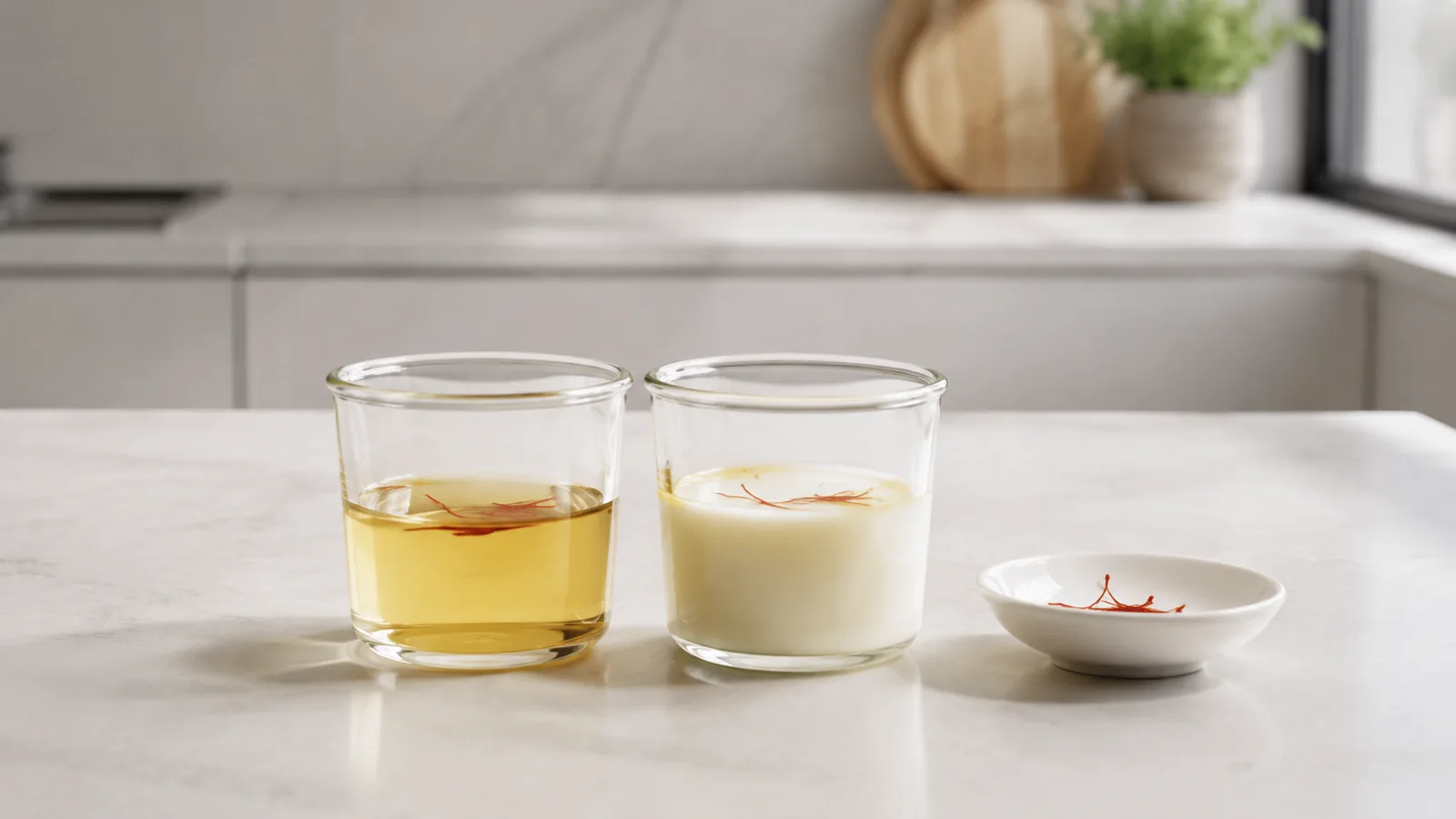
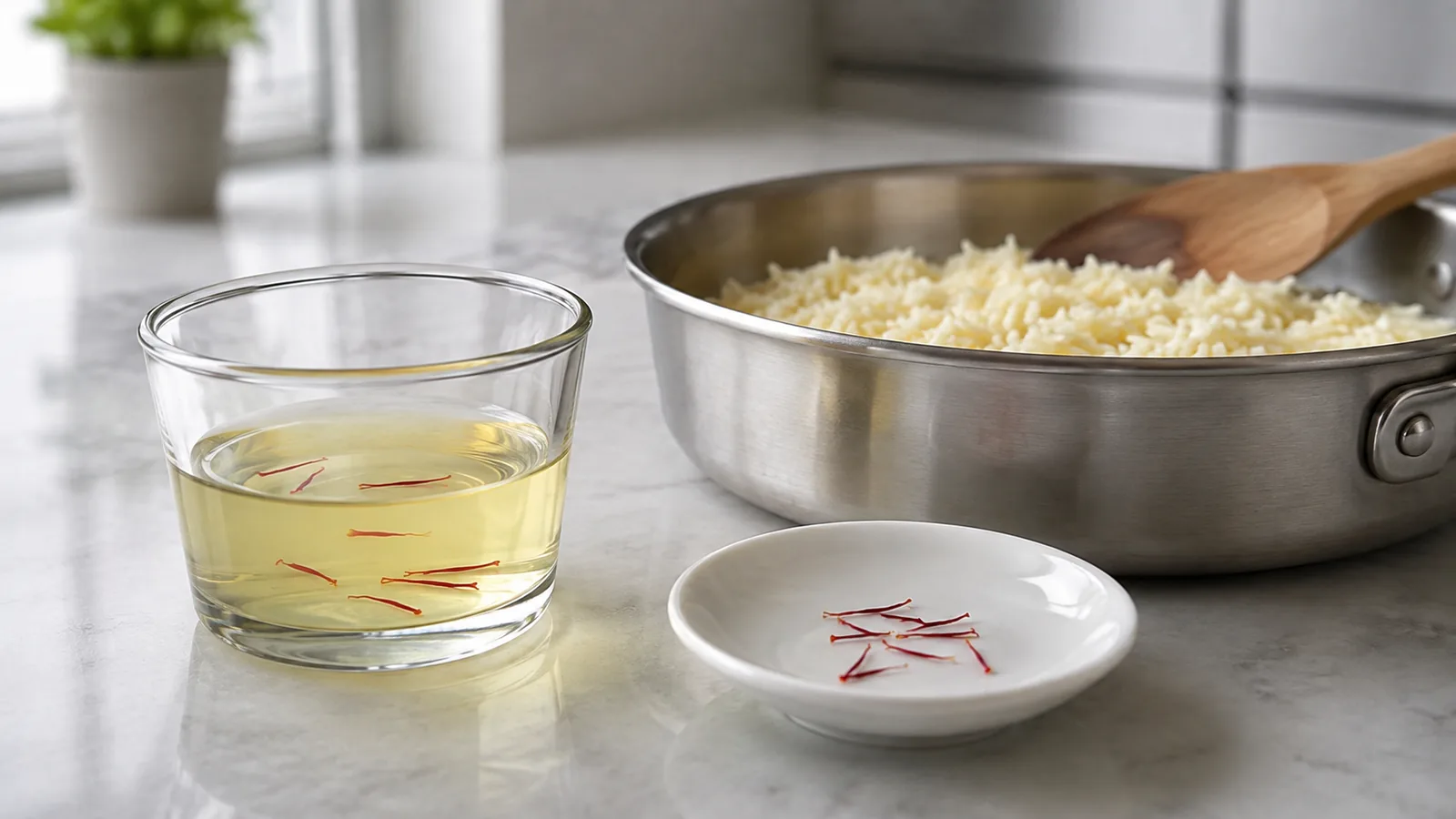
Grind the saffron lightly between your fingers or with a small mortar and pestle. Stir it into two tablespoons of warm water and leave it for 10 minutes. This releases the colour and distributes the saffron more evenly than adding dry threads to the batter. Our guide to brewing saffron explains the same principle in more detail.
Prepare the pan and oven
Heat the oven to 180°C (350°F), or 170°C (340°F) for a fan oven. Grease a 20 cm round cake pan and line the base with baking paper. A light-coloured metal pan gives the most even result; a dark pan may brown the edges sooner.
How to make saffron and rosewater cake
- Mix the dry ingredients. Whisk the flour, baking powder and salt in a medium bowl. Set it aside.
- Whip the egg whites. Put the whites in a completely clean, dry bowl. Beat at medium speed until foamy, then add half the sugar gradually. Continue beating until the whites form glossy medium-stiff peaks. They should hold their shape without looking dry. Set them aside while you prepare the yolk mixture.
- Beat the yolks. In a separate large bowl, beat the yolks with the remaining sugar for two to three minutes, until the mixture becomes paler and falls from the whisk in a thick ribbon.
- Add the liquid ingredients. Beat the bloomed saffron, milk, rosewater, oil and vanilla into the yolks just until evenly combined.
- Add the flour. Sift the dry ingredients over the yolk mixture in two additions. Fold gently with a flexible spatula after each addition. Stop as soon as no dry pockets remain; vigorous mixing at this point makes the cake heavier.
- Fold in the egg whites. Stir one-quarter of the whipped whites into the batter to loosen it. Add the rest in two batches, cutting down through the centre and folding the batter over itself. Rotate the bowl as you work. A few small white streaks are better than an overmixed batter.
- Bake. Transfer the batter to the prepared pan and level the top. Bake on the centre rack for 35 to 45 minutes. Start checking at 35 minutes: the cake is ready when the centre springs back lightly and a wooden skewer comes out clean or with a few dry crumbs.
- Cool. Leave the cake in its pan for 10 minutes. Run a thin knife around the edge, turn it onto a rack, remove the paper and let it cool completely before decorating.
How to keep the cake light
Room-temperature eggs and milk combine more readily, which helps the batter stay airy. The mixing bowls also matter: even a trace of grease can stop egg whites from whipping properly. If a yolk breaks into the whites, remove it before you begin beating.
Once the flour goes in, use a slow folding motion rather than stirring in circles. Tapping the filled pan hard on the counter is unnecessary here because it can knock out the air you have just folded in. Level the surface gently and put the cake straight into the hot oven.
Flavour and decoration ideas
When the cake is cool, a light dusting of powdered sugar and a scattering of pistachios are enough. The green nuts look attractive against the golden crumb, but the cake is also good plain with tea or coffee. For a slightly sharper finish, add a little finely grated orange zest to the yolk mixture. It complements the floral notes without making the cake sweeter.
This style is often described as an Iranian saffron cake, although family recipes differ in sweetness and texture. It also shows why Persian desserts with rose water are best made with restraint. If you prefer a subtler rose water cake recipe, begin with one tablespoon of rosewater and use an extra tablespoon of milk.
Avoid pouring heavy syrup over the finished sponge unless you want a deliberately moist, dense dessert. The measured saffron infusion already brings the spice into every slice. If you would like to explore other ways of pairing saffron with sweets, see our guide to saffron desserts and cooking.
Serving and storage
Let the cake cool fully before slicing; while warm, its delicate crumb can compress under the knife. Use a serrated knife and a gentle sawing motion for neat slices. Serve it at room temperature, when the rosewater and saffron aromas are easiest to notice.
Keep leftovers in an airtight container at room temperature for up to two days. For longer storage, refrigerate the cake for up to four days, then bring each slice back to room temperature before serving. The uniced cake can also be wrapped well and frozen for up to one month. Thaw it, still wrapped, at room temperature so condensation forms on the wrapping rather than on the crumb.
Common questions
Can I use ground saffron?
Yes, provided it is pure saffron rather than a seasoning blend. Use about 1/4 teaspoon and bloom it in the warm water as directed. Whole threads are easier to assess visually and can be ground immediately before use, which helps protect their aroma.
Can I replace the rosewater?
If you do not enjoy rosewater, replace it with the same amount of milk and add one teaspoon of finely grated orange zest. The result will still be a saffron cake, but it will no longer have the traditional saffron-and-rosewater profile.
Why did my cake sink?
The usual causes are underbaking, opening the oven too early or deflating the egg whites while folding. Wait until the centre looks set before checking it, and test with a skewer rather than relying on colour alone. Accurate flour measurement also helps: spoon flour into the measuring cup and level it, or use the gram weight above.
Can I make this saffron and rosewater cake ahead?
Yes. Bake it one day ahead, let it cool completely and store it airtight. Add powdered sugar and pistachios shortly before serving so the decoration stays fresh and clean.