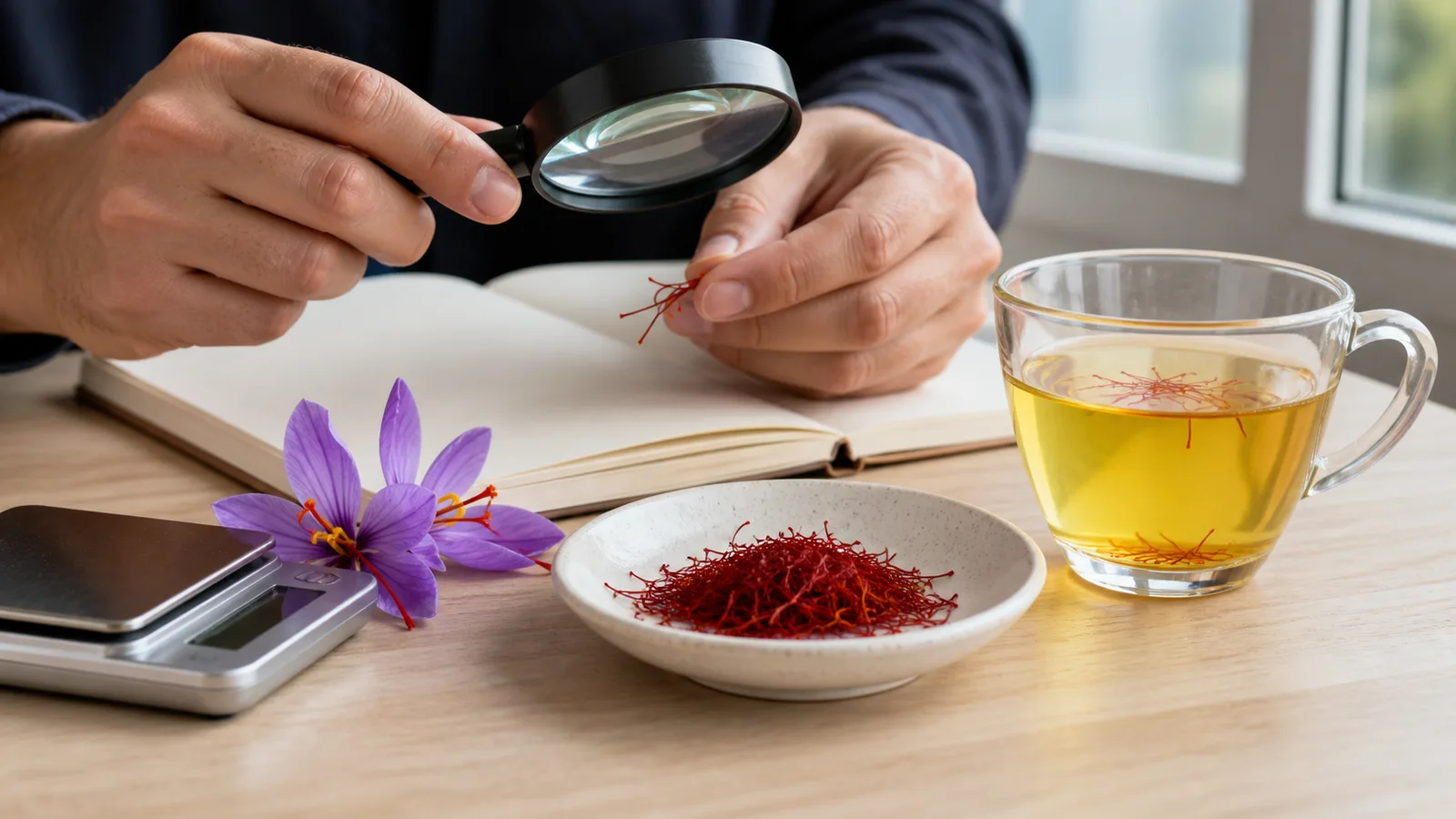
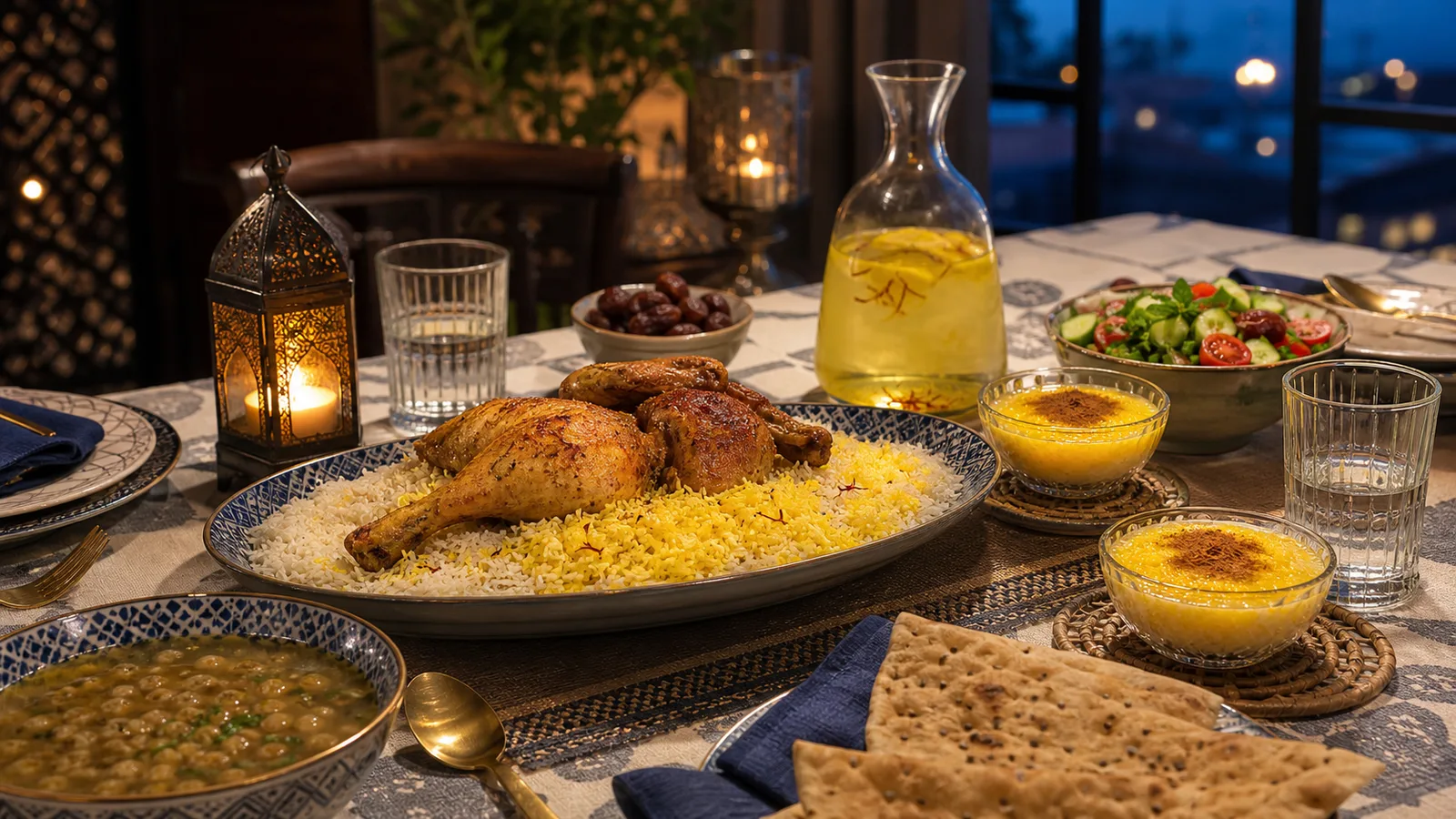
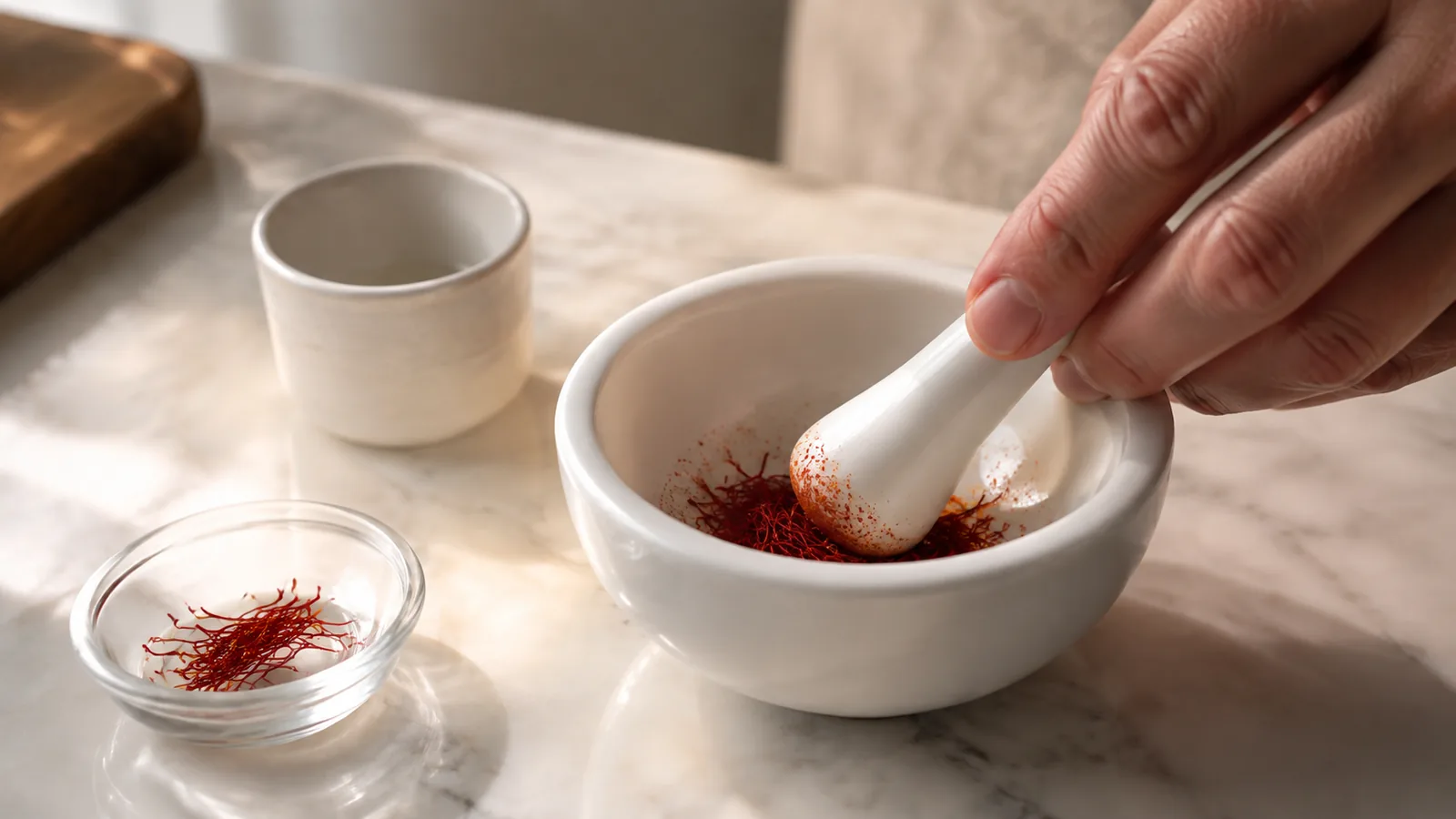
This guide to Saffron Desserts & Cooking follows the spice from cakes, custards, rice puddings, and frozen sweets to savory rice, seafood dishes, sauces, tea, milk, and cardamom coffee. Saffron in desserts can bring a warm golden color and a dry, honeyed aroma, provided the threads are prepared carefully and used with restraint.
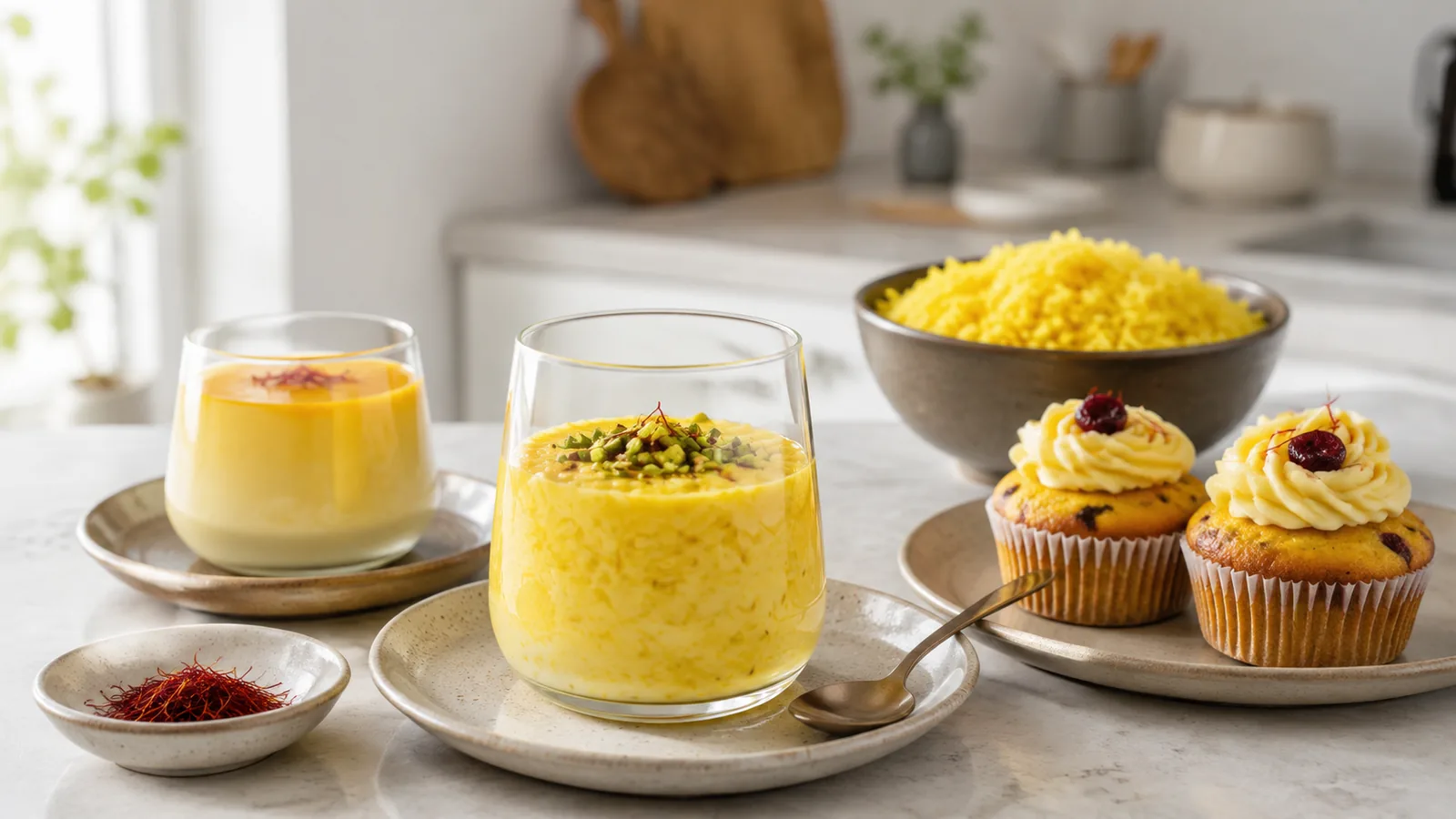
How saffron behaves in sweet and savory dishes
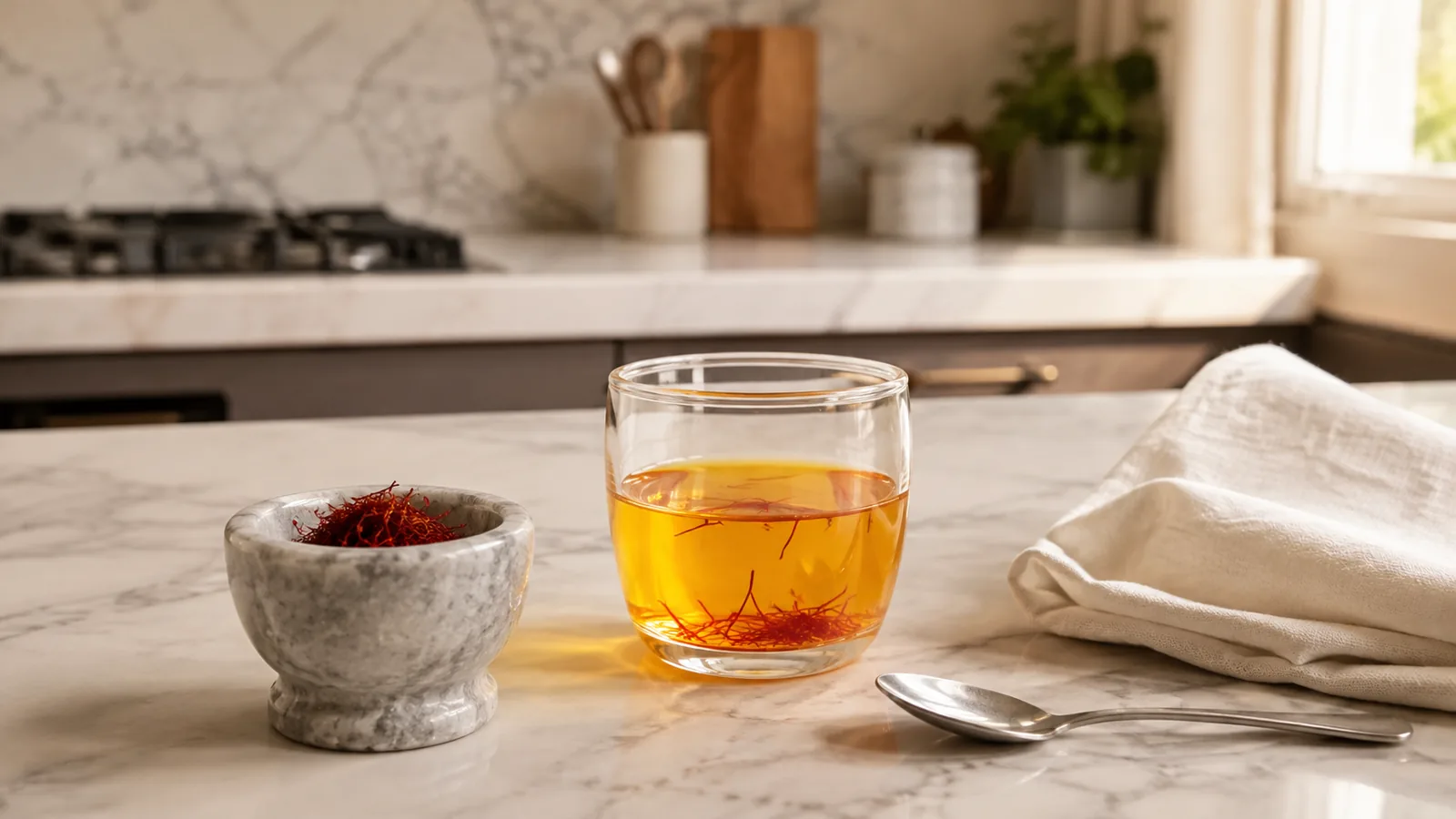
Saffron is both aromatic and water-soluble, so it performs best when the crushed threads are first steeped in a little warm liquid. This distributes the color and flavor more evenly than dropping whole threads into a large bowl of batter or a full pot of rice. Saffron in sweets can be infused in water for versatility or in warm milk when it will go directly into custard, cake, or ice cream.
It is easy to add more saffron than a dish needs. A restrained amount supports fruit, dairy, nuts, rice, cardamom, rosewater, citrus, and vanilla; too much can become bitter or medicinal. The right quantity depends on the strength of the threads and the number of servings, so taste the infusion and build gradually.
Persian saffron desserts and sweets
In Persian cooking, saffron belongs to everyday hospitality as well as festival tables. It colors and perfumes sholeh zard, the rice pudding made with sugar and usually rosewater. It also appears in halva, where flour or another starch is toasted before syrup and saffron are incorporated, and in bastani sonnati, the traditional ice cream flavored with rosewater and often pistachios.
Regional saffron sweets give the spice different textures and companions. Sohan from Qom is associated with a crisp, rich confection garnished with nuts. Masghati, closely associated with Shiraz, is a translucent starch sweet scented with saffron, cardamom, or rosewater. Bakers in Kermanshah, Khuzestan, Lorestan, Yazd, and other regions use saffron in local cookies, cakes, and ceremonial sweets, although recipes and names vary from one household to another.
For a cold dessert, our saffron ice cream recipe shows how to keep the floral notes clear without turning the color unnaturally bright.
Saffron desserts beyond Iran
Kesar basundi and other Indian milk sweets
Kesar basundi is a reduced-milk dessert flavored with saffron, often cardamom, and nuts. The milk is cooked gently until it thickens, then the saffron infusion is folded through it. Saffron also appears in kheer, shrikhand, kulfi, rasmalai, and festive rice sweets. “Kesar” is the Hindi word commonly used for saffron, which is why the name appears on many Indian dessert menus.
Panna cotta and dairy custards
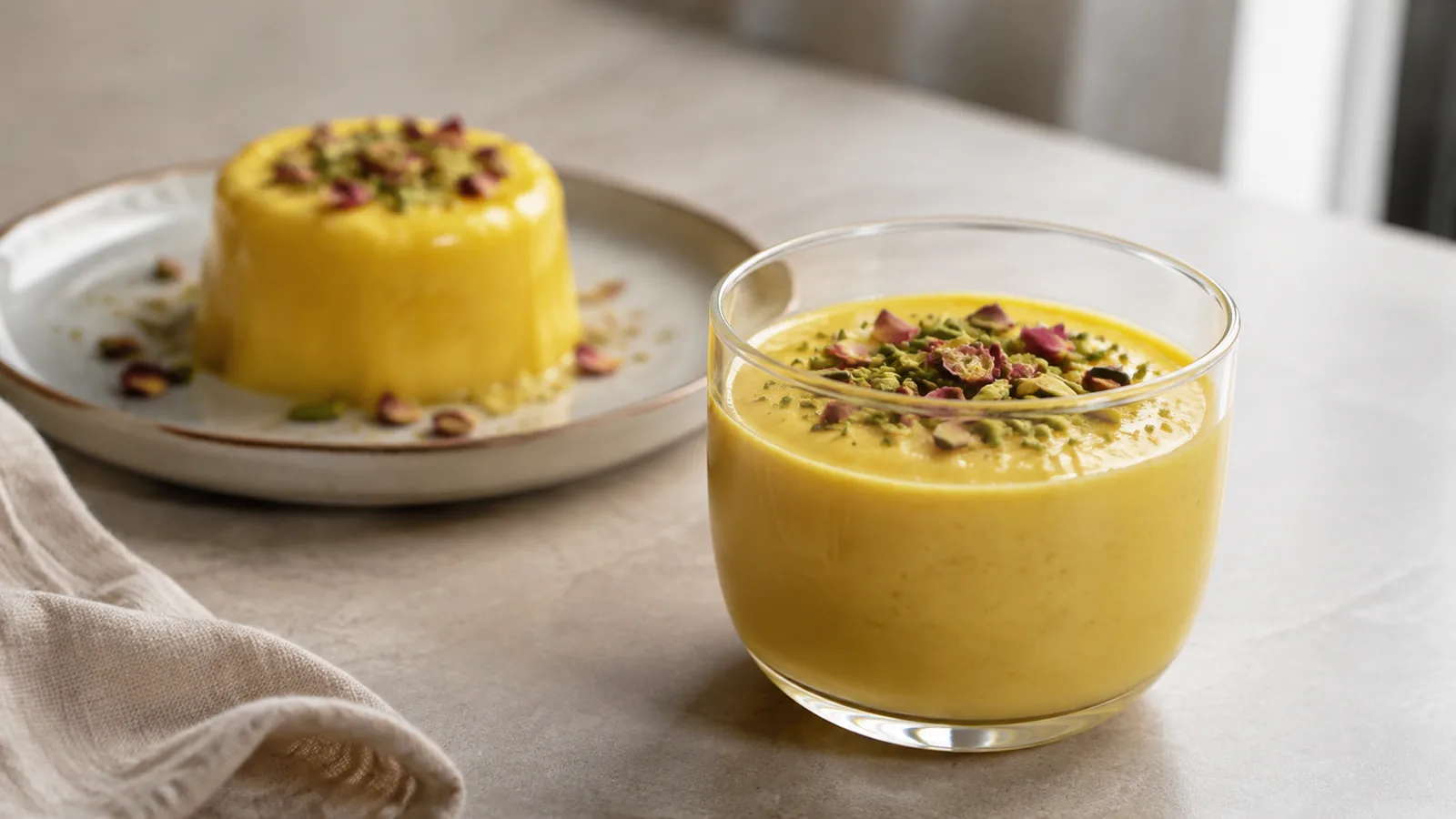
Saffron panna cotta is an Italian-style set cream in which the spice is infused into the dairy before gelatin is added. The infusion should be strained only if a perfectly smooth appearance is important; leaving a few fine threads visible can make the ingredient clear. Similar flavoring works in baked custard, crème caramel, or a simple stovetop pudding.
Cakes, cookies, and fruit desserts
Saffron pairs well with orange, pear, apple, cranberry, apricot, and date. In cake batter, add a concentrated, cooled infusion so the extra liquid does not disturb the formula. In shortbread or cookies, grind the threads finely and disperse them in the recipe’s small amount of liquid before mixing. A few threads can also perfume poaching syrup for fruit.
Saffron in savory cooking
The same spice can move from dessert to dinner without tasting sweet. Indian biryani often uses saffron-infused milk or water to streak the top layers of rice. Spanish paella may include saffron for aroma and color, though regional and household recipes differ. In Italy, saffron is central to risotto alla Milanese; in Switzerland, it is also associated with risotto from Ticino.
Saffron suits fish stews, shellfish, chicken, lamb, and vegetable broths. French bouillabaisse is one familiar example, while Persian cooking uses saffron in rice, kebabs, chicken, and braises. Add the infusion where it can spread through the liquid or fat, then reserve a small portion for the end if the dish benefits from a fresher aroma.
Saffron in drinks
For saffron tea, crush a few threads and steep them in hot water rather than sprinkling them dry over the cup. Cardamom, cinnamon, rosewater, lemon, or a little honey can be added according to taste. Saffron milk uses the same principle: steep the threads first, then combine them with warm or chilled milk.
Arabic coffee is often scented with cardamom and may include saffron. The exact preparation changes across the Gulf and between families, so saffron is better described as a valued variation than a requirement in every cup.
A cold saffron syrup needs more than dry threads stirred into cold water. First make a warm saffron infusion and dissolve the sugar separately or while the water is warm. Chill the combined syrup, dilute it to taste, and add lemon or rosewater if desired. This produces a smoother drink and extracts the spice more evenly.
Saffron cranberry cupcakes
Of the saffron dessert recipes in this guide, these small cakes retain the original post’s exact saffron-and-cranberry combination. The recipe makes about 8 standard cupcakes, depending on the size of the cases.
Ingredients
- ½ gram saffron threads, finely ground
- 2 tablespoons warm milk or water for the saffron
- 100 g unsalted butter, softened
- 80 g granulated sugar
- 1 large egg, at room temperature
- 75 ml milk, at room temperature
- 120 g gluten-free all-purpose flour blend
- 1 teaspoon baking powder
- A small pinch of salt
- 80 g dried cranberries
Method
- Heat the oven to 175°C/350°F and line a cupcake pan. Steep the ground saffron in the 2 tablespoons of warm liquid for 10 minutes, then let it cool.
- Beat the butter and sugar until lighter and creamy. Beat in the egg, followed by the cooled saffron infusion.
- Whisk the flour blend, baking powder, and salt together. Fold the dry ingredients into the butter mixture in two additions, alternating with the 75 ml milk.
- Fold in the cranberries. Divide the batter among the cases, filling each about two-thirds full.
- Bake for 16–18 minutes, or until the tops spring back and a skewer comes out clean. Cool for 5 minutes in the pan, then transfer the cupcakes to a rack.
Gluten-free flour blends vary, so choose one intended for cakes and containing a binder if the package recommends it. For a pistachio variation with conventional flour, see our saffron and pistachio cupcake recipe.
Two simple saffron dessert ideas
Saffron coconut rice pudding
Cook short-grain rice gently with coconut milk until the grains are tender and the liquid is creamy. Stir in a saffron infusion and sweeten to taste. Orange blossom water, pistachios, or raisins can be added at the end. Brown rice flour is useful for a quick pudding, but it does not create the same grain texture as cooked rice; label the two versions clearly rather than treating them as identical.
Quick saffron panna cotta
Warm cream with sugar and a saffron infusion, keeping it below a hard boil. Bloom powdered gelatin in cold water, remove the cream from the heat, and stir in the gelatin until dissolved. Pour into small glasses, cool, and refrigerate until set. The amount of gelatin should follow the package instructions for the volume of liquid because products differ in strength.
Getting the balance right
- Bloom the threads: use a small amount of warm liquid before adding saffron to a larger recipe.
- Protect the aroma: avoid prolonged fierce boiling when a gentler method will work.
- Watch competing flavors: cardamom and rosewater are natural partners, but both can overwhelm saffron.
- Do not chase fluorescent color: genuine saffron gives a warm gold rather than a neon yellow.
- Keep health claims out of dessert advice: saffron can add flavor and color, but it does not make a sugary dessert medicinal or nutritionally balanced.
Saffron desserts and cooking share the same foundation: prepare the spice carefully, use it with restraint, and give it ingredients that leave room for its aroma. From kesar basundi and Persian ice cream to paella, risotto, coffee, and cranberry cupcakes, the best results come from technique rather than excess.