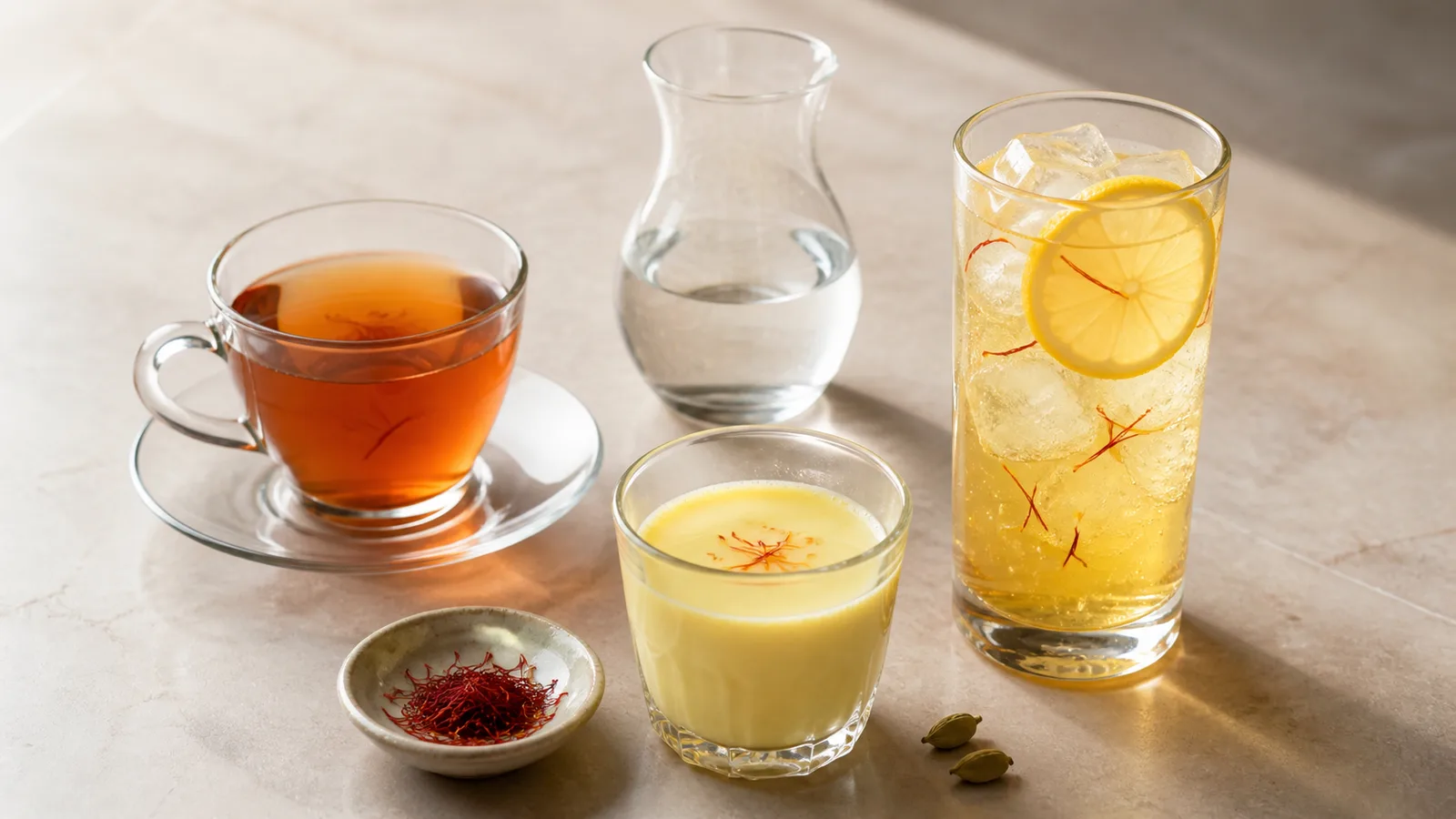
Saffron-infused drinks can be as simple as black tea with a spoonful of golden infusion or as festive as a chilled rosewater syrup. Saffron pairs naturally with milk, honey, coffee, ginger, cinnamon, cardamom, citrus, and several traditional Persian ingredients. The trick is restraint: enough saffron to notice, but not so much that the drink becomes bitter.
Below are 12 drinks with saffron, each with a usable method rather than a list of vague wellness promises. They are made for flavor and hospitality. None should be treated as a remedy for depression, heart disease, high or low blood pressure, digestive illness, or any other medical condition.
Start with one saffron drink base
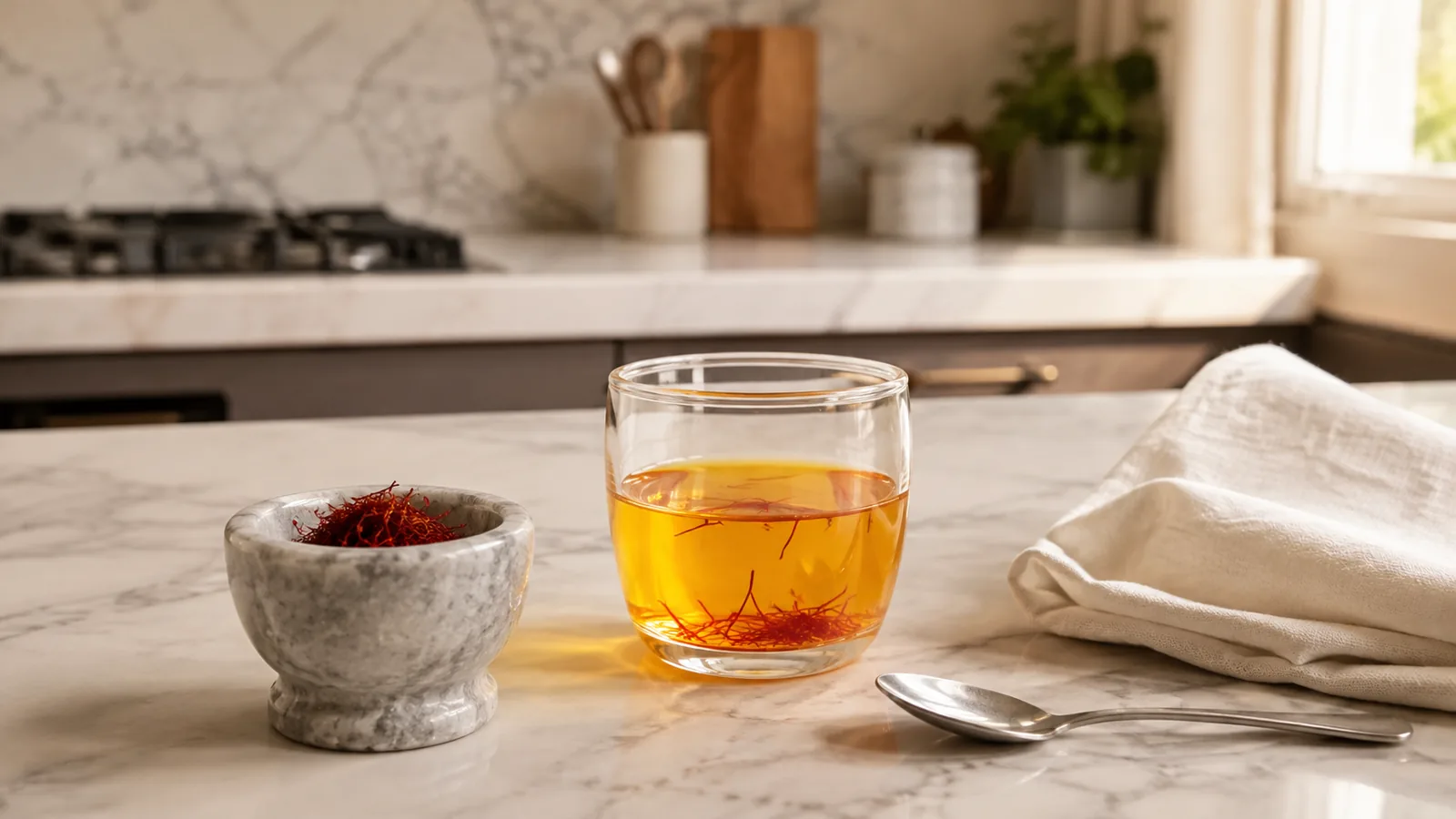
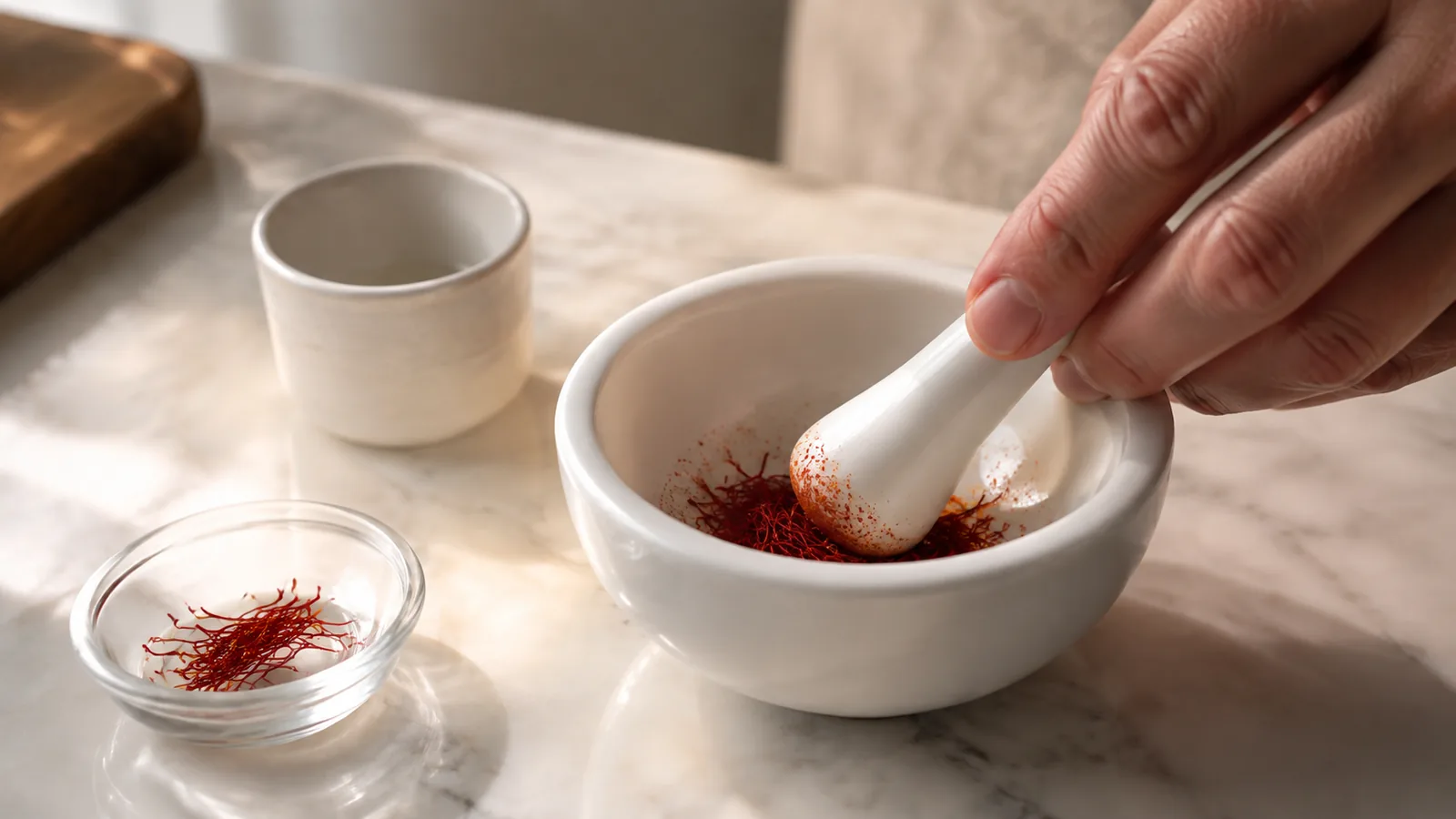
For most of these recipes, first make a small concentrated infusion:
- Lightly crush 20–25 saffron threads, approximately 0.05 g.
- Add 2 tablespoons of warm-to-hot water, roughly 60–80°C (140–176°F).
- Cover and leave for 15–20 minutes.
This produces enough saffron-infused water for two to four drinks, depending on the recipe and your taste. Use the softened threads as well as the liquid. If you are wondering how to drink saffron without swallowing a gritty layer of powder, crush the threads only lightly and strain the infusion through a fine tea filter before serving.
Using saffron in drinks is easiest when the spice is infused first. That way, you can add a teaspoon at a time and stop when the aroma is clear.
Our complete saffron infusion guide covers the warm-water and ice methods.
1. Saffron and black tea
Brew 2 cups of black tea at the strength you normally enjoy. Add 1–2 teaspoons of saffron infusion to each cup, taste, then sweeten only if needed. A strip of orange peel works well, but remove it before the white pith makes the tea bitter.
Traditional Persian temperament language may describe black tea as “cold” and saffron as “hot and dry.” That is a cultural framework, not a measurement of the drink’s physical temperature and not a medical diagnosis. The practical appeal is the pairing of black tea’s tannic depth with saffron’s aroma.
2. Saffron and green tea
Steep 2 teaspoons of loose green tea in 2 cups of water at about 75–80°C (167–176°F) for 2–3 minutes. Strain, then add 1 teaspoon of saffron infusion per cup. Lemon is optional.
People searching for green tea with saffron benefits often encounter claims about anti-aging, memory, mood, or weight loss. Both ingredients contain compounds studied in nutrition research, but this cup is not a proven treatment and it does not cause weight loss by itself. Make it because the grassy tea and warm saffron aroma suit one another.
3. Warm saffron milk
Warm 2 cups of milk over medium-low heat without letting it scorch. Stir in 1 tablespoon of saffron infusion, a small pinch of cardamom, and 1–2 teaspoons of honey if desired. Divide between two cups.
Dairy milk gives the drink a rounder texture. Unsweetened oat or almond milk also works, though each changes the flavor. Add honey after removing the pan from high heat so it is easier to control the sweetness.
4. Saffron, honey, and lemon
For two cups, combine 2 cups of warm water with 1 tablespoon of saffron infusion and 2 teaspoons of honey. Add lemon juice a teaspoon at a time and stop when the drink tastes bright rather than sharply sour.
The original article also suggested applying saffron and honey to the skin. That is outside the purpose of a drink guide, and homemade mixtures can irritate skin or trigger allergy. Keep this pairing in the cup.
5. Saffron and nabat
Nabat is Persian rock candy, often served on a stick beside tea. Brew black tea or a simple hot-water saffron drink, then stir it with a small piece of nabat until it reaches the sweetness you like. There is no need to dissolve a whole stick.
This is a familiar comfort drink, but claims that it cures stomach ache, bloating, fatigue, drowsiness, or drooling during sleep are not established. Persistent digestive or sleep symptoms deserve an appropriate medical assessment rather than more sugar.
6. Chilled saffron and rosewater syrup
Combine 2 cups of cold water, 1 tablespoon saffron infusion, 1–2 tablespoons food-grade rosewater, 1 tablespoon lemon juice, and honey or simple syrup to taste. Chill well and serve over ice.
Rosewater can dominate quickly, so start with the smaller amount. This saffron drink recipe is fragrant and refreshing without needing claims about vitamins, iron, mouthwash, memory, skin, stress, or digestion. Common saffron syrup uses include serving it as a non-alcoholic drink with food, at a celebration, or as a lightly sweet summer refresher.
7. Saffron and grape molasses
Whisk 1–2 teaspoons of grape molasses into 1 cup of warm water, then add 1 teaspoon of saffron infusion and a squeeze of lemon. Taste before adding more molasses; its flavor is concentrated and can hide the saffron.
This traditional-style pairing provides sweetness and a dark fruit note. It should not be presented as a cure for depression, frustration, low energy, or lack of enthusiasm. Anyone experiencing persistent low mood should seek qualified support.
8. Saffron coffee
Add ½–1 teaspoon of saffron infusion to a small cup of freshly brewed coffee. Cardamom is a natural companion, especially in coffee prepared in a cezve or dallah. Begin with less saffron than you think you need; coffee already has bitterness.
The caffeine can increase alertness, but adding saffron does not turn coffee into a treatment for headaches, poor concentration, or stress. People who are sensitive to caffeine should keep their usual limits.
9. About saffron and borage tea
The former article recommended boiling borage flowers with saffron and claimed that the herbs would balance each other’s effects on blood pressure. Do not rely on that claim. One herb does not reliably cancel the pharmacological or safety concerns of another.
Borage and other herbal materials can contain pyrrolizidine alkaloids. The European Food Safety Authority says exposure to these compounds through teas and herbal infusions may be a long-term health concern, especially for frequent or high consumers. We do not recommend a casual homemade borage-drink recipe. If you buy an herbal tea, use a properly identified, commercially produced food product and follow its label rather than gathering unknown flowers.
10. Saffron and ginger infusion
Slice 10–15 g of fresh ginger and simmer it in 2 cups of water for 8–10 minutes. Remove from the heat, strain, and add 1 tablespoon of saffron infusion. Lemon or a little honey can soften the ginger’s heat.
This is a warming drink for a cold day. It may feel soothing on the throat, but it is not a treatment for a cold, infection, or digestive disorder. Anyone taking medication or managing a condition should be cautious about concentrated herbal preparations.
11. Saffron and cinnamon tea
Simmer one small cinnamon stick in 2 cups of water for 5 minutes. Turn off the heat, add 1 tablespoon of saffron infusion, cover for another 5 minutes, then strain. Sweeten lightly if you wish.
Use a stick rather than a large spoonful of ground cinnamon, which leaves a silty texture. The drink is aromatic and comforting; claims about treating digestive discomfort, depression, or general disease are unnecessary and unsupported in this culinary context.
12. Saffron and cardamom tea
Crack 3 green cardamom pods and simmer them in 2 cups of water for 5 minutes. Remove the pan from the heat, add 1 tablespoon of saffron infusion, cover for 5 minutes, and strain. Black tea can be steeped during the final 2–3 minutes for a stronger cup.
Cardamom should sit behind the saffron rather than overwhelm it. This is one of the easiest saffron drinks to serve after a meal, but it should not be promoted as a remedy for heart disease, brain disorders, body aches, or low vitality.
How much saffron is sensible in drinks?
A few threads per serving are enough for culinary use. Avoid spoonfuls of ground saffron and do not assume that a darker drink is healthier. Saffron for drinking should be measured with the same care as saffron in food.
Pregnant people, anyone with an allergy, and people taking medication or managing a health condition should ask a qualified clinician about concentrated saffron products. A small amount used for flavor is different from an extract or supplement.
Is saffron hot or cold for the body?
In traditional Persian temperament language, saffron is commonly described as warm or “hot and dry.” That classification belongs to a historical medical system. It is not the same as body temperature, blood pressure, metabolism, or a modern clinical finding.
You can serve saffron drinks hot or cold. Choose based on the recipe: tea, coffee, and milk are pleasant warm; rosewater syrup and citrus drinks are especially good chilled.
How to keep the flavor balanced
- Bloom the saffron separately instead of adding dry powder blindly.
- Pair it with one or two flavors, not every spice in the cupboard.
- Add strong ingredients—coffee, ginger, rosewater, molasses—gradually.
- Use less sweetener first; you can always add more.
- Make only what you will drink while the aroma is fresh.
Saffron-infused drinks do not need exaggerated wellness language to be appealing. A clear recipe, a measured infusion, and a pairing that lets the spice remain recognizable are enough.