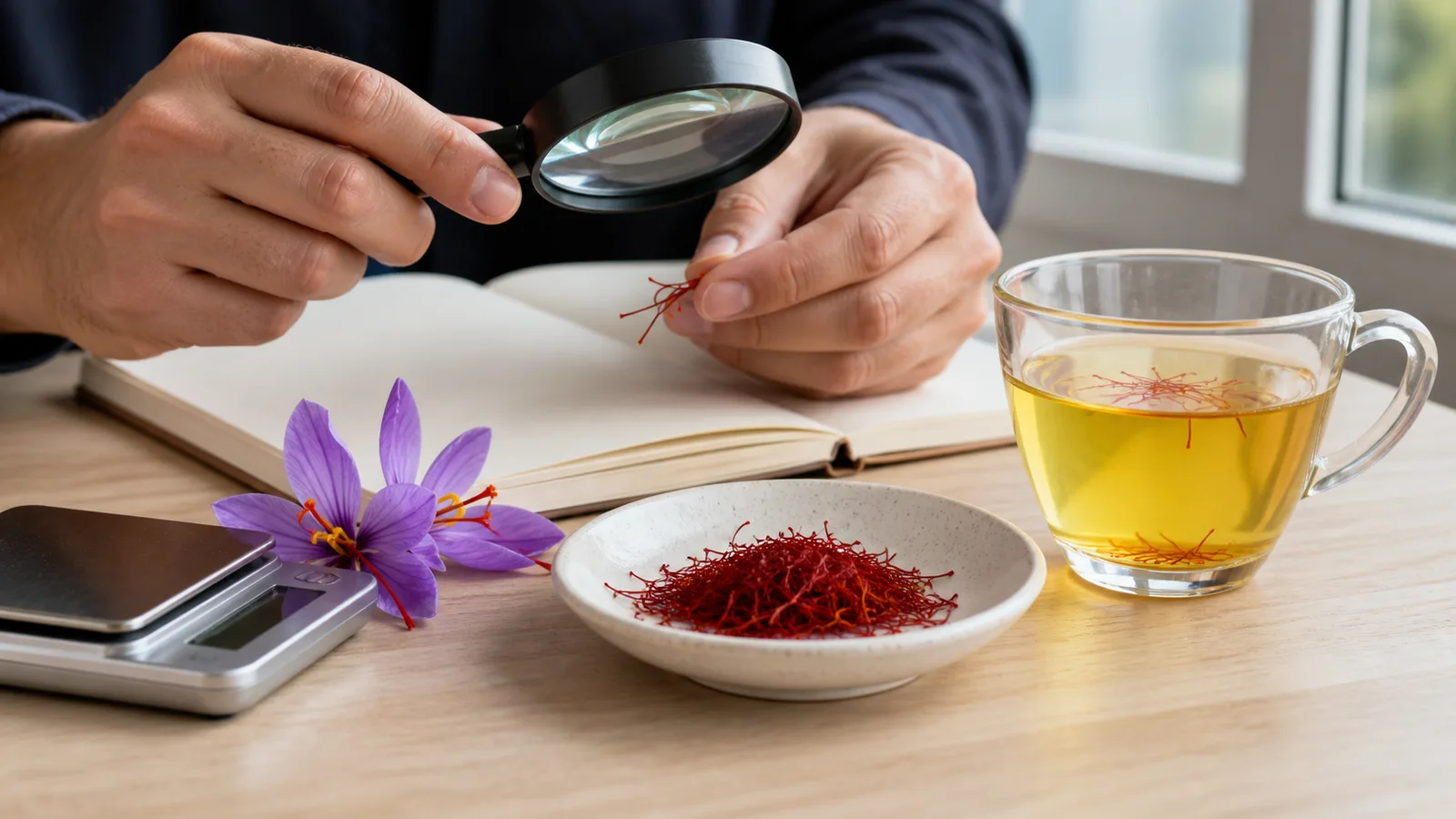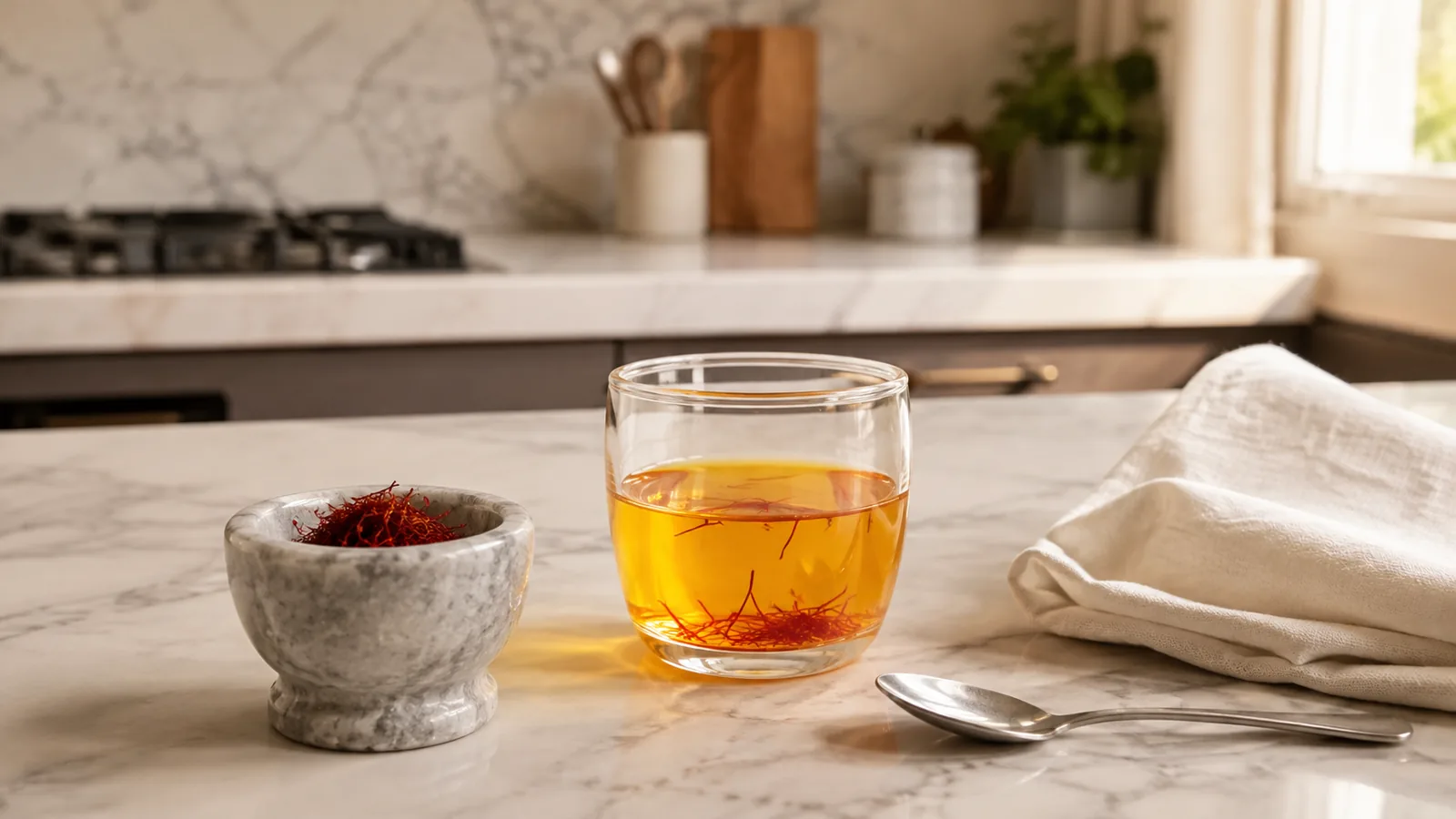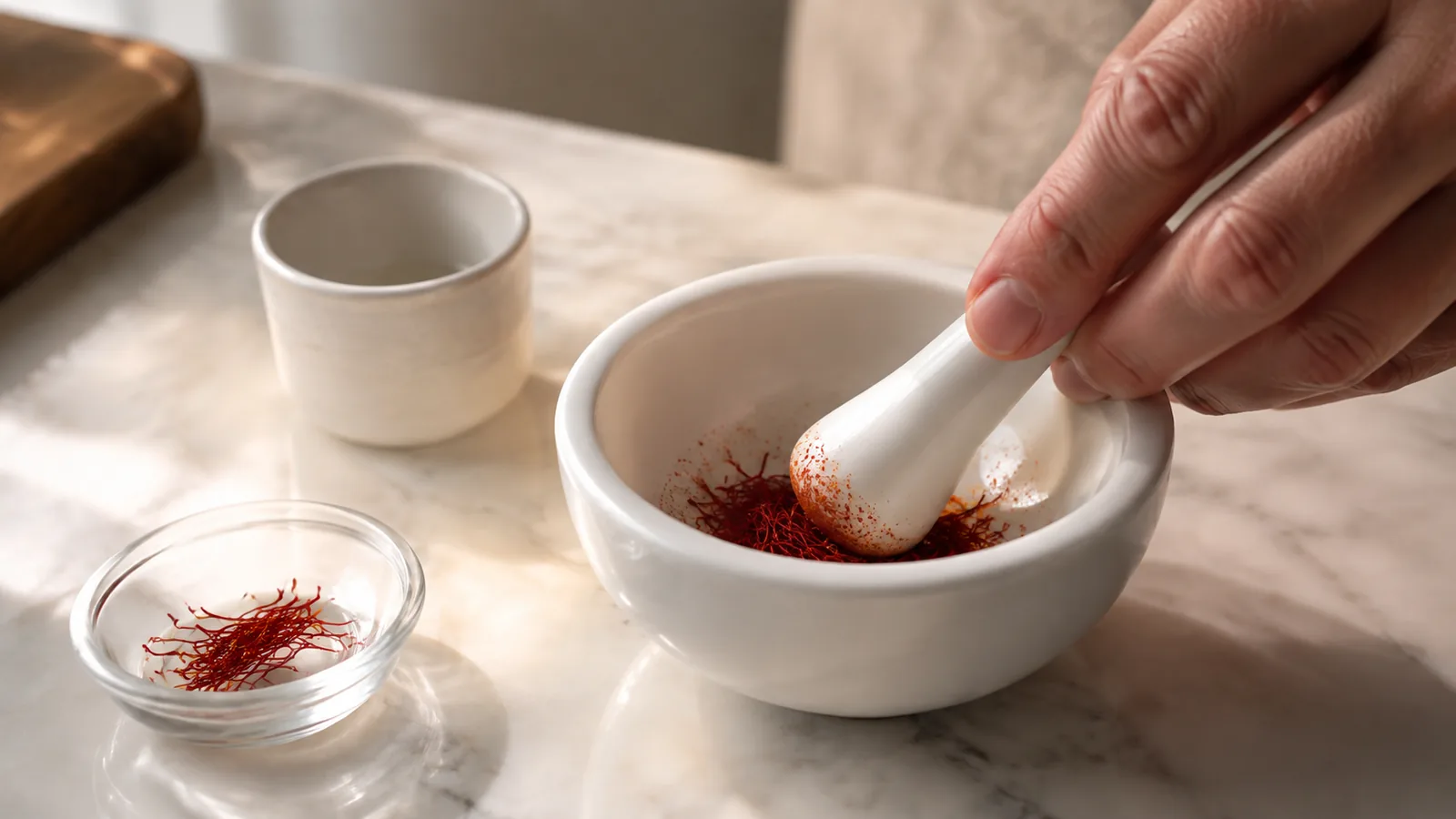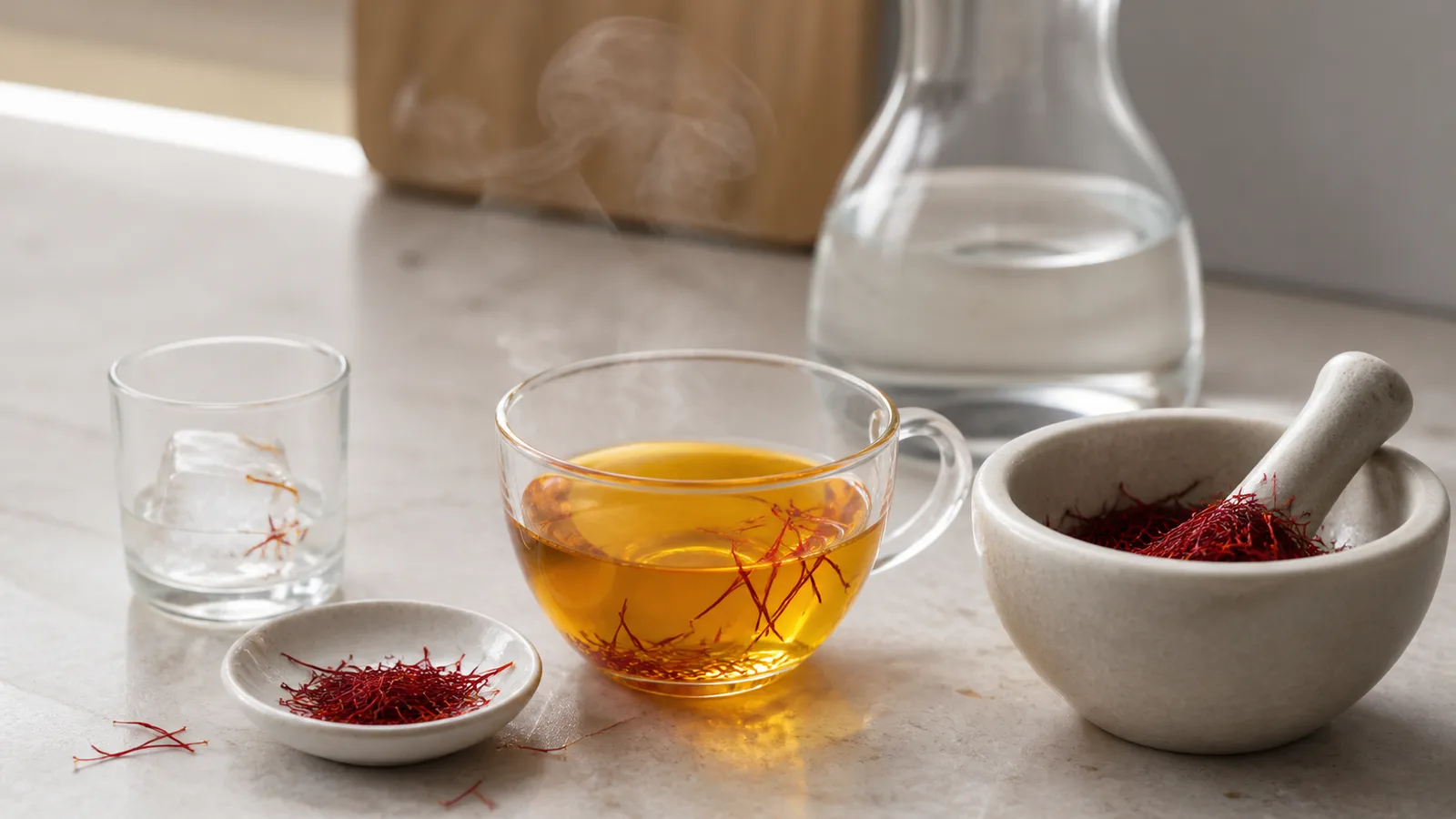
A good saffron infusion starts with genuine threads, a measured amount of warm water, and enough time for the color and aroma to open. Lightly crush the saffron, cover it with water that is hot but not vigorously boiling, and leave it covered for 15–20 minutes. The resulting saffron-infused water can be added evenly to rice, stews, sauces, drinks, and desserts.
This guide keeps the two familiar methods from the original article—warm water and melting ice—but explains what each one actually does. It also answers the practical questions behind searches such as “how to infuse saffron” and “how to make saffron color” without promising that one ritual will produce perfect results every time.
What a saffron infusion extracts
Saffron’s color, taste, and aroma do not come from the same compound. Water-soluble crocins provide the golden color, picrocrocin contributes bitterness and taste, and safranal is closely associated with the aroma. Infusing the threads disperses those components before the spice reaches the dish, so a small amount can be distributed more evenly.
A 2024 culinary study tested saffron in water, oil, and mixed systems at different temperatures and times. It found strong transfer of color compounds into water and showed that excessive heat or an unnecessarily long infusion can work against color and aroma. The practical lesson is simple: use water, avoid prolonged boiling, and add the infusion at a sensible stage of cooking. The full study is available in the peer-reviewed journal Foods.
Ingredients and equipment
For a family-size rice dish or another recipe serving four to six, use:
- 30–40 saffron threads, approximately 0.08–0.1 g
- 2 to 3 tablespoons (30–45 ml) warm water
- A small mortar and pestle
- A heat-safe cup or bowl with a cover
The old rule of “about 1/4 teaspoon” is a workable kitchen estimate, but threads settle differently and ground saffron packs more tightly. Weight is more repeatable when a small scale is available. If the recipe already specifies an amount, follow it rather than automatically increasing the saffron; too much can taste bitter or medicinal.
Method 1: how to infuse saffron in warm water
- Measure the threads. Set aside approximately 0.08–0.1 g for a dish serving four to six.
- Crush lightly. Use a clean, dry mortar to break the threads into small pieces. A completely fine powder is not required.
- Add warm-to-hot water. Pour over 2 to 3 tablespoons of water at roughly 60–80°C (140–176°F). If you do not have a thermometer, let freshly boiled water stand briefly before using it.
- Cover and wait. Cover the cup to limit aroma loss and leave it for 15–20 minutes.
- Use the whole infusion. Add both the liquid and the softened saffron particles unless a perfectly clear presentation requires straining.
The infusion should become a luminous yellow-to-orange color and smell distinctly of saffron. It should not need added dye. Very dark red-brown liquid is not the goal, and color alone cannot prove quality.
Method 2: infusing saffron with ice
The ice method is popular in Persian cooking. Place the lightly crushed saffron in a heat-safe glass, add one or two small ice cubes, cover, and let the ice melt at room temperature. Stir when it has melted, then allow another 10–15 minutes if the color is still developing.
This is a slow, cool-water extraction. It can produce attractive color, but the old claim that ice necessarily creates a stronger or longer-lasting flavor is not established by the culinary evidence cited above. Fewer ice cubes simply create a more concentrated liquid because there is less water; they do not create more saffron.
There is no need to place a cold glass over steam or use a double-boiling setup. Sudden temperature changes can crack ordinary glass, while warming the mixture changes it from an ice infusion into a warm extraction. Likewise, leaving it in the refrigerator overnight is optional rather than essential.
Warm water or ice: which method should you choose?
- Choose warm water when you want a reliable infusion in about 20 minutes. It is the clearest everyday method for rice, sauces, soups, and baking.
- Choose ice when you prefer a slower process and do not need the infusion immediately.
- Do not boil the threads for a long time in the small infusion cup. Extended high heat can reduce the qualities you are trying to preserve.
Both methods work because the final medium contains water. The quality and age of the saffron, the amount used, the volume of liquid, and the later cooking time can matter as much as the initial method.
How to use saffron-infused water
Rice and pilaf
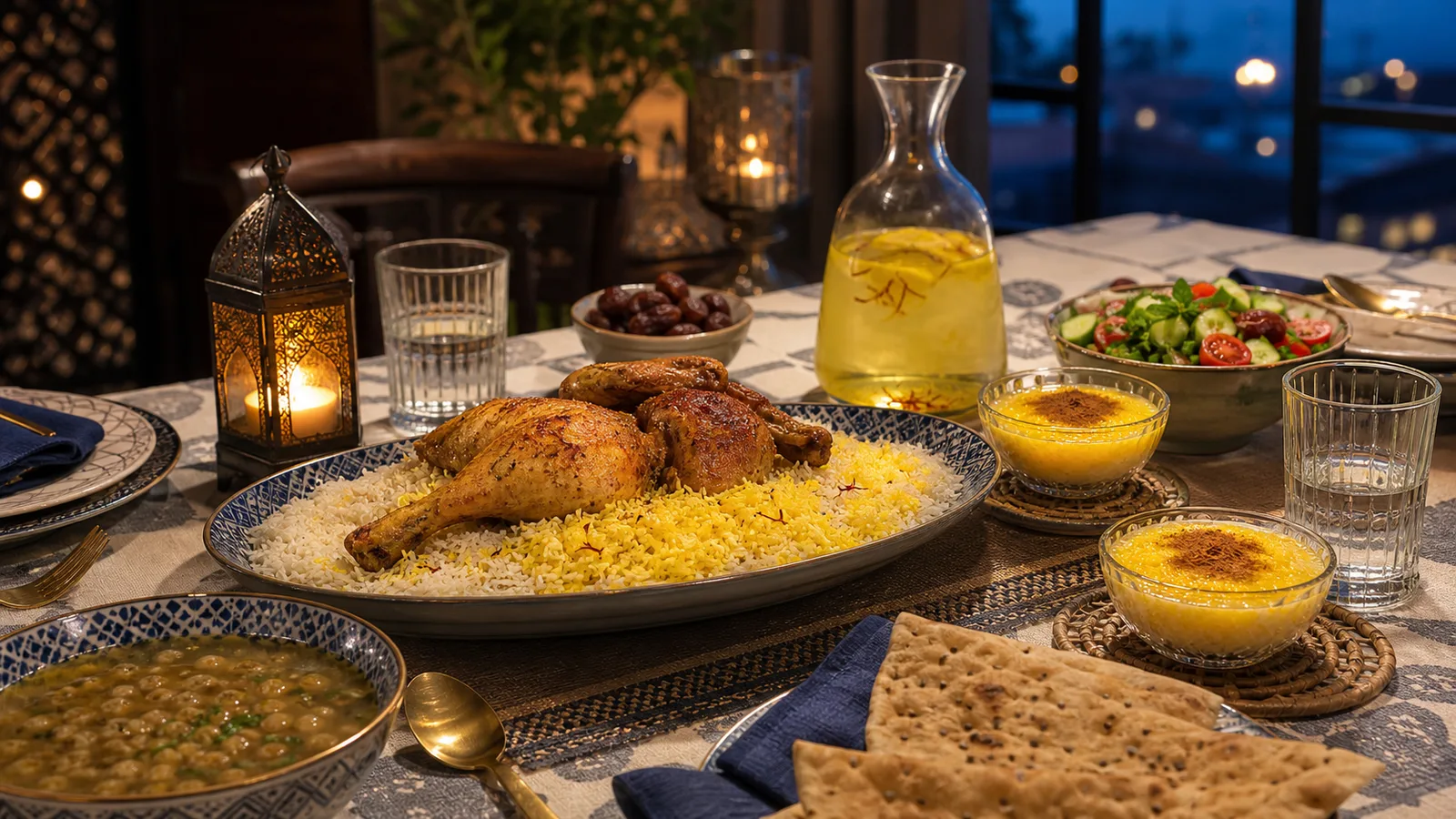
For white rice with golden streaks, mix part of the finished rice with the infusion and spoon that saffron rice over the platter. For a more even color, drizzle the liquid across the rice just before the final steaming stage. Our saffron nut pilaf recipe shows the method in a complete dish.
Stews, soups, and sauces
Add the infusion late enough to keep its aroma noticeable but early enough for it to blend with the sauce. Start with a portion, taste, and add more if needed. A small concentrated infusion is easier to control than a large cup of weak liquid.
Drinks and desserts
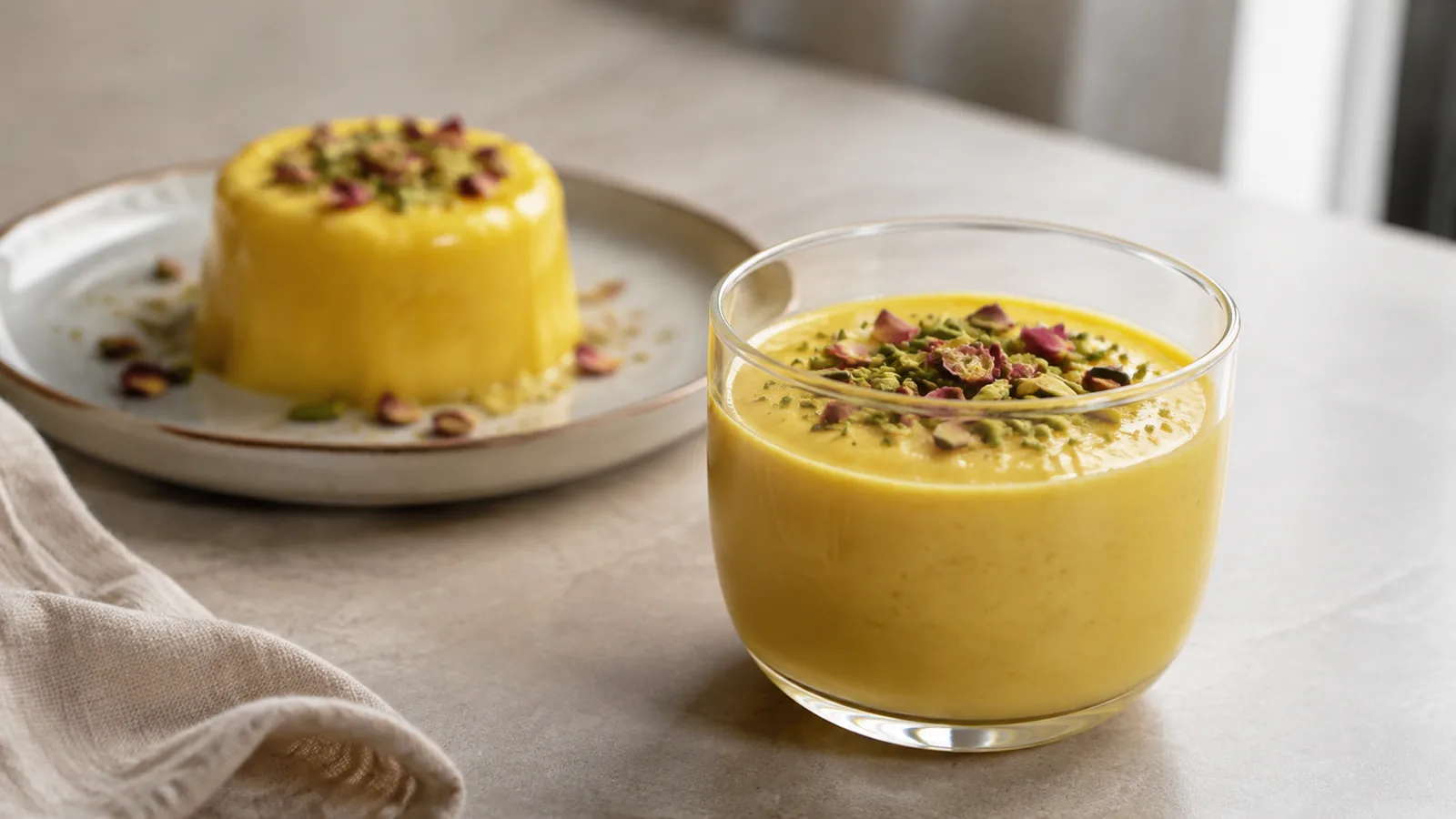
Let the infusion cool before adding it to chilled milk, lemonade, ice cream bases, or cold desserts. For a hot drink, the saffron can infuse directly in the cup; our guide to preparing saffron tea covers that use separately.
How to get better saffron color
- Use threads that still smell fresh. Long exposure to light, air, heat, and moisture weakens saffron over time.
- Crush only what you need. Smaller pieces expose more surface area, but pre-grinding a large supply also exposes it to air.
- Keep the liquid concentrated. Two or three tablespoons are easier to distribute than a full cup of pale water.
- Give it time. A quick splash of boiling water followed by immediate use is less controlled than a covered 15–20 minute infusion.
- Protect the finished color. Very long cooking and harsh heat are unnecessary once the saffron has been extracted.
- Judge aroma and taste as well as appearance. More orange color does not always mean a better final dish.
Common saffron infusion problems
The infusion stays pale
Check that the threads were lightly crushed, the water was warm, and the cup stood long enough. A very large volume of water will also look pale. Old or poorly stored saffron may have lost strength; adding food coloring would hide the problem rather than fix it.
The flavor tastes bitter
Saffron naturally has a slight bitterness, but an aggressive medicinal taste usually points to excessive spice or over-extraction in the finished dish. Dilute the infusion across more food and measure more carefully next time.
The aroma disappears during cooking
Do not leave saffron simmering uncovered for an extended period. Cover the infusion while it stands, and reserve a small portion to add toward the end when the recipe allows.
Threads float in the liquid
That is normal. Stir before use. If the visible pieces do not suit a drink or pale dessert, strain through a fine tea filter after the infusion has developed.
Storing and freezing the infusion
Freshly prepared saffron infusion has the brightest character. Make only what you expect to use, cover it, refrigerate promptly, and keep it away from strong odors. For a larger batch, pour measured portions into a clean silicone mold and freeze them, then transfer the frozen cubes to a labeled airtight container. This preserves the convenience described in the original article without leaving an open cup in the refrigerator overnight.
Label the container with the amount of saffron and water used. That matters more than the cube size: one clearly measured cube can be added to a sauce or main course without guessing how much spice it contains.
A repeatable saffron infusion
The most dependable saffron infusion is also the least complicated: measure fresh threads, crush them lightly, add a small amount of warm water, cover for 15–20 minutes, and use the finished liquid thoughtfully. Ice is a valid slower alternative, but it is not a requirement for good color.
Once the ratio and timing are consistent, adjust the amount for the dish rather than chasing a darker liquid. The aim is balanced golden color, recognizable saffron aroma, and a flavor that supports the food instead of overpowering it.