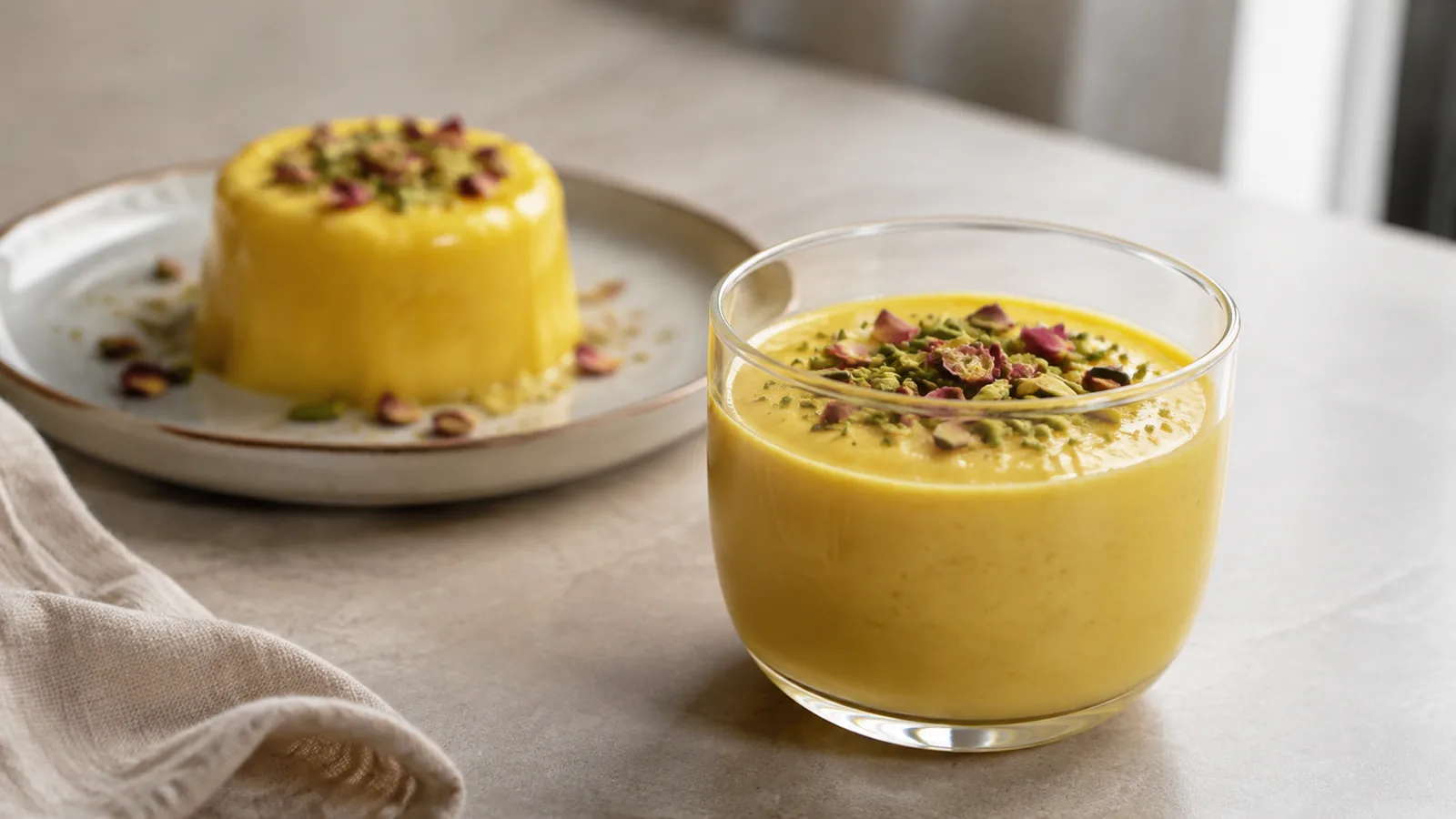
This Cardamom Saffron Cake Recipe makes a soft, gently spiced cake with a golden crumb and a fragrant saffron finish. You can serve it plain with tea, dust it lightly with sugar, or add the original recipe’s chilled saffron custard topping when you want a more elaborate dessert.
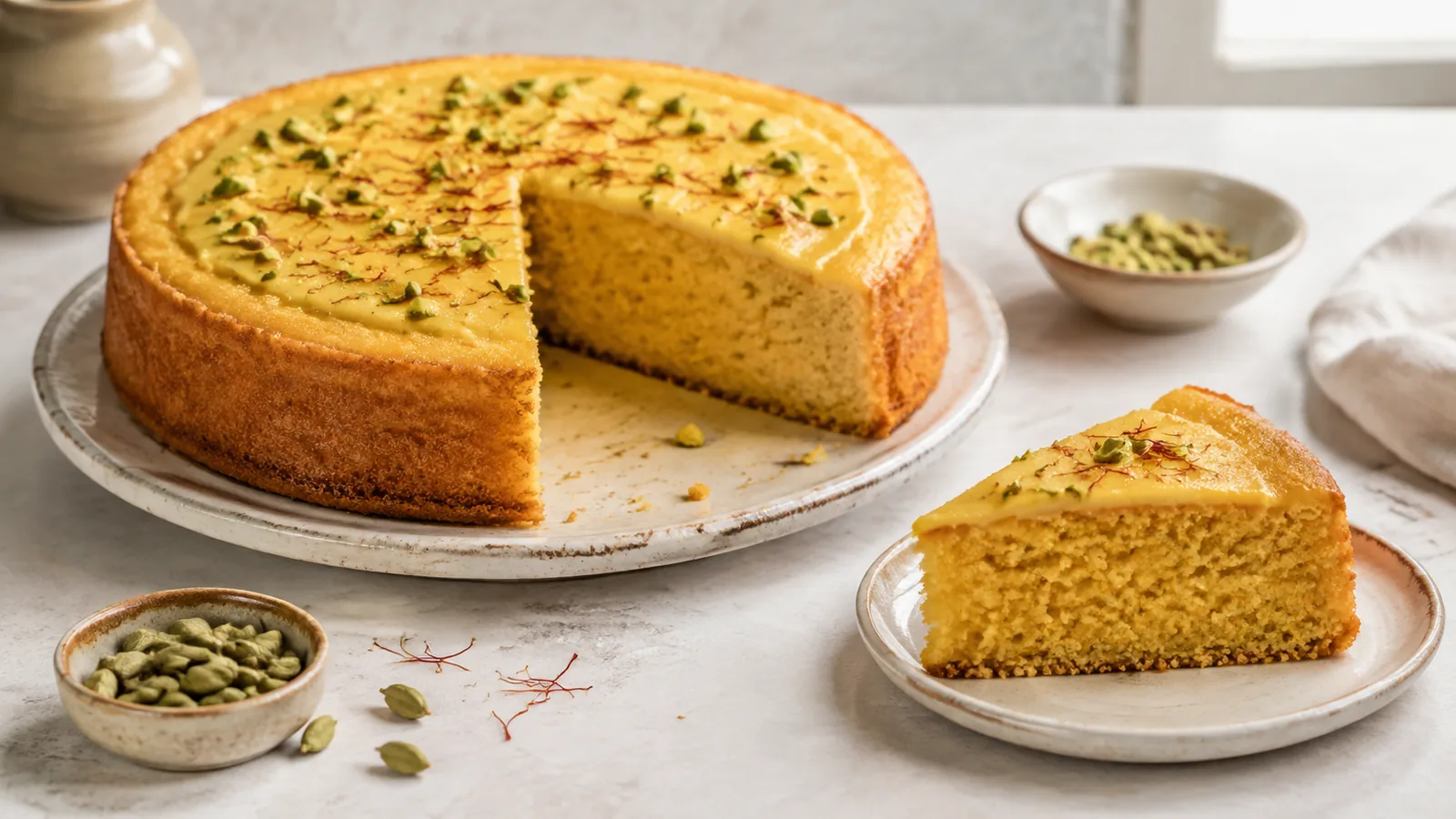
Cardamom saffron cake at a glance
The cake itself is simple: two eggs, oil, milk, flour, cardamom, and a concentrated saffron infusion. Oil keeps the crumb tender after cooling, while the cardamom supports the saffron without covering it. The optional topping turns it into a chilled celebration cake, so choose the finish before you begin and allow three hours of refrigeration if you use it.
- Pan: one 8-inch (20 cm) round or square pan
- Oven: 170°C/340°F conventional or 160°C/320°F fan
- Baking time: about 28–35 minutes
- Yield: 8 modest slices
- Cooling: about 1 hour for the plain cake; at least 3 hours in the refrigerator with the topping
Ingredients for the cardamom saffron cake
- 1½ cups (180 g) all-purpose flour
- 1 teaspoon baking powder
- 2 large eggs, at room temperature
- ½ cup (100 g) granulated sugar
- ½ cup (120 ml) neutral oil
- ½ cup (120 ml) milk, at room temperature
- 3 tablespoons strongly brewed saffron infusion, cooled
- 1 teaspoon ground cardamom
- ½ teaspoon vanilla extract
- A small pinch of salt
Measure the flour by weight if possible. If you use cups, spoon the flour into the cup and level it rather than pressing it down. Too much flour is one of the easiest ways to turn a tender saffron cake into a dry one.
Optional saffron custard topping
- 1½ cups (360 ml) milk, divided
- ½ cup (100 g) granulated sugar
- 3 tablespoons cornstarch
- 3 tablespoons strongly brewed saffron infusion
- A small pinch of ground cardamom
- ½ teaspoon vanilla extract
- 1 teaspoon powdered gelatin, optional
- 1 tablespoon cold water, only if using gelatin
The cornstarch thickens the topping on its own. Gelatin is optional and gives it a firmer, cleaner set for slicing. If you use gelatin, bloom it in the cold water first and add it only after the custard comes off the heat. Boiling bloomed gelatin with the milk is unnecessary and can weaken its setting power.
Prepare the saffron
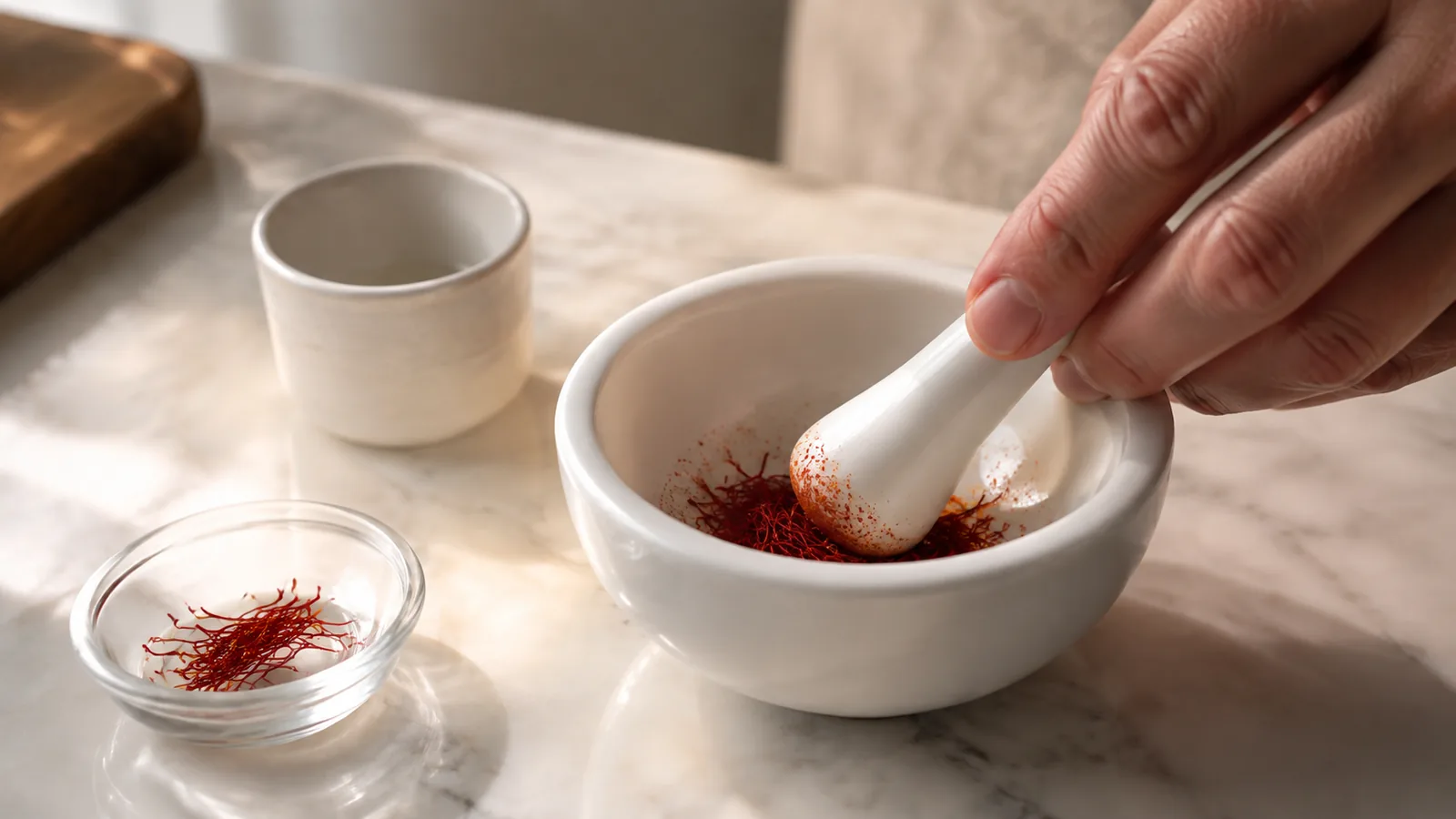
Crush a generous pinch of saffron threads in a small mortar. Add 6 tablespoons of warm water and leave it to steep for 10–15 minutes, then cool it before mixing the batter. This makes enough concentrated infusion for both the cake and its topping. If you are serving the cake plain, prepare only 3 tablespoons.
The liquid should be warm, not vigorously boiling. Crushing and steeping distribute the saffron far more evenly than adding whole dry threads to the flour. Our guide to brewing saffron before cooking explains the method and the signs of a balanced infusion.
How to make cardamom saffron cake
1. Prepare the pan and oven
Heat the oven to 170°C/340°F conventional or 160°C/320°F fan. Grease the pan and line its base with baking paper. Bring the eggs and milk to room temperature; they combine more smoothly with the oil and are less likely to make the batter look curdled.
2. Mix the dry ingredients
Whisk the flour, baking powder, cardamom, and salt together in a medium bowl. One thorough whisk is enough to distribute the leavener. Repeatedly sifting the flour is not required for a good crumb.
3. Whisk the eggs and sugar
In a second bowl, beat the eggs, sugar, and vanilla for 3–4 minutes, until the mixture is paler, slightly thickened, and falls from the whisk in a ribbon. This incorporates air and helps the modest amount of baking powder lift the cake.
4. Add the oil, milk, and saffron
With the mixer on low, add the oil in a thin stream. Mix in the milk and 3 tablespoons of cooled saffron infusion. Stop as soon as the mixture looks even; prolonged beating after this point does not improve the cake.
5. Fold and bake
Add the dry ingredients in two portions and fold gently with a spatula until no flour pockets remain. Scrape the batter into the prepared pan and level the surface. A single light tap can settle a large hidden air pocket, but repeatedly banging the pan will knock out the air you just created.
Bake for 28–35 minutes. Begin checking near the lower end of the range because ovens and pans differ. The cake is ready when the center springs back lightly and a skewer inserted in the middle comes out clean or with a few moist crumbs. Cool it in the pan for 10 minutes, then turn it onto a rack.
Make the saffron topping
If using gelatin, sprinkle it over 1 tablespoon of cold water and leave it undisturbed for 5 minutes. In a saucepan, whisk the cornstarch and sugar with about ½ cup of the cold milk until completely smooth. Add the remaining milk, saffron infusion, and cardamom.
Cook over medium-low heat, stirring continuously and scraping the corners of the pan. Once it begins to bubble gently, cook for another minute so the starch loses its raw taste. Remove the pan from the heat, stir in the vanilla, and then stir in the bloomed gelatin, if using, until it dissolves.
Let the topping cool for several minutes, stirring occasionally, until it is warm and thick but still spreadable. Put the completely cooled cake back in its clean pan or inside a cake ring, spread the topping evenly, and refrigerate it for at least 3 hours. Do not pour hot custard over a warm cake; the crumb can become soggy and the topping may slide.
Serving ideas
For a plain cake, a few chopped pistachios or a light dusting of powdered sugar is enough. With the saffron custard topping, keep the garnish restrained so the cardamom and saffron remain clear. Unsalted pistachios, a few dried rose petals sold for culinary use, or thin curls of white chocolate all work.
Cut a chilled topped cake with a clean knife, wiping the blade between slices. Let each slice sit at room temperature for 10–15 minutes before serving; the crumb and aroma are more expressive when the cake is not refrigerator-cold. If you prefer another approach to the same flavor family, see our broader saffron cake recipe.
Troubleshooting the recipe
The cake is dense
Check that the baking powder is active, avoid compacting the flour, and fold only until the batter is combined. A cold, poorly emulsified mixture can also reduce the lift, which is why the eggs and milk should be close to room temperature.
The saffron flavor is weak
Use genuine, aromatic threads and crush them shortly before steeping. Adding more dry threads directly to the batter is less effective than making a concentrated infusion. Cardamom can dominate quickly, so measure it rather than pouring by eye.
The topping has lumps
Always dissolve the cornstarch in cold milk before heating. If a few small lumps remain, pass the warm custard through a fine sieve before spreading it. Keep stirring while it cooks, especially along the base and corners of the saucepan.
Storage
Keep the plain cake covered at cool room temperature for up to two days, or refrigerate it in warm weather. A cake with the milk topping must be refrigerated promptly in a covered container and is best eaten within three days. Bring a slice out briefly before serving, but do not leave the custard-topped cake at room temperature for extended periods.
The result is a cardamom saffron cake that still respects the original proportions and chilled sauce, but gives each step a clear purpose. Make it plain for an everyday tea cake or add the topping for a dessert with a smooth, fragrant finish.