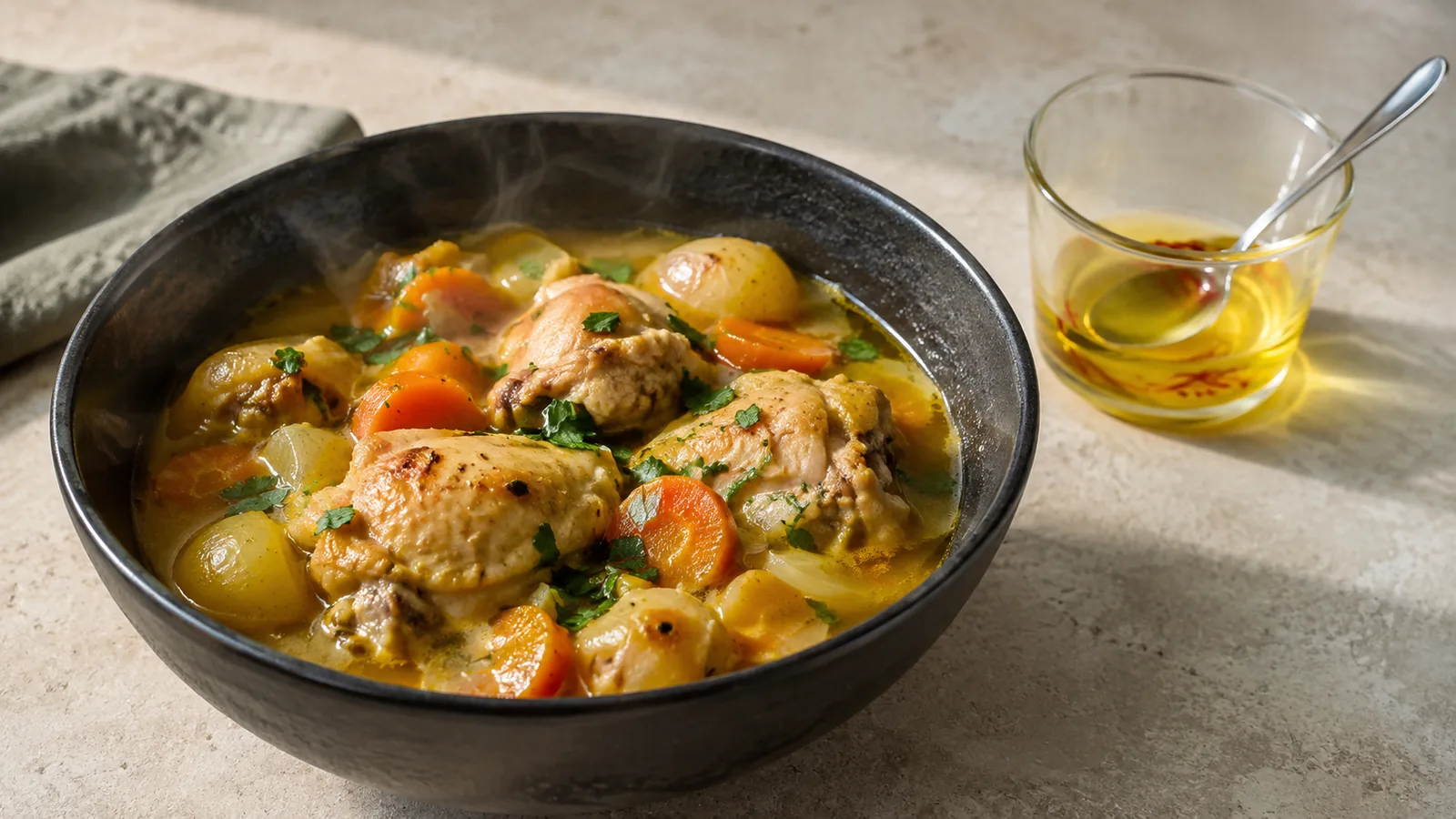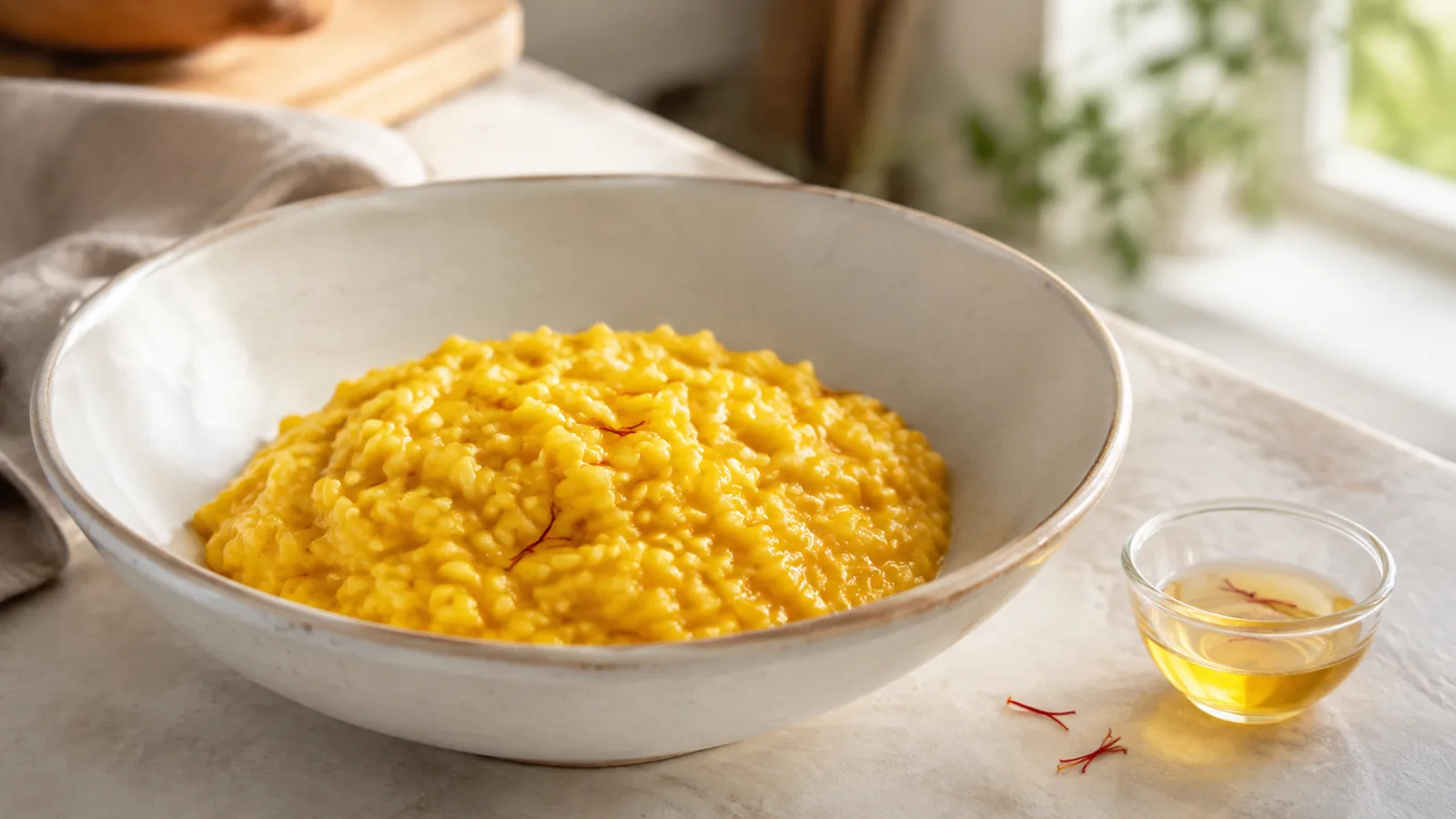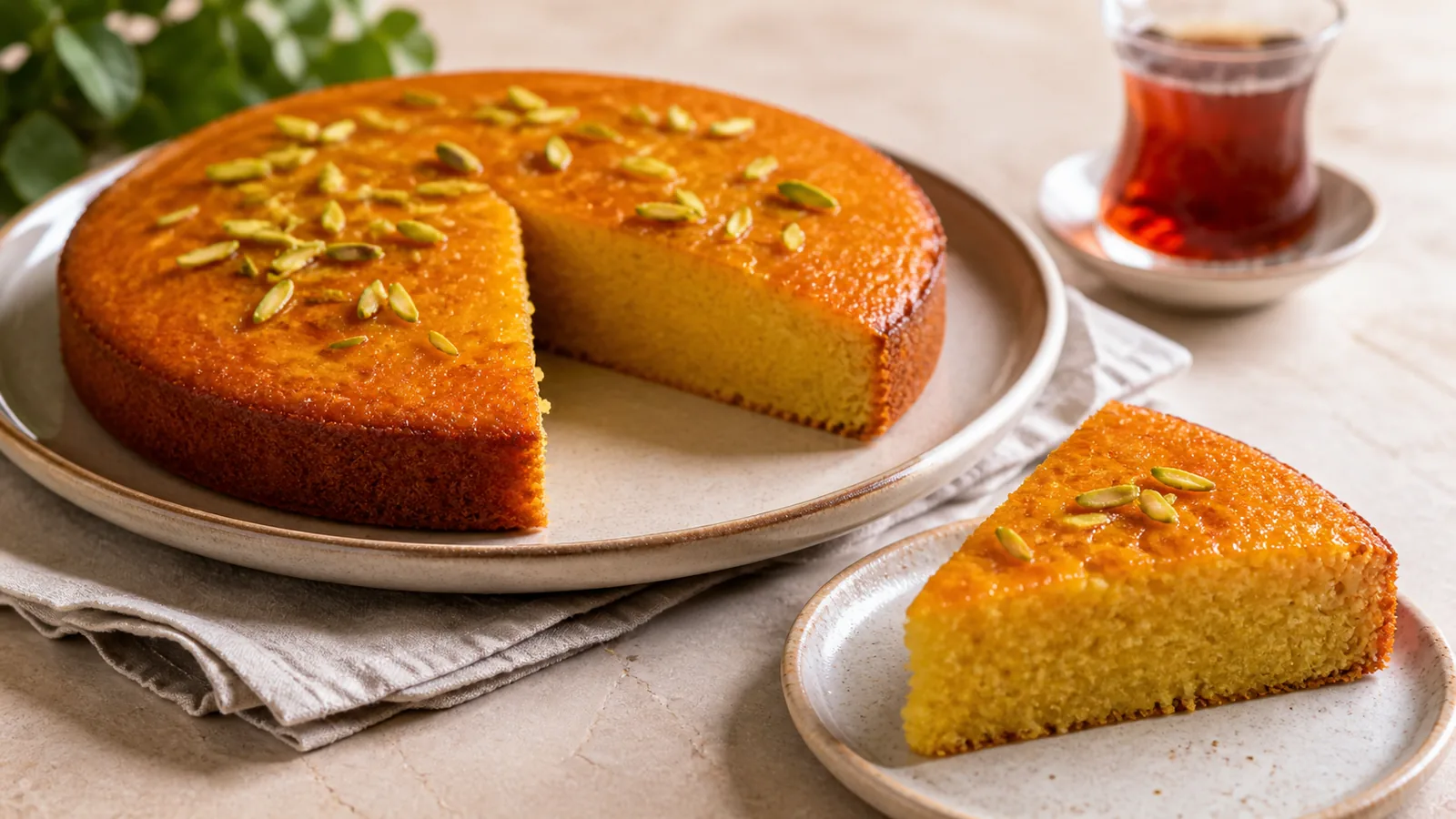
Saffron cake is a simple golden tea cake made with eggs, milk and oil, scented by a concentrated saffron infusion. Its crumb is soft but sturdy enough to slice, and the flavour is clearer after the cake has cooled. This version serves four to five people and bakes in one 20cm/8-inch round tin.
What is saffron cake?
The term covers several styles. Some Arabic saffron cake recipes refer to a milk-soaked sponge, while Persian home versions are often plain oil cakes served with tea. The inherited recipe on this page is the second kind: saffron goes directly into the batter, with an optional light glaze after baking.
The method resembles an everyday sponge cake, but saffron changes both its aroma and natural colour. Good saffron baking uses an infusion rather than dry threads, so the spice disperses through the crumb.
Ingredients
- 2 cups plain flour, about 250g
- 2 teaspoons baking powder
- 4 large eggs, at room temperature
- 1 1/2 cups sugar, about 300g
- 1/2 cup lukewarm milk, 120ml
- 1/2 cup neutral oil, 120ml
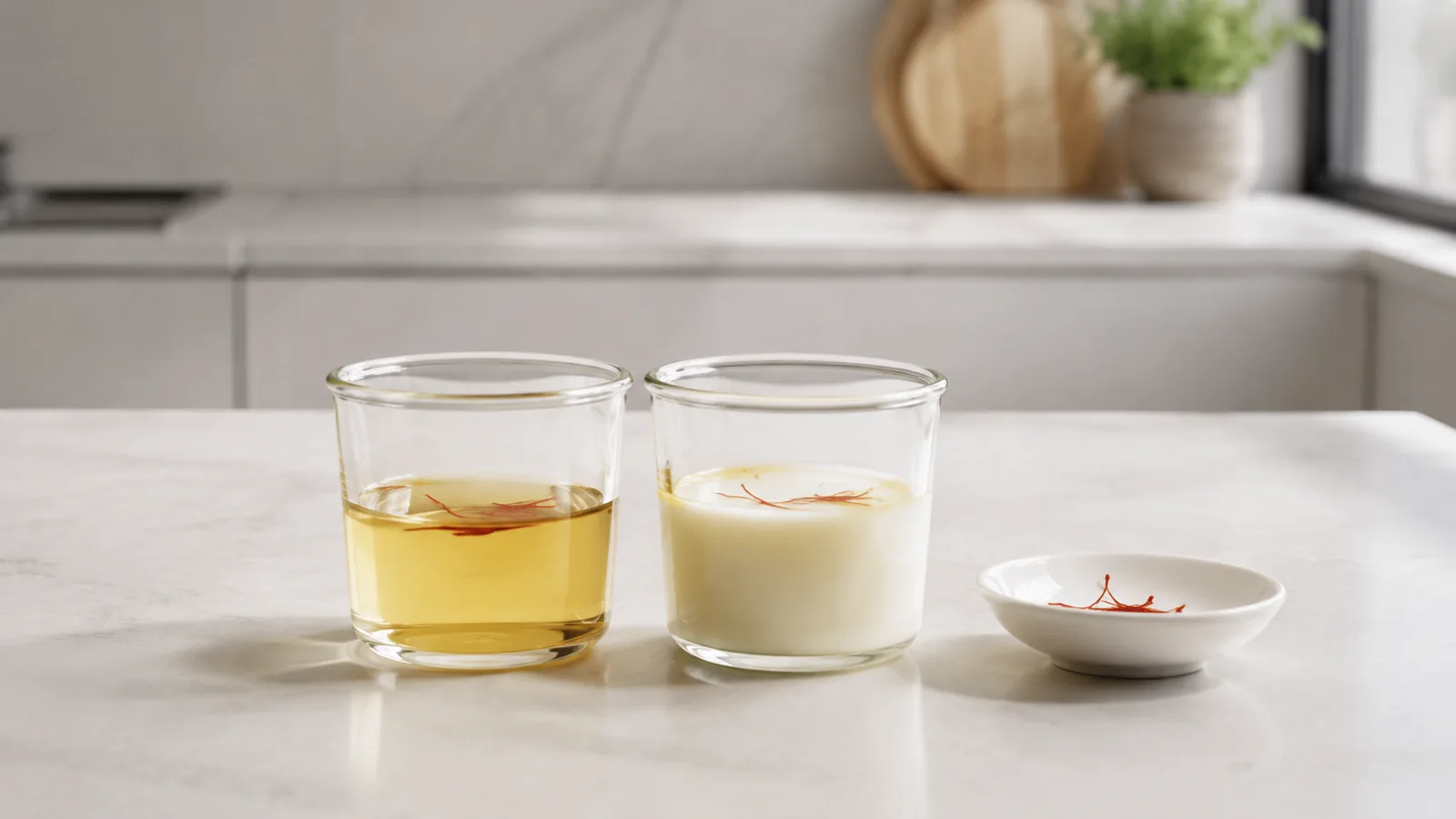
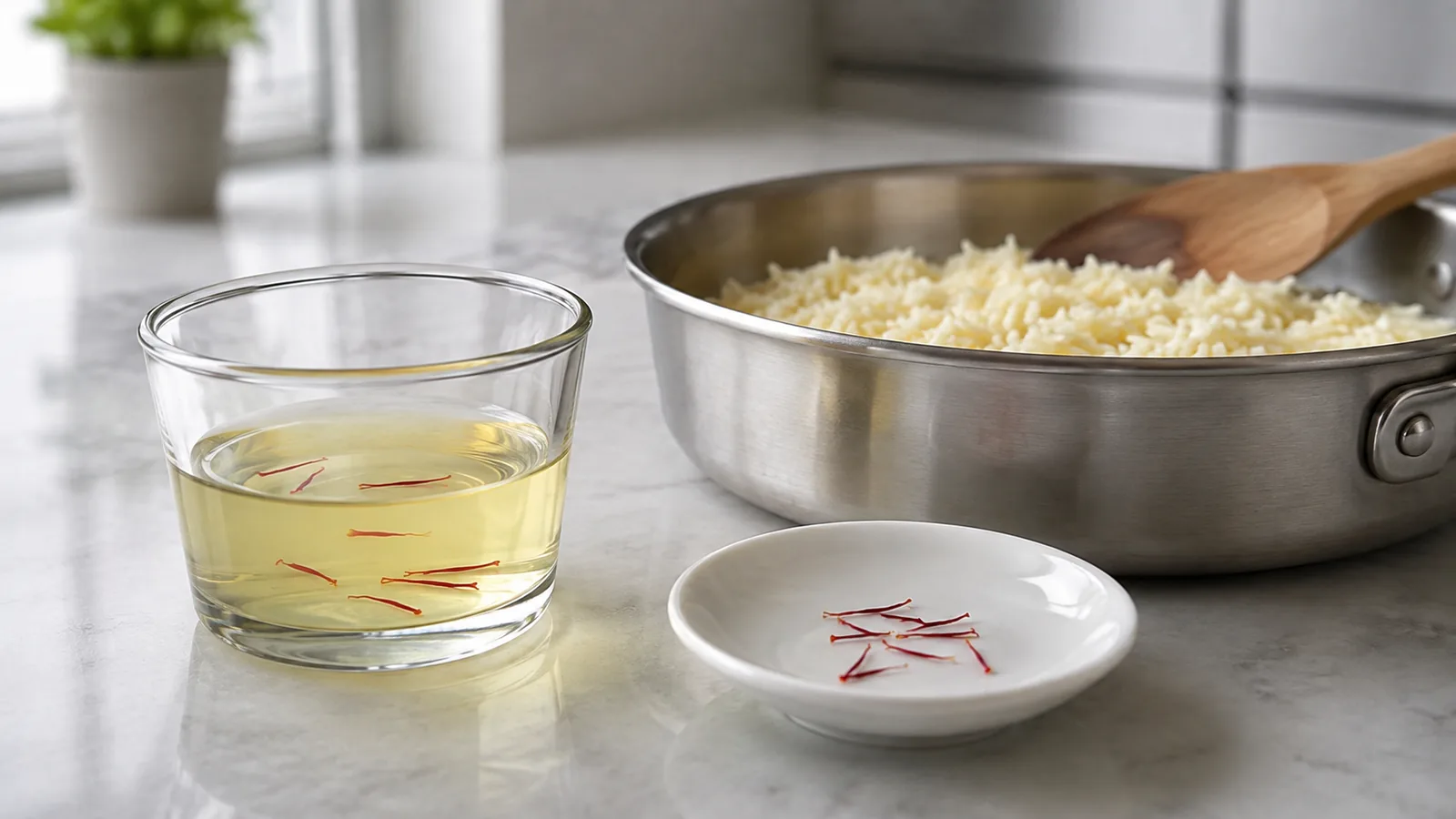
- 2–3 tablespoons concentrated brewed saffron, cooled
- 1/2 teaspoon vanilla extract
- finely grated zest of 1/2 orange, optional
A little honey can replace one tablespoon of the sugar if you like, but a large substitution changes the liquid balance and browning. Brew the saffron before measuring it; our saffron infusion guide explains how to make a concentrated batch.
Prepare the tin and oven
Heat the oven to 180°C/350°F. Lightly grease the tin and line its base with baking paper. Position a rack in the centre of the oven so the top and bottom colour evenly.
Sift the flour and baking powder together. Once is enough to remove lumps and distribute the raising agent; repeating it is harmless, but three siftings are not required for a tender cake.
Whip the eggs and sugar
Put the eggs and sugar in a large bowl. Beat with an electric mixer for 4–5 minutes, until pale, thick and increased in volume. A ribbon of mixture should remain on the surface briefly when the beaters are lifted.
Add the milk, oil, vanilla, brewed saffron and orange zest, if using. Mix on low speed only until the colour is even. The liquids should be lukewarm or cool, never hot enough to cook the eggs.
Fold in the flour
Add the flour mixture in three portions. Fold each one with a spatula, reaching to the bottom of the bowl, and stop when the last dry streak disappears. Overmixing after flour is added develops gluten and knocks out the air from the eggs, giving a tight crumb.
Pour the batter into the prepared tin and level it lightly. Tap the tin once on the worktop to release only the largest air pocket.
Bake for 40 to 45 minutes
Bake at 180°C/350°F for 40–45 minutes. Avoid opening the oven during the first 30 minutes. The cake is ready when the centre springs back gently and a skewer inserted in the middle comes out clean or with a few moist crumbs.
Cool in the tin for 10 minutes, run a thin knife around the edge and turn onto a rack. Let it cool completely before glazing or cutting. A hot cake is fragile and its saffron aroma is harder to judge.
Optional saffron glaze
The original introduction mentions a sauce, although its ingredient list and method do not include one. If you want that finish, whisk 1 cup icing sugar with one tablespoon cooled saffron infusion and enough milk or lemon juice—added a teaspoon at a time—to make a thick glaze.
Spoon it over the fully cooled cake and allow it to set for 20 minutes. For a less sweet result, skip the glaze and dust the surface very lightly with icing sugar, or serve the cake plain.
Keeping the crumb soft
- Measure flour without packing it into the cup.
- Bring eggs to room temperature so they whip to a stable foam.
- Use a concentrated saffron infusion rather than adding a large volume of water.
- Fold after adding flour; do not continue beating.
- Begin checking at 40 minutes, because a dry skewer plus a deeply browned edge can mean the cake has gone too far.
Serving and storage
Slice the cake once cool and serve with tea, coffee, fruit or plain yogurt. Pistachios or thin orange strips can be scattered over the glaze, but they are optional rather than necessary to identify the flavour.
Keep unglazed saffron cakes covered at room temperature for up to two days. Refrigerate a milk-glazed cake in warm conditions, bringing slices back toward room temperature before serving. The cake can also be wrapped well and frozen for up to one month.
This saffron cake recipe succeeds when the eggs carry the structure and the saffron remains clear: whip first, fold gently, and do not bake longer than the centre needs.