


Saffron for cooking begins long before the threads reach a saucepan. Each red stigma is separated from a crocus flower, dried with care, and protected from light and moisture before it is ready to season rice, soup, sauces, desserts, or tea. Understanding that journey makes it easier to buy good threads, store them well, and draw out their color and aroma in the kitchen.
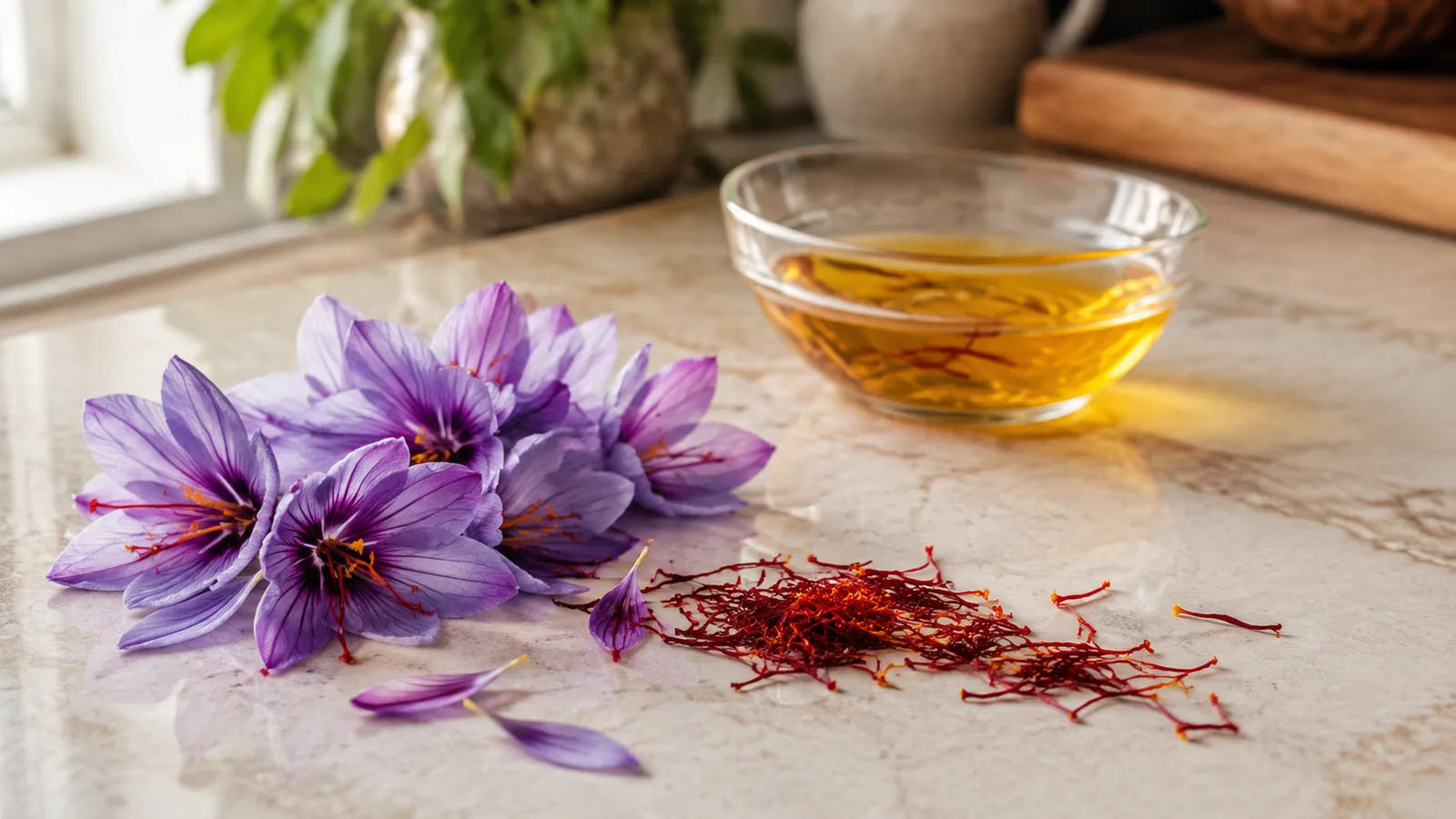
How saffron travels from flower to thread
The culinary spice comes from the stigmas of Crocus sativus. Each flower carries only three red stigmas, so harvesting is careful work rather than a mechanical shortcut. Growers collect the flowers during the short flowering season, then separate the stigmas from the petals and the rest of the flower.
Fresh stigmas are not yet the dry saffron threads sold for cooking. They contain moisture and must be dried promptly and evenly. Drying reduces that moisture, helps stabilize the spice, and shapes the balance of color, taste, and aroma that develops in the finished threads. Too little drying leaves the product vulnerable to deterioration; excessive heat can flatten its character.
Harvesting saffron flowers
Picking the flowers
Saffron flowers are usually gathered during the autumn bloom. Timing depends on the growing region and weather, so there is no single calendar date for every farm. Flowers are handled gently to keep soil, damaged plant matter, and other contaminants away from the stigmas. Prompt processing also matters because a pile of fresh flowers is delicate and short-lived.
Separating the saffron threads
After picking, workers open each flower and remove its stigmas by hand. The red portions are the valuable culinary material. Some commercial grades include more of the yellow style than others, which affects appearance and the concentration of the red thread material. Clean working surfaces and careful sorting are more important than speed at this stage.
This separation step is sometimes translated as “wrapping” the flowers, but that wording can be misleading. The flowers are not wrapped for storage. They are opened so the stigmas can be detached, sorted, and prepared for drying.
Drying saffron threads
Producers use several controlled methods to dry saffron, including warm-air systems, dehydrators, ovens, and traditional tray methods. Temperature, airflow, thread depth, humidity, and time work together; a temperature alone cannot guarantee a good result. Professional processors monitor the batch so the threads dry evenly without scorching.
Warm-air and dehydrator methods
A food dehydrator or purpose-built dryer offers steady airflow and controlled heat. The stigmas are spread in a thin layer on food-safe trays so air can move around them. A small, even layer dries more predictably than a deep pile. Commercial conditions should be validated for the equipment and batch rather than copied from a generic kitchen timetable.
Oven drying
Low-temperature oven drying is another established approach, but an ordinary home oven can fluctuate and create hot spots. Anyone drying home-grown stigmas should use clean food-safe trays, verify the actual temperature with a thermometer, and watch the threads closely. They should become dry and lightweight, not darkened or burnt.
Traditional tray drying
Some producers dry threads on fine mesh or clean trays with carefully managed warmth and ventilation. Simply leaving fresh stigmas uncovered in a damp room is not the same thing. Uncontrolled “natural drying” can be inconsistent because room humidity, dust, and airflow vary. For a closer comparison of the approaches, see our guide to the best methods for drying saffron.
If you buy packaged saffron, drying has already been completed. There is no benefit in reheating the threads at home. Extra heat can cost aroma, and it cannot correct poor processing or contamination that occurred earlier.
How to store saffron threads
Once dry, saffron needs protection from light, air, humidity, heat, and strong odors. Put the threads in a clean, dry, airtight container, ideally one that blocks light. Keep it in a cool cupboard away from the stove, dishwasher, sunny window, and other sources of warmth or steam.
- Keep the threads dry: use a dry spoon and close the container promptly.
- Limit light: choose an opaque container or keep a clear jar inside a dark cupboard.
- Avoid heat swings: a stable pantry location is better than a shelf beside the oven.
- Protect the aroma: keep saffron away from coffee, spice blends, and other strongly scented foods.
- Label the package: note the purchase or packing date so older stock is used first.
Do not add a loose moisture absorber unless it is specifically approved for use with food, remains intact, and cannot be mistaken for an ingredient. Good dry handling and a well-sealed container are normally the simpler safeguards in a home kitchen. Our detailed article on storing saffron and preserving its quality covers containers, ground saffron, refrigeration, and freezing in more depth.
How to prepare saffron for cooking
Whole threads keep their identity visible and let you control the grind. For most recipes, take only the amount you need and crush it in a small mortar. A pinch of sugar or coarse salt can provide friction, but use salt only when it suits the dish.
Place the crushed saffron in a small bowl and add a little warm water, milk, or broth. Let it steep until the liquid becomes deeply colored and fragrant, then add both the liquid and the softened saffron to the recipe. Warm liquid extracts the spice more evenly than scattering dry threads into a large pot. It should be warm rather than aggressively boiling, which gives you more control over the aroma.
When to add it
Timing depends on the dish. In rice, part of the saffron infusion can color a small portion that is folded or spooned over the finished rice. In soups, braises, and sauces, adding the infusion during cooking distributes the flavor. A small reserved portion added nearer the end can give a brighter aroma, provided the liquid and handling are food-safe.
Saffron is potent, but the right amount is not universal. The quantity depends on the number of servings, the recipe, the grade of saffron, and the desired intensity. Begin modestly. Adding more is easy; removing a medicinal or bitter edge from an over-saffroned dish is not.
Choosing saffron for cooking
Look for dry, distinct threads with a predominantly deep red appearance and a clean, characteristic aroma. A few visual clues can be useful, but a home inspection cannot certify origin, purity, or chemical quality. Laboratory testing and reliable traceability carry more weight than dramatic water, flame, or taste demonstrations.
Powder can be convenient, yet it is harder to assess by sight and loses exposed aroma more readily. If you buy it, choose a sealed product from a seller that identifies the saffron clearly. Whether you buy threads or powder, an implausibly cheap offer deserves caution because genuine saffron requires substantial hand work.
A practical routine from jar to dish
- Store the dry saffron in a tightly closed container in a cool, dark cupboard.
- Measure only what the recipe needs with clean, dry utensils.
- Crush the threads shortly before use rather than grinding a large batch in advance.
- Steep the crushed saffron in a small amount of warm liquid.
- Add the entire infusion at the point that suits the dish, then taste before increasing the amount.
The flower-to-thread process explains why saffron deserves thoughtful handling, but using it need not be complicated. Protect the dry threads, prepare a fresh infusion, and give the spice a clear role in the recipe. Those habits do more for everyday results than elaborate tests or rigid rules.

![Exporting Saffron to Turkey + Price Guide [Complete 0 to 100]](https://img.rowhanisaffron.com/20260827003933/saffron-export-turkey-quality-inspection.webp)



