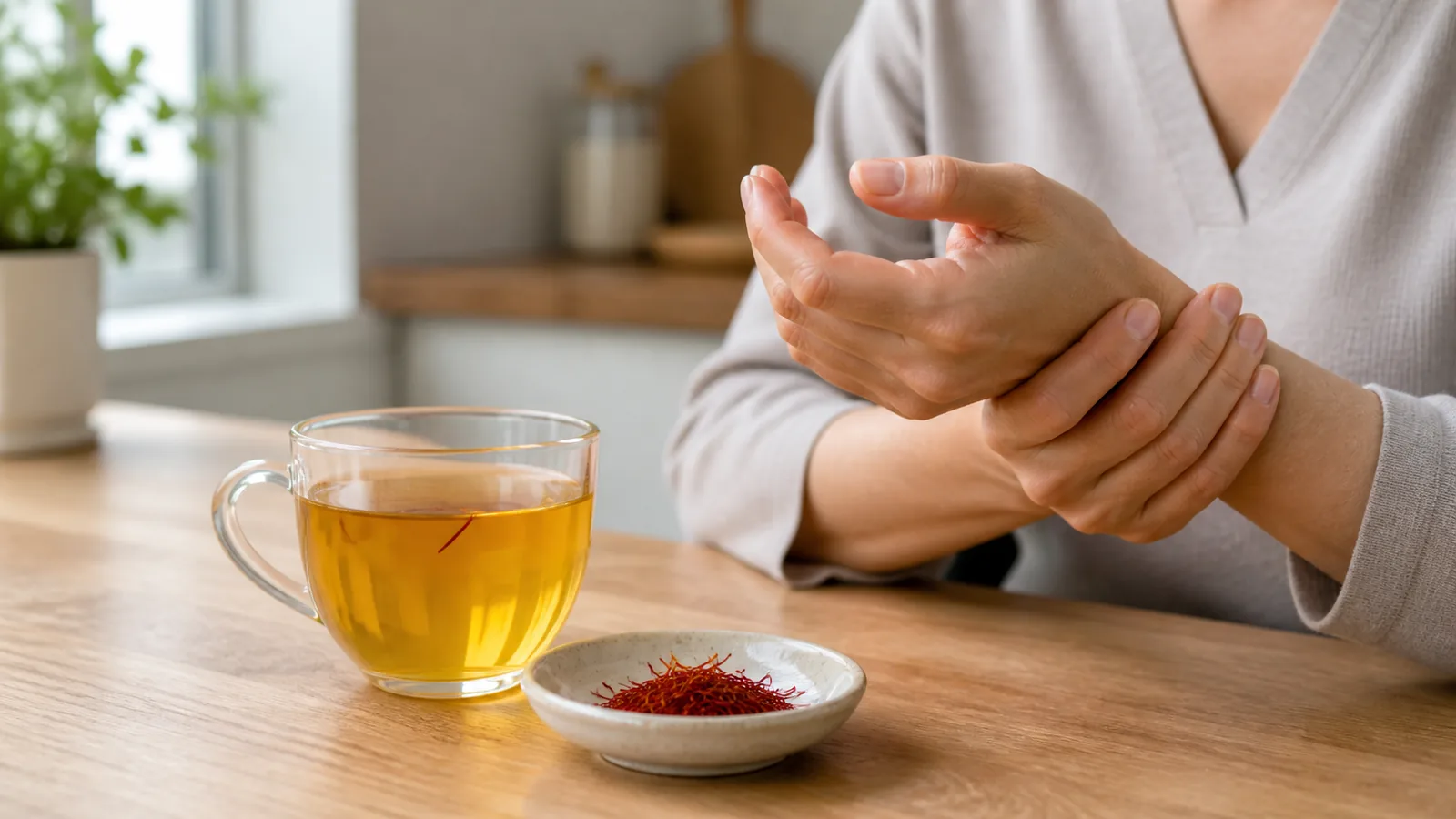
Research on saffron for mental health is promising but narrower than many headlines suggest. Pooled trials report improvements on some self-rated depression and anxiety scales, while clinician-rated measures have not shown the same clear effect. The studies generally test standardized supplements for several weeks—not a pinch in food or an occasional cup of tea.
Saffron is a popular spice sometimes marketed as a “natural herb” with health benefits, a unique color, and a delightful taste. Color and taste are straightforward culinary qualities; mental-health claims need a higher standard. Saffron is not a replacement for psychotherapy, prescribed medication, crisis support, or an individualized treatment plan. Anyone considering a supplement for depression, anxiety, bipolar disorder, or another diagnosed condition should discuss it with a qualified clinician first.
What the current evidence says
A 2026 GRADE-assessed systematic review and meta-analysis included 34 randomized controlled trials with 1,769 adults. Saffron supplementation improved scores on the self-reported Beck Depression Inventory and Beck Anxiety Inventory compared with controls. It did not produce significant pooled effects on the clinician-rated Hamilton Depression or Hamilton Anxiety scales, or on the Profile of Mood States.
The review rated the overall certainty as moderate, but variation between studies was very high. Trials differed in participants, saffron products, doses, duration, comparison groups, and outcome measures. The authors described saffron as a possible complementary intervention and called for better trials because the self-report and clinician-rated findings did not agree. Complementary means considered alongside standard care, not instead of it.
An earlier 2019 meta-analysis of 23 studies also found favorable pooled effects for depressive and anxiety symptoms, while identifying publication bias and limited regional diversity. An umbrella review later found improvement on one depression scale but not others. This is a genuine signal, not a settled conclusion.
Is saffron good for depression?
The accurate answer is that saffron for depression has encouraging short-term trial evidence, especially on self-reported symptoms, but it is not established as a stand-alone treatment. Most research concerns adults with mild-to-moderate symptoms and uses standardized preparations. It does not show that every product works, that effects persist long term, or that saffron suits every form of depression.
Searches for “saffron depression” and “saffron and depression” often lead to claims that the spice works like an antidepressant. That comparison is too simple. Some small trials compared a saffron product with a medicine, but a small non-inferiority finding is not proof that a supplement can replace routine care across diverse patients.
Saffron benefits for mental health should therefore be described as possible symptom effects under research conditions. Research on saffron for mood and emotional well-being does not establish guaranteed recovery, prevention of relapse, or a reason to stop treatment.
Can saffron help with anxiety or stress?
Saffron for anxiety has also been studied. The 2026 review found a pooled improvement on the self-rated Beck Anxiety Inventory but not the clinician-rated Hamilton Anxiety scale. That mixed pattern means saffron anxiety claims need the same caution as depression claims.
Can saffron help with anxiety? It may help some adults’ self-reported symptoms in the short term, but current evidence cannot predict an individual response. “Is saffron good for anxiety?” is not answered by a single average effect, especially when anxiety can reflect generalized anxiety disorder, panic, trauma, obsessive-compulsive symptoms, medication effects, substance use, medical illness, or temporary stress.
Saffron for stress has been examined in healthy adults with subclinical low mood or stress as well as in clinical groups. Those populations are not interchangeable. Feeling calmer during a four- or eight-week trial does not establish stress-relieving properties or treatment for an anxiety disorder.
Is saffron good for anxiety and depression together? The same evidence limits apply whether a search says saffron for anxiety and depression, saffron anxiety depression, or saffron depression anxiety. Reported saffron benefits for anxiety are pooled symptom changes, not a promise for an individual.
How to take saffron for depression and anxiety
There is no universal self-care dose. The question “how to take saffron for depression” cannot be answered safely by copying a number from one paper because products vary in extract ratio, stigma versus petal content, standardization, and active-compound profile. Trials also use eligibility screening, a defined duration, symptom measures, and adverse-event monitoring.
The same applies to how to take saffron for depression and anxiety together. A person already using an antidepressant, anti-anxiety medicine, mood stabilizer, stimulant, sedative, or other supplement needs an interaction and diagnosis review. Pregnancy, bleeding risk, low blood pressure, allergy, surgery, and other medical circumstances can also change the decision.
How to use saffron for depression or how to use saffron for anxiety is therefore a clinician-guided question if the intended use is medicinal. Choose a product only after the exact preparation, evidence, dose, quality controls, other medicines, and monitoring plan have been considered. Do not combine several saffron products or increase a dose because a response is not immediate.
Is saffron an antidepressant?
Saffron is a spice and botanical ingredient, not an approved prescription antidepressant. “How to use saffron as antidepressant” is misleading wording because it assumes equivalence before it has been established. Research can compare symptom scores without making two interventions interchangeable in everyday care.
The National Institute of Mental Health explains that mental-health medicines are selected around the person and diagnosis and that prescribed medication should not be stopped without a health-care provider’s help. Abrupt changes can cause withdrawal, symptom return, or other harm.
Saffron for depression and anxiety may eventually have a defined complementary role. That is different from telling someone to replace a medicine that is working, delay assessment, or use a shop-bought powder as treatment.
Saffron tea, extract, and supplements are different
Saffron tea for depression
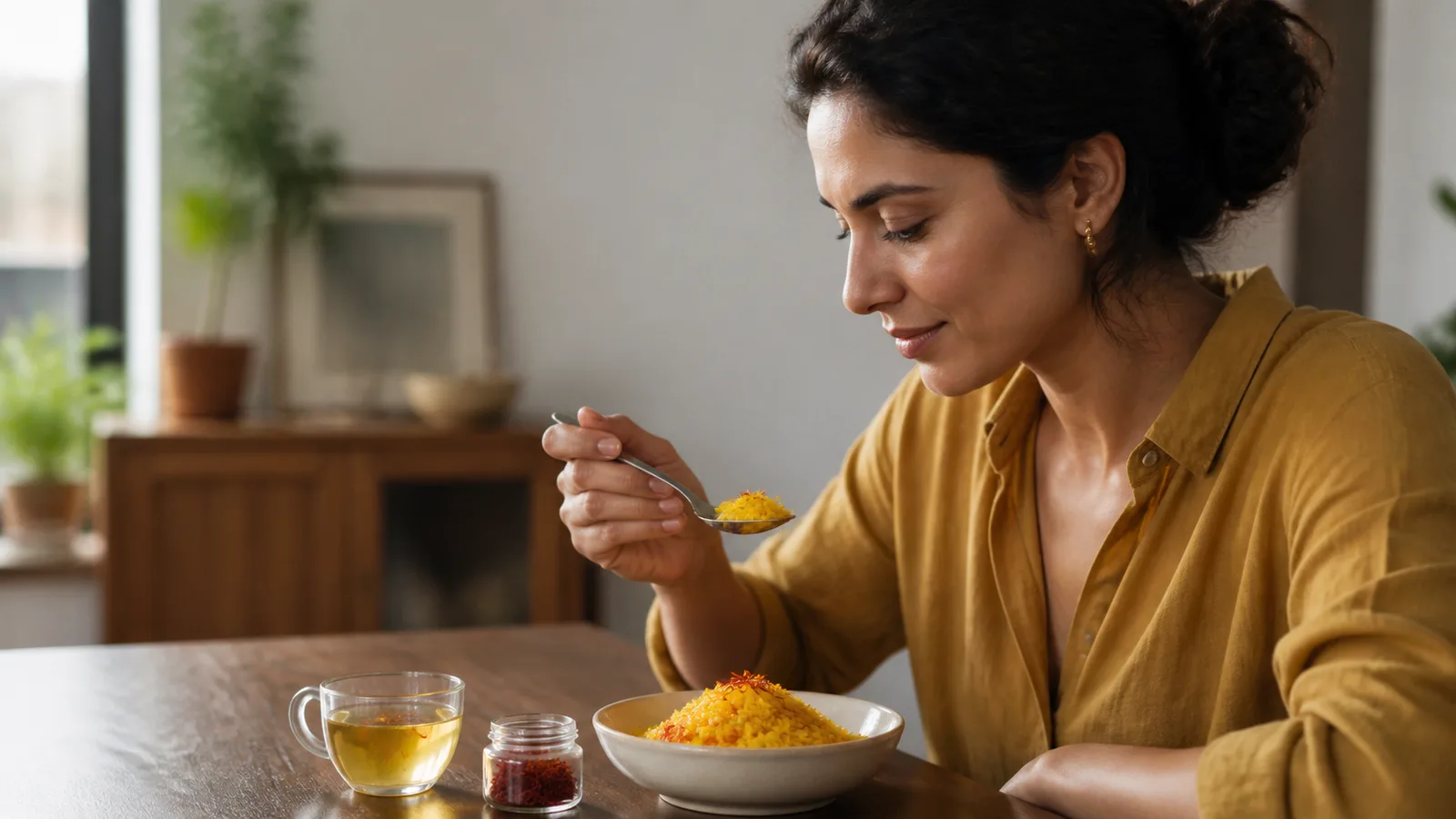
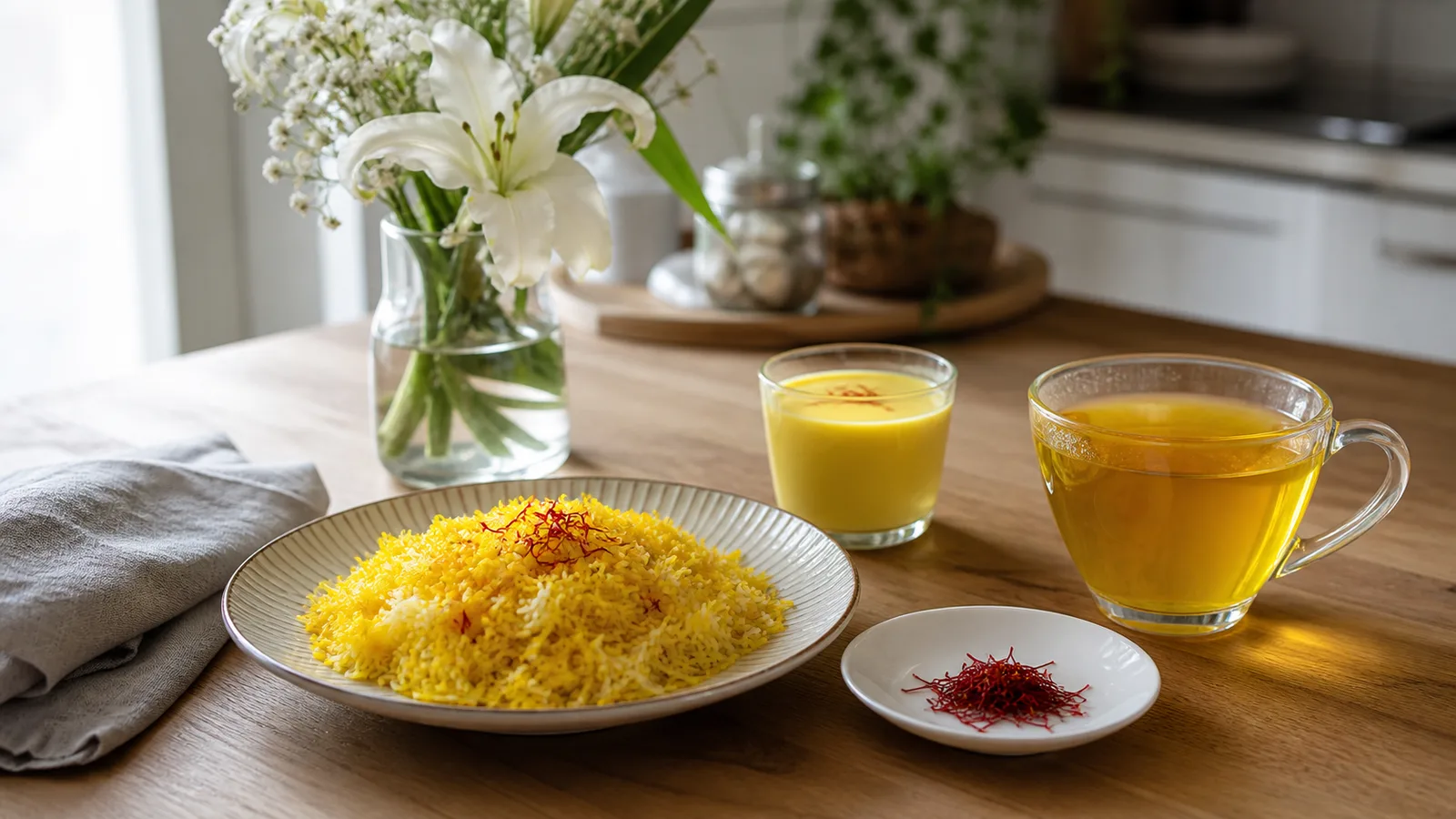
Saffron tea can be an enjoyable caffeine-free drink, but the phrase “saffron tea for depression” should not imply a therapeutic dose. A cup made with 8–15 threads varies in composition and is not equivalent to a standardized capsule used in a trial. Its warmth and aroma may suit a relaxing routine without treating a mental disorder.
Saffron extract and depression studies
Many saffron extract depression trials use preparations standardized to particular constituents. Two extracts with the same milligram number may not be chemically identical. Brand-specific results also cannot be transferred automatically to untested products.
Saffron supplements for depression
A saffron supplement for depression should be treated as a biologically active product, not as concentrated food. Quality, identity, contamination, dose consistency, adverse effects, and interactions matter. “Natural” does not mean risk-free.
What about crocin, safranal, and serotonin?
Crocin and crocetin are carotenoid-related compounds associated with saffron’s color. Safranal contributes aroma. Laboratory and animal research has explored antioxidant, anti-inflammatory, neurotransmitter, and stress-response pathways that might relate to mood.
Saffron serotonin explanations are still hypotheses, not a complete human mechanism. Serotonin is a neurotransmitter—not simply a “hormone of happiness”—and depression is not adequately explained as a single chemical shortage. Claims of serotonin regulation, or that saffron makes you happy, compress a complex condition and uncertain pharmacology into a slogan.
Picrocrocin gives saffron much of its bitter taste. The earlier article listed it as a mood compound, but the clinical case for picrocrocin itself is not established. It should not be grouped with crocin or a standardized extract without evidence.
Does saffron’s aroma have a calming effect?
Many people find the dry floral scent soothing. Preparing tea, cooking slowly, or pausing with a warm drink can also feel calming. That personal experience is valid, but it does not prove that smelling saffron reduces clinical anxiety or changes depression.
Saffron and mood research is mainly about ingested preparations, not ordinary kitchen aroma. A positive association with a comforting routine should remain a sensory observation.
Who should seek professional guidance first?
Speak with a clinician or pharmacist before medicinal use if you:
- have diagnosed depression, anxiety, bipolar disorder, psychosis, or another mental-health condition;
- take antidepressants, anti-anxiety medicines, mood stabilizers, antipsychotics, stimulants, sedatives, anticoagulants, or several supplements;
- are pregnant, breastfeeding, preparing for surgery, or managing low blood pressure or a bleeding disorder;
- have had agitation, mania, suicidal thoughts, or a severe reaction after changing treatment; or
- want to use a concentrated product for more than a brief trial.
If symptoms persist, interfere with daily life, or include hopelessness, panic, mania, psychosis, or thoughts of self-harm, seek professional help promptly. In an immediate danger, contact local emergency services or a crisis line; in the United States, call or text 988. Do not wait for a supplement to work.
How culinary saffron can fit a healthy routine
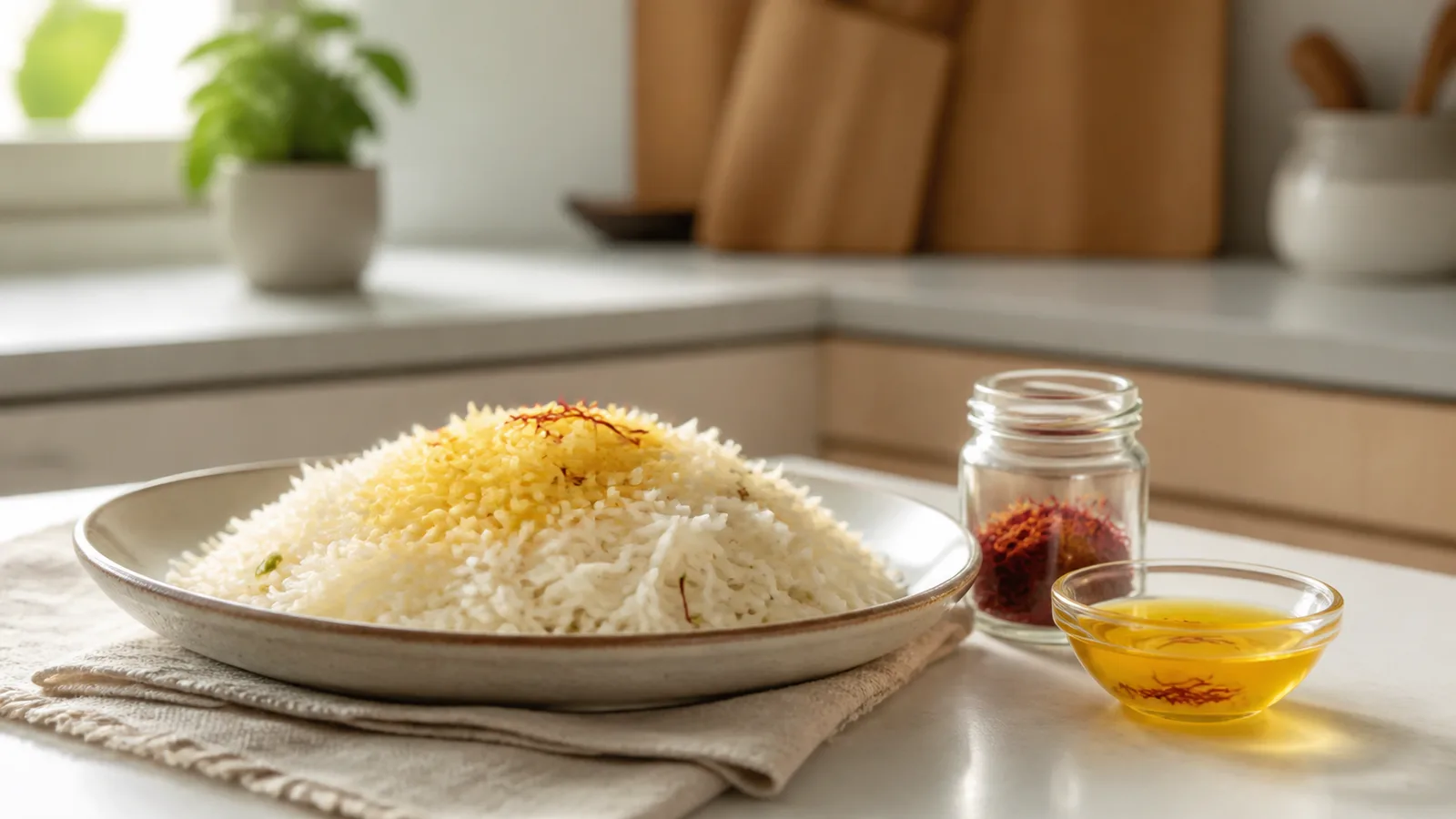
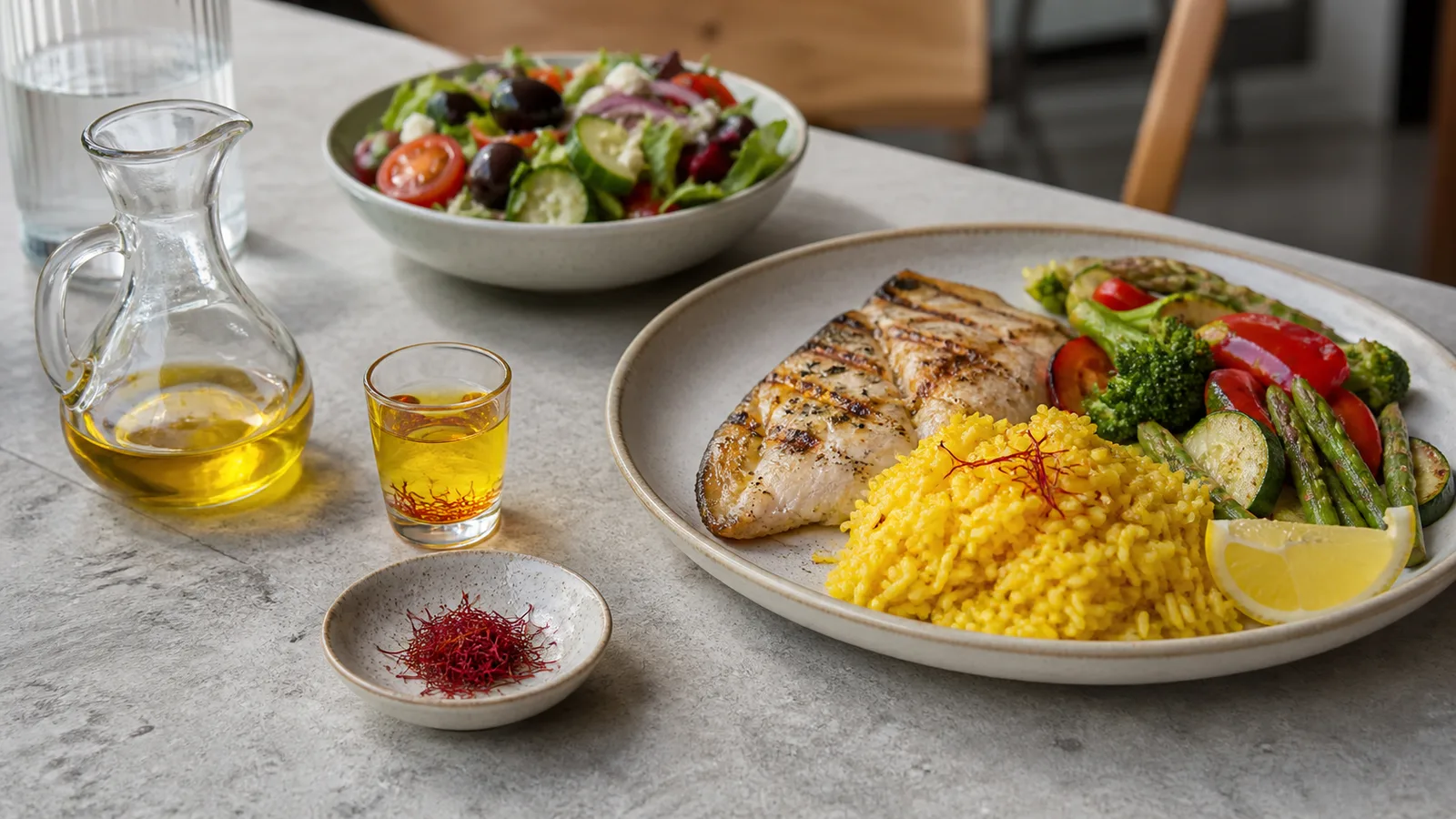
Saffron can add aroma and color to rice, soup, vegetables, fish, yogurt, milk, or tea. Cooking with a small pinch can be an enjoyable part of a healthy lifestyle that includes regular meals, sleep, movement, time outdoors, and social connection. These are supportive habits, not substitutes for mental-health treatment.
Whether it is written saffron mental health, saffron and mental health, or safran depression, the evidence boundary remains the same. Standardized supplements show a promising but inconsistent short-term signal. Culinary saffron remains food. Neither guarantees a positive impact on mood.
The practical conclusion
Saffron effects on mood deserve further study. Current evidence suggests possible complementary benefit for some self-reported depression and anxiety symptoms, while clinician-rated findings and long-term certainty are weaker. It is reasonable to be interested; it is not reasonable to promise that saffron cures depression, removes anxiety, or makes you happy.
Keep proven care in place, bring any supplement plan to a qualified professional, and treat saffron mental health benefits as an evolving research question rather than a guaranteed result.