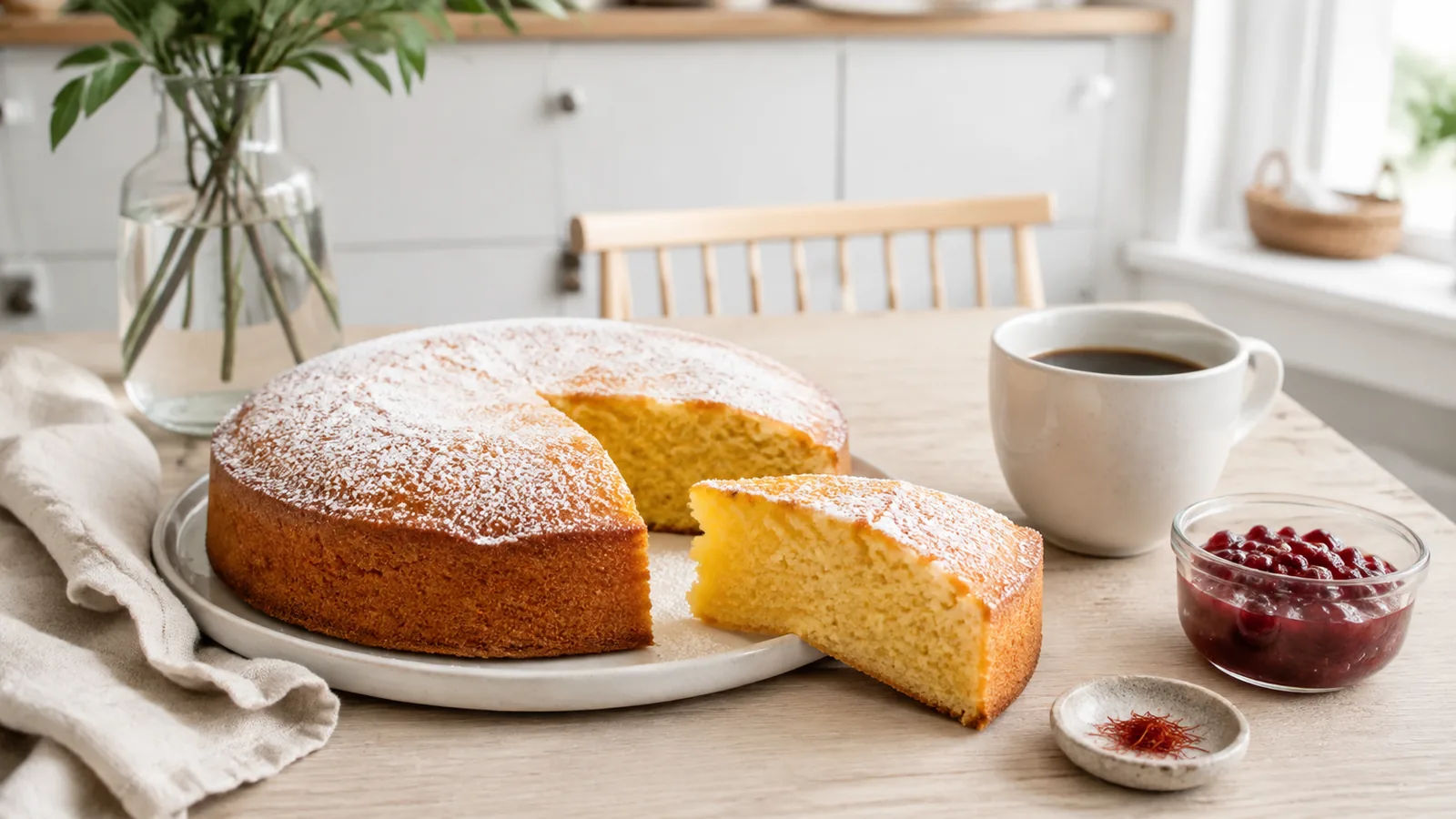
A Swedish saffron cake should be soft, buttery and clearly scented with saffron, with a golden crumb that stays moist enough to serve on its own. This version uses a simple round-cake method and measured ingredients, so the spice is noticeable without making the cake bitter.
What is Swedish saffron cake?
Swedish winter baking is closely associated with saffron. The best-known example is the yeast-raised lussekatt, or saffron bun, served around Advent and Lucia. A Swedish saffron cake is a different bake: it uses baking powder rather than yeast and has the tender crumb of a butter cake.
If you are new to baking with saffron, a simple cake is a forgiving place to begin. The spice is bloomed in measured milk, then folded into a familiar batter rather than added directly to flour.
It is well suited to fika—a pause for coffee and something sweet—and needs little decoration. Powdered sugar is traditional-looking and practical; berries or softly whipped cream can be offered separately. Visit Sweden’s guide to Swedish saffron buns provides useful cultural context for the spice’s place in seasonal baking, while the recipe below remains a straightforward cake.
Swedish saffron cake ingredients
You will need a 23 cm (9-inch) round cake pan. A springform pan makes the finished cake easier to release.
- 0.5 g saffron threads
- 2 tablespoons warm whole milk, taken from the measured milk below
- 200 g (1 2/3 cups) all-purpose flour
- 2 teaspoons baking powder
- 1/4 teaspoon fine salt
- 150 g (10 1/2 tablespoons) unsalted butter
- 3 large eggs, at room temperature
- 200 g (1 cup) granulated sugar
- 120 ml (1/2 cup) whole milk, at room temperature
- 1 teaspoon vanilla extract, optional
- Powdered sugar, for finishing
Half a gram is a convenient amount because saffron is often sold in that size. If you measure by volume, the density of whole threads varies, so weight is more dependable. Use pure threads rather than a yellow seasoning blend.
How to make Swedish saffron cake
1. Bloom the saffron
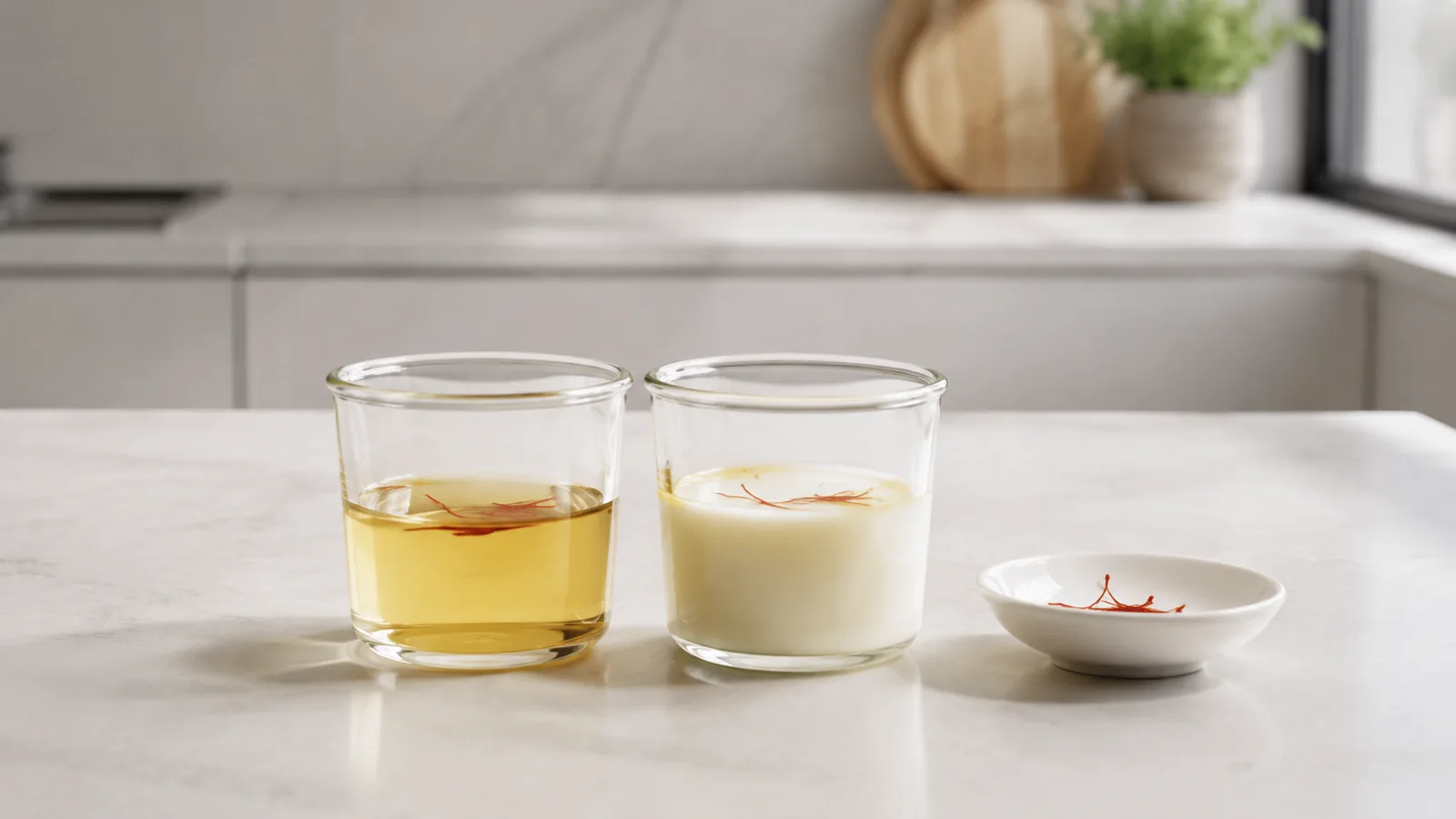
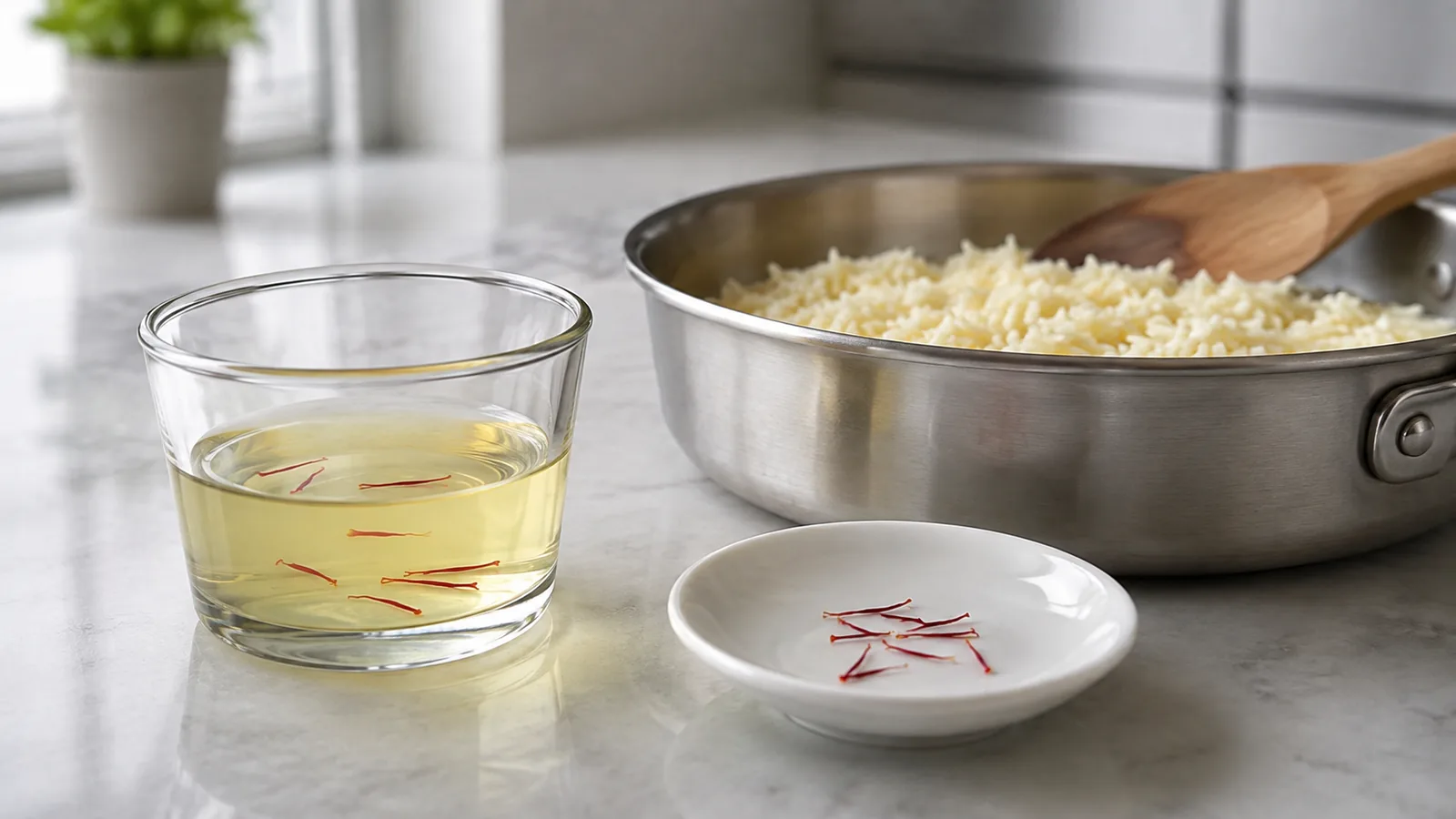
Crush the threads gently with a mortar and pestle. Stir them into two tablespoons of the warm milk and leave the mixture for 10 to 15 minutes. The infusion should become a rich golden colour. Blooming distributes the saffron more evenly than dropping dry threads into the batter; our guide to brewing saffron explains the basic technique.
2. Prepare the oven and pan
Heat the oven to 175°C (350°F), or 165°C (330°F) for a fan oven. Grease the pan, line its base with baking paper and dust the sides lightly with flour. Tap out the excess.
3. Mix the dry ingredients
Whisk the flour, baking powder and salt together in a bowl. There is no need to sift the flour repeatedly; breaking up visible lumps and distributing the baking powder evenly is what matters.
4. Melt and cool the butter
Melt the butter over low heat, then set it aside until warm rather than hot. Hot butter can deflate the egg mixture and may partially cook it on contact.
5. Whip the eggs and sugar
Beat the eggs and sugar with an electric mixer for three to five minutes. The mixture should look pale and thick, and a ribbon of batter should sit briefly on the surface before disappearing. This incorporated air helps make a lighter saffron sponge cake.
6. Add the liquids
Combine the saffron infusion with the remaining milk and vanilla, if using. With the mixer on low, add the warm melted butter in a thin stream, followed by the milk mixture. Stop as soon as the liquids are incorporated.
7. Fold in the flour
Add the dry ingredients in two batches and fold with a flexible spatula. Scrape to the bottom of the bowl, where flour pockets often hide, but do not beat the batter until perfectly smooth. Overmixing develops gluten and makes the cake firmer.
8. Bake and cool
Pour the batter into the prepared pan and level the top. Bake on the centre rack for 32 to 40 minutes. Begin checking at 32 minutes. The cake is ready when the centre springs back gently and a wooden skewer comes out clean or with a few dry crumbs.
Cool it in the pan for 10 minutes, then release the side and transfer the cake to a wire rack. Wait until it is completely cool before dusting it with powdered sugar.
Why this saffron cake recipe works
The eggs are whipped rather than simply stirred, which gives the cake a finer, lighter crumb. Melted butter provides the familiar richness of Swedish baking without requiring a separate creaming step. Bloomed saffron travels through the milk, helping its colour and aroma reach the whole cake.
The recipe also avoids an unclear instruction found in many informal saffron cake recipes: “add brewed saffron” without saying how much liquid is involved. Here, the blooming milk is counted within the total milk, so the batter’s balance does not change.
Tips for a moist, even cake
- Bring the eggs and milk to room temperature. Cold ingredients can make melted butter seize into small pieces.
- Weigh the flour when possible. A packed measuring cup adds more flour than a lightly filled one and can produce a dry cake.
- Keep the saffron infusion modest. Extra blooming liquid changes the batter even if the amount of saffron stays the same.
- Do not overbake. A skewer with a few dry crumbs is acceptable; waiting for a deeply browned surface can dry the centre.
- Let it cool before cutting. The crumb settles as the cake reaches room temperature.
Serving variations
Serve the cake plain or with powdered sugar. Fresh raspberries, lingonberry preserves or a spoonful of softly whipped cream add contrast without covering the saffron. Chopped almonds can be scattered over the batter before baking, but they are optional rather than essential to the recipe.
Rosewater is not required in a Swedish saffron cake. If you want a more floral Persian-style variation, use a recipe designed for that balance rather than adding a large splash to this batter. Our saffron and rosewater cake is built specifically around that pairing.
Storage and freezing
Keep the cooled cake in an airtight container at room temperature for up to two days. Refrigeration extends storage, but it also firms the butter and makes the crumb seem drier; bring a chilled slice back to room temperature before serving.
To freeze it, leave off the powdered sugar, wrap the completely cooled cake well and freeze it for up to one month. Thaw it while still wrapped, then decorate just before serving.
What determines saffron cake calories?
Saffron itself is used in a very small amount. Most of the energy in saffron cakes comes from butter, sugar, flour and the size of the slice. A calorie figure without the exact ingredient brands, final cake weight and serving size can be misleading, so this recipe does not repeat a single unsupported number. For a useful personal estimate, enter the ingredients you actually use into a nutrition calculator and divide the total by the number of equal slices you cut.
Swedish saffron cake questions
Can I use ground saffron?
Yes, if it is pure saffron. Use the same weight and bloom it in the measured milk. Pre-ground saffron is harder to inspect visually, so buy it from a source you trust.
Why is my cake dense?
The eggs may not have been whipped enough, the flour may have been overmixed, or the butter may have been too hot. Measure the flour carefully and fold only until no dry pockets remain.
Can I bake the cake in a loaf pan?
A loaf pan makes a deeper cake and changes the baking time. Use a pan with a similar total capacity, fill it no more than two-thirds full and expect it to need longer in the oven. Check the centre rather than relying only on the clock.