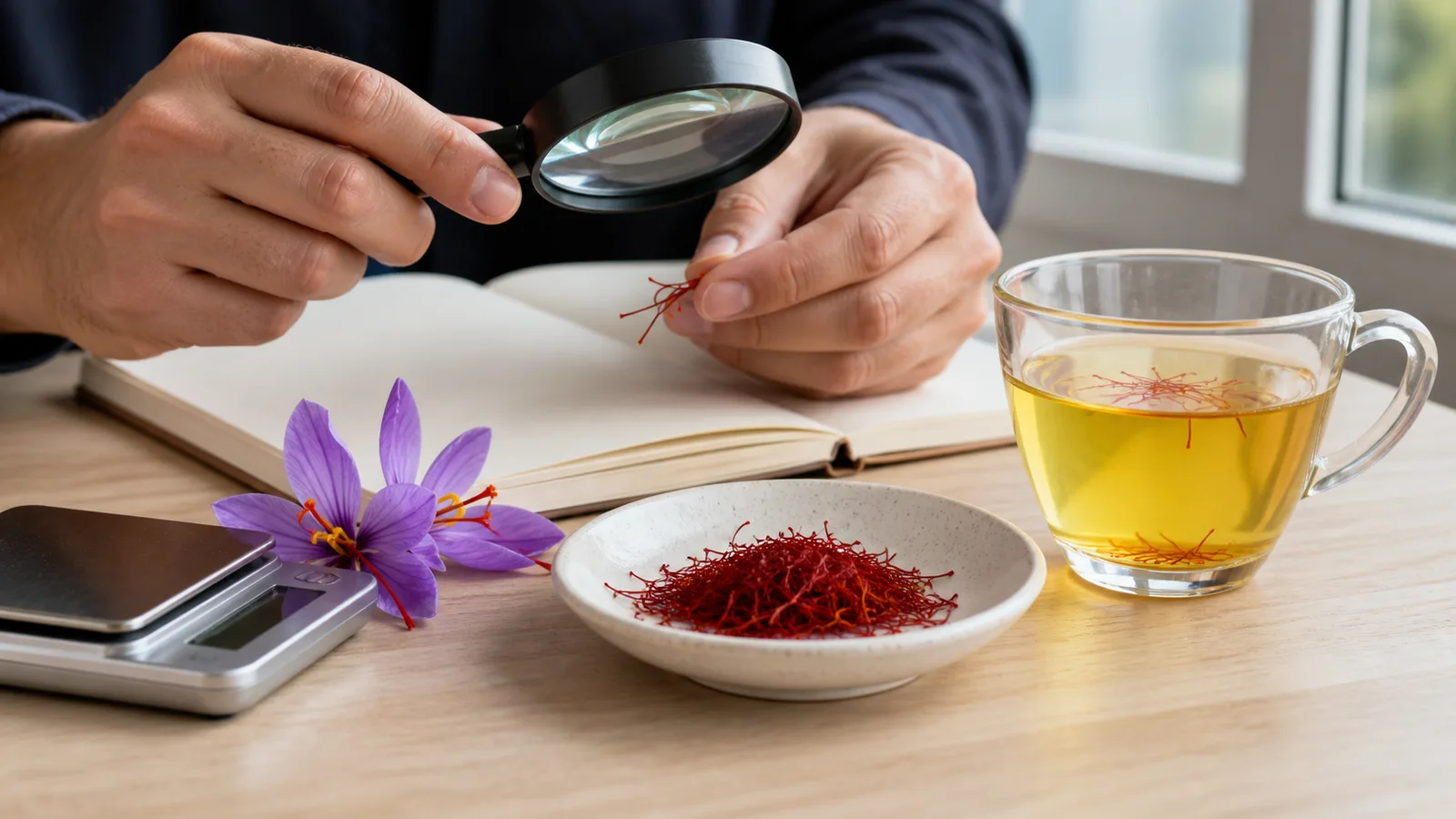
The best time to plant saffron is during the corm’s summer dormancy, shortly before its autumn growth begins. In much of the Northern Hemisphere, that means August or early September. The calendar shifts with climate, so the condition of the corm and the local season matter more than one date for every garden.
The short answer: plant in late summer
Crocus sativus is a fall-flowering crocus grown from corms, not seed. The University of Vermont’s home-garden guidance recommends planting the corms as soon as possible in August or early September. Its production-cycle guide places dormancy in July and August, sprouting around September, and flowering and harvest mainly in October and November for its Northern Hemisphere conditions.
Those months are a useful starting point, not a worldwide guarantee. In the Southern Hemisphere, follow the equivalent late-summer to early-autumn season. In unusually hot or wet regions, watch soil conditions and local fall weather rather than planting into saturated ground or during a severe heat spell.
Why saffron planting time matters
A healthy dormant corm contains the resources for its next growth cycle. Planting before autumn activity gives it a stable, well-drained position from which to root, sprout and flower. Holding corms until spring works against that cycle; the Vermont guidance warns that stored corms may sprout and die if they are kept that long.
Timing alone cannot guarantee a high-quality harvest. Corm size and condition, drainage, planting depth, crowding, local weather and care through winter and spring all affect the result. A well-timed corm in waterlogged soil is still at risk of rot.
How to recognise the planting window
Use these signs together rather than relying on the calendar by itself:
- The previous season’s leaves have yellowed and died back, indicating summer dormancy.
- The corms are firm and sound, without soft areas, mould or a sour smell.
- The bed can be worked and drains freely after watering or rain.
- Late-summer extremes are easing, but autumn growth has not advanced far.
- You can plant soon after receiving the corms instead of storing them for months.
Do not try to measure a home corm to a supposed universal moisture percentage. The original article’s 15–20 percent target was not supported by a practical test a gardener could perform. Firmness, clean condition and correct seasonal handling are more useful buying and planting checks.
Best time to plant saffron by climate
Cold-winter regions
Plant during late summer, while there is still time to prepare a well-drained bed before cold, wet weather. In the Vermont system, August to early September is the target. Planting deeper and using a suitable site can provide insulation, but local winter survival still depends on climate, drainage and container exposure.
If you grow in pots, do not leave small containers in a highly exposed position where they repeatedly freeze and thaw. A larger container or insulated raised bed moderates temperature more effectively.
Mild Mediterranean-type climates
Late August or September often aligns with the end of dry summer dormancy and the approach of autumn rain. Do not interpret “before the rainy season” as a reason to plant into dusty, unprepared ground. Prepare the bed first, make sure irrigation can settle the soil if needed, and avoid sites that collect winter water.
Hot climates
Use the local late-summer transition and avoid leaving newly purchased corms in a warm, humid package. If outdoor conditions remain extremely hot, store them only briefly in a dry, ventilated place and plant as soon as suitable bed conditions arrive. A greenhouse is not automatically cooler and can worsen heat unless it is actively managed.
Wet climates or heavy soil
Drainage may matter more than shifting the date. Build a raised bed, amend the site appropriately or use a deep container with free drainage. Never plant corms in a hollow where autumn and winter water stands around them.
Prepare the site before the corms arrive
Choose a sunny site with light to moderately textured, well-drained soil. Clear perennial weeds and break up compaction. If the ground remains wet for a long period after rain, solve that problem before planting rather than hoping the corms will tolerate it.
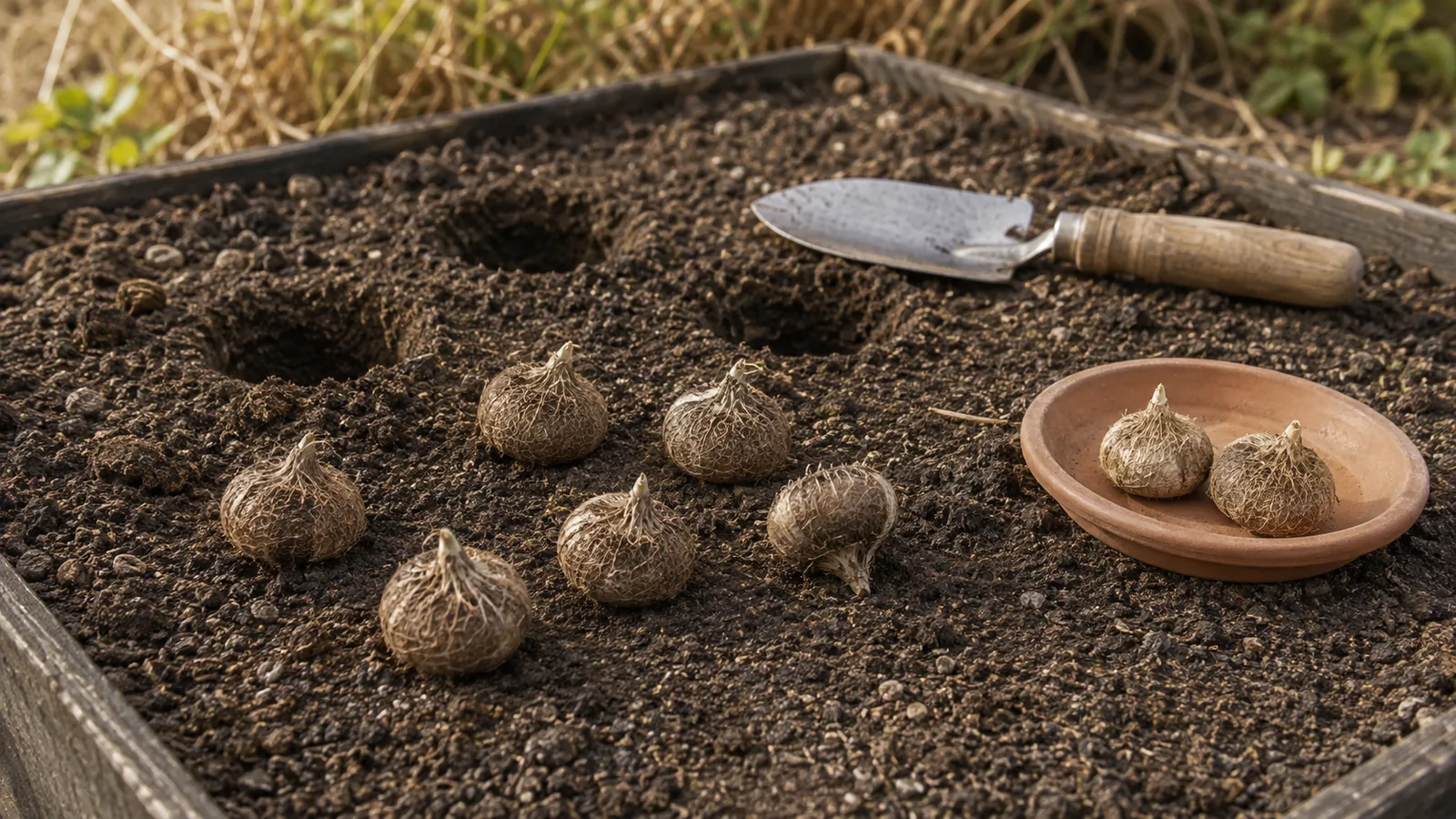
For a home bed, the University of Vermont suggests planting around 15 cm (6 inches) deep and spacing corms roughly 7.5–10 cm (3–4 inches) apart. Other extension systems use shallower ranges in milder climates, so depth is context-dependent. Consistency within one bed helps growth emerge at a similar time.
Our complete guide to planting and growing saffron covers bed layout, corm orientation, containers, seasonal foliage and division in more detail.
Step-by-step planting
- Inspect the corms. Keep firm, clean corms and discard any that are soft, mouldy or badly damaged.
- Prepare drainage. Loosen the bed and make sure water can move away from the planting zone.
- Set the depth. Use a locally suitable depth; around 15 cm is the Vermont home-garden recommendation.
- Place the corm correctly. Set the flatter root plate down and the pointed growing tip up. If the shape is unclear, place it on its side rather than forcing it upside down.
- Space evenly. Leave enough room for daughter corms to develop and for the bed to remain manageable.
- Backfill gently. Cover with soil without crushing the corms, then settle the bed lightly.
- Water according to conditions. Outdoor autumn rainfall may be enough. Water only if the soil is dry, and never leave the bed saturated.
Saffron growing time and temperature
Questions about saffron growing temperature often assume one ideal number, but the plant follows a seasonal cycle. Corms are dormant through the warmer part of summer, begin active growth as conditions shift, flower in autumn and keep their grass-like leaves through winter and spring before returning to dormancy.
Saffron cultivation time is therefore better understood as a full annual cycle, not just the day corms enter the soil. The best climate to grow saffron is not simply the warmest one: it must also provide drainage and a seasonal pattern the corm can follow.
That cycle explains why a fixed “cooler is always better” rule is incomplete. Warmth supports dormancy, while cooler autumn conditions accompany sprouting and flowering. Sudden extremes, persistent waterlogging and a mismatch between the corm’s cycle and the planting date create more practical risk than missing one claimed temperature target.
When will newly planted saffron flower?
Sound corms planted in the correct late-summer window may flower in the first autumn, sometimes within several weeks. The exact interval varies with planting date, corm size, depth and climate. A small or late-planted corm may produce leaves without a useful first-year flower display.
Do not dig up the bed simply because flowers are sparse in year one. Keep the foliage intact through winter and spring; it feeds the daughter corms that support future seasons. Remove leaves only after they have yellowed and died back naturally.
Saffron harvest time
Saffron harvesting time begins when the autumn flowers appear, not when the soil reaches a universal 8°C. Check the bed daily during flowering because individual blooms are short-lived. Harvest in the morning after dew or frost has dried, ideally while flowers are still fresh and just opening.
Separate the three red stigmas from each flower, keeping petals and yellow stamens out of the spice. Dry the stigmas promptly. Our evidence-based guide to drying saffron at home compares controlled oven and dehydrator methods with less reliable alternatives.
What if you missed the ideal date?
If firm corms arrive in early autumn and have begun to sprout, plant them promptly if the ground is workable and well drained. A late planting may reduce or delay the first display, but storing actively sprouting corms until spring is usually worse.
If the ground is frozen, flooded or otherwise unsuitable, do not force the planting. Keep the corms briefly in a cool, dry, ventilated place and prepare a protected container or seek local horticultural advice. Do not seal them in damp plastic.
The practical planting rule
For most Northern Hemisphere home gardens, order corms in summer, prepare the bed before they arrive and plant them in August or early September. Shift the calendar to match your hemisphere and local late-summer conditions, but keep the biological sequence intact: dormant corm, autumn sprouting and flowering, winter-spring leaves, then summer dormancy.
That approach gives saffron a sound start without pretending that planting date alone can maximise yield. Good corms, drainage and patient seasonal care remain just as important.