Drying fresh saffron threads is a short but decisive part of the harvest. The aim is to remove moisture evenly without scorching the stigmas or exposing them to dust, steam and uncontrolled heat. These seven drying saffron methods are not equally reliable; the controlled oven and dehydrator options give a home grower the clearest process.
Before drying fresh saffron
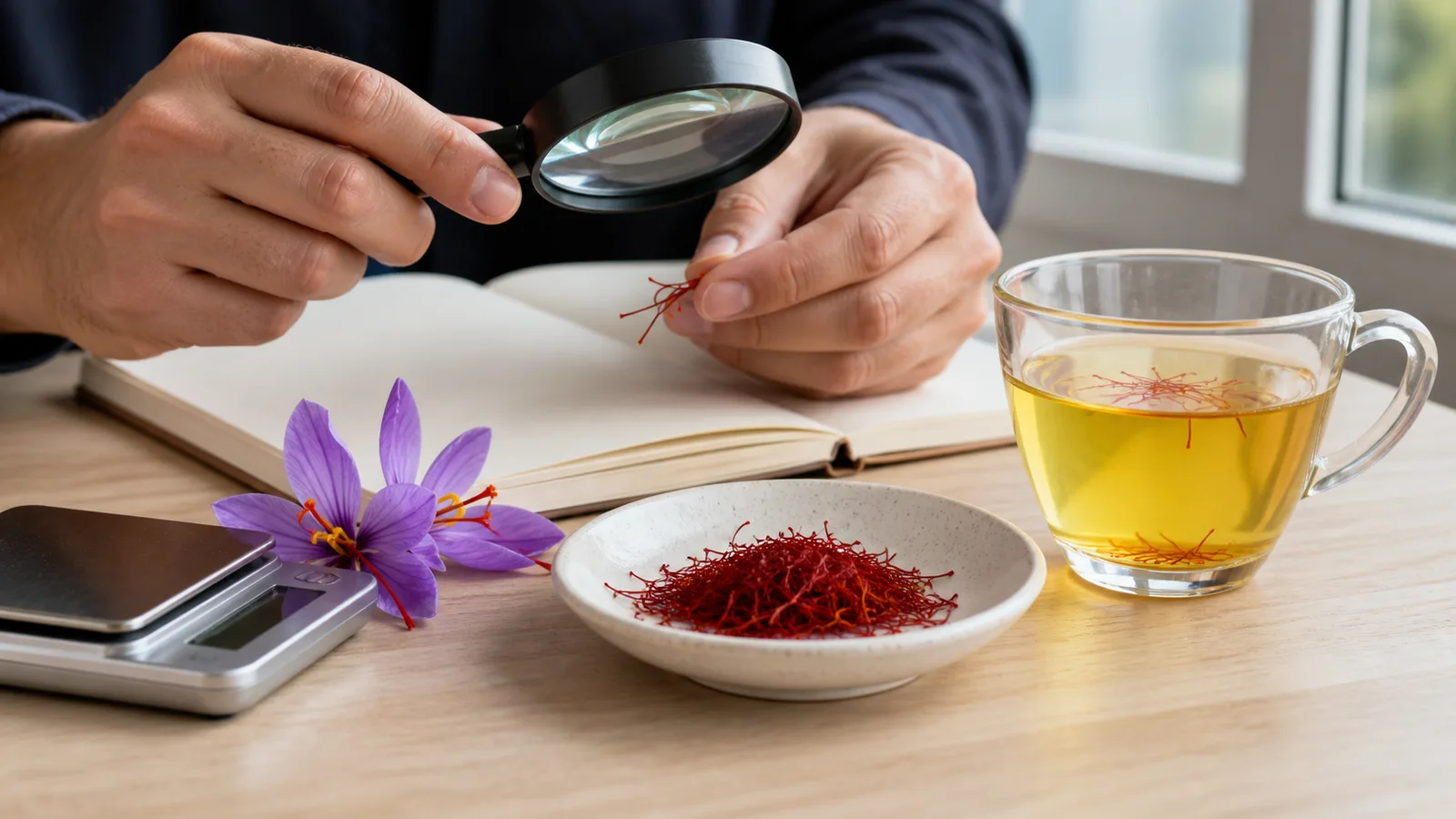
Harvest the flowers promptly and separate the three red stigmas from each Crocus sativus flower with clean fingers or tweezers. Remove petals, yellow stamens and other plant material. Work on a clean, dry surface and begin the saffron drying process as soon as practical rather than leaving fresh stigmas in a damp pile.
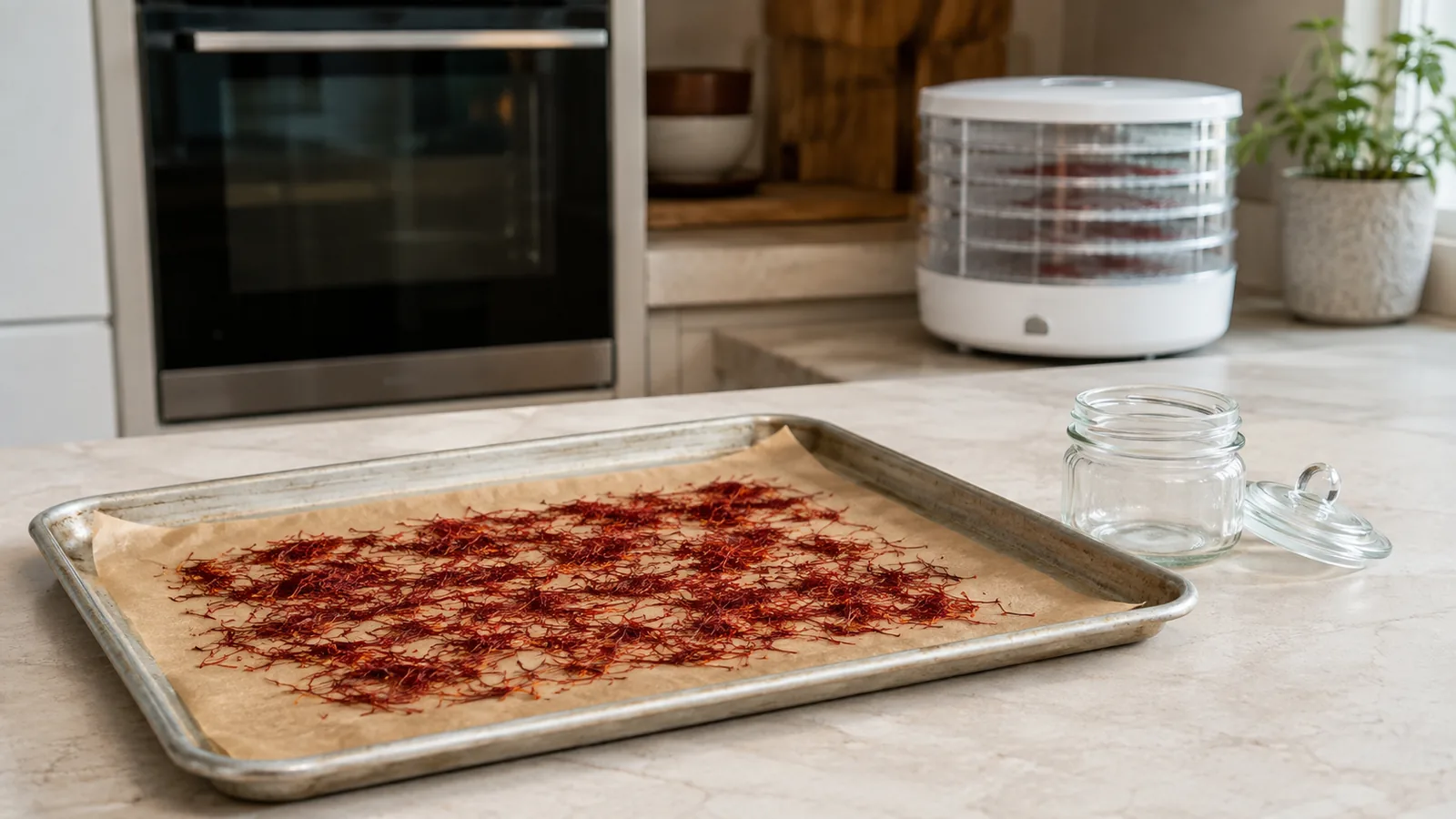
Spread the threads in a single loose layer. They may touch, but they should not form a thick mat. For a very small harvest, baking paper on a clean tray is convenient. A fine food-safe mesh tray improves airflow in a dehydrator. If you are still planning the crop and harvest, our home saffron growing guide explains when to collect flowers and how to separate the stigmas.
If you are learning how to dry fresh saffron, prepare the tray before separating the stigmas so the harvest does not wait in a pile. Drying saffron threads on paper is practical when food-safe baking paper lies flat on an oven tray; never put paper directly on a heater or over a flame.
How to dry saffron threads: seven methods compared
The first three oven schedules below come from the University of Vermont’s North American Center for Saffron Research and Development. Its small study compared high, medium and low oven temperatures; the researchers found the highest-temperature schedule produced more crocin and safranal in their Vermont-grown samples, while also warning that more research is needed under other conditions. Use an oven thermometer because domestic oven controls can be inaccurate.
1. High-temperature oven: 100°C for 7–10 minutes
Heat the oven to about 100°C (210°F). Put the threads in one layer on a clean, oven-safe tray and place it in the centre of the oven. Check at seven minutes and do not walk away: such a small quantity changes quickly. Remove the tray by ten minutes, or sooner if the threads are dry, and let them cool completely before judging the result.
This is the fastest tested home-oven option and the strongest performer in the Vermont comparison. It also has the smallest margin for error, especially if the oven cycles above its set temperature. Test a modest portion first when using an unfamiliar oven.
2. Medium-temperature oven: 77°C for about 25 minutes
Set the oven close to 77°C (170°F), arrange the stigmas in a single layer and dry them for about 25 minutes. This schedule gives more time to observe the threads than the high-temperature method. If the oven cannot hold such a low setting, monitor the centre of the oven with a separate thermometer rather than trusting the dial.
3. Low-temperature oven: 55°C for about 60 minutes
At approximately 55°C (130°F), the tested drying time was about one hour. It is a gentler schedule, but the Vermont trial found lower crocin and safranal results than with its hotter, shorter treatment. A low oven is still more controllable than an open tray in a humid room.
Some ovens do not operate consistently at 55°C. If yours repeatedly switches off or rises far above the setting, use a food dehydrator rather than improvising with a direct flame or hot appliance surface.
4. Food dehydrator
A dehydrator is practical when it offers steady heat and a fine tray that prevents threads from falling through. The Vermont guidance notes that growers use standard dehydrators successfully, commonly at settings no higher than about 71°C (160°F). Drying time depends on the actual temperature, airflow, harvest size and starting moisture, so follow the machine closely instead of assuming one universal number.
Keep the saffron in a thin layer and check it at short intervals. Do not put it on a tray that has retained food odours; saffron can pick up surrounding aromas.
5. Indoor air-drying
For indoor air-drying, spread the threads on clean paper or fine mesh in a dry, dust-free room with gentle airflow. Do not place them beside a sink, boiling pot or open window where humidity and debris can reach them. Depending on the room, this can take a day or more.
Air-drying is simple, but it is less predictable. The Vermont comparison found room-temperature samples had higher remaining moisture and lower colour, flavour and aroma measures than samples dried with controlled heat. In a humid home, choose an oven or dehydrator.
6. Sun-drying
Traditional sun-drying is possible in a hot, dry climate, but it exposes a valuable food ingredient to fluctuating temperature, ultraviolet light, wind, dust and insects. A cloth cover reduces some contamination risk but also changes airflow. It is not the preferred home method when clean, controlled heat is available.
If sun-drying is the only practical option, use a food-safe fine-mesh enclosure rather than an open basket, keep the layer thin and bring it indoors before evening humidity rises. Do not place the finished saffron in a jar until it has cooled and you are confident it is dry.
7. Microwave, iron or direct-heater drying
These shortcuts appear in informal instructions, but they are difficult to control. A microwave heats unevenly and can damage a tiny batch before there is an obvious warning. An iron introduces pressure, contact-surface hygiene and temperature problems. Paper placed directly on a heater or over a flame creates a scorching and fire risk.
For that reason, this seventh category is included as a comparison, not a recommendation. A measured oven schedule or food dehydrator is safer and easier to repeat.
How do you know when saffron is dry?
Fresh stigmas are soft and moist. Dried saffron should feel dry rather than limp, and the threads should separate instead of clinging together. Do not judge them while they are still warm; let the tray reach room temperature first. Warm saffron sealed immediately can create condensation inside the container.
Commercial quality is measured rather than guessed. The current Codex standard for dried saffron sets a maximum moisture content of 12 percent by weight for filament and powdered grades. Most home growers do not have calibrated moisture testing, so a sensory check cannot prove compliance. If you are preparing saffron for sale, use suitable testing and follow the food rules that apply in your market.
Should damp store-bought saffron be re-dried?
Freshly harvested saffron and a commercial jar that has become damp are different situations. If packaged saffron smells musty, shows visible mould, has unknown water exposure or has sat wet for an uncertain period, discard it. Drying does not reliably make a contaminated food safe.
If a known, recent burst of humid air has softened otherwise sound threads, move them away from the moisture and assess them carefully. A controlled low-temperature drying step may remove the absorbed humidity, but it cannot restore aroma already lost through poor storage. Preventing the problem is better than trying to repair it.
Cooling and storing saffron after drying
Let the dry threads cool completely in a clean area, then transfer them to a dry glass jar or metal tin with a tight-fitting lid. Keep the container at room temperature in a dark cupboard, away from the cooker, dishwasher and direct sun. Do not wrap saffron in cloth or loose foil before putting it into the container; those layers do not provide a dependable moisture seal.
Saffron readily takes up moisture from humid air, so keep the jar open only as long as needed. The claim that every batch must rest for 30 days before use is not a proven safety requirement. The University of Vermont drying guide describes a one-month wait as a reported practice whose flavour benefit has not been scientifically confirmed.
For container choices and long-term protection from light, heat and humidity, see our detailed saffron storage guide.
The best way to dry saffron at home
For most home growers, the best way to dry saffron is a monitored oven or clean food dehydrator. Both allow you to control heat, keep the stigmas away from dust and finish the work promptly. The 100°C oven schedule has supportive trial results, but an accurate thermometer and close attention are essential because the batch is small.
Whichever method you choose, keep the threads in one layer, avoid unmeasured direct heat, cool them before sealing and protect the finished saffron from humidity. Those habits matter more than turning seven possible methods into seven equal recommendations.