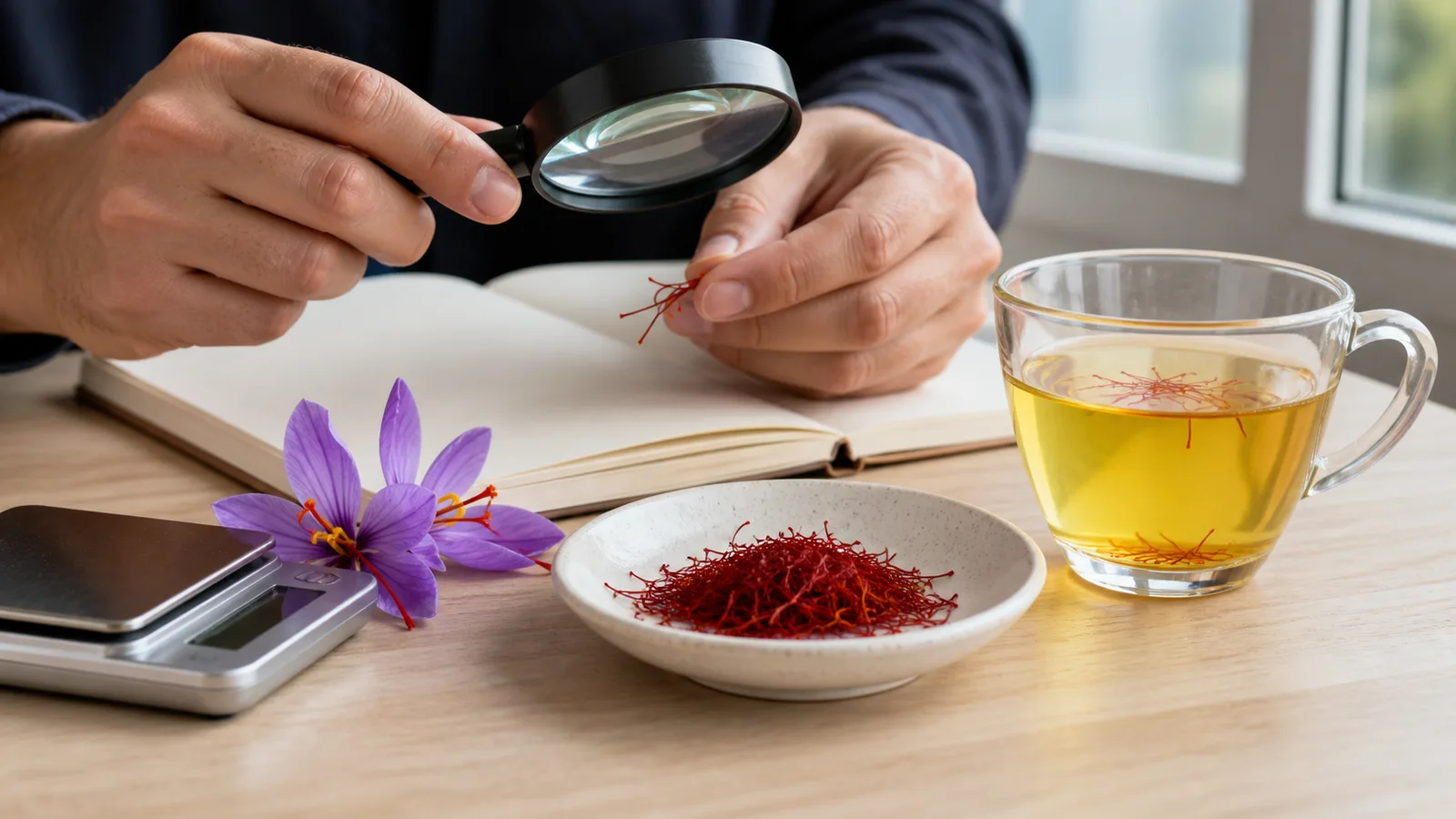
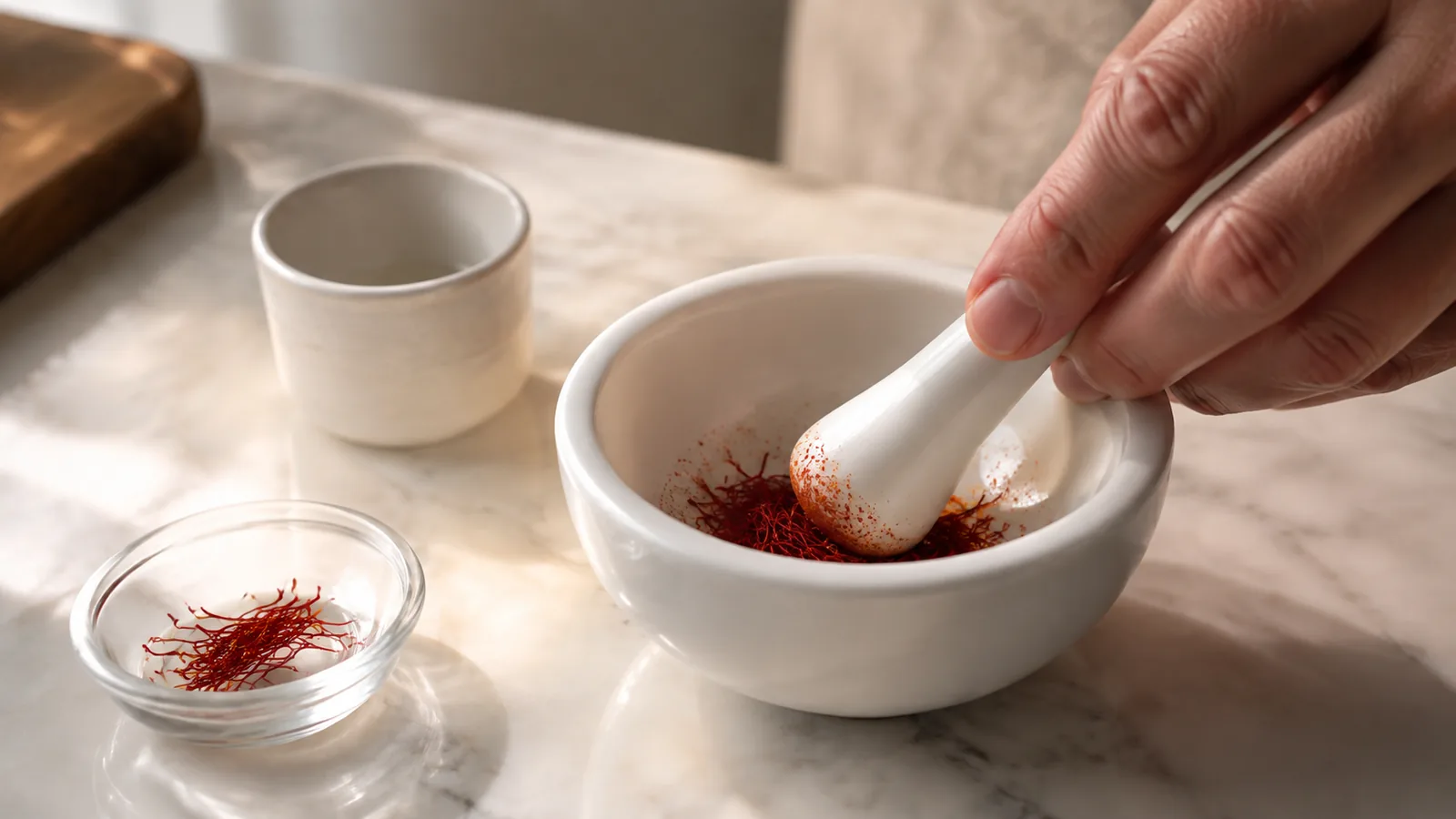
Growing saffron at home is possible when you start with true Crocus sativus corms and give them sun, sharp drainage, a summer rest, and cool-season growth. Planting is straightforward; the challenge is matching the plant’s unusual calendar and being ready to pick and process a brief autumn flush of flowers.
Can you grow saffron at home?
You can grow saffron in a sunny garden bed, a raised bed, or a deep container. At home, the cultivation of saffron is a perennial cycle rather than an annual sowing. The plant flowers in autumn, carries narrow leaves through the cooler months, then turns yellow and goes dormant as the weather warms. New daughter corms develop underground and continue the planting in later years.
The crop is easiest in a climate with a relatively dry summer and a cool growing season. Gardeners in wetter areas can still succeed by using raised beds, containers, or a rain-sheltered position. A greenhouse is helpful only if it improves drainage and seasonal control; a hot, humid greenhouse can encourage rot.
Start with saffron corms, not seed
Culinary saffron is propagated from corms. Crocus sativus is sterile, so listings for “saffron seed” do not produce the standard spice crop. They may refer to safflower, another crocus, or an unrelated plant. Buy firm, healthy corms from a supplier that gives the botanical name.
Size influences first-year flowering because a larger healthy corm holds more stored energy. Reject corms that are soft, moldy, deeply cut, or badly shriveled. Our guide to choosing and handling saffron corms explains what to inspect before planting.
The phrase “jafran gach” is also used online when people look for a saffron plant. Whatever local or transliterated name appears on a listing, verify Crocus sativus before buying. Appearance and a common name are not enough.
Where does saffron grow best?
Saffron prefers full sun and soil that drains promptly after rain or watering. Sandy loam is convenient, but soil texture matters less than the absence of standing water. A low place that stays wet is a poor choice even if it receives plenty of sunlight.
The University of Vermont’s home-garden saffron planting guidance reports successful growing in cold regions and stresses drainage. Local winter wet, freeze-thaw patterns, summer rain, and snow cover can matter as much as a hardiness-zone label.
Conditions for growing saffron
- Light: choose a position with at least six hours of direct sun when the plant is actively growing.
- Drainage: use a raised bed or free-draining potting mix where native soil holds water.
- Summer: keep dormant corms on the dry side rather than irrigating them like summer vegetables.
- Autumn: provide moisture when growth resumes if seasonal rain is absent.
- Winter and spring: protect the leaves from unnecessary cutting so they can feed daughter corms.
When to plant saffron
Plant dormant corms in late summer or early autumn, before active growth begins. The exact month depends on climate and when the supplier lifts and ships the corms. In the Northern Hemisphere, many home gardeners plant from August into September; a local extension service or experienced grower can refine that window.
Do not keep corms in a warm package for weeks after arrival. Inspect them, prepare the site, and plant promptly. If shoots have begun, handle them gently and avoid snapping the growing point.
How to plant saffron in a garden bed
- Clear perennial weeds and loosen the bed without creating a basin that traps water.
- Improve structure with mature compost if the soil needs it, but do not place fresh manure or concentrated fertilizer against the corms.
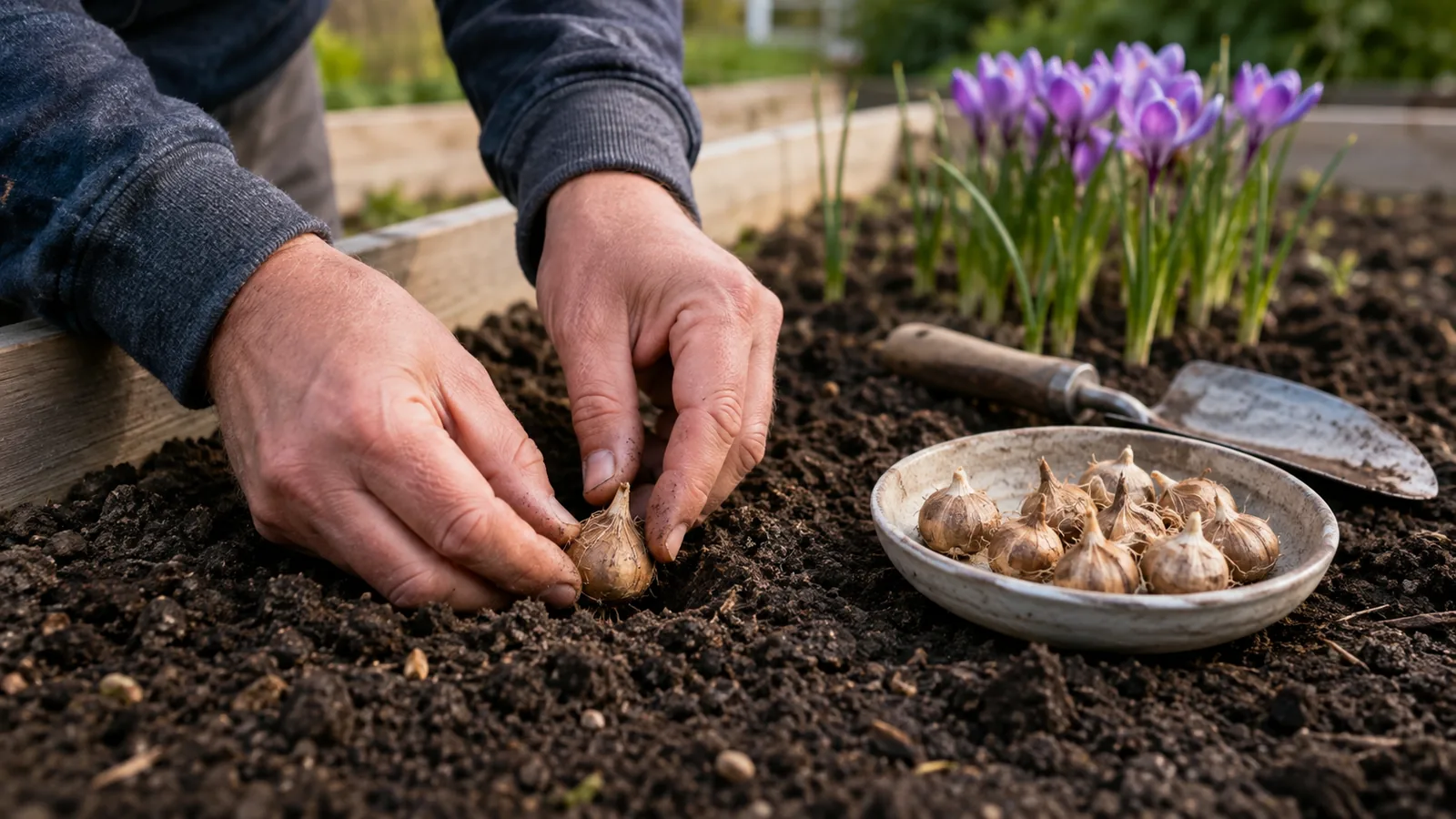
- Set each corm with the pointed growing tip facing upward.
- Space corms about 5 to 10 cm (2–4 inches) apart for a home cluster.
- Cover them to a consistent depth and label the bed with the cultivar or source and planting date.
- Water once after planting if the soil is dry, then wait until the root zone begins to dry before watering again.
The old guide specified 5 cm deep. That is the shallow end of home practice and can leave corms exposed to temperature swings or animals. Many growers plant around 10–15 cm (4–6 inches) deep; the best depth depends on soil, winter conditions, corm size, and whether the bed will be lifted regularly. Consistency within a trial bed makes the result easier to evaluate.
How to grow saffron in pots
Choose a container at least 20–25 cm (8–10 inches) deep with several open drainage holes. Fill it with a free-draining potting mix rather than heavy garden soil. Plant the corms in a group while leaving room between them, then water thoroughly and let excess water escape.
Keep the pot outdoors in strong light. Do not leave it standing in a saucer of rainwater. In a very wet climate, move it under an open-sided shelter during dormancy; in a severe winter, protect the container itself from repeated freezing and thawing without bringing actively growing plants into a hot room.
Container soil dries faster than a garden bed, so check it with a finger instead of following a fixed calendar. Moist is useful during active growth; continuously soggy is not.
How fast does saffron grow?
A large, well-conditioned corm planted at the right time may flower in its first autumn. The earlier estimate of four weeks, or generally six to ten weeks, is possible in some conditions but not a guarantee. Corm size, storage history, planting date, temperature, and moisture can all shift emergence and flowering.
Small corms may produce leaves without a first-year flower. That is not necessarily failure. Let the foliage grow until it yellows naturally so the plant can build daughter corms. Judge the bed across more than one season rather than digging up a quiet corm after a few weeks.
Seasonal care after planting
Watering
Water after planting if conditions are dry, then respond to the soil. Autumn moisture helps start growth, and winter or spring moisture supports the leaves and new corms. During summer dormancy, unnecessary watering raises the risk of rot. Rainfall may supply everything an outdoor bed needs.
Feeding
A modest amount of mature compost can support a home bed, but more fertilizer does not automatically produce more saffron. If growth is weak, test the soil before adding concentrated nutrients. Avoid high-nitrogen feeding that produces soft foliage without addressing drainage, light, or corm health.
Weeds, animals, and disease
Pull weeds carefully so you do not disturb shallow roots. Rodents may dig for corms, and poor drainage can lead to soft, decaying planting stock. A buried wire barrier may help where animals are persistent. Remove obviously rotted corms with clean tools and correct the wet conditions rather than treating the whole bed blindly.
How saffron is harvested
If you are learning how to harvest saffron, plan first for a short and concentrated autumn bloom. Check the plants each morning and pick newly opened flowers on a dry day, ideally before strong sun or rain damages them. Place the flowers in a shallow clean basket rather than compressing them in a deep pile.
Open each flower at a clean work surface. A normal bloom has three red stigmas, the saffron threads. Remove them with clean fingers or tweezers without mixing in the yellow stamens, purple petals, soil, or damaged material. Process the day’s flowers promptly.
How much saffron comes from one plant?
A corm may produce more than one flower, or none in its first season, so “one plant” is not a dependable unit of yield. Each normal flower contributes only three stigmas. The old estimate that 50 flowers make one teaspoon is too precise because teaspoons pack differently and thread length and dryness vary. Count flowers for garden records, but weigh the finished dry saffron when yield matters.
Drying home-grown saffron threads
Fresh stigmas must be dried soon after separation. Spread them in a thin layer on a clean food-safe surface and use controlled warmth and airflow. A few home threads need close attention; direct sun, dust, a humid room, or a hot oven can spoil the result.
The correct time depends on temperature, airflow, humidity, and batch thickness. The threads should be dry before they enter an airtight container, but they should not be scorched. Our comparison of home saffron drying methods gives practical choices and their tradeoffs.
Let the dried saffron cool before sealing it. Store it away from light, heat, moisture, and strong odors. Keep the first harvest labeled with the date; small home batches are easy to confuse after the next flowering season.
What happens after flowering?
Do not prune the plant as soon as the flower fades. The narrow green leaves continue growing through the cool season and replenish the corms. Remove the foliage only after it has yellowed and dried naturally in spring or early summer.
Daughter corms gradually crowd the original planting. If flowering declines or the pot becomes congested, lift the corms during dormancy, discard unhealthy material, sort the firm daughters, and replant them with fresh spacing. Depending on growth and density, division may be needed after several years rather than every season.
Is growing saffron easy?
For a small home bed, the routine is manageable: plant healthy corms, protect drainage, watch the seasonal cycle, and harvest quickly. It is less easy where summers are constantly wet, the garden is shaded, or nobody can check the short flowering period. The spice is expensive because harvest and stigma separation require hand work, not because each corm is difficult to keep alive.
Start with a modest trial rather than filling the garden immediately. Record the number and size of corms, planting depth, first shoots, flowers, and dry yield. Those notes will tell you far more about your own conditions than a universal promise about how quickly saffron should grow.