Saffron in Cooking rewards careful handling. The threads need protection from light, moisture, heat, air, and strong odors, but they also need the right preparation before they reach a dish. Store them well, crush only what you need, and make a small infusion so the color and aroma spread evenly.
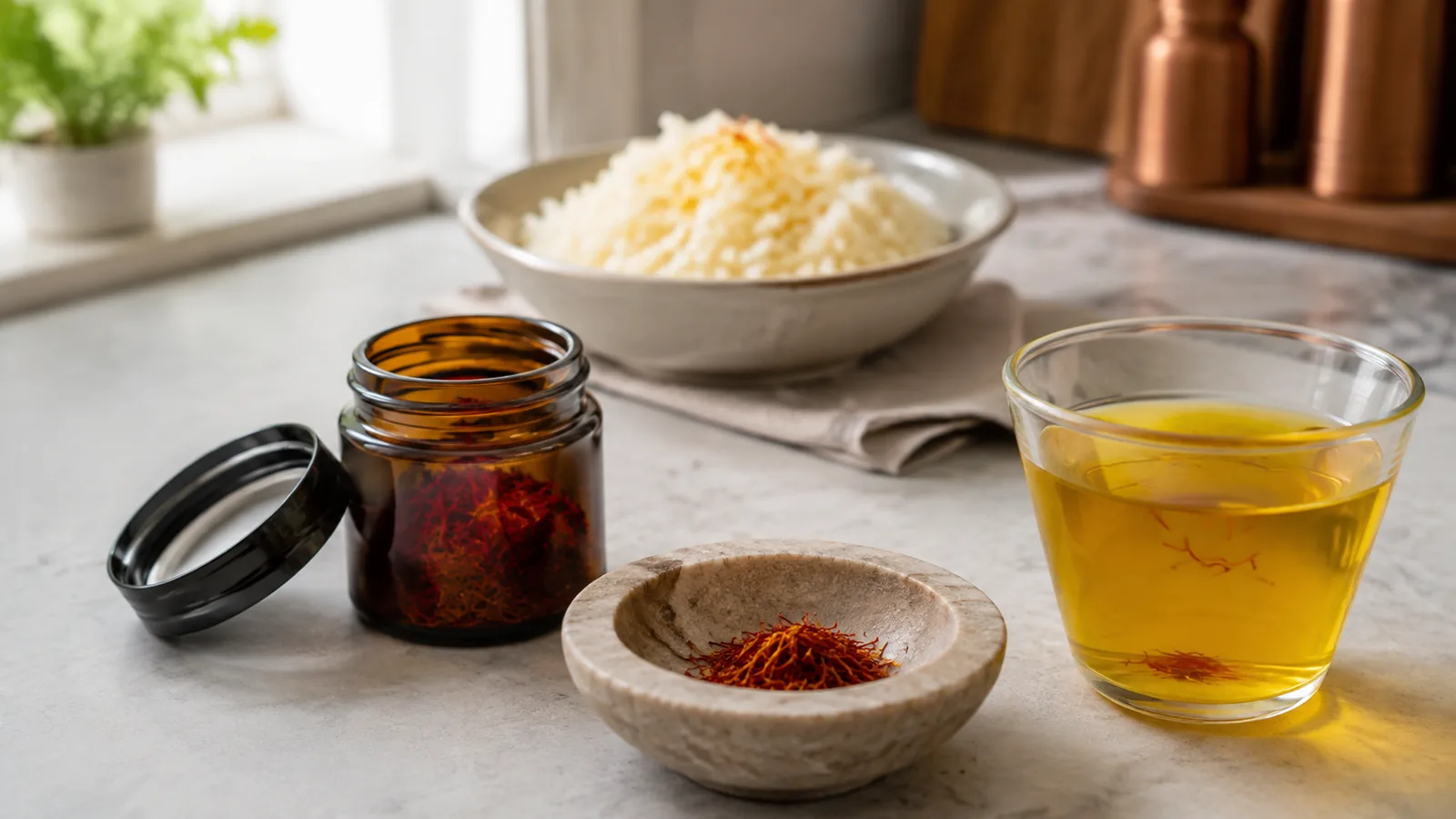
How to store saffron at home
Keep saffron in a clean, dry, airtight container. An opaque tin or dark glass jar is convenient; a clear jar also works when it stays inside a closed cupboard. Choose a place away from the stove, oven, dishwasher, sunny window, and other sources of heat or steam.
Saffron storage depends on limiting light, humidity, heat, and repeated exposure to air. Light can fade sensitive compounds, while humidity encourages clumping and deterioration. If you buy saffron in bulk, divide it into a working jar and a tightly sealed reserve so most of the threads stay undisturbed.
What good packaging should do
Regardless of brand, these are useful standards for any saffron package. Packaging should:
- limit the entry of air and moisture;
- protect the threads from light;
- keep them from being crushed during transport;
- carry enough product and origin information for traceability; and
- close securely after opening.
Foil can block light around a sealed container, but loose household foil is not a substitute for an airtight, food-safe package. The container itself should be clean, dry, odor-free, and easy to close correctly.
How to keep saffron fresh
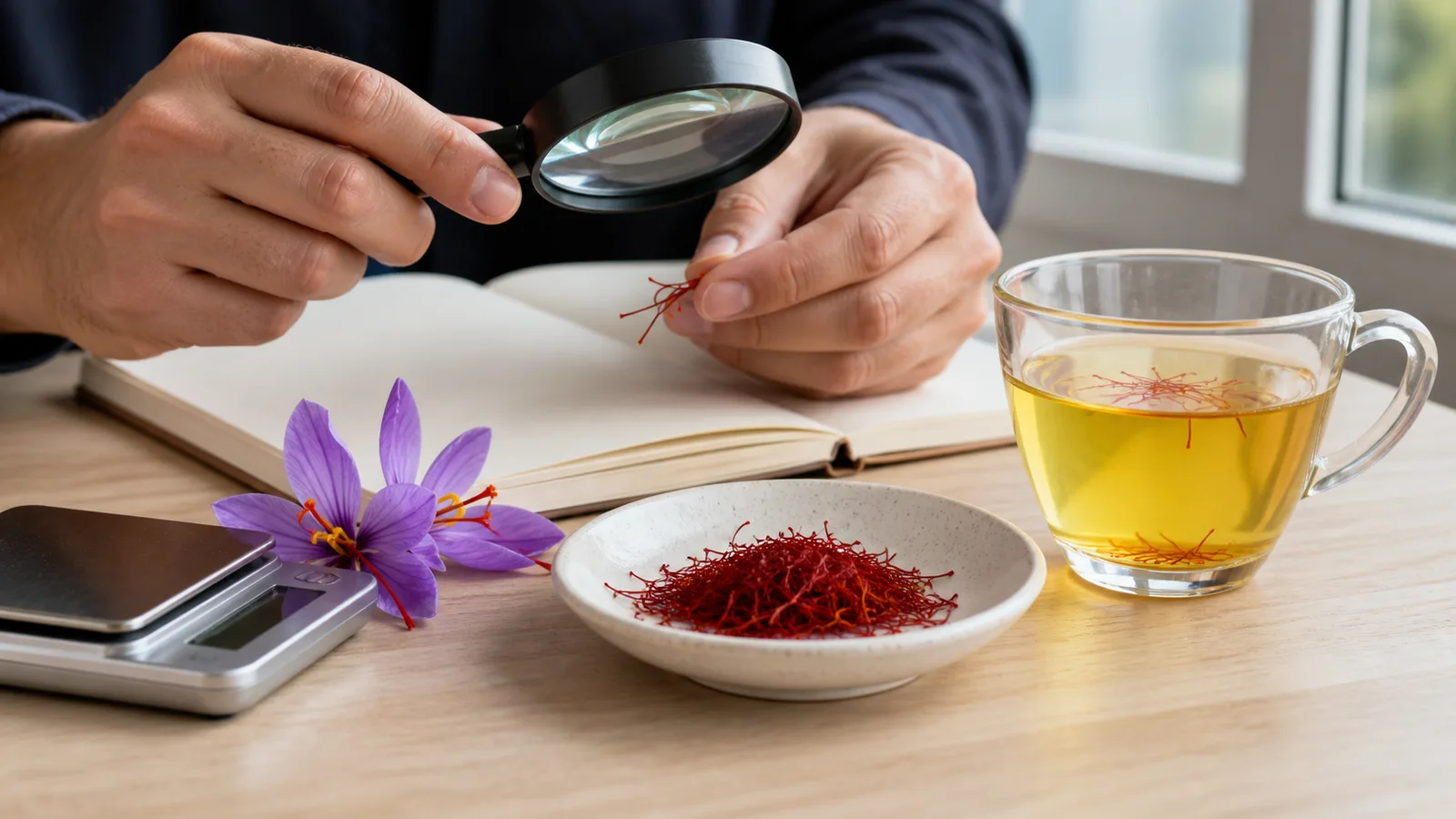
To understand how to preserve saffron, judge its condition rather than relying on an arbitrary six-month deadline. Properly dried and sealed threads can remain usable beyond six months, but their aroma and color strength gradually decline. A printed best-before date, packing date, and the way the package has been stored all provide useful context.
Write the opening date on the container and use the older jar first. If the saffron smells musty, shows moisture, contains visible mold or insects, or has been contaminated by a wet utensil, discard it. A weaker aroma on its own may simply mean age, but it will affect how much flavor the threads contribute.
Refrigerator and freezer storage
A stable, cool cupboard is usually the simplest home solution. Refrigerators and freezers introduce condensation risk when a cold container is opened in humid air. If you store a large reserve cold, seal it in small moisture-proof portions and let a portion reach room temperature while still closed before opening it.
For a more detailed comparison of containers, pantry storage, chilling, and ground spice, see our guide to the best methods for storing saffron.
Saffron threads or ground saffron?
Whole threads are easier to inspect and expose less surface area to air. They also let you grind a small amount immediately before cooking. Ground saffron is convenient and disperses quickly, but it can lose aroma faster and is harder to evaluate by sight.
Thread form does not, by itself, prove that saffron is pure, and powder is not automatically adulterated. Buy either form from a traceable seller that provides clear labeling and sensible packaging. Keep pre-ground saffron especially well sealed and use a dry measuring spoon.
How to prepare saffron for cooking
1. Measure and crush the threads
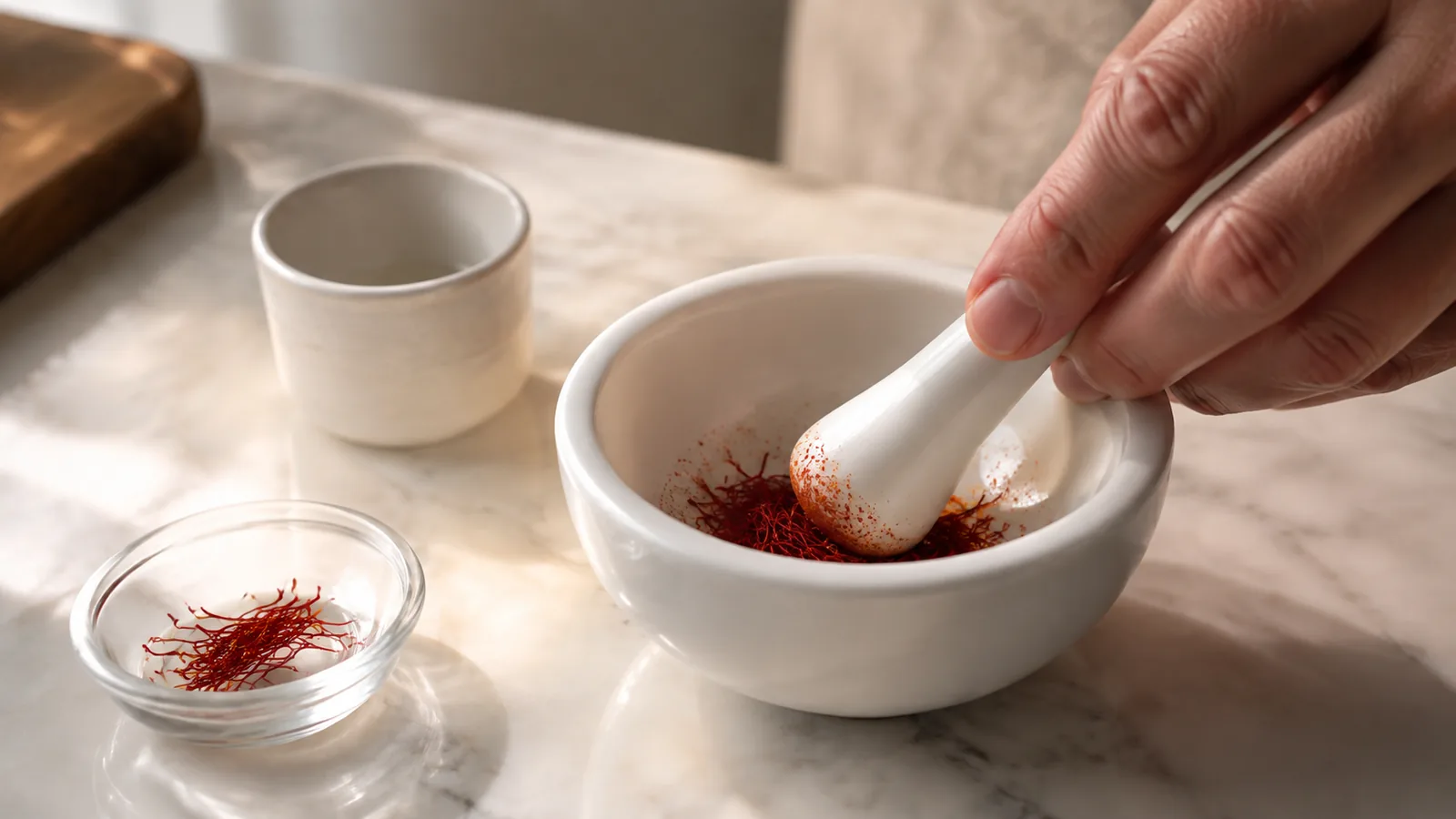
Take only the amount needed for the recipe. Crush the threads in a small mortar until they are fine but not dusty enough to blow away. A pinch of sugar can provide friction for desserts, while a few coarse salt crystals work in a savory recipe if its salt level allows.
2. Make a warm infusion
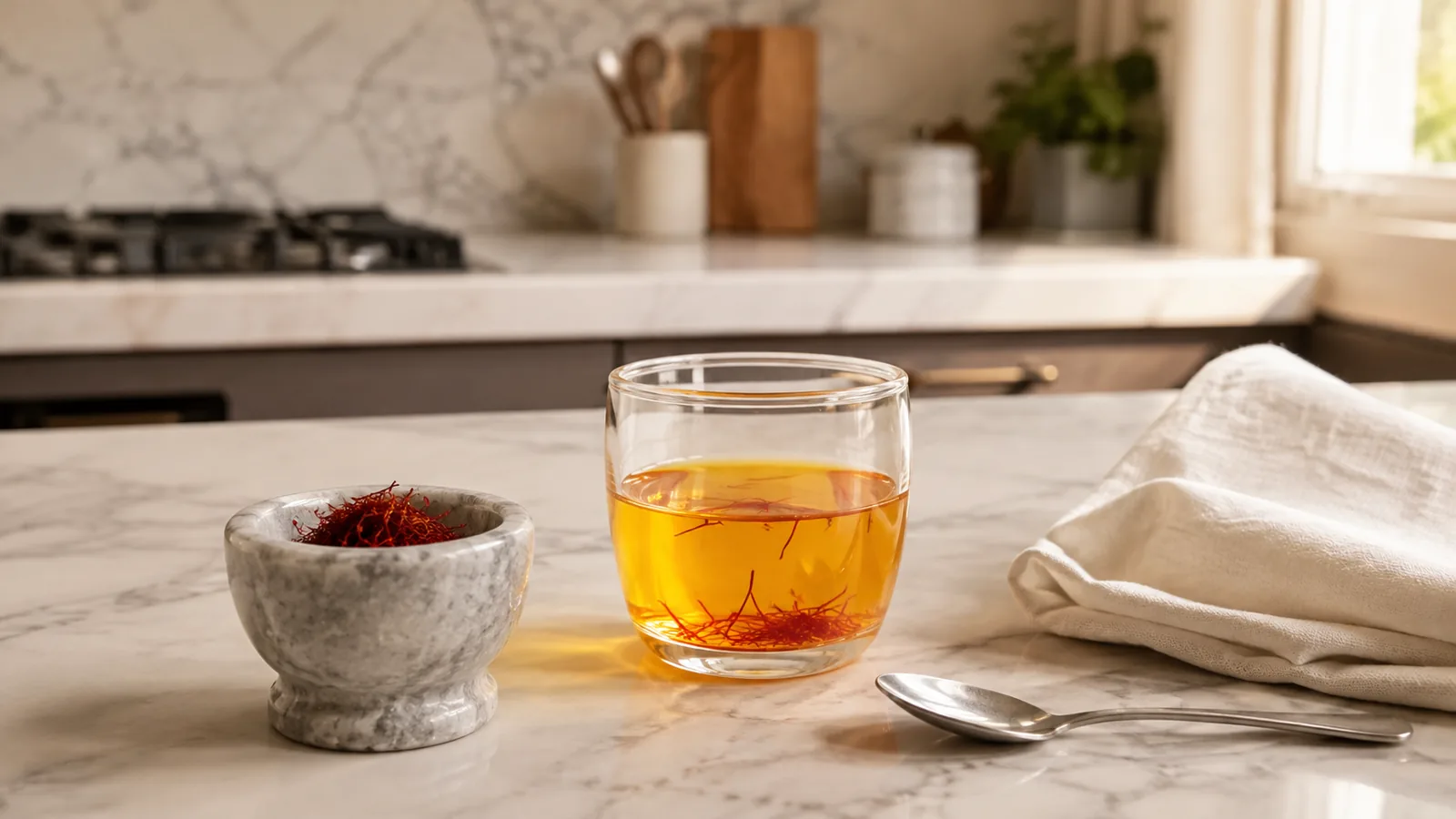
Put the crushed saffron in a small heatproof cup and add a few tablespoons of warm water, milk, or broth. Cover it and steep for about 10–15 minutes. The liquid should become golden and aromatic. Very hard boiling is unnecessary and makes the process less controlled.
Use water when the infusion may go into several dishes, milk for dairy desserts or biryani, and broth when it belongs in a savory sauce. Our full guide to brewing saffron explains warm-water and ice-melting approaches.
3. Add the entire infusion
Pour both the liquid and the softened threads into the dish. The old suggestion to dry and reuse the steeped threads is false economy: most of their readily extracted color and flavor has already moved into the first liquid. Reusing them produces a weak result and complicates clean handling.
How much saffron to use
There is no useful single dose for every recipe. Thread strength, serving count, liquid volume, and the desired intensity all matter. For a family-sized rice dish or dessert, begin with a generous pinch, bloom it, and judge the infusion before adding more. A recipe developed by weight should be followed by weight rather than translated into an uncertain number of threads.
Saffron is assertive. Too little may disappear behind onion, tomato, coffee, cardamom, or rosewater, while too much can taste bitter or medicinal. Increase it in small steps and keep other strong aromatics measured.
When to add saffron in cooking
Timing depends on what you are making. A long-cooked stew can receive part of the infusion during the simmer, with a smaller portion nearer the end for a fresher aroma. In rice, the infusion may color a portion of cooked grains that is folded through or spooned on top. In cake batter, custard, and ice cream, cool the infusion before combining it with eggs, butter, cream, or gelatin.
Avoid placing dry threads directly in hot frying fat. Localized heat can scorch them before their flavor disperses. If a recipe calls for finishing a pan sauce with saffron, add the infusion to the liquid rather than trying to fry the spice.
Dishes that suit saffron
- Rice: Persian chelow, tahdig, biryani, paella, and risotto.
- Proteins: chicken, lamb, fish, and shellfish with a sauce or marinade that can carry an infusion.
- Soups and sauces: broths, seafood stews, and cream sauces.
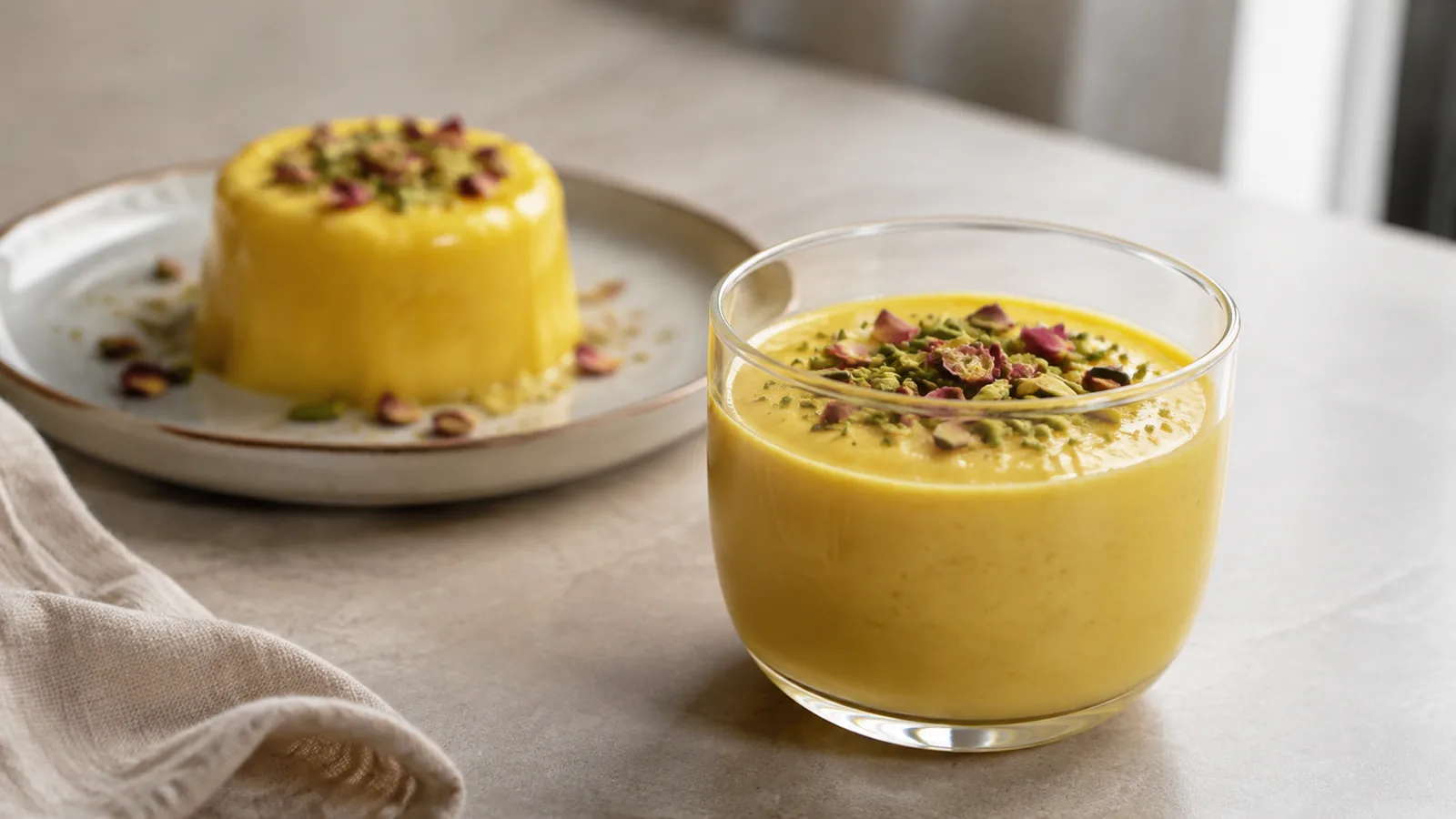
- Desserts: rice pudding, halva, panna cotta, ice cream, custard, cakes, and cookies.
- Drinks: tea, warm milk, cardamom coffee, and chilled saffron syrup.
Pairing is more important than putting saffron into as many dishes as possible. Ingredients such as pistachio, almond, rosewater, orange, cardamom, basmati rice, butter, and mild dairy leave room for it. Heavy smoke, excessive chili, or too many competing perfumes can hide what you paid for.
Common storage and cooking mistakes
- Keeping a clear jar in direct sunlight.
- Opening the container above a steaming pot.
- Using a wet spoon or returning damp threads to the jar.
- Grinding the entire supply long before it is needed.
- Assuming threads are automatically pure or powder is automatically fake.
- Scorching saffron in a dry pan or hot oil.
- Discarding the infusion liquid or trying to reuse spent threads.
- Adding extra saffron only to chase a brighter color.
A simple routine for better saffron
Store the main supply in a sealed, dark, stable place. Measure with a dry utensil, crush only the portion you need, steep it in a small amount of warm liquid, and add that complete infusion at the right stage of the recipe. These habits preserve more of saffron’s culinary value than promotional packaging claims or a rigid freshness deadline.
Saffron in cooking should be treated as an ingredient, not a health treatment. Its practical contribution is color, aroma, flavor, and culinary tradition. Good storage protects those qualities; careful preparation lets them reach the plate.