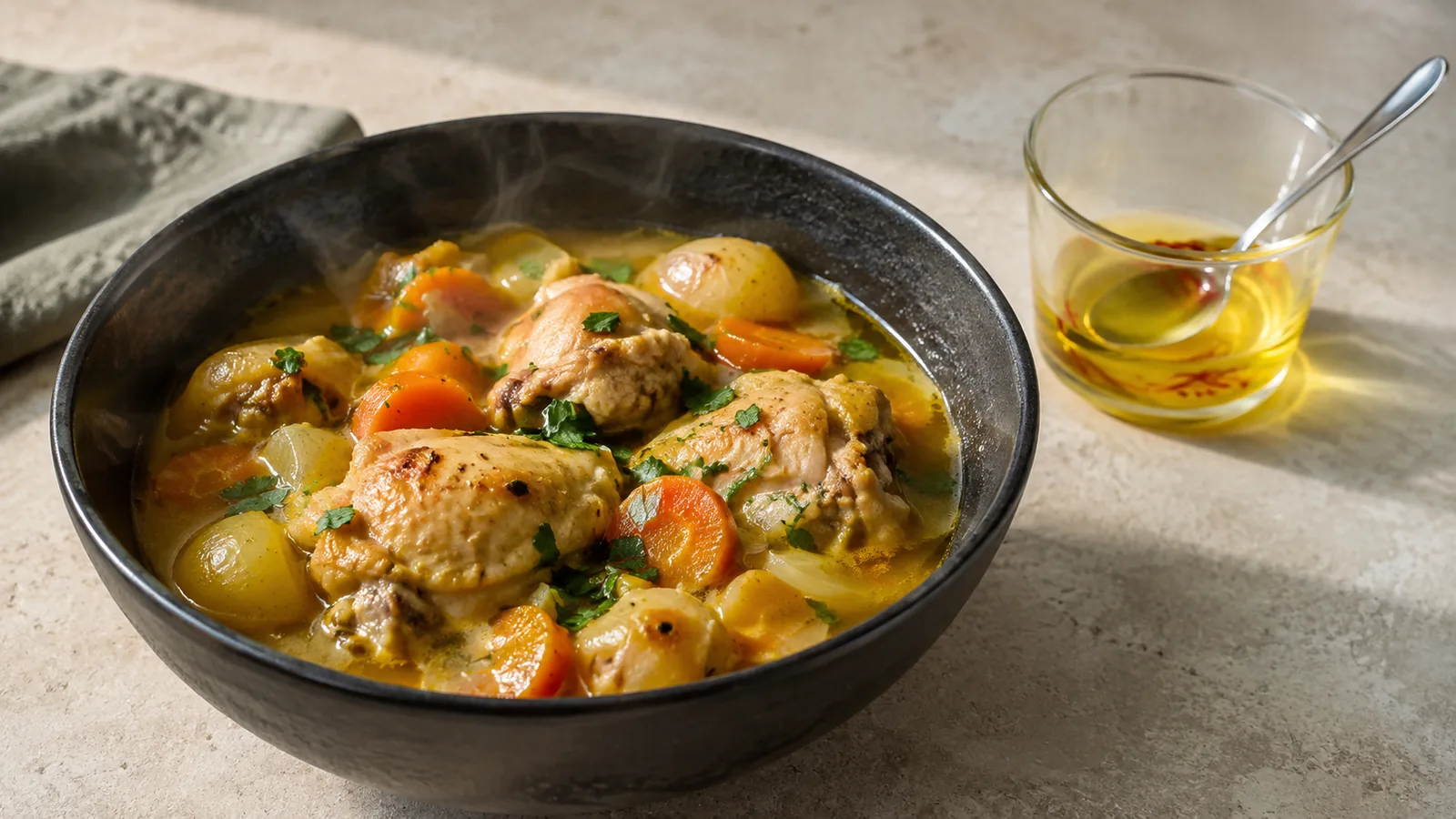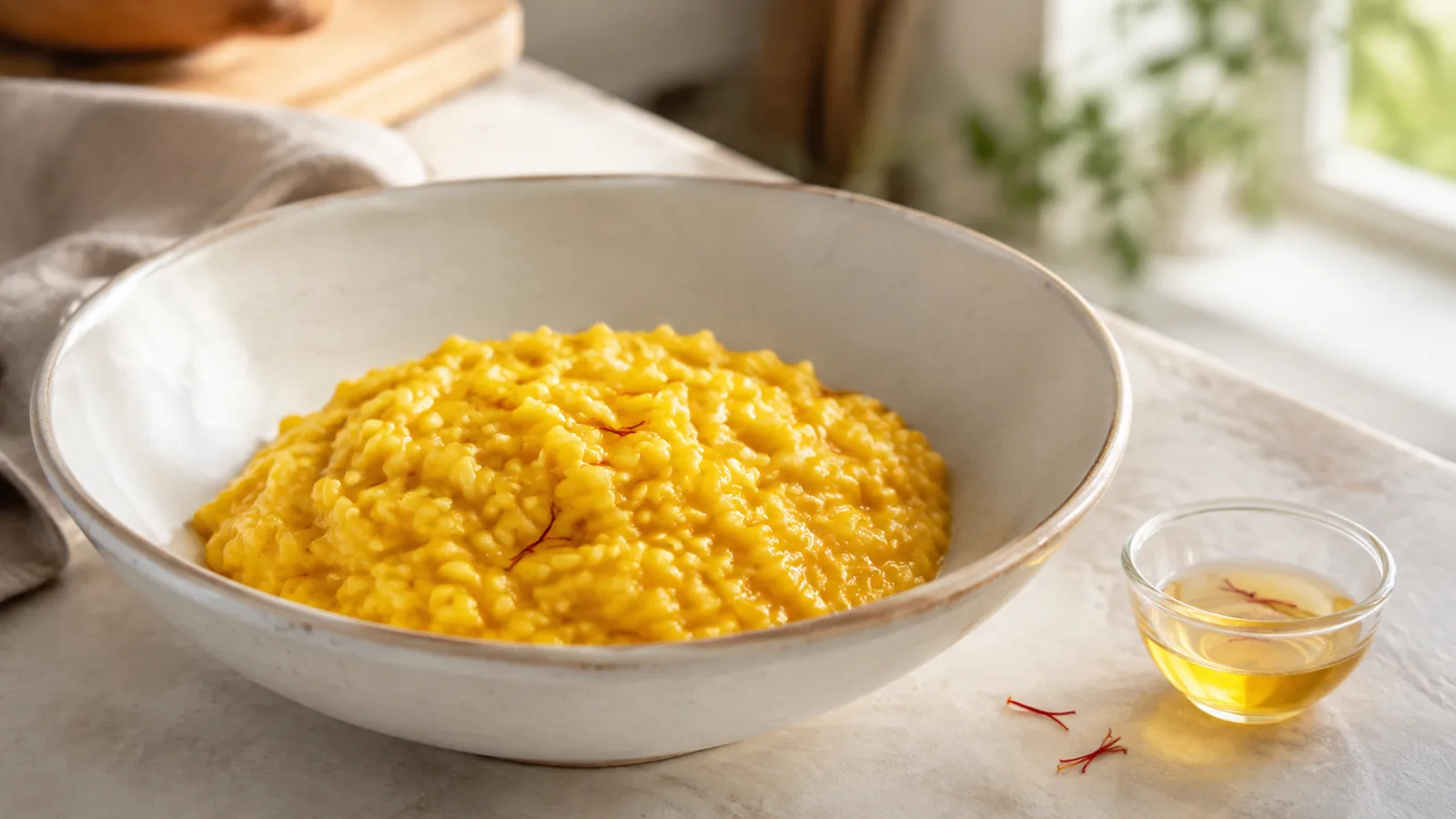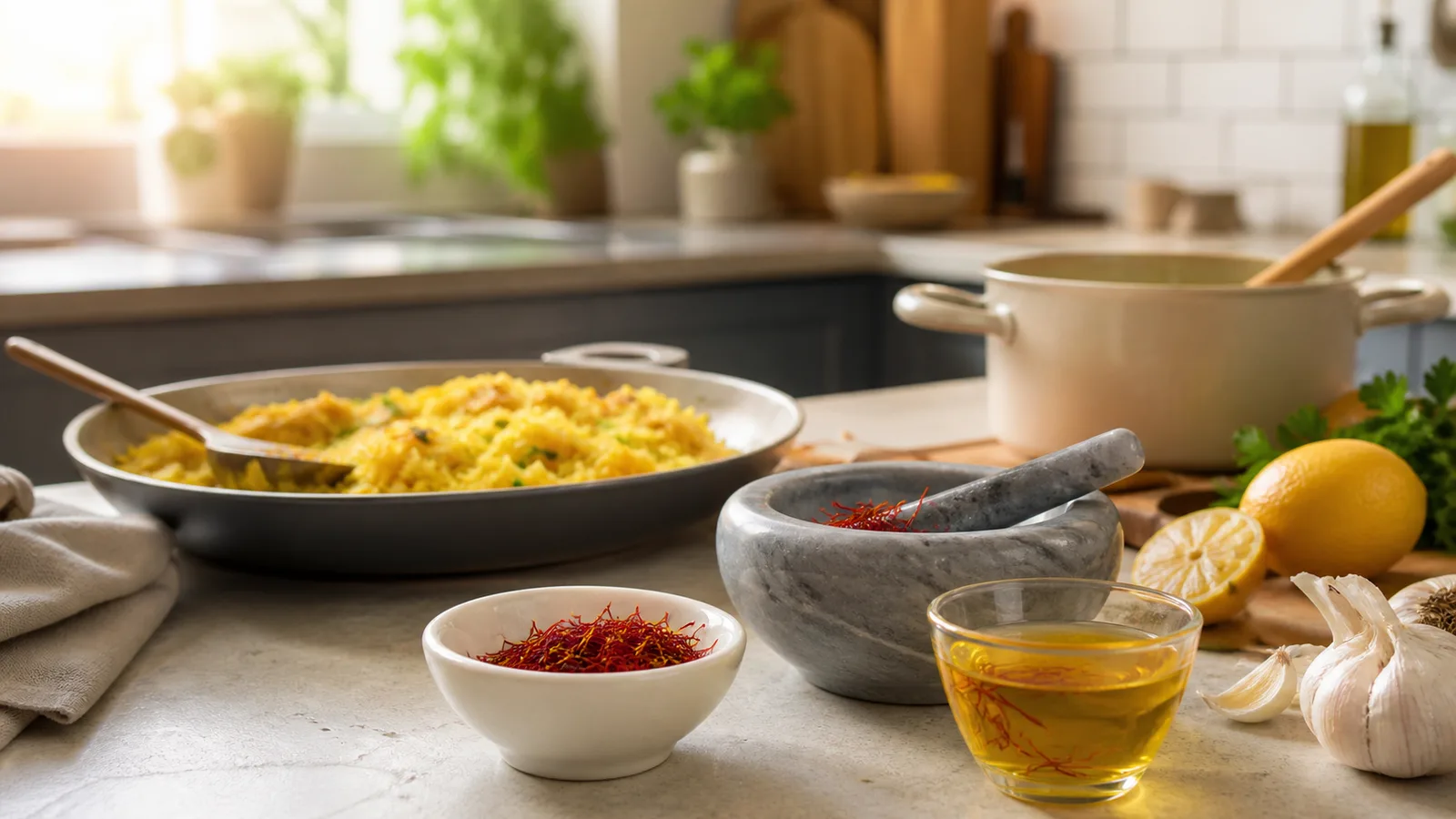
Saffron in cooking works best when the threads are lightly crushed, steeped in a small amount of warm water or milk, and then added where their aroma will not be boiled away. For a dish serving four to six people, roughly 0.08–0.1 g—often 30 to 40 threads—is a sensible starting point. It is enough to give rice, broth, sauce, or dessert a clear saffron character without making it bitter.
This is a spice that rewards a quiet hand. It can bring gold color, a warm floral aroma, and a faintly earthy bitterness to a dish, but it does not need to announce itself before every other ingredient. The practical skill is learning how much to use, what to steep it in, and when to add it.
How to use saffron in cooking
The basic method takes about 20 minutes and works for most home recipes:
- Measure the threads. Start with 0.08–0.1 g for four to six servings. Use a little less in a delicate custard and adjust upward only if the recipe is large.
- Crush them lightly. A mortar and pestle is useful, but the aim is a coarse powder, not dust scattered across the counter.
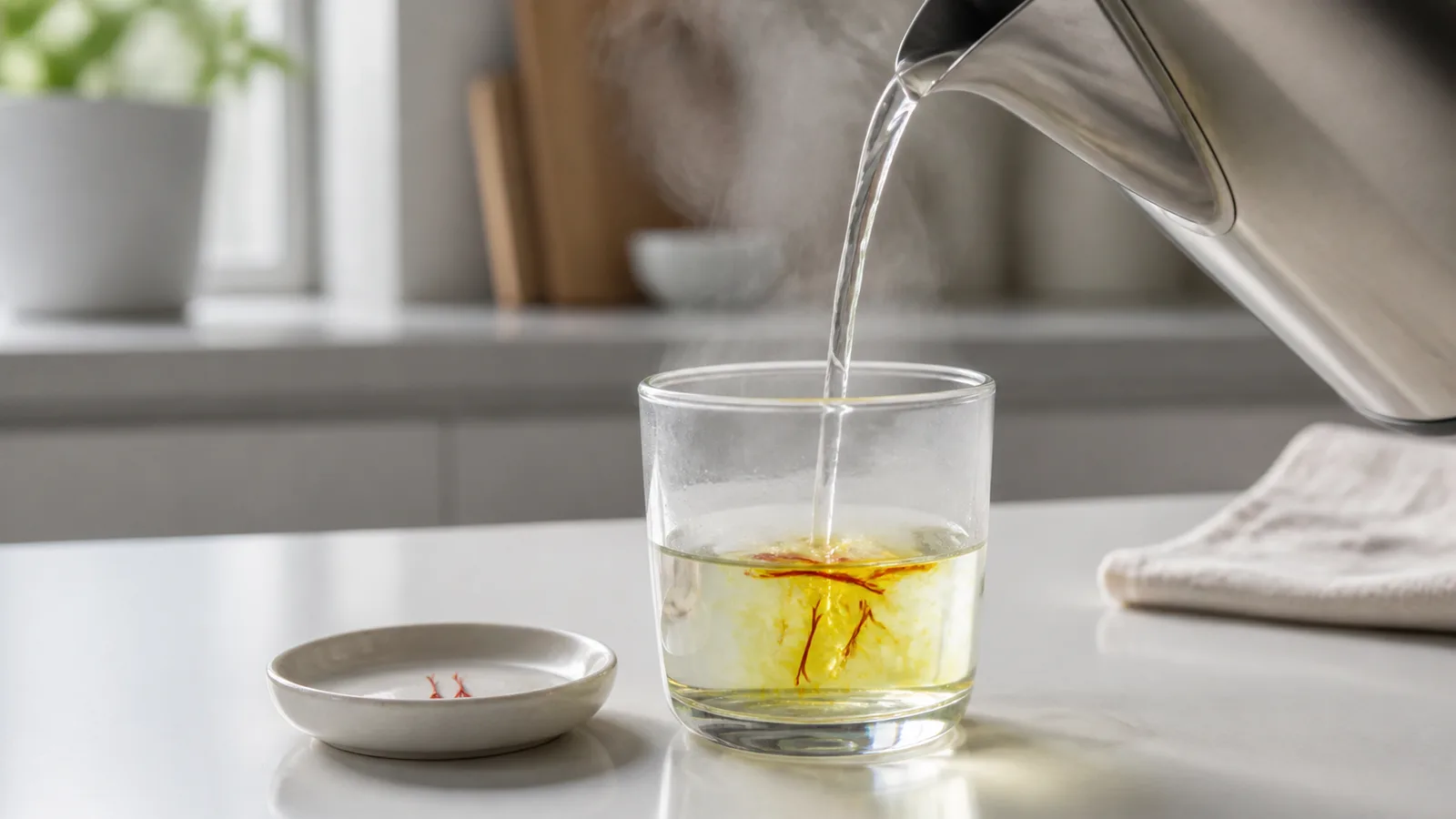
- Add a small amount of liquid. Use 2–3 tablespoons of warm water for savory dishes or warm milk for a dairy dessert. The liquid should feel warm, not be rolling at a boil.
- Cover and wait. Let the mixture stand for 15–20 minutes so the color and aroma move into the liquid.
- Add the whole infusion. Pour in both the liquid and the softened saffron. When possible, reserve a little for the later part of cooking so the finished dish keeps a fresher aroma.
Our detailed saffron infusion guide compares the common blooming methods and explains why violently boiling the threads is unnecessary.
Choose the blooming liquid to suit the dish
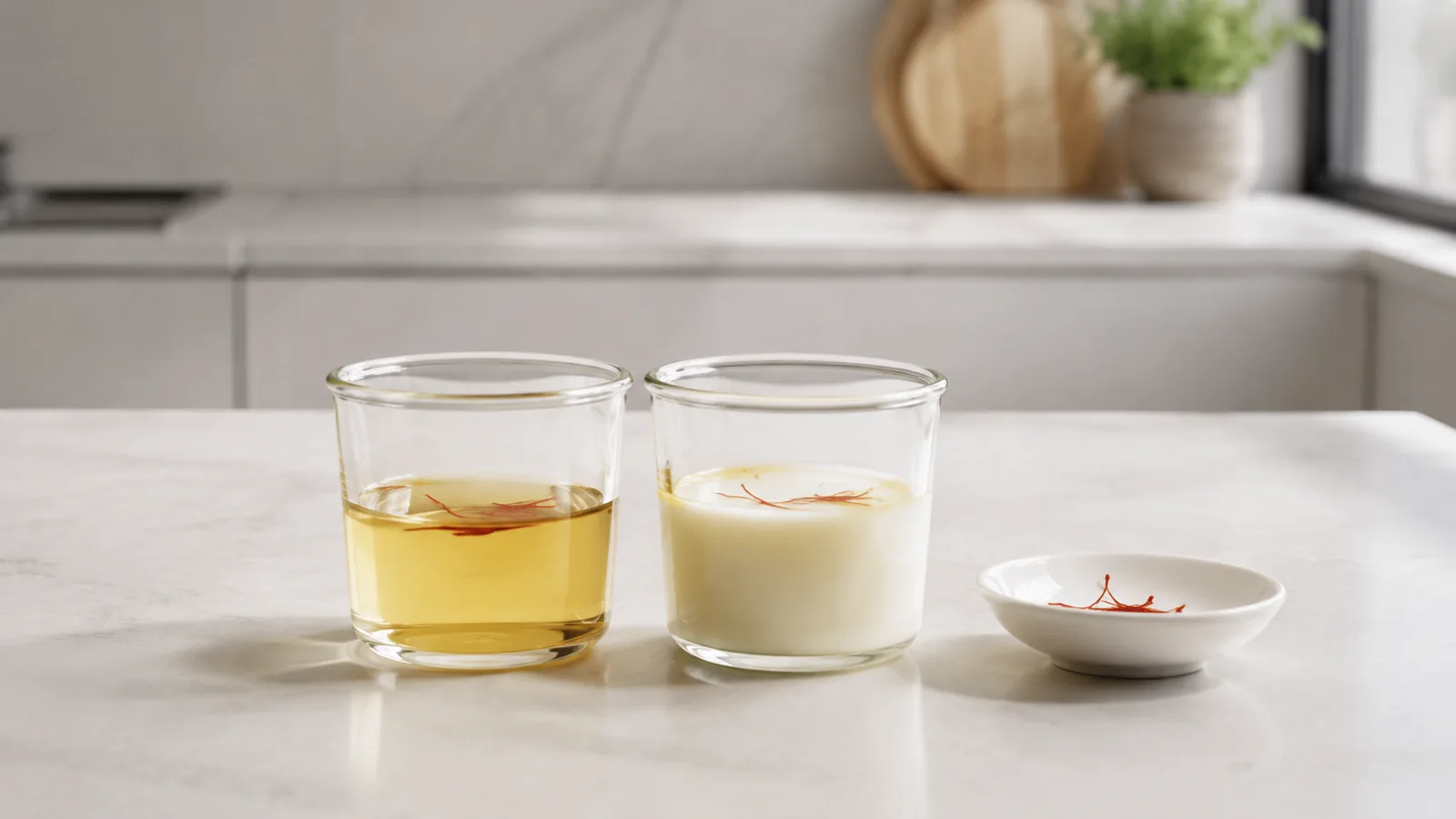
Warm water
Water is the most flexible choice for rice, paella, soups, stews, chicken, seafood, and vegetable dishes. Because it has no flavor of its own, it lets you judge the saffron before adding the infusion to the pot.
Warm milk
Milk suits kheer, kulfi, custard, ice cream, milk pudding, and warm drinks. Take a spoonful or two from the recipe rather than adding unplanned liquid. Milk should be comfortably warm, then covered while the saffron steeps.
Broth or stock
For risotto, paella, soup, or a braise, you can steep saffron in a small cup of the recipe’s warm stock. Taste the stock first. If it is aggressively salty or strongly spiced, water may give you better control over the saffron.
Ground with sugar
For cake, biscuit, or sweet dough, a pinch of sugar helps keep the threads steady in the mortar. The ground mixture can then be bloomed in the recipe’s milk or water. This is more reliable than dropping dry threads into flour and hoping they disperse evenly.
When should saffron go into the pan?
Timing depends on what you are cooking. Rice needs enough time for the infused liquid to spread, but a long-simmered stew benefits from a second, smaller addition near the end. A dairy base should receive saffron while it is warm enough to distribute the flavor, then be kept below a hard boil.
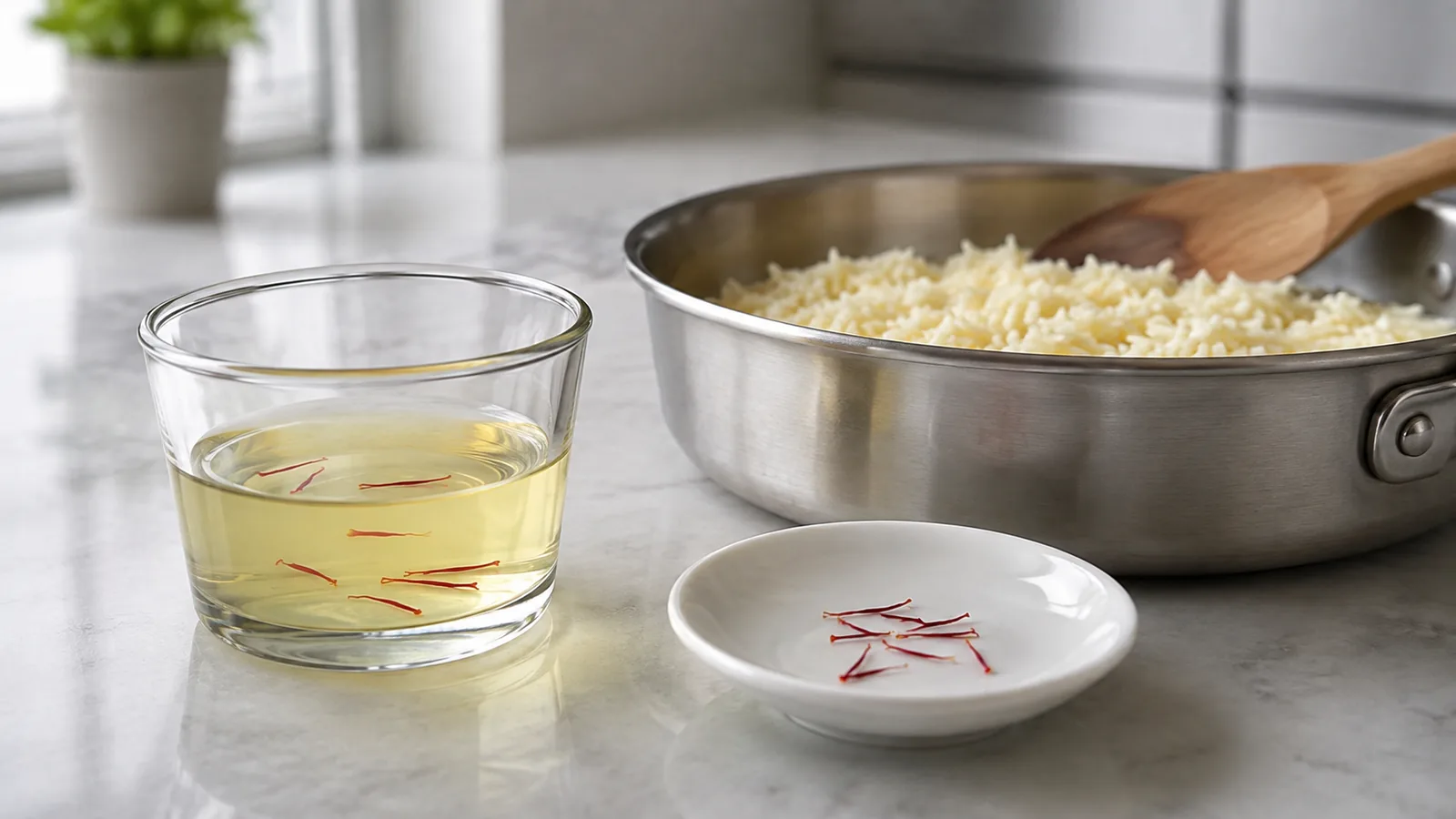
- Steamed rice: mix the infusion with part of the cooked rice for a gold garnish, or distribute it through the pot before the final steaming stage.
- Paella: blend it into the stock before the rice absorbs that liquid.
- Risotto: add the infusion during cooking, with a small amount held back for the final minutes if you want a clearer aroma.
- Biryani: drizzle a water- or milk-based infusion over the layered rice before dum cooking.
- Soup and stew: add most after the harshest simmering has passed; taste before adding more.
- Cake and dessert: mix the infusion into the wet ingredients so it does not form isolated dark streaks.
Popular dishes with saffron
Saffron rice and Persian dishes
Persian cooking uses saffron in steamed rice, tahchin, chicken, kebabs, stews, halva, sholeh zard, tea, and ice cream. In a platter of white rice, the gold portion is often used as a garnish rather than coloring every grain. That contrast is part of the dish. Our saffron rice recipe gives both the garnish and full-pot methods.
Paella, risotto, and biryani
Spanish paella, risotto alla Milanese, and South Asian biryani use different techniques, so saffron should not be handled as a decorative afterthought common to all three. Paella carries it in stock, risotto develops it through repeated additions of liquid, and biryani often receives a saffron drizzle across layered rice. The spice supports the method already belonging to each dish.
Chicken, seafood, soups, and sauces
Saffron works particularly well in pale broths and sauces where its color remains visible. It can season chicken braising liquid, a seafood broth, a cream sauce, or a vegetable soup. Onion, garlic, citrus, tomato, and gentle stock can all accompany it; the balance depends on the regional recipe.
Ice cream, custard, and baking
Dairy softens saffron’s bitter edge. Saffron ice cream, pudding, and custard are therefore natural places for it. Cardamom, rosewater, pistachio, almond, orange, and lemon are familiar partners. Use them with restraint. Three strong perfumes in the same spoonful can leave none of them distinct.
What does saffron taste like?
Good saffron is aromatic before it reaches the pan. People describe it with words such as floral, hay-like, warm, earthy, or honeyed, although it is not sweet on its own. The taste includes a gentle bitterness. If a finished dish tastes sharply medicinal or bitter, too much saffron—or a poor balance of other seasonings—is more likely than too little.
Color alone is not a useful guide to flavor. Turmeric can make food yellow, while safflower petals can add warm color, but neither reproduces saffron’s aroma. A product that releases an unnaturally intense color immediately and has little recognizable scent deserves scrutiny.
Common mistakes when cooking with saffron
- Using too much: more threads do not automatically make a more elegant dish. Start measured and taste.
- Adding dry threads unevenly: a bloom distributes the spice more consistently than a small pile dropped into one corner of the pot.
- Boiling the infusion hard: prolonged high heat can dull the aroma you paid for.
- Letting other spices bury it: saffron can live beside garlic, cardamom, cinnamon, citrus, or rosewater, but it should still be detectable.
- Chasing color alone: the goal is a balanced smell and taste, not the deepest possible yellow.
- Leaving the jar beside the stove: heat, light, air, and moisture shorten the useful life of the spice.
Does cooking with saffron create health benefits?
The previous version of this article claimed that saffron in a meal improves digestion and memory and combats anxiety, insomnia, and depression. Those statements were too strong for a culinary guide. Research involving defined saffron extracts and controlled doses cannot be transferred automatically to a serving of rice, soup, or ice cream.
Cook with saffron because its flavor, aroma, color, and culinary history suit the dish. Food is not a substitute for care for depression, sleep problems, digestive symptoms, or another health condition. Concentrated supplements also need a separate safety discussion, particularly during pregnancy or alongside medication.
How to store saffron between recipes
Keep the threads in an airtight container, away from direct light, steam, and the heat of the cooker. Grind only what you plan to use. If the aroma has faded, adding a large quantity may make the food bitter without restoring the fragrance of fresher saffron.
A small jar can last through many meals when it is measured carefully. Start with a proper infusion, choose a liquid that belongs in the recipe, and add it at a point that protects the aroma. That simple routine does more for saffron in cooking than any complicated trick.