


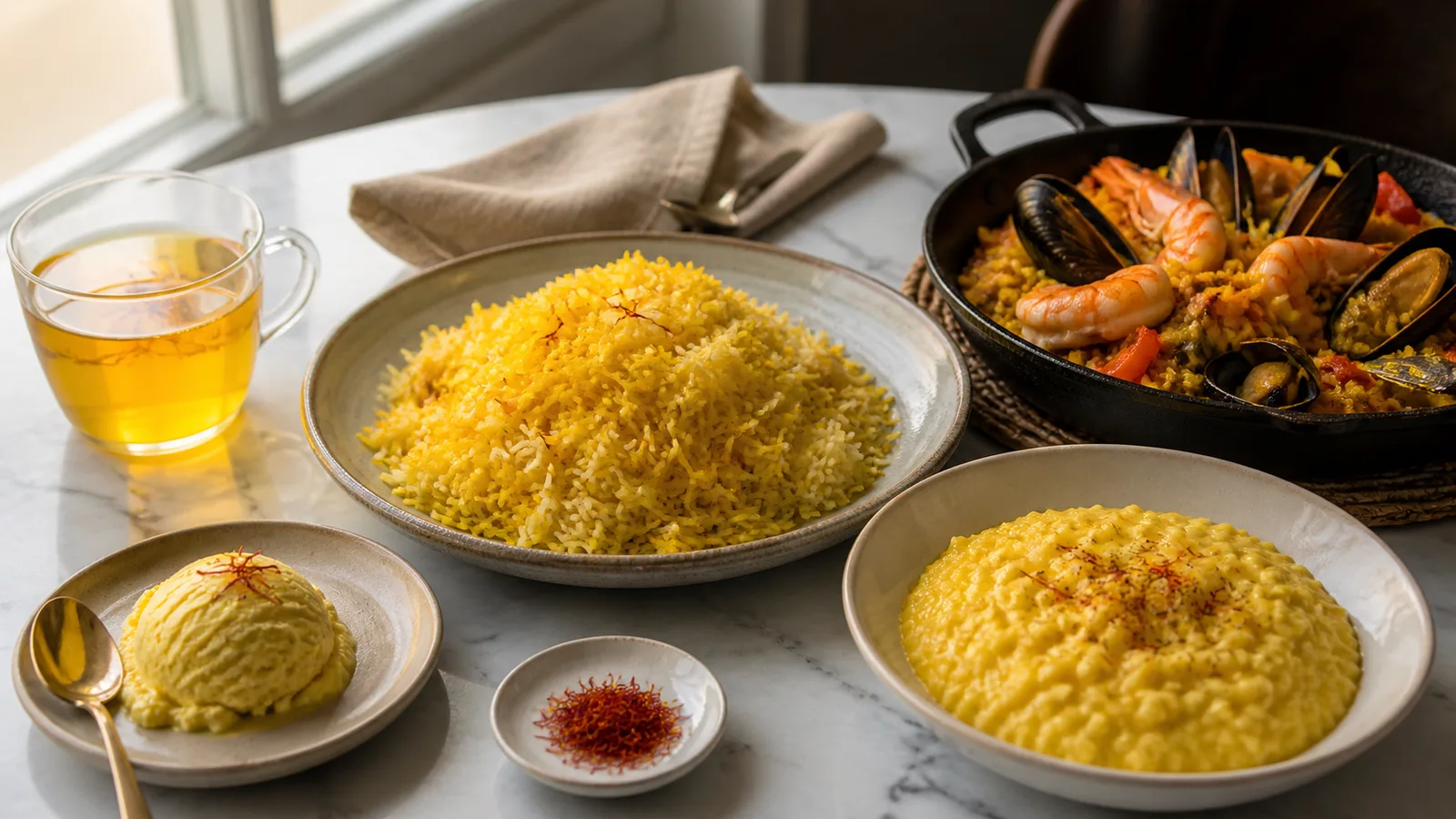
The uses of saffron in food come down to three qualities: golden color, a distinctive aroma, and a gently bitter flavor that can make both savory and sweet dishes more complex. It appears in Persian rice and desserts, Spanish paella, Italian risotto, Indian biryani and kheer, Gulf coffee, breads, ice cream, confectionery, and many other saffron foods.
Saffron is powerful enough that a small amount can shape an entire dish. That is also why it needs a little care. Blooming the threads in warm water or milk distributes them more evenly, while prolonged high heat or a heavy hand can flatten the aroma and make the flavor harsh.
What does saffron do to food?
Saffron contributes several things at once:
- Color: water-soluble crocins create shades from clear yellow to deep gold.
- Aroma: safranal and other volatile compounds give saffron its warm, hay-like, floral character.
- Taste: picrocrocin contributes the slight bitterness that keeps saffron from tasting simply perfumed.
- Identity: in dishes such as tahchin, risotto alla Milanese, and paella, saffron is part of what makes the dish recognizable.
The FAO/WHO food-additive monograph describes saffron’s functional uses as color and flavor, while treating it as a food ingredient rather than an ordinary additive. That distinction fits the kitchen: saffron is not merely dye. Its aroma and taste matter just as much.
The main saffron uses in food are practical rather than mysterious: season a liquid, color a grain or dough, perfume a dairy base, or give a finished dish a recognizable regional character.
Culinary uses of saffron: what is it used for in cooking?
Most cooks use saffron in one of four ways:
- Bloomed in water for rice, soups, stews, and sauces.
- Bloomed in warm milk for desserts, custards, ice cream, or drinks.
- Added to a broth for seafood, risotto, or braised dishes.
- Ground with a little sugar when it will be dispersed through baking mixtures.
These saffron culinary uses all work better when the spice is dispersed before it reaches the main mixture. When readers ask what is saffron used for in food, the short answer is rice, broth, dairy, baking, confectionery, and drinks—but the infusion method changes with the recipe.
For a family-size dish, 30–40 threads—about 0.08–0.1 g—are often enough. Lightly crush them, add 2–3 tablespoons of warm water, cover for 15–20 minutes, then use the liquid and softened threads. Our saffron infusion guide explains the process in detail.
Uses of saffron in Persian food
In Iranian kitchens, saffron is woven through everyday cooking and celebrations. The Food and Agriculture Organization’s page on the Qanat-based Saffron Farming System in Gonabad notes its extensive use with rice, sweets, cakes, ice cream, and drinks, alongside its cultural importance and role in local livelihoods.
Rice dishes
Persian cooks often fold a saffron infusion into a small portion of steamed rice and spoon it over a white platter. It also colors the yogurt-and-egg mixture in tahchin, brightens zereshk polo with chicken, and works through jeweled rice with fruit and nuts. See our measured saffron rice recipe for both full-pot and garnish methods.
Stews, chicken, and kebabs
Saffron can be added near the end of a chicken braise, brushed over kebabs, or stirred into a sauce once its strongest cooking has finished. Adding some infusion later keeps the aroma clearer than simmering every thread from the beginning.
Sweets and drinks
Sholeh zard, Persian saffron ice cream, halva, rice pudding, cakes, and syrups all use saffron comfortably. Rosewater and cardamom are familiar partners, but they should not overwhelm it. In tea or a chilled syrup, start with a teaspoon of concentrated infusion per serving and adjust by taste.
What cuisines use saffron?
Spain
Paella is the best-known Spanish example. Saffron is infused into the stock so its color and flavor spread through the rice. It should support the seafood, meat, vegetables, and toasted rice notes rather than make the pan taste perfumed.
Italy and Switzerland
Risotto alla Milanese uses saffron in a creamy rice dish often served with ossobuco. Saffron also appears in regional breads and baked goods around parts of northern Italy and Switzerland.
India and South Asia
Saffron flavors biryani, pulao, kheer, kulfi, milk drinks, and festive sweets. It is usually bloomed in warm milk or water before being drizzled over rice or folded into dairy.
The Arab world and the Gulf
Arabic coffee may include saffron with cardamom, while rice, meat dishes, and sweets use it in different regional combinations. The exact balance varies by household; saffron does not need to dominate every cup or platter.
France, England, and Germany
French seafood dishes such as bouillabaisse can use saffron in the broth. England has saffron-bun traditions, particularly in Cornwall, while German-speaking regions use the spice in selected breads and cakes. These are distinct local recipes rather than one generic “European” style.
Uses of saffron in food production
Home cooking is only part of the picture. A Codex project document submitted during development of an international saffron standard lists applications in dairy products, confectionery, ice cream, jelly, beverages, chicken, rice, seafood, soups, bread, cakes, and other prepared foods.
In commercial food production, saffron may appear in:
- soft drinks, syrups, tea blends, and dairy beverages;
- ice cream, custard, cream, butter, and cheese;
- cakes, cookies, biscuits, breads, and cake mixes;
- candy, chocolate, jelly, and other confectionery;
- rice dishes, sauces, soups, seafood, and prepared chicken products.
“Natural” does not automatically mean that any quantity or any label is appropriate. Commercial manufacturers still need consistent specifications, contaminant control, accurate ingredient declarations, and enough saffron to justify using its name rather than relying on unrelated color.
Saffron and safflower are not the same food ingredient
Some searches for safflower uses in cooking or safflower uses in food reach saffron pages because the names look similar. The plants and flavors are different. Saffron comes from the dried stigmas of Crocus sativus, a member of the iris family. Safflower comes from Carthamus tinctorius, a thistle-like member of the daisy family.
Safflower petals can add yellow-orange color to food, but they do not reproduce saffron’s aroma or flavor. They should be sold and labelled as safflower, not presented as saffron. A recipe may intentionally use either ingredient; substitution becomes a problem when identity is hidden.
What part of the saffron plant is used?
The red stigmas of Crocus sativus are harvested and dried to make the spice. Kew Science places the species in the Iridaceae family and confirms that its stigmas provide saffron. The plant grows from a corm, not a true bulb, and produces narrow leaves and autumn flowers.
Questions about saffron plant uses need a precise answer: the culinary product is the dried stigma. The leaves, petals, and corm are not interchangeable with the spice sold for cooking.
New corms develop around the parent corm and are used for propagation. The original article’s description of a round underground “bulb” was close in everyday language, but corm is the more accurate botanical term.
A note on saffron’s history
Saffron has a long relationship with Iranian agriculture and cuisine, and Persian forms of its name—including zafaran and older related spellings—appear across languages and historical sources. The former article made very specific claims about ancient Isfahan and Sumerians gathering a plant called “Zerparan” without citing a traceable primary source. Those statements should not be repeated as settled fact.
What can be said safely is that saffron has been cultivated and traded for centuries across West and Central Asia and the Mediterranean, and that Iran remains central to its agricultural and culinary story. FAO recognizes the Gonabad qanat-based saffron system for its agricultural heritage and livelihood value.
Saffron food is not saffron medicine
Saffron syrup, tea, rice, or ice cream may be enjoyable, but a culinary serving should not be promoted as a treatment for depression or low mood, poor appetite, digestive illness, asthma, high blood pressure, or diabetes. Research on standardized extracts does not turn every saffron food into a clinical product.
If someone is pregnant, takes medication, has allergies, or is managing a health condition, concentrated supplements and medicinal preparations need professional advice. That is separate from using a modest amount of saffron to flavor a shared dish.
How to choose and store culinary saffron
- Look for dry red threads with a recognizable aroma rather than damp clumps or obvious colored plant fragments.
- Buy an amount you can use while it is fresh; a large cheap package is poor value if the aroma has faded.
- Keep it airtight, dark, cool, and dry.
- Grind only what the recipe needs so the remaining threads have less exposure to air.
- Bloom it before use and judge aroma and taste as well as color.
Where saffron belongs in the kitchen
Where is saffron used? Almost anywhere its golden color and distinctive aroma make sense: rice, broth, seafood, chicken, bread, cakes, dairy, confectionery, tea, coffee, or chilled syrup. The better question is whether the rest of the recipe leaves room to notice it.
What is saffron used in beyond a familiar rice dish? The examples above show that its range extends from everyday tea to seafood stock, ice cream, biscuits, and celebration desserts.
Keep the amount measured, introduce it through an infusion, and pair it with ingredients that support rather than bury it. That approach explains saffron’s significant role in culinary dishes more honestly than calling it essential to every recipe or attaching a health promise to the plate.

![Exporting Saffron to Turkey + Price Guide [Complete 0 to 100]](https://img.rowhanisaffron.com/20260827003933/saffron-export-turkey-quality-inspection.webp)



