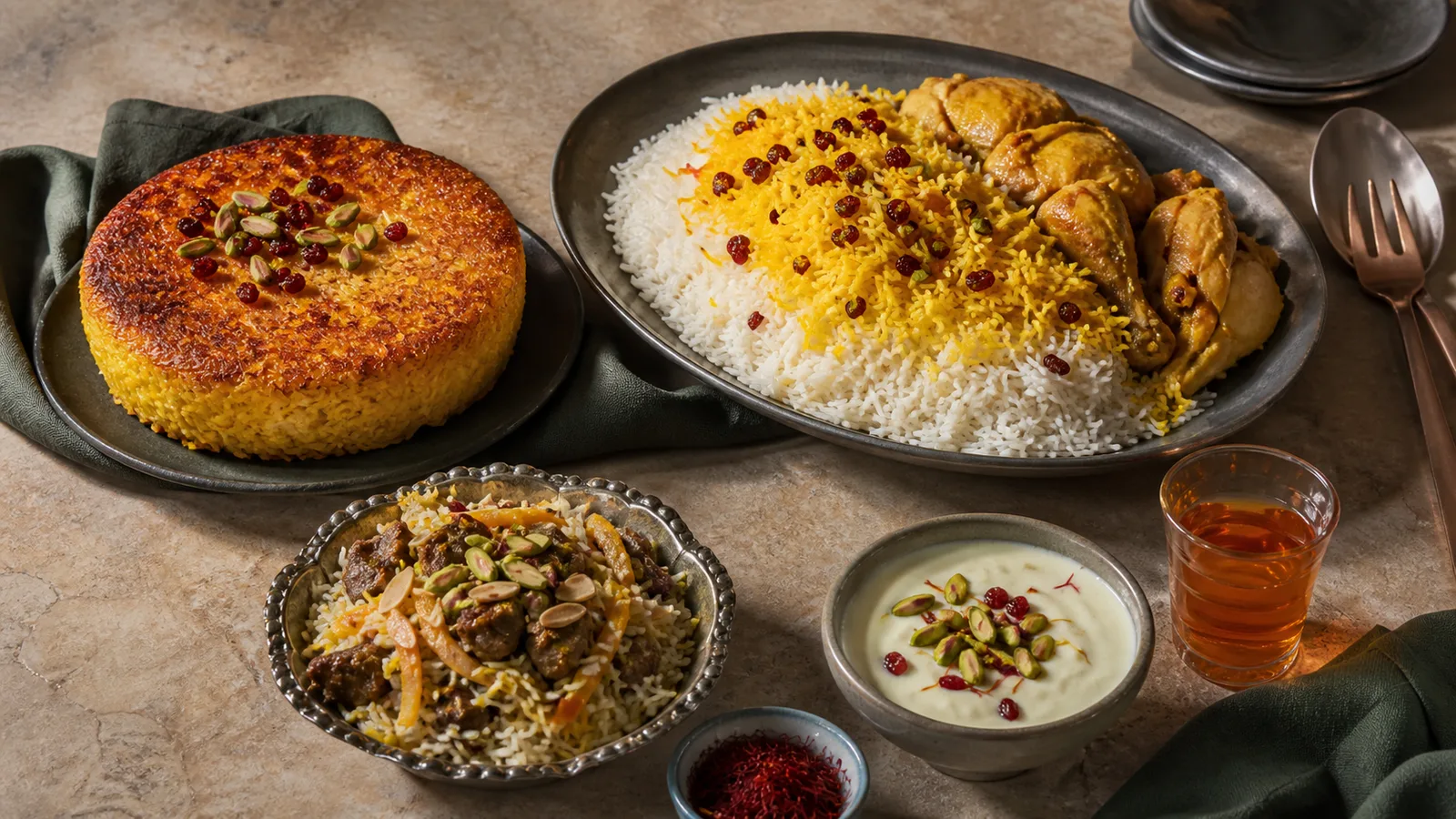
Saffron dishes in Iranian cuisine range from crisp-bottomed tahchin and barberry rice with chicken to Qazvin’s ornate gheymeh nesar and Isfahan’s chilled khoresht mast. The spice is rarely there for color alone. Its aroma moves through rice, yogurt, broth, or syrup, while a small portion of deep-gold food often provides contrast against a larger white or cream-colored dish.
Saffron and Persian cuisine are closely linked, but there is no single “saffron flavor” applied to everything. Tart barberries sharpen it in zereshk polo. Rosewater and cardamom draw out its floral side in a dessert. In a chicken braise, onion and gentle seasoning give it a savory background. The amount and timing change with the food.
How saffron is prepared for Persian dishes
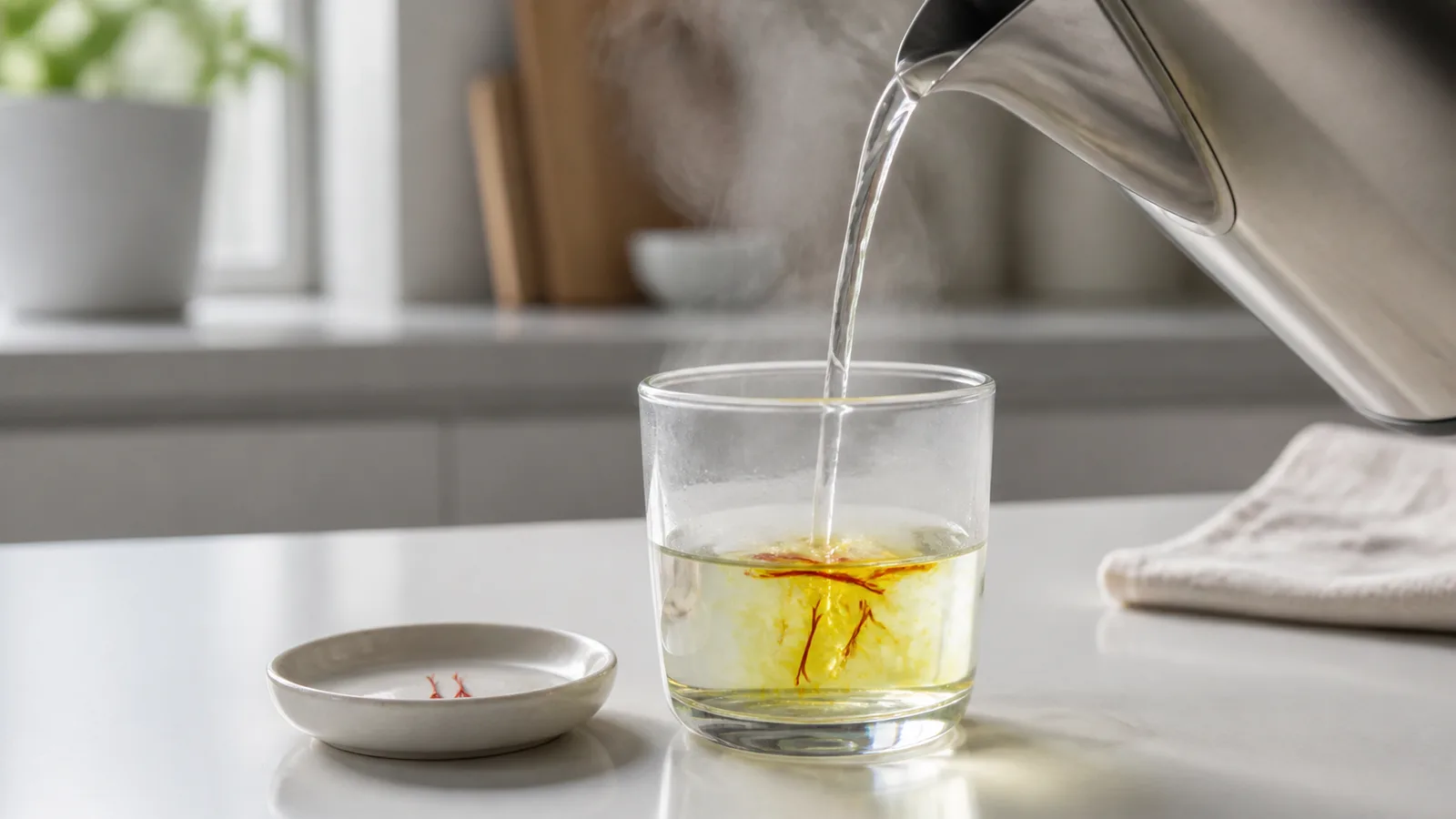
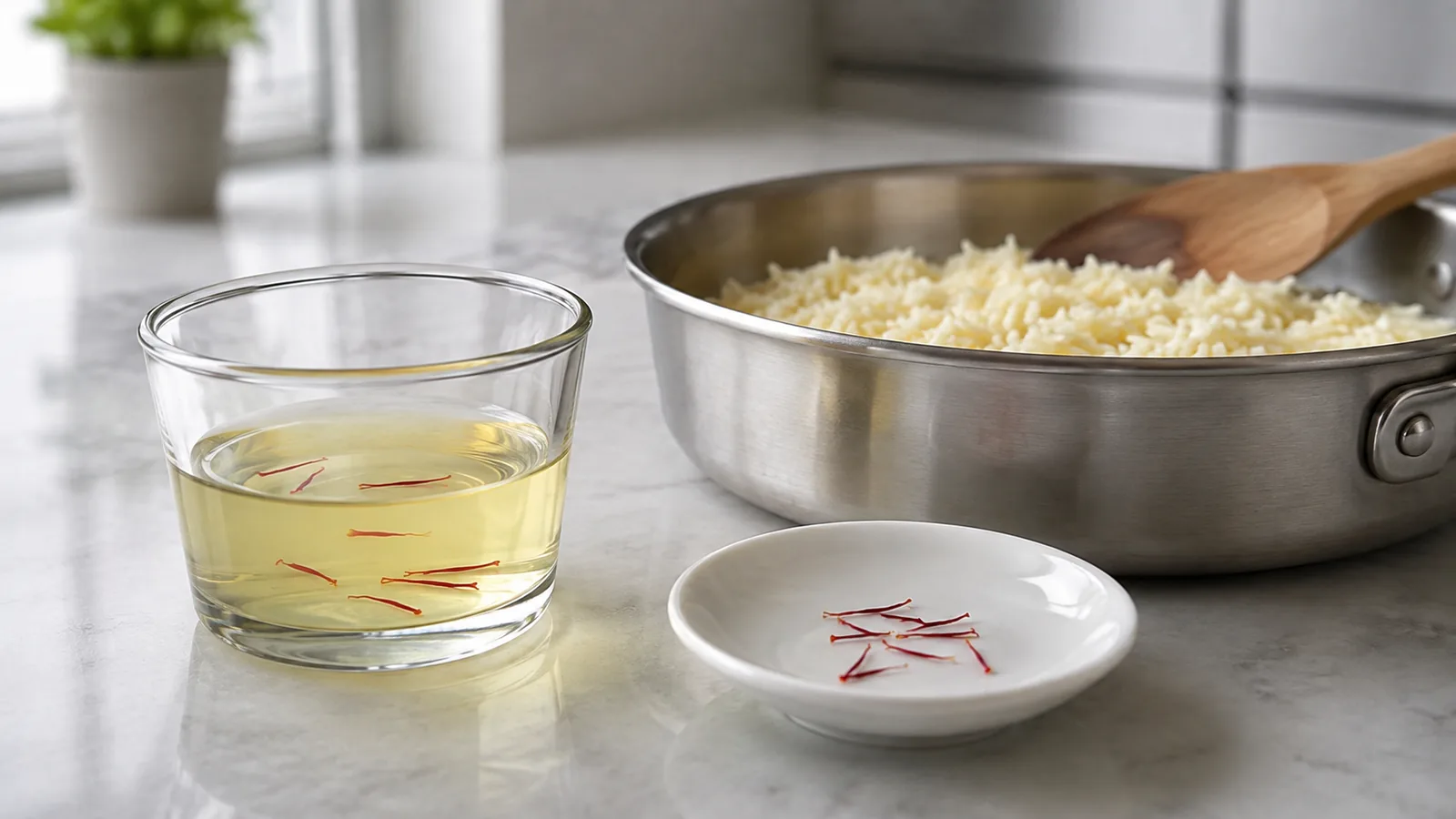
Most of the recipes below begin with a saffron infusion. For four to six servings, lightly grind 0.08–0.1 g of threads—roughly 30–40 threads—then cover them with 2–3 tablespoons of warm water. Let the cup stand, covered, for 15–20 minutes. Use both the liquid and softened threads.
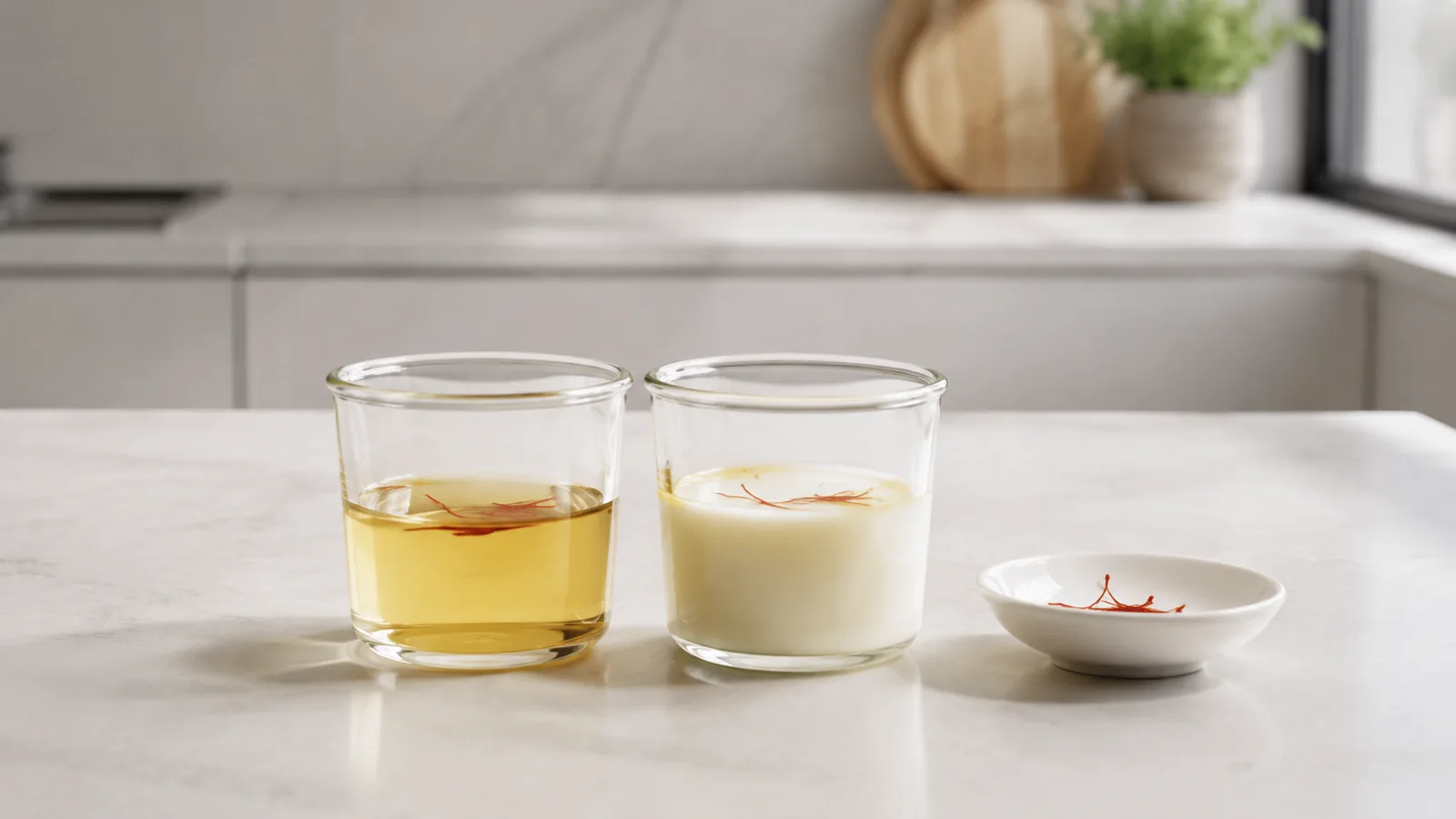
Warm water is dependable for rice and meat. Warm milk suits ice cream and pudding. A pinch of sugar can steady the threads in the mortar when the infusion is intended for a sweet dish. Our saffron infusion guide explains why gentle blooming is more useful than hard boiling.
Persian rice technique matters just as much. Rice is commonly soaked, parboiled until the outside is tender but the center still has some bite, drained, and then steamed. That sequence creates separate grains and leaves room for saffron liquid without turning the rice wet.
1. Tahchin: a saffron rice cake with a crisp crust
Tahchin binds parboiled rice with yogurt, egg, saffron, and fat, then cooks it against the bottom of a pot or baking dish. The result should hold together when turned out, with a deeply golden crust and a tender interior. Chicken is a familiar filling, but a plain saffron tahchin is a complete dish in its own right.
Ingredients for 4–6 servings
- 2 cups basmati rice
- 1 cup plain full-fat yogurt
- 1 whole egg plus 2 egg yolks
- 0.1 g saffron, bloomed in 3 tablespoons warm water
- 4 tablespoons melted butter or neutral oil, plus more for the pot
- 1½ teaspoons salt, divided
- Barberries and slivered pistachios for an optional garnish
Method
- Rinse the rice until the water is clearer, then soak it in salted water for 1–3 hours.
- Boil the rice in ample water for 6–8 minutes. Bite a grain: the outside should be tender while the center remains firm. Drain well.
- Whisk the yogurt, egg, yolks, saffron infusion, melted butter, and remaining salt. Fold in the warm rice without crushing it.
- Grease a heavy non-stick pot. Press the mixture in evenly, cover, and cook over low heat for 45–55 minutes. Rotate the pot once or twice if the burner heats unevenly.
- Rest for 10 minutes, loosen the edge, and invert onto a platter. Scatter briefly sautéed barberries and pistachios over the top if desired.
The old recipe used three cups of dry rice with only half a cup of yogurt, which can produce a loose or dry cake depending on the rice. The revised ratio gives the grains enough coating to set. If you add chicken, use a fully cooked, modest layer rather than raw pieces inside the rice.
2. Gheymeh nesar: Qazvin’s jeweled saffron rice
The previous article called this dish “Khoresht Nassar.” The established name is gheymeh nesar (also spelled qeymeh nesar), and it is a festive rice dish associated with Qazvin, not simply a bowl of stew. Iran’s official tourism page describes rice and lamb with saffron, barberries, almond and pistachio slivers, orange peel, cardamom, cinnamon, turmeric, tomato paste, and other aromatic seasonings.
Ingredients for 6 servings
- 3 cups basmati rice
- 450–500 g boneless lamb or beef, cut into small cubes
- 2 onions, finely chopped
- 1½ tablespoons tomato paste
- ½ cup barberries, picked over and rinsed
- ⅓ cup each slivered almonds and pistachios
- ⅓ cup thin bitter-orange or orange-peel slivers
- 0.1 g saffron, bloomed
- ½ teaspoon each ground cardamom and cinnamon
- A small pinch of cumin, plus turmeric, salt, and black pepper
- 1 tablespoon rosewater and 1–2 tablespoons sugar, both optional to taste
Method
- Cook the onion in a little oil until gold. Add the meat, turmeric, pepper, and tomato paste; cook until the paste darkens slightly.
- Add enough water to come partway up the meat. Cover and simmer gently until tender, topping up only when needed. Stir in half the saffron near the end and reduce the liquid to a spoonable sauce.
- Blanch the orange peel in fresh water two or three times, tasting after each round. Drain. Briefly sauté it with the almonds, pistachios, barberries, sugar, rosewater, cardamom, and cinnamon. Keep the heat low so the barberries do not burn.
- Parboil, drain, and steam the rice. Fold the remaining saffron into a small portion.
- Arrange white rice, saffron rice, meat, and the jeweled garnish in visible layers on a platter rather than stirring everything into one uniform mixture.
The rice, meat, and garnish are prepared with separate attention, then brought together. That is what gives gheymeh nesar its clean colors and textures.
3. Zereshk polo ba morgh: barberry rice with saffron chicken
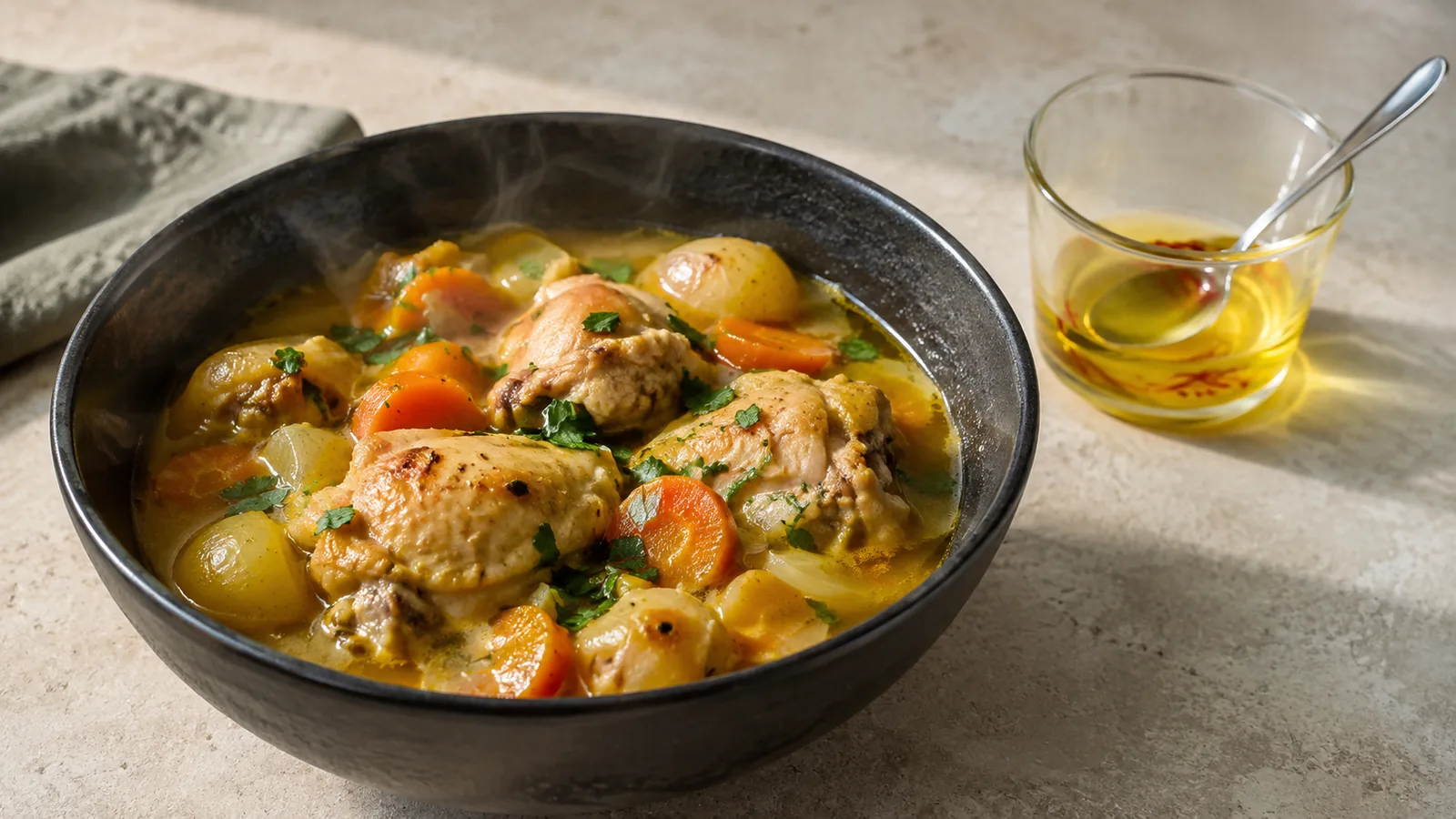
The earlier “saffron pilaf with chicken” section was describing a version of zereshk polo ba morgh. Naming it makes the dish easier to understand: steamed rice is topped with tart barberries and saffron, then served with braised chicken.
Ingredients for 4 servings
- 2 cups basmati rice
- 4 chicken thighs or a mixture of thighs and breast pieces
- 1 large onion, sliced
- 1 tablespoon tomato paste
- ½ cup barberries, rinsed and dried
- 0.08–0.1 g saffron, bloomed
- 2 tablespoons butter
- 1–2 teaspoons sugar, optional
- Turmeric, salt, and black pepper
Method
- Season the chicken with salt, pepper, and turmeric. Brown it in a little oil, then remove it.
- Cook the onion until soft. Stir in the tomato paste, return the chicken, and add enough hot water for a shallow braise. Cover and simmer gently until tender.
- Add half the saffron during the final 10–15 minutes. The chicken should reach 165°F/74°C at its thickest part, following the USDA safe-temperature guidance.
- Parboil, drain, and steam the rice. Combine a cup of cooked rice with the remaining saffron infusion.
- Warm the barberries in butter for no more than a minute; add a little sugar only if you want to soften their tartness.
- Spoon white rice onto the platter, add saffron rice and barberries, and serve the chicken and its reduced sauce alongside.
For a focused version with measurements and garnish options, see the barberry saffron rice recipe.
4. Khoresht mast: Isfahan’s chilled saffron yogurt dish
Despite a name that literally suggests yogurt stew, khoresht mast is served cold and is often treated as a rich side dish or dessert. The defining texture comes from cooked lamb neck worked until smooth and elastic, then blended with thick yogurt, saffron, rosewater, and sweetness. It should not be served as a hot meat stew.
Ingredients for 6 small servings
- 250 g lamb neck
- 1 small onion
- 3 cups thick full-fat strained yogurt
- ⅓–½ cup sugar, adjusted to the yogurt
- 0.08 g saffron, bloomed in 1 tablespoon warm water
- 1 tablespoon rosewater
- A pinch of cardamom, salt, pepper, and turmeric
- Slivered almonds, pistachios, and barberries for garnish
Method
- Simmer the lamb with onion, turmeric, salt, and pepper until it separates easily from the bone.
- Remove every bone and tough piece. Pound or work the warm meat until it becomes pale, smooth, and elastic; a quick rough mash will not give the traditional texture.
- Stir the yogurt and sugar over very low heat just until smooth and warm. Do not let it boil or split.
- Work in the meat, then add saffron, rosewater, and cardamom. Taste before adding more sugar or rosewater.
- Transfer to a clean shallow dish, chill promptly, and garnish after it has set. Keep it refrigerated because it contains cooked meat and dairy.
More Iranian saffron dishes worth knowing
- Sholeh zard: a saffron rice pudding scented with rosewater and often decorated with cinnamon and nuts. Our sholeh zard recipe covers the full method.
- Bastani sonnati: Persian saffron ice cream with rosewater and pistachio; some versions include pieces of frozen cream.
- Joojeh kabab: chicken marinated with saffron, onion, and often lemon, then grilled and served with rice or bread.
- Shirin polo: celebration rice garnished with sweet citrus peel, carrots, nuts, and saffron.
- Morasa polo: jeweled rice whose fruit, nuts, barberries, and saffron are arranged to preserve their individual colors.
- Halva: flour cooked with fat and combined with a saffron, sugar, and rosewater syrup.
- Khoresh-e beh or other braises: saffron may enter near the end, adding aroma without overpowering fruit, meat, or herbs.
What makes saffron in Persian cuisine distinctive?
Encyclopaedia Iranica’s account of Persian cooking notes both slow cooking and the importance of presentation: polow and chelow are commonly decorated with saffron-colored rice, while nuts, browned onions, yogurt, and other garnishes form visible patterns. That helps explain why Persian cooks do not always color the whole pot.
The effect is measured rather than loud. One concentrated infusion can season chicken, color a small rice garnish, and finish a barberry mixture, but it is divided according to when each element needs it. Saffron added late keeps a clearer aroma; saffron added to rice earlier spreads its color.
These dishes also show why a list of “saffron recipes” cannot be reduced to yellow food. Tahchin needs a firm crust, gheymeh nesar needs separate jewel-like components, zereshk polo needs tartness, and khoresht mast needs a smooth chilled texture. Saffron belongs to each one, yet the cooking technique gives each dish its identity.