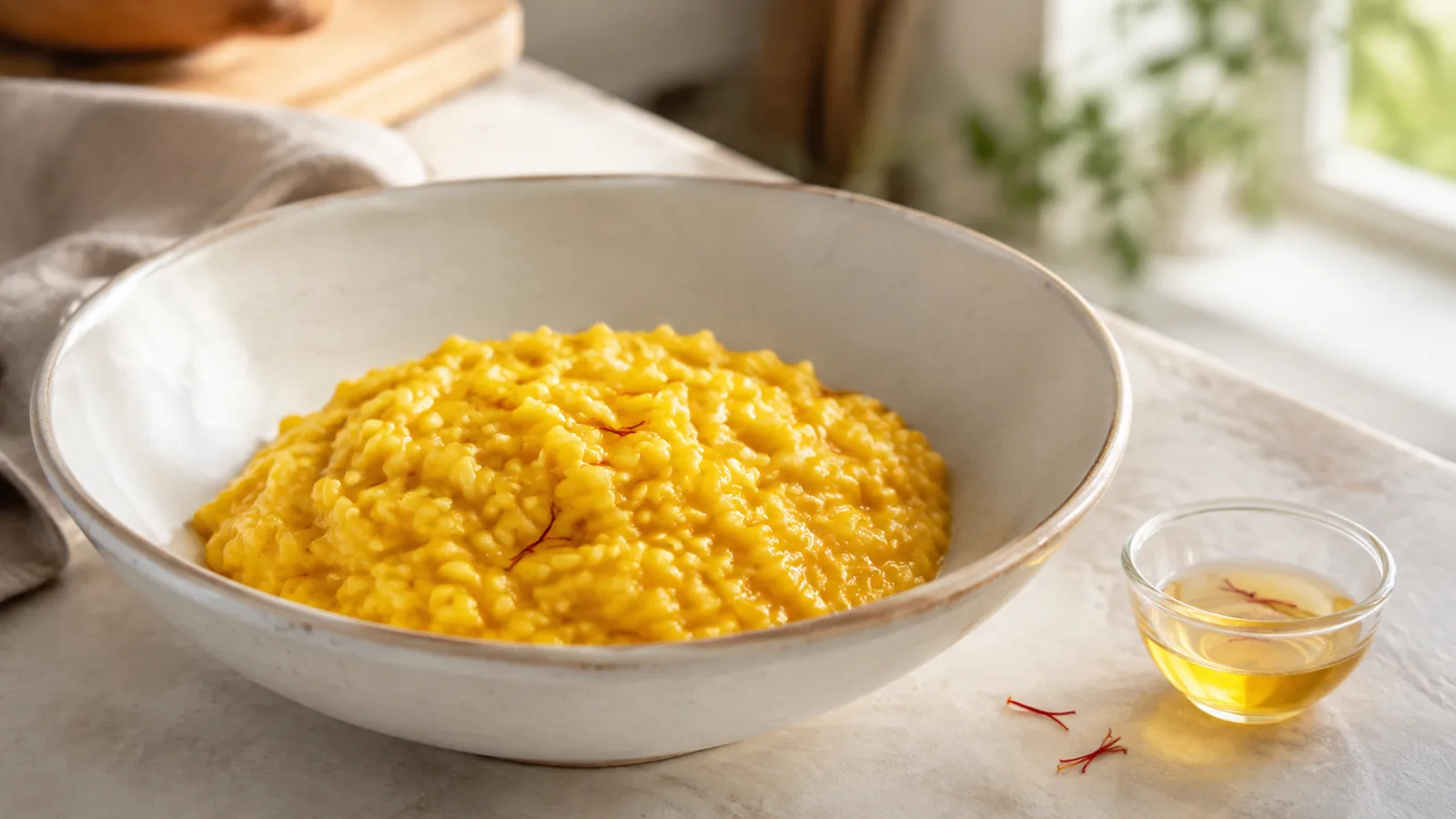
This barberry rice recipe combines fluffy Persian rice with tart dried barberries, golden saffron rice, fried onion and optional almond-pistachio slivers. The garnish is cooked only briefly, so the berries stay bright and the nuts keep their texture.
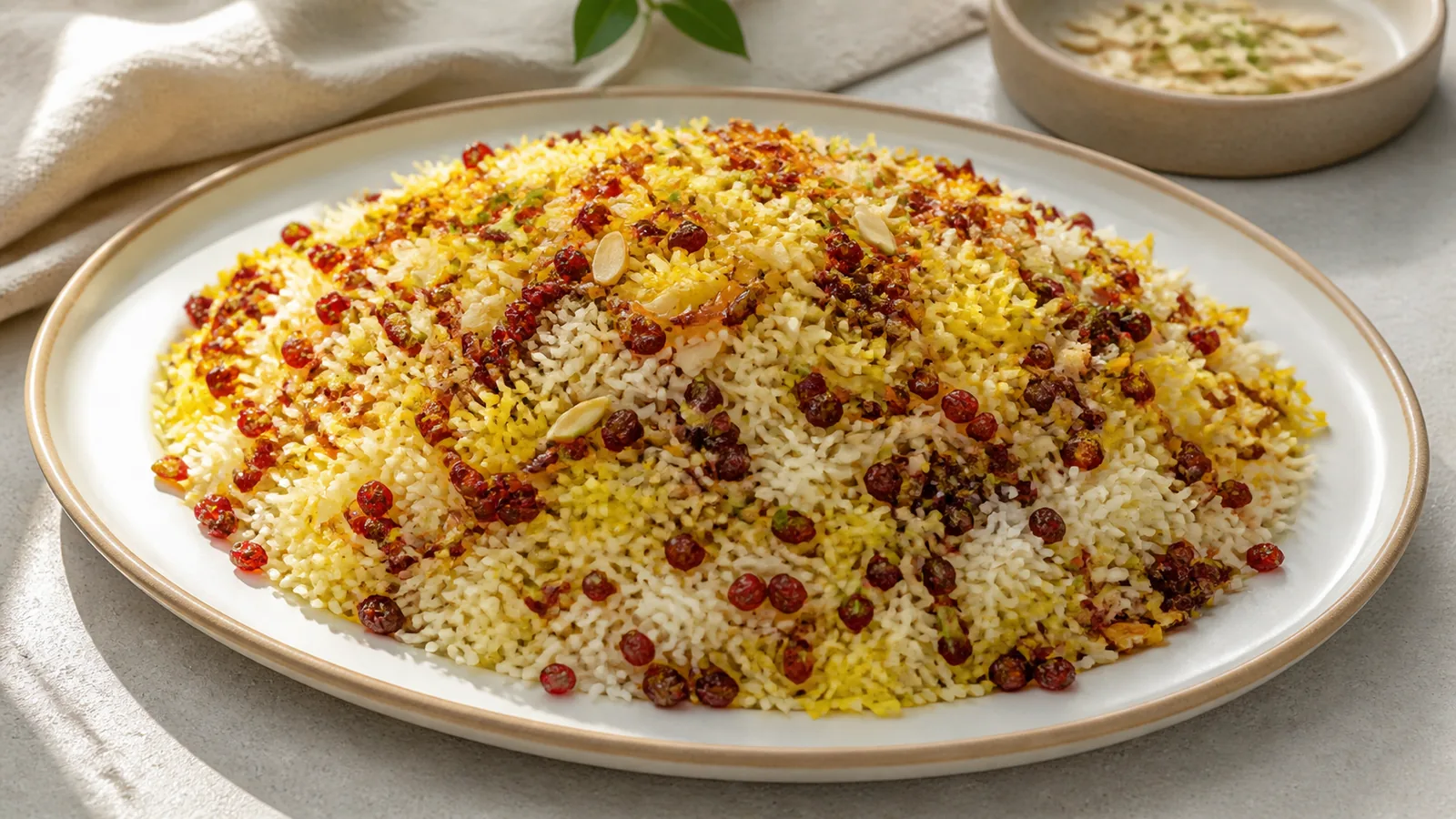
What is barberry rice? It is rice with barberries, usually known as zereshk polo in Persian cooking. The dried red berries bring a sharp fruitiness that balances butter, saffron and a small amount of sugar.
You may also see the dish described as “barberries rice.” It refers to the same Persian combination: steamed rice finished with a carefully cooked barberry garnish, rather than berries boiled through the whole pot.
Ingredients for a large Persian barberry rice
- 8 cups basmati rice
- 2 cups dried barberries
- 1 tablespoon sugar, or to taste
- 1 cup saffron infusion, divided
- Neutral oil, as needed for the pot
- 25 g butter
- 1/2 cup slivered almonds and pistachios combined, optional
- 2 tablespoons crisp fried onion
- Salt, for soaking and boiling
Eight cups of dry rice makes a celebration-size batch of about 16 servings. For a family meal, halve every ingredient and use a smaller pot rather than leaving the rice spread thinly in a large one.
Rinse and soak the rice
Put the rice in a large bowl and cover it with cool water. Move the grains gently with your fingertips, drain and repeat until the water is almost clear. Avoid squeezing or stirring roughly, which can break long basmati grains.
Cover with fresh cool water and add enough salt for the water to taste distinctly salty. Soak for at least 2 hours; the original recipe used 5 hours, which is suitable for older, firm rice. Drain immediately before boiling.
Clean dried barberries carefully
Spread the barberries on a tray and remove stems, grit or dark fruit. Put them in a bowl of cold water, move them gently and lift them out with a slotted spoon so sand stays at the bottom.
Repeat with fresh water until no grit remains, then drain in a fine sieve. Do not leave barberries soaking for hours; they lose flavour and can become soft before they reach the pan.
Parboil the basmati rice
Fill a large pot about two-thirds full with water and bring it to a rolling boil. Add salt, then pour in the drained rice. Keep the heat high enough for the water to return to a boil promptly.
Cook for 5 to 7 minutes, depending on the rice. Lift out a grain and bite it: the outside should be soft while a small white point remains at the centre. The grains should float freely and still hold their length.
Drain into a colander held safely above the sink base. Rinse briefly with lukewarm water to remove excess surface starch and stop the cooking, then let the rice drain for several minutes.
Steam the rice until fluffy
Coat the base of a clean heavy pot with oil. Add bread or potato slices if you want tahdig, then spoon the rice into the pot without pressing it. Mound it gently toward the centre.
Use the handle of a wooden spoon to make several steam channels. Pour 120 ml boiling water mixed with 1 tablespoon oil around the edge of the pot.
Cover and cook over medium-high heat until a strong cloud of steam appears. Wrap the lid in a clean kitchen towel, keeping every corner away from the heat, and turn the flame to low.
Steam for 50 to 70 minutes. A very deep pot holding the full 8-cup batch may need up to 2 hours, as the original method states. Judge by steady steam and tender, separate grains rather than the clock alone.
Prepare the saffron rice
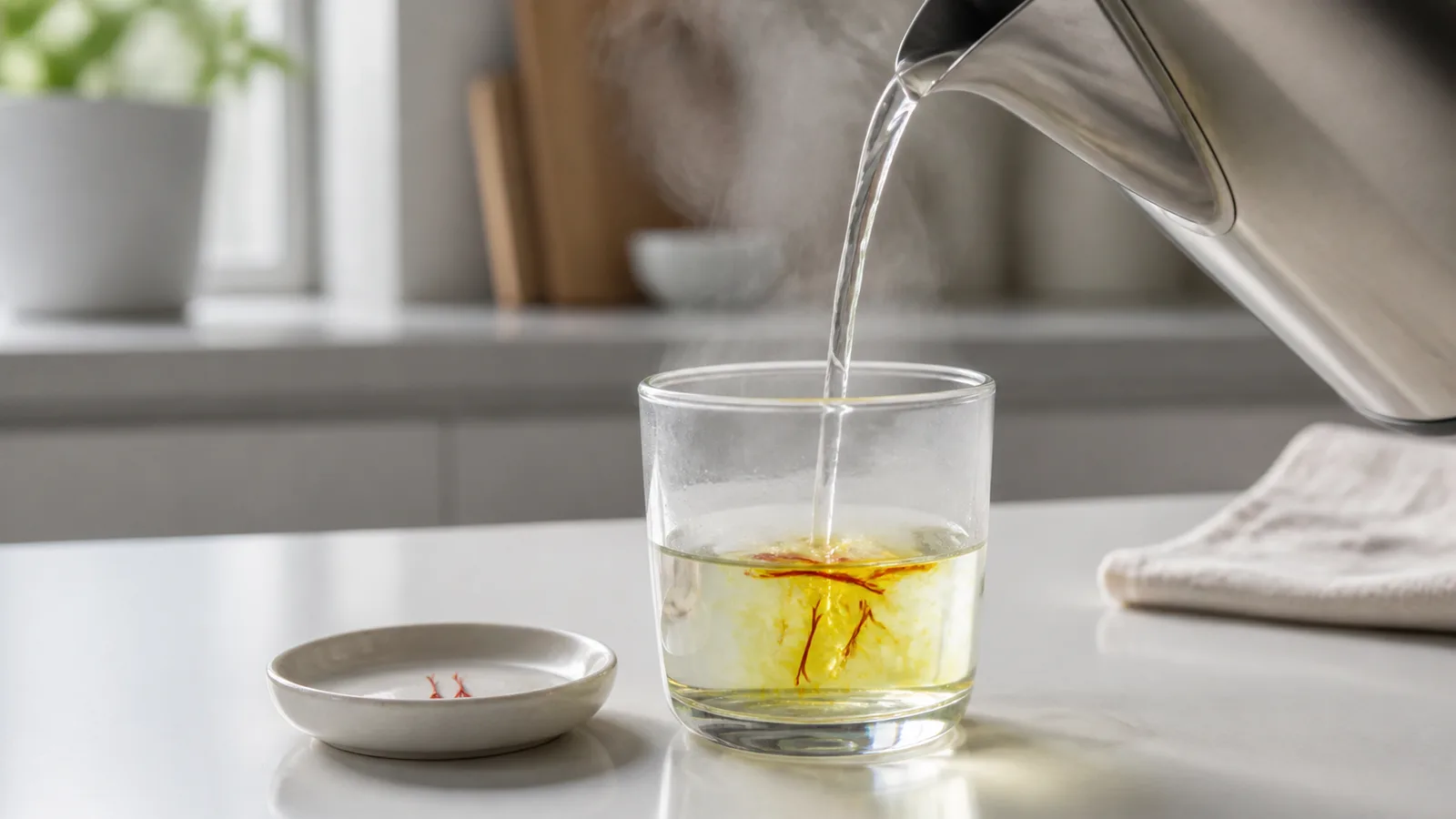
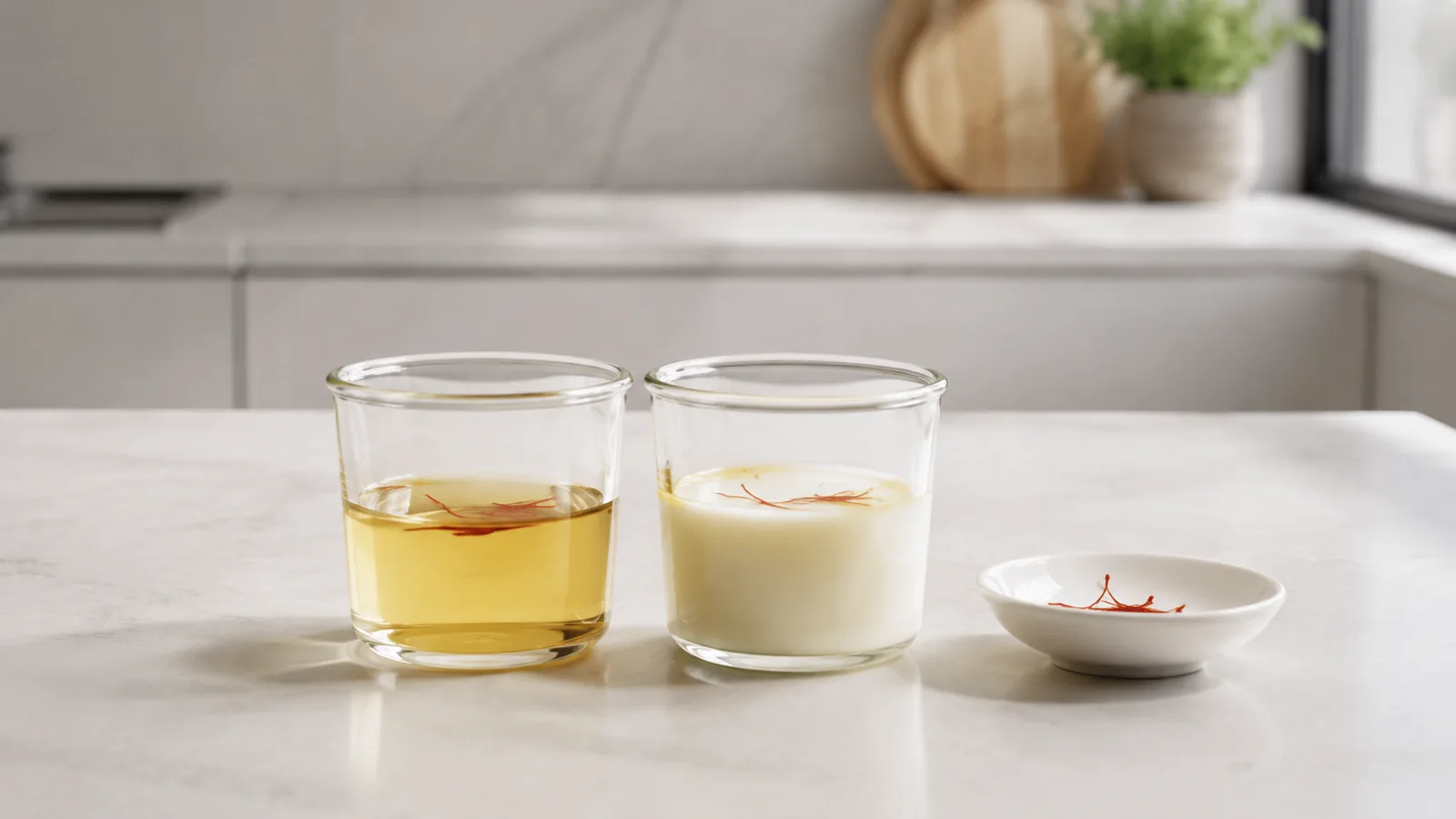
For an even colour, make the infusion before the rice finishes. Our guide to brewing saffron explains a concentrated method.
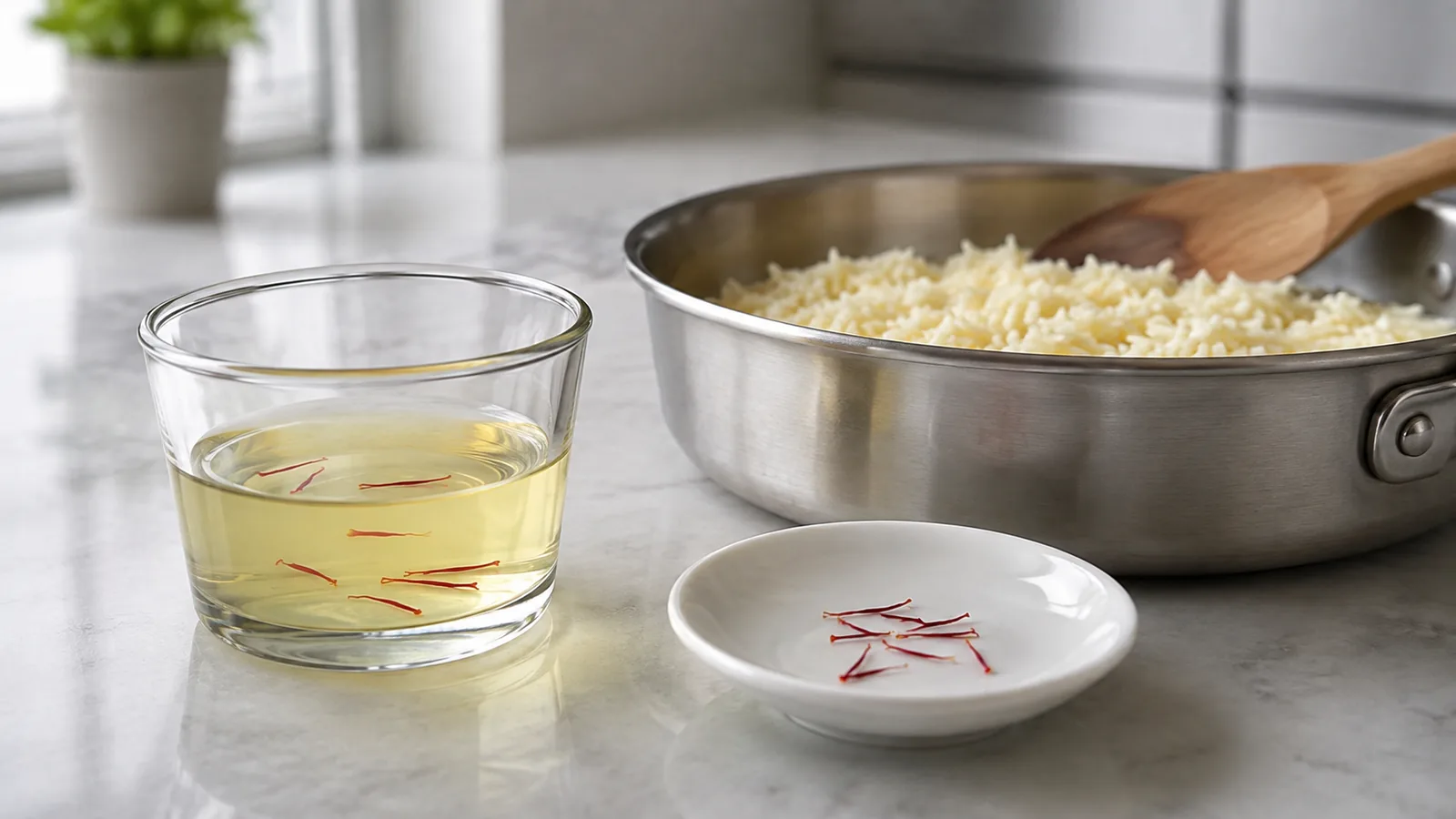
When the rice is ready, put 4 cups of it in a wide bowl. Add saffron infusion a few spoonfuls at a time and fold gently after each addition. Stop when the grains are evenly gold and still separate; reserve unused infusion rather than making the rice wet.
Cook the barberry garnish briefly
Melt the butter in a wide frying pan over low heat. Add the drained barberries and sugar. Stir for 60 to 90 seconds, just until the berries glisten and begin to swell.
Barberries scorch easily and become bitter when cooked hard. Remove the pan from the heat before every berry looks fully plump; residual warmth continues the cooking.
If using almonds and pistachios, add them after the heat is off. Fold in the fried onion last so it does not soften too early.
Assemble saffron rice with barberries
Lift the white rice onto a large warm platter with a wide spoon. Scatter half the saffron rice over it, followed by half the barberry mixture. Repeat with the remaining saffron rice and garnish.
Keep some white rice visible. The red, gold and white contrast is part of the dish, and vigorous mixing can stain the whole platter and crush the berries.
Adjust tartness without hiding the fruit
Taste one cooked barberry before adding more sugar. Some batches are sharply sour, while others are mild. Add extra sugar by the teaspoon and warm for only a few seconds to dissolve it.
This is a barberry recipe built around tart fruit, not a jam. The garnish should taste bright enough to balance the butter and rice.
Serving and storage
Serve the barberry rice immediately with tahdig on a separate plate. It works as a main rice dish or alongside chicken, lamb or roasted vegetables, without requiring meat in the rice itself.
Among dried barberry recipes, this one is best freshly assembled because the garnish is most vivid before it sits in steam. Cool leftovers promptly, refrigerate within 2 hours and reheat until steaming throughout.
Common mistakes
- Grit in the garnish: lift barberries out of their rinse water instead of pouring the sediment back over them.
- Bitter berries: keep the heat low and cook for no more than 90 seconds.
- Mushy saffron rice: fold the infusion into a separate portion a little at a time.
- Broken grains: rinse, drain and lift the rice gently instead of stirring vigorously.
- Soft nuts: add slivered almonds and pistachios after the barberry pan leaves the heat.
This recipe contains almonds and pistachios if the optional garnish is used, and dairy if made with butter.