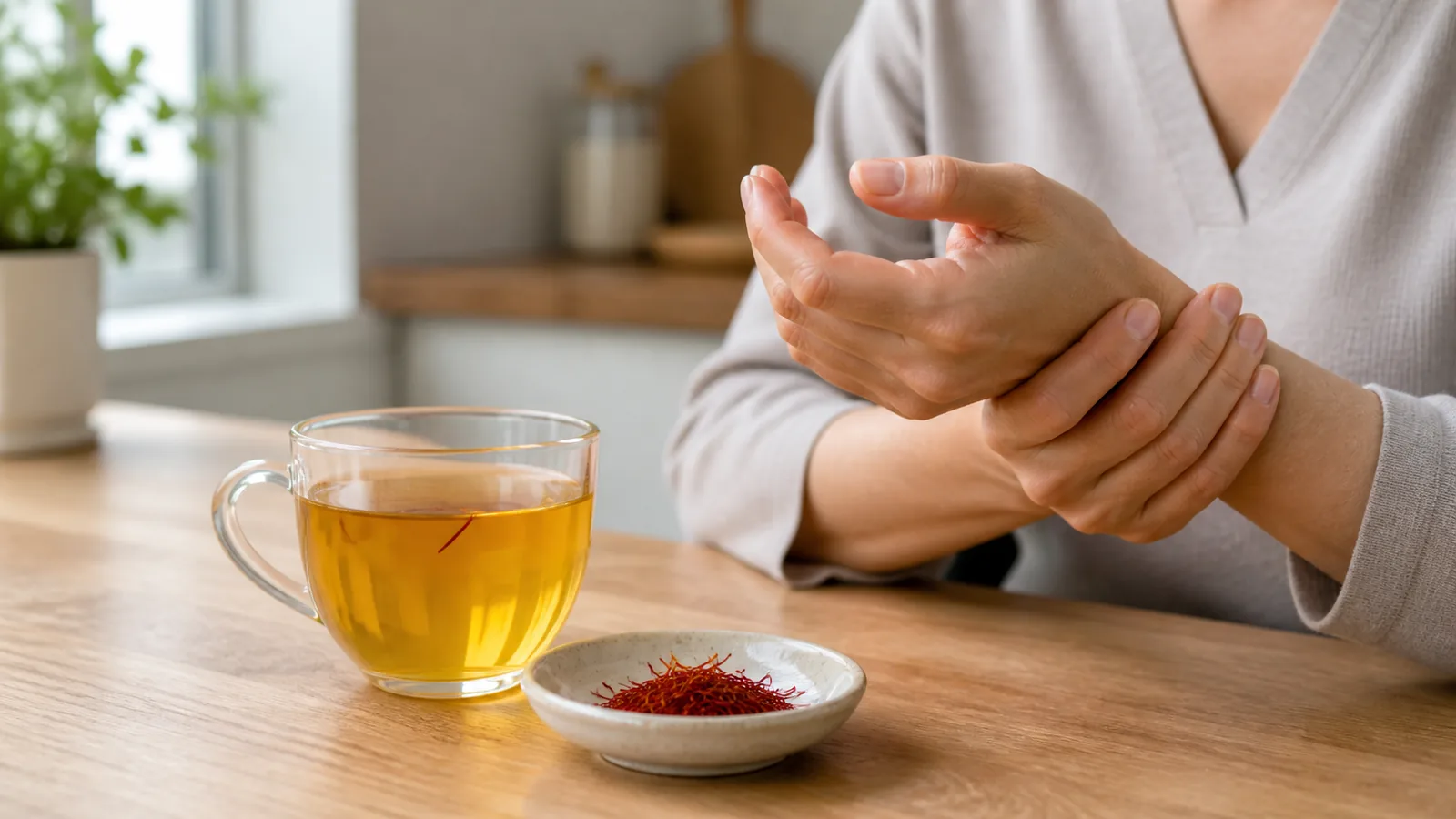
Saffron health benefits are most credible in three areas: mood symptoms have the broadest clinical research, sleep has a smaller positive trial base, and some studies report modest changes in cardiometabolic measurements. Evidence for memory, appetite and other outcomes is still limited. Weight loss, stronger bones and disease prevention should not be promised.
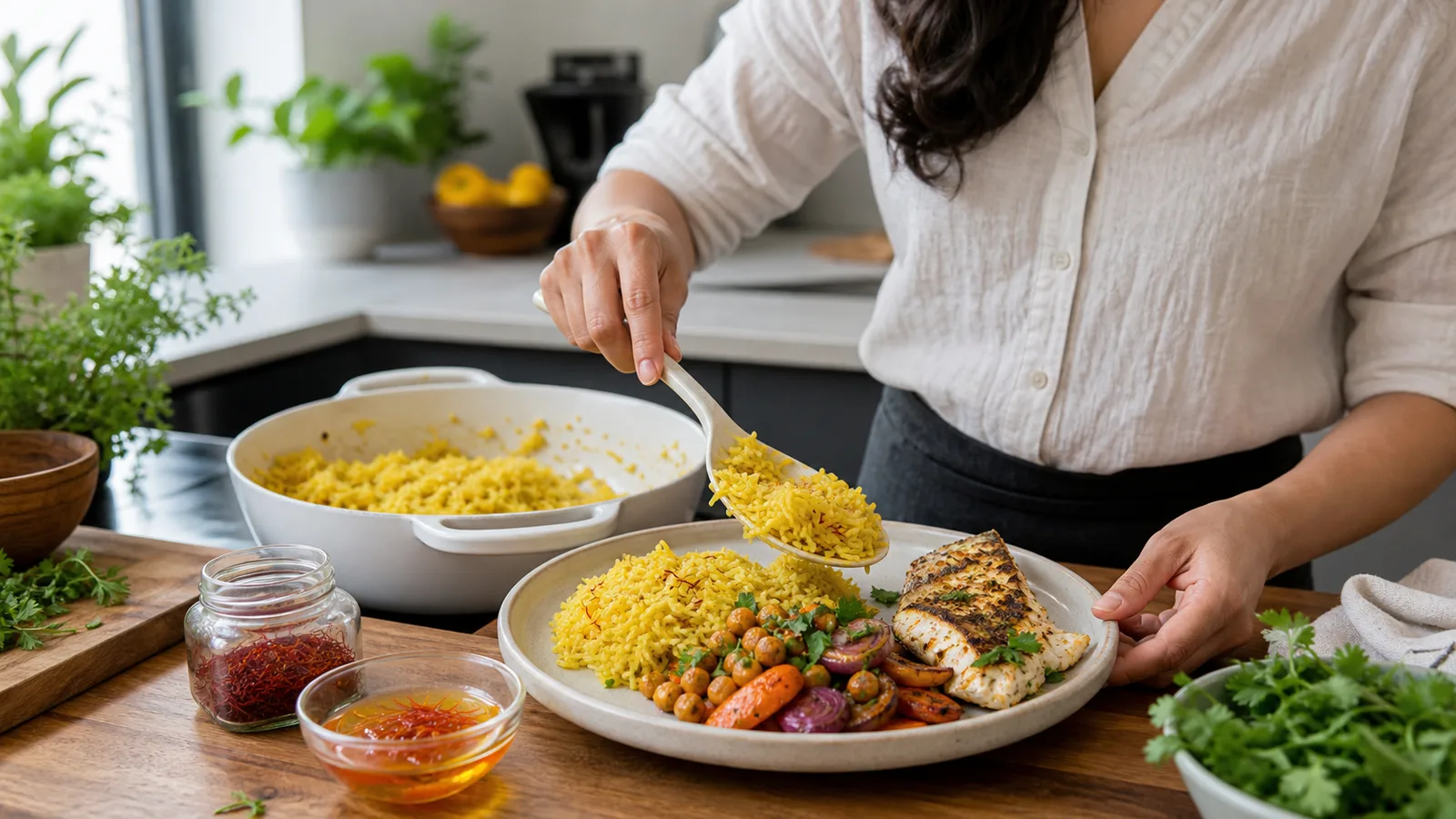
Saffron, kesar and zafran are names readers use for the same spice, the dried red stigmas of Crocus sativus. Eating a few threads can transform a meal. It does not reproduce the measured extracts used in clinical trials, so this guide separates the benefits of saffron as food from the effects researchers have tested as supplements.
What are the benefits of eating saffron?
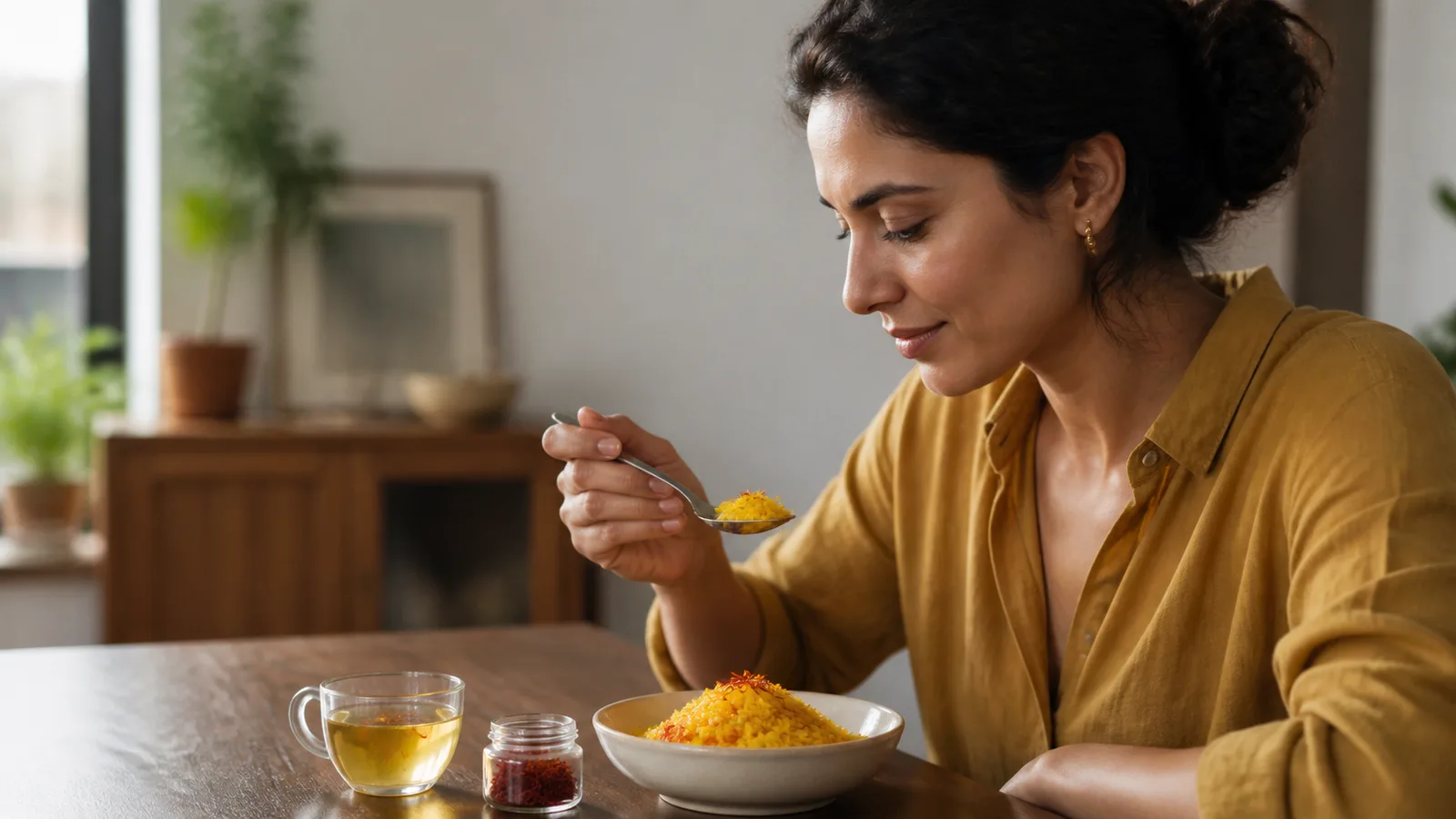
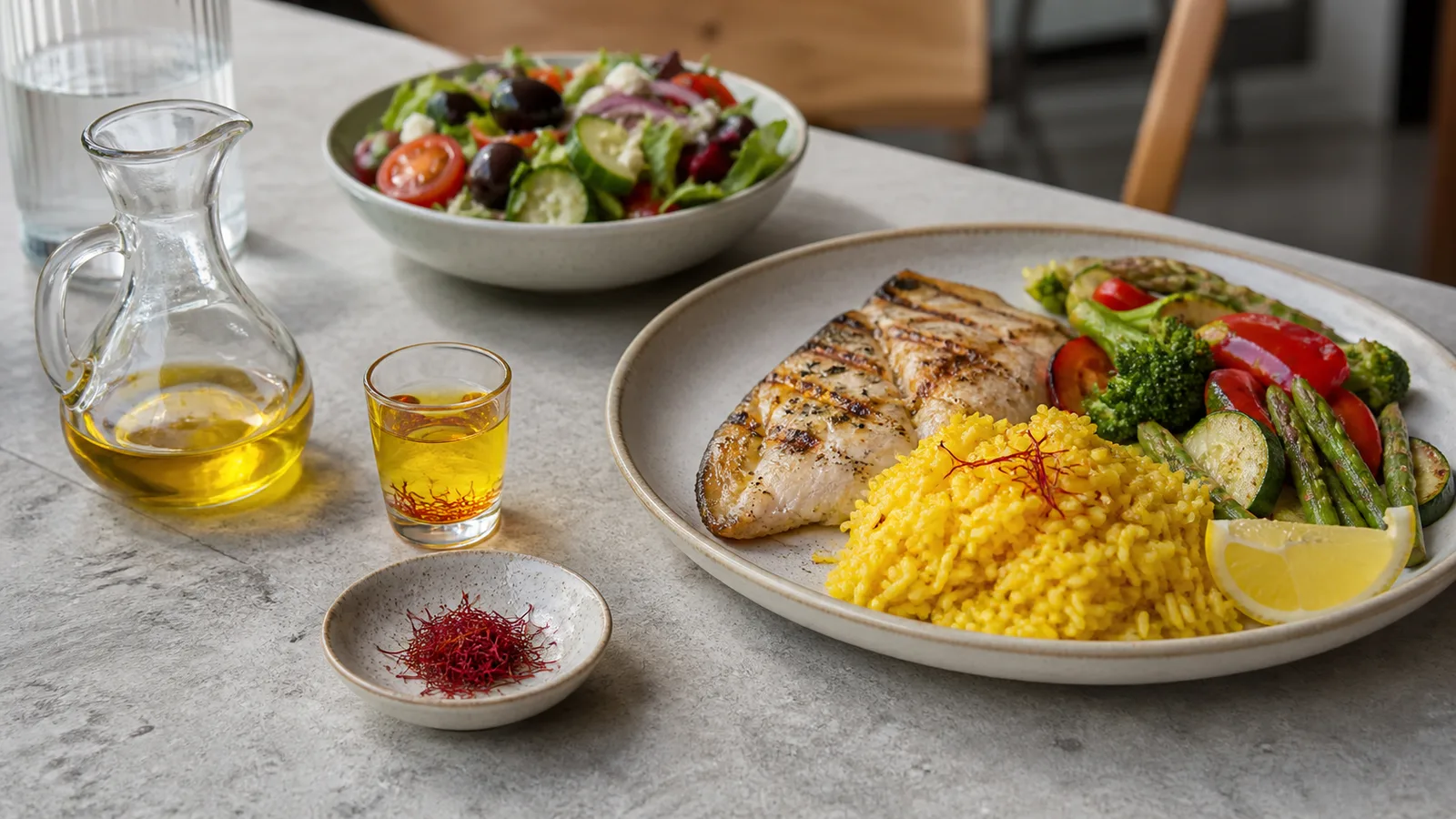
In a normal culinary amount, the clearest benefits are sensory. Saffron adds a concentrated aroma, a gentle bitterness and a golden colour without needing a large quantity. It can make rice, soup, bread, milk drinks and desserts more distinctive.
It is sometimes advertised as a rich source of vitamins and minerals. Saffron does contain micronutrients when measured by weight, but a recipe uses such a small amount that it is not a practical source of vitamin C, iron, calcium or potassium. Its contribution to a balanced diet is flavour and variety, not a meaningful serving of those nutrients.
The spice also contains crocins, crocetin, picrocrocin and safranal. These compounds help explain its colour, taste, aroma and biological activity in experiments. Their presence is a reason for research, not proof that a dish prevents ageing or disease.
Saffron benefits for mood
Mood is the strongest part of the human evidence. A 2026 GRADE-assessed review of 34 randomised trials found improvements in self-reported depression and anxiety scores. Clinician-rated scales did not show the same consistent effect, and results varied substantially between trials.
That supports saffron as a possible complementary option to discuss with a clinician. It does not make it an antidepressant replacement, and it does not mean a culinary pinch will have the effect of a standardised product used daily in a study. Anyone experiencing persistent low mood, anxiety or thoughts of self-harm needs qualified care rather than a spice remedy.
Saffron and sleep quality
A systematic review of five randomised trials involving 379 people found initial support for improved sleep quality or duration. That is encouraging, but the evidence base is still small and the products differed.
Poor sleep can be linked to stress, pain, medication, breathing disorders or an irregular schedule. Saffron should not delay an assessment of the cause. It is also inaccurate to assume that saffron will make every person sleepy after a meal.
Memory and cognitive support
Small studies in mild cognitive impairment and Alzheimer’s disease have reported changes in cognitive scores. A systematic review found five eligible trials with 325 participants and cautioned that the evidence could have a high risk of bias.
The research is promising for future clinical work; it does not establish saffron as a treatment for dementia or a memory booster for healthy adults. A person who notices memory changes should seek an assessment, because the cause and appropriate support matter.
Heart health, glucose and blood pressure
Trials have measured fasting glucose, HbA1c, cholesterol, triglycerides and blood pressure. A 2025 meta-analysis in people with metabolic syndrome or related disorders found small average reductions in fasting glucose, HbA1c, total cholesterol and blood pressure. It did not find significant changes in triglycerides, LDL, HDL, body mass index or waist circumference.
The metabolic-syndrome review calls for additional high-quality trials in more diverse populations. These are risk markers, not proof that saffron prevents heart attacks or treats diabetes. Medication should never be changed on the basis of a blog post or a supplement label.
Does saffron reduce appetite or cause weight loss?
Some small studies have investigated snacking, satiety or appetite, which led to strong weight-loss marketing. Pooled research has not shown a dependable change in body mass index, and findings for waist circumference are inconsistent.
Saffron is therefore not an established appetite suppressant or weight-loss treatment. It can fit into an enjoyable diet, but it does not cancel the overall pattern of food, activity, sleep, medicine and health conditions that influence weight.
Antioxidant and anti-inflammatory effects
A meta-analysis of oxidative-stress markers found changes in measurements such as malondialdehyde and total antioxidant capacity. The included studies varied and were concentrated in Iran. A marker changing over several weeks does not show that saffron “detoxes” the body or prevents a named disease.
Inflammation is even less straightforward. A systematic review of eight randomised trials found no significant overall change in CRP, TNF-α or IL-6, although some subgroup findings differed. Later studies in selected patient groups have also produced mixed results. “Anti-inflammatory” should not be used as a blanket treatment claim.
Does saffron strengthen bones?
The previous version of this article said saffron strengthened the skeletal system. Human clinical evidence does not establish that benefit. Laboratory mechanisms and the trace minerals found in saffron by weight are not enough: the culinary serving is tiny, and bone outcomes require direct study.
Bone health is better supported by adequate nutrition, appropriate weight-bearing activity and medical assessment when osteoporosis risk is present. Saffron may add pleasure to those foods, but it should not be sold as their replacement.
Choosing a grade for food
Super Negin, Negin and Pushal describe common Iranian trade forms rather than different medicines. Negin products usually emphasise long, separated red stigma pieces. Pushal retains some yellow or orange style and often costs less. Sargol is another common red-stigma form.
Appearance affects presentation, while colour, bitterness, aroma, moisture, purity and storage determine how a lot performs. A grade name does not prove chemical strength or authenticity. Our practical guide to choosing, checking and blooming saffron explains why traceability and testing matter more than a label alone.
How to add saffron to your diet
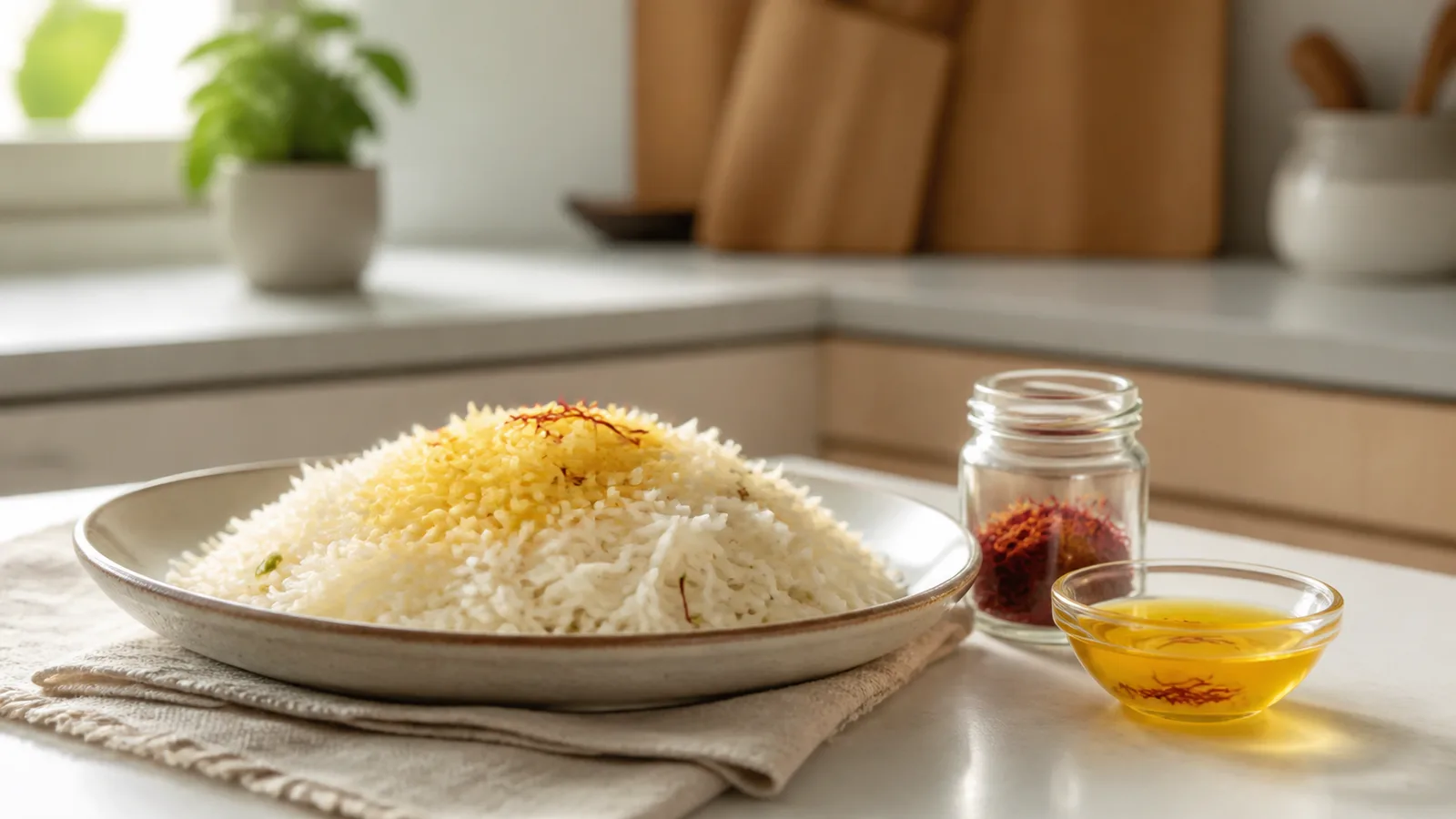
Lightly crush a small culinary pinch and let it bloom in warm water. Stir the liquid and threads into rice, a stew, soup, bread dough, custard or a milk drink. Blooming distributes the colour and aroma more evenly than dropping dry threads into one corner of a dish.
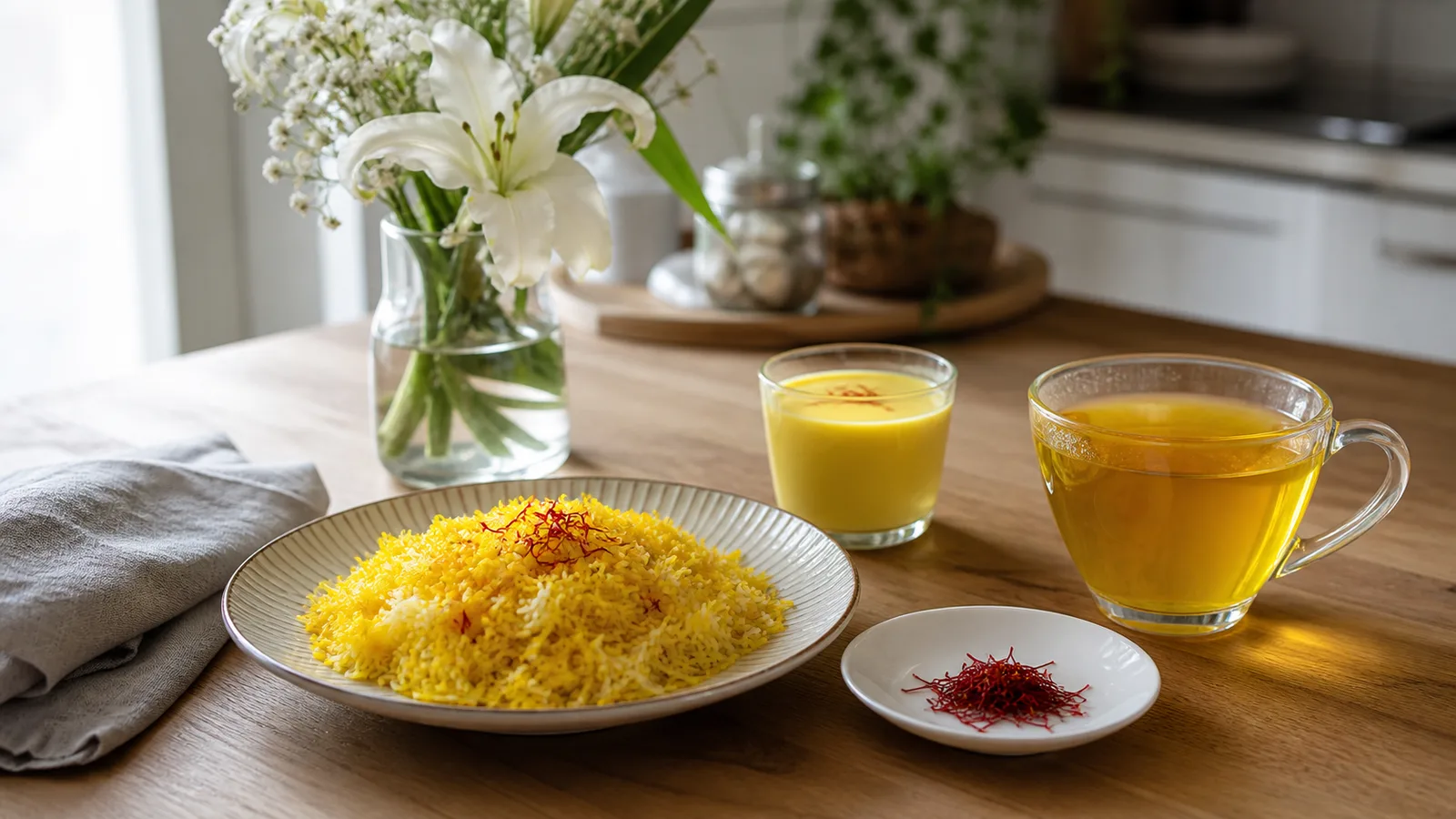
You can also prepare a simple infusion; our saffron tea recipe treats it as a drink, not a cure. Store the remaining spice in a tightly closed container away from light, heat, moisture and strong odours. The complete saffron storage guide covers whole threads, ground saffron and common container mistakes.
Food use is different from medicinal use
Clinical trials specify a product, amount and duration. A retailer’s powder, a stigma infusion and a standardised extract may not contain the same constituents in the same proportions. This is why there is no single study-backed home dose for every benefit claim.
For a deeper comparison of mood, sleep, cognition, eye health, menstrual symptoms, sexual function, metabolic markers, liver and kidney claims, read our 20-claim saffron benefits evidence review.
Side effects and sensible caution
A 2026 review of saffron adverse events found that it was generally well tolerated in human studies, while gastrointestinal problems were the most frequently reported effects. Higher-dose or prolonged medicinal use deserves clinical monitoring.
Pregnant or breastfeeding people should not begin concentrated saffron use without professional guidance. Speak with a doctor or pharmacist before a supplement if you use prescription medicine, are preparing for surgery, or have a bleeding, blood-pressure, mental-health, liver or kidney condition.
The realistic health advantage of saffron
Saffron can make nutritious food more appealing, and several measured extracts have produced encouraging results in clinical research. Those are worthwhile advantages. They do not make the spice essential to every meal, and they do not turn preliminary findings into treatment.
The best answer to “what are the health benefits of saffron?” is specific: mood has the strongest signal, sleep has early support, several metabolic markers may change modestly, and many other claims remain uncertain. Enjoy saffron or kesar for what it adds to food, then judge any medical promise by the study behind it.