A mature saffron corm can produce flowers roughly six to eight weeks after late-summer or early-autumn planting, but that is only the first visible milestone. Saffron growth time follows an annual cycle: autumn flowering, winter and spring leaf growth, daughter-corm development, then summer dormancy. Climate, planting date and corm size can shift that schedule, and a small corm may not flower in its first season.
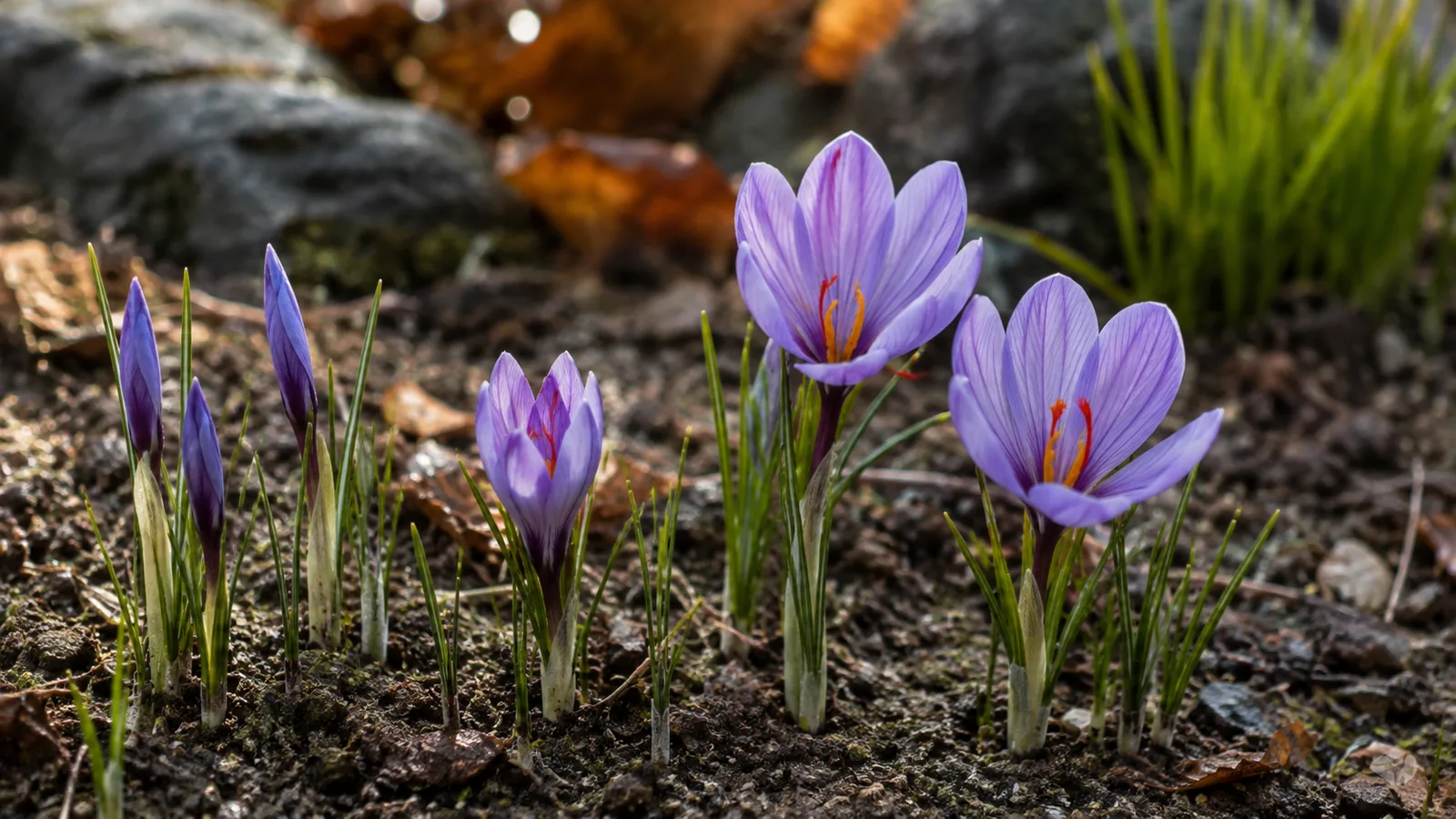
First flowers versus a full growth cycle
“How long does saffron take to grow?” can mean three different things. A gardener may be asking when the first shoot appears, when the first red stigmas can be harvested, or when the plant has completed a season and produced replacement corms. Those answers are not the same.
- First shoots: leaves or a flower shoot may emerge within weeks when temperature and moisture trigger growth.
- First flowers: suitably mature corms can flower in the first autumn, often about six to eight weeks after planting in a favourable schedule.
- A complete seasonal cycle: the leaves remain active after flowering, feed developing daughter corms through winter and spring, and die back as the plant enters summer dormancy.
Penn State Extension’s guide to producing saffron gives the six-to-eight-week flowering estimate for corms planted in September or October. It also stresses that saffron is a perennial corm, not a seed-grown annual.
A typical Northern Hemisphere timeline
The months below are a planning framework, not a promise for every garden. Local temperature, rainfall, elevation and the origin of the planting stock can move each stage.
Late summer to early autumn: planting and sprouting
Plant healthy corms before their local autumn growth period in free-draining soil. In some regions that means August or September; in others, September or early October is appropriate. A pointed corm is planted upright, then begins rooting and sprouting as conditions become favourable.
Planting depth should follow local climate and soil guidance. Around 3–4 inches is common in home-garden advice, but colder or hotter production areas may use a different depth. Drainage matters more than chasing one universal number: a corm sitting in wet soil can rot before it flowers.
Autumn: flowering and harvest
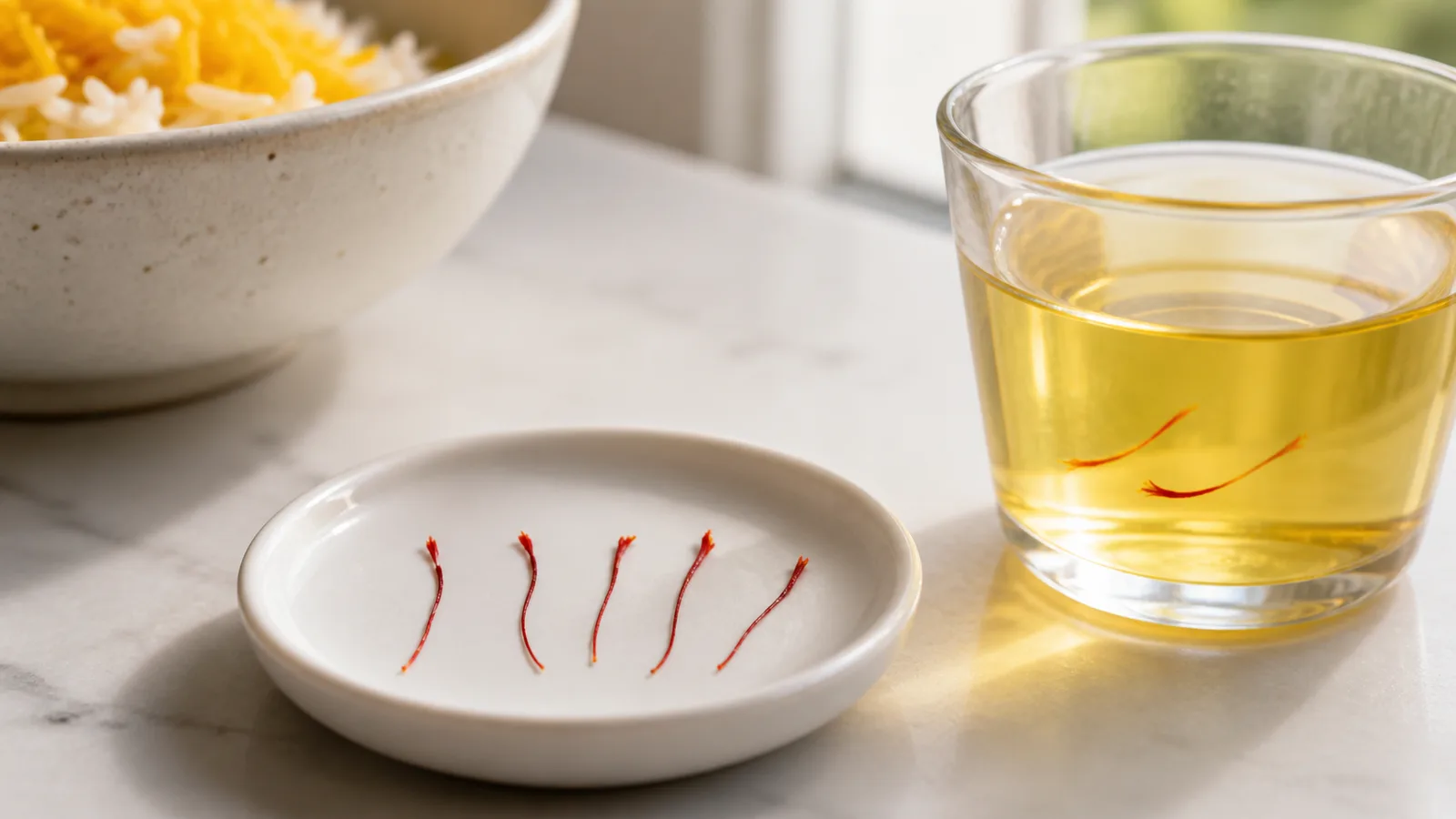
Crocus sativus is an autumn-flowering crocus. Blooms generally arrive in a concentrated window rather than steadily across the year. Each flower carries three red stigma branches—the saffron that is separated and dried for cooking.
The harvest window is short. Individual flowers may last only a day or two, while a planting may bloom across one or more weeks. Check the bed daily once buds appear, gather clean flowers promptly, and separate the red stigmas with clean, dry tools.
Commercial labour is a separate clock from plant growth. A peer-reviewed review of saffron harvesting and drying estimates about 370–470 production labour hours per kilogram across flower collection, stigma removal and drying. Those work hours explain production intensity; they do not mean an individual corm takes that many hours to flower.
Winter to spring: leaves and daughter corms
The harvest is not the end of the plant’s work. Its narrow, grass-like leaves continue photosynthesising through the cool season. That growth supplies the daughter corms forming around the old mother corm and determines much of the following season’s potential.
Do not cut green leaves merely because flowering has finished. Leave them until they yellow and die back naturally. The University of Vermont’s saffron production-cycle guide places vegetative growth through winter, daughter-corm development in spring and dormancy in summer, while noting that climate changes the exact timing.
Late spring to summer: dieback and dormancy
As leaves senesce, active above-ground growth ends and the corms enter dormancy. This is the normal cycle, not evidence that the plant has died. In a suitable site, the dormant daughter corms remain in the soil and restart growth when the next season arrives.
Dormancy is also the practical time to lift and divide crowded clumps where necessary. Established beds are often left in place for several years, then divided so daughter corms have enough room.
Why some corms flower sooner than others
Calendar estimates assume viable planting material and an appropriate growing environment. Several factors can change the first harvest.
- Corm size and maturity: larger, mature corms have more stored reserves and are more likely to flower in the first season; small corms may produce leaves only.
- Planting date: very late planting leaves less time for establishment before the normal flowering trigger.
- Temperature: saffron’s transition from dormancy to sprouting and flowering responds strongly to seasonal temperature patterns.
- Drainage: heavy, waterlogged soil increases rot risk and can prevent emergence.
- Light and leaf care: a sunny site and intact post-flowering leaves help the plant build daughter corms for the next year.
- Overcrowding: a productive clump eventually needs division when too many corms compete in a small space.
Does saffron take years before you can harvest it?
Not necessarily. Unlike a crop raised from seed to maturity, cultivated saffron is planted as a corm containing stored energy and a developed bud. A healthy flowering-size corm can yield a small harvest in its first autumn. The number of flowers often improves as daughter corms mature, provided the site and care are suitable.
Because saffron is sterile, it does not set viable seed and spread like an ordinary seed-grown flower. The bed expands through daughter corms. That is why “time to grow” includes both the quick first bloom and the slower multi-year development of a productive planting.
How long do harvesting and drying take?
Flower collection usually occupies a brief part of autumn, often around one to several weeks for a bed as buds open on different days. Stigmas should be removed promptly rather than left in wilting flowers.
Drying time depends on the method, temperature, airflow and quantity; it should not be described as a compulsory two or three days. A small home batch may dry quickly under controlled low heat, while air-drying takes longer. The aim is a properly dried, aromatic thread without scorching it. Once cool and dry, store the saffron in a sealed container protected from light and moisture.
Planning for your climate
Use the seasonal sequence—plant, flower, maintain leaves, allow dormancy—but obtain local guidance for the calendar. Saffron cultivation in Kashmir, Iranian production districts, Vermont and Mediterranean gardens follows the same biological sequence, but not the same calendar dates. If winters are extremely cold or summers stay wet, bed design, protection or dormant storage may need adjustment.
Our broader saffron planting guide covers site preparation and establishing a bed. For timing alone, expect possible flowers within six to eight weeks from mature corms, then let the foliage complete the winter-to-spring cycle that prepares the following year’s crop.