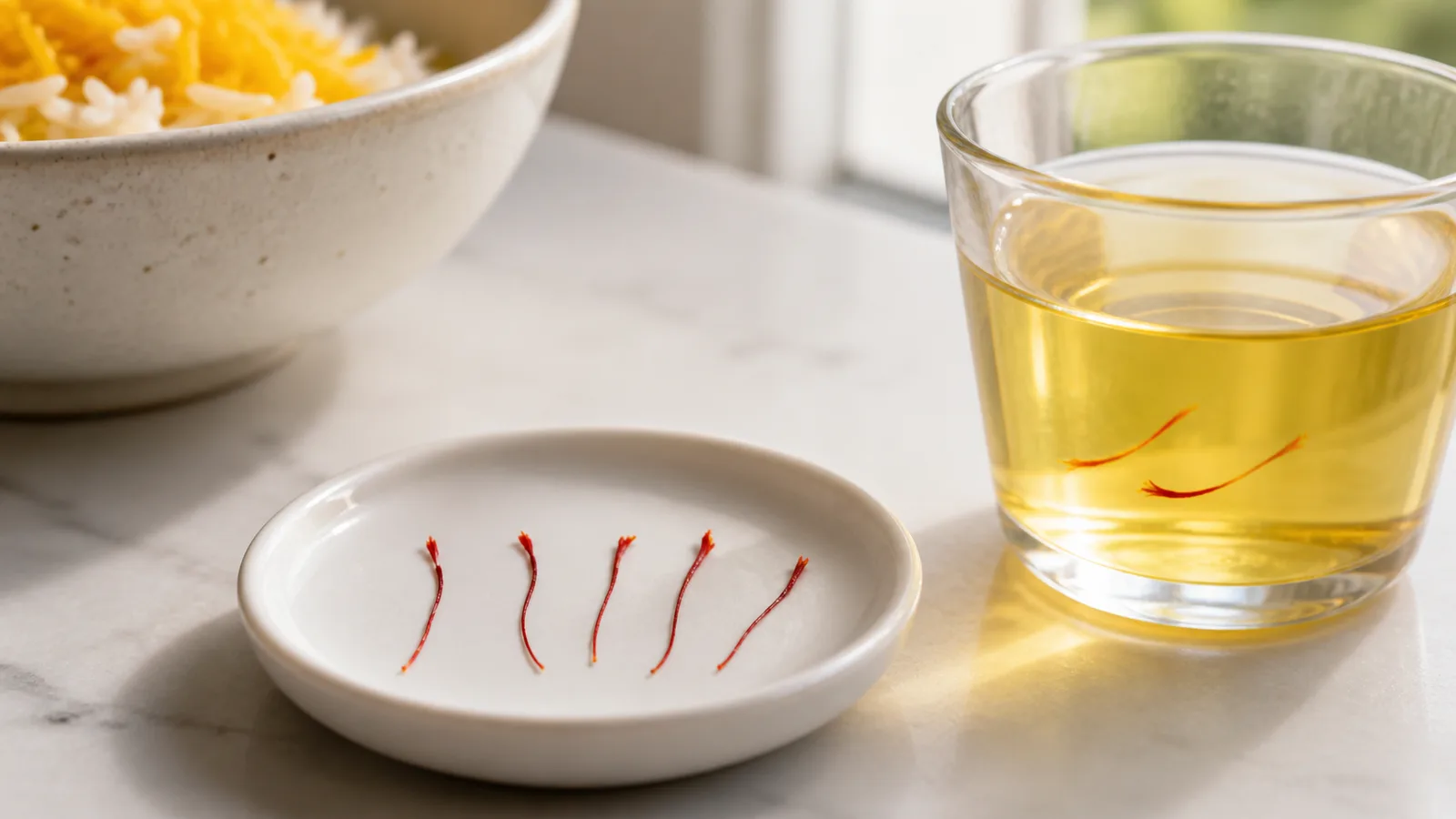
No—at current mainstream prices, gold is more expensive than culinary saffron when both are compared by the gram. The phrase “red gold” describes saffron’s exceptional value as a spice; it does not mean saffron always costs more than bullion. A careful saffron price compared to gold calculation must use the same weight, currency and date.
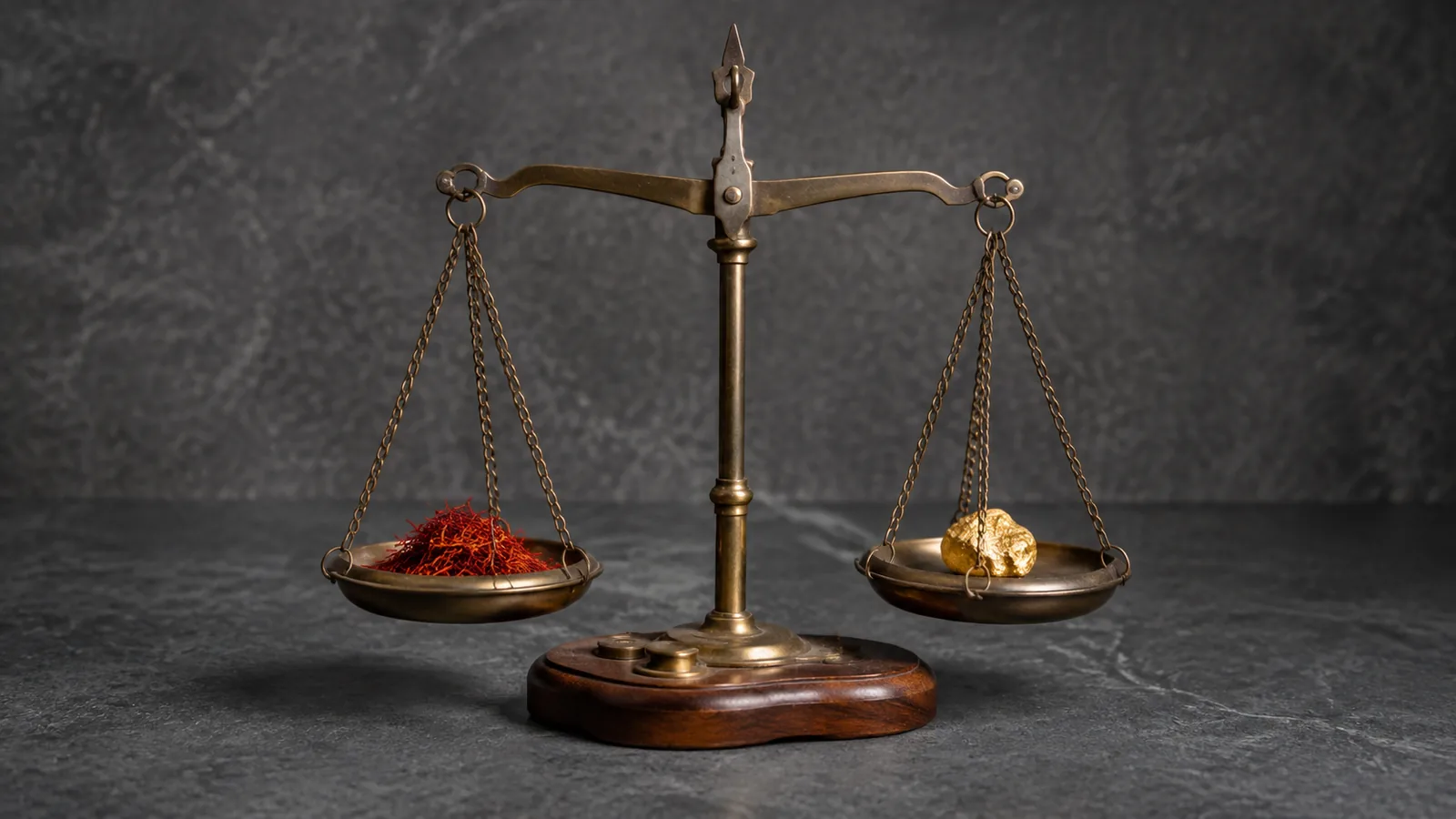
A dated price comparison
Prices move, so an undated dollar figure soon becomes misleading. Here is a transparent snapshot using data available when this article was reviewed on 5 September 2026.
- The London Bullion Market Association reported that 15.8 million ounces of gold cleared in July 2026 with a corresponding value of $64.5 billion. Dividing the value by the volume gives an implied average of about $4,082 per troy ounce, or $131.25 per gram. This is a calculation from LBMA’s published clearing totals, not a live retail quote.
- The European Central Bank reference rate for 4 September 2026 was $1.1622 to €1. At that reference rate, the gold figure works out to roughly €113 per gram.
- As a same-site retail example, the five-gram option on our Super Negin saffron listing was €34.11 on the review date, or about €6.82 per gram before shipping or other order-level costs.
On those stated inputs, the implied gold value per gram was around sixteen and a half times the example saffron price. The figures should not be treated as permanent: gold changes with the market, while saffron varies by grade, origin, pack size, seller and season. The useful conclusion is the scale of the difference, not a frozen price.
Why people say saffron costs more than gold
The claim is memorable, and at certain historical prices or in extremely small, highly marked-up packages it may appear true. It also survives because people often compare unlike units—one gram of saffron with an ounce of gold—or repeat an old price after the gold market has moved.
A troy ounce of gold weighs about 31.1035 grams. Comparing the ticket price of one ounce of gold with a one-gram saffron jar exaggerates the gap in the wrong direction; comparing one gram with one gram is the clean method. Jewellery is another poor reference because workmanship, brand and retail margin sit on top of the metal value.
Saffron is still extraordinarily expensive for a spice
Gold being dearer does not make saffron cheap. A saffron flower carries only three red stigma branches, and those fragile parts must be separated and dried to make the spice. A peer-reviewed review of saffron harvesting and drying estimates that producing one kilogram requires roughly 150,000 flowers and 370–470 hours across picking, stigma removal and drying. The full study on saffron harvest and post-harvest processing explains how this concentrated labour contributes to its price.
Quality control adds another layer. Threads must be dried well enough to preserve their aroma, colour and bitterness, then protected from moisture, light and contamination. Only a small fraction of each flower becomes saleable spice, while poor handling can reduce the value of an entire batch.
What changes saffron’s price per gram?
There is no single global saffron price. Two packets with the same weight can differ for legitimate reasons, although a high price alone never proves quality.
- Grade and usable stigma: longer red stigma material and less yellow style can command a higher price.
- Whole threads or powder: intact threads are easier to inspect; powder may be convenient but can be harder for a buyer to assess.
- Laboratory and traceability work: testing, documented origin and controlled handling add cost.
- Pack size: tiny retail packs usually cost more per gram than larger packs because the container, filling and sale costs are spread over less spice.
- Market and season: harvest size, labour, trade costs, currency and demand can all move the final price.
For a deeper look at production and quality costs, see our guide to why saffron is expensive.
How to make a fair saffron-versus-gold comparison
- Choose one date. Use a saffron listing and a gold benchmark from the same day or as close as the data allow.
- Choose one currency. If conversion is needed, name the exchange-rate source and date.
- Convert both to grams. Divide a gold price per troy ounce by 31.1034768.
- Name the product level. Wholesale saffron, retail saffron, bullion and jewellery are not interchangeable prices.
- Record extra costs separately. Shipping, taxes, dealer premiums and decorative packaging can distort the apparent ingredient or metal price.
This method also explains why two correct-looking comparisons can disagree: they may use different dates, currencies or points in the supply chain.
Could a particular saffron pack cost more per gram?
It is possible for an unusually small or elaborate retail package to produce a very high unit price. That would show what one presentation costs, not establish that saffron as a commodity is more valuable than gold. The same caution applies to a piece of jewellery: its price reflects much more than its gold content.
If the question is about the ingredient itself versus the metal itself, use ordinary quality saffron per gram and a recognised bullion benchmark per gram. Under the dated comparison above, gold is clearly more expensive.
The short answer
Saffron deserves its reputation as the world’s costliest culinary spice because so much flower material and skilled manual work produce a small amount. It is not, however, generally more expensive than gold today on a like-for-like per-gram basis. Check both current prices, convert the units, and keep retail packaging separate from the value of the underlying spice.