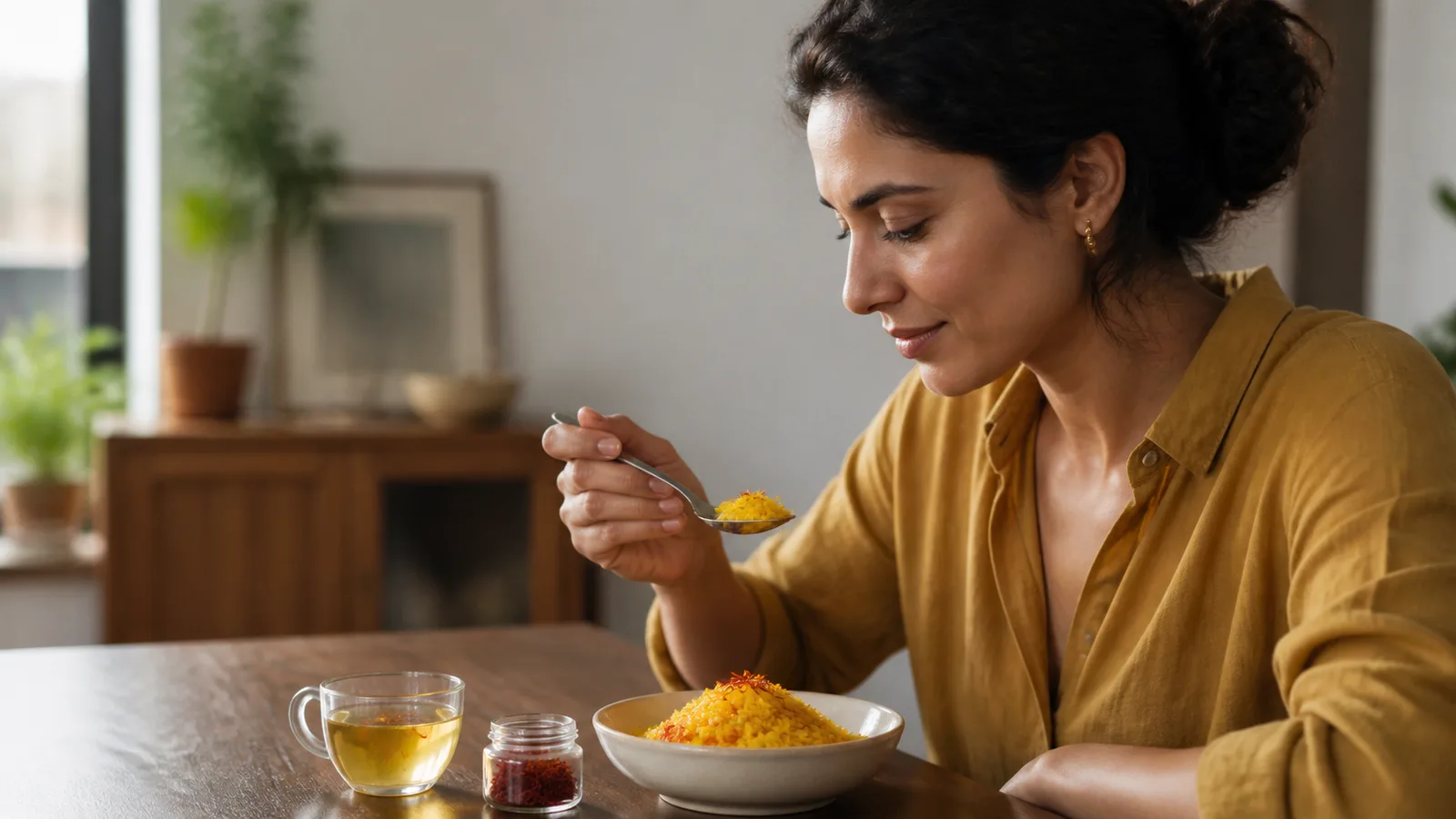
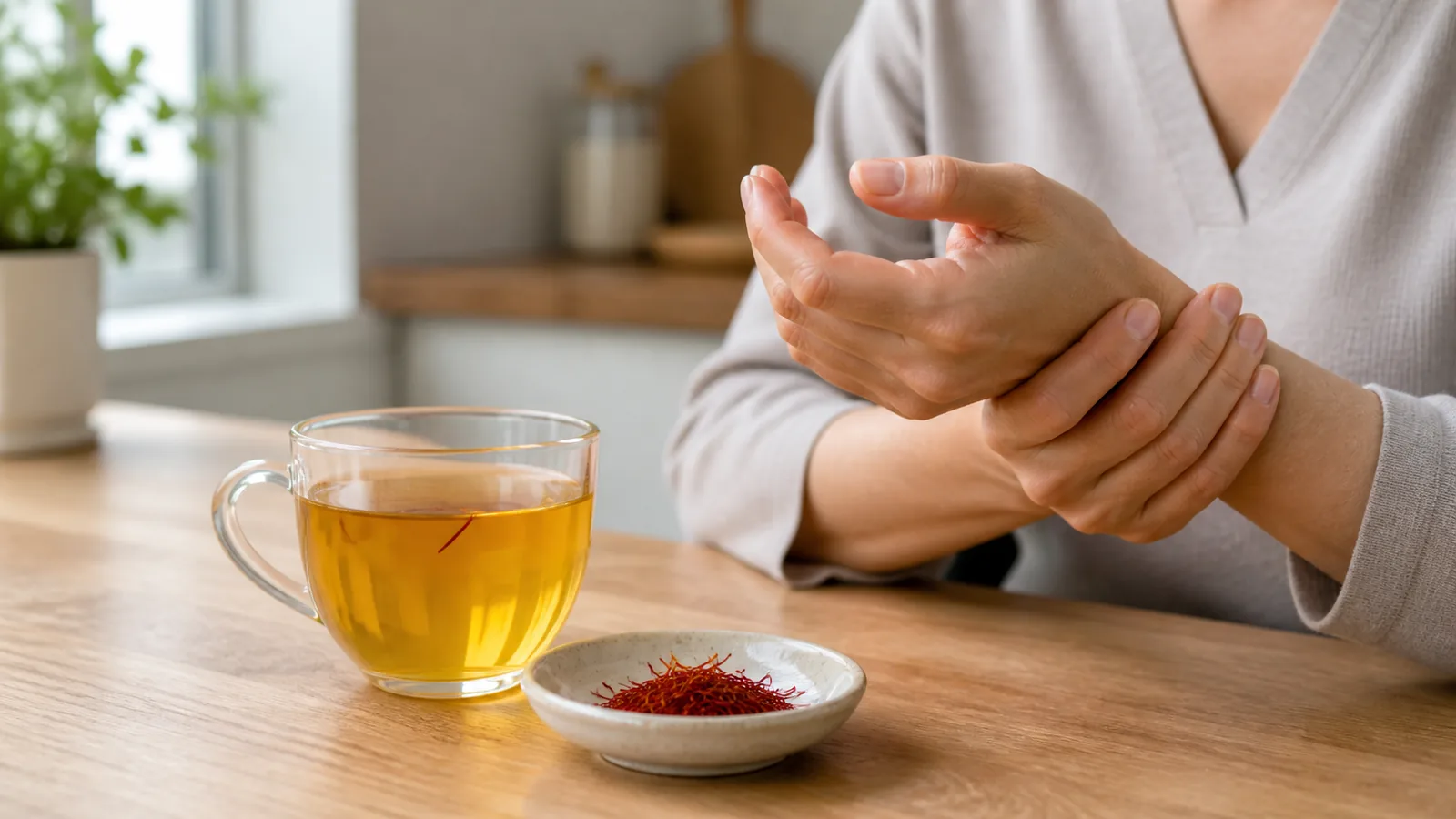
Saffron for health benefits makes sense only when the spice and the claim are both genuine. Saffron is a remarkable food: a small pinch gives a dish colour, aroma and a distinctive bittersweet edge. Its clinical research is promising in a few areas, but it does not cure cancer, replace medicine or make every homemade mask safe.
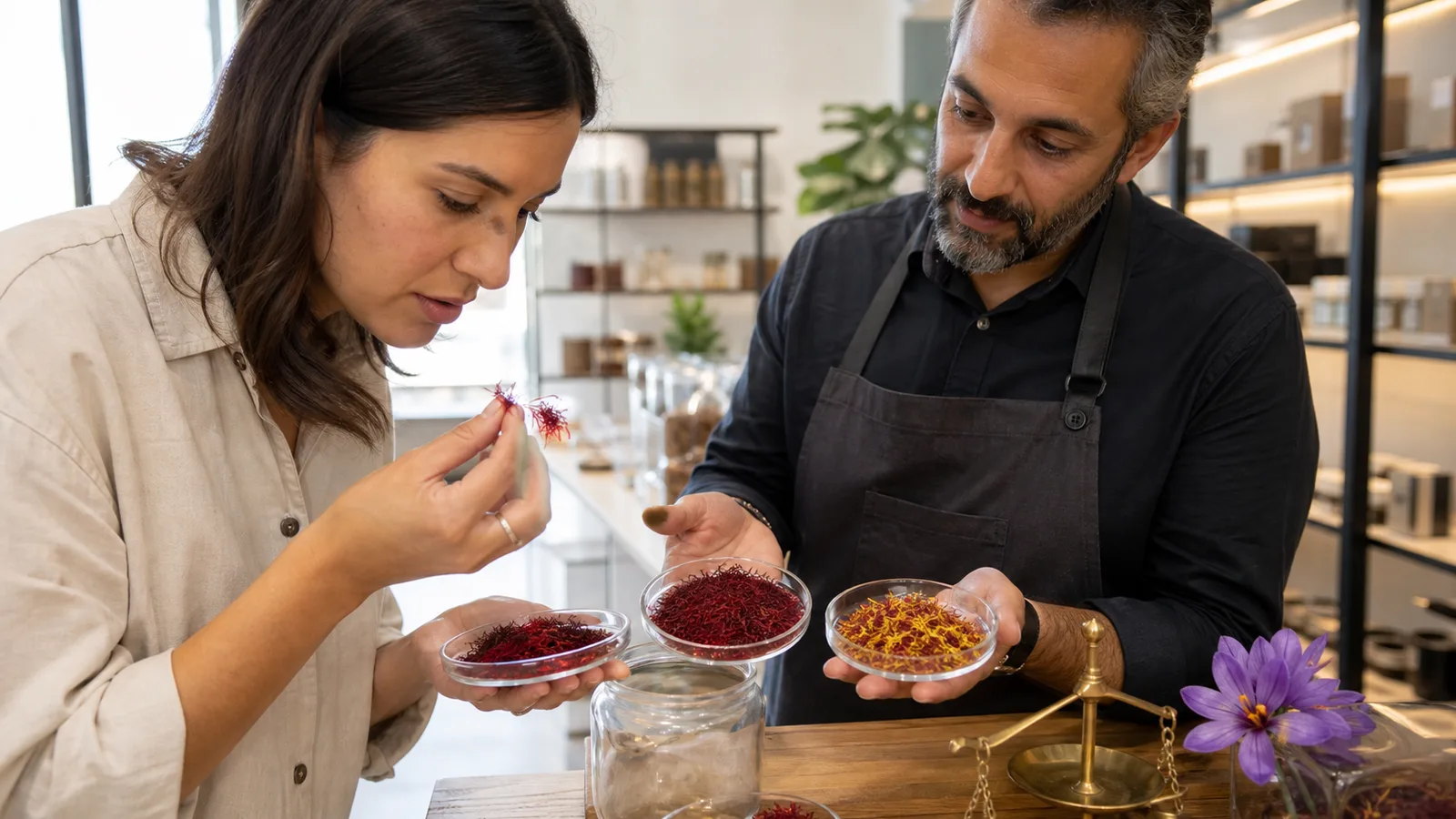
This guide starts with the flower and the grades you may see for sale, then moves through buying, blooming, health evidence and safety. It is the practical overview to read before treating a label, recipe or wellness claim as fact.
What saffron actually is
Saffron is the dried red stigma of Crocus sativus. A flower has three stigma branches, which are separated and dried after harvest. The plant grows from a corm, not a seed-grown bulb, and the work of collecting a small part from each flower helps explain the spice’s value.
Its familiar sensory qualities come largely from a group of compounds that includes crocins, associated with colour; picrocrocin, associated with bitterness; and safranal, an important part of the aroma. Processing and storage affect that balance, so two packs from the same country can smell and perform differently.
Iranian saffron and where it is grown
Iran has long been the leading centre of saffron cultivation, and the Khorasan provinces are especially important. Saffron is also grown in other Iranian provinces and in countries including Afghanistan, India, Greece, Spain and Morocco.
You will often see a fixed claim that Iran produces 90 percent or more of the world’s crop. Such a percentage needs a named dataset and year because harvests and reporting change. Country of origin is useful information, but it is not a quality grade on its own. A well-handled, traceable lot matters more than a broad national slogan.
Understanding Negin, Sargol, Pushal and bunch saffron
Iranian traders commonly use names such as Super Negin, Negin, Sargol, Pushal and bunch saffron. They describe differences in sorting and how much red stigma or yellow style is present, but they are commercial terms rather than one universal global ladder.
- Negin and Super Negin usually refer to long, separated red stigma pieces selected for appearance.
- Sargol generally contains red stigma pieces with little or no yellow style.
- Pushal keeps some of the style attached, which can make the flower structure easier to recognise.
- Bunch saffron is dried as bundled stigma and style material rather than fully separated red threads.
A name alone cannot establish strength, purity, crop year or storage condition. Ask for a lot-specific specification and, for a significant purchase, laboratory evidence. The current ISO 3632-1:2025 saffron specification covers dried saffron in filaments, cut filaments and powder forms and also includes storage and transport recommendations.
How to buy saffron with fewer surprises
Whole threads give you more visual information than powder. Look for a seller who states net weight, origin, lot or batch, packing date or crop information, and a way to resolve a quality problem. The container should be intact and should protect the spice from moisture and strong outside odours.
Threads are typically deep red, sometimes with an orange-red end. A strong perfumed aroma, slight bitterness and gradual release of golden colour in warm water can be useful observations. They are not conclusive authenticity tests. Artificial colour, added plant material and mixtures can be designed to imitate one or more of those signs.
The old baking-soda test in this article was unreliable and has been removed. A laboratory may combine spectroscopy with microscopy, chromatography or DNA methods depending on the question. Research on saffron authentication shows why no single home trick can prove species, purity, colour strength and geographical origin at once.
A 2025 systematic review of saffron fraud detection discusses common substitutes and the strengths and limits of current testing. For an ordinary household purchase, traceability, intact packaging and a reputable seller are more realistic protections than a viral kitchen experiment.
How to bloom saffron for food and drink
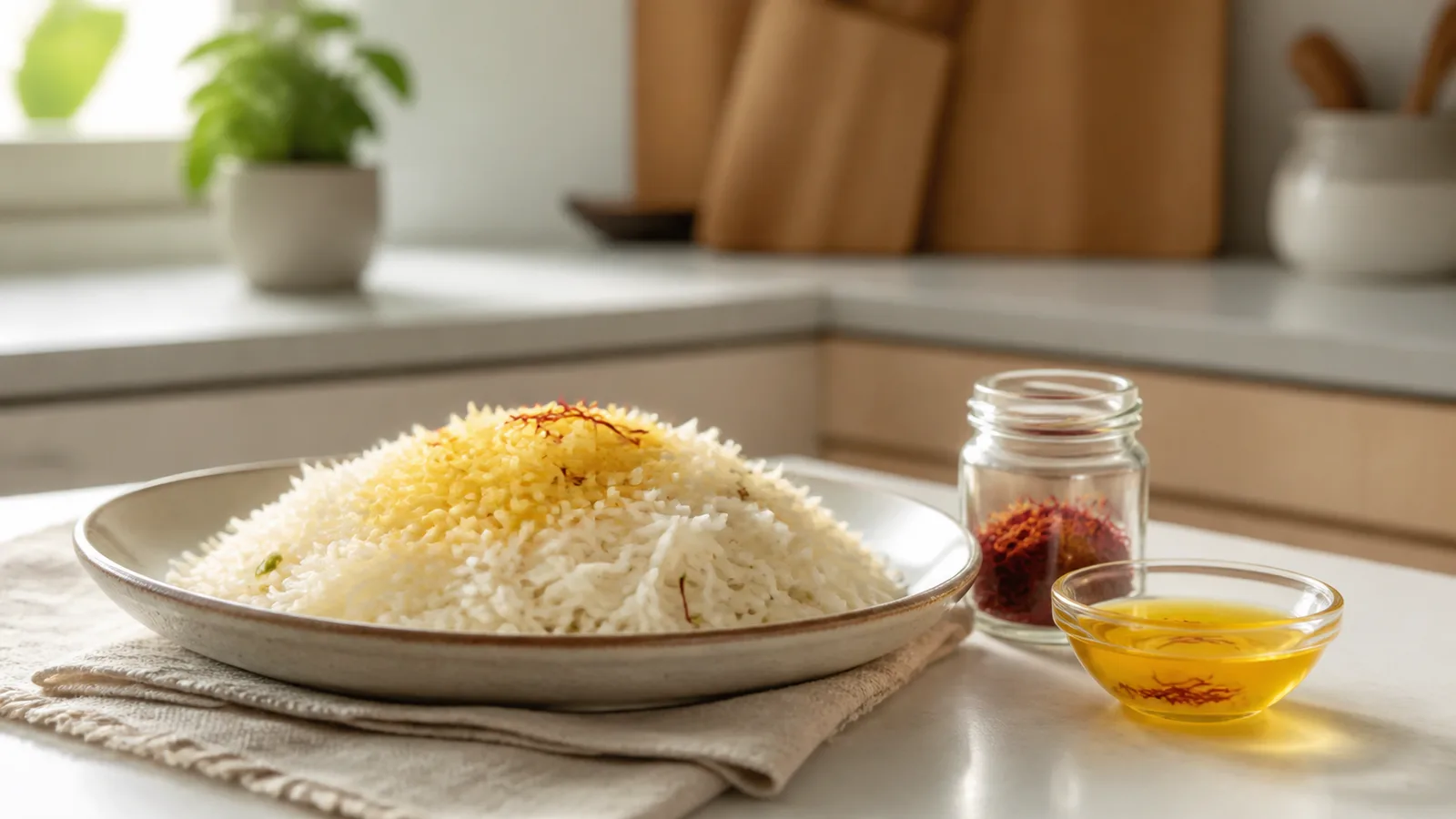
Blooming helps distribute the colour and aroma through a dish. Lightly crush a small culinary pinch, add warm water and allow it to infuse before stirring the liquid and threads into rice, soup, sauce, dough or dessert. Very aggressive grinding and long exposure to high heat can flatten the aroma.
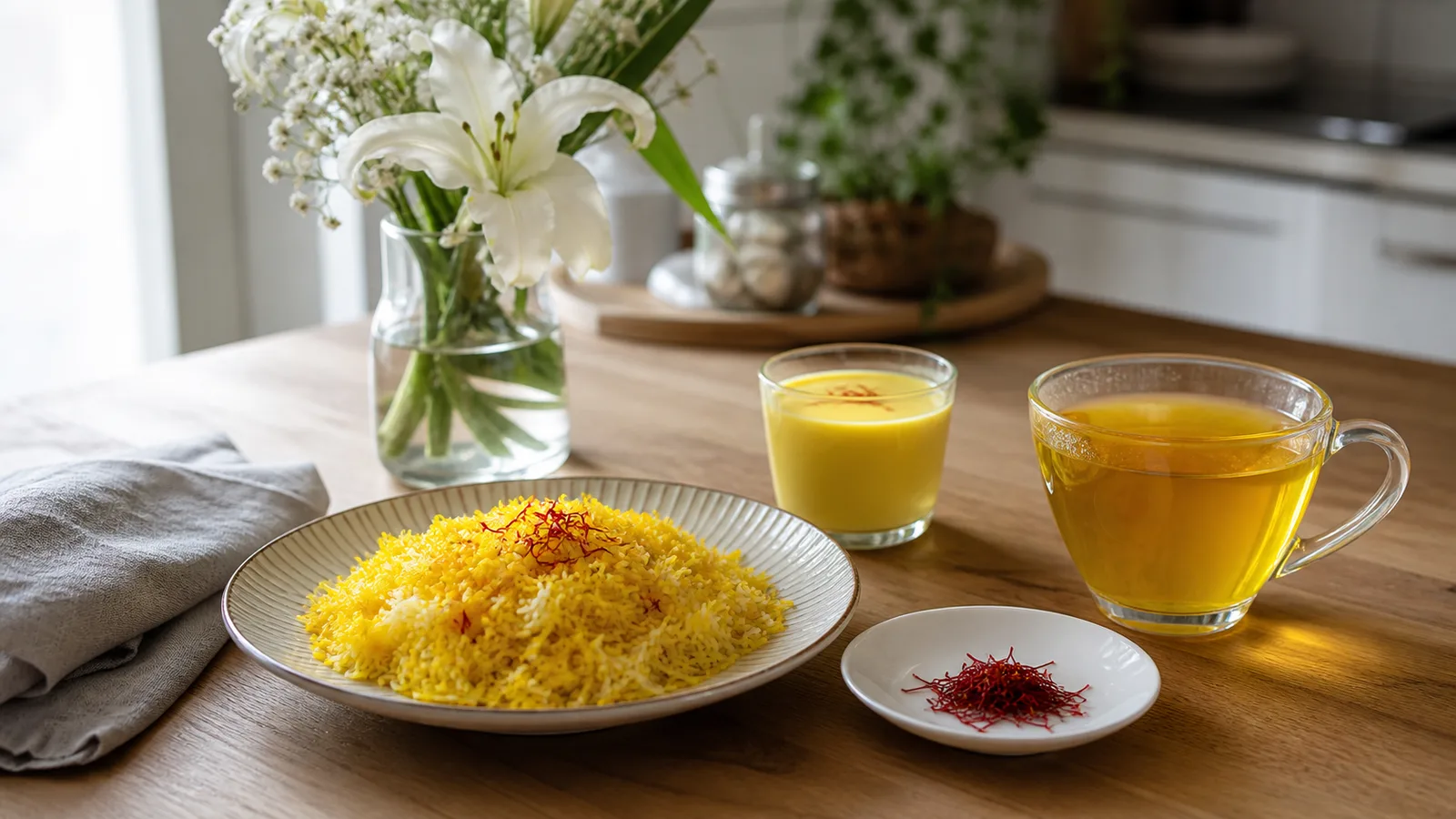
For tea, use the same principle and give the threads time to infuse. Add other ingredients for flavour rather than to turn the drink into a treatment. Our saffron tea recipe gives a straightforward culinary method.
What the research says about saffron’s health benefits
The strongest body of human research concerns mood symptoms. Randomised trials and meta-analyses also offer early support for sleep quality. Smaller or less consistent bodies of work have examined cognition in people with mild impairment, selected eye conditions, premenstrual symptoms, sexual function and cardiometabolic markers.
Those studies do not all test the same thing. Some use stigma powder, others use a standardised extract or an isolated constituent. Participants may be healthy or may already have a diagnosed condition, and most interventions last weeks rather than years. A result for one product and population cannot be applied automatically to saffron tea at home.
Our 20-claim saffron health evidence guide separates those outcomes one by one. Its sources include a broad evidence map that found encouraging findings but also called for better-quality reviews and larger, more diverse trials.
Mood and sleep
Pooled trials suggest saffron may improve some self-reported depression and anxiety scores. Clinician-rated outcomes have not always agreed, and studies vary substantially. Sleep reviews have found a positive signal from a small set of randomised trials. Neither finding makes saffron a replacement for mental-health care or an assessment of persistent sleep trouble.
Metabolic and cardiovascular markers
Some meta-analyses report small average changes in fasting glucose, HbA1c, cholesterol, triglycerides or blood pressure. Other reviews find no change in several of the same measures. A movement in a marker is not proof that saffron prevents diabetes, heart disease or a cardiovascular event.
Cognition and eye health
Small clinical trials in mild cognitive impairment, dementia and selected retinal conditions have produced promising results. The evidence is not strong enough for saffron to replace diagnosis, monitoring or approved care. Claims that a cup of saffron tea treats Alzheimer’s, Parkinson’s or an eye disease go beyond the trials.
Claims that should be left out
Laboratory research on crocin, crocetin and other compounds is sometimes described as proof that saffron prevents or fights cancer. It is not. Work in cells or animals can identify a mechanism worth testing, but it cannot show that eating the spice treats a tumour in a person.
Saffron is also sometimes called a “natural blood thinner.” That phrase is too blunt to guide care and can be dangerous if it encourages someone to combine products or change prescribed treatment. The appropriate advice depends on the person, the preparation and their medicines.
Skin-brightening, acne, anti-ageing and hair-growth promises are similarly ahead of the evidence. A homemade mixture of saffron, honey, milk, yoghurt or rosewater has not been shown to repair every skin or hair condition, and natural ingredients can still irritate the skin. Patch-testing cannot rule out every reaction, and a persistent problem belongs with a qualified clinician.
How much is too much?
A few threads used to season a shared meal are not equivalent to a concentrated daily supplement. There is no single home dose that reproduces every study, because extracts, stigma products and isolated compounds differ.
A 2026 systematic review of saffron adverse events found that it was generally well tolerated in human studies, with gastrointestinal problems the most frequently reported effects. The authors still advised clinical monitoring for higher-dose or prolonged medicinal use because potentially important adverse events have occurred.
Pregnant or breastfeeding people should not begin concentrated saffron use without professional advice. The same applies to anyone taking prescription medicine, preparing for surgery, or managing a bleeding, blood-pressure, mental-health, liver or kidney condition.
Store it as carefully as you choose it
Light, heat, air, moisture and strong odours can all reduce quality. Keep saffron in a tightly closed, food-safe container in a cool, dark, dry cupboard, and handle it with a clean, dry utensil. Refrigeration is not automatically better if repeated opening creates condensation.
For container choices and signs of quality loss, use our complete guide to storing saffron.
A useful place for saffron
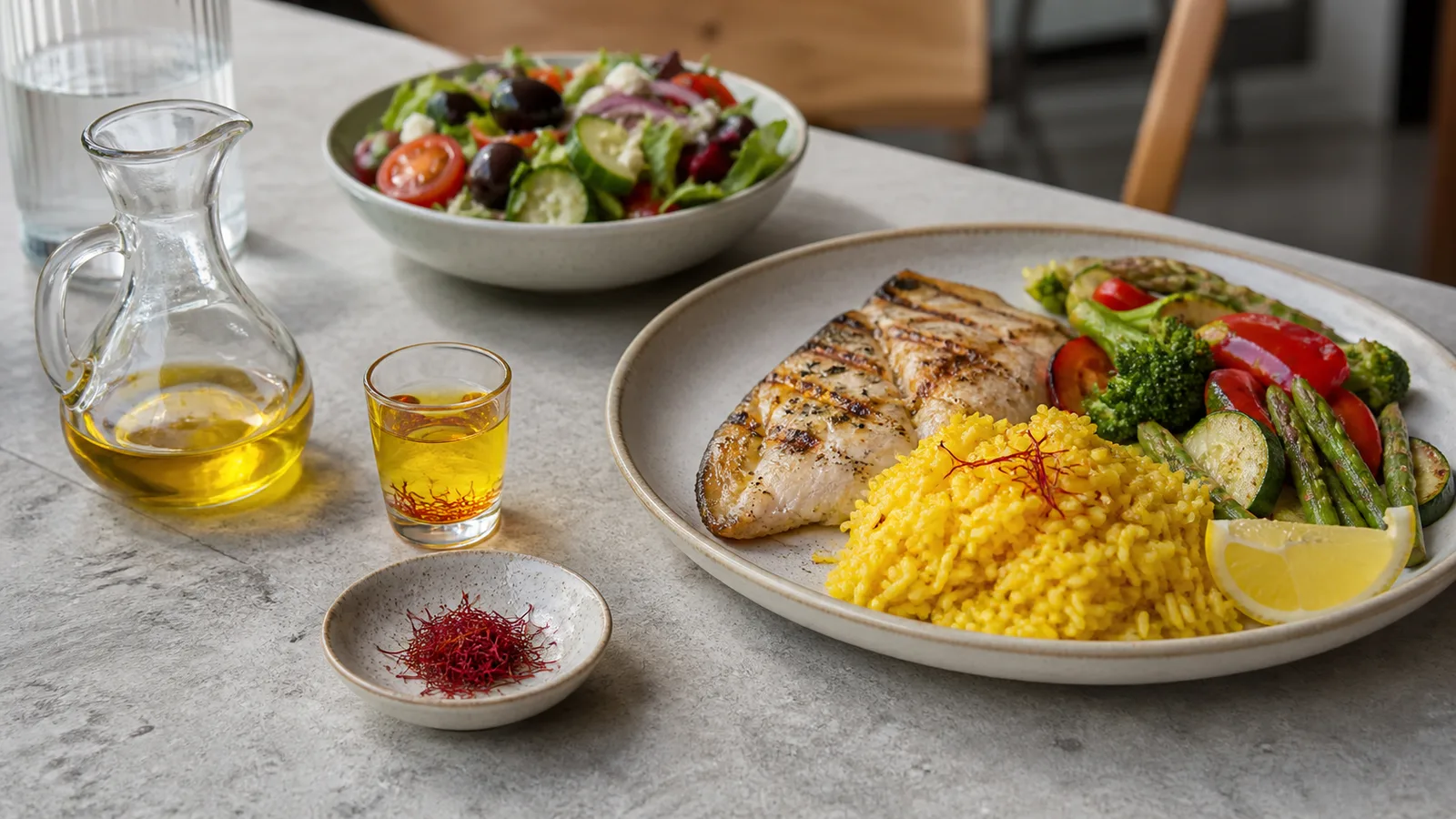
The most reliable way to enjoy saffron is also the simplest: buy traceable threads, store them well and use a modest amount to make food taste and smell distinctive. Its human health research deserves attention, particularly around mood and sleep, but attention is not the same as a cure.
That is the honest case for saffron for health benefits. Appreciate what the spice does beautifully in the kitchen, read clinical claims at the level the evidence supports, and involve a clinician when the goal moves from flavour to treatment.