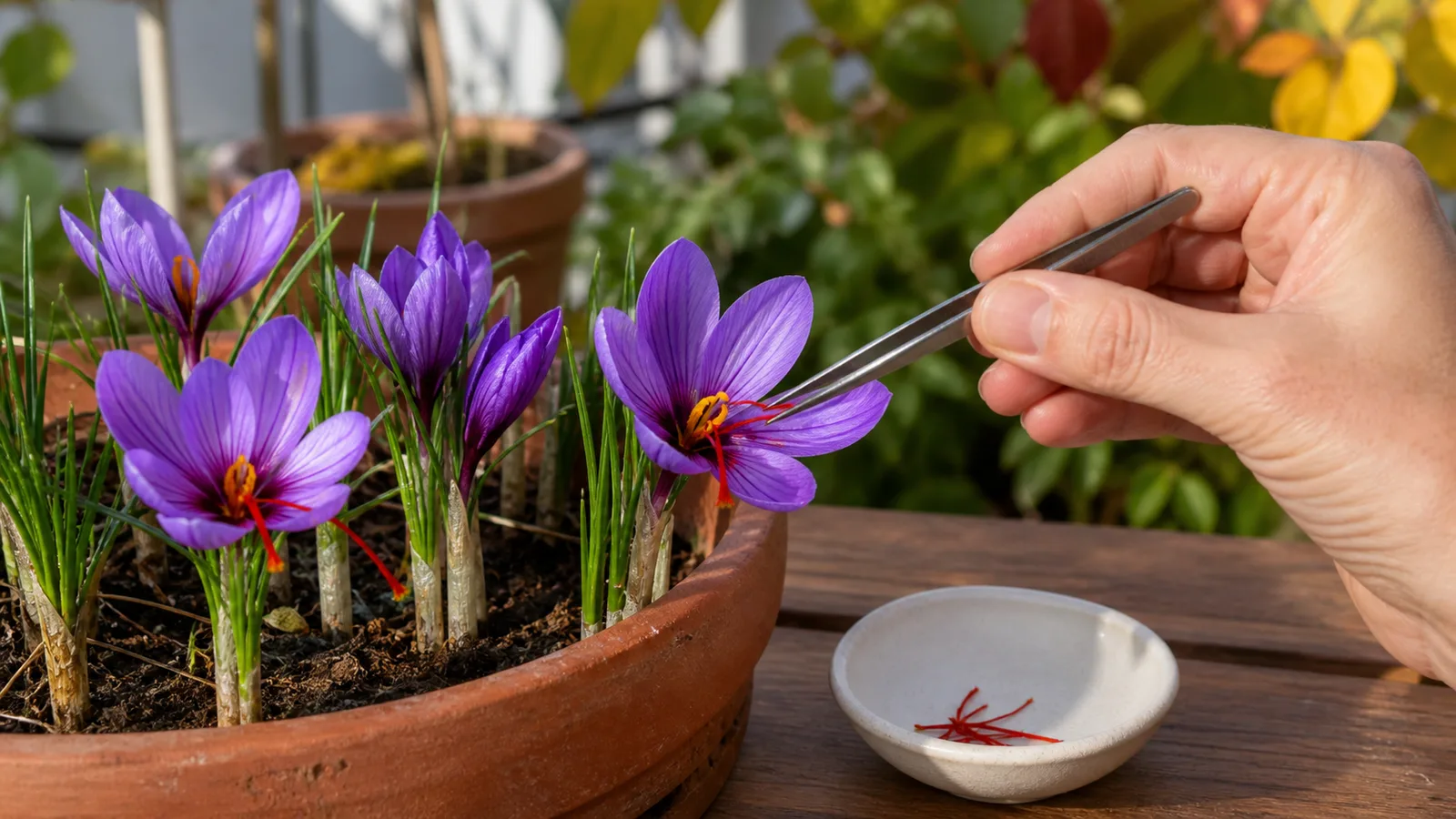
Can I grow saffron at home? Yes, if you can give Crocus sativus full sun, sharply drained soil and a summer rest that is not constantly wet. A garden bed, raised bed or deep container can work. The harvest will be small—each flower gives only three red stigmas—but the plant itself is manageable.
Can I Grow Saffron at Home?
Saffron does not grow true from seed. It is a sterile plant propagated from corms, the solid underground stems often casually called bulbs. Buy correctly labelled Crocus sativus corms from a reputable nursery; do not collect an unidentified autumn crocus, because similar-looking plants are not necessarily edible.
Ideal Growing Conditions for Saffron
Choose the sunniest practical spot and make drainage the priority. Sandy or loamy soil is easier to manage than compacted clay. The Penn State Extension saffron guide recommends well-drained, slightly alkaline soil and notes that corms rot when the soil stays too wet. It lists USDA hardiness zones 6 to 9 as a useful range.
Raised beds help in rainy areas. For a container, use a deep pot with generous drainage holes and a gritty, free-draining growing mix. A pot can be sheltered from prolonged rain, but keeping it in a warm living room all winter does not reproduce the plant’s normal seasonal cycle.
Planting Saffron Corms
Plant healthy, firm corms in late summer or early autumn; local climate shifts the exact date. Penn State suggests September through October. Place the pointed growing tip upward, about 3 to 4 inches deep, and leave roughly 4 to 6 inches between corms so offsets have room.
Water after planting to settle the soil, then avoid keeping the bed soggy. Label the position: leaves can be easy to overlook, and you do not want to disturb the corms while working nearby.
Maintaining Your Saffron Plants
Saffron often flowers in autumn and carries narrow leaves through the cooler growing period. Water when active growth and the soil’s condition require it, but allow the upper layer to dry rather than following a rigid schedule. Rainfall, container size and soil type make more difference than a calendar.
After the leaves yellow naturally, the corms enter summer dormancy. Do not cut green leaves early; they help replenish the corm. Keep dormant corms comparatively dry, control weeds by hand and watch for rot or rodents.
Harvesting Saffron
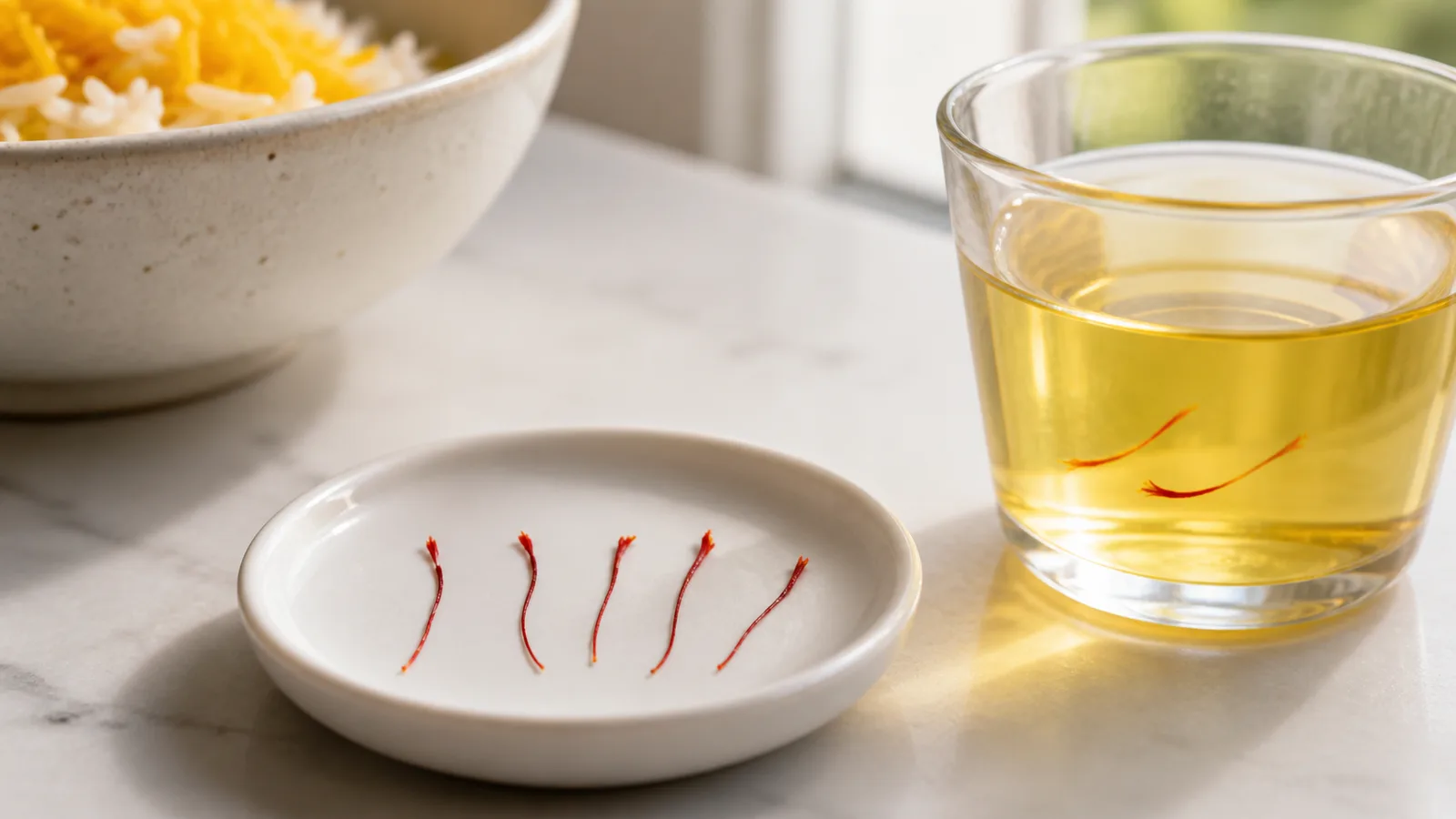
Pick flowers soon after they open on a dry day. Indoors, separate the three long red stigmas from each flower with clean fingers or tweezers. The yellow anthers and purple petals are not the saffron spice.
Dry the stigmas promptly in a clean, protected place until they are fully dry rather than leathery. Store them in a small airtight container, away from light, heat and moisture. Letting newly dried saffron rest briefly before use can allow its aroma to settle, but cleanliness and complete drying matter most.
Challenges of Growing Saffron at Home
The main difficulties are wet soil, low light, poor-quality corms and unrealistic yield expectations. One flower produces three stigmas, so a home planting gives pinches, not jars. The first season may be modest, while daughter corms can increase the planting over time.
In very humid or waterlogged conditions, containers or raised beds provide more control. In colder regions, consult a local extension service about winter protection for your exact zone; trapping moisture under heavy protection can be worse than cold alone.
Conclusion
Growing saffron at home is practical on a small scale when sunlight and drainage are right. Start with authentic corms, respect the seasonal cycle, harvest only the red stigmas and expect a careful, hand-sized crop rather than commercial quantities.
If you would rather cook than cultivate, explore our food-grade saffron products.