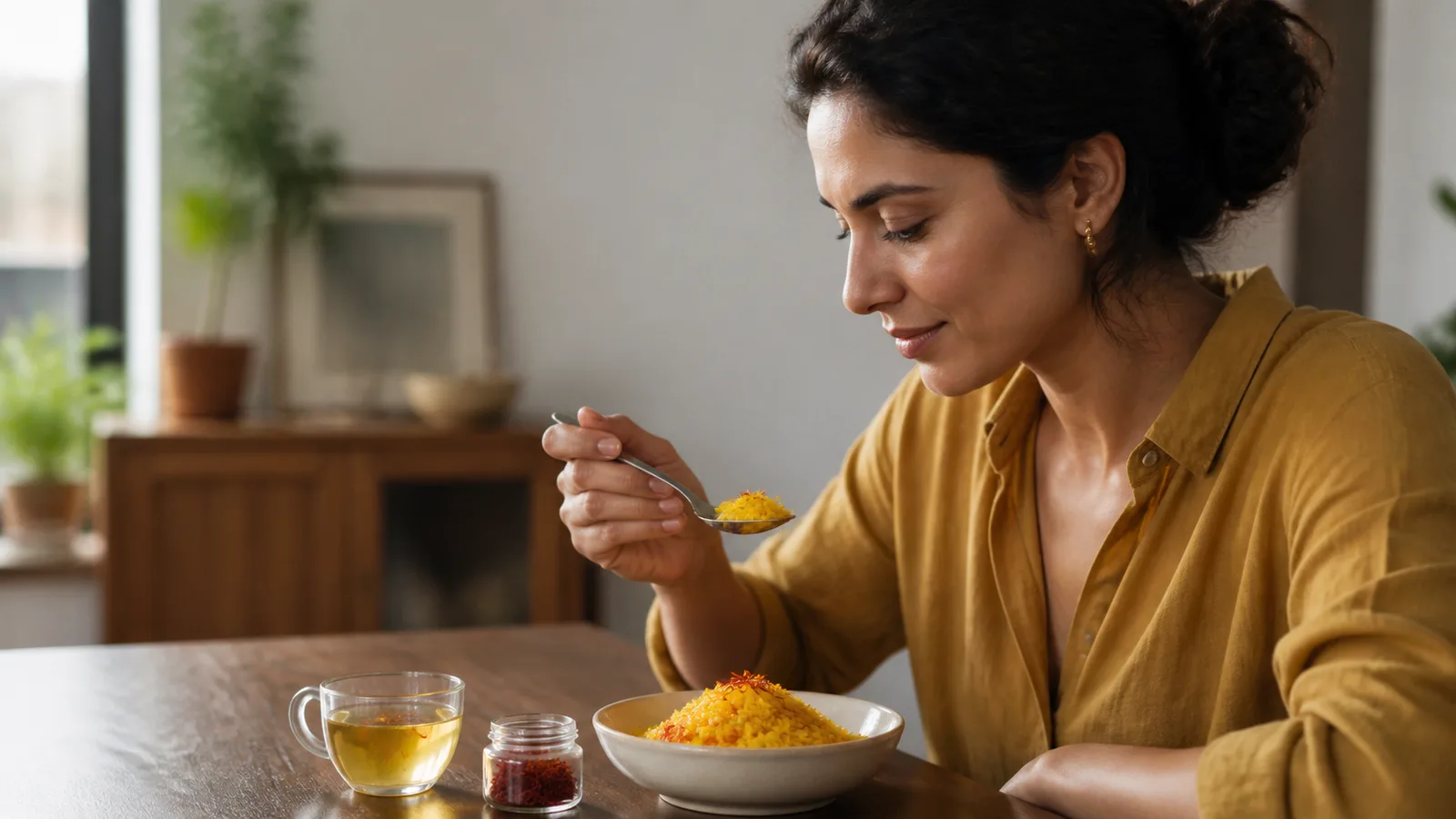
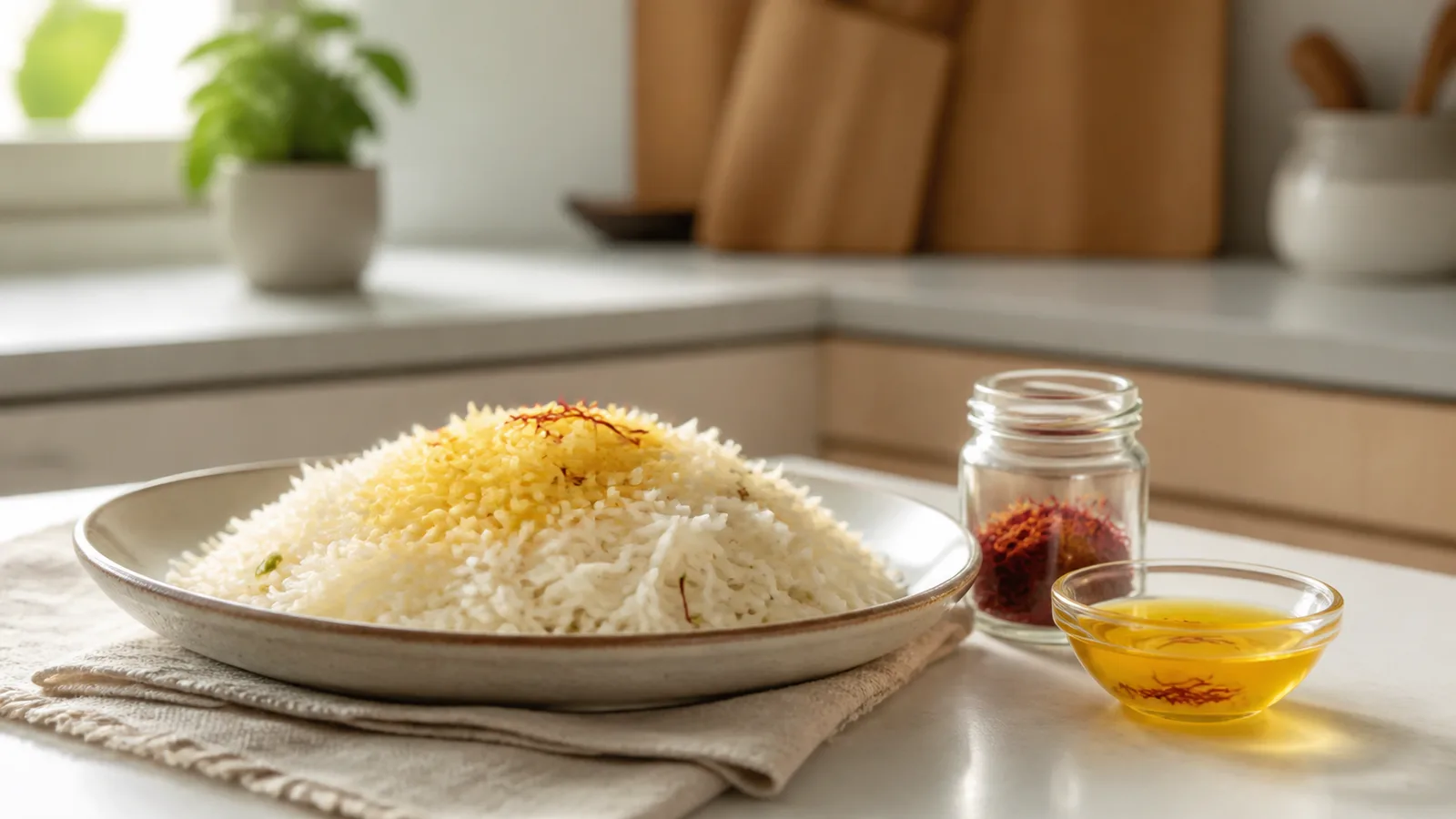
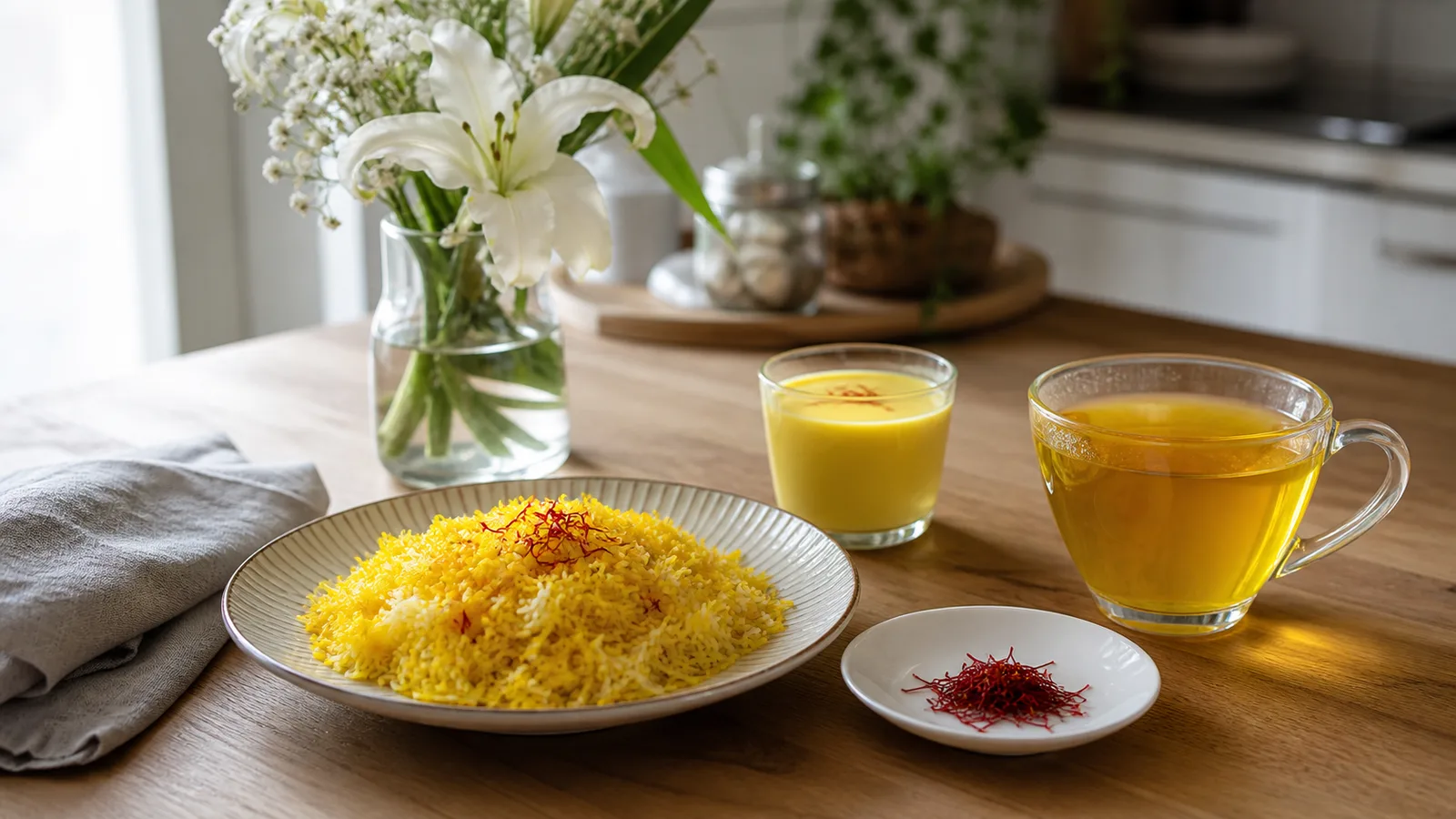
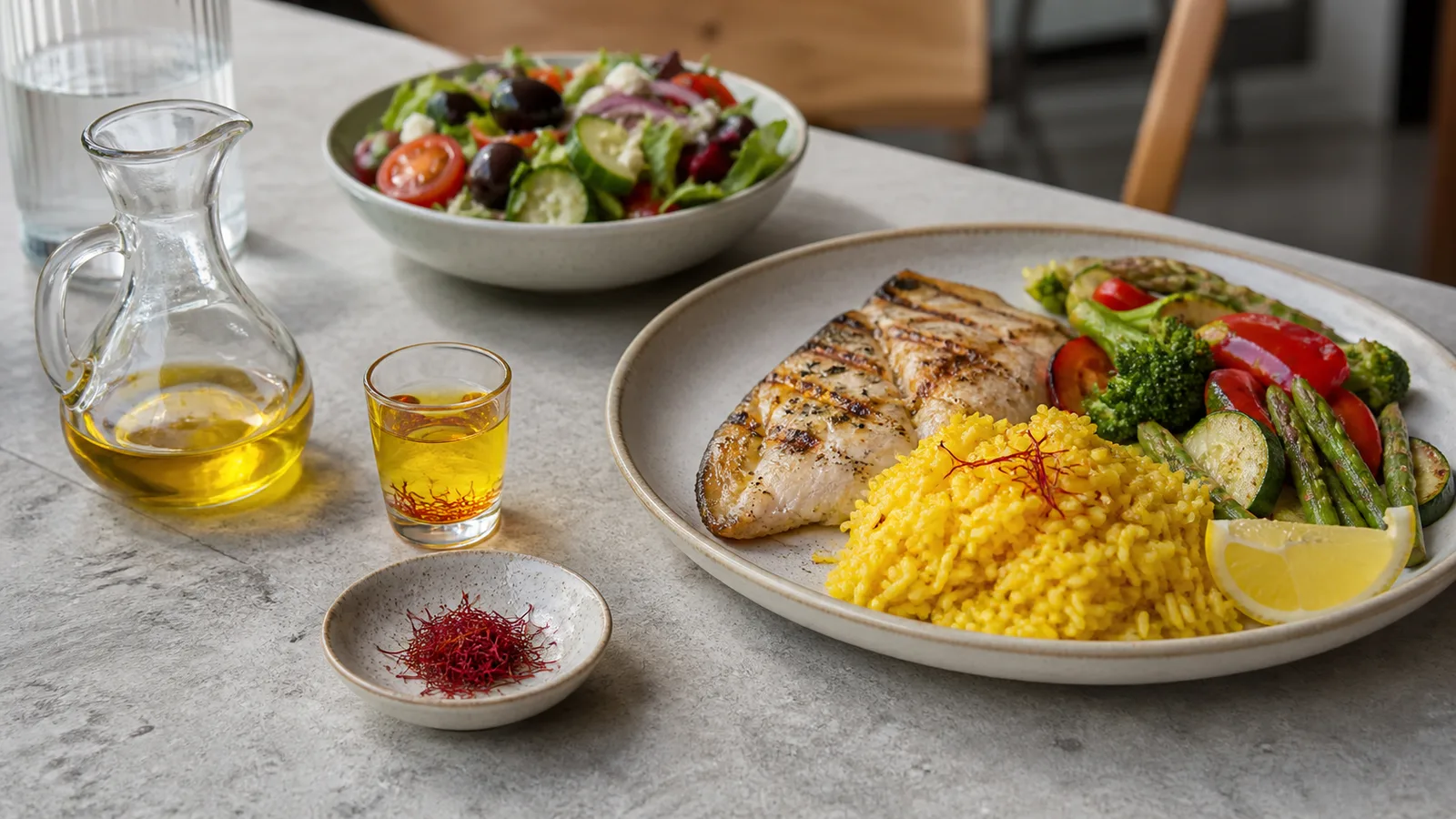
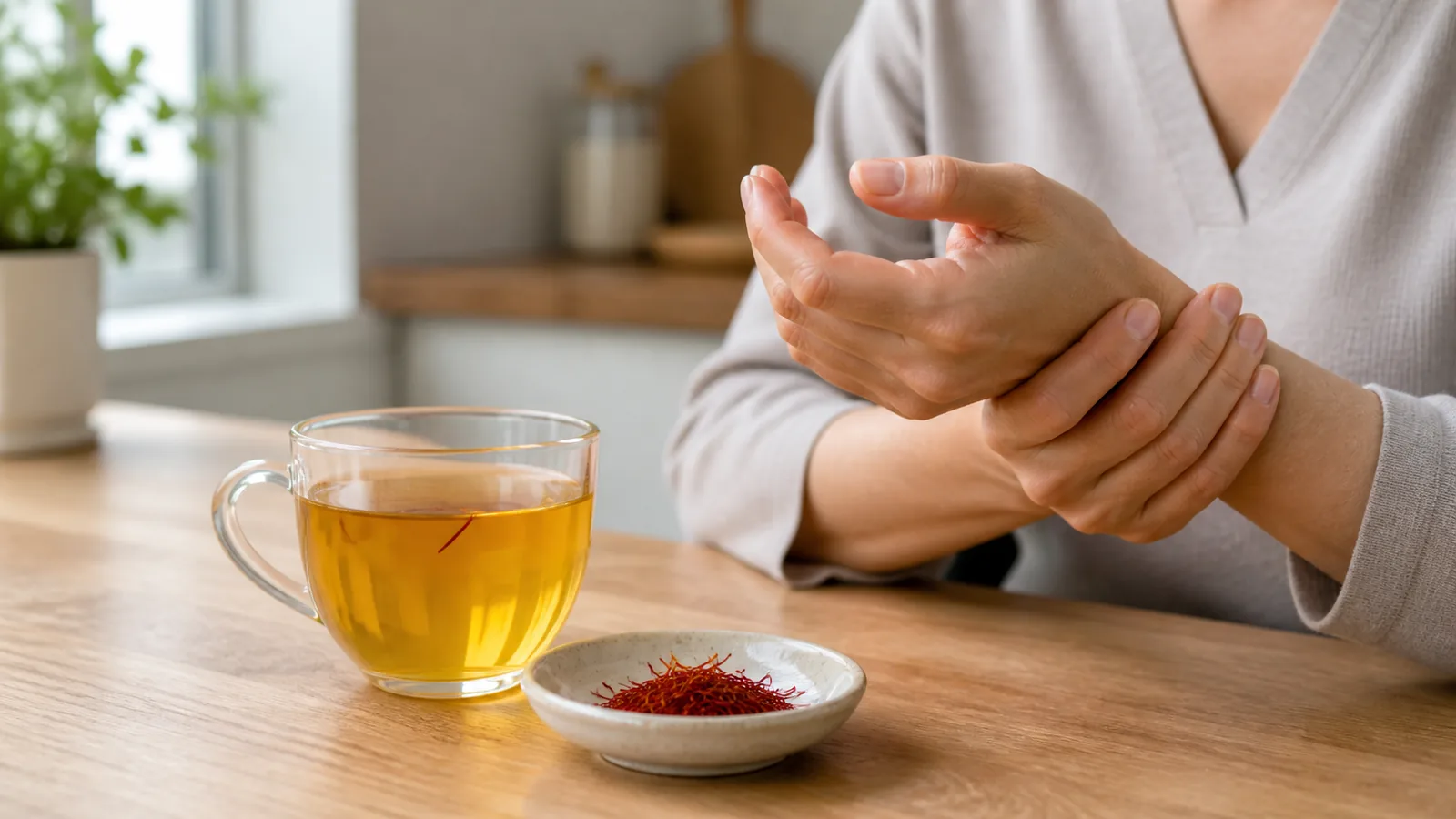
Saffron benefits for women are being studied most directly in premenstrual symptoms and some aspects of sexual health. The evidence is still narrower than many online claims suggest. Saffron has not been shown to start a late period safely, determine a baby’s skin tone, treat pregnancy complications or guarantee weight loss.
This evidence guide separates everyday cooking from the measured products used in trials. It also corrects several risky ideas in the previous article, particularly its instructions for stimulating menstruation and its advice about saffron during pregnancy.
What the research actually covers
Most clinical studies do not test a few threads scattered over rice or a casual cup of tea. They use a defined saffron powder or extract, a measured daily amount and a fixed treatment period. Results from that setting cannot establish the effect of an unmeasured home preparation.
- Culinary use means the small quantity shared across a dish for colour, aroma and flavour.
- A study product has a specified composition and schedule under a research protocol.
- A supplement can vary in strength and purity and may expose one person to far more saffron than a meal does.
That distinction matters when reading every section below.
Premenstrual symptoms and period pain
Premenstrual syndrome can include mood changes, irritability, fatigue, poor concentration, appetite changes and physical symptoms in the days before a period. It is not explained by one simple “drop in serotonin,” even though brain signalling may be involved.
A 2026 systematic review and meta-analysis of saffron for PMS and dysmenorrhea found a promising overall signal, but the authors also reported substantial variation between studies. An earlier double-blind trial used 30 mg a day in women aged 20–45 for two menstrual cycles. That number describes the trial; it is not a universal self-treatment instruction.
The old article converted 30 mg into “one or two branches” and told readers to divide it through the day. Threads differ greatly in size, so that conversion is unreliable. More importantly, saffron should not be used to force or “stimulate” menstruation. A late period can have many causes, including pregnancy, and deliberately taking a concentrated product before finding the cause is unsafe.
For a fuller look at cramps and the limits of the evidence, see our guide to saffron and menstrual pain. Severe pain, fainting, very heavy bleeding, bleeding between periods or a new change in the cycle deserves medical assessment.
Saffron during pregnancy
The previous version offered two confident rules: no saffron during the first three months, then one or two threads daily during the final six months. Human evidence does not support that precise timetable or dose.
A 2026 integrative review of saffron and pregnancy found culturally important practices but limited and inconsistent safety evidence. This is a reason for caution with medicinal or concentrated use throughout pregnancy, not a basis for prescribing a “safe” trimester from a blog.
Food use is different from supplementation
A small amount of saffron distributed through food is a different exposure from drinking a concentrated infusion every day or taking capsules. Someone who is pregnant, trying to conceive or breastfeeding should discuss any regular medicinal use with an obstetric clinician or pharmacist who can consider the product and personal history.
Saffron should not be used to manage high blood pressure in pregnancy. Headache, visual disturbance, sudden swelling, upper abdominal pain or a high blood-pressure reading may require urgent maternity assessment. Nor should saffron replace appropriate care for persistent indigestion, muscle pain or insomnia.
Saffron does not change a baby’s skin tone
The original article was right to reject this belief. A baby’s inherited pigmentation is determined primarily by genetics and normal biological development. Eating saffron cannot make a baby fairer or “clear” the skin. Marketing that promises otherwise exploits a cultural myth rather than evidence.
Our dedicated guide explains the boundary between culinary saffron and saffron supplements during pregnancy.
Mood and sleep
Some saffron research concerns depressive and anxiety symptoms, but that is not a benefit unique to women. A 2026 review of 34 randomised trials found improvement on some self-reported scales, while several clinician-rated outcomes did not show the same result and studies differed considerably.
This evidence does not mean saffron simply “secretes serotonin,” produces euphoria or reliably treats insomnia. It should not replace counselling, sleep care or prescribed medicine. Anyone with persistent low mood, severe anxiety or thoughts of self-harm needs professional support rather than a spice remedy.
Sexual health
This is another women-specific area with early human research. A small randomised trial studied saffron in women experiencing sexual side effects while taking fluoxetine. A later three-centre placebo-controlled trial examined women with sexual dysfunction more broadly. These studies suggest a possible effect on selected measures, but they do not establish saffron as a general aphrodisiac or identify the right option for every cause.
Pain, dryness, medication effects, hormonal changes, relationship factors and several health conditions can contribute to sexual difficulties. A clinician can help identify the cause. Do not stop an antidepressant or other medicine to try saffron.
Appetite and weight
The earlier article claimed that saffron releases serotonin, stops snacking and therefore helps women lose weight. That chain of certainty is not supported. A systematic review of trials in people with overweight or obesity examined body measurements and metabolic outcomes, but differences between products, participants and studies prevent a promise that culinary saffron suppresses appetite or produces meaningful weight loss.
A few threads can make a balanced meal more aromatic without adding much energy. That is a culinary advantage, not a treatment for obesity. Sustainable weight management depends on the whole eating pattern, activity, sleep, medicines and health conditions.
Side effects and sensible use
A 2026 systematic review of reported adverse events found medicinal saffron preparations generally tolerated in trials, with gastrointestinal complaints among the most frequent problems. Trial monitoring does not make every commercial supplement equally safe.
- Use small culinary quantities for flavour; do not infer a medicinal dose from a recipe.
- Avoid using concentrated saffron to start a period or self-treat pregnancy symptoms.
- Ask a clinician or pharmacist before supplements during pregnancy or breastfeeding, before surgery, or alongside regular medicines.
- Stop using a product and seek advice after an unexpected reaction.
- Choose whole red threads from a traceable seller; powders are harder to assess visually.
How to enjoy saffron as food
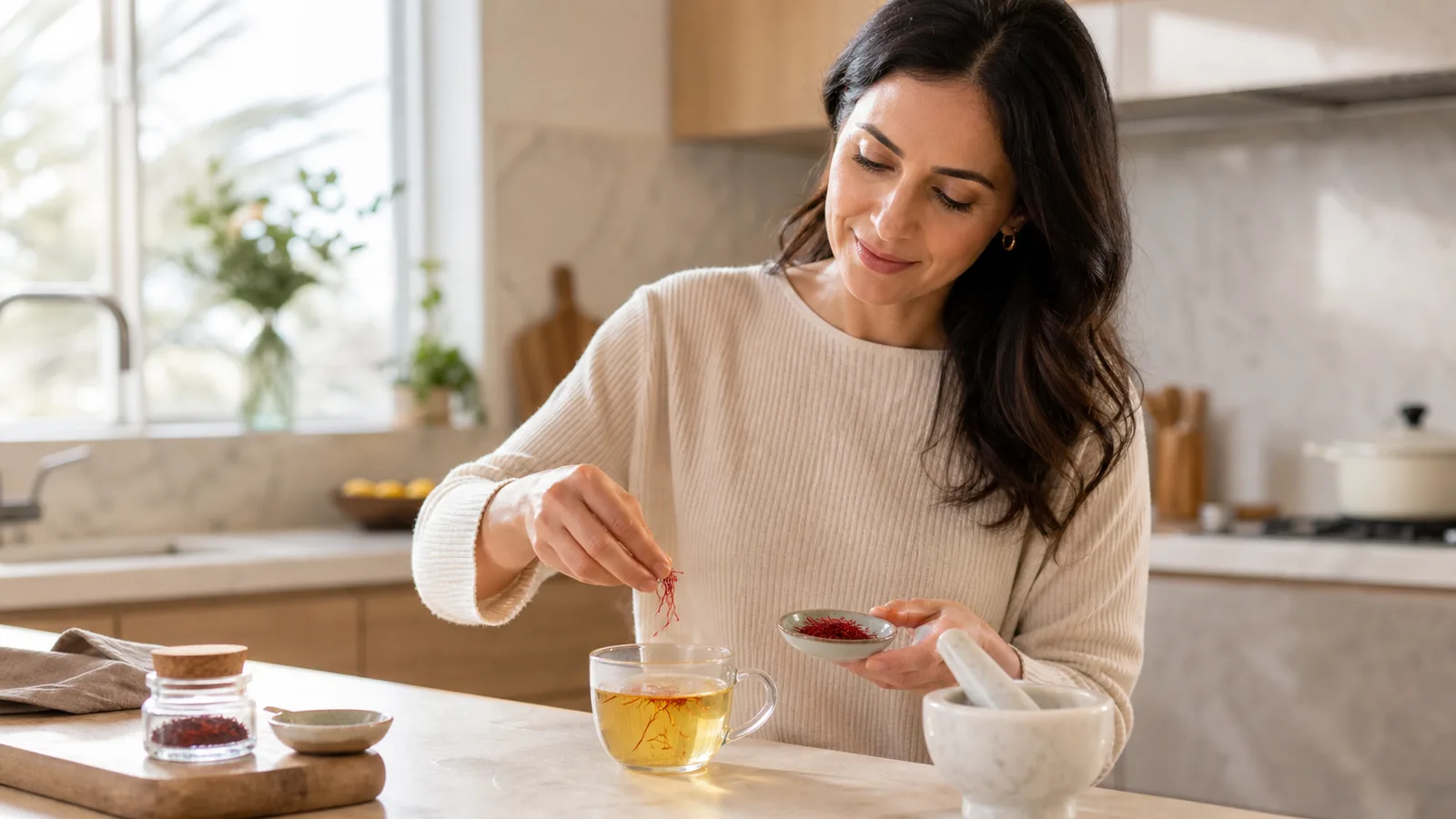
For cooking, crush a modest pinch, cover it with a few tablespoons of hot water and let it steep for 15–20 minutes. Add the liquid gradually to rice, soups, sauces or desserts. Our guide to brewing saffron explains how to protect its aroma.
Saffron benefits for women should be described with the same precision used for anyone else: identify the studied outcome, product and population, then state the uncertainty. The strongest current signals do not justify promises about fertility, menstrual induction, pregnancy complications, sleep or weight loss. Saffron remains a valuable food ingredient, while medical questions deserve evidence and individual care.