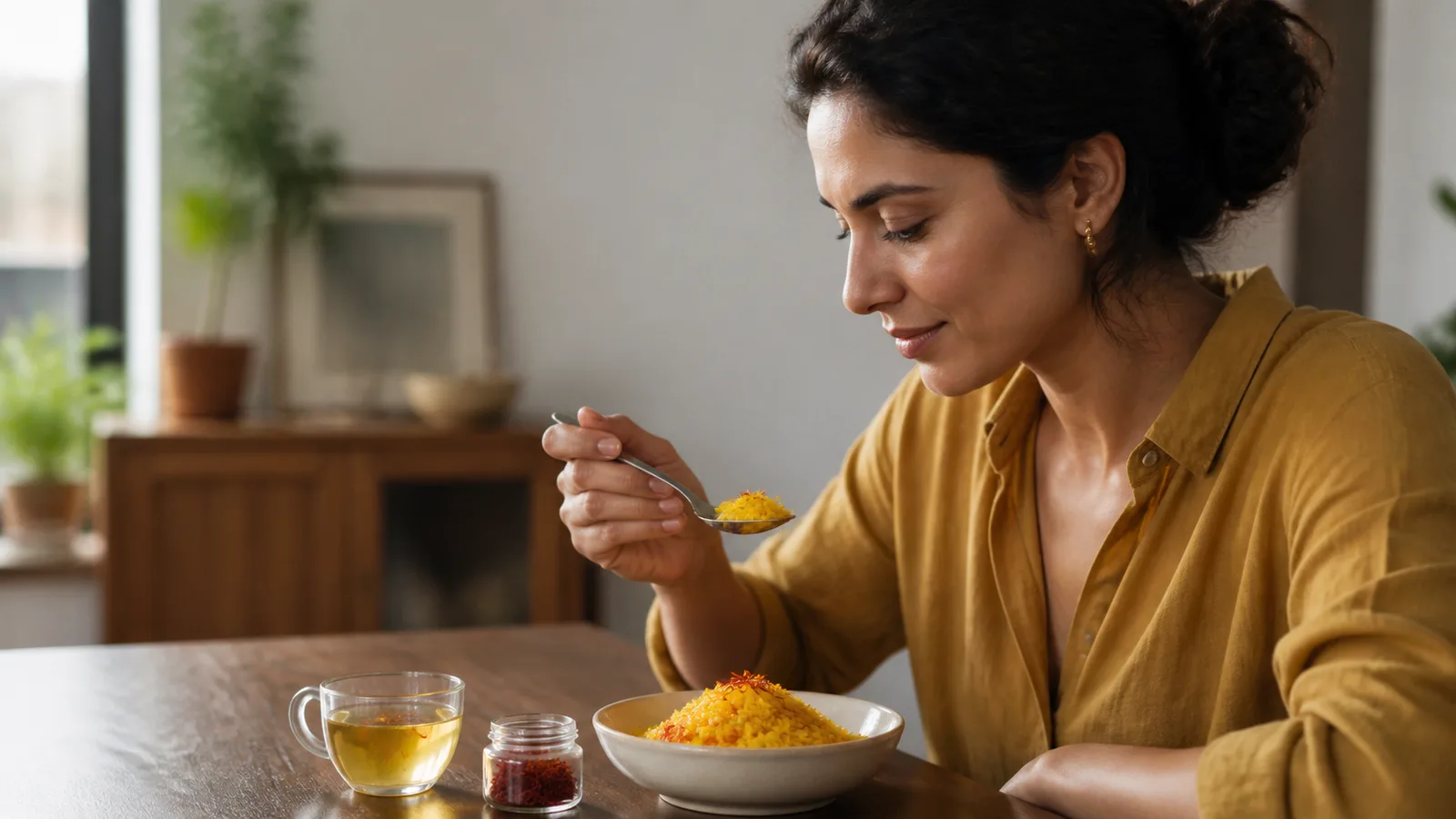
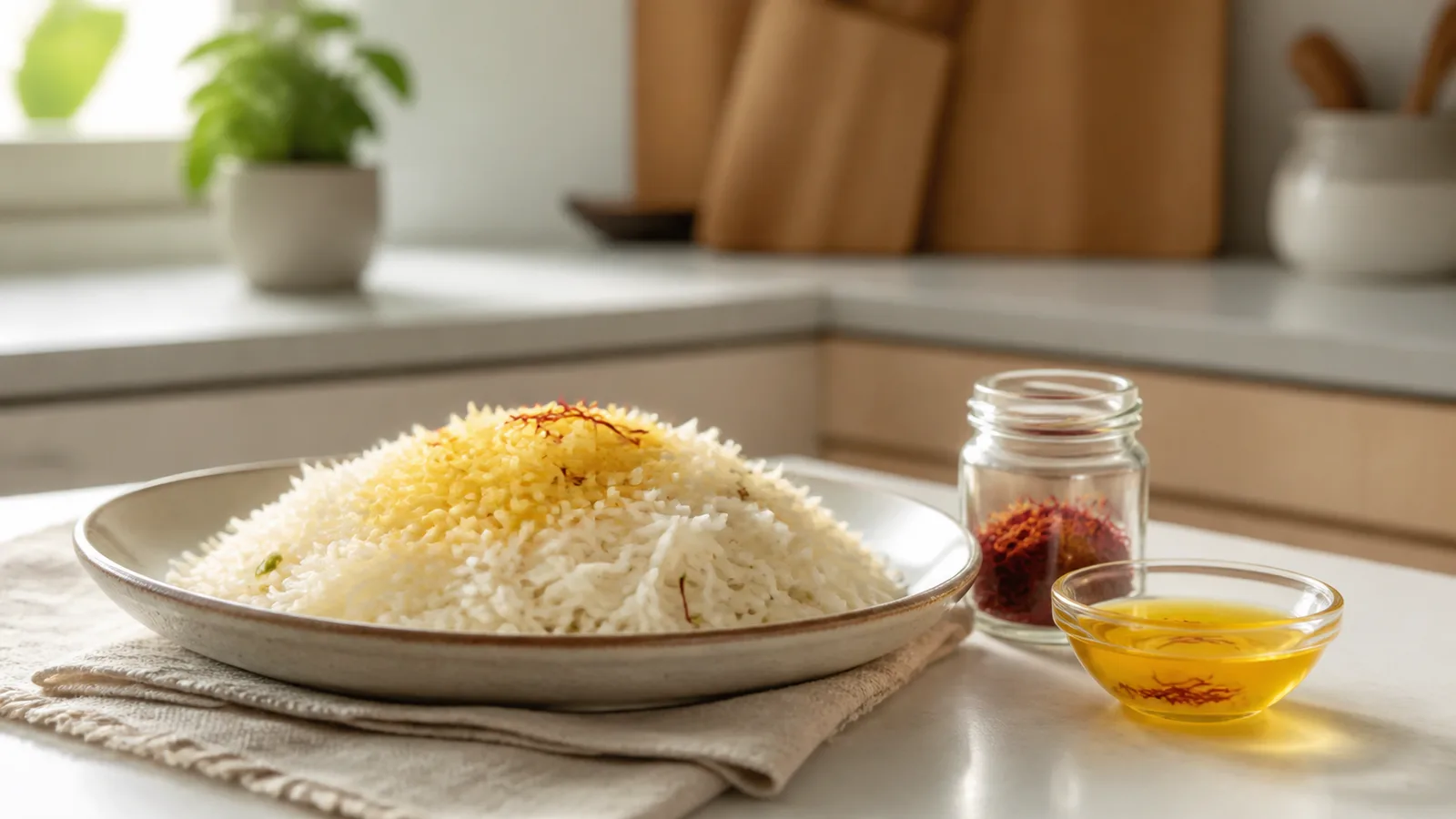
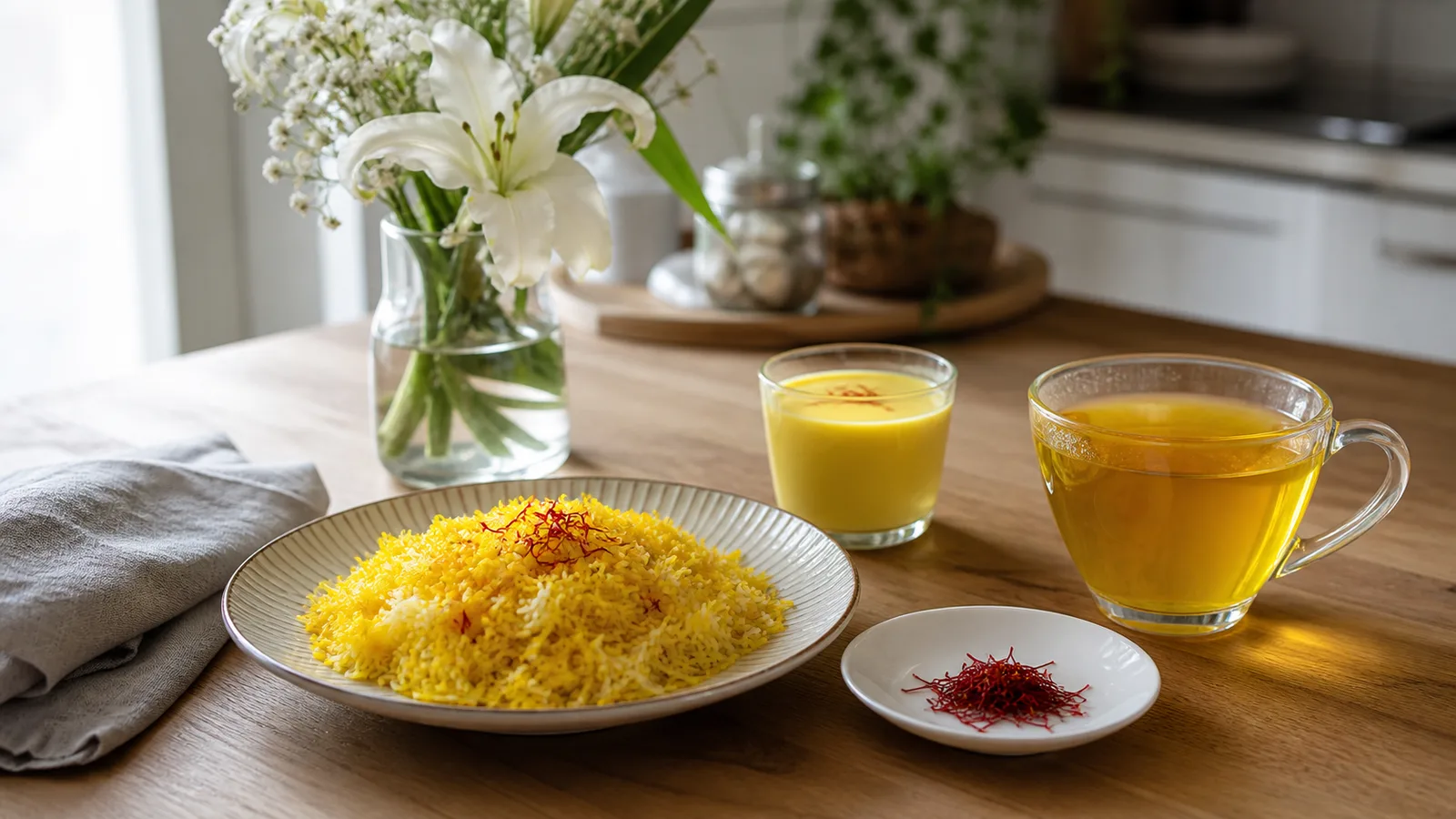
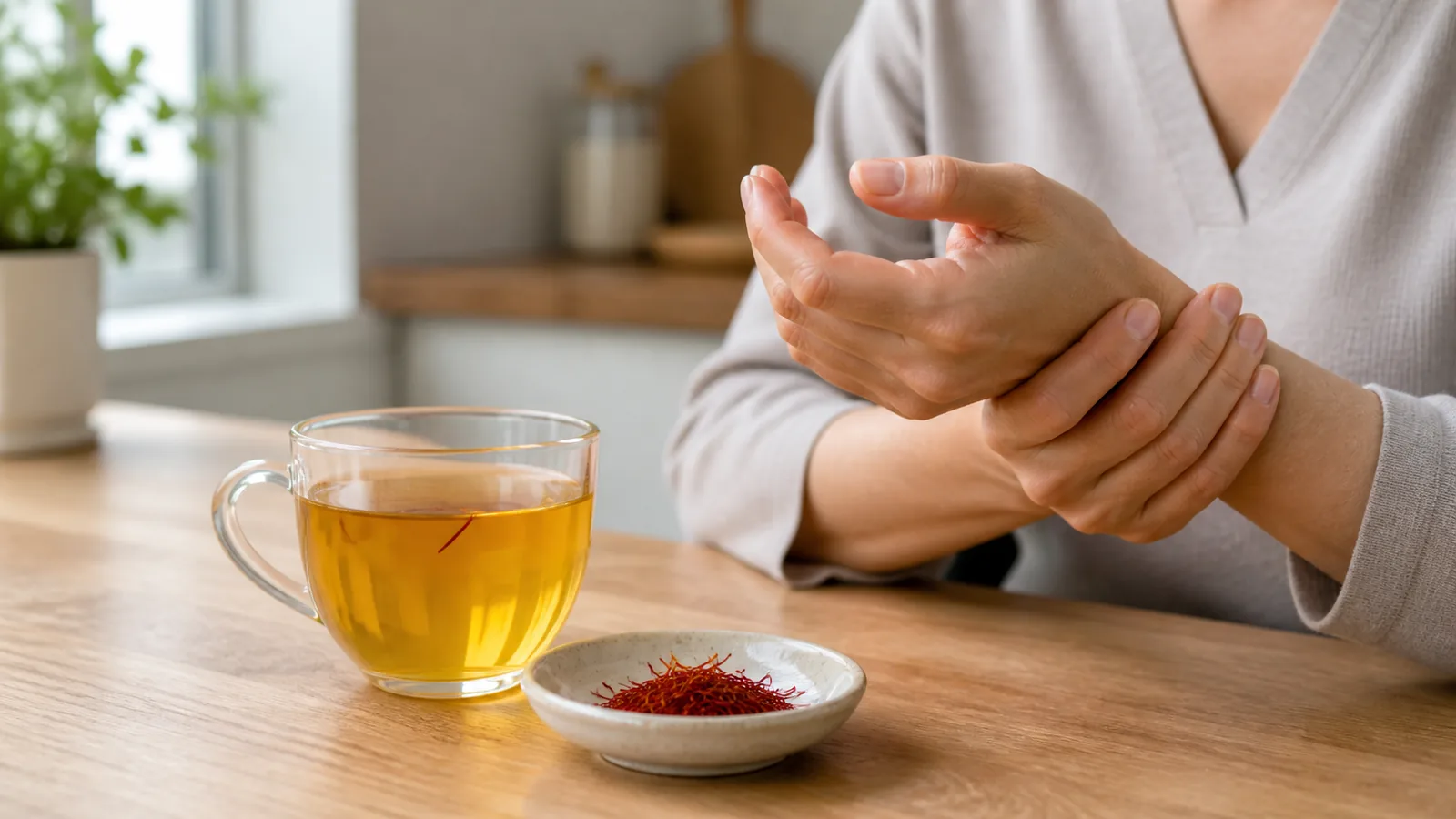
Saffron mixed with hot water is a simple culinary infusion. The water carries saffron’s colour and aroma into rice, stews, desserts or a warm drink. It does not become a proven treatment for anxiety, cancer, Alzheimer’s disease or menstrual symptoms merely because the spice has been steeped.
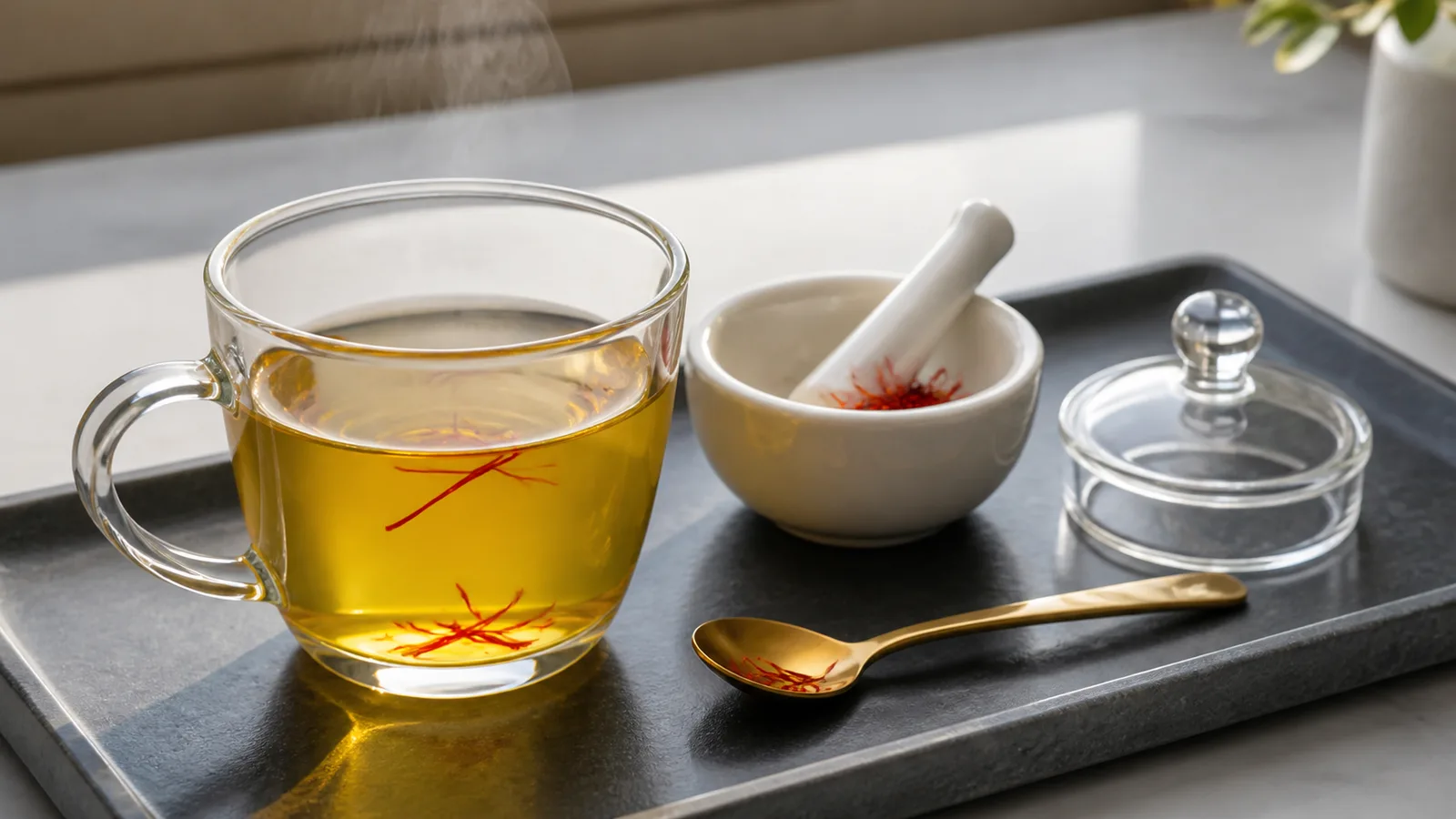
This guide explains how to prepare saffron water and saffron tea, why they are not identical, and what the research cited around them can—and cannot—support.
Saffron water, saffron tea and tea with saffron
The names are often used interchangeably, but the cups can be different:
- Saffron water is a concentrated infusion intended mainly for cooking.
- Pure saffron tea is a more diluted infusion served as a drink, sometimes with lemon, rosewater or a small amount of sweetener.
- Tea with saffron combines saffron with black, green or another true tea; it therefore contains the caffeine and compounds of that tea as well.
Tea and herbal infusions have an established place in Iranian and wider Eastern hospitality. Saffron contributes a distinctive golden colour and aroma, but culture and enjoyment are different evidence from disease prevention.
How to mix saffron with hot water
For a cooking infusion
- Crush a modest pinch of dry saffron threads in a clean mortar.
- Put the powder in a small heat-safe cup.
- Add 45–60 ml hot water that has just come off the boil.
- Cover and steep for 15–20 minutes.
- Stir and add the liquid gradually to the dish.
Covering the cup helps retain volatile aroma. There is no need to keep saffron over indirect heat for half an hour; prolonged heating can flatten the fragrance. Our full comparison of methods appears in the best way to brew saffron.
For a drink
Dilute one or two teaspoons of the cooking infusion in a cup of hot water and taste before adding more. A thin slice of lemon or a little rosewater can change the flavour. Sweeten lightly if desired. Saffron becomes bitter when overused, and a darker cup is not automatically better.
To make black tea with saffron, add a small amount of brewed saffron to the finished tea rather than boiling both for a long time. Remember that the result contains caffeine; people sensitive to caffeine may prefer the pure saffron infusion, especially in the evening.
Mood and anxiety: the drink has not been tested like the extracts
The original article promised that saffron tea calmed anxiety and made people happy. Human research on saffron and mood is promising, but the intervention in a trial is normally a measured powder or standardised extract, taken for weeks—not an unmeasured cup.
A 2026 GRADE-assessed review of 34 randomised trials found improvement on some self-reported depression and anxiety scales but not several clinician-rated outcomes; variation between studies was high. That evidence does not make saffron tea a replacement for mental-health care or prescribed treatment.
Antioxidants do not “eliminate toxins”
Saffron contains compounds that show antioxidant activity, and supplementation trials have measured changes in selected oxidative-stress markers. A 2023 systematic review and meta-analysis reported effects on some markers, but a marker is not evidence that a tea removes environmental toxins from the body.
The liver, kidneys, lungs and gastrointestinal system process or eliminate different substances through specific pathways. “Detox” is not one outcome, and no beverage can be assumed to reverse pollution exposure.
Cancer prevention and progression claims are not supported
The old text said saffron tea was a good option to prevent cancer or prevent its progression. That is not an acceptable conclusion. Research on saffron compounds and cancer is largely laboratory and animal work. A 2025 systematic review of saffron and breast cancer explicitly focused on preclinical studies because human evidence was lacking.
Saffron water should not be used to prevent, slow or treat a tumour. Anyone in cancer care should ask the oncology team before taking a concentrated supplement, because products may interact with treatment or add side effects.
Memory, serotonin and Alzheimer’s disease
The article also said scientists had concluded that saffron lowered serotonin and prevented Alzheimer’s disease. That description is wrong. Serotonin signalling is complex, and the mood literature does not support presenting “lower serotonin” as saffron’s established benefit.
A small 16-week trial in 46 people reported a cognitive benefit from 30 mg/day saffron capsules compared with placebo in mild-to-moderate Alzheimer’s disease. It called for larger confirmatory trials. A capsule trial in diagnosed patients does not prove that tea prevents Alzheimer’s or is “one of the most suitable drinks” for brain health.
New memory loss, confusion or difficulty with normal activities needs medical assessment. A hot drink should not delay it.
Premenstrual symptoms and women’s health
Early controlled studies have examined saffron preparations for premenstrual symptoms, and reviews describe the signal as interesting. The evidence base is much smaller than the broad phrase “women’s health,” and it does not establish a dose or schedule for saffron tea before menstruation.
Severe pelvic pain, very heavy bleeding, fainting, possible pregnancy or a marked change from the usual cycle deserves assessment. Concentrated saffron use in pregnancy should be discussed with an obstetric clinician rather than inferred from a menstrual-symptom study.
Side effects and interactions
Food quantities are not the same as repeated medicinal doses. A 2026 systematic review of saffron adverse events found medicinal preparations generally tolerated, with gastrointestinal complaints most often reported; the authors recommended more attention with higher-dose or prolonged use.
- Begin with a small culinary amount rather than a teaspoon of dry saffron in one cup.
- Ask a clinician before concentrated use during pregnancy, before surgery or with several medicines.
- Do not stop antidepressants, dementia treatment or other prescription medicine for saffron.
- Stop and seek advice for an unexpected reaction.
- Keep saffron and extracts away from children.
Storage
Use a fresh hot-water infusion immediately when possible. If you prepare extra for cooking, cool it promptly, cover it and refrigerate for no more than three to four days. Discard it sooner if the smell or appearance changes. Do not leave the wet infusion at room temperature simply because the dry spice stores well.
Saffron mixed with hot water is worthwhile because it distributes an expensive spice evenly and produces a pleasurable cup. Those are strong culinary reasons; they do not require a promise to detoxify the body, prevent cancer or protect memory.