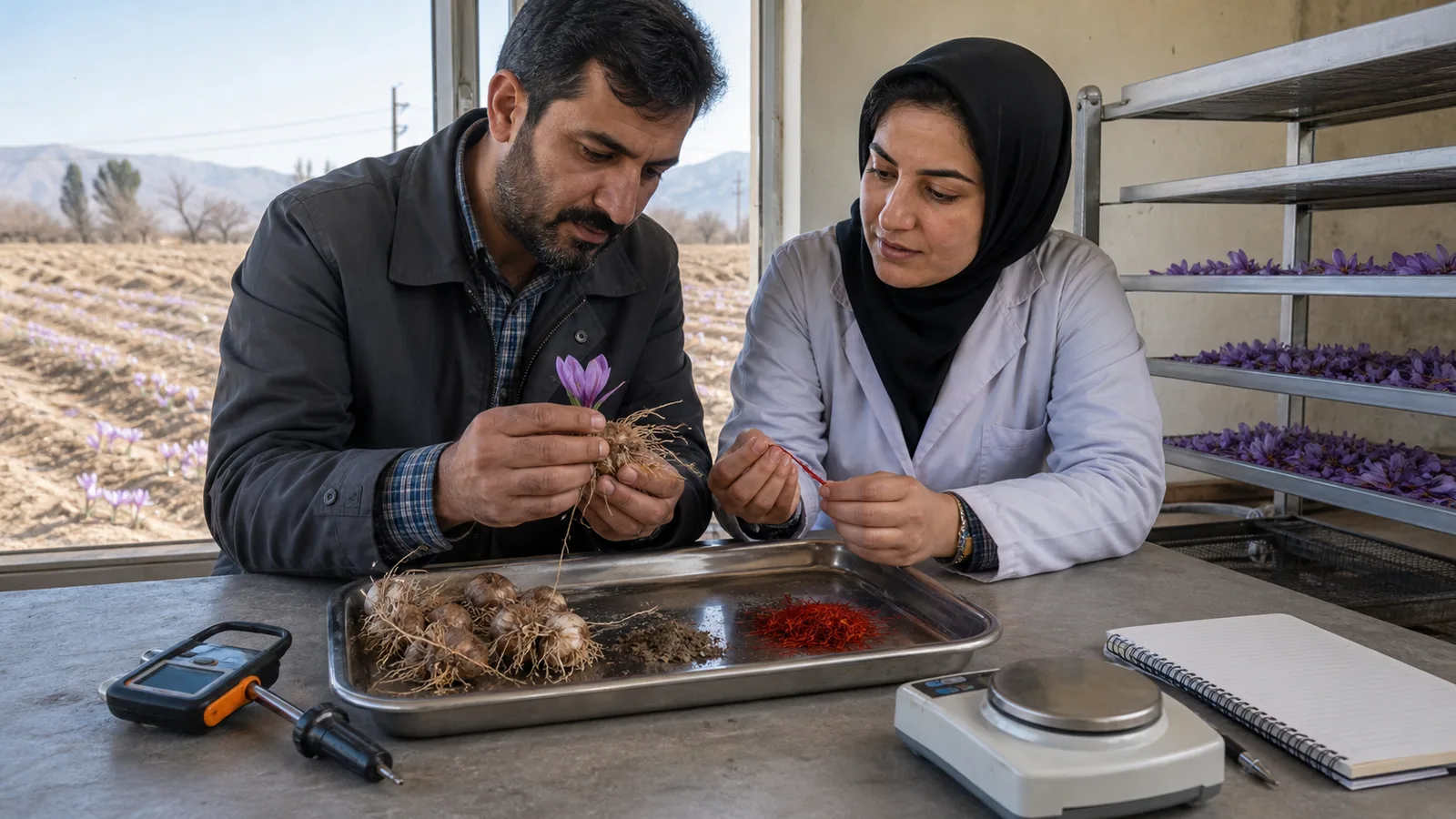


Increasing the area under saffron cultivation in Hamedan to 150 hectares was announced as a five-year target from a reported base of 63.5 hectares.
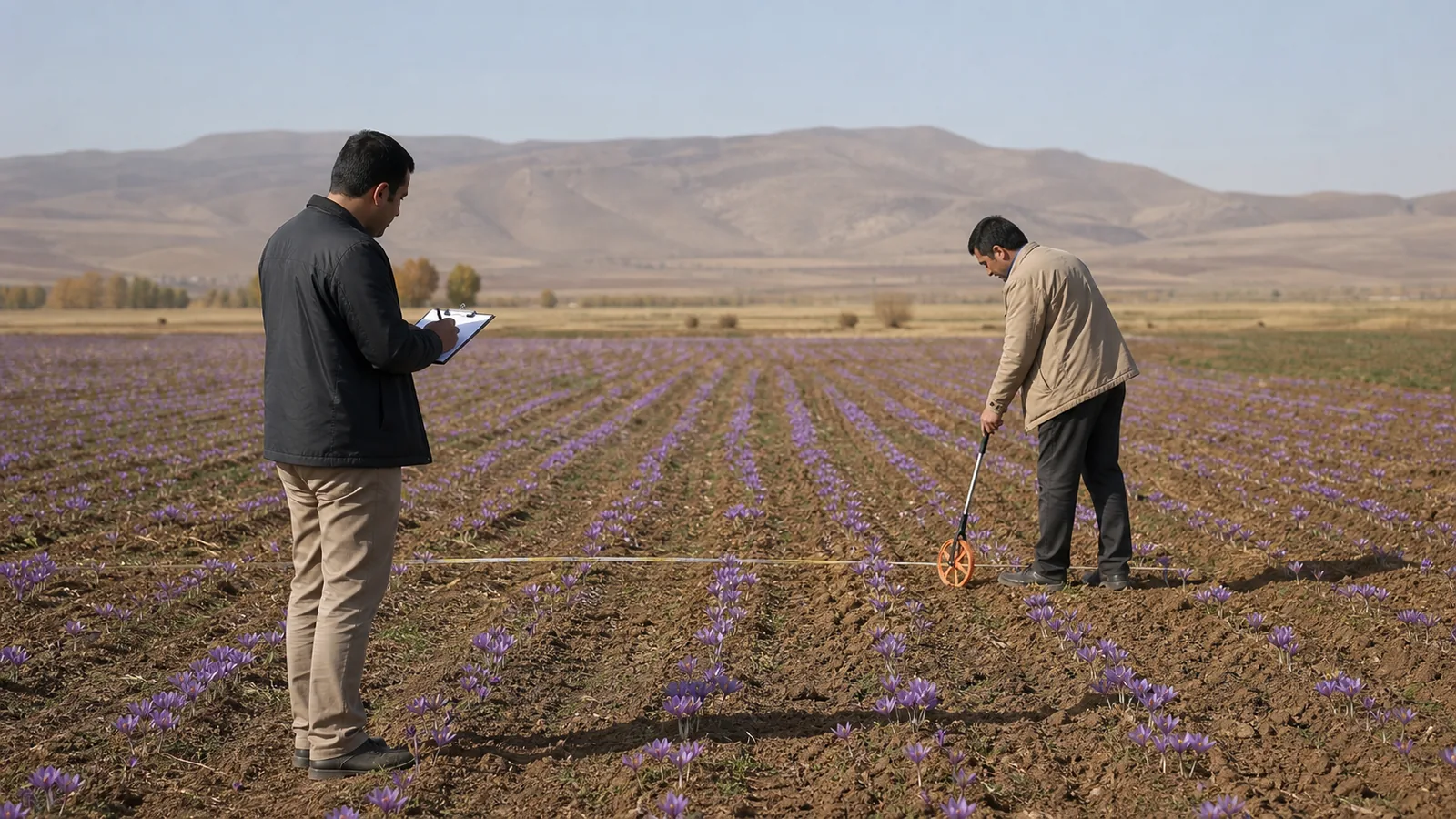
The plan was described by Shahram Parvaresh, deputy for plant-production improvement at Hamedan’s Agricultural Jihad organization. Both the starting area and the 150-hectare figure belong to that historical announcement, not a current land survey.
The five-year saffron cultivation target
Parvaresh said Hamedan Province had 63.5 hectares under saffron cultivation at the time of the report. Under a special programme prepared with the provincial management organization, the area was to expand to 150 hectares over five years.
That would have required adding 86.5 hectares to the reported base. The statement described a planned direction and timeframe; it did not confirm that the full increase was later completed.
The harvest reported from 63.5 hectares
The same account recorded a harvest of 194 kilograms of saffron from Hamedan’s 63.5 cultivated hectares that year. Keeping the production and area figures together is important because one number gives context to the other.
The report did not provide field-by-field yields, crop age, weather or harvest-method details. It therefore offers a provincial snapshot rather than a guarantee of what every new hectare would produce.
Why Hamedan planned to expand saffron
Parvaresh placed the plan within an effort to produce more economically valuable crops. He said that, historically, 95 percent of national saffron production had been associated with South Khorasan and Razavi Khorasan.
The Hamedan programme was presented as part of widening cultivation beyond those established centers. The report did not suggest that Hamedan would replace them; its stated goal was to develop a suitable crop within the province’s own agricultural planning.
The wider shift in irrigated cropping
Saffron expansion was discussed alongside a reduction in the area devoted to irrigated crops. Parvaresh used sugar beet to explain how the province was considering land area, yield and crop nutrition together rather than measuring progress by hectares alone.
He reported 344,000 tonnes of sugar beet production that year. He said the cultivated area had not increased, while better yield per unit of land and plant nutrition had raised production.
The following year’s sugar beet plan
For the next year, Parvaresh said sugar beet cultivation was expected to fall by 1,000 hectares. The stated plan was to produce 260,000 tonnes from 5,000 hectares.
These figures help explain the saffron target’s policy context. The province was not discussing one crop in isolation; it was considering how limited irrigated land could be allocated and how production could be maintained through yield improvements.
What the 150-hectare figure represents
- 63.5 hectares: Hamedan’s reported saffron area at the time of the announcement.
- 150 hectares: the proposed area after a five-year expansion plan.
- 194 kilograms: the saffron harvest reported from the existing 63.5 hectares that year.
- 95 percent: Parvaresh’s historical description of the share associated with South Khorasan and Razavi Khorasan.
- 86.5 hectares: the difference between the reported base and the five-year target.
What would be needed to verify the outcome
A plan is different from a completed expansion. Confirming whether saffron cultivation in Hamedan reached 150 hectares would require a later official acreage report using the same geographic scope.
The same caution applies to production. The 194-kilogram harvest, 344,000-tonne sugar beet result and planned 260,000-tonne target all describe the reporting period. They have been preserved as dated figures rather than converted into current claims.
A snapshot of crop planning in Hamedan
The article records a moment when Hamedan officials were trying to increase saffron cultivation while reducing pressure from irrigated cropping. Saffron’s five-year target, the existing harvest and the sugar beet plan were different parts of that discussion.
Its most important distinction is now explicit: 150 hectares was the destination proposed in the plan, while 63.5 hectares was the cultivated area reported when the announcement was made.