Saffron syrup is a cold aromatic drink made by diluting brewed saffron with water and, in some Persian versions, rosewater or musk-willow distillate. The dependable saffron syrup uses are culinary: colour, fragrance, sweetness and refreshment. Claims that it treats anxiety, diabetes, asthma or other disease need a much higher standard of evidence than the old recipe supplied.
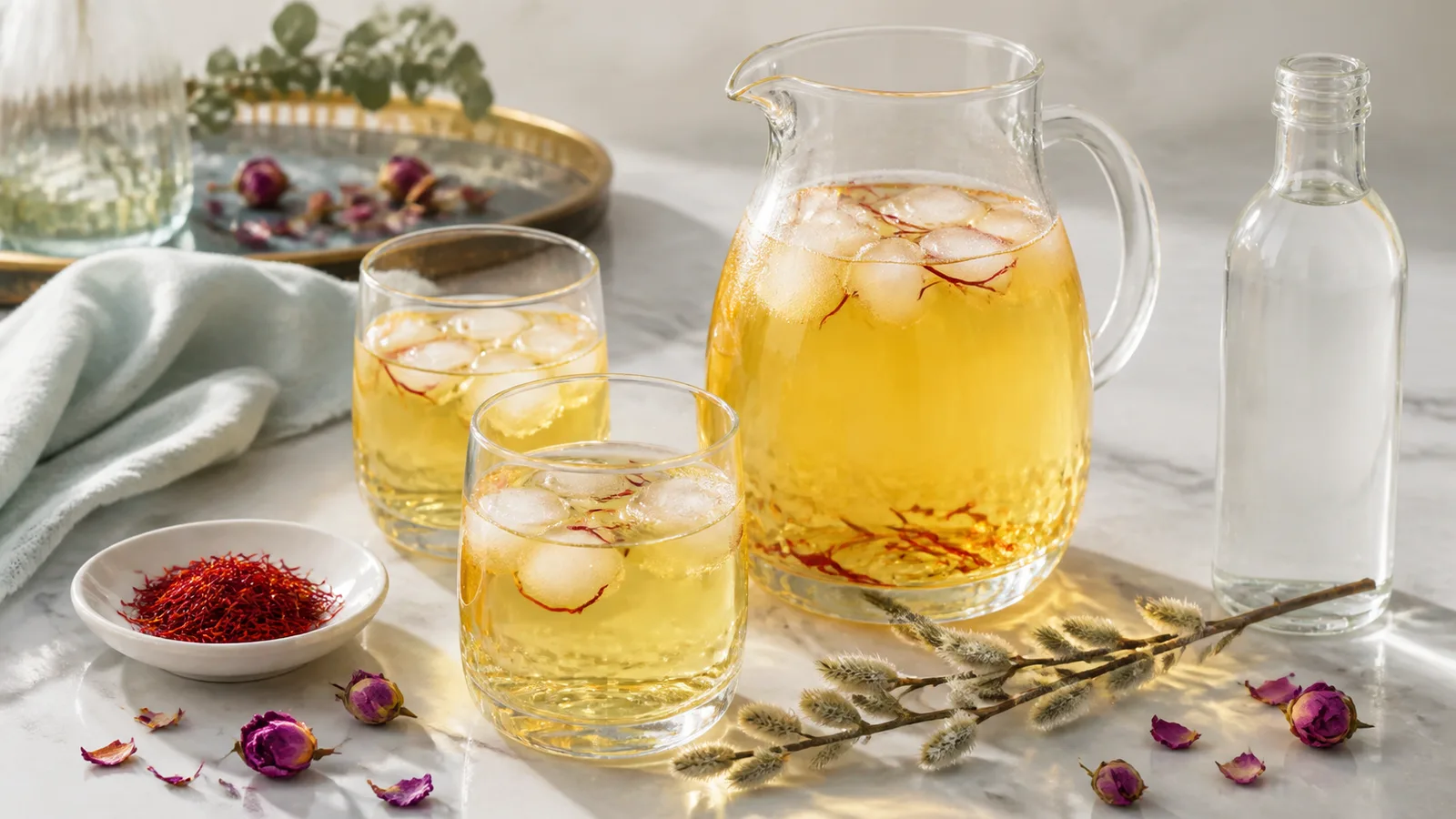
This guide answers the search for saffron syrup benefits and uses by separating the drink from the concentrated extracts studied in trials. It also gives the original rose-and-musk-willow recipe clearer measurements and safer boundaries.
What is in Persian saffron syrup?
The stored recipe combined water, rosewater, “pussy sweat,” honey and saffron. The unusual phrase was a translation error: the intended ingredient is musk-willow distillate, known as aragh-e bidmeshk, an aromatic water made from Salix aegyptiaca catkins. A scholarly survey of aromatic waters in Persian food culture records both rosewater and musk willow among traditional hydrosols.
Use only a product made and sold for food. A bottle should identify its ingredient and producer; clear liquid in an unlabelled container is not enough. Musk-willow distillate is optional—the drink still works with rosewater alone.
Saffron syrup ingredients
- 500 ml cold drinking water
- 240 ml food-grade rosewater
- 240 ml food-grade musk-willow distillate, optional
- 120 ml warm water
- 5–6 tablespoons honey, adjusted to taste
- 1–2 tablespoons concentrated brewed saffron
- Ice made from safe drinking water, for serving
This makes about one litre, depending on whether the optional distillate is used. The old line “half a tablespoon of saffron” did not say whether it meant dry threads or brewed liquid. Half a tablespoon of dry saffron would be excessive for an ordinary pitcher, so this version measures a prepared infusion. Our guide explains how to brew saffron before adding it.
How to make saffron syrup
- Pour the cold water, rosewater and optional musk-willow distillate into a clean pitcher.
- Stir the honey into 120 ml warm water until it dissolves. The water should be warm, not boiling.
- Add one tablespoon of concentrated brewed saffron to the honey mixture, then pour it into the pitcher.
- Stir, taste and add the second tablespoon of infusion only if the aroma and colour need it.
- Chill thoroughly. Add clean ice to individual glasses immediately before serving.
The original note discouraged ice at iftar but gave no reason. There is no general need to avoid ice if it is made from safe water and a cold drink feels comfortable after fasting. Sip slowly and serve alongside food and plain water rather than relying on a sweet drink for rehydration.
Does saffron syrup contain many vitamins?
The old article listed vitamins A, C, E and several B vitamins, plus sodium, potassium, fibre, protein, calcium, iron, magnesium, folate, manganese, selenium and zinc. That list appears to transfer nutrient-table values for ingredients into a serving without calculating the actual amount.
A normal glass contains little saffron and may contain significant honey. It should not be promoted as a reliable source of vitamins, minerals, fibre or protein, and it is not “blood-building.” Nutritional value depends on the exact recipe and serving size; anyone with a deficiency needs an appropriate diet and medical assessment.
Mood, stress and sleep claims
Randomised trials have examined standardised saffron products for depression and anxiety. A 2026 review of 34 trials found improvement on some self-reported scales but not several clinician-rated measures; variation between studies was high and the evidence was graded moderate.
That does not prove a homemade syrup relieves depression, nervous tension, headaches or insomnia. The extraction, dose and duration are different, and honey or floral waters introduce other ingredients. Saffron syrup is not a replacement for psychotherapy, sleep assessment or prescribed medicine.
Appetite and children
A sweet, fragrant drink can add energy and may be appealing, but that is not evidence that saffron treats anorexia or loss of appetite. In children, poor growth, restricted eating or persistent appetite change needs paediatric assessment. Regular sweet drinks can also displace more nutritious food and contribute to tooth decay.
Digestion, bloating, asthma and metabolism
The old list promised a stronger stomach, easier digestion, less bloating and benefits for asthma, diabetes, blood pressure and blood lipids. It also described general strengthening of the body and heart. A beverage recipe cannot support those disease claims.
Asthma symptoms can become urgent; prescribed inhalers should not be replaced by syrup. People managing diabetes or triglycerides should also count the honey. The World Health Organization classifies sugar in honey as free sugar and recommends limiting free sugars across the diet.
Memory, Alzheimer’s and Parkinson’s disease
Saffron compounds are being researched in cognition, but this syrup has not been shown to strengthen memory or treat Alzheimer’s or Parkinson’s disease. Those diagnoses require clinical care, and new confusion, movement change or loss of daily function should not be managed by increasing a spice dose.
Menstrual cramps, pregnancy and breastfeeding
Some saffron preparations have been studied for menstrual symptoms, but the evidence does not establish this household mixture as a treatment. Severe pain, very heavy bleeding, fainting or a new pattern deserves assessment.
The original post told pregnant women not to consume the drink but said breastfeeding mothers could. Both statements are too absolute without a defined exposure. A 2026 review of saffron in pregnancy found limited and inconclusive safety evidence and greater concern around high doses or occupational exposure. Pregnancy and breastfeeding are reasons to ask a qualified clinician before supplements or intentional medicinal use; normal culinary exposure and a concentrated preparation are not equivalent.
Sexual function, skin, hair and “anti-ageing”
Trials of specific saffron products and selected sexual-function outcomes do not justify a general claim that syrup increases “potency.” Nor does the recipe prove that it prevents premature ageing, cleanses the urinary tract or strengthens skin and hair. These are broad marketing-style promises without a measured outcome, preparation or dose.
Side effects and safe use
A recent systematic review of saffron adverse events found that medicinal saffron was generally tolerated, but gastrointestinal problems were the most frequently reported events and higher-dose or prolonged use could warrant monitoring. The result should not be read as permission to consume unlimited saffron.
- Use a modest culinary infusion, not an unmeasured spoonful of dry saffron.
- Check every floral water is food-grade and correctly labelled.
- Reduce or omit honey if sweetness is unnecessary; honey still counts as free sugar.
- Ask a clinician before concentrated use during pregnancy, before surgery or alongside several medicines.
- Stop using the drink if it causes an unexpected reaction.
Storage
Refrigerate saffron syrup in a covered clean pitcher and use it within three to four days. Pour servings rather than drinking from the container, and discard it earlier if the smell, appearance or carbonation changes. Do not depend on honey, rosewater or saffron to preserve a diluted drink at room temperature.
The sensible summary is simple: saffron syrup is useful as a fragrant drink and a way to serve saffron at a culinary concentration. Human extract research is worth following, but it does not convert the pitcher into saffron syrup medicine.