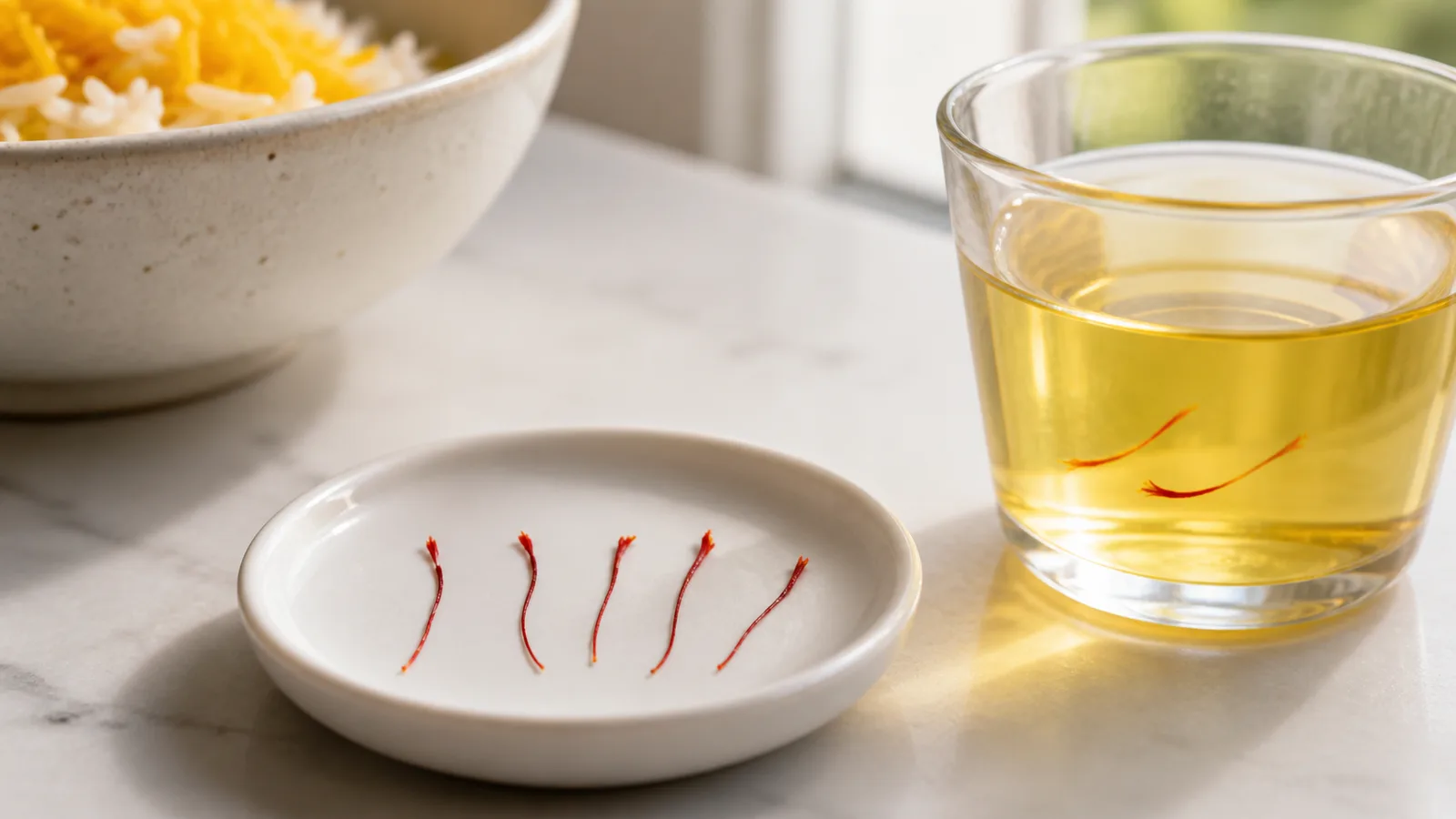
Saffron and vanilla are both costly natural spices, but saffron is usually more expensive than vanilla when comparable retail products are measured by weight. Vanilla prices can move sharply, so the fair answer depends on the date, grade, origin, pack size, and whether you are comparing whole beans, extract, powder, or saffron threads.
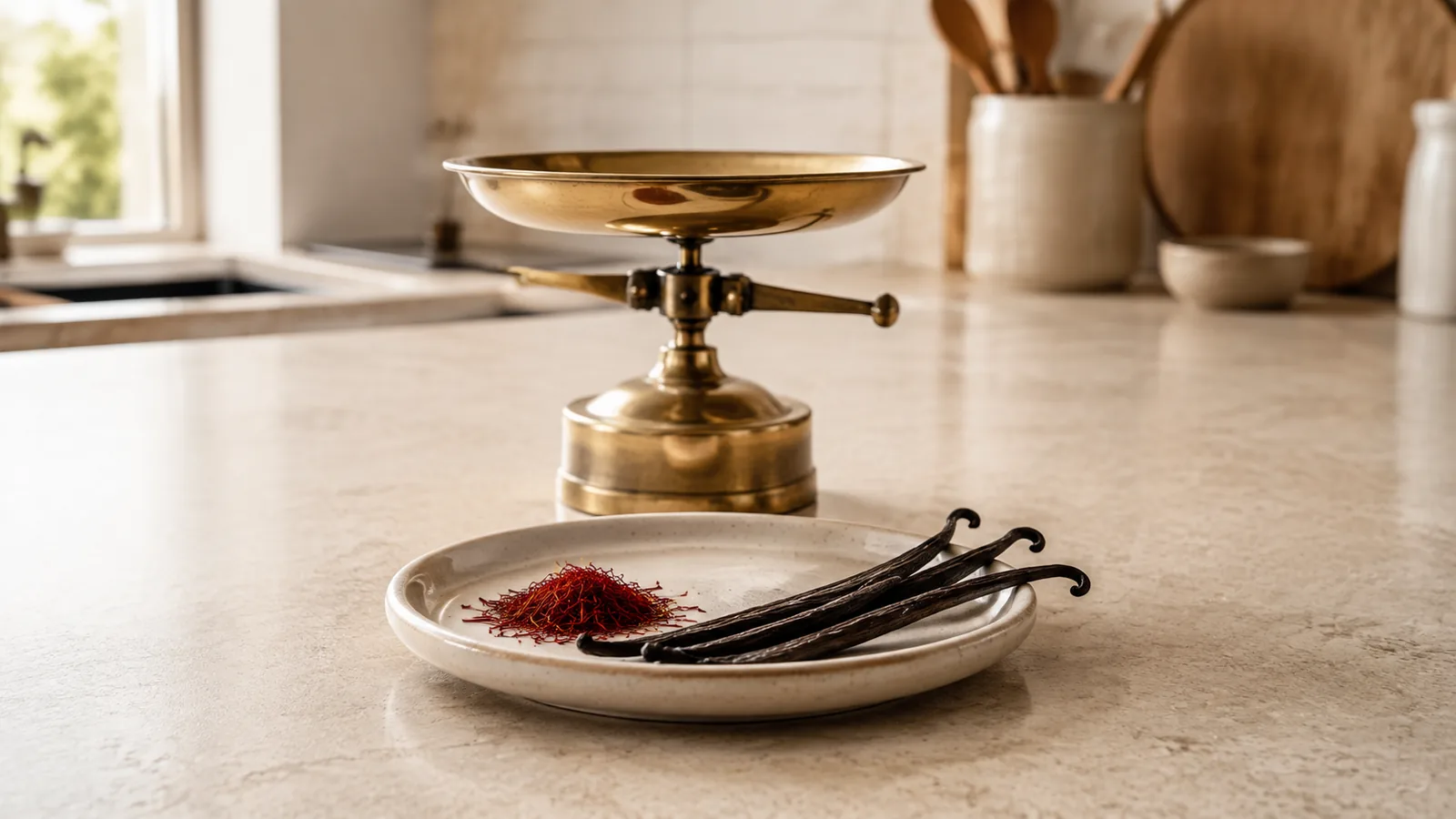
Saffron vs. vanilla cost: which is more expensive?
Is saffron or vanilla more expensive? In most like-for-like retail comparisons, saffron costs more per kilogram. The same conclusion applies if the question is “is saffron more expensive than vanilla?” provided both prices describe genuine, food-grade products sold through the same type of market.
That qualification matters. A tiny retail tube has a much higher price per gram than a wholesale carton. Premium vanilla from one origin cannot sensibly be compared with low-grade saffron powder from another seller. Natural vanilla beans and vanilla extract are different products, while imitation vanilla is not a price substitute for the cured orchid pod.
Why saffron is so expensive
Saffron comes from the flower of Crocus sativus. Each flower produces only three red stigma branches, and they are separated by hand before being dried. The Royal Horticultural Society estimates that about 150 flowers are needed for one gram of dry saffron. Scaled to a pound, that is roughly 68,000 flowers, which explains why figures near 70,000–75,000 flowers per pound are often quoted.
The expense is therefore not just a story about rarity. A large area has to flower within a short seasonal window, pickers must work quickly, and the harvested material loses most of its weight as it dries. Sorting, testing, careful storage, and protection from adulteration add further costs before the spice reaches a customer. Our fuller guide to why saffron is worth so much follows that chain from flower to finished thread.
Why natural vanilla is expensive
Vanilla is not a simple, low-cost crop. The familiar “bean” is the cured pod of an orchid, commonly Vanilla planifolia. The vine can take years to reach useful production. Flowers have a short opportunity for pollination, much commercial vanilla is pollinated by hand, and mature green pods still need a controlled curing process before they develop the dark colour and aroma buyers expect.
The United Nations Food and Agriculture Organization’s vanilla post-harvest compendium describes the crop, harvesting, curing, quality controls, and the way weather and concentrated supply can affect the trade. This labour and time explain why genuine vanilla is one of the world’s expensive spices, even though it generally remains below saffron by weight.
Madagascar is a major source of traded vanilla, but it is not the only origin. Indonesia, Uganda, Papua New Guinea, Mexico, and other producing areas also supply the market. A current CBI European vanilla market review describes substantial price volatility linked to production cycles, concentrated supply, weather, quality, and policy changes. This is why a price quoted without a date soon becomes unreliable.
Vanilla vs saffron price: compare like with like
A saffron vs vanilla price comparison begins with price per gram. Divide the pack price by its net weight in grams, then use the same calculation for the other spice. Keep the currency, tax treatment, date, and sales channel consistent.
Before deciding which is more expensive, check these details:
- Product form: compare whole vanilla beans with saffron threads, or clearly explain why a powder or extract is being used instead.
- Net weight: do not compare the price of one vanilla pod with the price of one gram of saffron without converting both to a common unit.
- Quality and moisture: grade, aroma strength, moisture, broken material, and adulteration risk all affect value.
- Retail or wholesale: small consumer packs include more packaging and handling cost per gram than bulk orders.
- Date and origin: harvest size, weather, currency, freight, and regional supply can move both markets.
Anyone looking for the latest saffron-versus-vanilla wholesale price per kilogram should request offers for the same quantity and delivery terms on the same day. A retail website price and an export quotation do not answer the same purchasing question.
Is vanilla more expensive than saffron?
Usually, no. Put another way: is vanilla or saffron more expensive? By comparable weight, saffron normally is. Yet an individual vanilla item can cost more than an individual saffron item. A premium bundle of long cured pods may have a higher ticket price than a small sachet of saffron, even while saffron remains dearer per gram. Pack price and unit price are not the same thing.
Vanilla can also experience severe price spikes after crop damage or supply disruption. During such a period, a high-grade vanilla lot may overlap with the lower end of a saffron market. That exception does not make a timeless price ranking; it shows why the product specification and quotation date belong beside the number.
Which is the most expensive spice in the world?
Saffron is widely described as the most expensive spice in the world by weight. Its combination of three stigmas per flower, manual picking, rapid processing, and low dry yield supports that description. Vanilla is often placed among the next most expensive natural spices, but a fixed global league table can mislead because market prices and grades change.
Is vanilla the most expensive spice? It can be exceptionally valuable, but the usual answer is saffron. Our separate article on whether saffron is the most expensive spice explains what “most expensive” does and does not mean. Comparisons with gold or unrelated illegal substances use different markets and units and do not help a food buyer judge value.
Price per kilogram is not the same as cost per recipe
A kilogram comparison answers a market question, not a cooking question. Saffron is normally used a few threads or a small pinch at a time. Vanilla may be used as a whole pod or measured extract, depending on the recipe. The ingredient with the higher price per kilogram does not automatically add the greater cost to one dish.
Flavour is not interchangeable either. Turmeric can add yellow colour but does not reproduce saffron’s aroma; imitation vanillin does not provide the full character of a cured vanilla pod. Choosing a substitute solely because it is cheaper changes the result, so compare the role of the ingredient as well as its price.
How to check the current saffron price
There is no responsible fixed number that remains current for every grade and order size. For a live quotation, specify the saffron type, packing format, quantity, destination, and shipping method on the saffron price request page. If you are also pricing vanilla, collect a same-date quotation with equally clear product details and convert both to the same unit.
The practical conclusion is straightforward: saffron generally costs more than natural vanilla by weight, while both are expensive because their production demands skilled manual work and careful processing. A trustworthy comparison states exactly what was priced instead of relying on a broad range copied without a date.