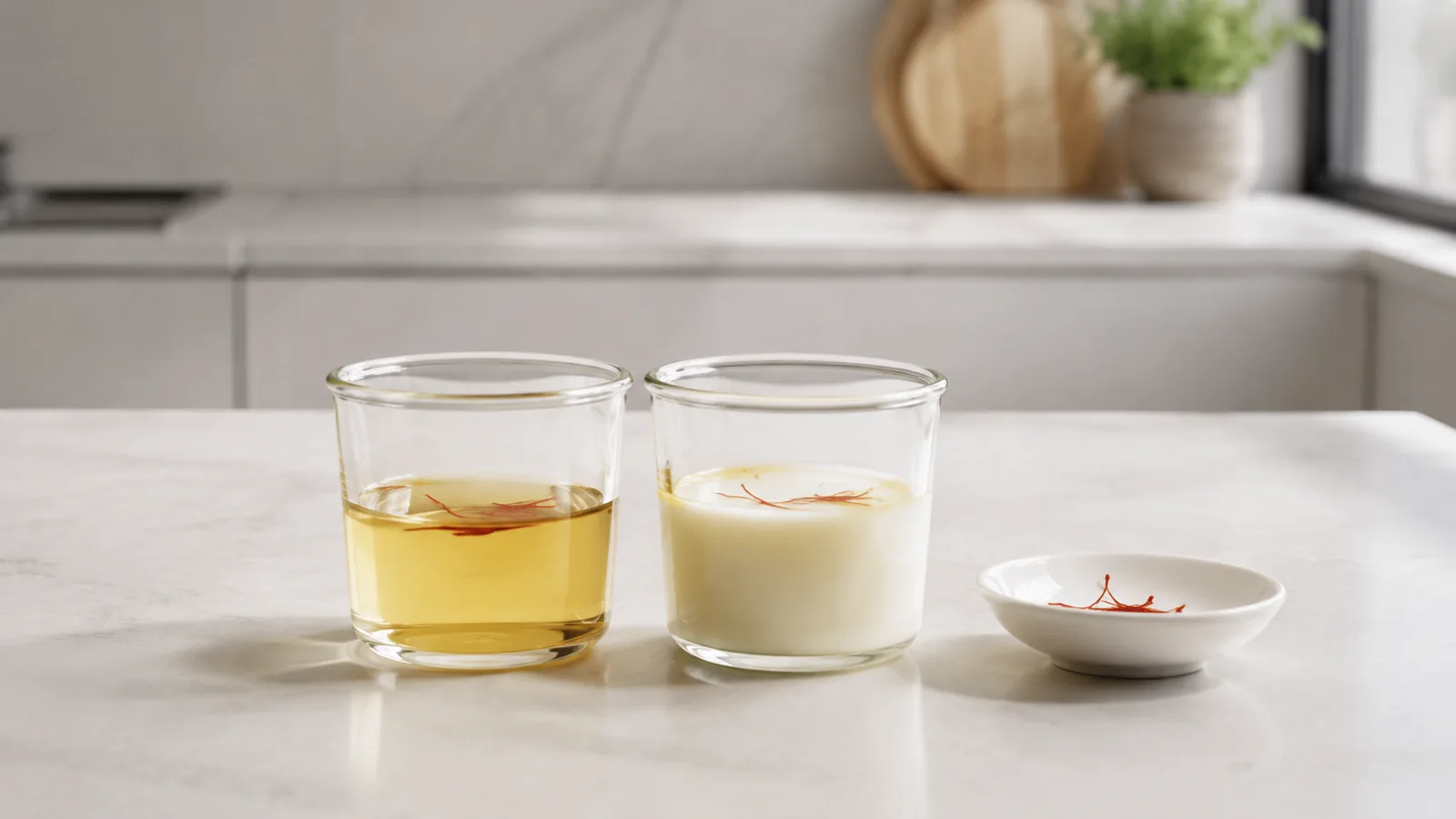
Can I mix saffron with milk? Yes. Warm milk carries saffron’s colour and aroma well, especially when the threads are bloomed first in a small amount of liquid. You do not need a special additive or a large dose: a modest culinary pinch is enough for one or two cups.
The best result comes from gentle heat. Hard boiling can scorch milk and flatten saffron’s fragrance, while adding dry threads at the last second gives them little time to infuse.
Can I Mix Saffron with Milk?
Saffron and milk are used together in Persian, Indian and other regional drinks and desserts. The pairing works because milk softens saffron’s natural bitterness and gives its floral, hay-like aroma a rounded background. Dairy is traditional, but an unsweetened plant-based drink can also work; choose one that tolerates heating without separating.
What is saffron milk? At its simplest, it is warm milk infused with real dried saffron threads. Cardamom, rose water, nuts and sweetener are optional recipe choices, not requirements for releasing the spice.
Benefits of Mixing Saffron with Milk
The dependable saffron-with-milk benefits are sensory. Bloomed threads lend a golden colour and distinctive aroma, and a small amount can make a plain cup feel more deliberate. The nutritional profile comes mainly from the milk: dairy generally supplies protein and calcium, while plant drinks vary by ingredient and fortification.
Saffron contains crocins, crocetin, picrocrocin and safranal. Clinical studies commonly use measured extracts or capsules, not household saffron milk. A review of saffron evidence reviews found interesting results but also important limitations in study quality and reporting. A home drink is not proven to treat stress, heart disease, poor memory or digestive problems.
How to Make Saffron Milk
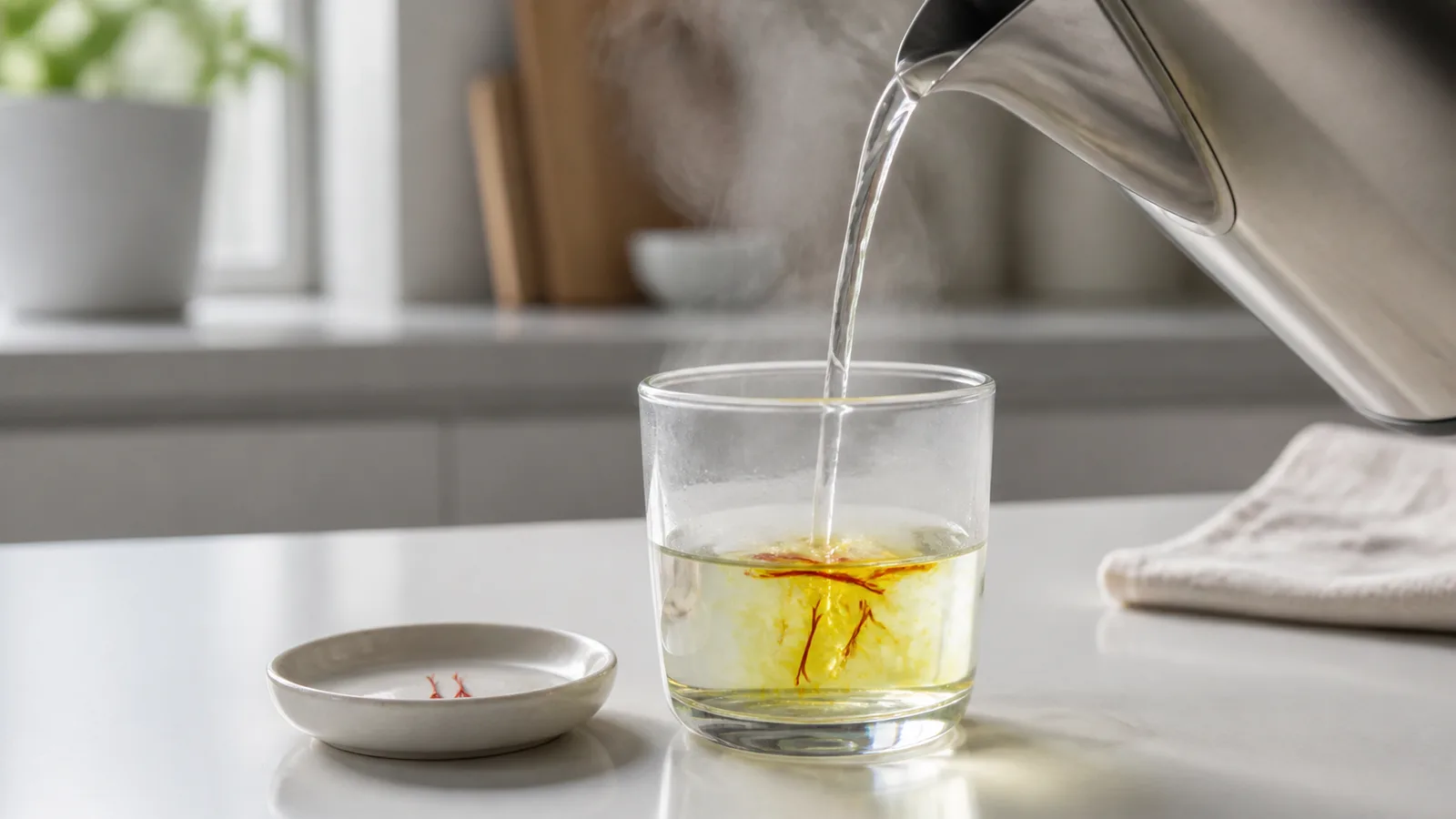
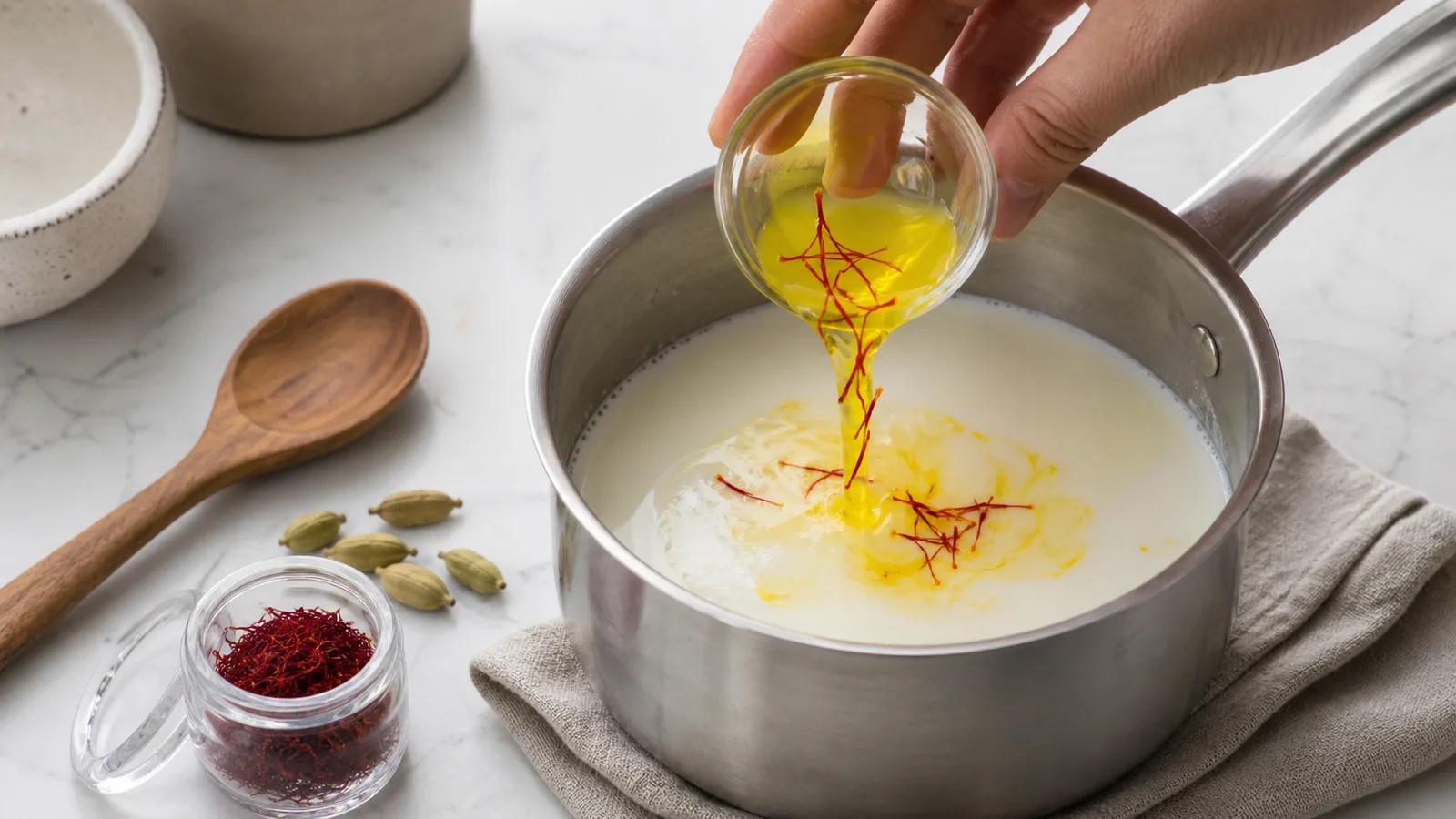
If you are wondering how to use saffron in milk, begin by lightly crushing a few genuine threads. Soak them in one or two tablespoons of warm milk for 15 to 20 minutes. Stir the infusion and softened threads into one cup of gently heated milk.
- Warm the milk over low heat until steaming, not furiously boiling.
- Add the bloomed saffron and stir for about a minute.
- Taste before adding sugar or honey. Milk and commercial plant drinks may already contain sugar.
- Add cardamom or a drop of rose water only if you want a more aromatic style.
How much saffron should you use in milk? Start with a small culinary pinch rather than counting on thread numbers, which vary widely in length and weight. The aim is a clear aroma and warm golden colour without harsh bitterness.
You can drink the softened threads; there is no need to strain them. For a cold drink, make the warm infusion first and chill the finished milk promptly instead of expecting dry threads to extract well in cold liquid.
Precautions to Consider
Choose pasteurised milk or a suitable packaged alternative and observe its storage instructions. People with a milk allergy should avoid dairy; lactose intolerance may call for lactose-free milk or another appropriate option. Discard a drink left at an unsafe room temperature rather than reheating it repeatedly.
Avoid translating supplement-study doses into kitchen advice. Concentrated or excessive saffron can cause adverse effects, and pregnancy warrants particular caution (PMID 28293386). Ask a doctor or pharmacist before regular concentrated use if you are pregnant or breastfeeding, take medicines, have low blood pressure or a bleeding condition, or are preparing for surgery.
Conclusion
Mixing saffron with milk is a sound culinary technique. Bloom a modest pinch, use gentle heat and judge the cup by flavour rather than an invented daily dose. Enjoy it as food, not as a replacement for treatment or a promise of health effects.
For a closer look at evidence behind popular claims, read what happens when you drink saffron milk. Browse our culinary saffron for the recipe.