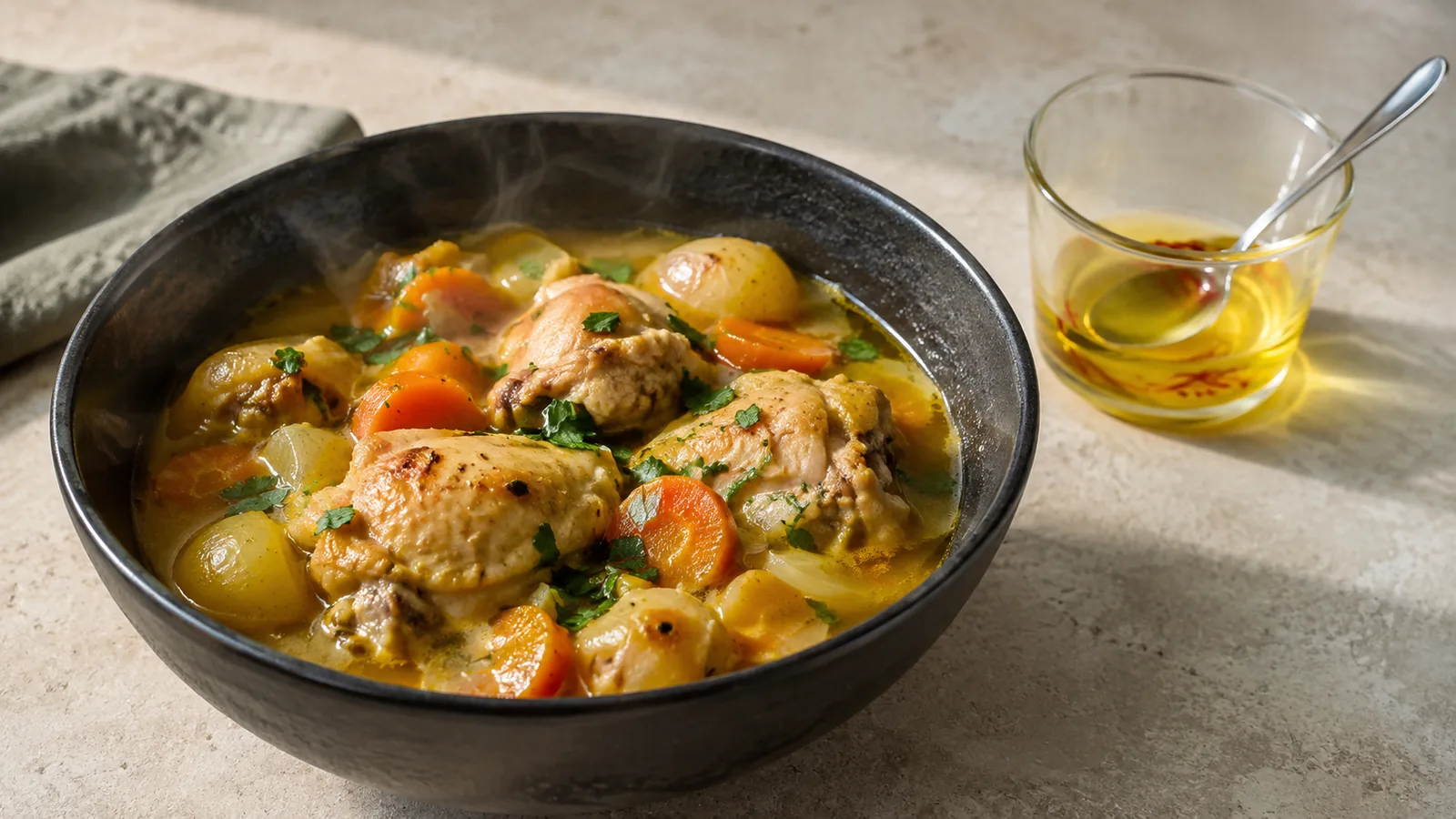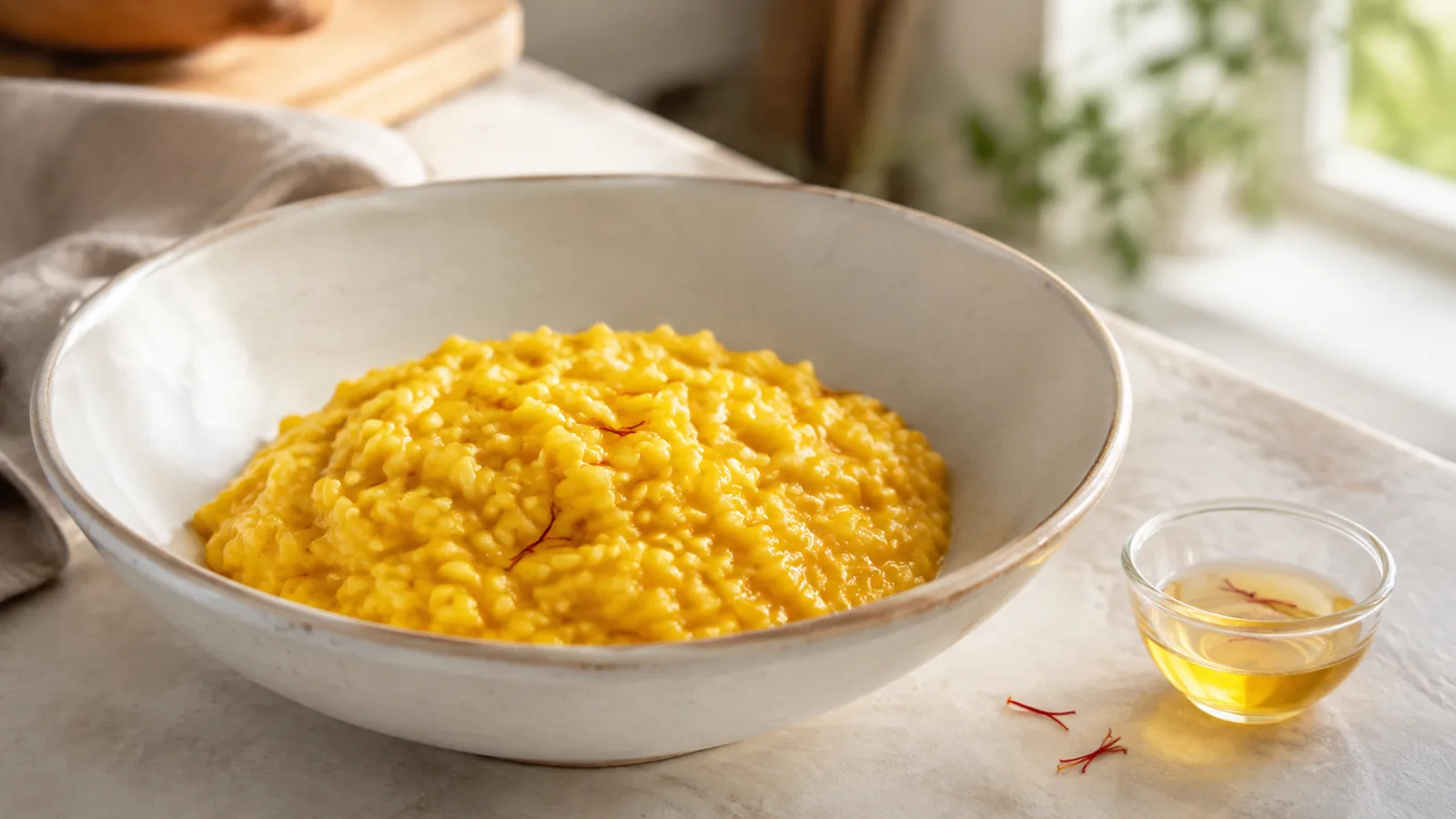
What happens when we drink milk with saffron? You get a warm, aromatic drink in which milk supplies most of the protein, energy and minerals, while a small amount of saffron contributes colour, aroma and a mild bitter-floral note. It may feel soothing as part of a routine, but one cup does not reliably improve mood, sleep, digestion, heart health or skin.
The immediate effects depend more on the milk, added sugar, portion and your tolerance than on a few threads. Someone with lactose intolerance may feel bloated; someone with a milk allergy should avoid dairy entirely; a heavily sweetened cup can contain far more sugar than expected.
Milk with Saffron Benefits: What Happens When You Drink It?
What is saffron milk? Also called kesar milk in South Asia, it is a culinary drink rather than one standard medical preparation. Recipes vary widely. Some use dairy milk, others plant-based drinks; cardamom, nuts, rose water and sweeteners are optional.
That variability matters when reading claims about saffron milk benefits or milk with saffron benefits. Clinical saffron studies usually test measured extracts or capsules. They do not test every household recipe, and they cannot show that adding saffron gives milk a new therapeutic property.
How to Prepare Milk with Saffron
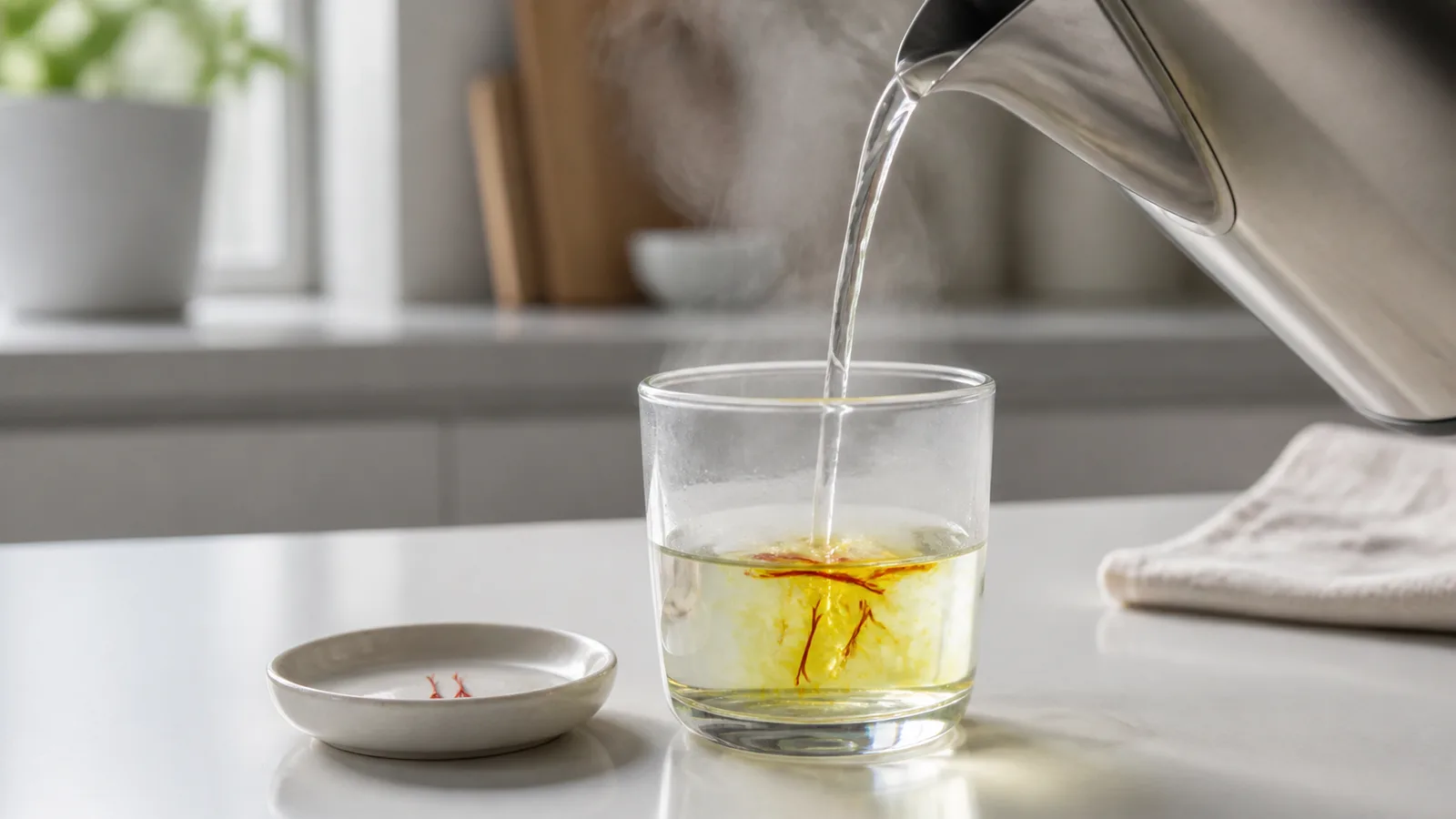
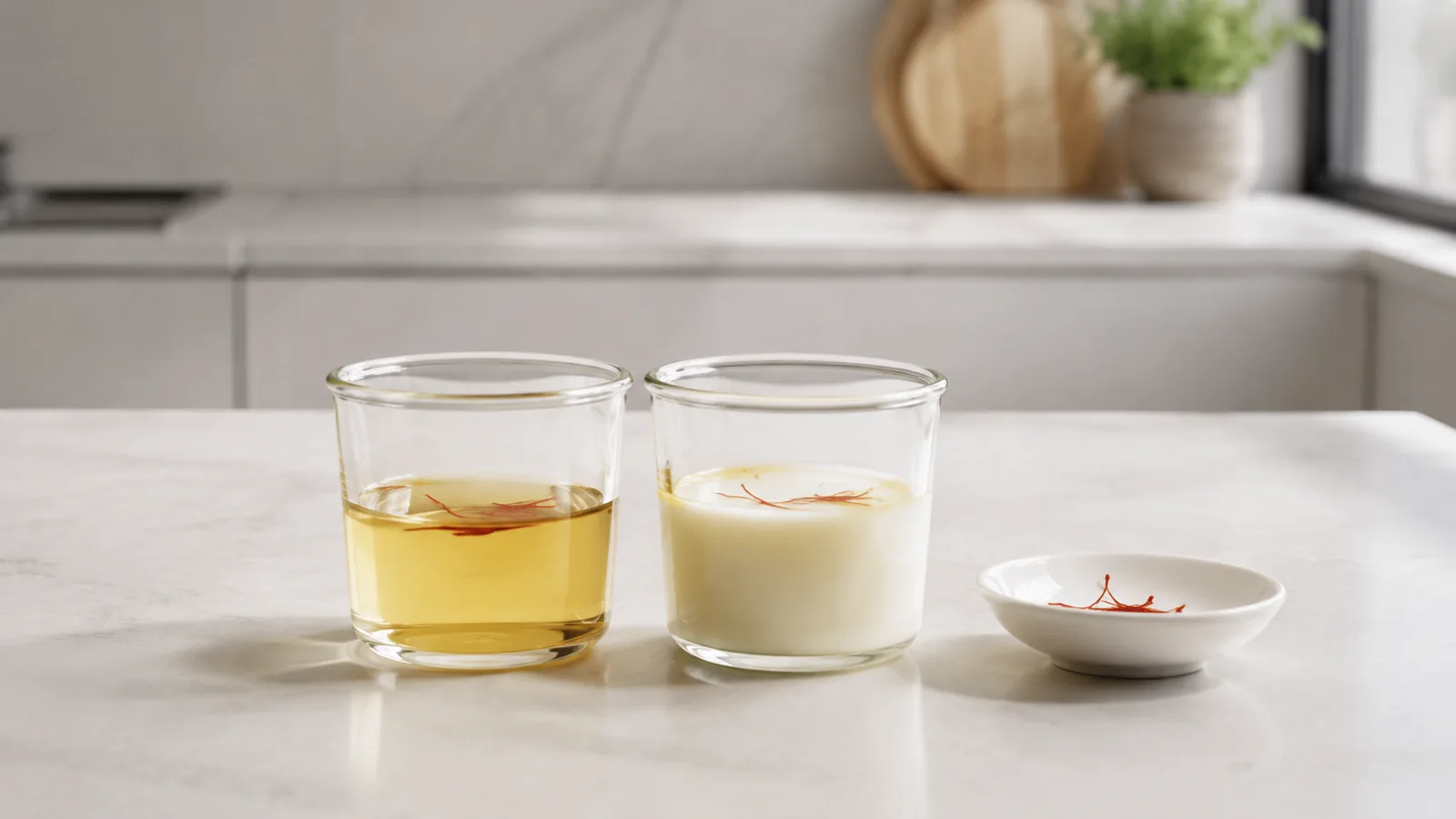
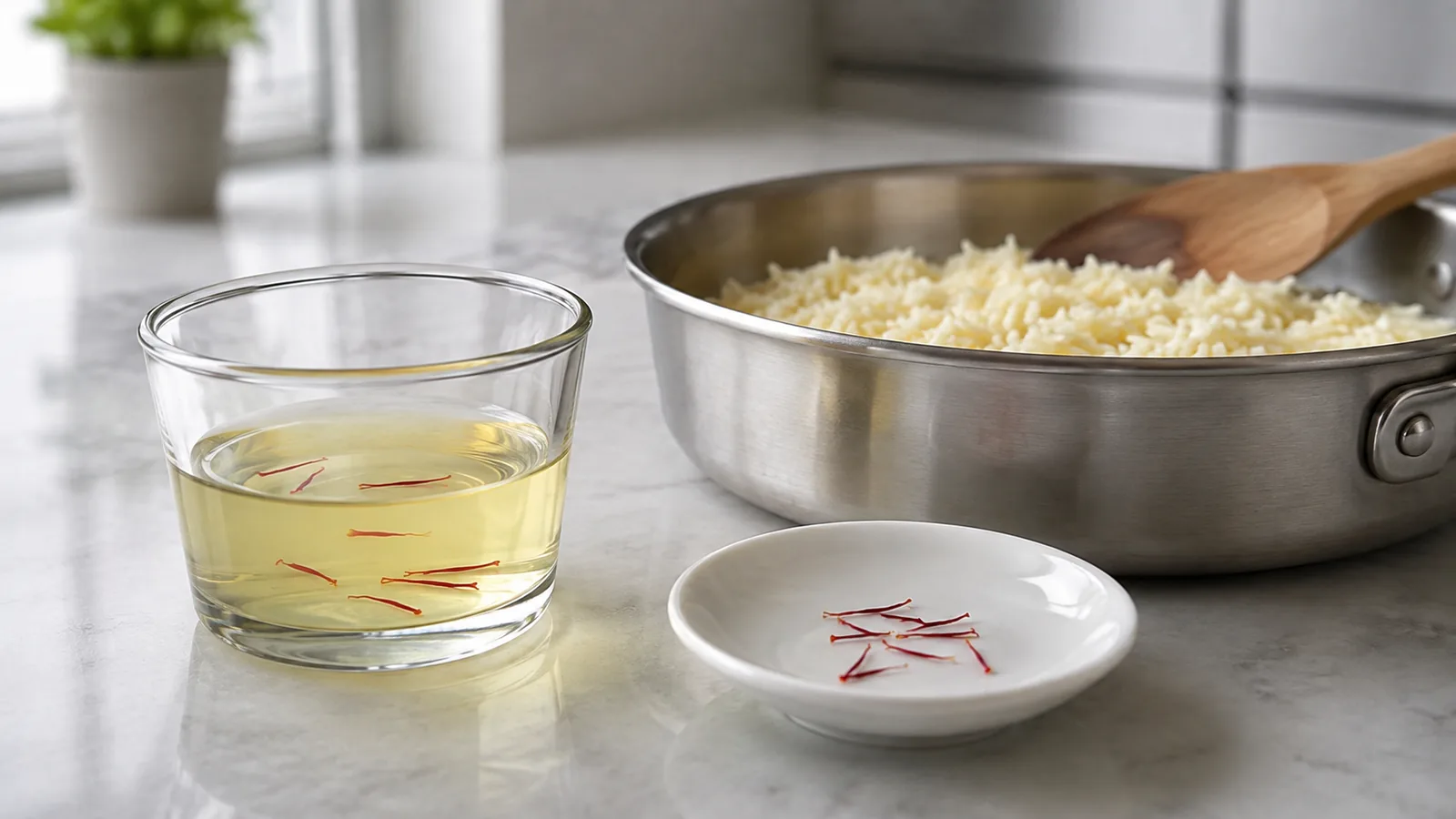
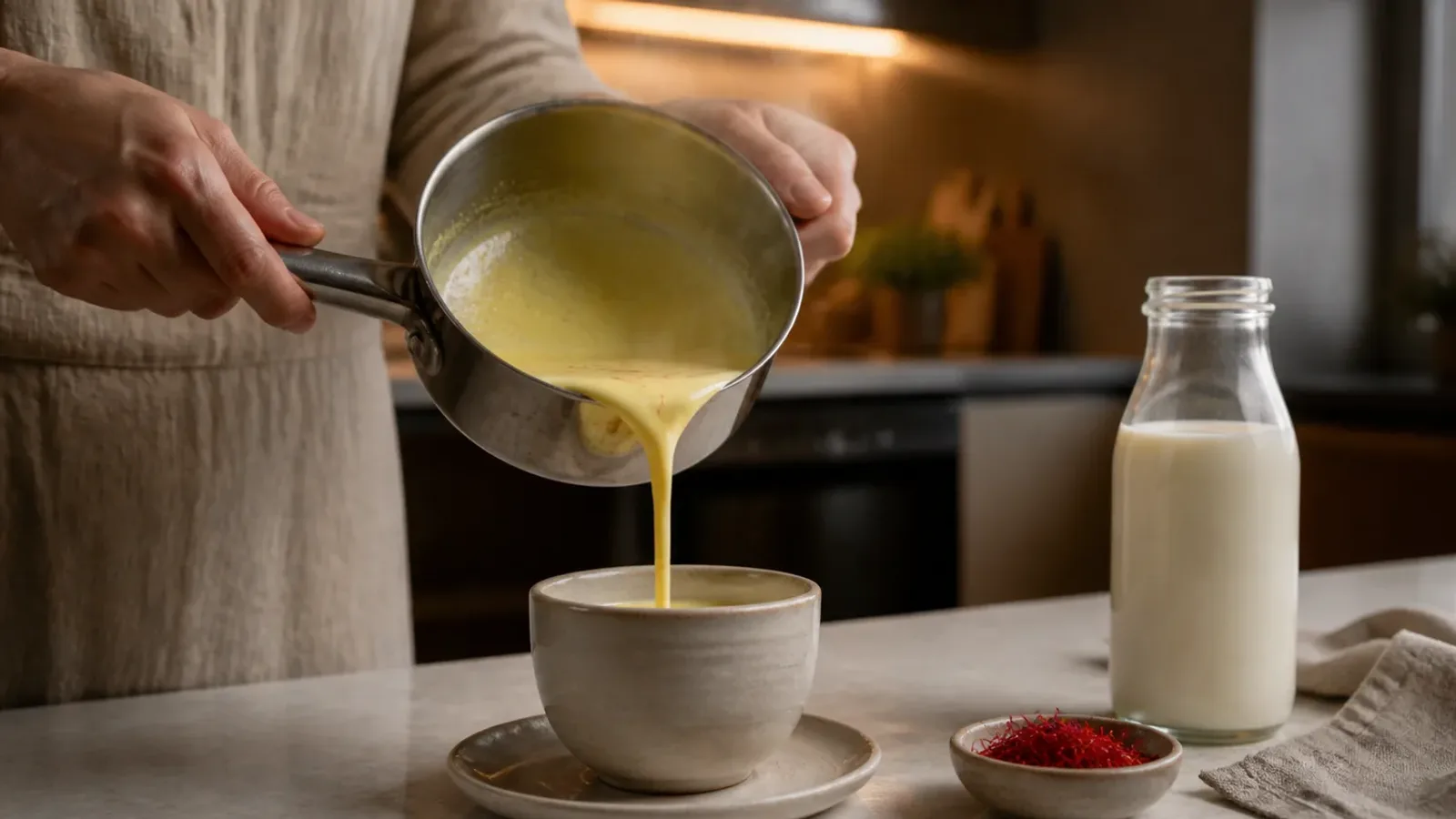
Gently crush a small culinary pinch of genuine threads. Soak it in a tablespoon or two of warm milk for 15 to 20 minutes, then stir the infusion and softened threads into one cup of warm milk. Avoid prolonged hard boiling, which can flatten the aroma and increase the chance of scorching.
Cardamom pairs naturally with saffron. Honey or sugar is a flavour choice, not an activation step. Add sweetener after tasting, because milk already has natural sugars and commercial plant drinks may be sweetened.
If you are learning how to eat saffron with milk, there is no need to strain out the threads. They are edible once softened. Start with flavour, not with a dose copied from a supplement study.
Health Benefits of Drinking Milk with Saffron
The nutritional value comes mainly from the chosen milk. Dairy commonly provides protein, calcium and vitamin B12; exact amounts and fortification vary by product. Plant drinks differ substantially, so check the label rather than assuming they are nutritionally identical.
Saffron contains crocins, crocetin, picrocrocin and safranal. A broad meta-research review found interesting clinical outcomes while warning that the quality and reporting of many saffron evidence reviews need improvement. A culinary cup is not proven to reduce inflammation, prevent heart disease or treat a mental-health condition.
What happens if we drink saffron milk daily? Daily use is not required for a normal diet. If it replaces a less suitable late-night drink and you enjoy it, that is a personal routine benefit. It should not displace varied food, medical treatment or hydration.
Improves Sleep Quality
Small trials of defined saffron preparations have reported changes in sleep questionnaires. A 2022 meta-analysis called the findings promising and also asked for more research on dose and long-term safety. It did not prove that saffron milk works as a sedative.
A warm caffeine-free drink may help mark the end of the day. Milk contains tryptophan, but an ordinary serving is not a sleeping medicine. If saffron milk at night feels comfortable, keep added sugar modest and allow time before lying down if reflux is a problem.
Enhances Mood and Reduces Stress
A 2026 GRADE-assessed review of 34 mood trials found improvements in some self-reported depression and anxiety scores but not several clinician-rated or other mood measures. The evidence was moderately certain and highly variable.
Those results concern supplementation over time, not an immediate emotional lift from kesar milk. A pleasant aroma and familiar ritual can feel comforting without constituting treatment. Persistent anxiety or depression deserves qualified care, and prescribed medicine should not be stopped for a drink.
Supports Skin Health
There is no reliable evidence that drinking saffron with milk produces glowing skin, fades pigmentation, treats acne or reverses ageing. Saffron compounds are studied in skin research, but oral culinary use and a finished topical formulation are different exposures.
Skin appearance is influenced by genetics, sun exposure, sleep, illness, hormones and skin care. Use tested sun protection and seek dermatological advice for persistent concerns instead of expecting daily saffron milk to change the complexion.
Who Should Take Extra Care?
Avoid dairy if you have a milk allergy; choose a suitable alternative or lactase strategy for intolerance. Ask a doctor or pharmacist before concentrated saffron use if you are pregnant or breastfeeding, take regular medicine, have low blood pressure or a bleeding condition, or are preparing for surgery.
For a simple drink, use a modest culinary amount and treat the result as food. This article explains what happens in the cup; our separate guides address basic milk preparation and who may need to avoid saffron milk.
Browse our culinary saffron or contact us for product questions.