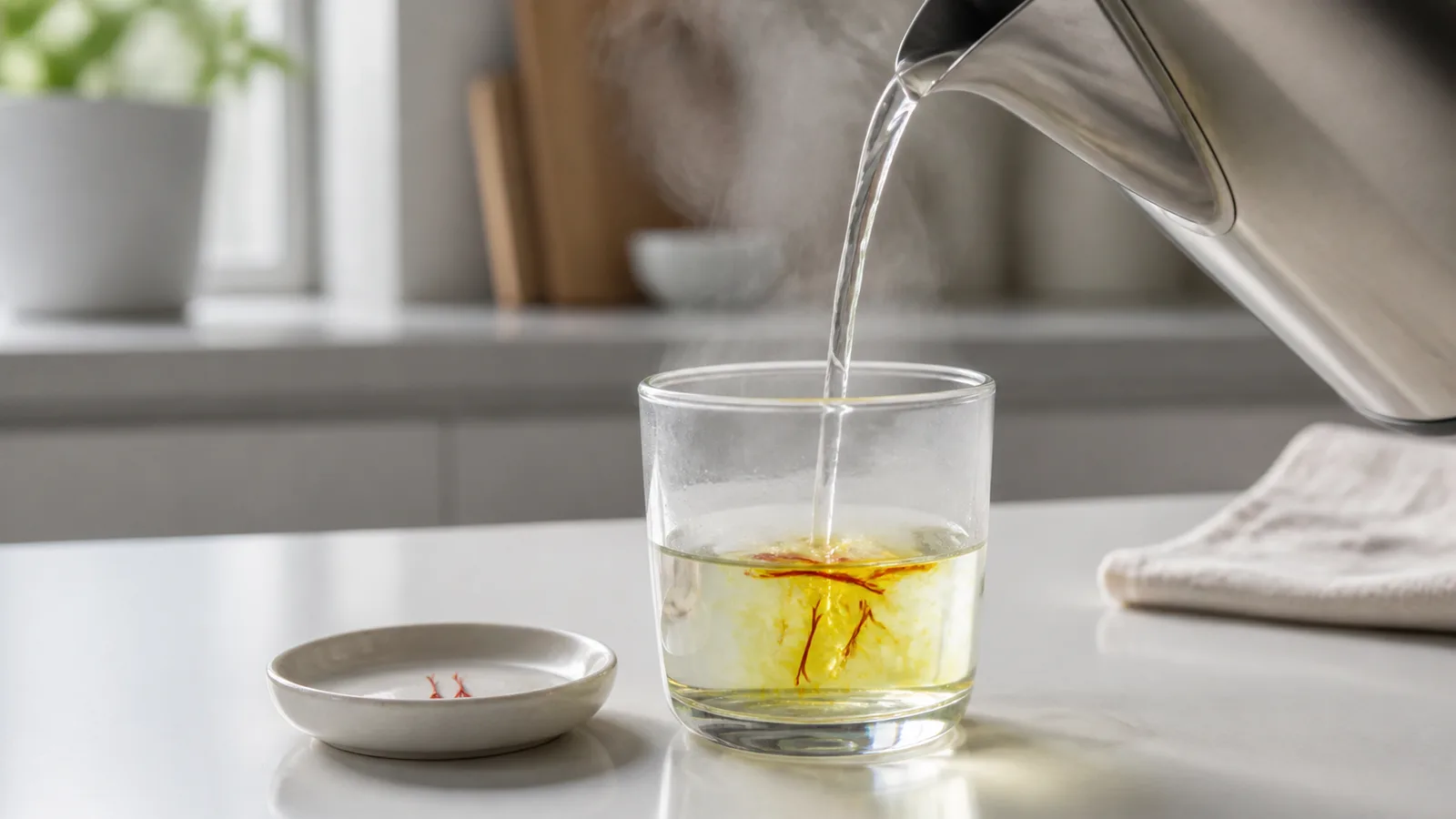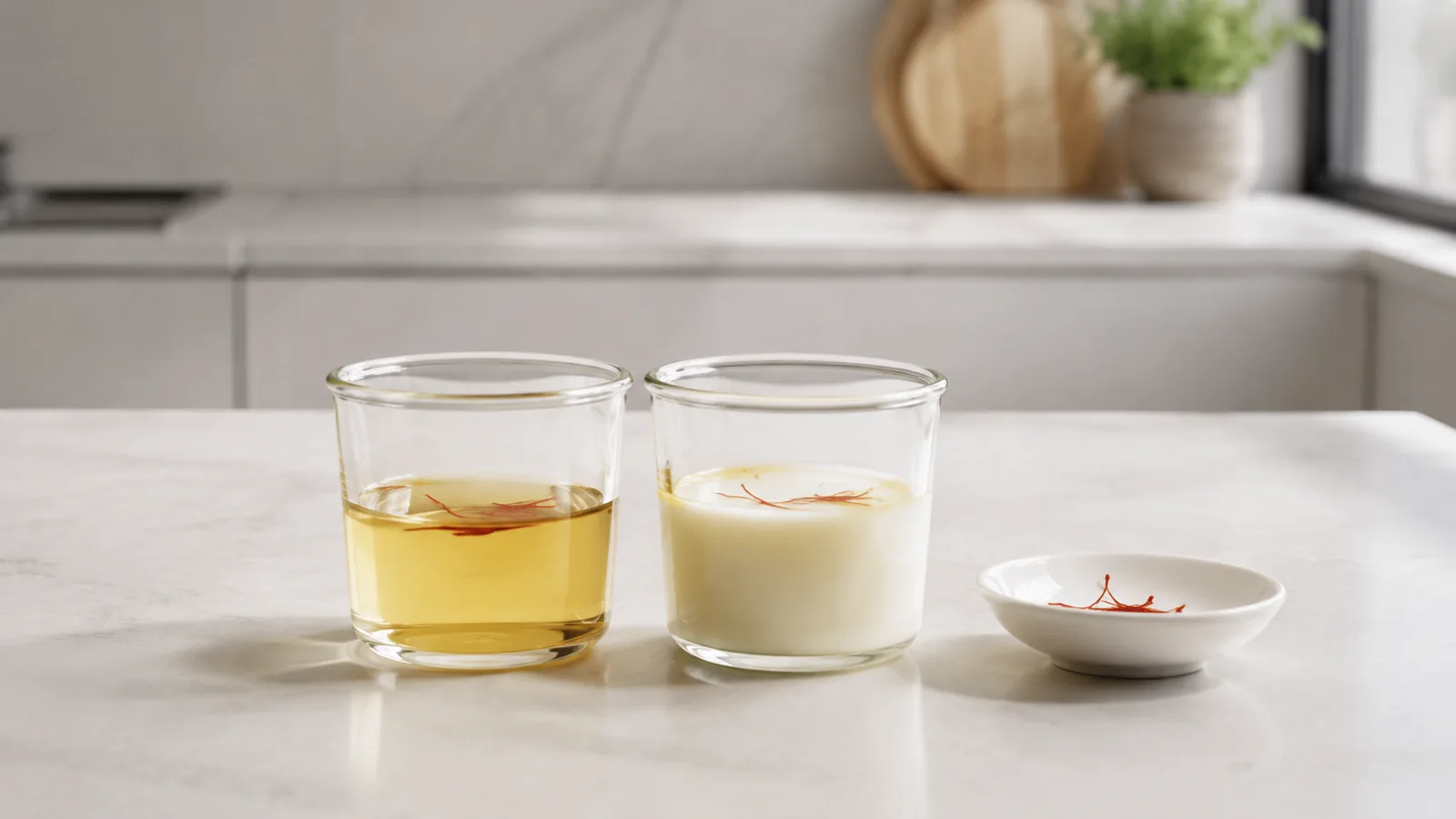
Can I put saffron in milk? Yes. Bloom a small culinary pinch of genuine threads in a little warm milk, then stir it into the rest of the cup. This gives better colour and aroma than dropping dry threads into cold milk, and no special “activation” ingredient is needed.
Saffron with milk is a traditional drink and dessert base. Its dependable advantages are flavour, fragrance and versatility. Health claims need more care because clinical saffron studies usually test measured extracts, not every household kesar-milk recipe.
Saffron in Milk Benefits: Is It Safe and Good for You?
For most adults without an allergy or another relevant condition, an occasional cup made with pasteurised milk and a modest culinary amount of saffron is a food choice. The milk supplies most of the protein, calcium and energy; exact nutrition depends on dairy fat, fortification, plant alternative and added sugar.
Daily use is not necessary. People with milk allergy should avoid dairy, while lactose intolerance may call for lactose-free milk or a suitable plant drink. Pregnancy, regular medicines, low blood pressure, bleeding conditions and concentrated saffron use warrant individual advice.
Health Benefits of Saffron in Milk
Searches for saffron milk benefits or the benefits of kesar milk often combine the properties of two ingredients into one promise. That is not how evidence works. Milk has a labelled nutrient profile; saffron contains crocins, crocetin, picrocrocin and safranal, but a cup has no standard extract dose.
A review of saffron health evidence reviews found promising findings together with important weaknesses in study quality and reporting. Saffron in milk has not been proven to relieve indigestion, prevent inflammation or heart disease, or improve general wellness.
Boosting Mood and Mental Health
Trials have studied defined saffron preparations for mood outcomes, generally over time. They do not show that one glass of saffron milk immediately raises serotonin or acts as a natural antidepressant. A familiar warm drink may feel comforting without constituting treatment.
Persistent low mood, anxiety or loss of function deserves qualified care. Do not stop prescribed medicine or rely on saffron milk instead of psychological or medical treatment.
Improving Skin Health
There is no reliable evidence that drinking saffron milk creates glowing skin, removes dark spots, treats acne or reverses ageing. Skin appearance depends on genetics, sun exposure, sleep, hormones, illness and skin care, among other factors.
A culinary drink and a finished topical cosmetic are different exposures. Use tested sun protection and seek dermatological advice for a persistent concern rather than adding more saffron to the cup.
Improved Sleep Quality
A 2022 systematic review and meta-analysis described promising sleep findings from small trials of defined saffron preparations and called for more research on dose and long-term safety. It did not prove that saffron soaked in warm milk is a sedative.
A warm caffeine-free drink can be part of a wind-down routine. If the recipe uses black or green tea, caffeine changes the answer. Reflux, sugar and drinking a large volume just before bed can also interfere with sleep.
How to Make Saffron Milk
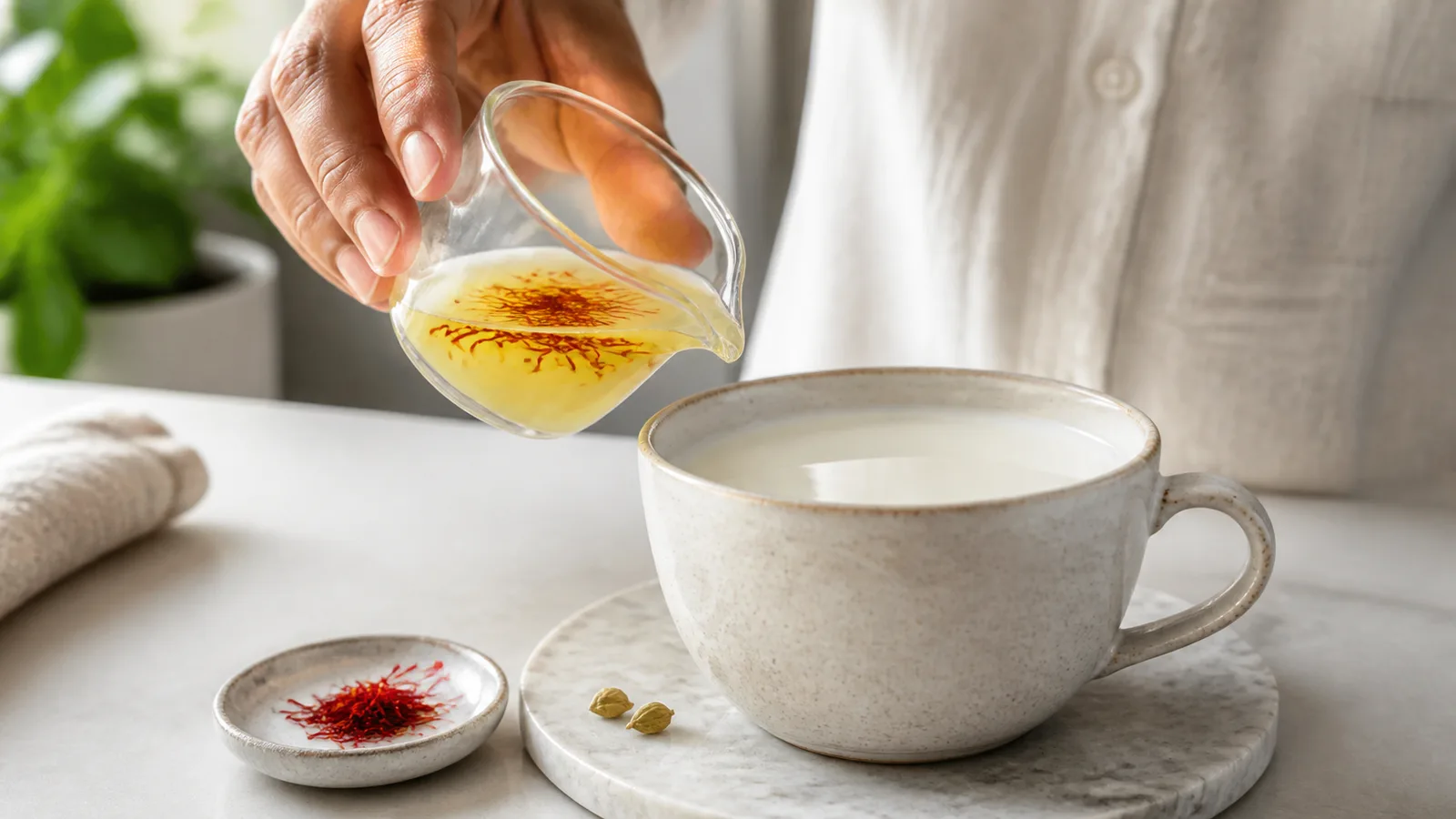
Lightly crush a small culinary pinch of threads. Soak them in one or two tablespoons of warm milk for 15 to 20 minutes, then add the golden infusion and softened threads to one cup of gently heated milk. Do not boil it hard.
Cardamom, pistachio or a drop of rose water are optional. Taste before adding honey or sugar. The threads are edible after blooming, so learning how to drink or eat saffron with milk does not require straining them out.
For contraindications, read who should not drink saffron milk. For a deeper evidence review, see what happens when milk and saffron are combined, or browse our culinary saffron.