Can I put saffron in milk tea? Yes. Saffron works especially well in a gently spiced black tea with milk, where its honeyed, hay-like aroma softens the tea’s tannic edge. The important part is timing: bloom the threads first and add them after the tea has brewed, rather than boiling them hard with the leaves.
A small culinary pinch is enough for a cup or two. More saffron does not automatically make better tea; it can turn the drink bitter and bury the flavour you paid for.
Saffron in Milk Tea: Can You Add It for Extra Flavor?
Saffron milk tea can mean several things. It may be ordinary black tea finished with milk and saffron, an Indian-style kesar chai with cardamom, or a caffeine-free milk infusion without tea leaves. Does saffron tea have caffeine? A pure saffron infusion does not, but a drink made with black, green or oolong tea does.
The clearest saffron milk tea benefits are culinary: a deeper aroma, a warm golden colour and a more layered cup. Milk contributes most of the protein and minerals. Treat broader wellness claims cautiously because research on measured saffron extracts does not prove that a household tea prevents disease or works as a treatment.
How to Add Saffron to Milk Tea
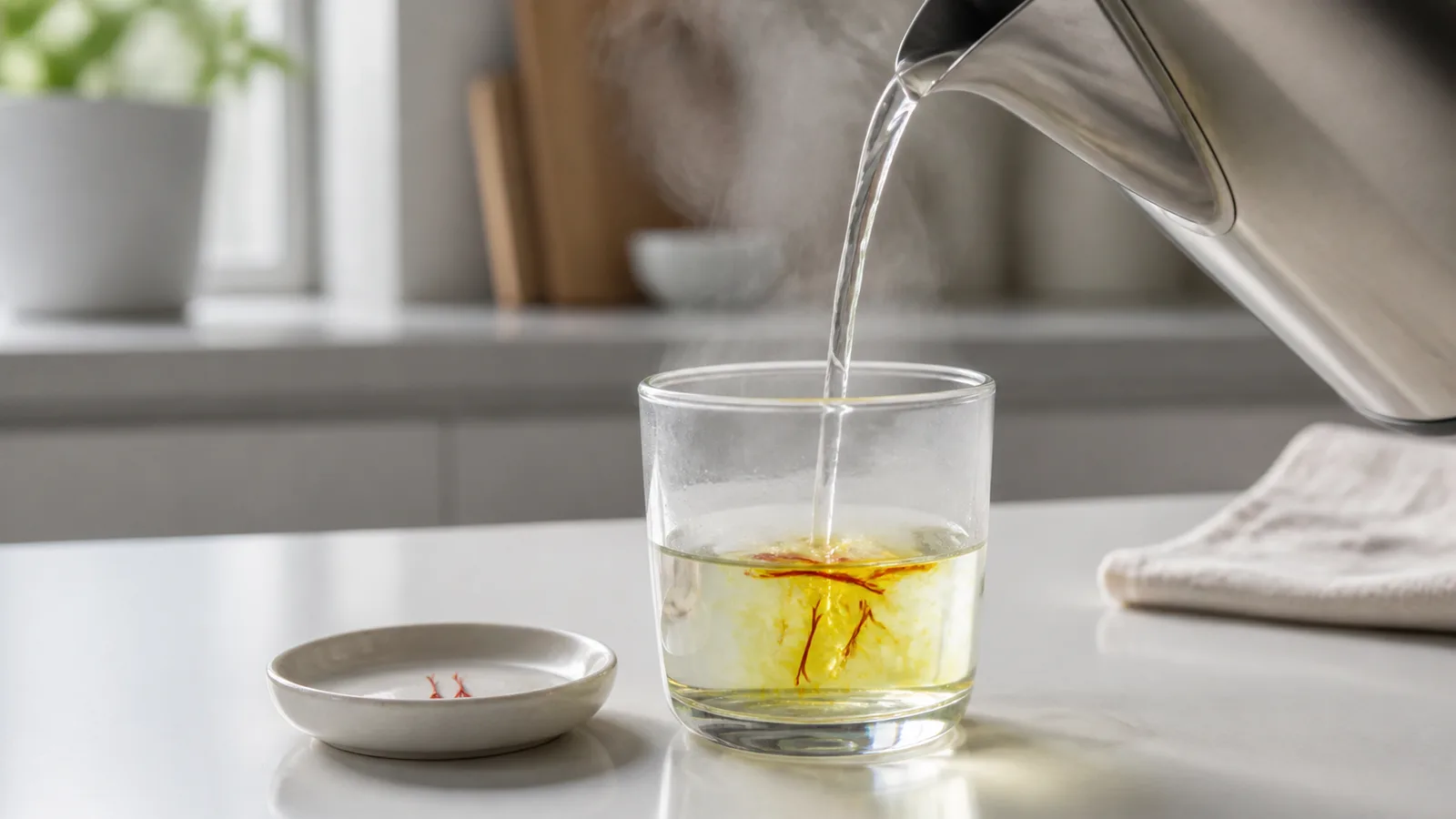
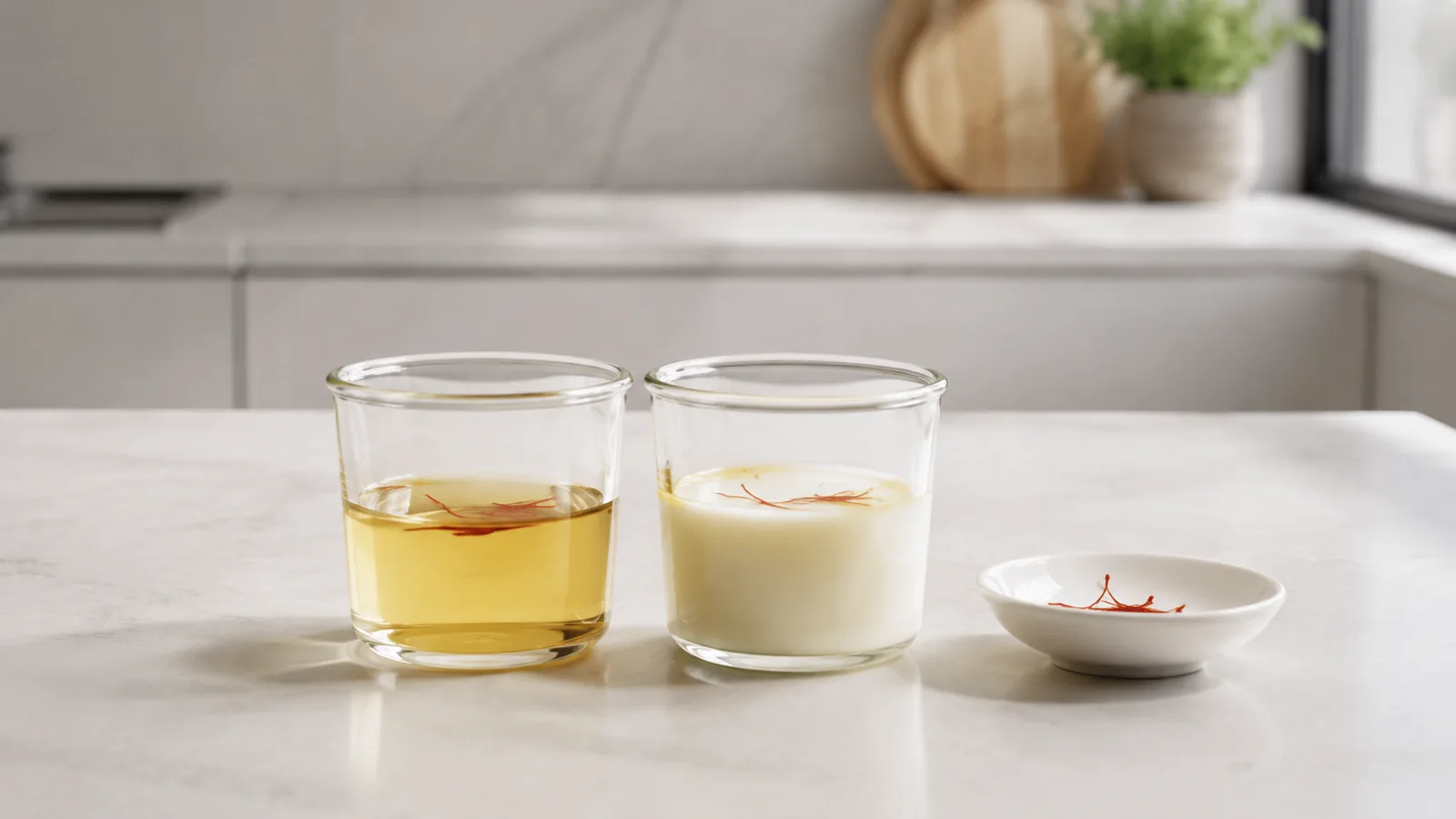
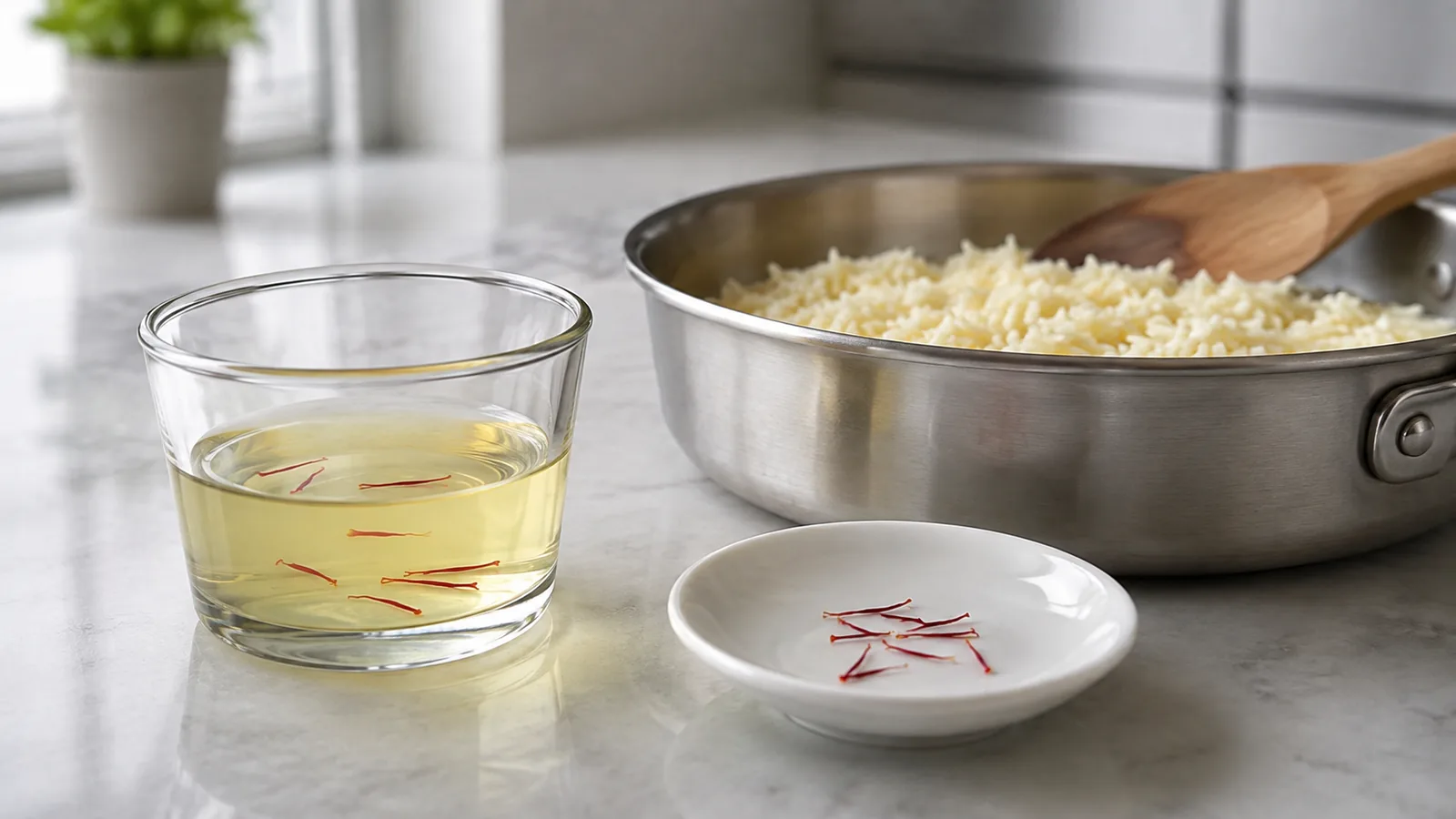
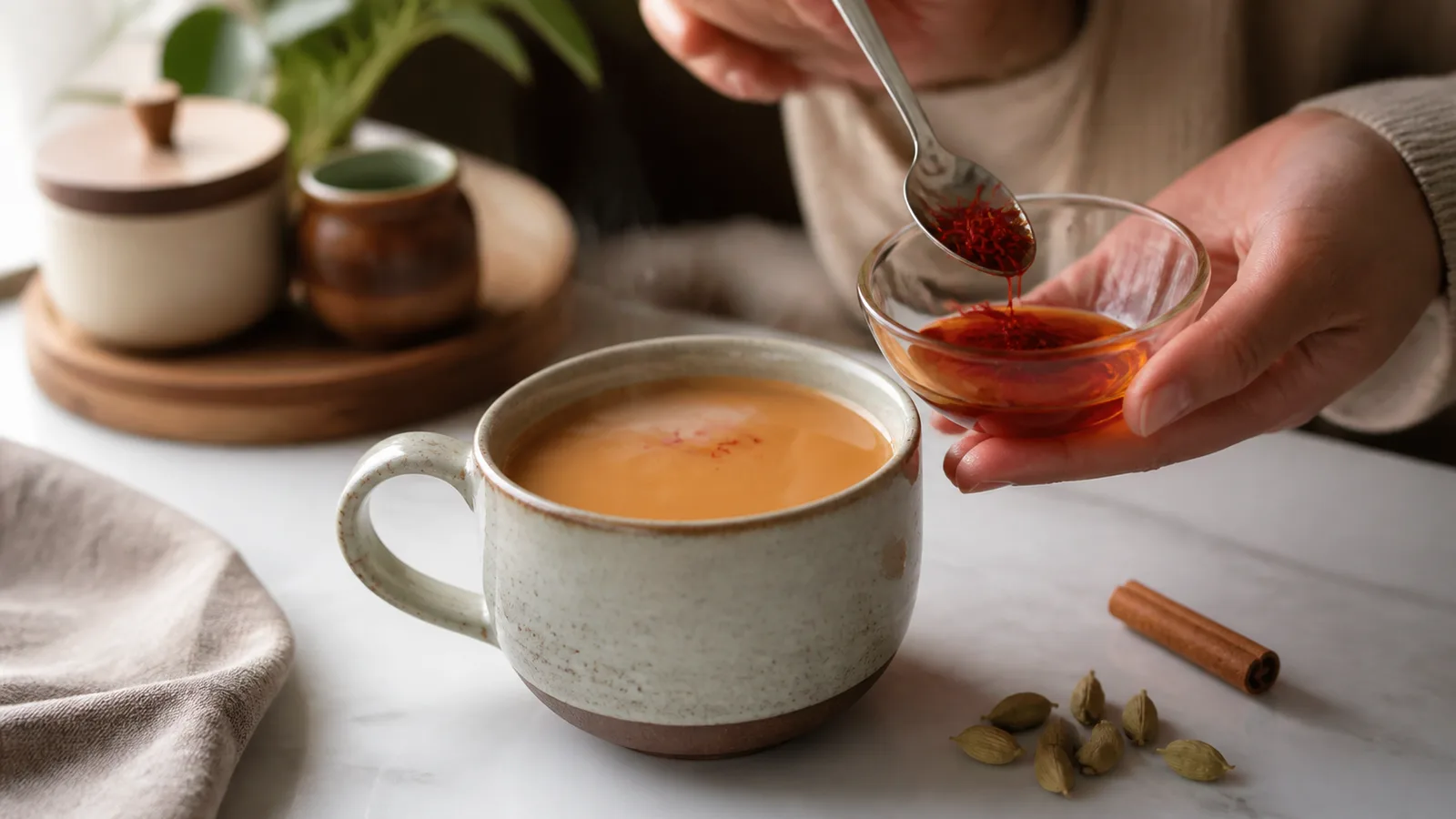
How much saffron should I put in my tea? For two cups, lightly crush a small culinary pinch of genuine threads. Soak them in two tablespoons of warm water or warm milk for 15 to 20 minutes. This is often called blooming, and it releases colour and aroma more evenly than dropping dry threads into the finished cup.
- Brew black tea in water to the strength you enjoy. Assam gives a bold cup; Darjeeling is lighter and more floral.
- Add milk and warm the mixture gently. Avoid repeatedly boiling it, which can make tea harsh and milk taste cooked.
- Stir in the saffron infusion, including the softened threads, during the final minute.
- Taste before adding sugar or honey. Cardamom is a natural partner; a small piece of cinnamon gives a warmer, sweeter impression without requiring more sugar.
When adding saffron to tea, start with fewer threads and adjust on the next cup. This is the simplest way to learn how to add saffron to tea without making it bitter. Household spoons are too imprecise for measuring such a light spice, while a modest pinch is practical for culinary use.
Flavor Enhancement with Saffron
Good saffron is aromatic rather than simply colourful. It can suggest dried grass, honey and a faint mineral or floral note, followed by gentle bitterness. Creamy milk rounds that bitterness; robust tea keeps the drink from becoming flat.
Saffron is easily overwhelmed by heavy spice blends. If you use ginger, cinnamon, cloves or cardamom, choose one or two and keep them restrained. Rose water can work too, but a drop is often enough. The result should still smell distinctly of saffron.
Health Benefits of Saffron Milk Tea
Saffron contains crocins, crocetin, picrocrocin and safranal. Human trials have explored standardised saffron preparations, including mood and sleep outcomes, but they do not establish a therapeutic dose in tea. A review of saffron evidence reviews found promising findings alongside important limitations in study quality and reporting.
Milk tea also changes with the recipe. Dairy milk supplies protein; fortified plant drinks may supply added calcium or vitamins; sweetened condensed milk can add a substantial amount of sugar. Read the label and judge the whole cup, not one ingredient. Saffron milk tea should not replace medical care, prescribed treatment or a varied diet.
When to Enjoy Saffron Milk Tea
There is no medically proven best time to drink saffron tea. In the morning or afternoon, a black-tea version can be a fragrant alternative to ordinary chai. In the evening, use decaffeinated tea or omit tea leaves if caffeine affects your sleep. Remember that decaffeinated tea can still contain a small amount.
People with a milk allergy should avoid dairy; those with lactose intolerance can choose a suitable lactose-free or plant-based option. If you are pregnant, breastfeeding, take regular medicine or are considering concentrated saffron supplements, ask a qualified clinician rather than treating a tea recipe as dosing advice.
For a related caffeine-free preparation, see our guide to adding saffron to milk. To make this version at home, browse our culinary saffron.