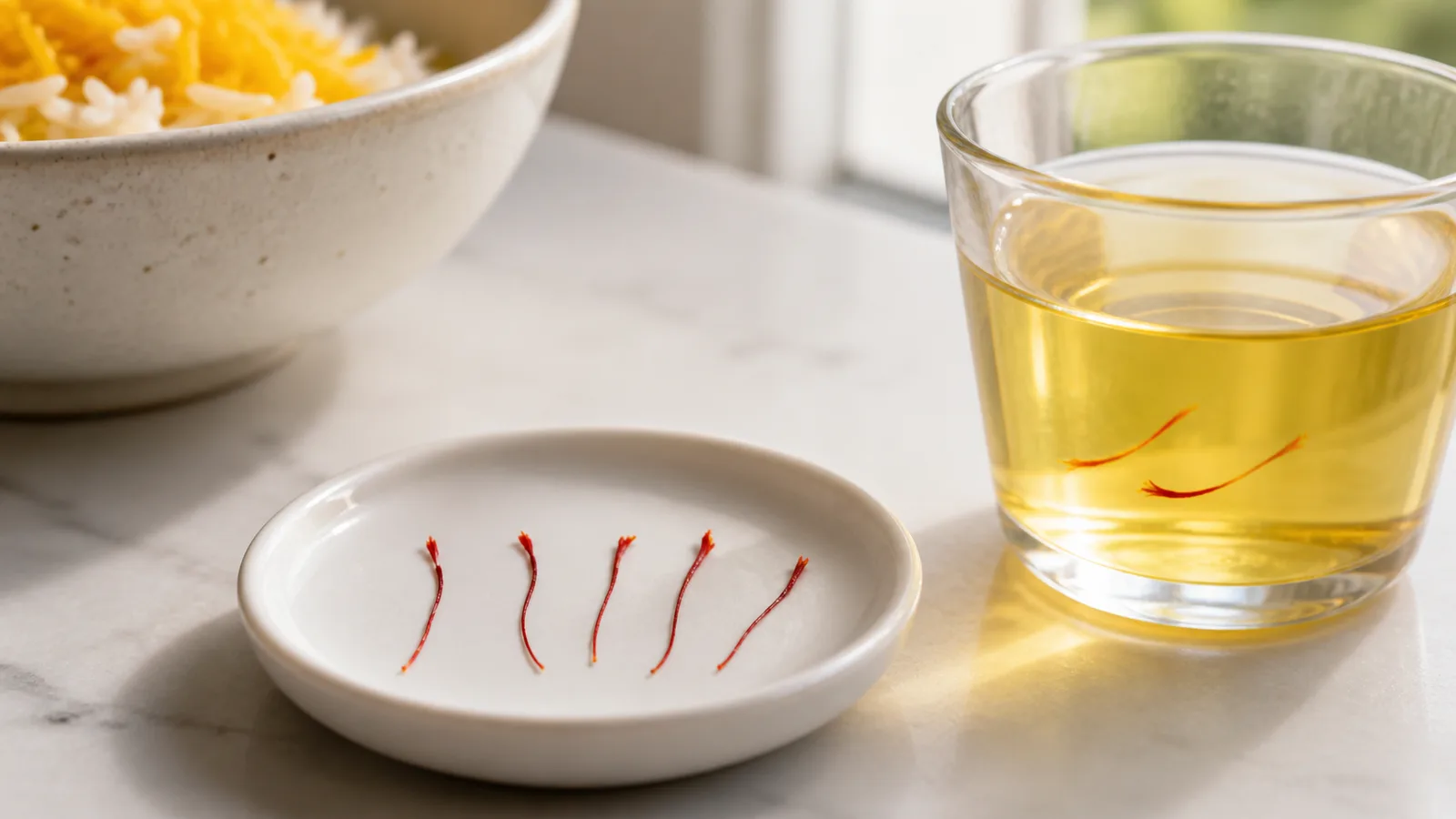
Growing saffron at home can be worth it if you want a patient gardening project and a small supply you can trace from flower to jar. It is less convincing as a quick way to save money. The corms need the right site, the harvest is brief and hands-on, and each flower gives only three red stigmas.
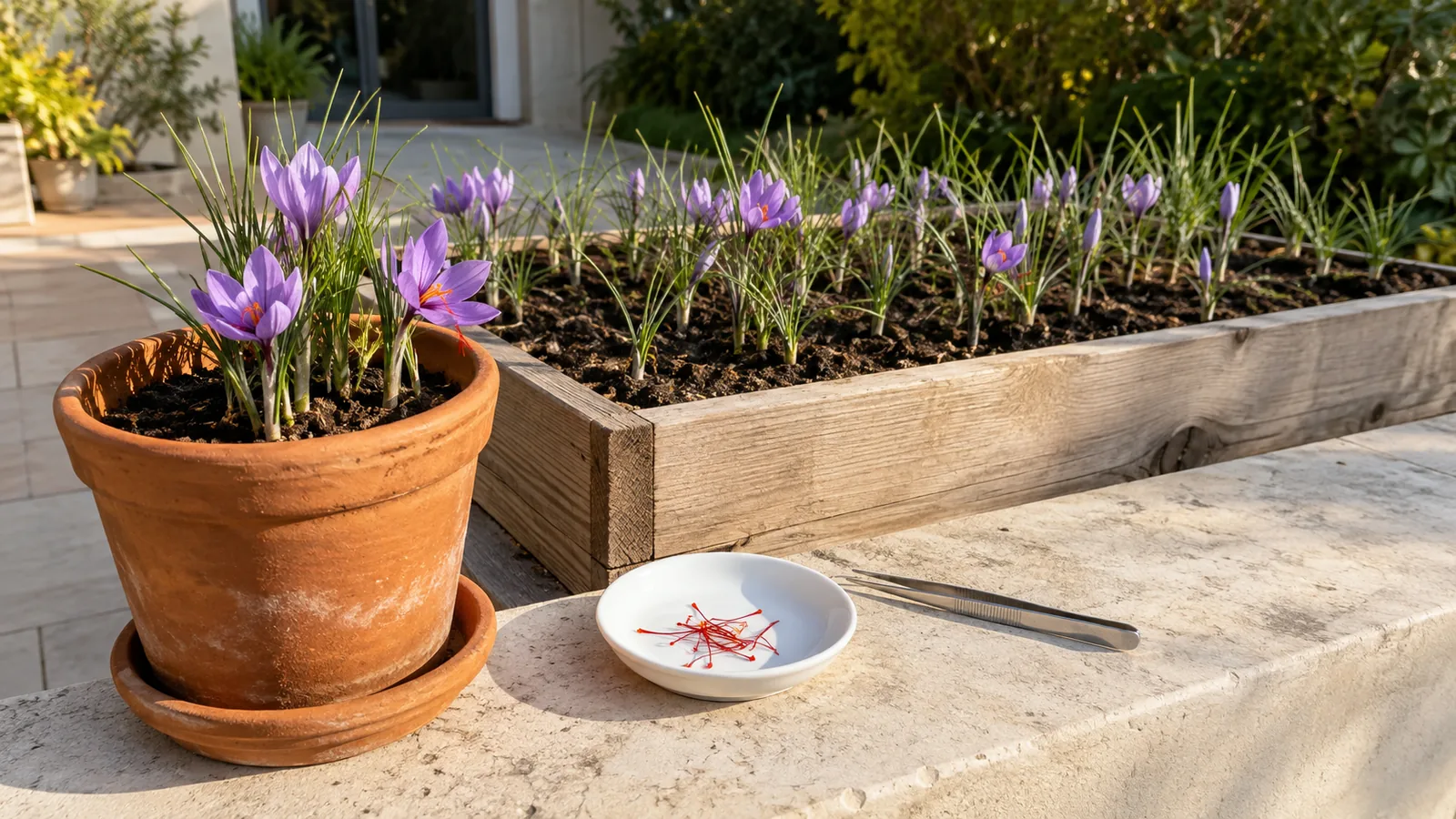
When growing saffron at home is worth the effort
A home patch makes sense for someone who enjoys growing unusual food plants, has a sunny space with fast-draining soil and is willing to check the flowers during their short autumn bloom. The reward is not just the final weight. You see exactly how the plant was grown, separate the threads yourself and learn what fresh saffron smells like before it has spent months in a supply chain.
It may also become more productive over time. Crocus sativus does not grow true from seed; it is propagated through corms. A healthy planting produces daughter corms, so a small bed can expand as the plants mature. That growth is gradual, and overcrowded clumps eventually need lifting and dividing.
When buying saffron is the practical choice
Home cultivation is probably not worthwhile if your only aim is to replace an occasional spice purchase. According to the University of California Master Gardeners’ saffron guidance, roughly 150 flowers are needed for one gram of dried spice. Yields vary with corm size, climate, planting density and the age of the bed, so the first season may be modest.
There are costs beyond the corms. Heavy soil may need a raised bed or a gritty amendment; rodents may require wire protection; and containers need enough depth and drainage. Harvesting, separating and drying hundreds of delicate stigmas also takes time. A grower who values the activity may consider that time enjoyable. Someone comparing only the price per gram may not.
A simple way to judge the cost
Prices for corms and garden materials differ too much by region and season for one universal calculation. Before ordering, write down the cost of the corms, containers or bed preparation, drainage material and pest protection. Then decide how many seasons you are prepared to wait while the corms multiply.
Compare that total with how much saffron your household actually uses, not with the high retail price of a large amount you would never buy. A few dishes may require only a small pinch. Growing can still be personally valuable, but a realistic calculation prevents the phrase “the world’s most expensive spice” from turning into an exaggerated promise of easy profit.
Conditions that make a home crop more likely to succeed
Sun and drainage
Choose a bright position with well-drained soil. Standing water is one of the clearest risks because wet corms can rot. A raised bed or container can help where garden soil stays heavy after rain, but the container must have open drainage holes and should not sit in a water-filled saucer. Watering should be restrained and adjusted to rainfall, growth stage and local conditions rather than done on a fixed daily schedule.
The right planting material
Buy Crocus sativus corms from a reputable horticultural supplier. They are often casually called bulbs, but botanically they are corms. They should be firm and free from soft patches, visible mould and damage. Do not confuse saffron crocus with plants sold as autumn crocus or meadow saffron; some look similar and are not the culinary species.
Planting time and spacing
In much of the Northern Hemisphere, corms are planted in late summer or early autumn before their flowering period. Local climate changes the exact date. The University of Vermont Extension’s home-growing advice uses a sunny, well-drained site and planting about three inches deep. Spacing of roughly three to four inches gives the plants room to multiply. Gardeners should adjust depth and winter handling to their climate and supplier’s instructions.
Our detailed saffron planting guide covers bed preparation and the seasonal sequence. If you are choosing stock, the saffron corm guide explains what the underground structure does.
What the first year is really like
After planting, narrow leaves emerge and flowers may follow in autumn. Not every corm is guaranteed to flower in its first season. Larger, healthy corms generally have more stored energy, while stress, excess water or a poor site can reduce flowering.
The leaves remain after flowering and feed the developing daughter corms. Let them yellow and die back naturally rather than cutting them while green. During summer dormancy, keep the bed from becoming persistently wet. The planting may improve over the next few seasons before crowding begins to reduce performance.
Harvesting and drying a small crop
- Check the plants daily once buds appear because individual flowers do not last long.
- Collect open flowers on a dry morning after surface moisture has gone.
- Separate the three red stigmas from each flower with clean fingers or tweezers.
- Dry the threads promptly using a controlled method suited to a small batch; they should be dry, not scorched.
- Store the finished saffron in a clean airtight container, protected from light, heat and moisture.
Careful drying and dark, airtight storage help protect the harvest’s aroma and colour. A few threads can be useful in cooking, so you do not need thousands of flowers before the project has any value. The large flower count matters when the goal is a measurable gram or a commercial harvest. For a fuller start-to-finish overview, see our guide to how to grow saffron at home.
Common reasons a home planting disappoints
- Wet soil: poor drainage encourages corm loss and fungal problems.
- Too much shade: weak light can limit the energy stored for later flowering.
- Wrong plant: ornamental autumn-flowering species are not substitutes for Crocus sativus.
- Unrealistic first-year expectations: a small new bed will not behave like an established field.
- Cutting green leaves: removing them early interrupts the corm’s annual growth cycle.
- Missing the bloom: waiting several days can leave flowers weathered and threads harder to collect cleanly.
Is growing your own saffron worth it?
Yes, for a gardener who has suitable drainage, enjoys careful seasonal work and values a small, traceable harvest. Probably not, if the aim is immediate savings, a large first-year yield or effortless production. Start with a manageable number of sound corms, treat the first season as a trial and let the result in your own garden decide whether the bed deserves to expand.