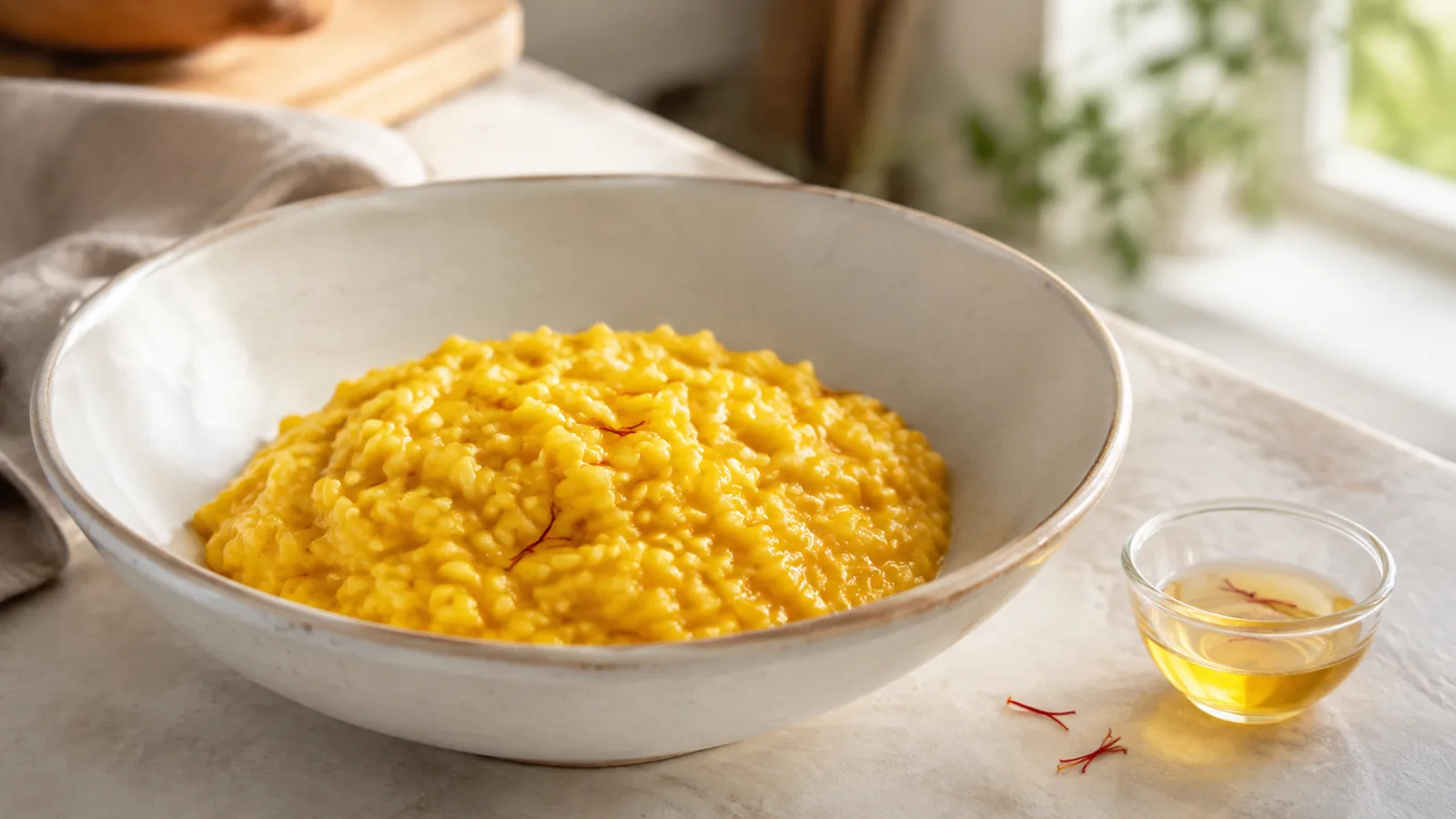
Saffron recipes for special occasions do not have to mean fragile restaurant food or a full day in the kitchen. These three dishes—a chicken kuku, saffron beef tacos and a chicken-and-potato stew—use saffron in genuinely different ways. Each recipe is complete enough to cook as written, with measured quantities, food-safety cues and serving ideas for a family gathering.
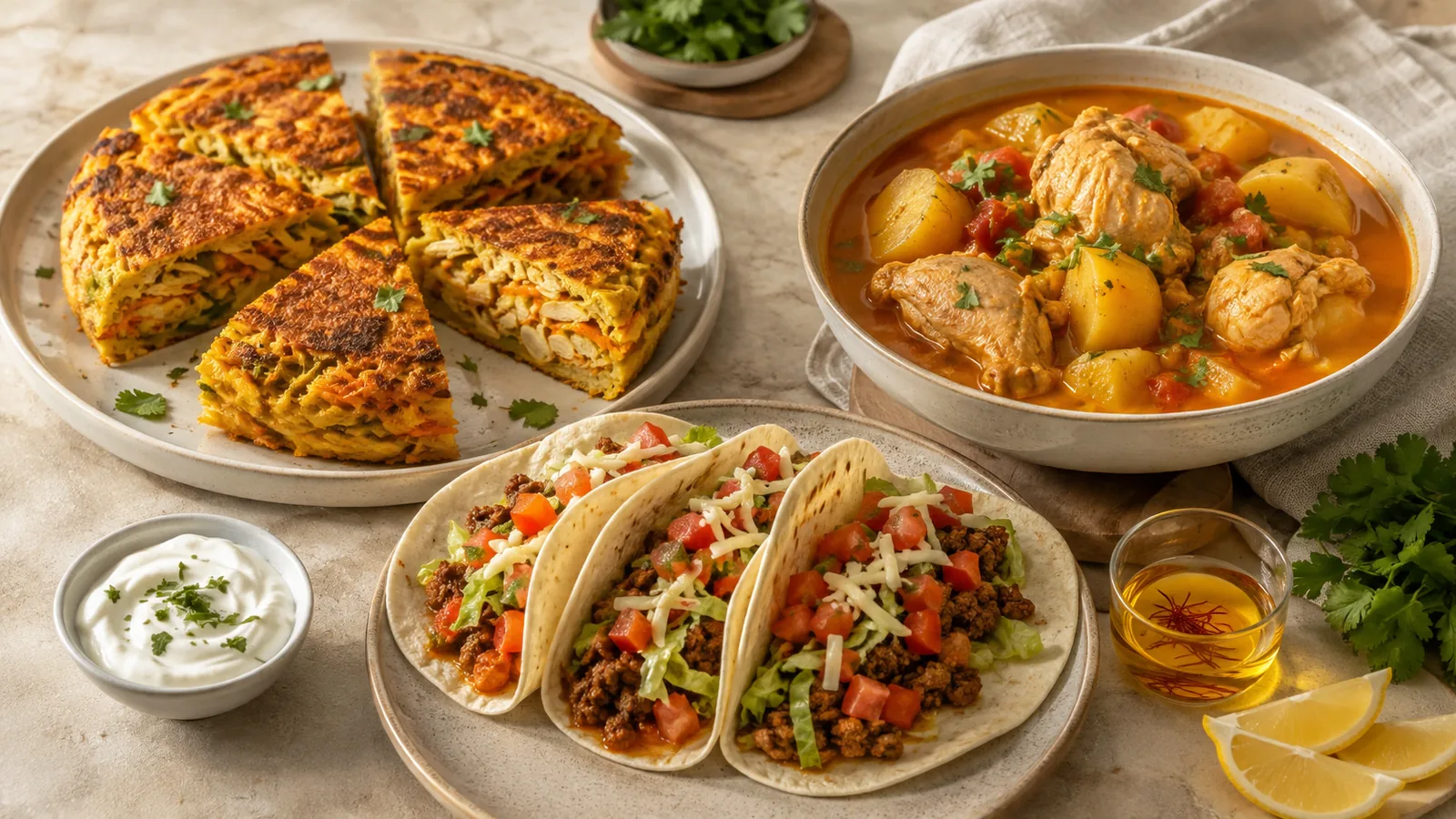
Three special dishes with saffron at a glance
- Saffron chicken kuku: a sliceable egg-and-chicken dish for a buffet, brunch or light supper.
- Saffron beef tacos: a quick Persian-inspired fusion meal with warm spice, peppers and optional cheese.
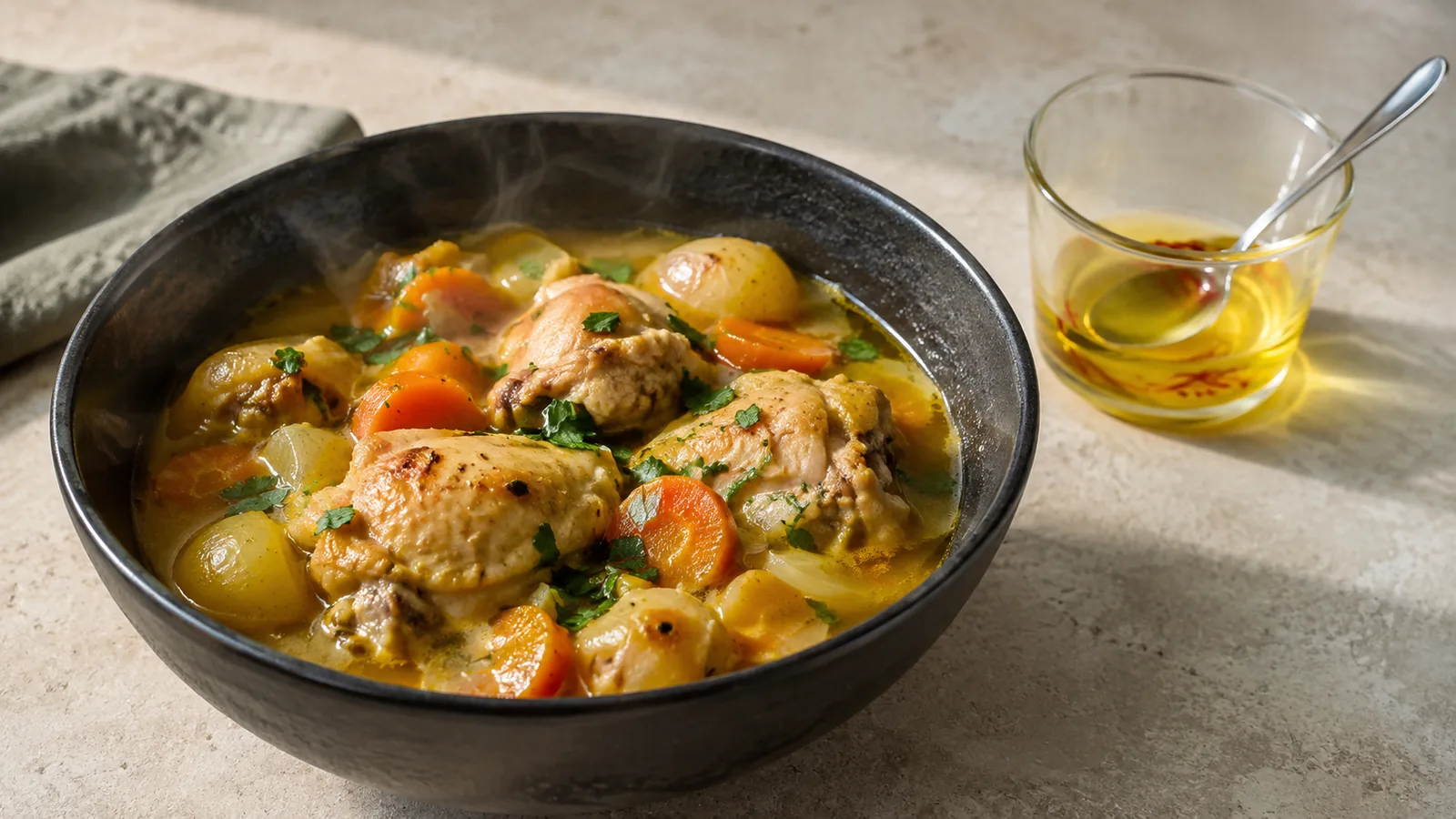
- Saffron chicken and potato stew: a gentle one-pot dish for guests who prefer familiar, comforting flavours.
If you arrived looking for a recipe with saffron, choose by the kind of meal you need. Kuku can be made ahead and served in neat wedges; tacos are best assembled at the table; the stew is the easiest to keep warm while people arrive.
Together, the three dishes show practical ways to use saffron in eggs, ground meat and a light sauce. In recipes using saffron, timing matters. Each dish with saffron here has its own measured infusion, so the spice remains noticeable without taking over the plate.
How to cook with saffron without wasting it
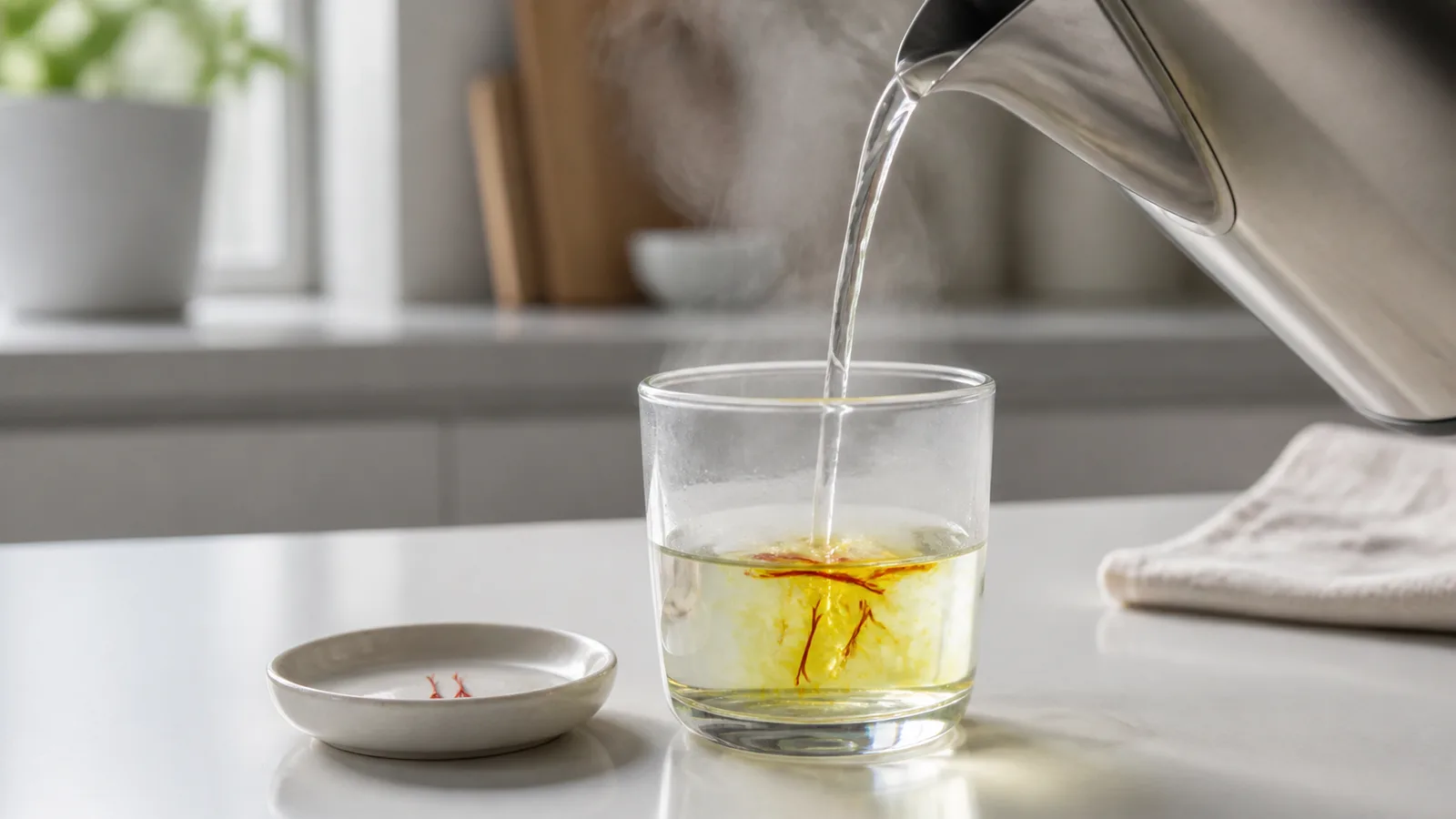
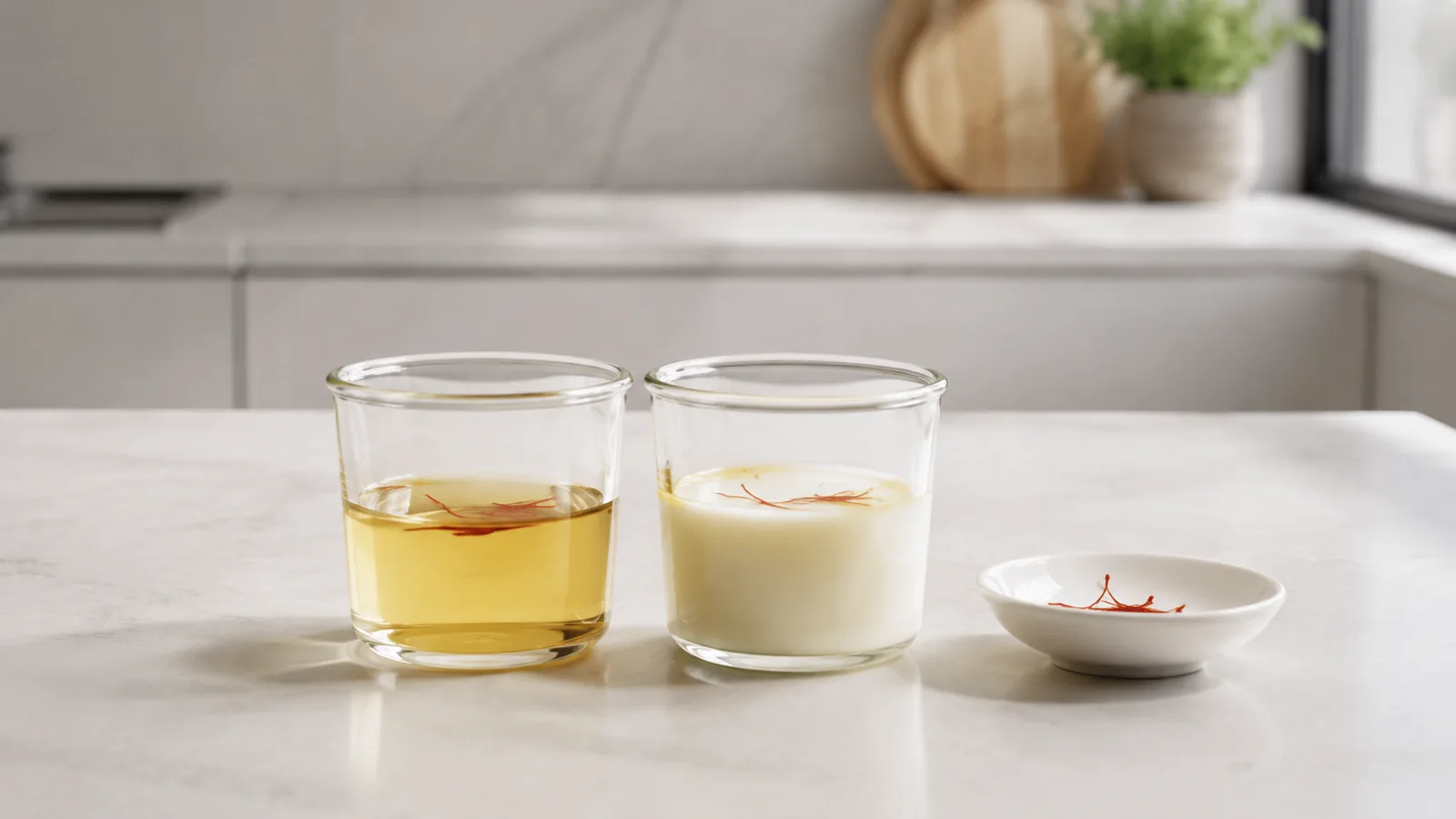
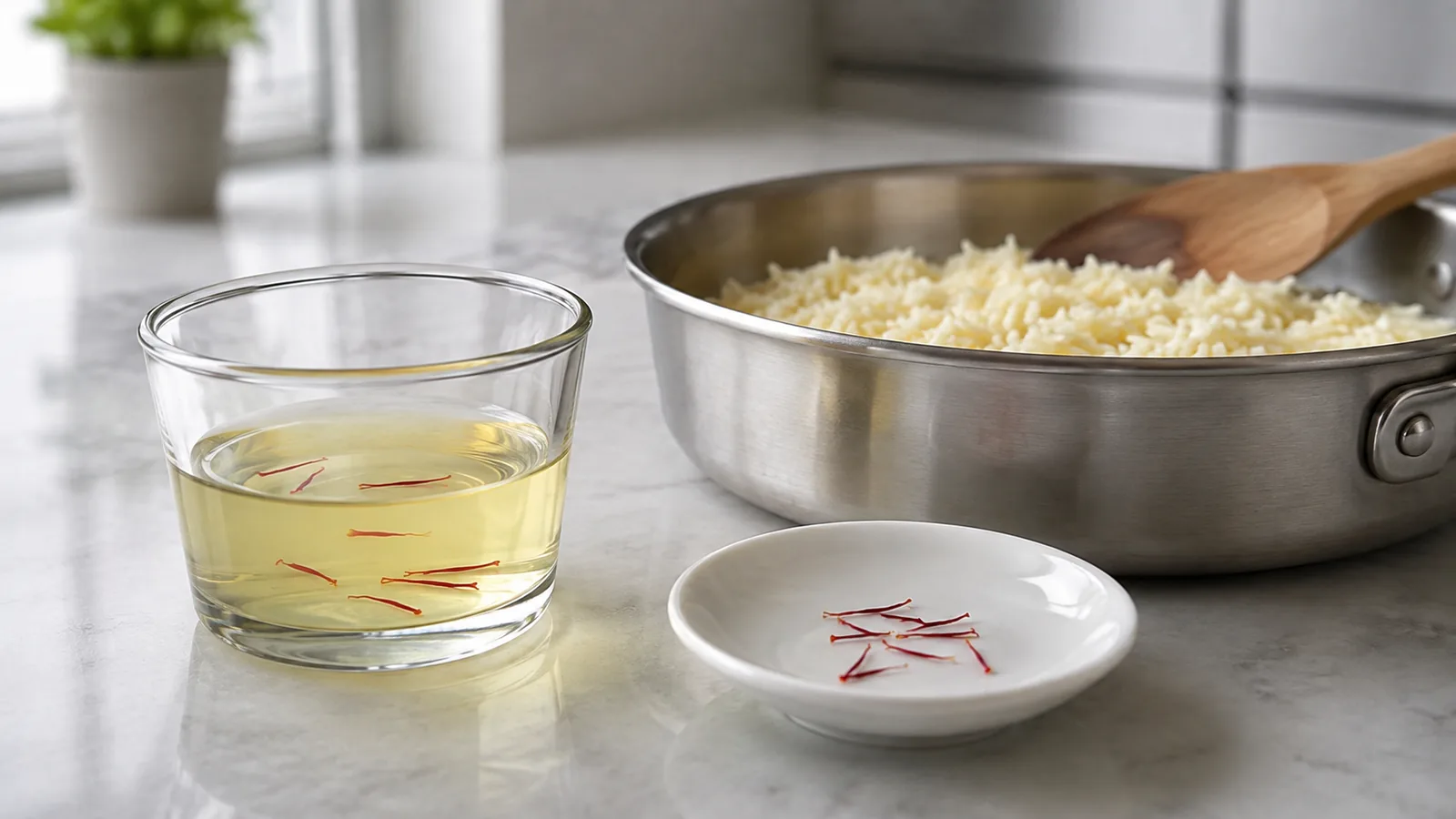
For each recipe, lightly grind the listed threads with a pinch of sugar, add the stated hot water, cover and steep for 15 minutes. This turns a small quantity into a concentrated infusion that reaches every part of the dish. Adding dry threads directly is possible, but the distribution will be less even.
Keep the infusion away from hard boiling and add most of it near the end of cooking. Our guide to brewing saffron for cooking explains the process and how to hold a prepared infusion safely.
1. Saffron chicken kuku
Kuku sits somewhere between a thick omelette and a frittata, with the filling playing a larger role than the egg. This version uses cooked chicken, onion and carrot. It can be browned on the stovetop or finished in the oven, which is easier when you want tidy slices for a special-occasion platter.
Ingredients for six appetizer portions
- 400 g cooked shredded chicken breast or thigh;
- 4 large eggs;
- 2 medium onions, thinly sliced;
- 1 small carrot, coarsely grated;
- 1 garlic clove, finely grated;
- 1/4 teaspoon saffron threads;
- 2 tablespoons hot water for the saffron;
- 1 tablespoon lemon juice;
- 2 tablespoons chicken stock or water;
- 1/2 teaspoon turmeric;
- 3/4 teaspoon salt;
- black pepper;
- 3 tablespoons neutral oil, divided;
- plain yoghurt and herbs for serving.
Method
- Brew the saffron in the hot water. Heat 2 tablespoons of oil in a 24 cm oven-safe frying pan over medium-low heat.
- Add the onions and a pinch of salt. Cook for 12–15 minutes until soft and golden, then add the carrot, garlic and turmeric for 2 minutes. Let the mixture cool for 5 minutes.
- Beat the eggs in a large bowl with the saffron infusion, lemon juice, stock, remaining salt and black pepper.
- Fold in the shredded chicken and cooled onion mixture. The filling should be coated, not swimming in egg.
- Add the remaining tablespoon of oil to the pan. Pour in the kuku mixture, level the top and cook over low heat for 6–8 minutes until the edge is set.
- Transfer to a 190°C/375°F oven for 12–16 minutes, until the centre reaches 71°C/160°F and no liquid egg remains.
- Rest for 10 minutes before sliding onto a board and cutting into wedges.
No oven-safe pan? Cover and cook entirely on the stovetop over very low heat for 12–15 minutes, then divide the kuku into quarters and turn each piece carefully to brown the second side. A moderate amount of oil and low heat give a cleaner crust than deep-frying the mixture.
2. Saffron beef tacos
Saffron tacos are not a traditional Persian dish. They are a useful fusion recipe: saffron softens the earthy edge of turmeric and works well with sweet bell pepper, while lime or lemon keeps the beef lively. Small flour tortillas are easier to fold than crisp shells, though either can be used.
Ingredients for eight small tacos
- 450 g lean ground beef;
- 8 small flour tortillas or taco shells;
- 1 small onion, finely diced;
- 1 red or yellow bell pepper, thinly sliced;
- 1/4 teaspoon saffron threads;
- 2 tablespoons hot water for the saffron;
- 1/4 teaspoon turmeric;
- 1/2 teaspoon ground cumin, optional;
- 1 tablespoon neutral oil;
- 1 tablespoon lime or lemon juice;
- 3/4 teaspoon salt;
- black pepper;
- 75 g grated Gouda, mozzarella or mild cheddar, optional;
- shredded lettuce, diced tomato and plain yoghurt for serving.
Method
- Brew the saffron. Heat the oil in a wide pan over medium heat and cook the onion for 4–5 minutes.
- Add the ground beef, breaking it into small pieces with a spoon. Cook until evenly browned.
- Stir in the turmeric, optional cumin, salt and pepper. Continue cooking until the beef reaches 71°C/160°F.
- Add the bell pepper and cook for 3 minutes so it softens but keeps a little bite.
- Pour in the saffron infusion and cook for 1–2 minutes, just until excess liquid evaporates. Remove from the heat and add the citrus juice.
- Warm the tortillas in a dry pan. Fill with the beef and vegetables, then add cheese, lettuce, tomato or yoghurt as you like.
There is no need to fry filled tortillas in deep oil. Warming them makes them pliable and keeps the finished meal lighter. If you prefer crisp shells, heat them according to the package directions and fill them only at the table so they do not soften.
3. Saffron chicken and potato stew
The original idea promises potato, so potato belongs in the pot. It absorbs the saffron-tomato sauce and makes this a complete dish rather than seasoned shredded chicken. Use waxy potatoes if you want distinct pieces; floury varieties thicken the sauce but may break at the edges.
Ingredients for six
- 700 g boneless, skinless chicken thighs or breast;
- 600 g potatoes, peeled and cut into 3 cm pieces;
- 1 large onion, sliced;
- 2 garlic cloves, finely chopped;
- 1 bell pepper, sliced;
- 1/3 teaspoon saffron threads;
- 3 tablespoons hot water for the saffron;
- 1 tablespoon tomato paste;
- 1 tablespoon ketchup, optional;
- 1/2 teaspoon dried thyme;
- 1/2 teaspoon turmeric;
- 1 tablespoon neutral oil;
- 20 g unsalted butter;
- 500 ml unsalted chicken stock or water;
- 1 teaspoon lemon juice;
- salt and black pepper;
- rice, flatbread or a green salad for serving.
Method
- Brew the saffron. Cut the chicken into 4 cm pieces, pat dry and season lightly with salt and pepper.
- Heat the oil and half the butter in a heavy pot. Brown the chicken in two batches, then transfer it to a clean plate.
- Lower the heat and cook the onion for 7–8 minutes. Add the garlic, turmeric, thyme and tomato paste; stir for one minute.
- Add the potatoes, stock and optional ketchup. Bring to a gentle simmer, cover and cook for 10 minutes.
- Return the chicken and add the bell pepper. Simmer partly covered for 10–15 minutes, until the chicken reaches 74°C/165°F and the potatoes are tender.
- Stir in the saffron infusion and remaining butter. Simmer uncovered for 2 minutes, then remove from the heat and add lemon juice.
- Rest for 5 minutes, taste and adjust the seasoning. Serve while the potatoes still hold their shape.
Ketchup is optional and should not define the sauce. A spoonful adds sweetness and acidity, but tomato paste plus lemon gives a cleaner savoury finish. For a different saffron-chicken method, our saffron chicken dinner guide covers pan and oven cooking.
What flavours pair well with saffron?
Saffron is easiest to recognise beside ingredients that support rather than overwhelm it. Onion, rice, chicken, eggs, mild dairy and potato give the aroma room. Lemon adds a clean finish; use it late and sparingly. Turmeric can strengthen the golden colour, but it should remain a background spice.
- For kuku: yoghurt, fresh herbs, flatbread and a crisp cucumber salad.
- For tacos: bell pepper, tomato, lime, mild cheese and yoghurt in place of a heavy sauce.
- For stew: plain basmati rice, bread, leafy salad or roasted vegetables.
For full saffron meals, add only one or two quiet sides. The main recipe should still be easy to recognise, and the saffron should not have to compete with several strongly seasoned dishes.
Strong smoke, large amounts of cinnamon and aggressive chilli can cover saffron quickly. They are not forbidden, but they change which flavour leads the dish.
How to plan these saffron dishes for a gathering
Kuku is the best make-ahead choice. Bake it earlier the same day, cool, refrigerate and bring it close to room temperature before serving. The stew can also be made a day ahead and reheated gently; add a fresh spoonful of saffron infusion only if its aroma has faded.
Tacos should be cooked last. Prepare the onion, pepper and toppings in advance, then brown the beef shortly before the meal. Put the warm filling and toppings in separate bowls so guests can assemble their own.
If you want rice with the kuku or stew, the site’s saffron rice with barberries is a more festive side. For a large menu, choose plain rice instead so three bold elements are not competing on one plate.
Common problems and fixes
The kuku falls apart
The onion mixture may have been hot when it met the eggs, or the centre may not have set. Let the filling cool briefly, use the stated egg-to-chicken ratio and rest the cooked kuku before slicing. Extra stock makes it softer, not better.
The taco filling is wet
Use a wide pan and let the saffron liquid evaporate before filling the tortillas. Drain unusually fatty beef if needed. Add tomato and yoghurt at the table rather than cooking them into the meat.
The potatoes break down
Cut even pieces, simmer rather than boil and add the chicken only after the potatoes have had their first 10 minutes. Once tender, stir with a broad spoon and avoid repeatedly reheating the pot.
The saffron cannot be tasted
Check that the threads smell clean before cooking, brew them covered and add the infusion late. Do not solve the problem by adding a tablespoon of dry saffron. Freshness and extraction matter more than an excessive quantity.
Storage and food safety
Refrigerate cooked kuku, beef filling and stew within two hours in shallow covered containers. Use them within three to four days. Reheat chicken and ground-beef dishes until steaming throughout; warm tortillas separately so they remain flexible.
Never return cooked food to a plate that held raw meat. Wash hands, boards, knives and work surfaces after preparing raw chicken or beef, and use a clean thermometer to confirm the centre rather than relying on colour.
What to make with saffron next
These recipes with saffron are deliberately different. Kuku shows how an infusion works in an egg mixture, tacos use it to finish ground meat, and stew carries it through a light sauce. Once those techniques feel familiar, you can adapt them to other saffron dishes without simply colouring every meal yellow.
For a special occasion, choose the recipe that fits the way you want to serve people. Neat kuku wedges suit a shared table, tacos invite conversation, and chicken-potato stew waits patiently for late guests. Good cooking with saffron is less about spectacle than timing, balance and a dish people genuinely want to eat.