Saffron for flavoring works best when a small measured amount is ground, infused and added with enough liquid to spread through the dish. The same threads also need protection from humidity, light and repeated exposure to air between uses. Good technique matters more than adding a larger pinch.
What gives saffron its flavour and colour?
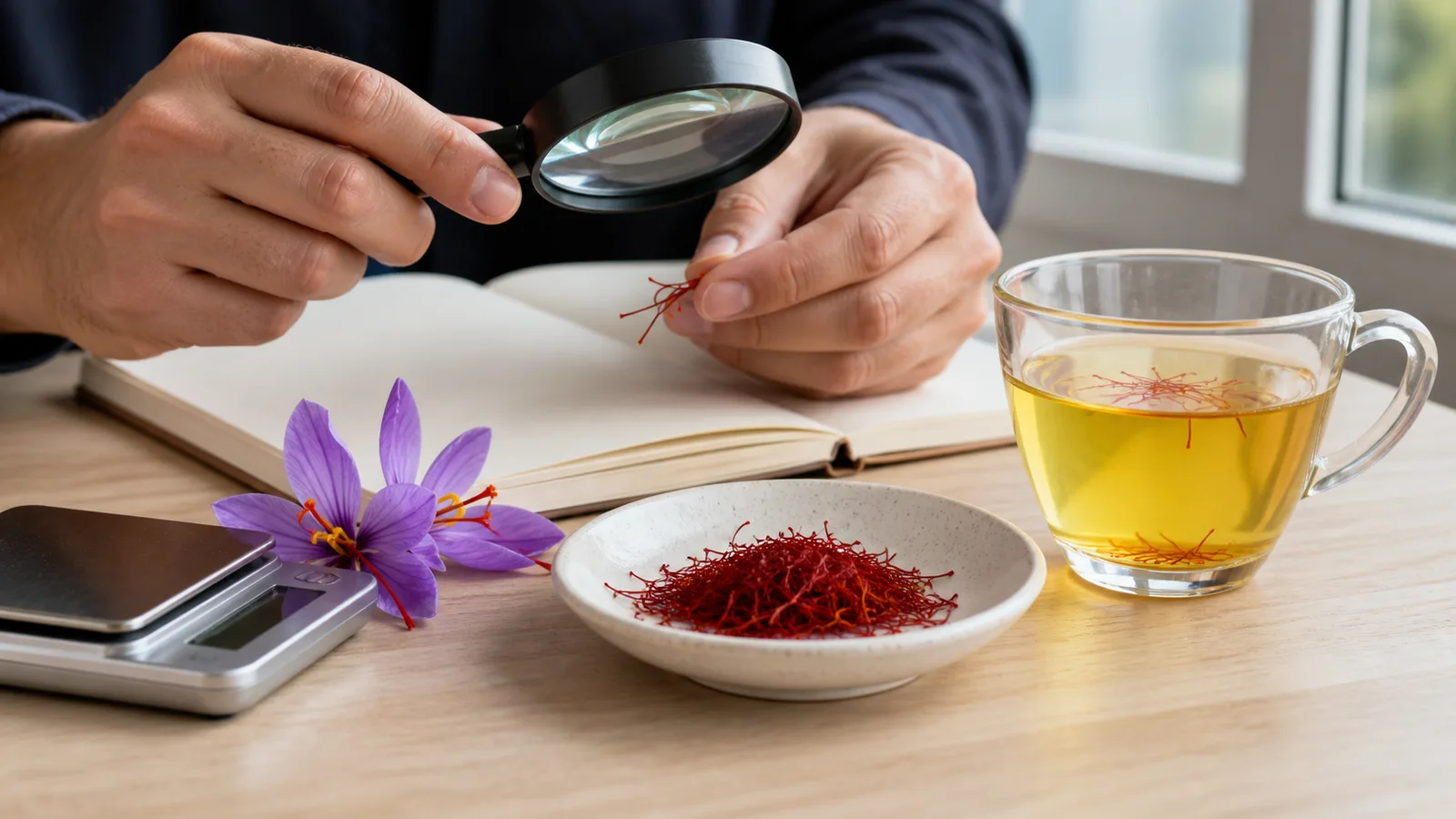
Saffron contributes three related qualities: a golden colour, a gently bitter taste and a distinctive aroma. Crocins are associated mainly with colour, picrocrocin with bitterness and safranal with much of the aroma. They do not all behave in exactly the same way during drying, storage and cooking.
This explains why very old saffron may still smell noticeable yet give weak colour, or why a vivid infusion does not automatically have a balanced flavour. A study comparing fresh and two-year-stored saffron found clear changes in its chemical profile over time, including lower crocins in the stored samples.
How much saffron should you use for flavoring?
Start with a modest amount. For four servings of rice, soup, stew or sauce, 1/8 to 1/4 teaspoon of loosely packed threads is usually enough. A cake, custard or larger pot may need 1/4 to 1/2 teaspoon, depending on its volume and the strength of the batch.
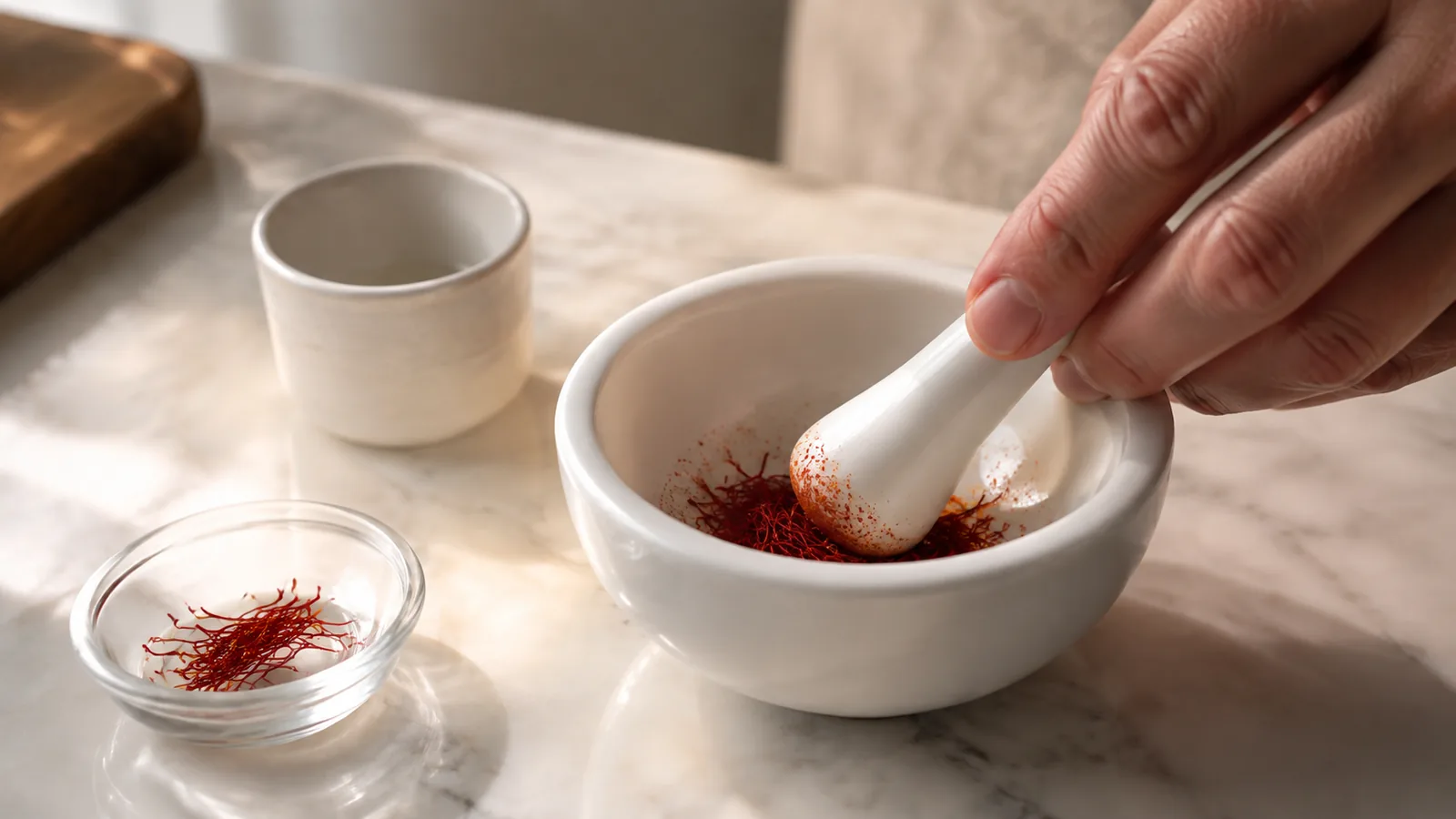
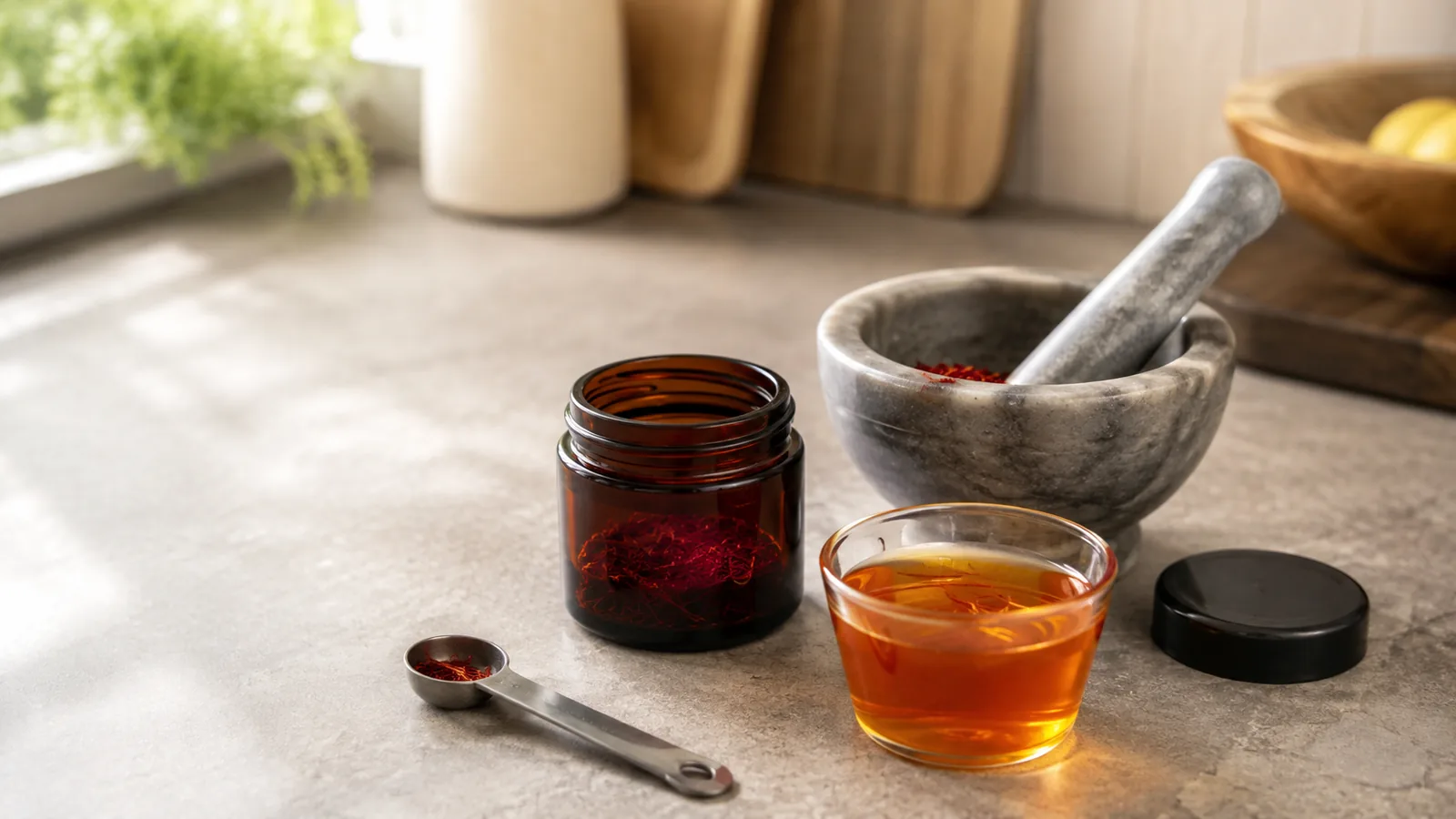
Grind only the portion you are about to use. A small mortar works well; adding a pinch of sugar or coarse salt gives the threads traction when either ingredient already belongs in the recipe. Stop when the saffron is a fine, uneven powder rather than grinding it for several minutes.
These are starting points, not a potency guarantee. Saffron varies with age, moisture, cut and storage history. Use the lower amount in a delicately flavoured dish, taste after it has dispersed and increase the next batch if necessary. Too much can make food bitter and medicinal rather than more aromatic.
How to brew saffron in hot water
- Place the freshly ground saffron in a small heatproof cup.
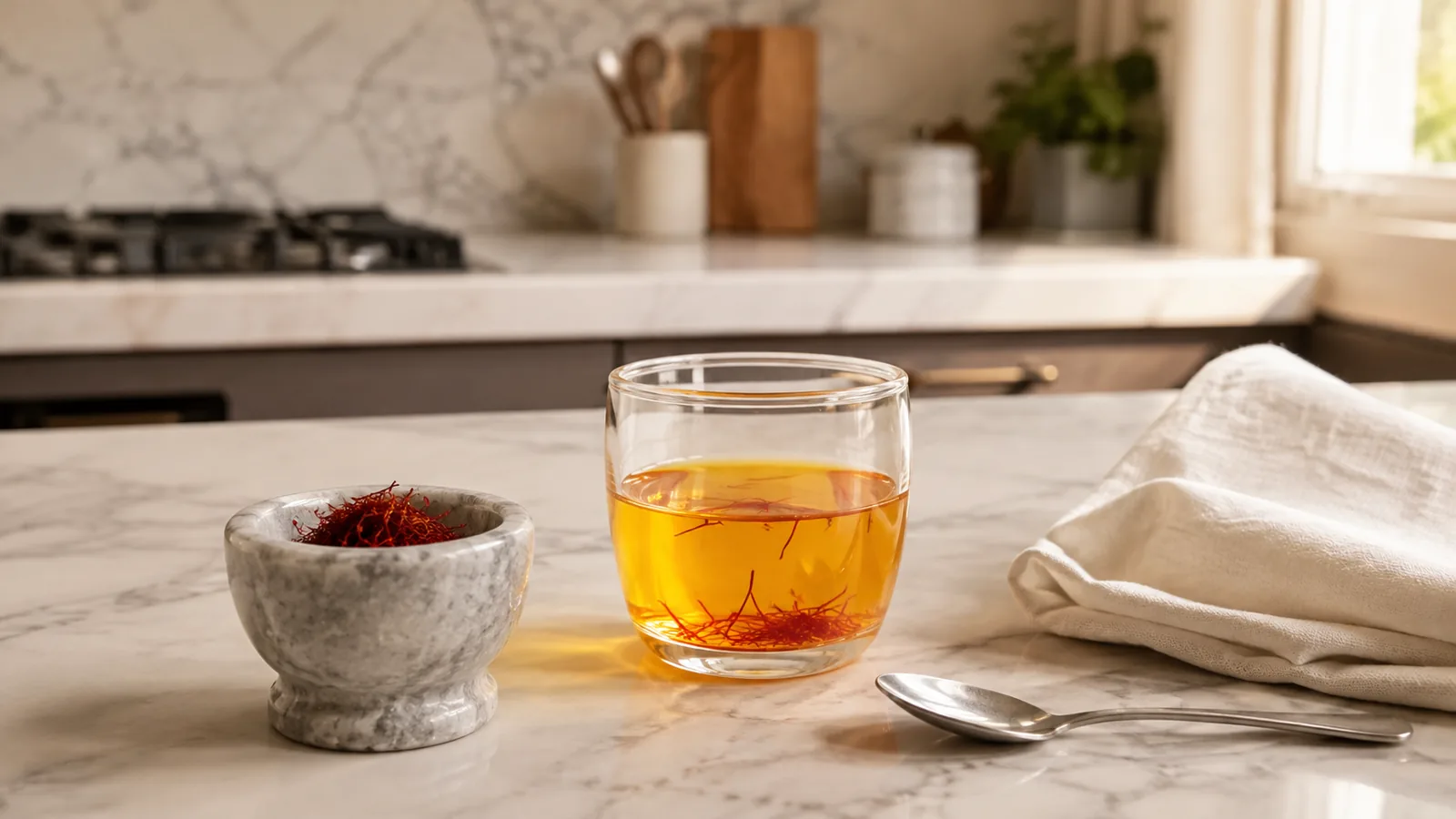
- Add 2–3 tablespoons of hot water for each 1/4 teaspoon of threads. The water can be just off the boil; there is no need to boil the saffron itself.
- Cover the cup so the aroma is not carried away with the steam.
- Leave it for 10–15 minutes, until the water is deeply coloured and fragrant.
- Add the entire brewed saffron, including the fine particles, to the dish.
Indirect heat over a kettle or tea maker is unnecessary. Warm water and a covered rest provide a simple, repeatable saffron flavoring method without holding the infusion hot for a long time. If the food itself cooks for hours, add most of the infusion nearer the end so prolonged heat does not flatten the aroma.
Can you brew saffron with milk?
Yes. Hot milk is useful when saffron is going into a custard, pudding, ice cream, bread or warm drink. Grind the threads, stir them into 2–3 tablespoons of hot milk, cover for 10 minutes and add the infusion to the recipe. Milk does not become clear, so judge the result by aroma and an even golden tint rather than expecting the vivid transparency of a water infusion.
Use milk taken from the recipe’s measured liquid so the ratio does not change. Cool the infusion before adding it to whipped eggs or yeast dough. For dishes that do not contain dairy, water is the more neutral choice.
Does the ice-cube method make saffron stronger?
Ice can extract saffron as it melts, but there is no good reason to promise that it always creates stronger colour or flavour than a careful warm infusion. It is slower and harder to reproduce because cube size and room temperature vary.
To try it, sprinkle the ground saffron over one small ice cube in a covered cup and let it melt completely at room temperature. Do not put the icy cup over a kettle or direct heat; that defeats the point of a cold extraction and risks thermal shock in ordinary glass. Compare equal weights of saffron and equal liquid volumes if you want to decide which method suits your batch.
When to add brewed saffron to food
Rice and grains
Mix the infusion with a small portion of cooked rice, then use that golden rice as a top layer. This gives clear colour contrast without stirring and breaking every grain. The same approach is used in our saffron rice with barberries.
Soups, stews and sauces
Add part of the infusion during cooking so it disperses, then reserve a small amount for the final 10–15 minutes. Taste before adding more. Strong stock, tomato, chilli and heavy spices can obscure saffron, while a simple broth or cream sauce exposes it clearly.
Bread, cake and pastry
Add a cooled infusion with the measured wet ingredients. Keep its volume small so it does not alter the dough or batter. The finished infusion can also be brushed very lightly over a warm bake, as long as the surface is meant to absorb liquid; the method is illustrated in the site’s saffron cake recipe.
Milk desserts and frozen desserts
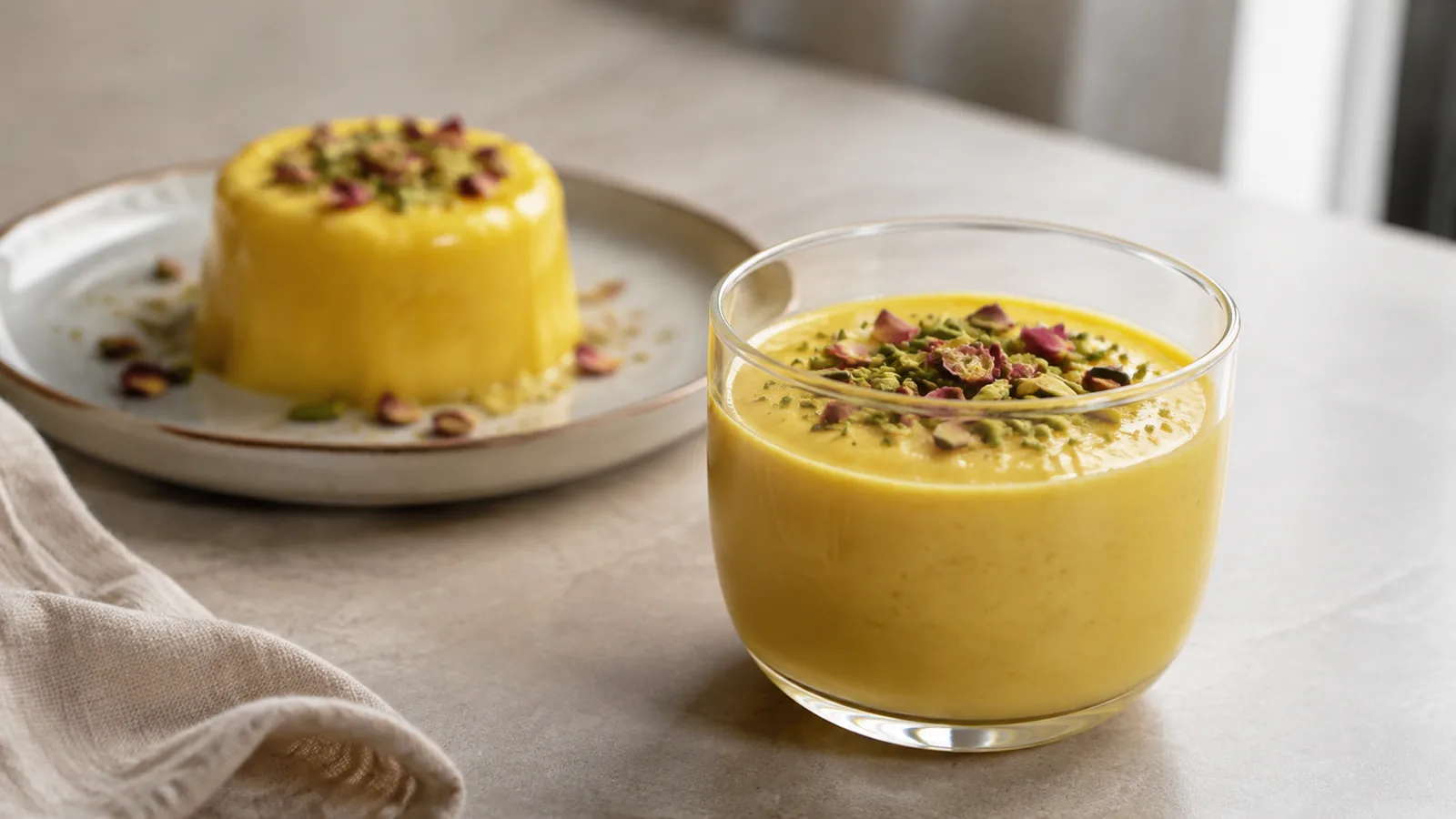
Infuse saffron in the milk or cream, then give it time to spread before deciding the colour is too pale. For ice cream, chill the base properly before churning. Saffron pairs naturally with restrained amounts of rose water, cardamom, vanilla, pistachio, almond and citrus, but several strong aromatics at once can make it difficult to taste.
How to store dry saffron
When storing saffron, keep the dry threads in a small, airtight, food-safe container in a cool, dry, dark cupboard. A clean glass jar with a sound seal is practical because it does not retain aromas; an opaque food-grade metal tin can also work. The seal and the storage conditions matter more than declaring that every plastic or wooden container is harmful.
The current ISO 3632-1:2025 saffron specification includes recommendations for storage and transport. At home, the useful principles are straightforward:
- choose a container only slightly larger than the amount of saffron;
- close it immediately after measuring;
- keep it away from a cooker, kettle, sunny shelf and steamy cupboard;
- use a completely dry spoon or clean dry fingers;
- store threads rather than pre-grinding the entire supply;
- label the jar with its purchase or harvest date and origin information.
If you buy in bulk, divide it into several small sealed containers and open one at a time. This reduces the number of humidity and air cycles reaching the rest. Retain any lot number or test certificate separately so repacking at home does not erase traceability.
Should dry saffron go in the refrigerator?
Usually, no. A stable dark cupboard is easier to manage. A cold jar can collect condensation when opened in a warm, humid kitchen, and repeatedly moving it in and out creates more risk than it solves.
If local heat makes cool storage impossible and you choose refrigeration, use a genuinely moisture-tight container in small portions. Let a sealed portion reach room temperature before opening it, then close it promptly. Do not keep the jar in the refrigerator door, where temperature changes are greatest.
Can you freeze saffron?
You can freeze both dry and brewed saffron, but the reasons are different. Freezing dry threads is generally unnecessary for a normal household quantity. If it is the only practical way to protect a large supply from prolonged heat and humidity, divide the threads into moisture-tight portions and thaw each portion while still sealed.
Brewed saffron is well suited to freezing. Pour a freshly cooled infusion into a clean ice-cube tray or small covered moulds, using one recipe-sized measure per compartment. Once solid, transfer the portions to a labelled freezer container. Use one portion at a time so the rest never needs to thaw.
For quality, use frozen brewed saffron within about three months. Add a cube directly to a hot soup or stew, or thaw it in the refrigerator for a cold preparation. Avoid thawing and refreezing the same portion; repeated handling adds temperature and contamination cycles and steadily weakens the aroma.
How long does brewed saffron keep?
A water or milk infusion is perishable in a way that dry threads are not. Refrigerate it promptly in a clean covered container and use it within three to four days. The former suggestion of keeping brewed saffron for two weeks was too long for a general home-storage rule, especially when the cleanliness and refrigerator temperature are unknown.
Make only what you need for a few days, or freeze the rest immediately in measured portions. Discard an infusion that has an unusual smell, visible growth, gas, a leaking container or an unknown time at room temperature. Colour alone is not a safety test.
What to do if dry saffron becomes damp
Do not assume that gentle oven drying restores it. Heat may remove water, but it does not reverse chemical changes or make contaminated material safe. If the threads show mould, clumping with an off smell or signs of pests, discard them and inspect the storage container and cupboard.
If a sealed jar merely feels cold and you suspect condensation, leave it closed until it reaches room temperature before assessing it. For a valuable commercial lot, isolate it and ask the supplier or a qualified laboratory to measure moisture and check quality rather than attempting a kitchen repair.
A simple routine for better saffron flavour
Keep the dry threads sealed and dark, measure before grinding, brew only the amount you need, and choose water or milk to match the dish. Add the infusion where it can disperse without spending hours over high heat. Refrigerate a small leftover infusion for no more than a few days, or freeze it in labelled portions.
This routine answers both sides of the problem: how to preserve saffron and how to make it noticeable in food. Freshness cannot be recovered after poor storage, but careful handling helps the saffron you already have deliver its colour, aroma and flavour consistently.