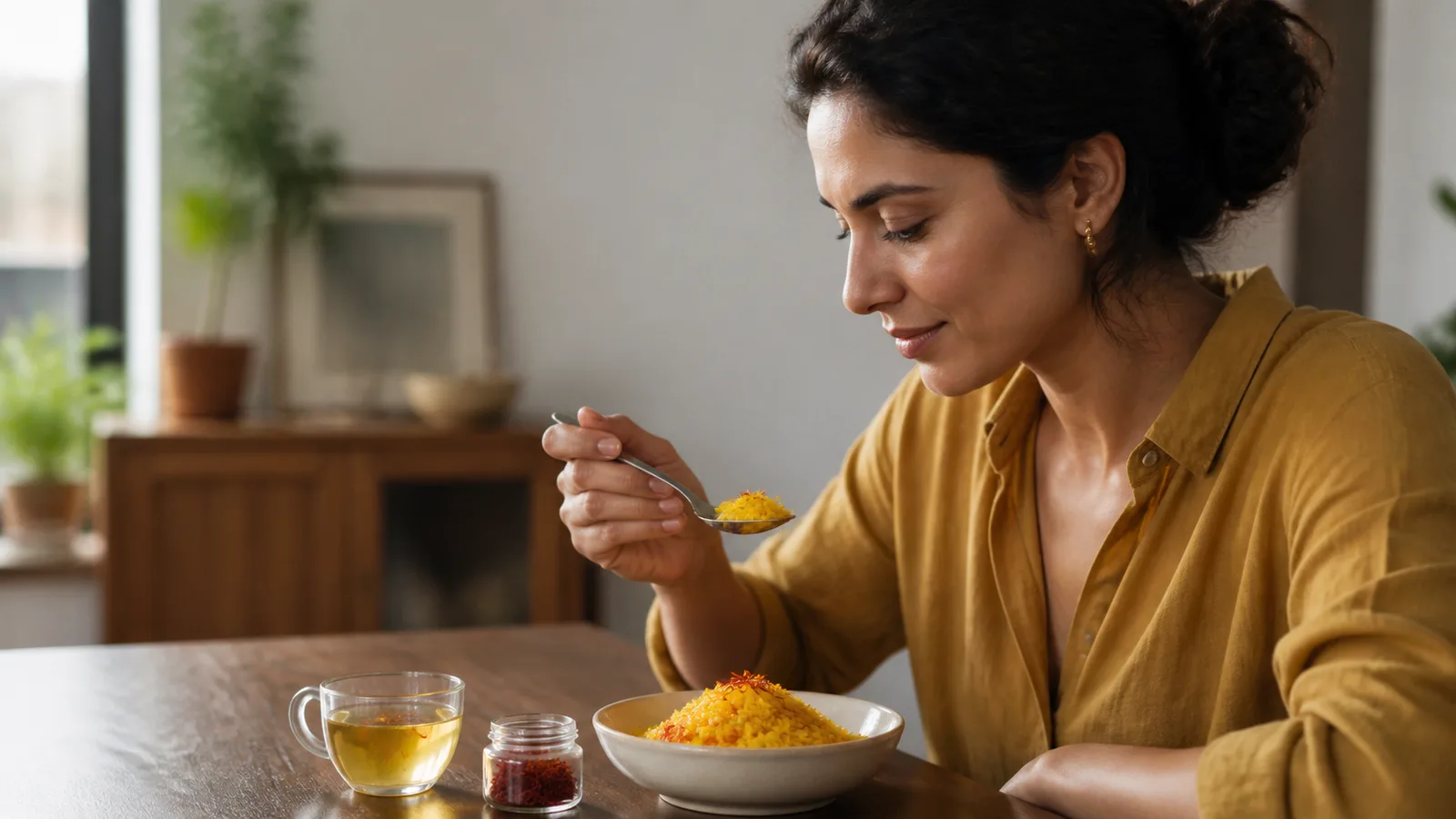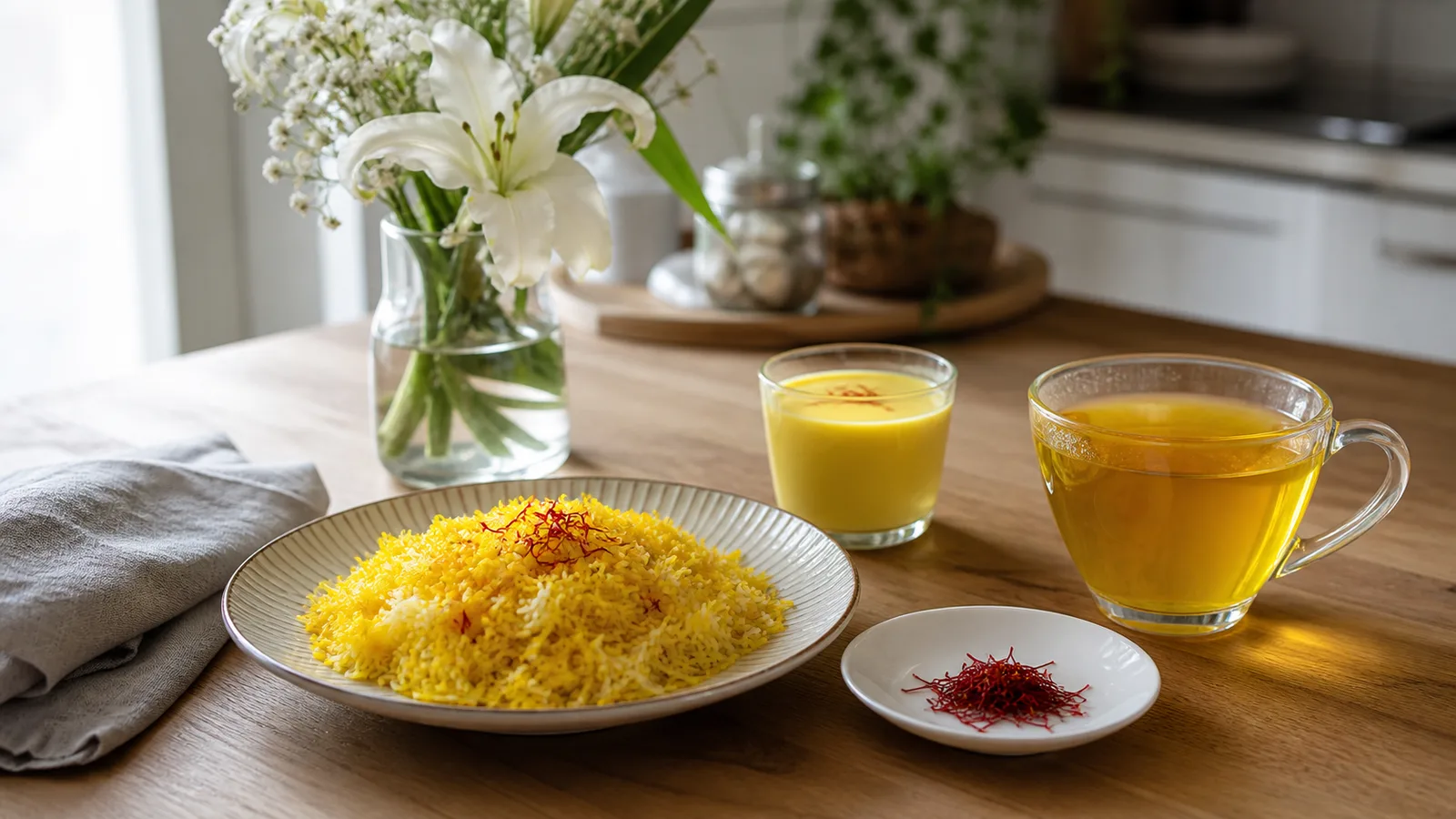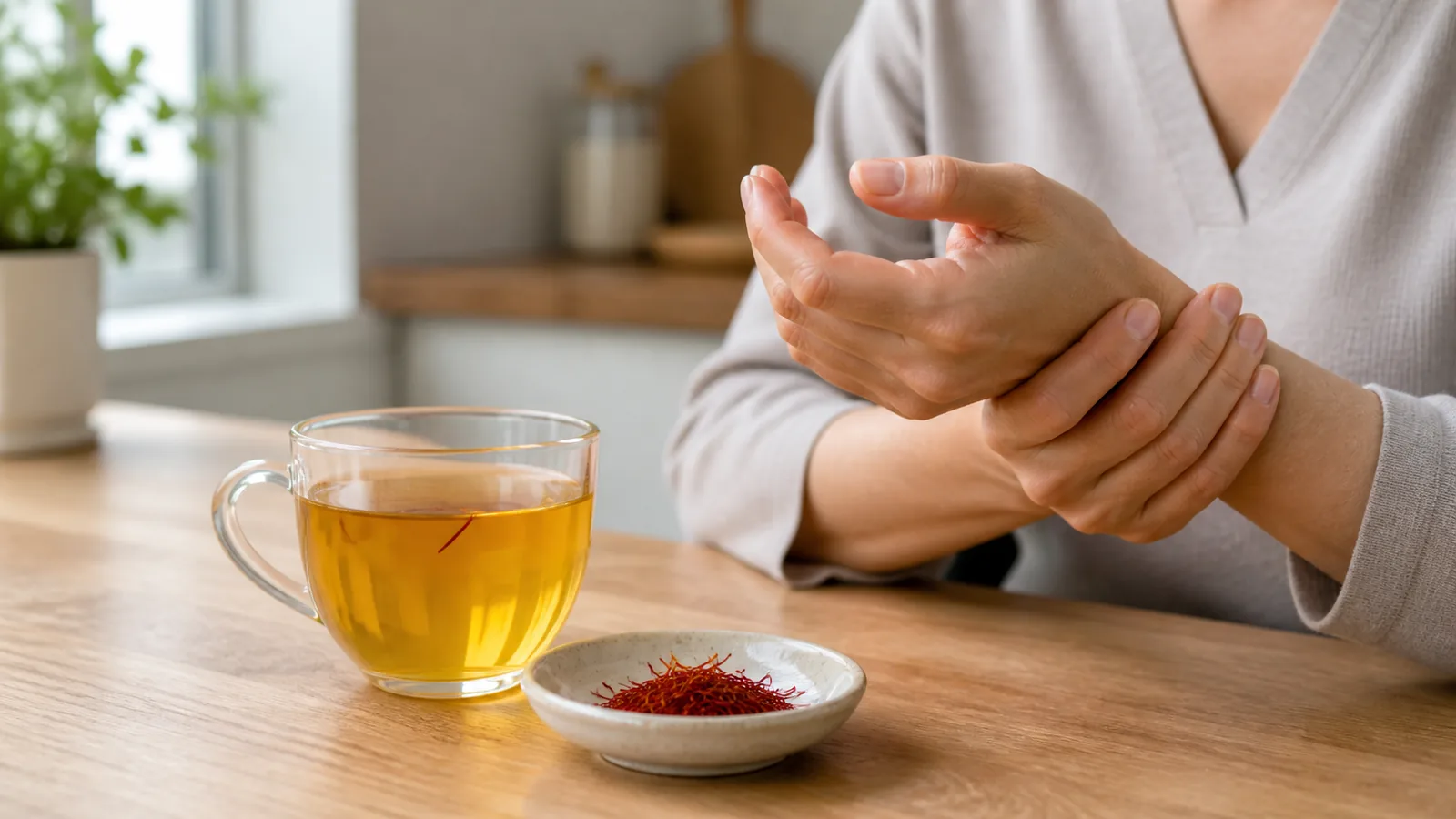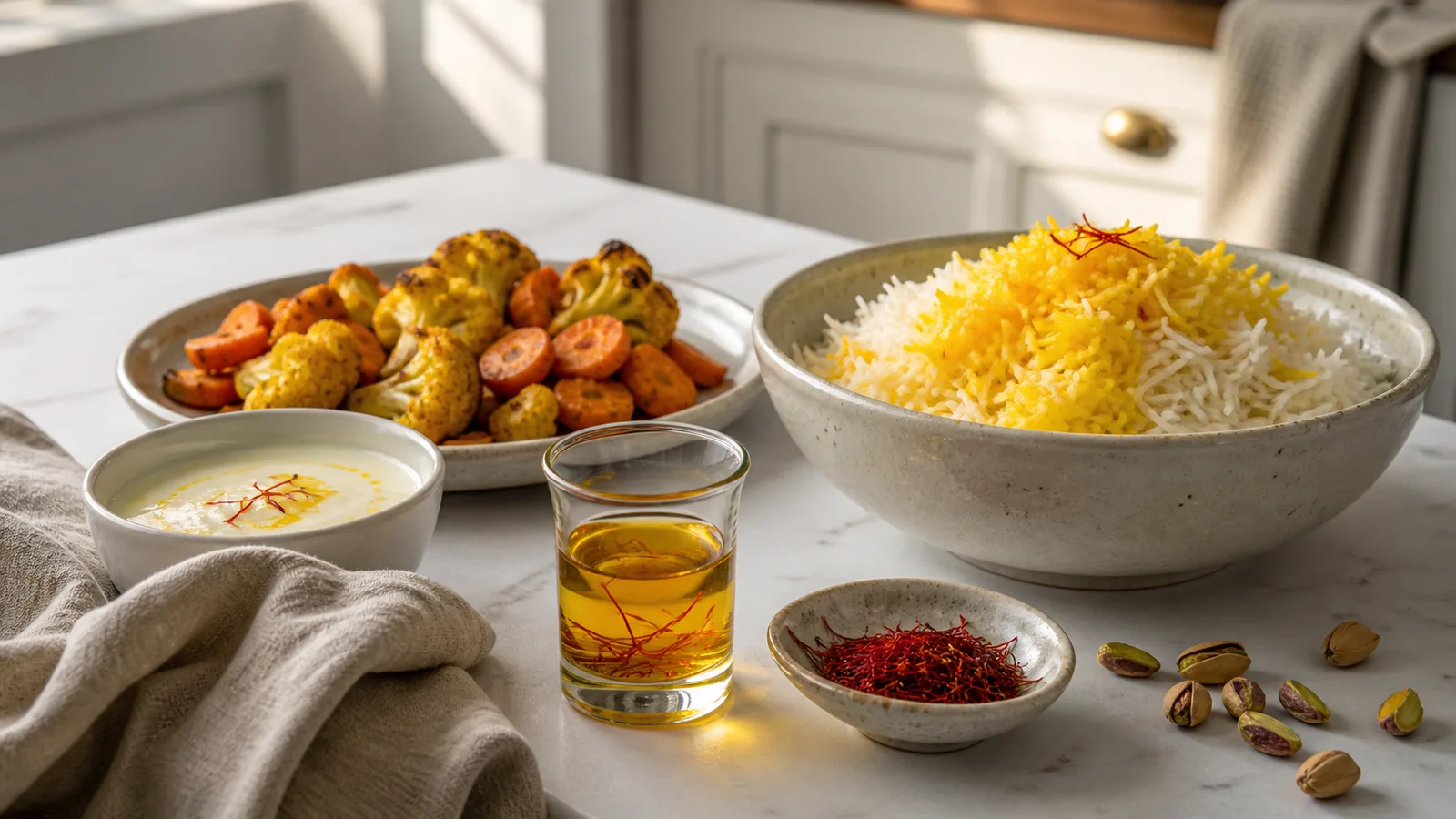
Saffron in food gives a meal a distinctive aroma, a gently bitter edge, and a vibrant yellow-gold color. Those are its clearest benefits. Saffron also contains compounds studied in human health research, but a dish seasoned with a few threads is not equivalent to a standardized extract or capsule.
If you are wondering what saffron is good for, start with its real culinary strengths. Then treat any health claim separately: ask what product was tested, in whom, for how long, and against what comparison.
What does saffron do to food?
Saffron changes food in three connected ways:
- Aroma: warm, floral, hay-like, and slightly earthy notes develop as saffron blooms.
- Flavor: a small amount adds complexity and a restrained bitterness; too much becomes harsh.
- Color: crocin dissolves into the cooking liquid and produces a gradual golden tone.
It works best when it supports the main ingredients rather than overwhelms them. Saffron uses in food range from rice and soups to fish, chicken, vegetables, yogurt, milk, tea, and restrained desserts.
10 benefits and uses of saffron in food
1. It gives rice an even golden color
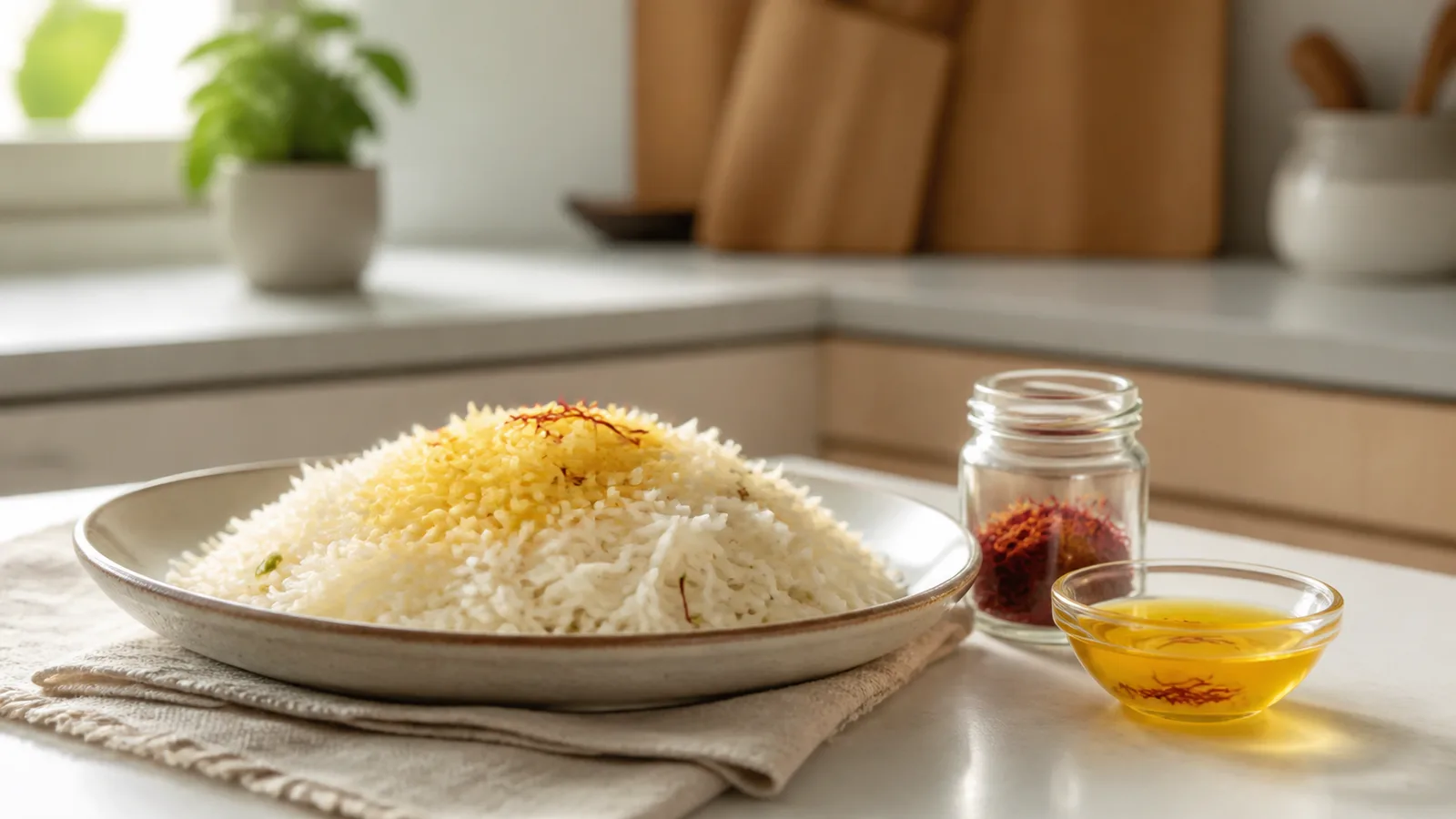
Bloomed saffron can be folded through all the rice or mixed into a small portion for a contrasting golden layer. This is one of the most practical uses of saffron in food because the infused liquid distributes more evenly than dry threads.
2. It adds aroma without relying on heat
Saffron is aromatic, not spicy-hot. It brings depth to delicately seasoned food without adding chile heat or a heavy sauce. Its fragrance suits basmati rice, mild broths, seafood, chicken, cauliflower, squash, and potatoes.
3. It makes simple ingredients feel complete
A modest infusion can turn rice, lentils, milk, or yogurt into a more memorable dish. That sensory pleasure is a legitimate food benefit. Enjoying a varied meal is different from claiming that the spice treats a disease.
4. It works in savory and sweet cooking
Saffron foods are not limited to one cuisine. The spice appears in traditional Persian rice, Spanish paella, Italian risotto, Indian and Central Asian sweets, French seafood dishes, and drinks across the Middle East and South Asia. Use these traditions as a guide rather than mixing every compatible flavor at once.
5. It contains well-studied plant compounds
Crocin, crocetin, safranal, picrocrocin, and other constituents are studied for antioxidant activity and pathways involving inflammation. They can neutralize free radicals in laboratory systems, but this does not prove that saffron meals protect the stomach lining, slow aging, or prevent chronic disease.
6. Saffron research includes mood outcomes
Randomized trials of defined saffron preparations have reported promising results for depression, anxiety, and mood symptoms. Those studies do not show that saffron in food releases “feel-good hormones,” reduces cortisol, or works as an antidepressant. A culinary amount may make a meal enjoyable, but it is not a treatment dose.
7. Researchers have examined cognition
Small trials have explored saffron preparations in mild cognitive impairment and Alzheimer’s disease. Evidence remains too limited for clinical recommendations. Adding saffron to food has not been shown to improve memory, prevent cognitive decline, shield brain cells, or guarantee mental clarity.
8. Some studies concern PMS and appetite
Selected supplements have been studied for premenstrual symptoms and appetite-related outcomes. That does not establish that saffron meals balance hormones, improve fertility, stop menstrual cramps, increase satiety, reduce calories, boost metabolism, suppress appetite, or cause sustainable weight loss. Product, dose, population, and total diet matter.
9. Cardiometabolic markers are research topics
Meta-analyses have evaluated blood pressure, cholesterol, blood sugar, and other risk markers after supplementation. Findings do not make saffron food a heart treatment, protect arteries, boost circulation, or substitute for medical care. There is no basis for saying a saffron dish improves oxygen distribution or energy, speeds exercise recovery, or prevents heart disease.
10. It encourages careful, low-quantity seasoning
Because saffron is potent and expensive, cooks learn to extract flavor from a small amount. Blooming the threads and tasting as you go provides more control than adding a large pinch. This habit improves the dish and avoids needless waste.
How to use saffron in cooking
For a family-size dish, start with a small pinch of genuine threads. The right amount depends on the recipe, thread quality, and whether saffron should be a background note or the main aroma.
- Gently crush the threads with clean, dry fingers or a mortar.
- Cover them with a few tablespoons of warm water, milk, or stock.
- Leave the infusion for 10 to 15 minutes.
- Add it while enough cooking time remains for the aroma to integrate.
- Taste before adding more.
Warm liquid is reliable; it does not need to be violently boiling. If a long-cooked dish uses high heat, reserve part of the infusion for later so the aroma stays noticeable.
Good pairings for saffron
Saffron pairs best with ingredients that leave room for its aroma:
- basmati or short-grain rice;
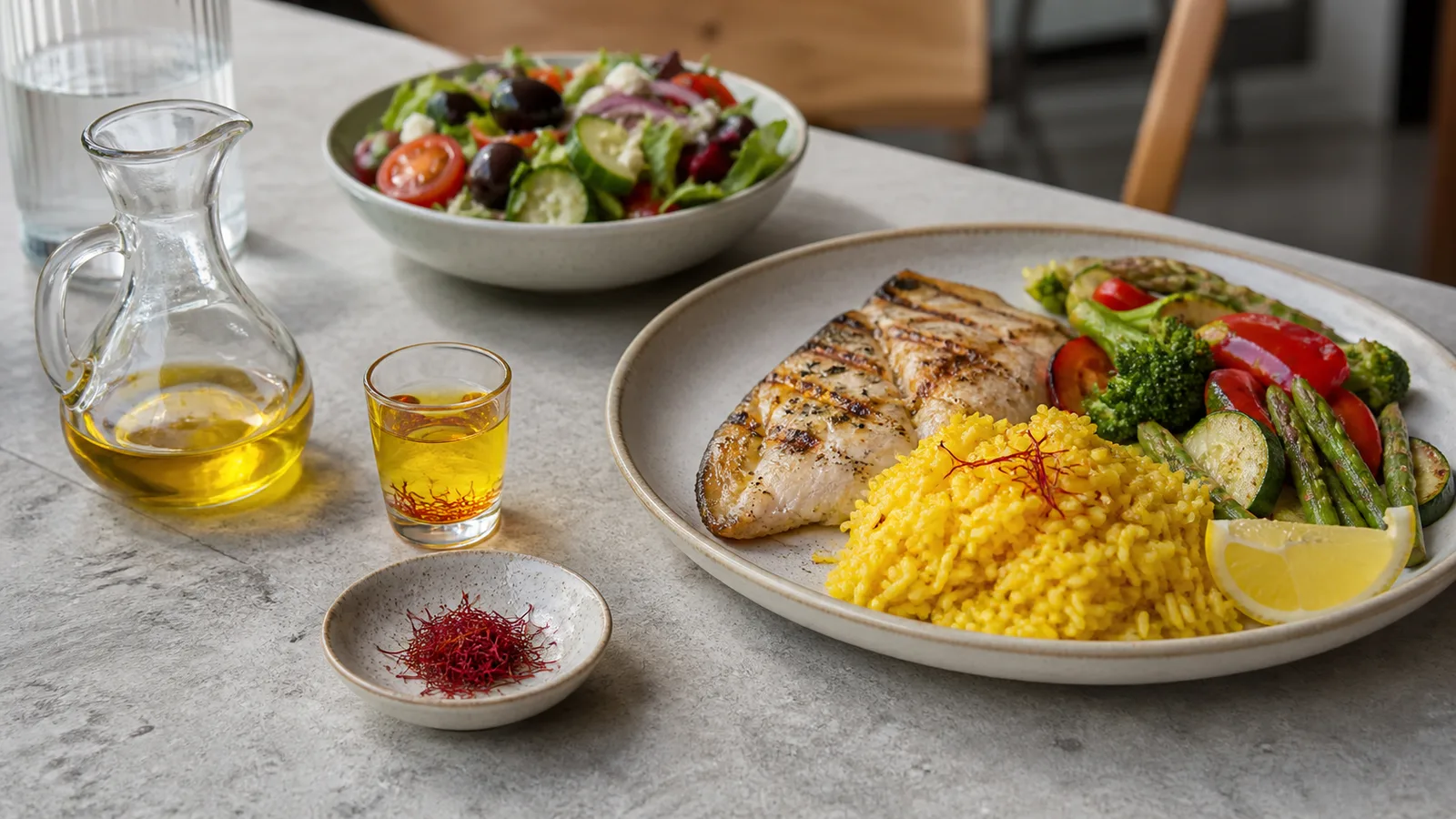
- chicken, white fish, shellfish, and mild stock;
- onion, garlic, leek, and fennel;
- cauliflower, squash, carrots, and potatoes;
- yogurt, milk, cream, and butter;
- almonds, pistachios, and cashews;
- citrus peel, rosewater in moderation, cardamom, and cinnamon; and
- pear, apple, and restrained honey.
Avoid crowding it with many strong spices. When saffron is the feature, choose one or two supporting flavors and keep the rest simple.
Does eating saffron improve digestion or gut health?
There is not enough evidence to say that regular saffron consumption prevents digestive issues, protects the stomach lining, or improves gut health. Some people tolerate culinary saffron well; concentrated products may cause nausea or digestive upset.
Persistent bloating, pain, reflux, bleeding, unexplained weight loss, or a change in bowel habits needs appropriate medical evaluation. A pleasant saffron rice or soup can be part of a meal, but it is not a gastrointestinal treatment.
Does saffron in food prevent cancer?
No. Cell and animal studies explore saffron constituents and oxidative stress, including effects on cancer cells. They do not establish cancer prevention, show that eating saffron reduces cancer risk, or prove that it improves the effect of cancer treatment. No one should add a supplement during cancer care without asking the oncology team about interactions and product safety.
Culinary saffron versus a supplement
A meal normally uses a small, variable amount shared among several people. A trial may use a measured stigma powder or standardized extract every day. Those exposures cannot be treated as equivalent.
If you are considering a supplement, look for the plant part, amount, standardization, batch, manufacturer, and credible independent testing. Speak to a clinician or pharmacist if you are pregnant or breastfeeding, preparing for surgery, have a bleeding disorder or low blood pressure, or use medicine for mood, sleep, blood pressure, blood sugar, or clotting.
A 2026 systematic review found that medicinal saffron was generally tolerated in trials but adverse effects occurred, most often gastrointestinal problems. “Natural” does not mean interaction-free.
Buying and storing saffron for food
Whole red threads are easier to inspect than loose powder. Avoid a product that smells sugary or artificial, releases all of its color instantly, or contains obvious yellow stamens and unrelated plant material. Price alone cannot prove quality; traceability and credible testing are more useful.
Keep saffron airtight, dry, and protected from heat and light. Grind only what you need. Proper storage protects aroma and makes the small amount used in each meal worthwhile.
The balanced answer
The most defensible benefits of eating saffron are culinary: color, aroma, flavor, versatility, and the pleasure of a carefully made dish. Health research on saffron is real, but much of it concerns defined supplements rather than food. Enjoy saffron in meals for what it genuinely does, and evaluate medical claims with product-specific human evidence.
Sources
- Evidence map and review of saffron health-outcome meta-analyses
- 2026 GRADE-assessed meta-analysis of saffron and mood outcomes
- Systematic review of saffron for mild cognitive impairment and dementia
- Systematic review and meta-analysis of cardiovascular risk markers
- 2026 systematic review of saffron adverse events