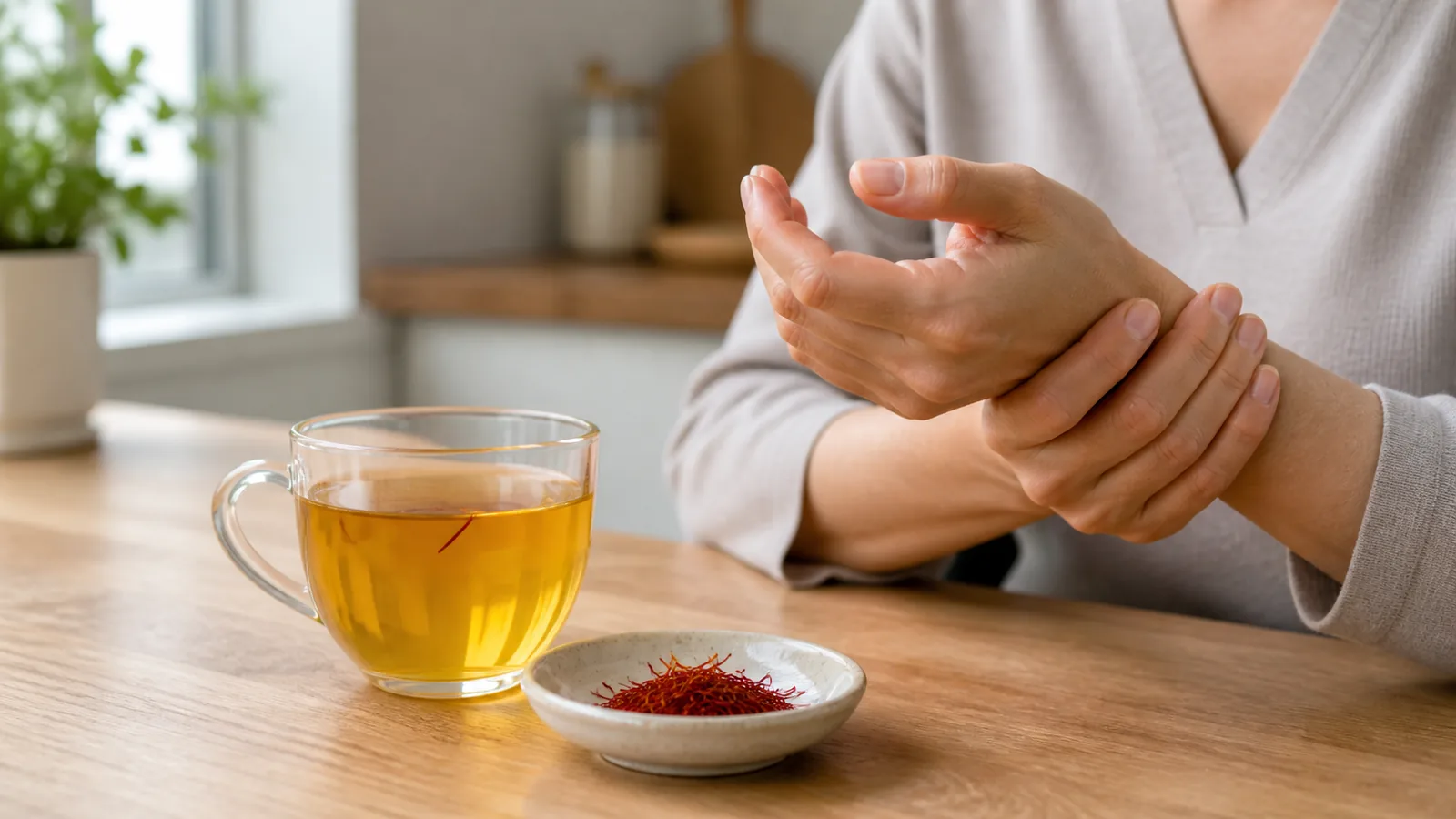
Saffron has been studied in a small number of randomized trials involving people with mild cognitive impairment or Alzheimer’s disease, but the evidence is not strong enough to recommend it as a treatment. It has not been proven to prevent, stop, reverse, or cure Alzheimer’s.
That distinction is easy to lose when a laboratory mechanism or a small trial becomes a social-media claim. This guide explains what researchers actually tested, what the results can and cannot tell us, and what families should consider before anyone uses a saffron supplement.
What research says about saffron and Alzheimer’s
A 2020 systematic review and meta-analysis found four randomized clinical trials of saffron for mild cognitive impairment or dementia. The studies reported favorable results on some cognitive scales compared with placebo, and some trials compared saffron with medicines such as donepezil or memantine.
The review’s conclusion was cautious: the evidence was too limited to support a recommendation for clinical use. Another systematic review found five trials with 325 participants and warned that the promising findings came from studies with potentially high risk of bias.
These limitations matter:
- only a few trials were available, with relatively small groups;
- study duration was short compared with the years-long course of Alzheimer’s disease;
- different saffron preparations and cognitive scales were used;
- a score change does not necessarily mean a person can live independently for longer; and
- short studies cannot establish long-term safety, disease modification, or prevention.
Did saffron perform as well as Alzheimer’s medicines?
Some small studies found no statistically significant difference between saffron and donepezil or memantine on selected cognitive measures. That does not prove that saffron is equivalent to either medicine. A trial may simply be too small to detect a difference, and it may not measure all the outcomes that matter.
Prescription medicines have defined formulations, approved indications, interaction information, and monitoring requirements. Current treatment also includes more than symptom medicines. In the United States, for example, lecanemab and donanemab are approved for selected people with early Alzheimer’s disease and require specialist assessment and monitoring.
Do not stop, replace, or combine treatment on the basis of a saffron headline. The clinician who knows the diagnosis, stage, medicines, test results, and other health conditions is the right person to evaluate an additional supplement.
Why crocin and antioxidant claims are not clinical proof
Saffron contains crocin, crocetin, safranal, picrocrocin, and many other constituents. Laboratory and animal research explores oxidative stress, inflammation, amyloid, cell signaling, and neuroprotection. These studies help researchers decide what to test next.
They do not show that antioxidants in saffron slow neurodegeneration in a person. Nor do they prove that saffron improves blood flow to the brain, regenerates neurons, removes plaques, or prevents cognitive decline. A biological possibility must survive well-designed human trials before it becomes care advice.
Saffron, rose petals, tea, and extracts are different
Posts and advertisements sometimes group saffron with rose petal extract and call both natural Alzheimer’s treatments. Traditional use can explain interest, but evidence about one ingredient cannot be transferred to another. A combined product adds another uncertainty because the contribution and interaction of each component must be tested.
The Alzheimer’s trials used defined oral preparations. A few threads in rice, saffron tea, a rose drink, and an unverified capsule are not interchangeable with those products. Culinary saffron can be enjoyed for flavor, aroma, and color, but it should not be described as a therapeutic dose.
Memory changes need a diagnosis
Forgetfulness does not automatically mean Alzheimer’s disease. Sleep problems, depression, medication effects, infection, thyroid or vitamin disorders, stroke, and other conditions can affect memory or thinking. Some causes may be treatable.
According to the U.S. National Institute on Aging, an assessment may include a health and medication history, questions about daily function and behavior, cognitive testing, laboratory tests, imaging, and sometimes biomarkers. A blood test alone should not be used to diagnose dementia.
Seek an evaluation when memory or thinking changes interfere with daily life, repeat or worsen, create driving or financial risks, or are noticed by people close to the person. Sudden confusion, new weakness, speech difficulty, severe headache, or abrupt behavior change needs urgent medical attention.
Why early, accurate diagnosis matters
Early, professional diagnosis does not guarantee that severe symptoms can be delayed or that quality of life will improve, as the old version of this page suggested. It can, however, identify other causes, clarify treatment options, provide access to appropriate trials, and give the person and family more time to plan.
A complete plan may address:
- medicines appropriate to the diagnosis and stage;
- hearing, vision, sleep, mood, pain, and other conditions that affect function;
- physical activity, nutrition, social contact, and meaningful routines;
- home, driving, medication, and financial safety;
- legal and care preferences while the person can participate; and
- support and respite for family caregivers.
No spice can replace this comprehensive care. Lifestyle support can be useful, but it must be tailored to the person rather than presented as a cure.
Safety of saffron supplements in older adults
A 2026 systematic review found saffron was generally tolerated in clinical studies, but adverse effects occurred, most often gastrointestinal problems. Reported concerns include nausea, digestive upset, headache, dizziness, dry mouth, allergy, and effects relevant to blood pressure or bleeding.
Older adults may be more vulnerable to dizziness, falls, appetite changes, and drug interactions. Memory problems can also make dosing errors more likely. Before using a concentrated product, give the doctor or pharmacist the exact label and ask about:
- blood-pressure, diabetes, blood-thinning, sleep, mood, and memory medicines;
- kidney or liver disease;
- planned surgery;
- duplicate ingredients in other supplements; and
- who will store and administer the product safely.
Choose only a product that identifies the plant part, amount, standardization, manufacturer, batch, and credible independent testing. “Brain health,” “memory care,” and “natural remedy” on a label are marketing phrases, not proof.
Can culinary saffron still have a place?
Yes. Food can support pleasure, cultural connection, appetite, and shared routine. Bloom a few genuine threads in warm water and add them to rice, soup, vegetables, yogurt, or milk if the person enjoys the flavor and can eat the dish safely.
Those everyday benefits are worthwhile without calling the meal a treatment. If swallowing, weight loss, appetite, or food safety is a concern, ask the care team for advice suited to the person.
The responsible conclusion
Saffron and Alzheimer’s research is interesting but not decisive. Small trials justify better research; they do not justify a cure claim, a prevention promise, or replacing established care. Treat any supplement as a product-specific medical decision and keep diagnosis, safety, daily function, and the person’s own priorities at the center.
Sources
- Systematic review and meta-analysis of saffron for mild cognitive impairment and dementia
- Systematic review of randomized trials concerning saffron and cognitive function
- Systematic review of saffron in neurological and psychiatric disorders
- 2026 systematic review of saffron adverse events
- National Institute on Aging: how Alzheimer’s disease is diagnosed
- National Institute on Aging: how Alzheimer’s disease is treated