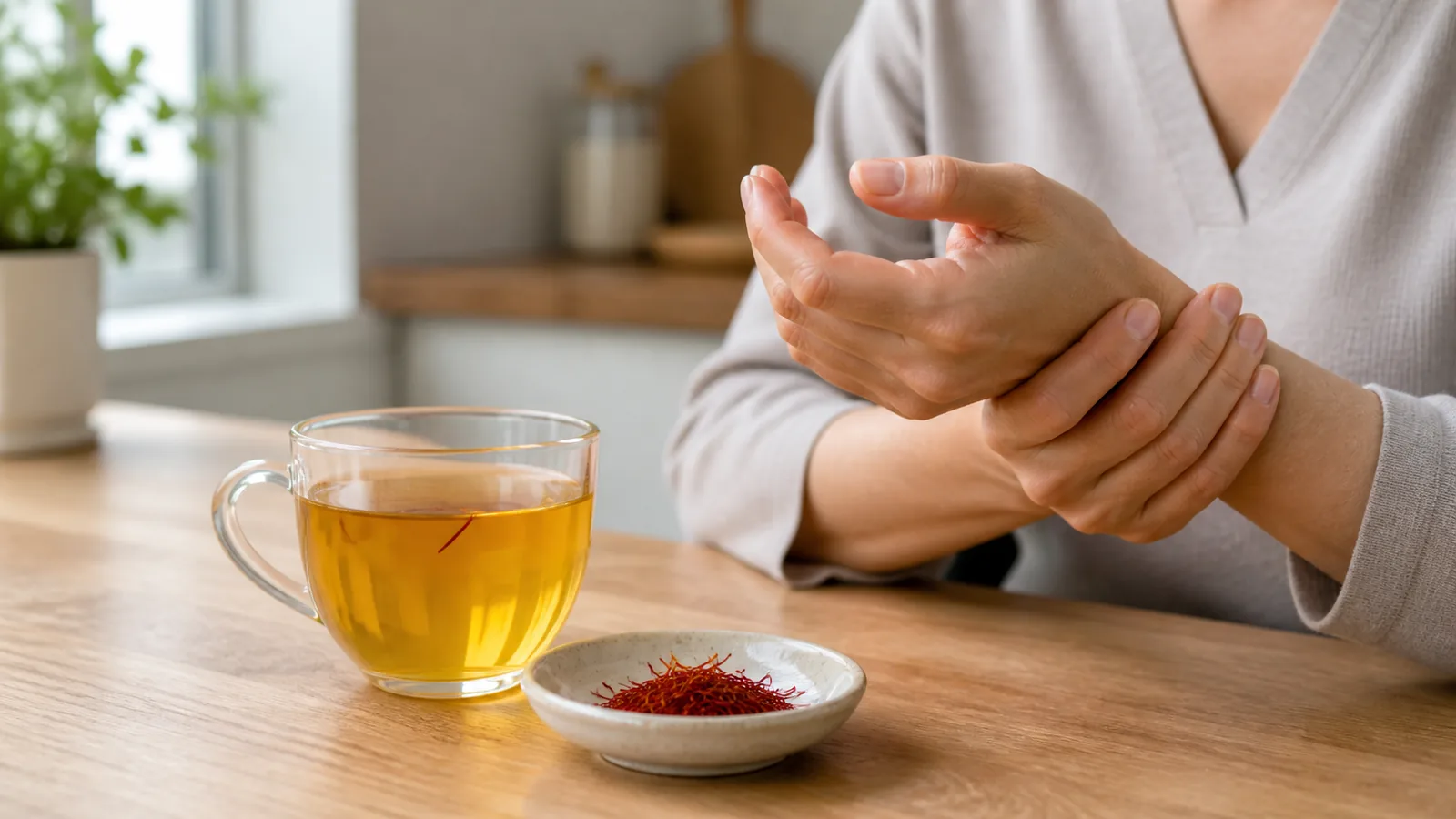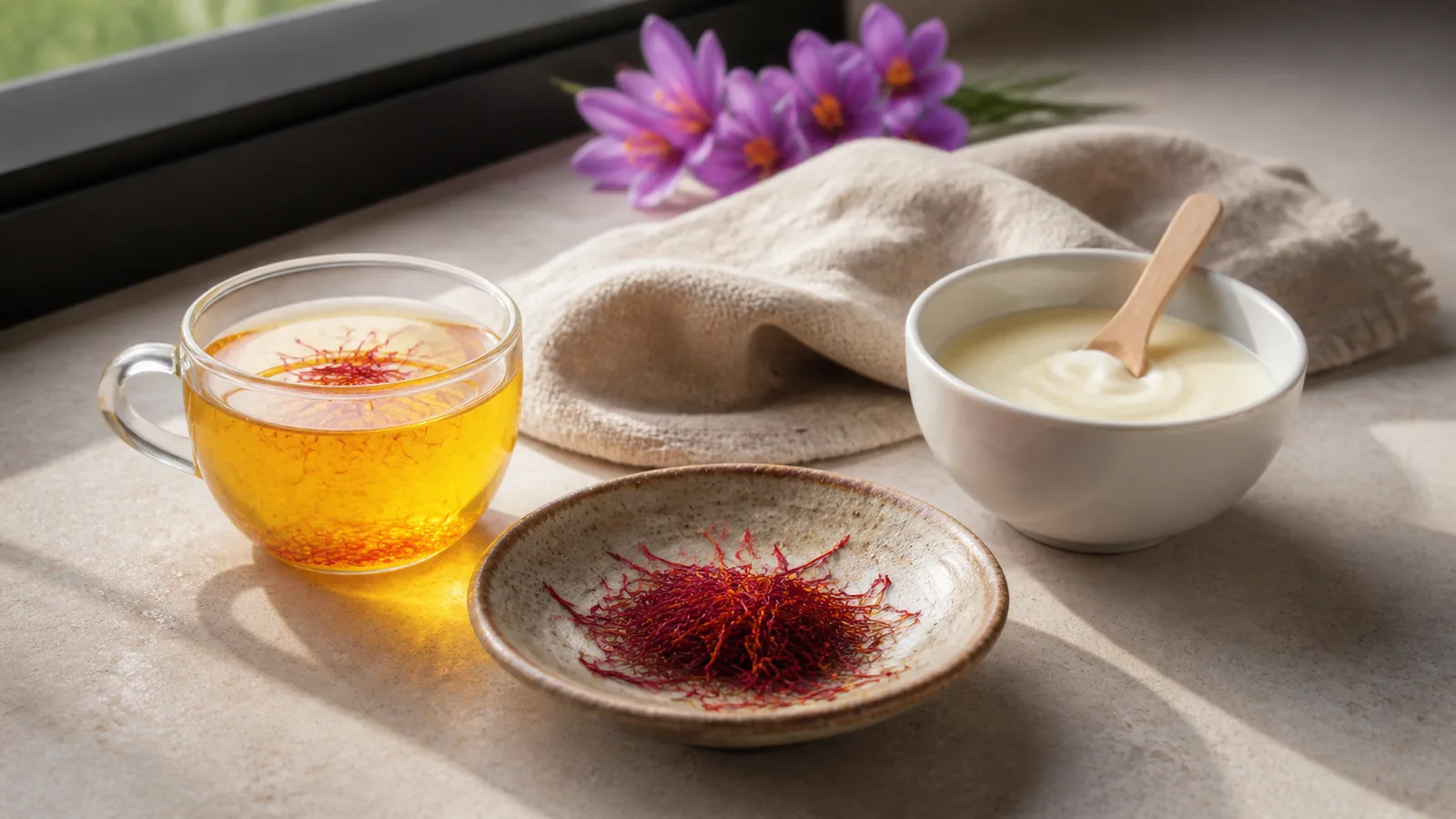
The best-supported saffron benefits for health and beauty are narrower than many online lists suggest. Human trials have examined defined saffron preparations for outcomes such as mood, sleep, and some metabolic measures. Culinary saffron also offers a distinctive aroma, color, and a pleasant way to make food feel special. Neither point proves that saffron treats every condition, “detoxifies” the body, or clears skin.
This guide separates practical uses from clinical research and traditional claims. That distinction matters: a standardized extract in a trial, a few threads in rice, and a homemade face mask are not equivalent products.
How to judge a saffron benefit
A useful health claim should identify four things: the exact saffron preparation, the people studied, the comparison group, and the outcome measured. Laboratory antioxidant activity can help researchers form a hypothesis, but it cannot show that eating saffron prevents disease. A short randomized trial can be informative, yet it may not establish long-term benefit or safety.
Keep this evidence ladder in mind:
- Established culinary effect: saffron contributes aroma, flavor, and yellow-gold color to food.
- Promising human evidence: several defined supplements or extracts have produced favorable results in selected groups.
- Unconfirmed mechanism: crocin, crocetin, safranal, and other constituents show biological activity, but a proposed pathway is not a treatment result.
- Traditional or marketing claim: history can explain why a use is popular; it does not confirm effectiveness.
Mood and mental wellbeing
Mood is one of the more extensively studied saffron topics. A 2026 GRADE-assessed systematic review included 34 randomized controlled trials concerning depression, anxiety, or mood disorders. Some defined preparations improved symptom scores compared with controls.
There are still important limits. Trials differ in extract, plant part, dose, duration, participants, and study quality. It is too definite to say that saffron triggers “happy hormones,” restores emotional balance, or works as a universal natural antidepressant. Culinary saffron and ordinary tea have not been shown to provide the exposure used in clinical trials.
The same evidence does not establish a general benefit for mental clarity or the nervous system. Although saffron contains trace nutrients, an ordinary serving is not a meaningful source of vitamin B6 and has not been shown to prevent muscle weakness or nerve damage.
Depression or persistent anxiety deserves proper assessment. Do not stop medication, combine a saffron supplement with psychiatric medicine, or substitute it for care without speaking to the prescriber or pharmacist. Our focused guide to saffron and depression explains the evidence and safety boundaries in more detail.
Sleep: promising evidence, not a guaranteed remedy
Randomized trials and systematic reviews have studied standardized saffron extracts for sleep quality. The results are promising, but studies use specific products and usually last only a few weeks. They do not establish that saffron milk cures insomnia or that every saffron capsule improves sleep.
If you enjoy it, a small culinary amount in warm milk can be part of a calming bedtime routine. The dim light, regular schedule, and pause from screens may matter as much as the drink. Ongoing insomnia, loud snoring, breathing pauses, severe daytime sleepiness, or a sudden change in sleep needs medical evaluation.
Circulation, metabolism, and heart-health claims
Meta-analyses have reported changes in some cardiovascular and metabolic risk markers after saffron supplementation. Results across blood pressure, blood sugar, cholesterol, body measurements, and inflammatory markers are not uniform, however, and a change in a marker is not proof that saffron prevents a heart attack, stroke, or diabetes complication.
Saffron should not be described as a circulation treatment, a metabolism booster, or a detox for the liver, kidneys, and bladder. Those organs already perform defined physiological functions. Anyone with cardiovascular disease, diabetes, kidney or liver disease should discuss concentrated supplements with a clinician, especially when taking medicine that affects blood pressure, glucose, or bleeding.
Digestion, breathing, bones, and cellular repair
The old version of this article said saffron relieves bloating, indigestion, stomach discomfort, cough, and asthma; strengthens bones; and supports cellular regeneration. Those conclusions are not established by strong clinical evidence.
- Digestion: saffron is used in many comfortable, digestible dishes, but it is not a treatment for persistent abdominal pain, bloating, reflux, or bowel symptoms.
- Respiratory symptoms: crocin’s laboratory activity does not prove that saffron opens airways or treats asthma. Breathing difficulty needs appropriate medical care.
- Bone health: culinary saffron is not a high-calcium food and has not been shown to prevent osteoporosis.
- Cell repair: saffron contains trace nutrients, but ordinary servings do not provide enough potassium or magnesium to justify a tissue-regeneration claim.
Reproductive health and menstrual symptoms
Saffron has a long history in discussions of sexuality and reproductive health. Human studies have investigated premenstrual symptoms, sexual function, and some fertility-related outcomes, but that is not evidence that saffron “balances hormones,” restores fertility, or benefits everyone.
Menstrual cramps, abnormal bleeding, difficulty conceiving, erectile dysfunction, or a change in sexual function can have many causes. Treating the underlying issue is more useful than relying on a broad vitality claim. A clinician should review any supplement alongside current medicines and reproductive plans.
What saffron can—and cannot—do for skin
Saffron’s vivid color and luxury reputation make it popular in beauty products. Some cosmetic formulations and laboratory studies explore antioxidant, pigment, or ultraviolet-related effects. Evidence for applying kitchen saffron to human skin is much thinner.
There is no good basis for promising that a saffron mask removes acne, dark spots, blemishes, eczema, or signs of aging. Acne and pigmentation have different causes, and a yellow stain can be mistaken for a change in skin tone. Honey, milk, fragrance, oils, and plant material can also irritate sensitive skin or trigger an allergy.
If you want to try a rinse-off cosmetic product:
- choose a properly formulated product with a complete ingredient list;
- patch-test it on a small area first;
- do not apply it to broken or inflamed skin;
- stop if burning, swelling, hives, or persistent redness occurs; and
- use proven basics—gentle cleansing, moisturizer, and broad-spectrum sunscreen—as the foundation of skin care.
See our evidence-aware guide to saffron health benefits for a broader look at product forms and research quality.
Antioxidants are not a shield against chronic disease
Crocin, crocetin, and safranal are widely studied saffron constituents. Experiments involving oxidative stress, inflammation, free radicals, or cancer cells are useful early research. They do not show that saffron prevents Alzheimer’s disease, cardiovascular disease, cancer, diabetes, or another chronic illness in people.
The same caution applies to immune claims. Saffron has not been established as an immune booster or a way to prevent infection. Sleep, vaccination where appropriate, varied food, physical activity, and evidence-based medical care have clearer roles in health than a spice marketed as a safeguard.
A practical way to use saffron
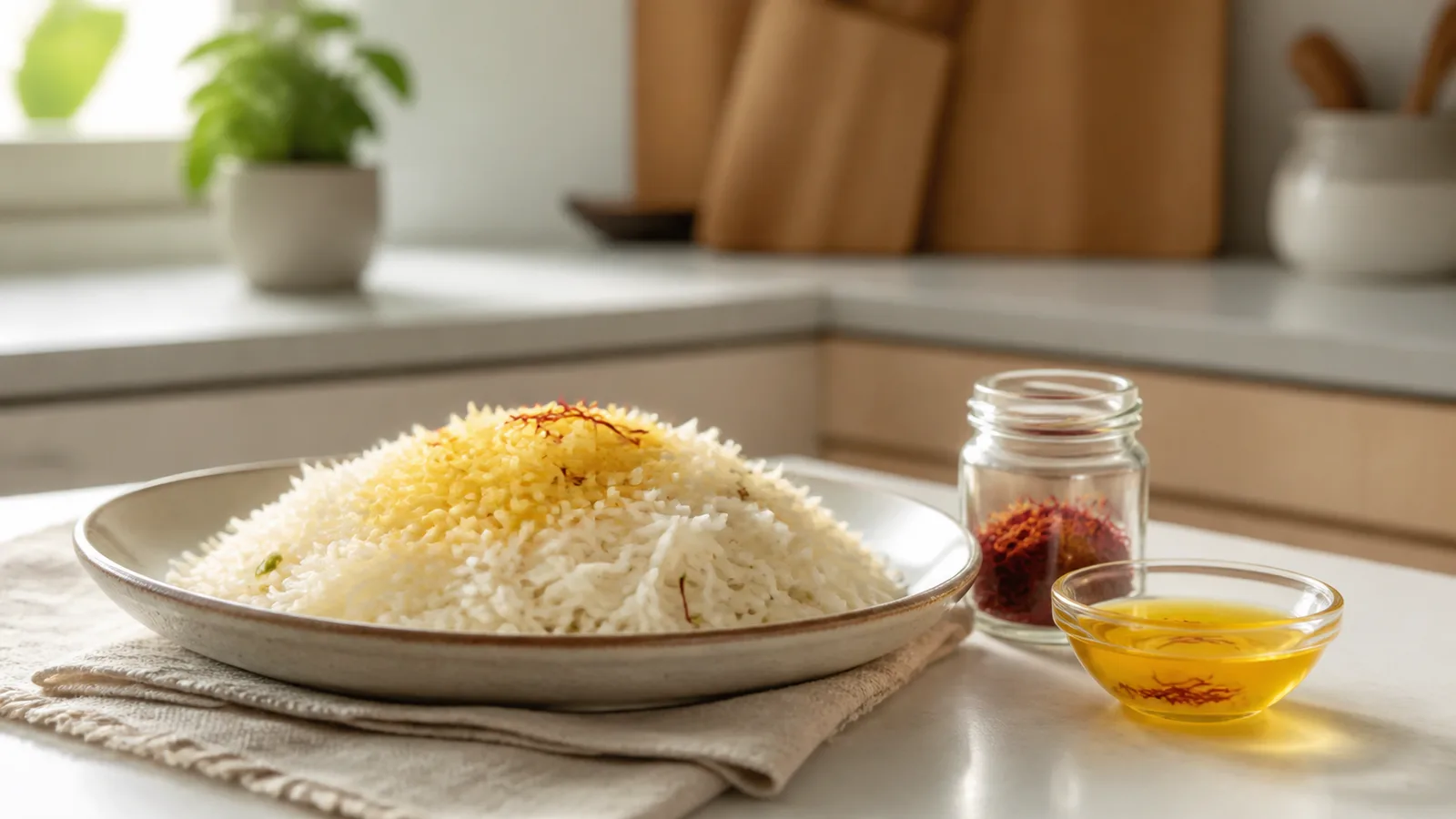
For food, start with genuine threads rather than an anonymous powder. Gently crush a small pinch, cover it with warm water, and leave it for 10 to 15 minutes. Stir the liquid and threads into rice, soup, vegetables, yogurt, milk, or a drink. Low, gradual use is better than adding a large amount: too much can taste bitter and waste an expensive ingredient.
Good saffron should contribute a complex aroma rather than a sugary perfume, and its color should diffuse gradually. Store dry threads in an airtight, opaque container away from heat, moisture, and direct light. Our saffron tea guide explains how an everyday infusion differs from a studied extract.
Supplement safety
A 2026 systematic review of saffron adverse events found that medicinal use was generally tolerated in trials, but adverse effects occurred and were most often gastrointestinal. Reported concerns include nausea, digestive upset, headache, dizziness, dry mouth, allergy, and changes relevant to blood pressure or bleeding. Long-term evidence remains limited, and retail products vary.
Pregnancy needs particular caution. Claims that saffron makes labor easier or supports the uterus are not a reason to experiment with medicinal amounts in the first trimester or later pregnancy. People who are pregnant, trying to conceive, breastfeeding, preparing for surgery, managing a bleeding disorder or low blood pressure, or taking regular medicine should ask a qualified clinician before using a concentrated saffron product.
Choose supplements only when the label identifies the plant part, amount, standardization, manufacturer, batch, and credible independent testing. “Red gold,” “detox,” “anti-aging,” and “clinically proven” on the front of a package do not supply those details.
The balanced conclusion
Saffron can be a beautiful and enjoyable part of cooking, and selected preparations have a growing clinical evidence base. The responsible version of saffron benefits for health and beauty is specific about what was studied and honest about what remains uncertain. Use saffron for its genuine culinary qualities; treat a supplement as a separate decision; and do not let a broad wellness promise replace diagnosis, treatment, or sensible skin care.
Sources
- 2026 GRADE-assessed systematic review of saffron for depression, anxiety, and mood disorders
- Systematic review of randomized trials concerning saffron and sleep quality
- Meta-research review and evidence map of saffron and health outcomes
- Systematic review and dose-response meta-analysis of cardiovascular risk factors
- 2026 systematic review of adverse events associated with saffron