This saffron cake recipe makes a soft, golden cake with a clear saffron aroma and a light hint of rose water. The batter is straightforward, but a few small details—measuring the flour carefully, brewing the saffron before it goes in and stopping the mixer at the right moment—make a noticeable difference.
Saffron cake ingredients
This recipe fits one 23 cm (9-inch) round cake pan. Bring the eggs and milk to room temperature before you begin so the batter combines evenly.
- 2 cups (250 g) plain or all-purpose flour
- 2 teaspoons baking powder
- 1/4 teaspoon fine salt
- 4 large eggs, at room temperature
- 1 cup (200 g) sugar
- 1/2 teaspoon vanilla extract
- 1/2 cup (120 ml) neutral vegetable oil
- 1 cup (240 ml) milk, at room temperature
- 2 tablespoons strongly brewed saffron
- 1 tablespoon food-grade rose water
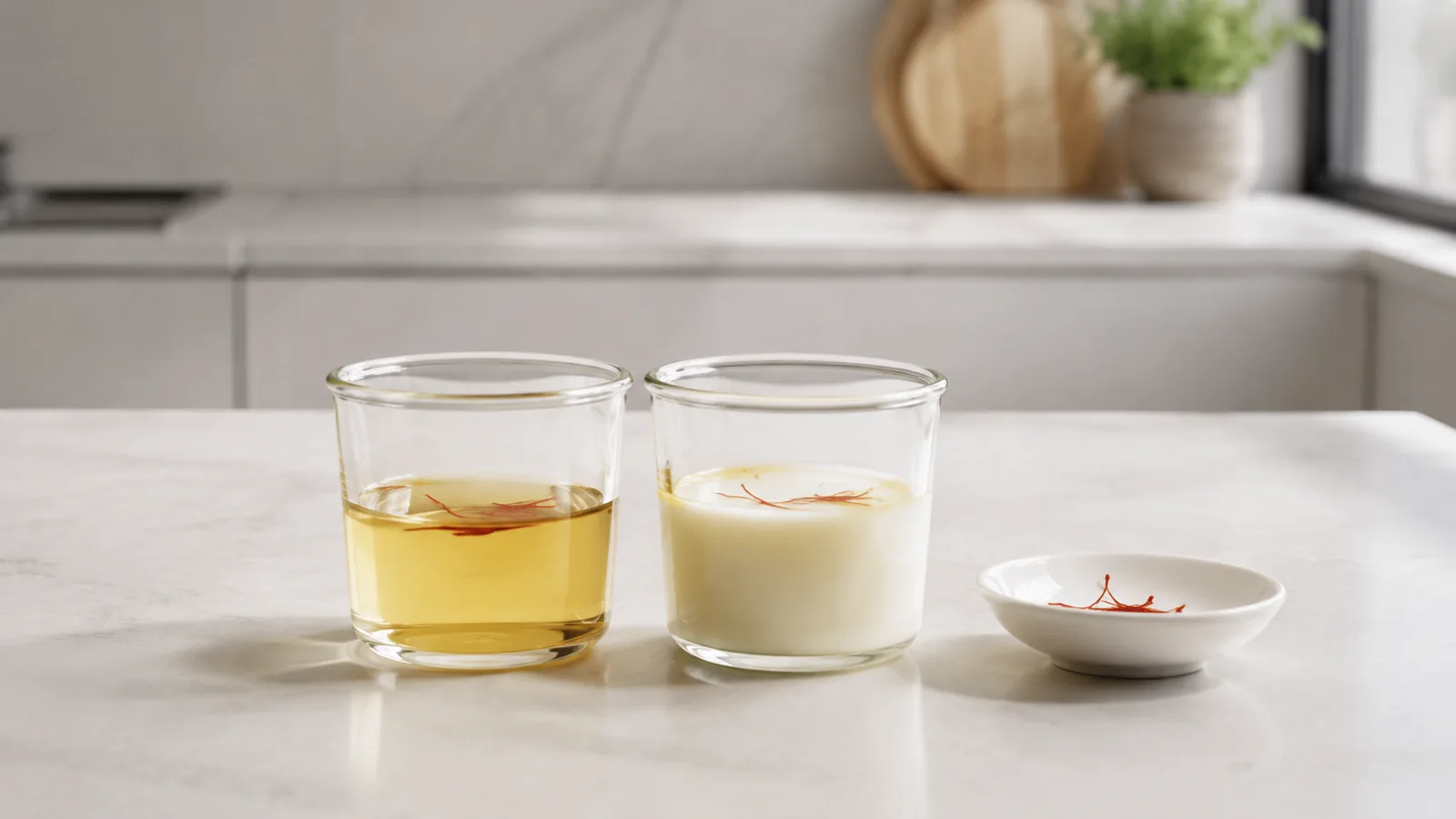
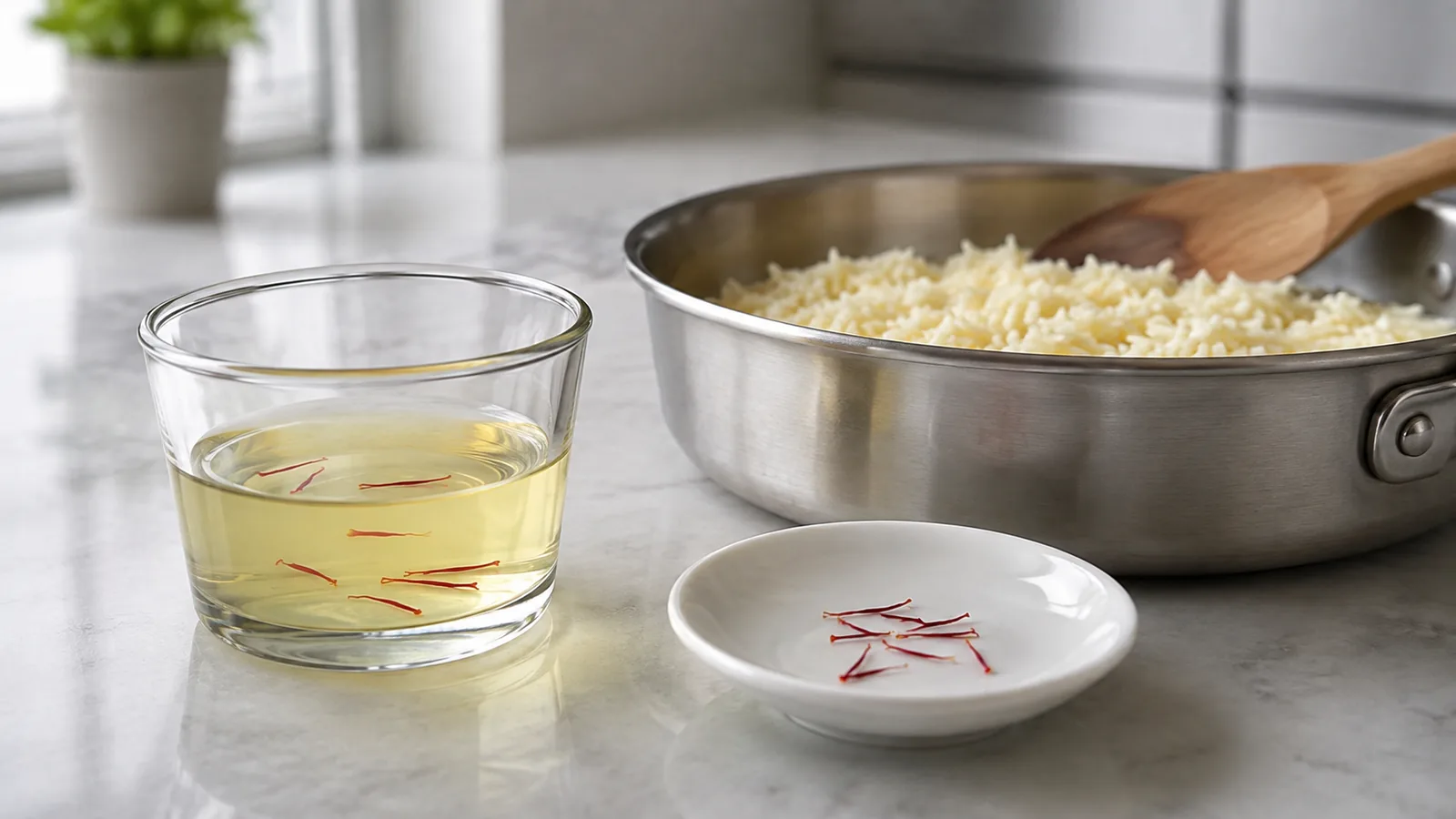
For the saffron, finely grind about 1/2 teaspoon of threads and steep them in 2 tablespoons of hot, but not vigorously boiling, water until the liquid is fragrant and deeply coloured. Let it cool before adding it to the eggs. Our guide to brewing saffron explains the method in more detail.
Before you mix the batter
Heat the oven to 180°C (350°F). Grease the pan, line the bottom with baking paper and lightly grease the paper. Sift the flour, baking powder and salt together. Sifting once is enough to break up compacted flour; there is no need to repeat it three times if the dry mixture is already even and lump-free.
Measure flour by spooning it loosely into the cup and levelling the top, rather than pressing the cup into the bag. Too much flour is one of the quickest ways to turn an otherwise tender saffron cake dry.
How to make saffron cake
- Whip the eggs and sugar. Beat the eggs, sugar and vanilla for 3–5 minutes, until the mixture is pale, thicker and falls from the whisk in a loose ribbon. This incorporated air helps the cake rise evenly.
- Add the liquids. With the mixer on low, pour in the oil gradually. Add the milk, cooled brewed saffron and rose water, then mix only until the colour is even.
- Fold in the flour. Add the sifted dry ingredients in three portions. Use a spatula or the mixer’s lowest speed and stop as soon as no dry streaks remain. Scrape the bottom of the bowl once so there are no hidden flour pockets.
- Fill the pan. Pour the batter into the prepared pan and gently level the surface. Tap the pan once on the worktop to release any unusually large air pockets.
- Bake. Set the pan on the centre rack and bake for about 35–45 minutes. Begin checking at 35 minutes; the top should spring back lightly and a skewer inserted in the centre should emerge clean or with a few moist crumbs.
- Cool properly. Leave the cake in its pan for 10 minutes, then turn it onto a wire rack. Remove the paper and let the cake cool completely before decorating or slicing.
How to keep the saffron flavour balanced
Saffron and rose water are both assertive, so more is not always better. Two tablespoons of concentrated saffron infusion give this cake colour and aroma without bringing lots of extra liquid into the batter. One tablespoon of rose water sits in the background rather than covering the saffron.
The strength of an infusion varies with the threads and the way they were brewed. If yours is pale and barely fragrant, make a stronger infusion rather than adding a large amount of weak saffron water. Let the liquid cool first; hot liquid can disturb the airy egg mixture.
Optional flavours and toppings
Ground cardamom is the most natural addition: 1/4 teaspoon gives a gentle warmth without changing the cake’s character. Cinnamon can dominate saffron quickly, so use only a small pinch if you enjoy that combination.
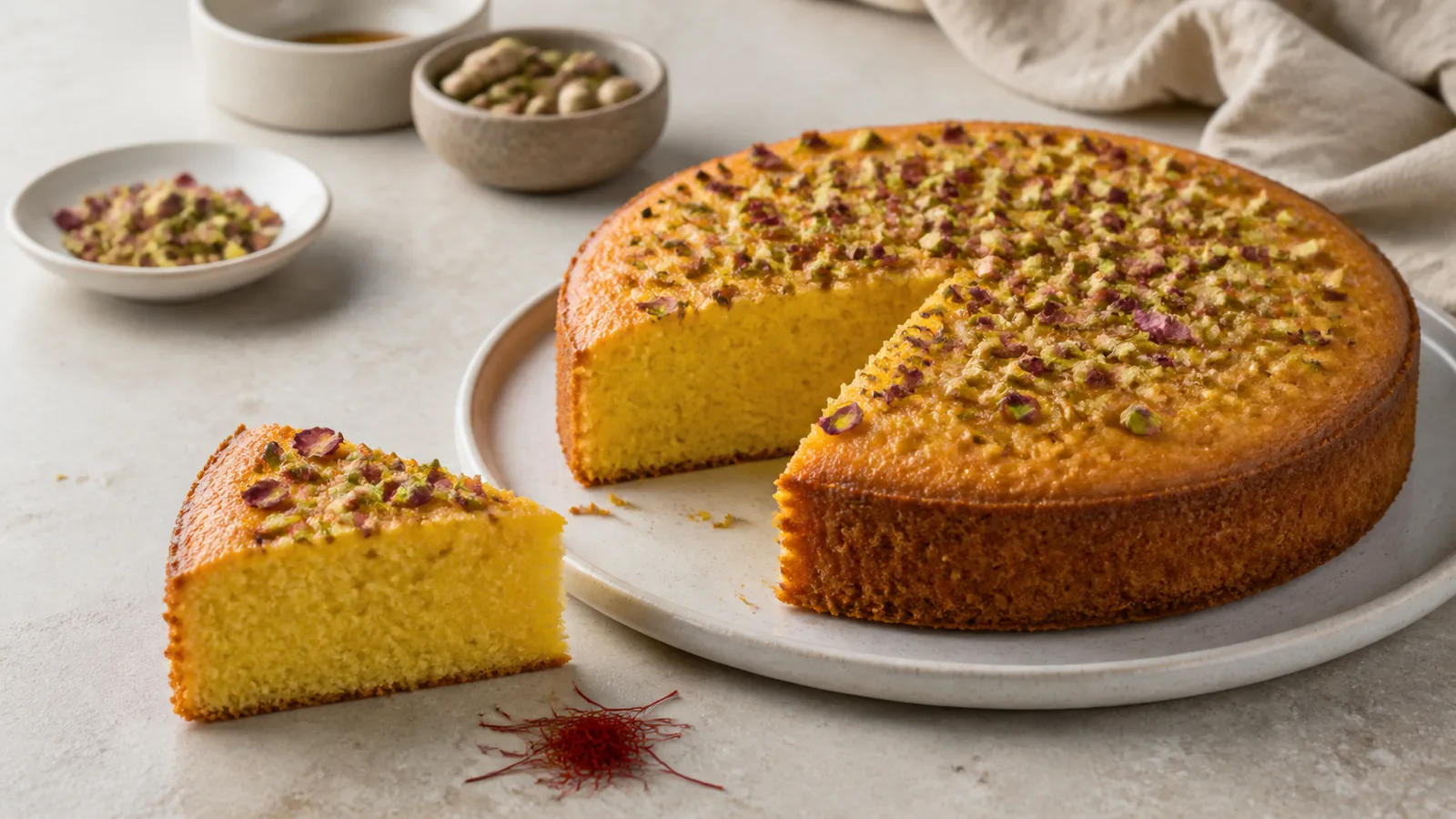
The cooled cake needs little decoration. A fine dusting of icing sugar, chopped unsalted pistachios or a few edible dried rose petals is enough. For a richer finish, brush the warm surface very lightly with a spoonful of saffron syrup, but avoid soaking it; the crumb is meant to remain light. If you prefer a tangier, denser bake, the site’s saffron yogurt cake is a different style rather than a substitute for the milk in this recipe.
Can you make saffron cake without an oven?
You can cook the batter in a heavy, tightly covered pot on the stovetop, although the result will not brown like an oven-baked cake. Line and grease a 23 cm pot, pour in the batter and cover the lid with a clean kitchen towel so condensation does not drip onto the surface. Tie the towel securely above the flame and keep all fabric away from the burner.
Place the pot over a heat diffuser on the lowest steady heat for about 40–50 minutes. Do not lift the lid during the first 35 minutes. Test the centre with a skewer, then give it another 5 minutes if wet batter remains. Stovetops and pots vary much more than ovens, so use the visual and skewer tests rather than treating the time as exact.
Troubleshooting saffron cake
Why is the cake dense?
The usual causes are beating the batter after the flour goes in, packing too much flour into the measuring cup or leaving the mixed batter on the counter before baking. Fold gently and put the pan into the hot oven without delay.
Why did the centre sink?
An underbaked centre cannot support itself as it cools. Opening the oven door early can also cause a sudden temperature drop. Wait until the cake has risen and set before checking, and make sure the skewer reaches the middle rather than only the outer crumb.
Why is the saffron aroma faint?
Old threads, an overly weak infusion or too much rose water can hide saffron’s aroma. Grind the threads just before brewing, cover the infusion while it steeps and keep the rose water measured. A vivid yellow colour alone is not proof of strong saffron flavour.
Serving and storing the cake
Serve the cake at room temperature with tea or coffee. Once it is completely cool, keep it in an airtight container at room temperature for up to two days. For longer storage, refrigerate it well wrapped and let each slice return to room temperature before serving; a cold cake tastes firmer and its aroma is less apparent.
The recipe also freezes well without a wet topping. Wrap the whole cooled cake or individual slices tightly, freeze for up to two months and thaw them while still wrapped. Add icing sugar, pistachios or rose petals only after thawing.