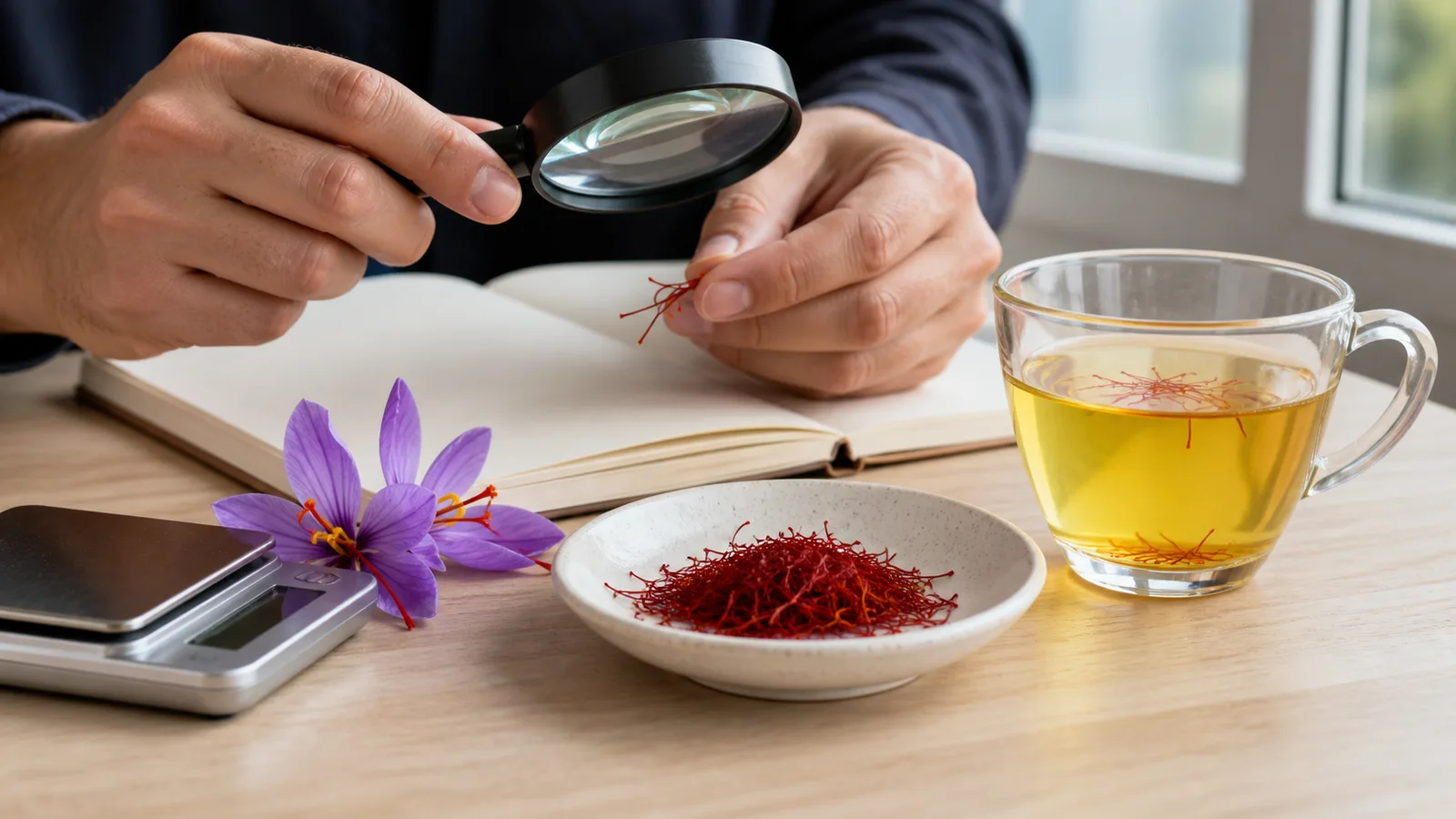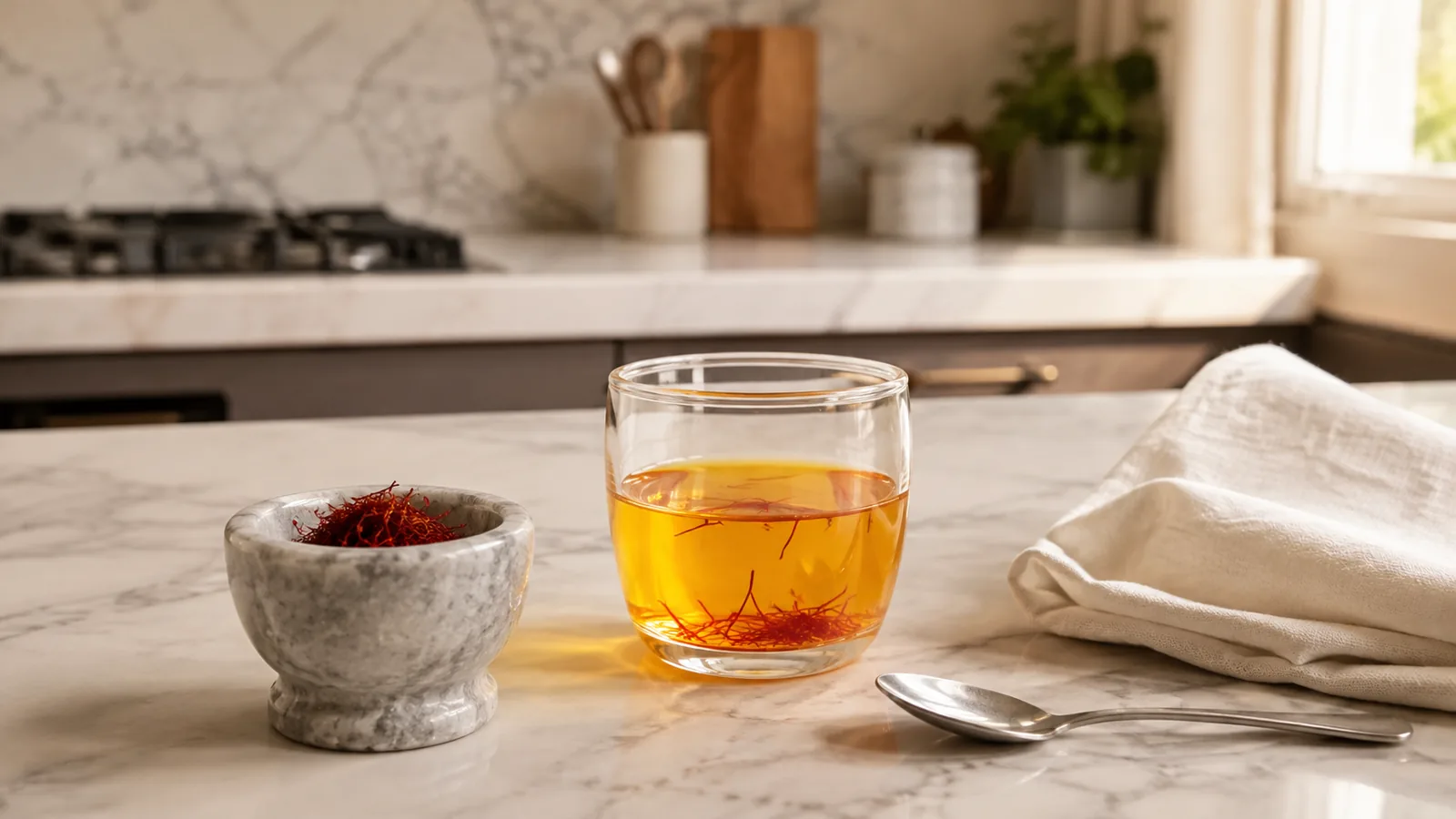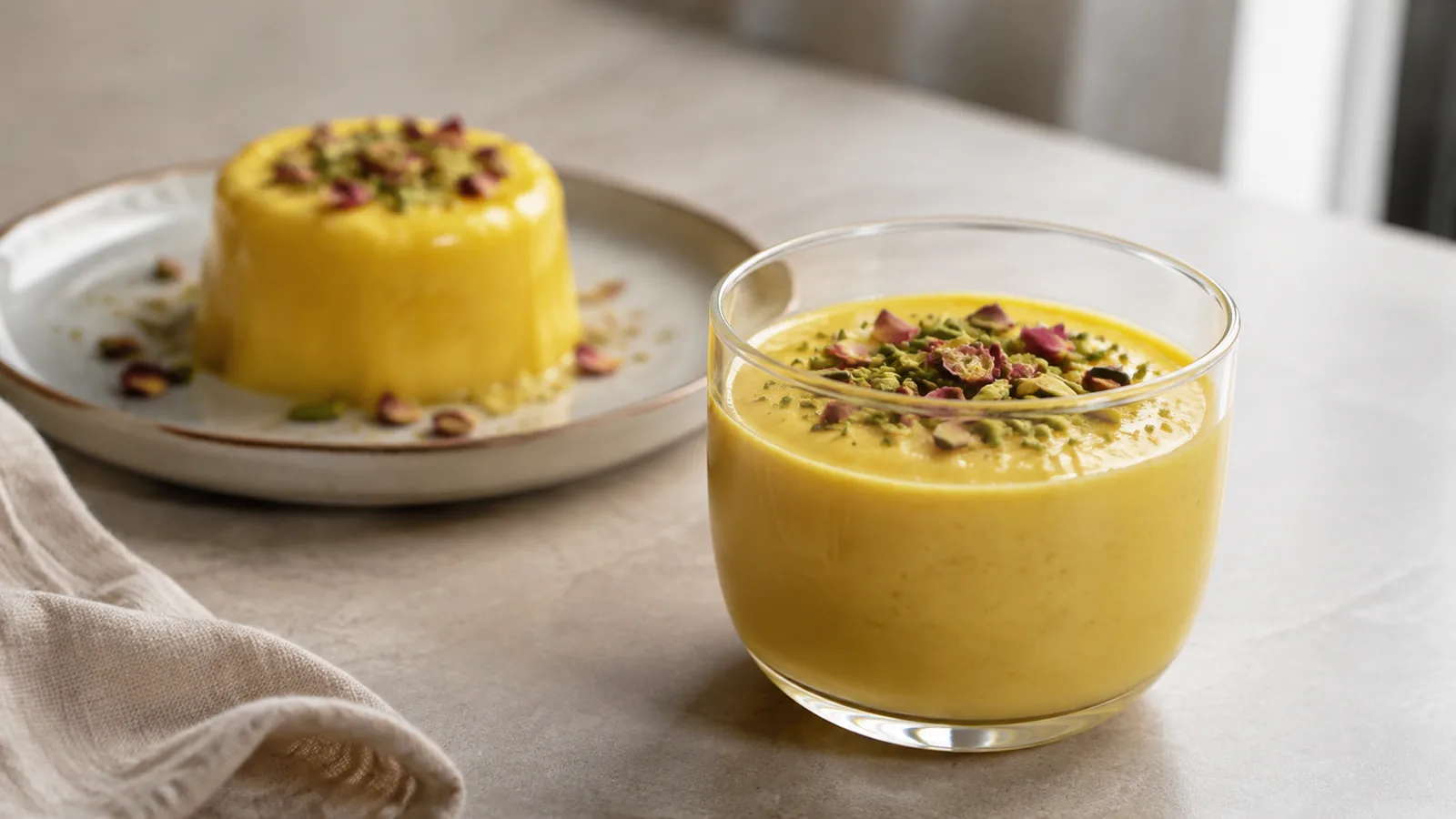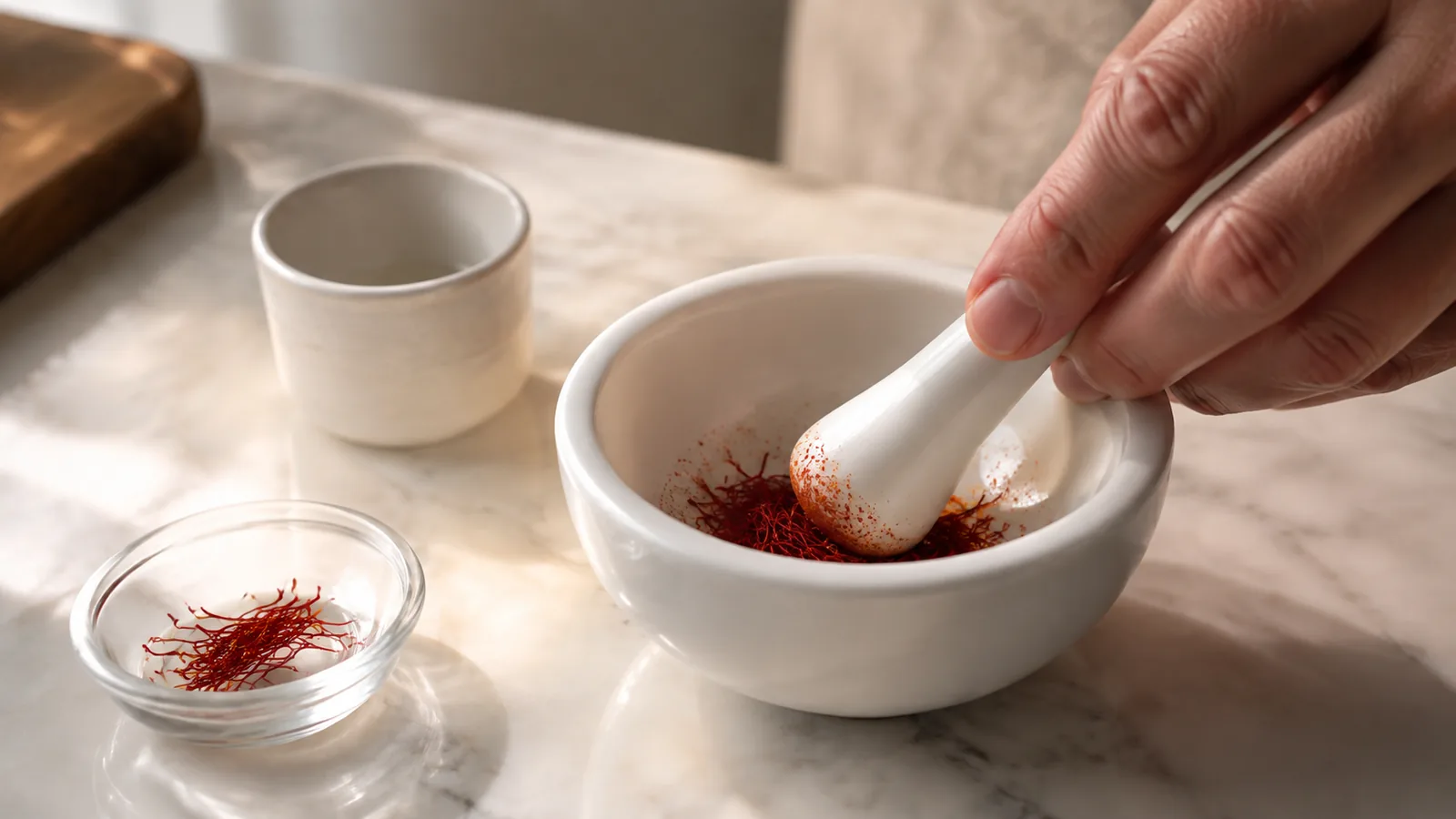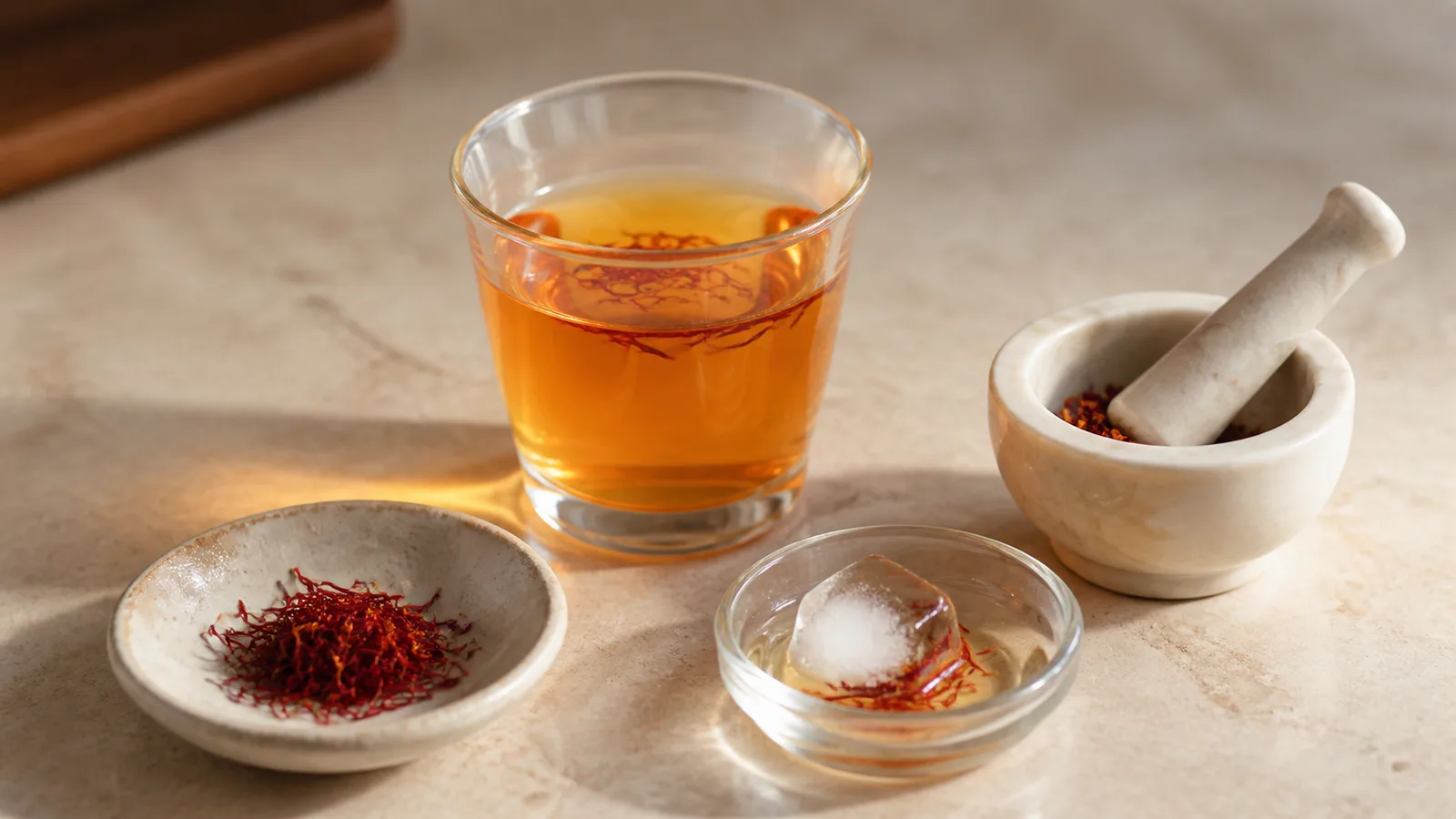
The best way to brew saffron is simple: gently crush the threads, cover them with a small amount of warm-to-hot water, and leave the covered cup alone for 15 to 20 minutes. This creates a concentrated saffron infusion that spreads evenly through rice, sauces, drinks, and desserts without leaving dry threads in the food.
Persian cooks often call this preparation “brewed saffron.” You may also see it described as steeping saffron, blooming saffron, or making a saffron brew. The names differ, but the aim is the same: give the spice enough moisture and time to release its color and aroma before cooking drives them away.
How to brew saffron with warm water
For most recipes, this is the most reliable saffron preparation method. It is quick, easy to control, and works whether you are making Persian rice or adding a fragrant finish to a drink.
- Measure the threads. Use about 12 to 20 saffron threads for a family-size dish, or follow the amount in your recipe. Good saffron is potent, so more is not always better.
- Crush them gently. A small mortar and pestle works best. A clean spoon against a saucer is fine too. Aim for coarse powder rather than grinding until the spice heats up.
- Add a little water. Pour 2 to 4 tablespoons of water at roughly 60–80°C (140–176°F) over the saffron. It should be hot but not boiling.
- Cover and wait. Let it steep for 15 to 20 minutes. Keeping the cup covered helps retain the delicate aroma.
- Use the whole infusion. Add both the liquid and the softened saffron to the dish, usually near the end of cooking.
This infusion technique works beautifully in rice, soups, sauces, tea, milk drinks, and desserts. For a more concentrated result, reduce the water rather than adding extra saffron. Too much water does not ruin the spice, but it can make the infusion awkward to use in recipes that need little additional liquid.
What temperature and steeping time work best?
Boiling is unnecessary. A 2024 laboratory study of saffron infusions found that water temperature and infusion time changed the extraction of aroma and color compounds; in its test conditions, a 20-minute water infusion at 60°C retained the highest measured crocin content. That does not turn one exact temperature into a rule for every kitchen, but it supports a practical point: moderate heat and patience work well, while prolonged high heat can cost aroma.
If you have wondered how to steep saffron threads without a thermometer, boil the water and let it stand for a few minutes before pouring. The cup should feel hot, but the water should not be rolling or bubbling around the saffron.
How to infuse saffron with ice
The ice method is familiar in many Persian households and is often passed down by a grandmother or another experienced family cook. Put the crushed threads in a small cup, add one or two ice cubes, cover, and let the ice melt naturally. The result is a cool, slowly extracted saffron infusion.
Some cooks prefer its color, but there is not good evidence that ice always produces a higher-quality infusion than warm water. It is simply slower. If you are choosing the best way to infuse saffron for a weeknight meal, warm water is more predictable; use ice when you enjoy the traditional process and have time to wait.
Does sugar delay the infusion?
No established evidence shows that a small pinch of sugar delays saffron infusion. In fact, coarse sugar can help the mortar grip the threads while you grind them. It is optional, though, and may not suit a savory recipe. Crushing the threads on their own gives you the most flexible brewed saffron.
A safer version of the chef’s method
You may encounter a chef’s saffron infusion technique that warms dry threads, grinds them with sugar, simmers them until bubbles form, and then adds ice. That much temperature change is not needed. Directly heating delicate dry threads can scorch them, and simmering an already fragrant infusion can drive off aroma.
If the threads feel damp, warm them only indirectly for a few seconds between folded baking paper over a barely warm pan. Then crush them and use the standard warm-water method. Do not toast for two or three minutes, boil the infusion, or shock a hot cup with ice. The simpler process gives you more control over both flavor and color.
Brewing saffron for Persian rice
For saffron rice, prepare the infusion in its own covered cup while the rice cooks. When the rice is ready, mix a few spoonfuls with a small portion of cooked rice until the grains are evenly gold, then fold or spoon that saffron-infused rice over the white rice. You can also drizzle the remaining infusion through the pot shortly before serving.
There is no need to balance a small container beside a steaming rice pot. That old shortcut provides indirect warmth, but it is less stable and offers no advantage over brewing the saffron safely on the counter.
Can you infuse saffron in milk or oil?
Water is the best general-purpose base because saffron’s color compounds dissolve readily in it. Warm milk also works for custards, rice pudding, and saffron milk because it contains both water and fat. Add the saffron to gently warmed milk and leave it covered for about 15 minutes; avoid a hard boil.
Oil extracts a different balance of aromatic compounds and little of saffron’s characteristic water-soluble color. If a recipe contains oil, make the saffron infusion in water first and combine it with the dish unless the recipe specifically calls for an oil infusion.
Troubleshooting a weak saffron brew
The color is pale
Give the infusion the full 15 to 20 minutes, crush the threads more evenly, and check that you are using genuine, fresh saffron. A good infusion is deep gold to orange-red; an unnaturally immediate red stain can be a warning sign rather than proof of strength.
The flavor is bitter
Saffron naturally has a slight bitterness, but a medicinal taste usually means too much was used. Dilute the brewed saffron across more food. Do not compensate with prolonged steeping or extra heat.
The aroma disappears in the dish
Add at least part of the infusion late in cooking and keep the pot covered when practical. Long boiling is one of the easiest ways to flatten saffron’s floral character.
How long does brewed saffron keep?
Use saffron infused in water as soon as possible for the freshest aroma. If necessary, cool it promptly, cover it, and refrigerate it for up to two days. For longer storage, freeze small portions in a clean ice-cube tray and transfer the frozen cubes to a sealed container. Label them clearly so they are not mistaken for ordinary ice.
Quality matters more than a complicated technique
No brewing trick can restore stale or poorly stored saffron. Choose threads with a rich red color and a clean, hay-like floral aroma and fragrance, then keep them sealed away from light, heat, and moisture. High-quality Persian saffron should not need artificial color or an elaborate ritual to make itself known in a dish.
For another gentle preparation, see our guide to making saffron tea. Whether you call the result brewed saffron, a saffron infusion, or steeping saffron, the dependable formula is the same: crush gently, use moderate heat, cover, and give it time.
Source
Molecules (2024): Effects of infusion conditions on saffron compounds and antioxidant activity