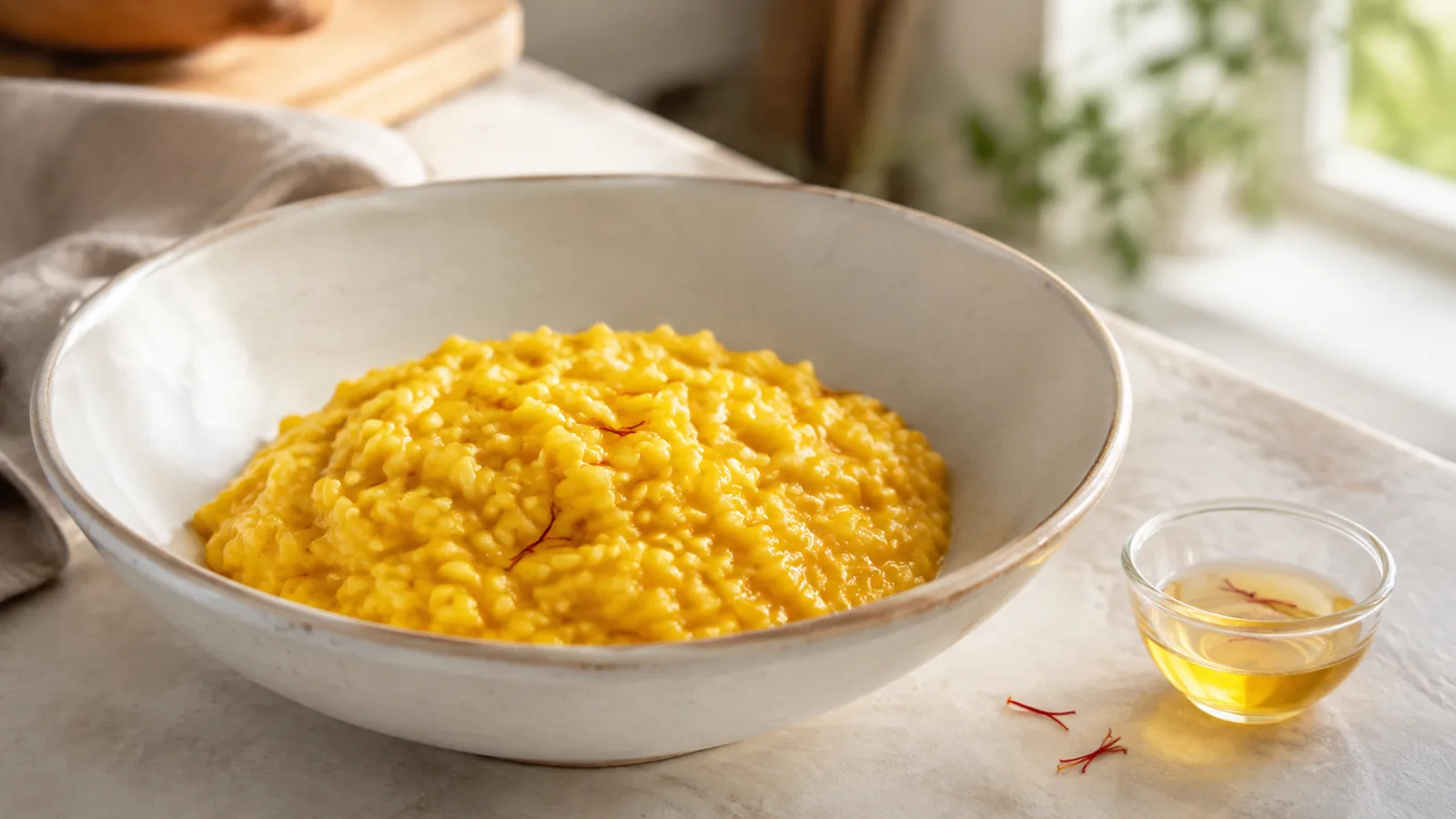
This saffron chicken recipe makes a useful weeknight dinner: tender pan-cooked chicken, a fragrant saffron-and-lemon marinade, and a cool saffron mayonnaise sauce served on the side. It takes about 45 minutes plus marinating time and serves four. Chicken breast or boneless thigh both work; the important parts are brewing the saffron first, drying the chicken surface, and checking doneness with a thermometer.
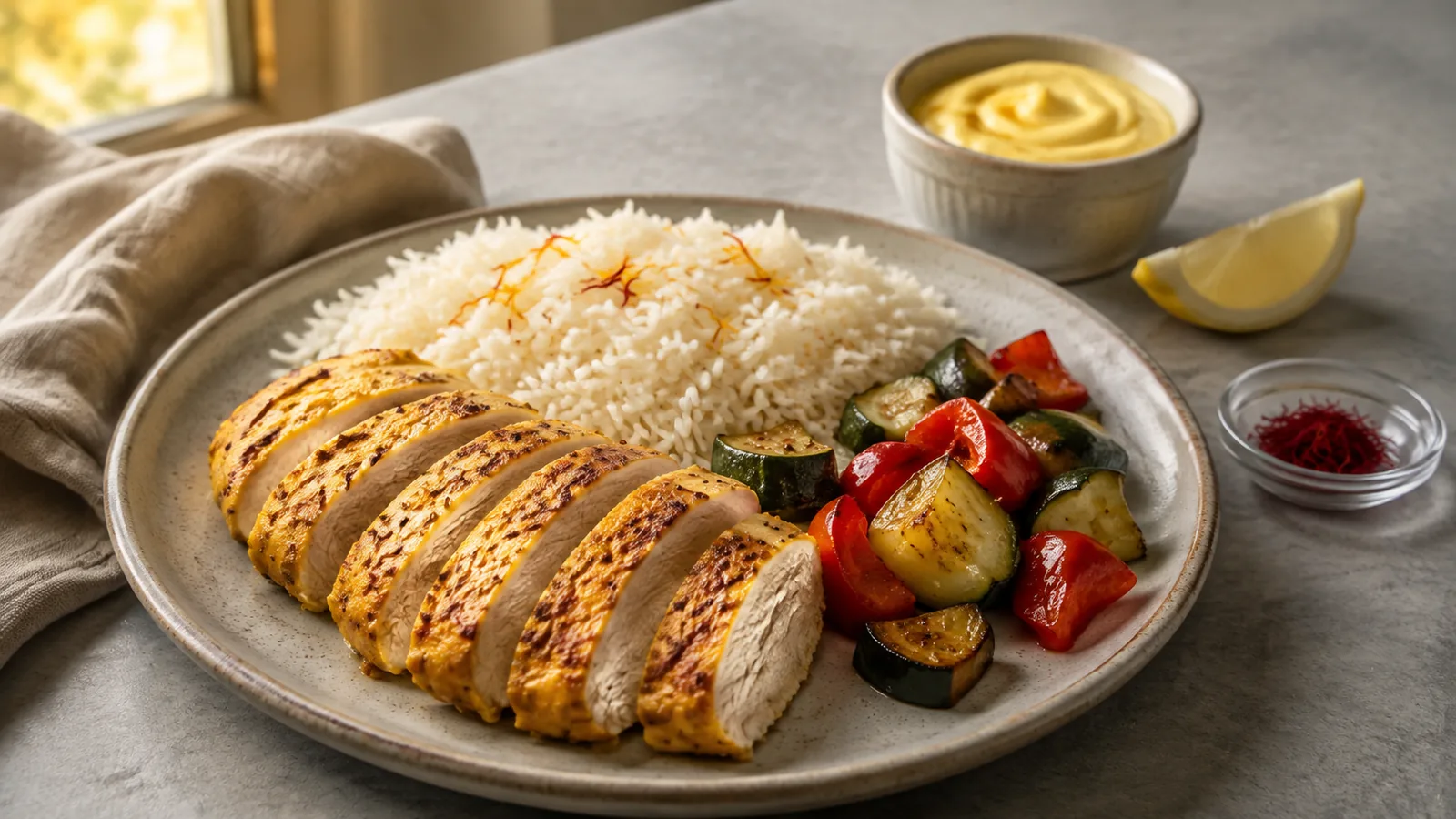
Saffron chicken ingredients
For the chicken
- 600 g boneless, skinless chicken thighs, or 4 small chicken breasts
- 1/4 teaspoon saffron threads
- 3 tablespoons hot water
- 2 tablespoons olive oil
- 1 tablespoon fresh lemon juice
- 1 teaspoon finely grated lemon zest
- 1 small garlic clove, finely grated
- 3/4 teaspoon salt
- 1/2 teaspoon black pepper
- 1/4 teaspoon ground turmeric, optional
- 1/2 teaspoon sweet paprika, optional
For the saffron mayonnaise sauce
- 1/3 cup mayonnaise
- 2 tablespoons thick plain yoghurt
- 1 tablespoon brewed saffron, reserved from the amount above
- 1–2 teaspoons lemon juice
- a small pinch of salt and black pepper
The yoghurt lightens the sauce and gives it a cleaner finish, but you can replace it with more mayonnaise. Use a pasteurised commercial mayonnaise if the sauce will be served to anyone more vulnerable to foodborne illness. Keep the sauce refrigerated while the chicken cooks.
How to brew saffron for chicken
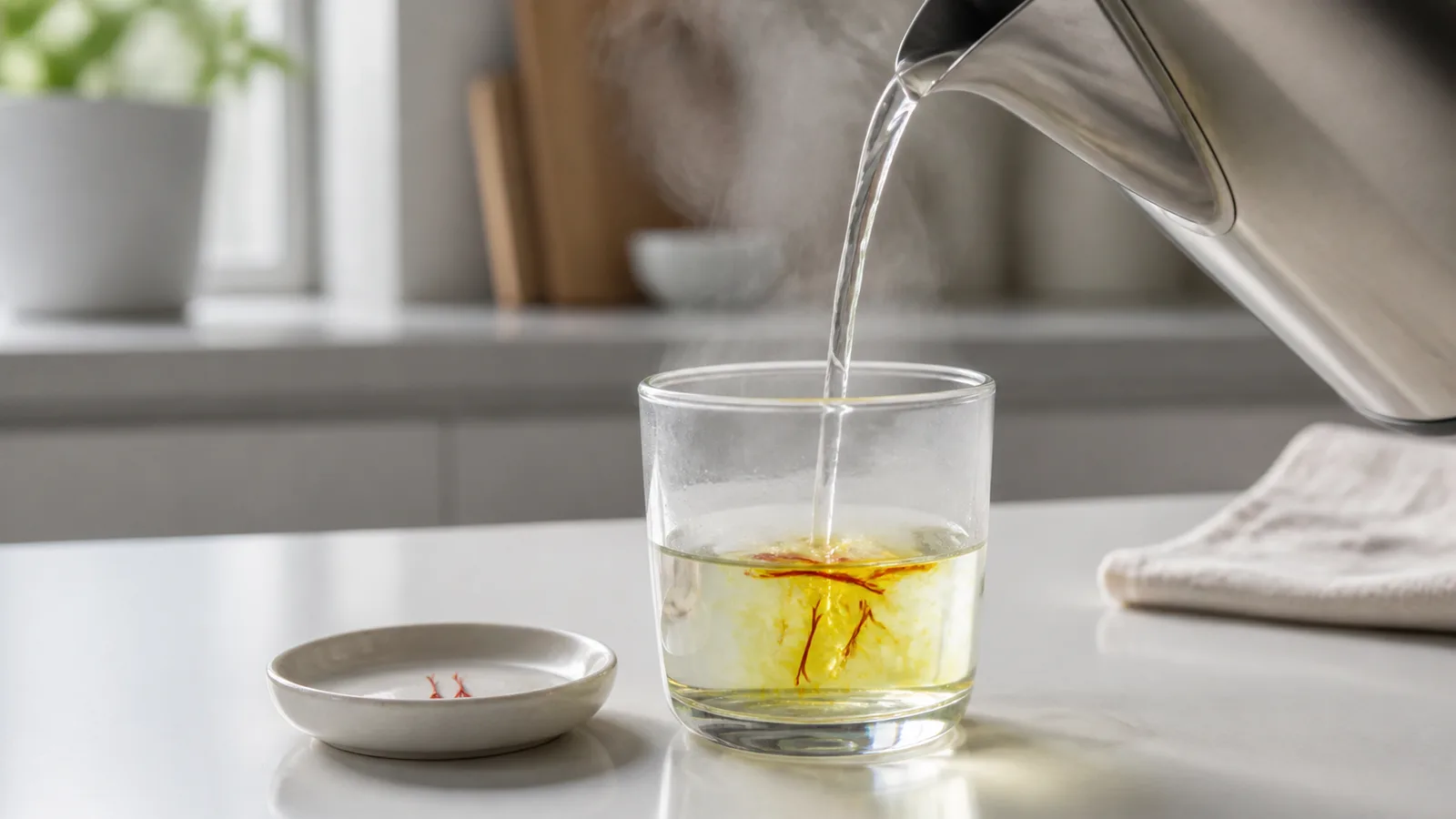
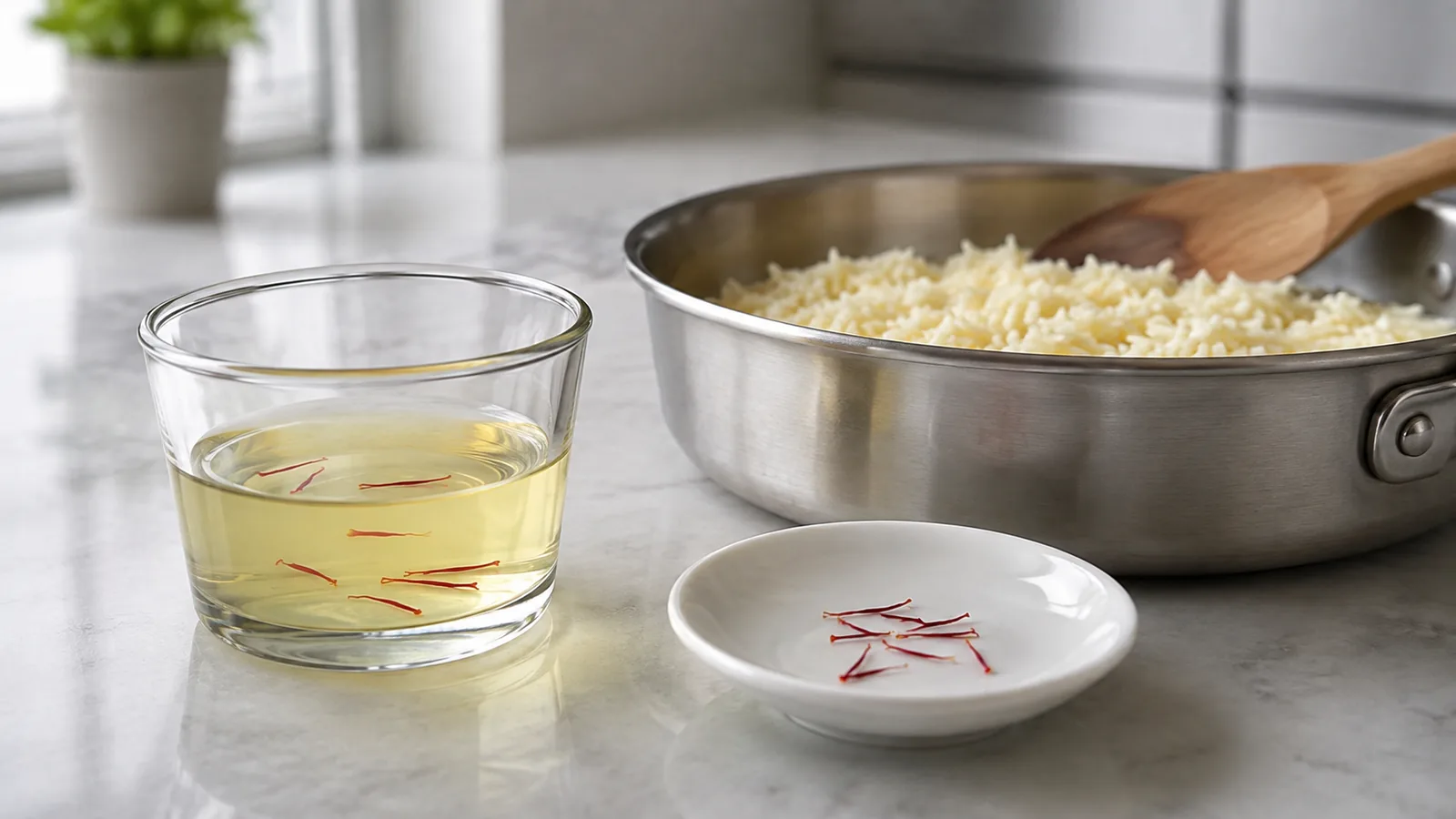
Grind the saffron lightly in a small mortar. Add three tablespoons of hot water, cover and leave it for 10–15 minutes. Reserve one tablespoon for the sauce and use the rest in the marinade.
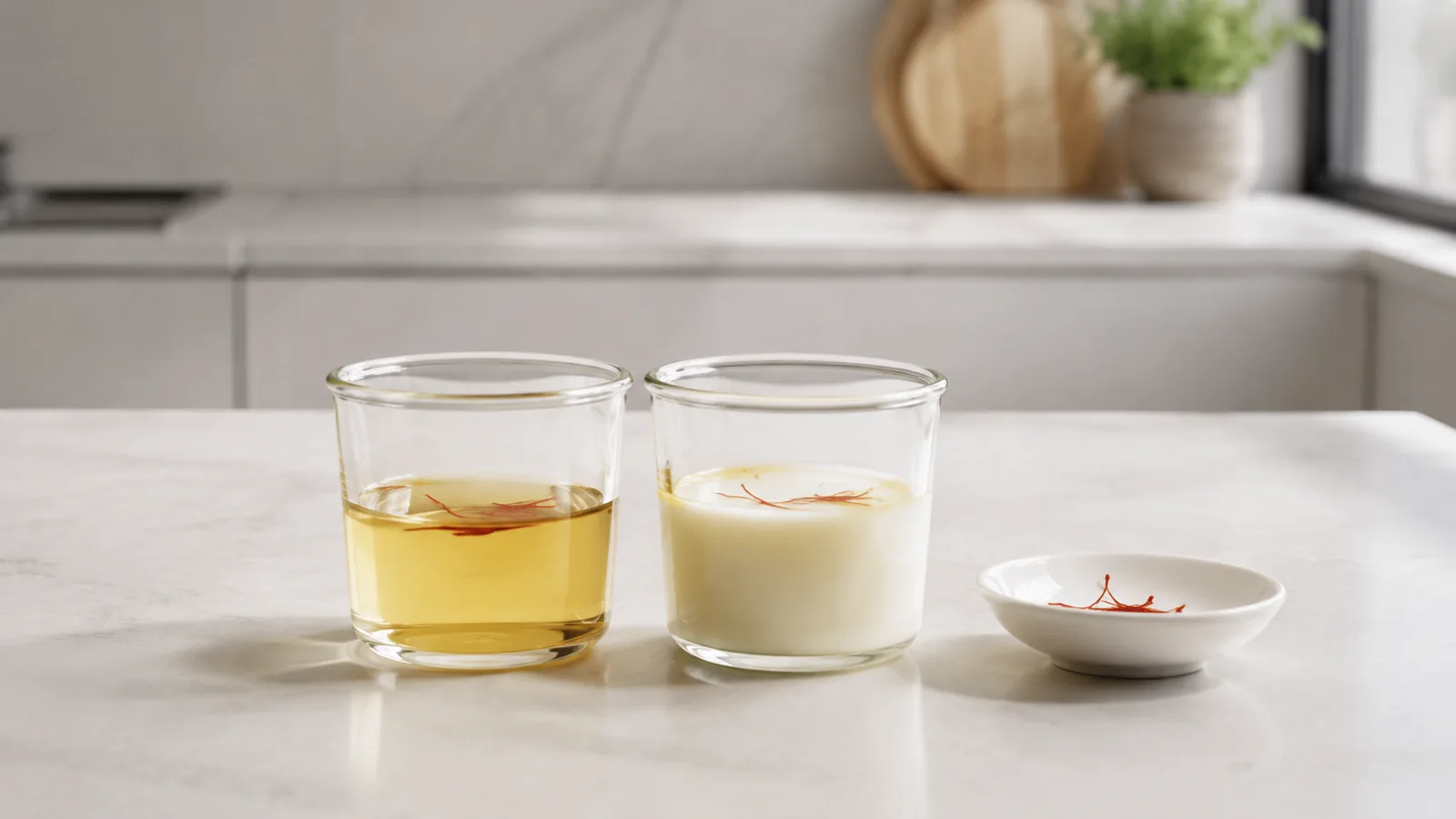
Adding dry threads straight to the frying pan wastes much of their potential because they are not distributed evenly and can scorch. A short water infusion spreads the colour and aroma over every piece. If you want to compare extraction methods, the site’s guide to brewing saffron for cooking explains warm-water, milk and storage options.
Prepare the chicken safely
Do not wash raw chicken. Rinsing can splash bacteria onto the sink, worktop and nearby utensils. The CDC’s chicken food-safety guidance recommends keeping raw chicken and its juices away from ready-to-eat food, washing hands after handling it, and cooking poultry to 165°F/74°C.
Instead, open the package close to the preparation area and pat the chicken dry with disposable paper towel. Discard the towel immediately, clean the work surface and use a separate board or plate for anything that will be eaten without further cooking.
If using chicken breasts, place each one between sheets of baking paper and pound the thick end gently until the piece is an even 1.5–2 cm thick. Even thickness matters more than the exact shape: it lets the centre cook before the outside dries.
Marinate chicken with saffron
- Mix the olive oil, two tablespoons of brewed saffron, lemon juice, zest, garlic, salt, pepper and optional turmeric or paprika in a non-reactive bowl.
- Add the chicken and turn every piece until coated.
- Cover and refrigerate for at least 30 minutes and up to 8 hours.
- Take the bowl from the refrigerator about 15 minutes before cooking, but do not leave raw chicken at room temperature for a long period.
The short marinade perfumes the surface without overwhelming the meat. Lemon left on chicken for a full day can make the exterior soft or chalky, so longer is not automatically better. Do not use the raw marinade as a serving sauce unless it is cooked thoroughly first.
Cook saffron chicken in a frying pan
- Heat a wide, heavy frying pan over medium heat. Add a teaspoon of oil if the surface is not already well seasoned.
- Lift the chicken from the marinade and let excess liquid drip back into the bowl. Arrange the pieces in one layer with space between them.
- Cook thighs for roughly 5–7 minutes on the first side, then turn and cook for another 4–6 minutes. Evenly flattened breasts may need 4–6 minutes per side.
- Lower the heat if the saffron and garlic begin to darken before the centre is done. Add one or two tablespoons of water and cover briefly if a thick piece needs more gentle cooking.
- Insert an instant-read thermometer into the thickest part without touching the pan. Remove the chicken when every piece reaches 165°F/74°C.
- Rest it on a clean plate for 5 minutes before slicing.
Times are a guide, not the safety test. Pan material, burner strength and chicken thickness can change them considerably. Do not put cooked chicken back on the plate that held it raw.
Oven method for saffron chicken breast or thighs
Heat the oven to 220°C/425°F. Arrange the marinated chicken in a lightly oiled baking dish without overlapping. Small flattened breasts usually need about 15–20 minutes; boneless thighs may take 20–25 minutes. Begin checking early and use the same 165°F/74°C internal-temperature rule.
For more colour, place the safely cooked chicken under a hot grill for one or two minutes while watching closely. The saffron, lemon and garlic can burn quickly. Rest the meat for 5 minutes before cutting so its juices do not immediately run onto the board.
Make the saffron mayo recipe
Stir the mayonnaise, yoghurt and reserved tablespoon of brewed saffron until smooth. Add one teaspoon of lemon juice, a pinch of salt and pepper, then taste. Add the second teaspoon of lemon only if the sauce needs it.
This saffron sauce for chicken should be creamy enough to spoon, not thinned with several tablespoons of oil. Serve a small amount beside the hot chicken rather than pouring it heavily over the crisp surface. Use a clean spoon; never add marinade that has touched raw poultry.
For a mayonnaise-free option, replace the mayonnaise with thick yoghurt and add a teaspoon of olive oil. Béchamel is possible, but it turns this quick pan dinner into a different, heavier dish and should be cooked as its own sauce.
What to serve with chicken and saffron
Plain basmati rice, warm flatbread, roasted potatoes or a simple green salad all suit this chicken with saffron. Add one crisp vegetable and one mild starch rather than surrounding the dish with several competing sauces.
For a Persian-style plate, serve the chicken beside saffron rice with barberries. Its tart berries echo the lemon without repeating the mayonnaise. Grilled courgettes, peppers, onions or mushrooms can be cooked separately so the pan is not crowded and the chicken still browns.
How to use saffron with chicken without losing the aroma
Use a measured infusion in the marinade and keep a small clean portion for the sauce. The marinade gives colour to the surface; the uncooked reserved infusion keeps a fresher saffron aroma in the chilled accompaniment. Reserving it before raw chicken enters the bowl is essential.
Stronger is not always better. Too much saffron can taste bitter, while paprika, garlic and turmeric can easily obscure it. The optional spice quantities are deliberately modest. If your saffron is particularly strong, leave out the paprika and let the aroma lead.
Why this simple saffron chicken recipe works
Evenly thick pieces finish at the same time. Oil carries aroma and helps browning, lemon brings brightness, and the water infusion distributes the saffron. Resting keeps the chicken succulent, while serving the mayonnaise on the side preserves the seared surface.
Many saffron chicken recipes add cream, stock or a long list of spices. Those can be good dishes, but they solve a different problem. This version is designed for tonight: one bowl, one pan and a sauce mixed while the meat rests.
Useful variations
Chicken and vegetables
Sauté sliced onion, pepper, courgette or mushrooms after the chicken leaves the pan. Add a spoonful of water to release the browned residue and return the rested chicken only long enough to warm. Cooking everything together from the start releases too much water and prevents proper browning.
Saffron chicken skewers
Cut thighs into equal pieces before marinating, thread them loosely onto metal or soaked wooden skewers, and grill or barbecue while turning. Check several centre pieces for 165°F/74°C. Discard any sauce used to brush the raw meat.
A warmer spice profile
Add a small pinch of ground cinnamon or cardamom to the marinade, not both in large amounts. A spoonful of toasted almonds or pistachios over the finished plate adds texture without changing the cooking method.
Storage and reheating
Refrigerate cooked chicken within two hours in a shallow covered container and use it within three to four days. Store the mayonnaise sauce separately and keep it cold. Discard sauce that has been left at room temperature for an extended meal or touched by a used serving utensil.
Reheat only the portion you need until it is steaming hot throughout. A covered pan with a splash of water is gentler than repeated microwaving. Cold leftover chicken can be sliced for a salad only if it was cooled and stored safely.
Dinner in one clear sequence
Brew the saffron, reserve a clean spoonful for the sauce, marinate the chicken and prepare the sides. Cook the chicken in one uncrowded layer, verify its temperature, and let it rest while you mix the saffron mayonnaise. That order keeps raw and ready-to-eat ingredients separate and puts dinner on the table without last-minute confusion.
The finished recipe for saffron chicken should taste balanced rather than heavy: aromatic meat, fresh lemon and just enough creamy sauce. Once the core method is familiar, thighs, breast, skewers and vegetables can all vary without losing the reason the dish works.