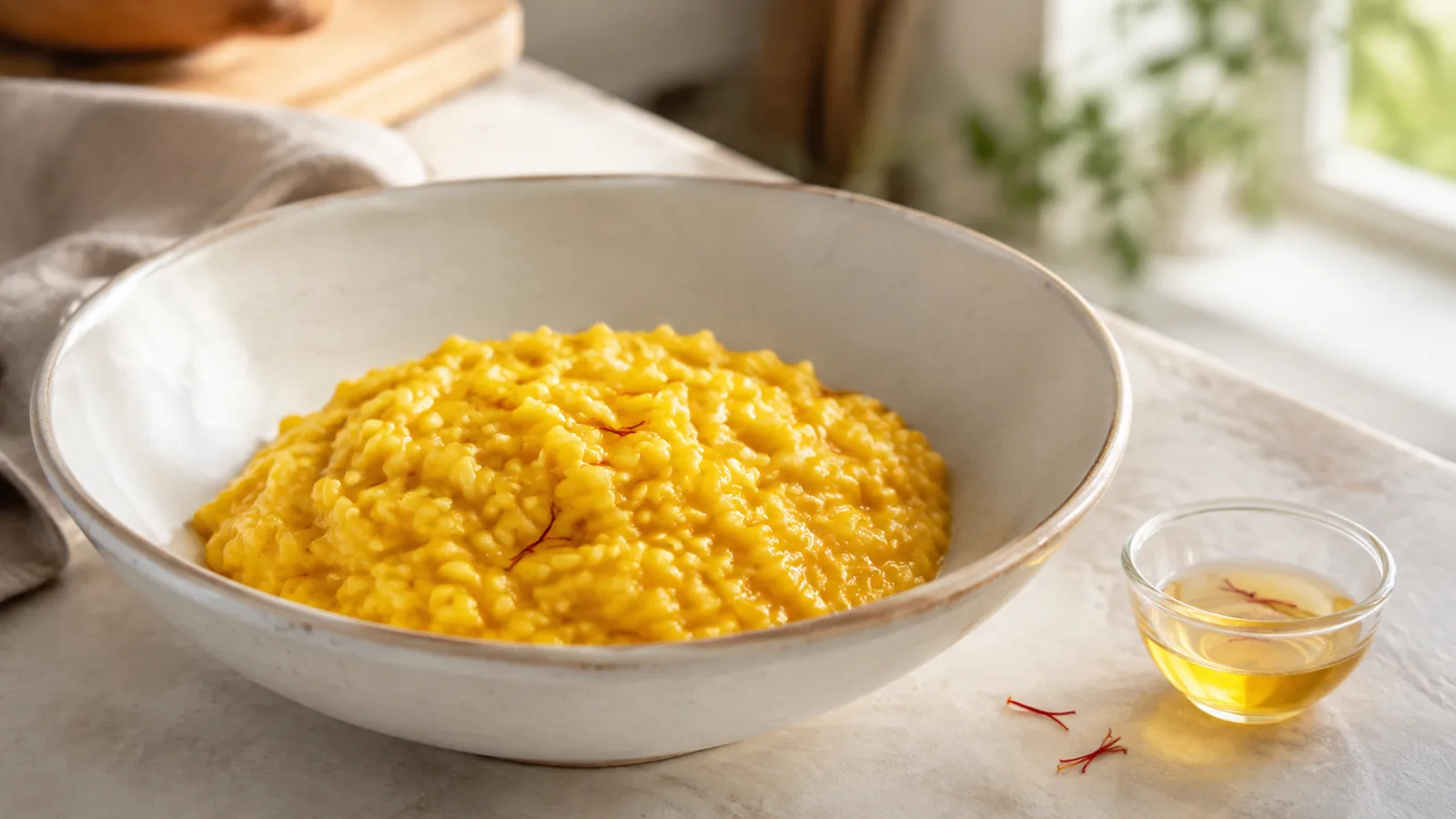
This saffron panna cotta recipe makes one elegant moulded dessert for eight to ten people. It is designed for a dinner or celebration: creamy enough to melt on the spoon, firm enough to turn out onto a platter, and fragrant with real saffron without becoming overly sweet or floral.
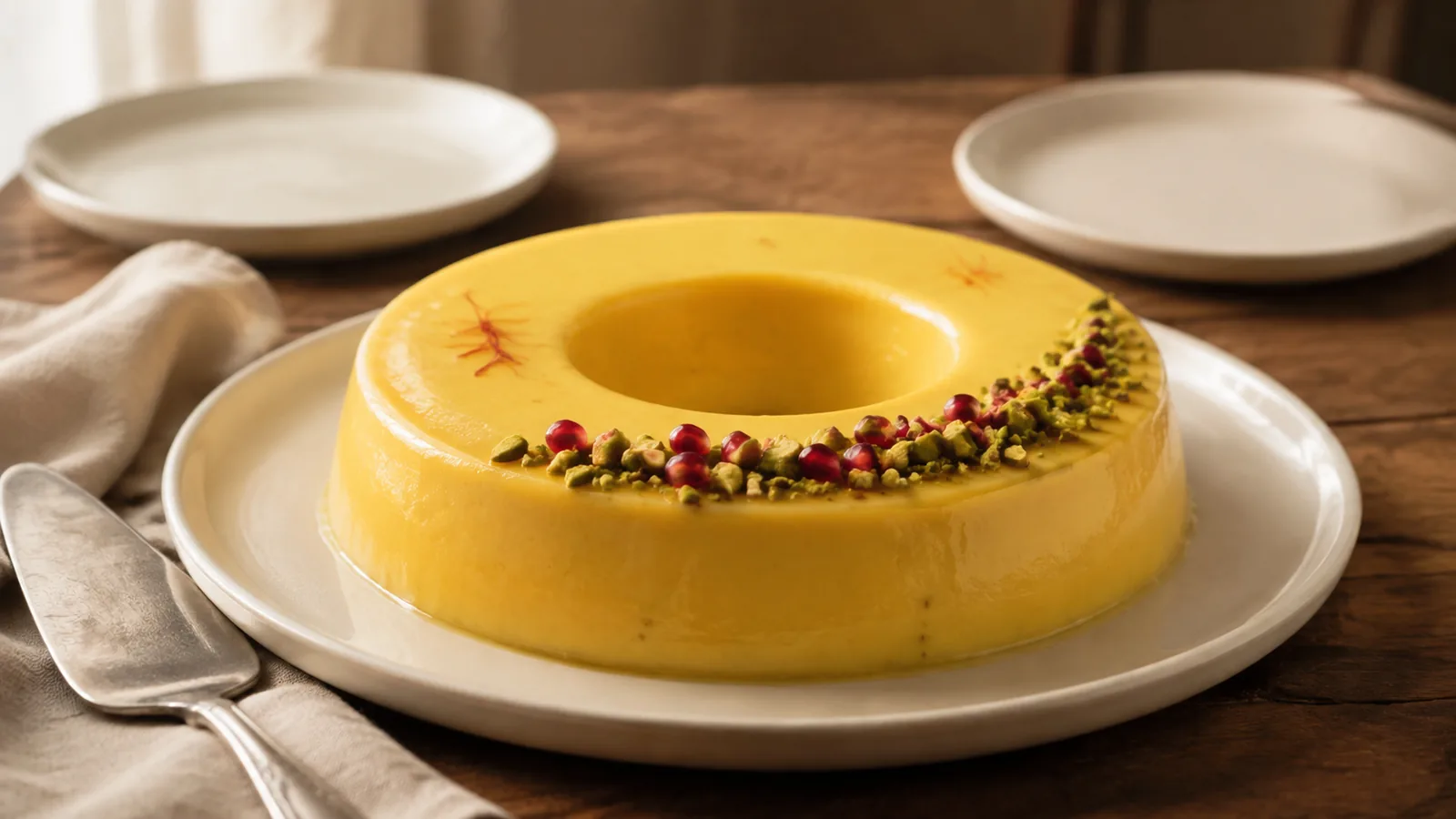
How to Make Saffron Panna Cotta: A Royal and Delicious Dessert
Individual panna cottas are forgiving because a guest can eat them straight from the glass. A single large mould needs a slightly more dependable set and a careful release. That is the purpose of this version. It uses four cups of dairy in a ring, loaf or smooth decorative mould and chills overnight before serving. The same dessert may appear on French-language menus or in searches as pannacotta saffran; the preparation principles are unchanged.
If you want six smaller, softly set servings, use our classic saffron panna cotta recipe. For a more prominent floral finish, the separate saffron panna cotta with rosewater explains how to adjust that ingredient without hiding the saffron.
Ingredients for this saffron panna cotta recipe
- 3 cups (720 ml) whole milk
- 1 cup (240 ml) heavy cream
- 1/2 cup (100 g) granulated sugar
- A generous pinch of saffron threads, about 0.15 g
- 10 g unflavoured gelatin powder, about 3 level teaspoons
- 1/4 cup (60 ml) cold water for blooming the gelatin
- 1 to 3 teaspoons food-grade rosewater, optional and to taste
- A small pinch of salt
- Pistachio flakes or slivers for serving
- A few raspberries, pomegranate arils or culinary rose petals for serving, optional
You will also need a smooth 1.2-litre mould, loaf pan or ring mould. Avoid a shape with extremely fine grooves; panna cotta is tender, and a complicated pattern is harder to release intact.
Why the former ratio needed correction
The earlier version listed 3 cups of milk, 1 cup of sugar without heaping, 1 heavy cream packet, ⅓ cup of rosewater, 2 tablespoons of thick saffron syrup, 3 tablespoons of gelatin powder and ½ cup of room temperature water. Those quantities were too ambiguous for a reliable recipe. Cream packets vary by market, and a concentrated saffron syrup may already contain an unknown amount of sugar.
Three tablespoons of gelatin would also make four cups of dairy much firmer than panna cotta, while ⅓ cup of rosewater could dominate the cream and saffron. That old ratio is closer to a sweet, sliceable milk jelly; for that texture, follow a tested saffron jelly recipe. The formula here specifies weights and volumes and uses enough gelatin for one large unmoulded dessert without turning it rubbery.
Prepare the saffron and the mould
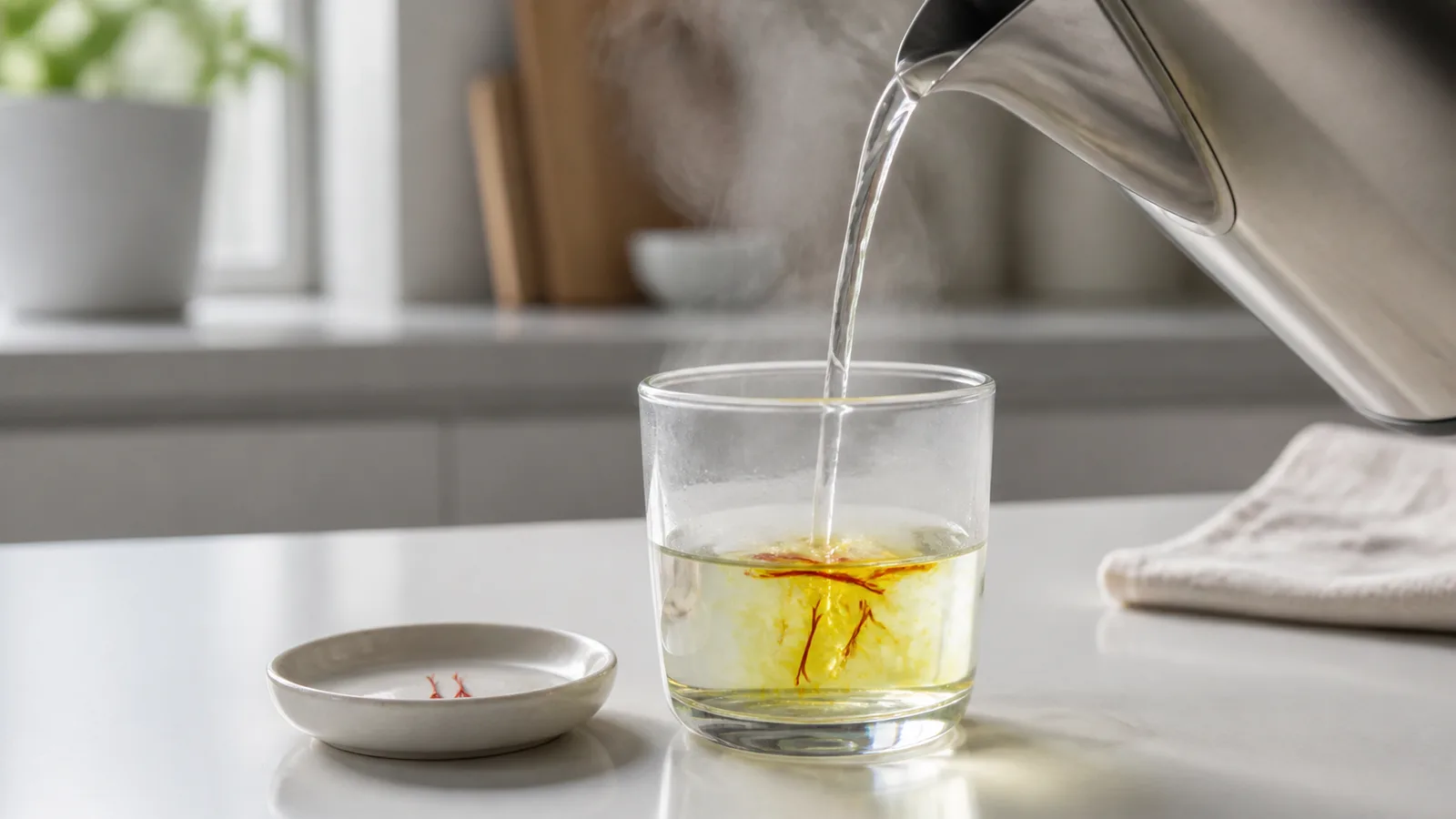
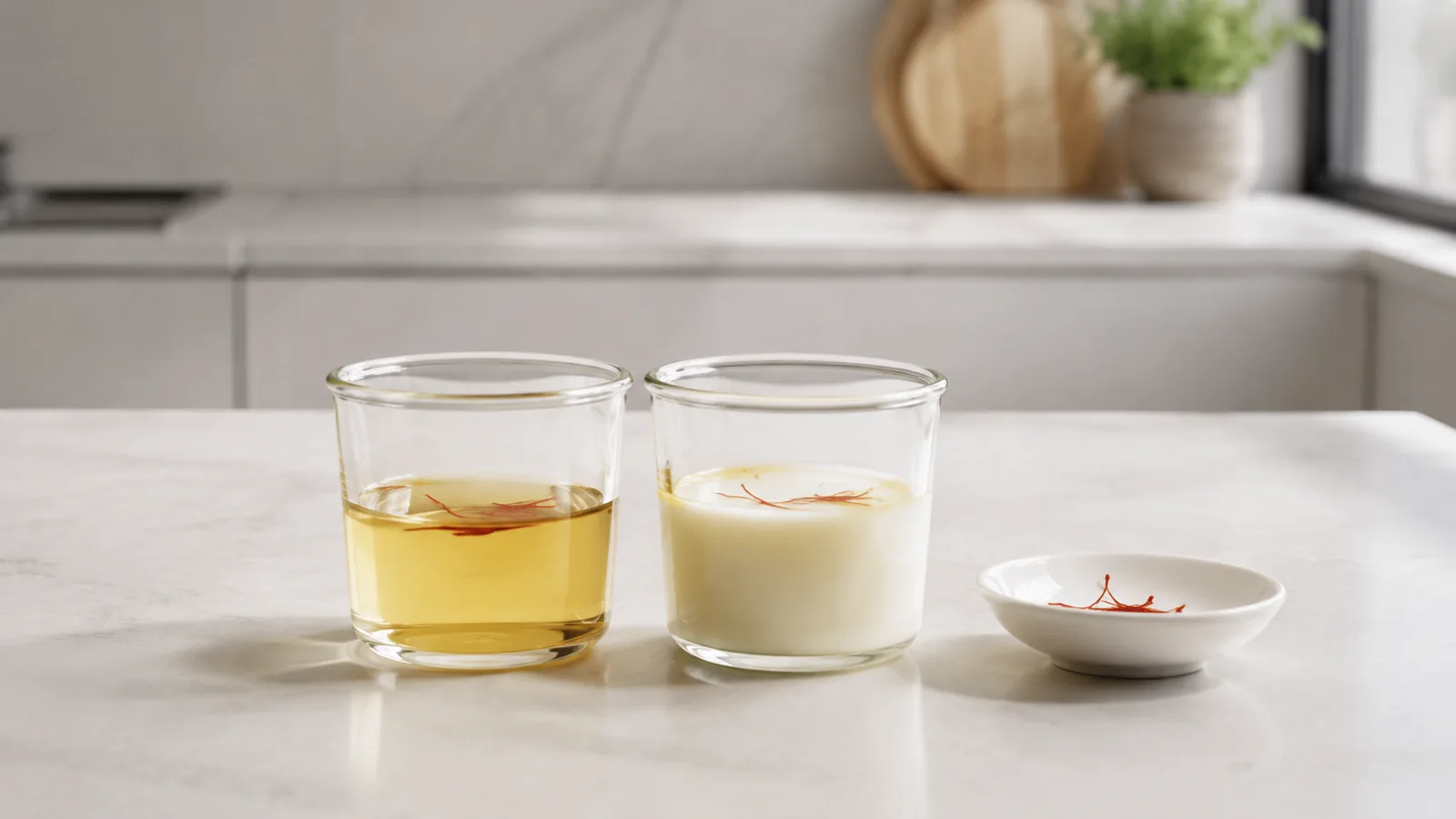
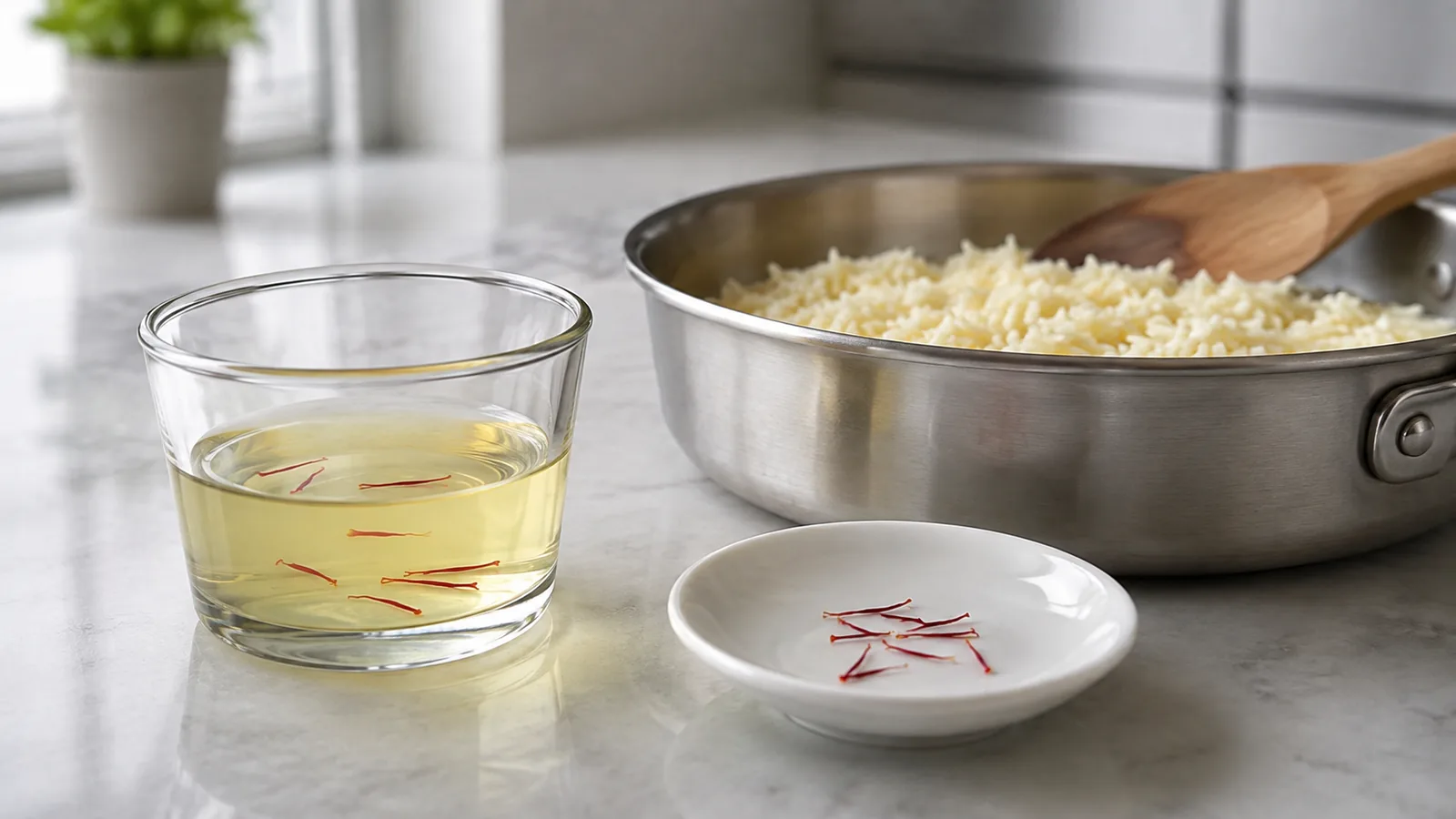
Crush the saffron threads into fine grains with a small mortar. Take 3 tablespoons from the measured milk, warm it until hot but not boiling, and stir in the saffron. Cover the cup and leave it for 10–15 minutes. The liquid should become deep gold and smell clearly of saffron.
Wipe the inside of the mould with the thinnest possible film of neutral oil. Use a clean paper towel to remove every visible pool. The oil is release insurance, not an ingredient, and too much leaves a slick surface.
Steps to prepare saffron panna cotta
Step 1: Bloom the gelatin
Put the cold water into a small heatproof bowl. Sprinkle the gelatin evenly over the surface instead of tipping it into one mound. Leave it undisturbed for 5–10 minutes, until the granules have absorbed the water and look thick and spongy.
Blooming allows water to reach each granule before heat is applied. If dry powder is dropped directly into hot milk, the outside can set around a dry centre and create stubborn lumps.
Step 2: Warm the milk and sugar
Pour the remaining milk into a saucepan with the sugar and salt. Warm it over medium-low heat, stirring until the sugar has dissolved. Stop before it boils. Steam and small bubbles around the edge are enough.
Remove the saucepan from the heat. Add the saffron infusion and stir slowly, scraping the base so the colour is evenly distributed.
Step 3: Dissolve the gelatin
Place the bowl of bloomed gelatin over a small pan of barely simmering water to make a gentle steam bath. The base of the bowl should sit above the water, not in it. Stir until the mixture is clear, then remove it promptly.
Whisk the dissolved gelatin into the warm saffron milk for about 30 seconds. Do not return the mixture to a boil; prolonged high heat is unnecessary, and whisking too vigorously adds bubbles that show on the finished surface.
Step 4: Add the cream and rosewater
Pour in the heavy cream and stir until the colour is uniform. There is no need to heat the cream in a separate pot. If the cold cream makes the mixture begin to thicken immediately, set the pan over very low heat for a few seconds while stirring, only until smooth.
Add 1 teaspoon of rosewater. Cool a spoonful for a minute and taste it before adding more. Rosewater varies considerably between brands and becomes more noticeable beside cold, mild dairy. The aim is a quiet floral finish, not perfume.
Step 5: Fill the mould
For the smoothest finish, pour the mixture through a fine sieve into a jug. This catches any undissolved gelatin, although it may also remove visible saffron pieces. If the gelatin is completely clear and you like the red flecks, skip the sieve.
Pour into the prepared mould in a steady stream. Pop large surface bubbles with the tip of a clean spoon. Let the mould cool briefly, then cover without touching the cream.
Step 6: Chill for a full set
Refrigerate the panna cotta for at least 8 hours. Overnight is preferable for a large mould because the centre takes longer to cool and set than six small cups. Keep the mould level and do not place warm food beside it.
When it is ready, the centre should wobble as one piece when the mould is moved. It should not ripple like liquid or feel rigid like a gummy sweet.
How to unmould it cleanly
Fill a tray or sink with warm water that reaches most of the way up the outside of the mould. Dip the mould for 8–12 seconds, keeping water away from the panna cotta. Dry the outside, then gently loosen the top edge with a fingertip or thin blunt knife.
Center a chilled serving platter over the mould. Hold the two firmly together, invert in one confident movement and pause. If the dessert does not release, turn it upright and repeat the warm-water dip for three to five seconds. Long heating melts the outside, so use two brief attempts rather than one prolonged soak.
Serving a large saffron panna cotta
Add the garnish after unmoulding. A narrow line of pistachio flakes makes the golden colour stand out without hiding the surface. A few tart berries or pomegranate arils cut through the richness. If using culinary rose petals, keep them sparse so diners know saffron is the main flavour.
Use a thin knife dipped in hot water and wiped dry for the first cut. A broad serving spoon is often easier than a cake slice because panna cotta is meant to be tender. Eight portions are generous; ten work well after a full meal.
Common problems and simple fixes
The dessert did not set
Check that the gelatin was weighed, fully bloomed and completely dissolved. A deep mould may also need longer than 8 hours. If the centre remains liquid after an overnight chill, serve it in glasses rather than trying to reheat a decorated dessert.
The panna cotta is too firm
Too much gelatin is the usual cause. Spoon measures vary, so use the gram weight when possible. Do not increase the gelatin merely because the mould is large; extra chilling time is gentler than a rubbery set.
There are pale and dark layers
Very coarse saffron can settle while the mixture cools. Grind the threads more finely, infuse them first and give the jug one slow stir immediately before pouring. Layers can also form when the dairy was not mixed thoroughly after the cream was added.
The saffron or rosewater is overpowering
Use measured threads rather than an unknown thick saffron syrup, and treat rosewater like an extract. More of either ingredient does not make the dessert more luxurious. Serve an over-floral batch with plain tart fruit, then reduce the rosewater next time.
Make-ahead and safe storage
This is a useful make-ahead dessert because it improves with an uninterrupted overnight chill. Keep it covered at 4°C/40°F or below, and wait until serving to add pistachios so they remain crisp.
Eat refrigerated panna cotta within three to four days. That conservative window follows official guidance for properly chilled prepared leftovers. Discard it if it has remained at room temperature for more than two hours or shows an unusual odour, mould or another sign of spoilage.
A royal and delicious saffron panna cotta does not need an extravagant ingredient list. Its polish comes from a smooth set, a measured saffron infusion, restrained rosewater and enough time in the refrigerator. Prepare it the day before, unmould it calmly and let the golden dessert arrive at the table as one complete centrepiece.