Saffron Panna Cotta should be softly set, creamy and fragrant enough to taste the spice without hiding the dairy. This recipe uses real saffron threads, a modest touch of rosewater and enough gelatin to unmould cleanly while keeping the dessert tender.
How to Make a Delicious Saffron Dessert
Panna cotta means “cooked cream,” although the mixture is gently heated rather than boiled. Saffron gives the pale cream a natural golden colour and a warm, distinctive aroma. Rosewater and pistachio suit it well, but both are optional; restraint keeps the saffron recognisable.
This saffron panna cotta recipe makes six small servings. Allow about 25 minutes of active work and at least four hours to chill. Preparing it the night before gives the set a full 8 hours and takes pressure off serving time.
Ingredients for a Creamy Panna Cotta
- 2 cups (480 ml) heavy cream
- 1 cup (240 ml) whole milk
- 1/3 cup (65 g) granulated sugar
- A generous pinch of saffron threads, about 0.1 g
- 2 1/4 teaspoons (one 7 g envelope) unflavoured gelatin powder
- 3 tablespoons (45 ml) cold water
- 1 to 2 teaspoons rosewater, to taste
- A small pinch of salt
- Chopped or sliced pistachios for serving, optional
You will also need six 120–150 ml ramekins or glasses. Use cups if you want to serve the panna cotta without unmoulding; use smooth-sided ramekins or moulds if you want to turn it onto plates.
Why this balance works
The former version of this recipe used 3 cups milk, 1 cup sugar (heaping), 1 tablespoon cream, 1/3 cup rosewater, 2 tablespoons concentrated saffron extract, 3 tablespoons gelatin powder and 1/2 cup water at room temperature. That mixture will gel, but the high gelatin level makes it much firmer than a classic panna cotta, while a heaping cup of sugar and so much rosewater can overwhelm the saffron.
The revised formula keeps three cups of dairy but makes cream the larger share, reduces the sugar and rosewater, and uses a standard small packet of gelatin. If you specifically want a sliceable saffron milk jelly, the former texture may be closer to your goal; our separate saffron jelly recipe is designed for that style.
Before you begin
Measure everything first. Gelatin needs time to absorb cold water before it is dissolved, and saffron benefits from a short warm infusion. Keep the dairy below a boil: a gentle steam is enough to dissolve sugar and prepare the mixture.
For the clearest saffron flavour, grind the threads just before use. The guide to grinding and preparing saffron for cooking explains how to work with a small quantity without losing it in the tool.
Step-by-Step Instructions
Step 1: Prepare the Gelatin Mixture
Put 3 tablespoons of cold water in a small heatproof bowl. Sprinkle the gelatin powder evenly across the surface rather than dropping it in one mound. Leave it for 5–10 minutes, until the granules have absorbed the water and the mixture looks spongy.
Do not use hot water for blooming. The outside can clump before the centre hydrates, leaving small rubbery pieces in the finished cream.
Step 2: Infuse the saffron and dissolve the gelatin
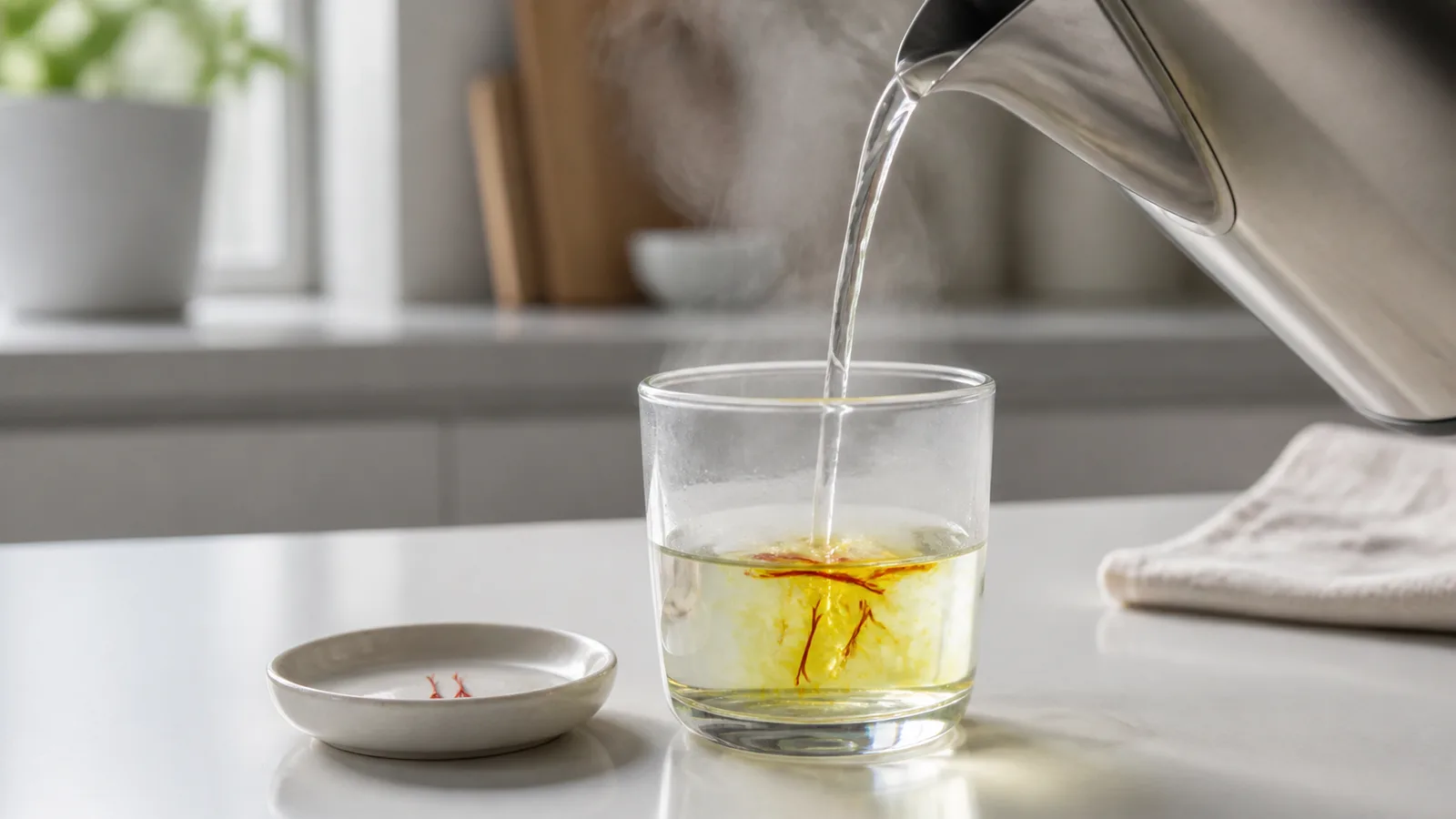
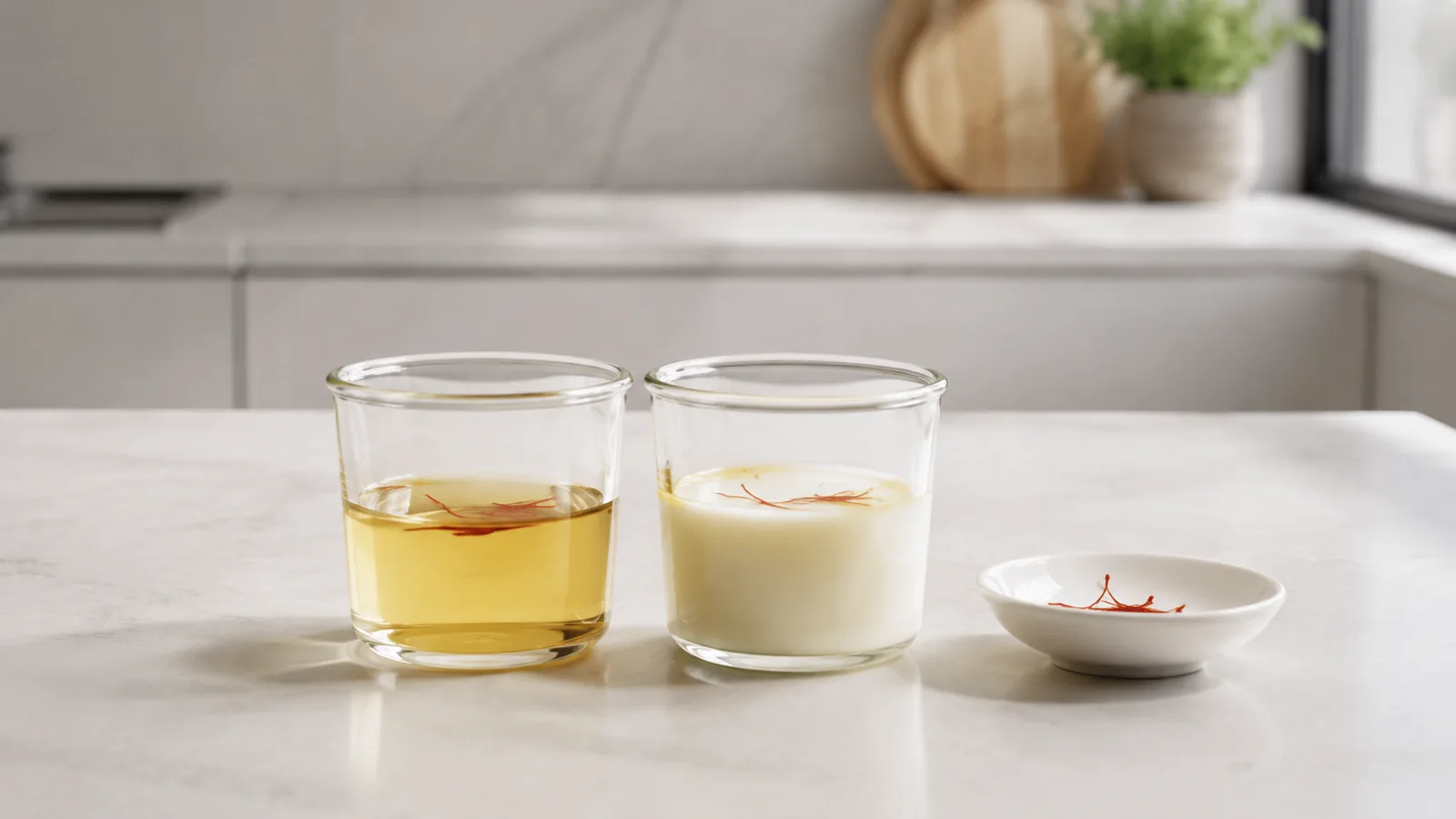
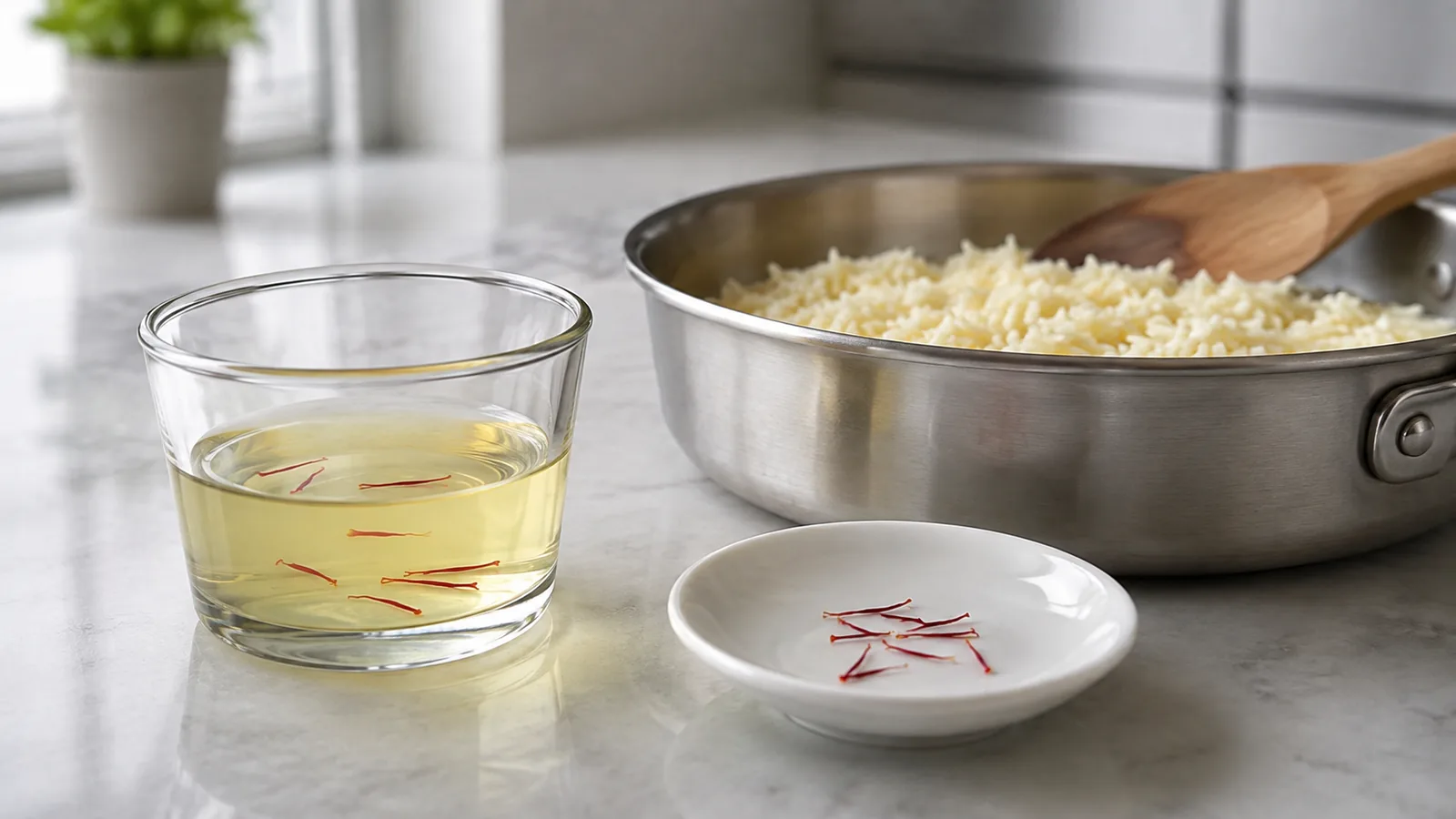
Crush the saffron into fine grains. Take 2 tablespoons from the measured milk, warm it until comfortably hot but not boiling, and stir in the saffron. Leave it to stand for about 10 minutes.
Meanwhile, place the gelatin bowl over a small pan of barely simmering water, using a bain-marie method. The base of the bowl should not touch the water. Stir gently until the gelatin becomes clear, then remove it from the steam. You can also dissolve bloomed gelatin in the hot dairy during the next step, but the bain-marie makes it easy to see that no granules remain.
Step 3: Incorporate the Gelatin into the Milk and cream
Combine the remaining milk, heavy cream, sugar and salt in a saucepan. Warm over medium-low heat, stirring until the sugar dissolves completely. Small wisps of steam may appear, but do not let the mixture boil.
Remove the pan from the heat. Whisk in the dissolved gelatin, then add the concentrated saffron infusion. Stir slowly for 30 seconds, scraping the base and corners of the pan so the colour is even.
Step 4: Add Cream flavourings carefully
The cream is already in the dairy mixture, so it does not need a separate pan. Add 1 teaspoon of rosewater after the pan leaves the heat, taste a cooled drop, and add the second teaspoon only if you want it. Rosewater strengthens as the dessert chills.
For an especially smooth finish, pour the mixture through a fine sieve into a clean jug. This catches any undissolved gelatin but may also catch visible saffron particles. If you prefer the red flecks, make sure the gelatin is fully clear and skip the sieve.
Step 5: Set the Panna Cotta
For an unmoulded dessert, wipe the inside of each mould with the thinnest possible film of neutral oil. Serving glasses need no oil. Divide the mixture evenly, let the surface cool briefly, then cover and refrigerate.
Chill for at least four hours. About 8 hours is ideal for a reliable set, especially in a deeper mould. Keep the cups level and do not stack anything on their covers.
Step 6: Serve and Garnish
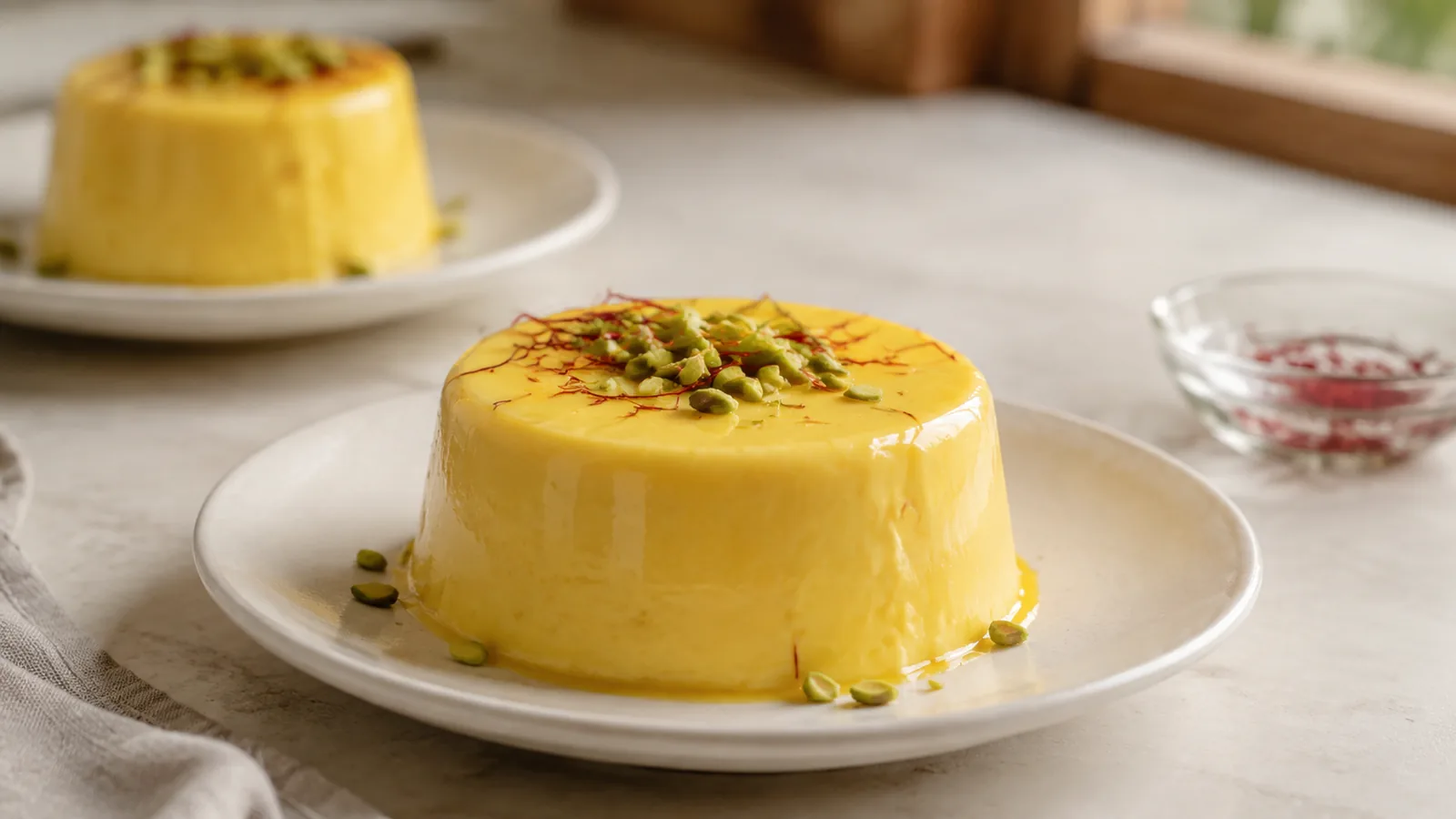
Serve directly in glasses, or unmould each panna cotta shortly before eating. Dip only the outside of the mould in warm water for 5–8 seconds, loosen the top edge with a fingertip or thin blunt knife, place the plate over it and invert in one confident movement. If it does not release, repeat the warm-water dip for a few seconds rather than forcing it.
Finish with a small scattering of pistachio slices. A few saffron threads or edible rose petals also work, but avoid a heavy garnish that competes with the soft texture.
How to tell when panna cotta is set
The centre should wobble as one piece when the cup is moved. It should not ripple like liquid, nor feel firm like a gummy sweet. A spoonful should hold its shape briefly and then melt across the tongue.
If the mixture is still liquid after 8 hours, the gelatin may have been under-measured, poorly bloomed or not fully dissolved. If it is rubbery, reduce the gelatin slightly next time; different brands and mould depths can change the perceived set.
Common problems and simple fixes
The gelatin formed lumps
Sprinkle powder across cold water and give every granule time to hydrate. If lumps remain after gentle heating, strain the warm mixture before filling the cups.
The cream separated
A hard boil or prolonged high heat can destabilise the dairy. Use medium-low heat and remove the pan once the sugar has dissolved and the mixture is steaming.
The saffron sank
Very coarse pieces may settle before the cream sets. Grind the threads more finely, infuse them first and let the filled cups cool for a few minutes before refrigeration. A gentle stir in the jug immediately before pouring also helps distribute the last portions evenly.
The rosewater is too strong
Start with one teaspoon. Brands vary greatly, and adding more later is easier than removing it. Vanilla can be used instead, or the saffron can stand alone.
Make-ahead and storage
Keep saffron panna cotta covered in the refrigerator at 4°C/40°F or below. For best texture, make it one day ahead and eat it within three to four days. Official food-safety guidance likewise advises using properly refrigerated prepared leftovers within three to four days.
Add pistachios and delicate garnishes at serving time so they stay crisp. Panna cotta is not a good candidate for freezing: thawing can make a gelatin-set dairy dessert weep or turn grainy.
Variations that keep the saffron clear
- Without rosewater: omit it and add half a teaspoon of vanilla, or use only saffron.
- Less sweet: reduce sugar to 1/4 cup (50 g); the set remains the same.
- Serve in glasses: reduce gelatin to 2 teaspoons for an even softer spoon dessert.
- With fruit: add a small spoonful of tart cooked berry or citrus compote at serving.
Agar is not a one-for-one substitute for gelatin: it sets and melts differently. Use a tested agar panna cotta formula rather than swapping the same spoon measure into this recipe.
A saffron panna cotta worth making again
The best version is quiet and balanced: cream first, a clear saffron aroma, gentle sweetness and a wobble that barely holds on the plate. Bloom the gelatin properly, do not boil the dairy, and give the cups a full chill. Once those details are right, the recipe is simple enough for an ordinary dinner and polished enough for a special occasion.