Saffron Panna Cotta with Rosewater is a softly set cream dessert in which both aromas need room to breathe. Saffron should bring warm, honeyed depth; rosewater should arrive lightly at the finish rather than tasting like perfume.
How Saffron-Infused Desserts Enhance Culinary Experiences
Saffron changes a plain dairy dessert in several ways at once. It gives the cream a natural golden tint, adds a dry floral aroma and leaves a gentle, slightly earthy flavor behind the sweetness. Rosewater works in a different register: it is brighter and more immediately fragrant. Used together, they can make a simple panna cotta feel special without adding a complicated technique.
The balance matters more than extravagance. Extra saffron does not automatically make a better dessert, and a large pour of rosewater can hide both the cream and the spice. This recipe builds the flavor in two small additions, so you can smell and taste each one.
What Makes Saffron Desserts Special?
Saffron is especially comfortable in milk, cream, rice and gently flavored syrups. Those ingredients carry its aroma without introducing strong bitterness or acidity. That is why saffron and milk puddings, rice desserts, cakes and panna cotta appear so often among saffron recipes for desserts.
Panna cotta is a useful showcase because the base is quiet. The finished texture should tremble when the plate moves and yield easily to a spoon. A firm, bouncy result is closer to milk jelly. If that is the texture you want, follow a dedicated saffron jelly recipe; this formula is designed to remain creamy.
Ingredients for the Perfect Saffron Panna Cotta
This makes six modest servings in 120–150 ml ramekins or glasses.
- 2 cups (480 ml) heavy cream
- 1 cup (240 ml) whole milk
- 1/3 cup (65 g) granulated sugar
- A generous pinch of saffron threads, about 0.1 g
- 2 1/4 teaspoons (7 g) unflavored gelatin powder
- 3 tablespoons (45 ml) cold water
- 1 to 2 teaspoons food-grade rosewater
- A small pinch of salt
- Pistachio slivers or a few dried culinary rose petals, for serving
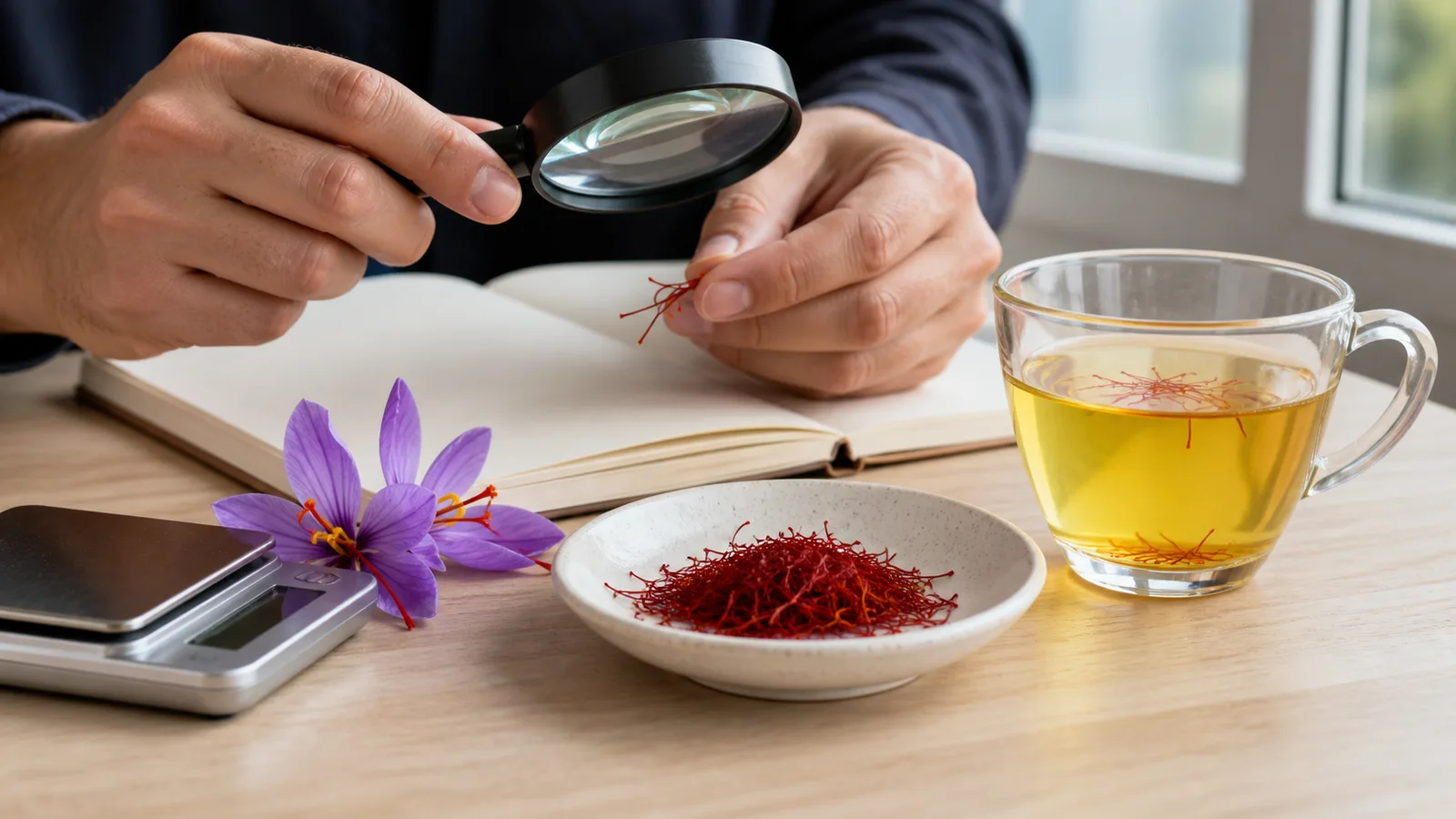
Use saffron threads rather than an unidentified yellow coloring. Crush them shortly before infusion; our guide to preparing saffron for cooking explains the same simple approach. Rosewater varies considerably by brand, so begin with one teaspoon and keep the bottle nearby for the final taste.
Why the former ingredient ratio needed adjustment
The earlier version listed 3 cups of milk, 1 heaping cup of sugar, 1 tablespoon of fresh cream, 1/3 cup of rosewater, 2 tablespoons of concentrated saffron extract, 3 tablespoons of gelatin powder and 1/2 cup of room-temperature water. Those ingredients do set, but they produce a firm, sweet milk jelly rather than the delicate panna cotta promised by the page.
The revised recipe keeps three cups of dairy while making cream the larger share. It also reduces the gelatin to a level that can still be unmolded, and treats rosewater as seasoning rather than a main liquid. The old measures are useful if a firm molded jelly is the goal, but they should not be mistaken for the only way to make this dessert.
Prepare the saffron and molds first
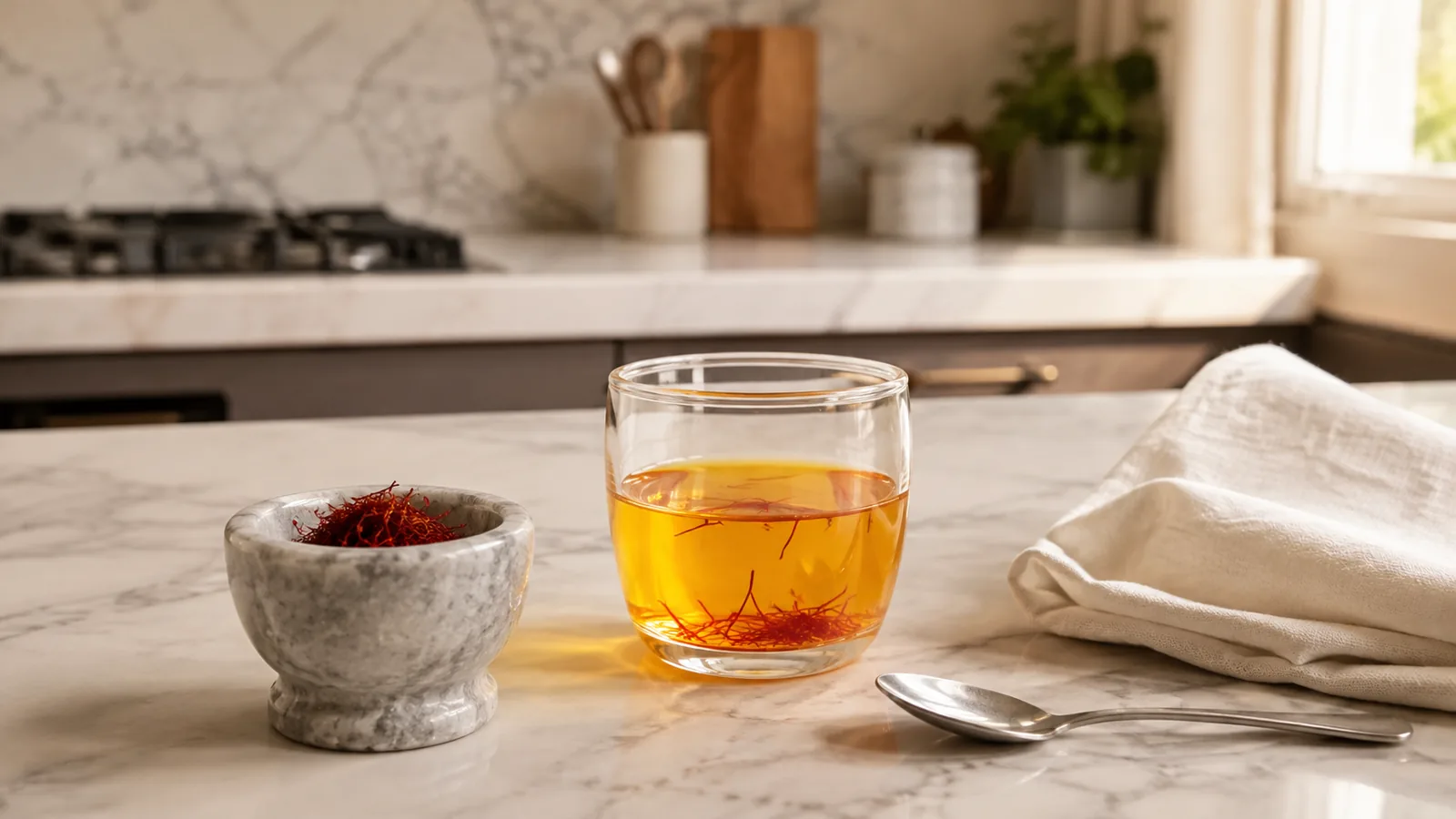
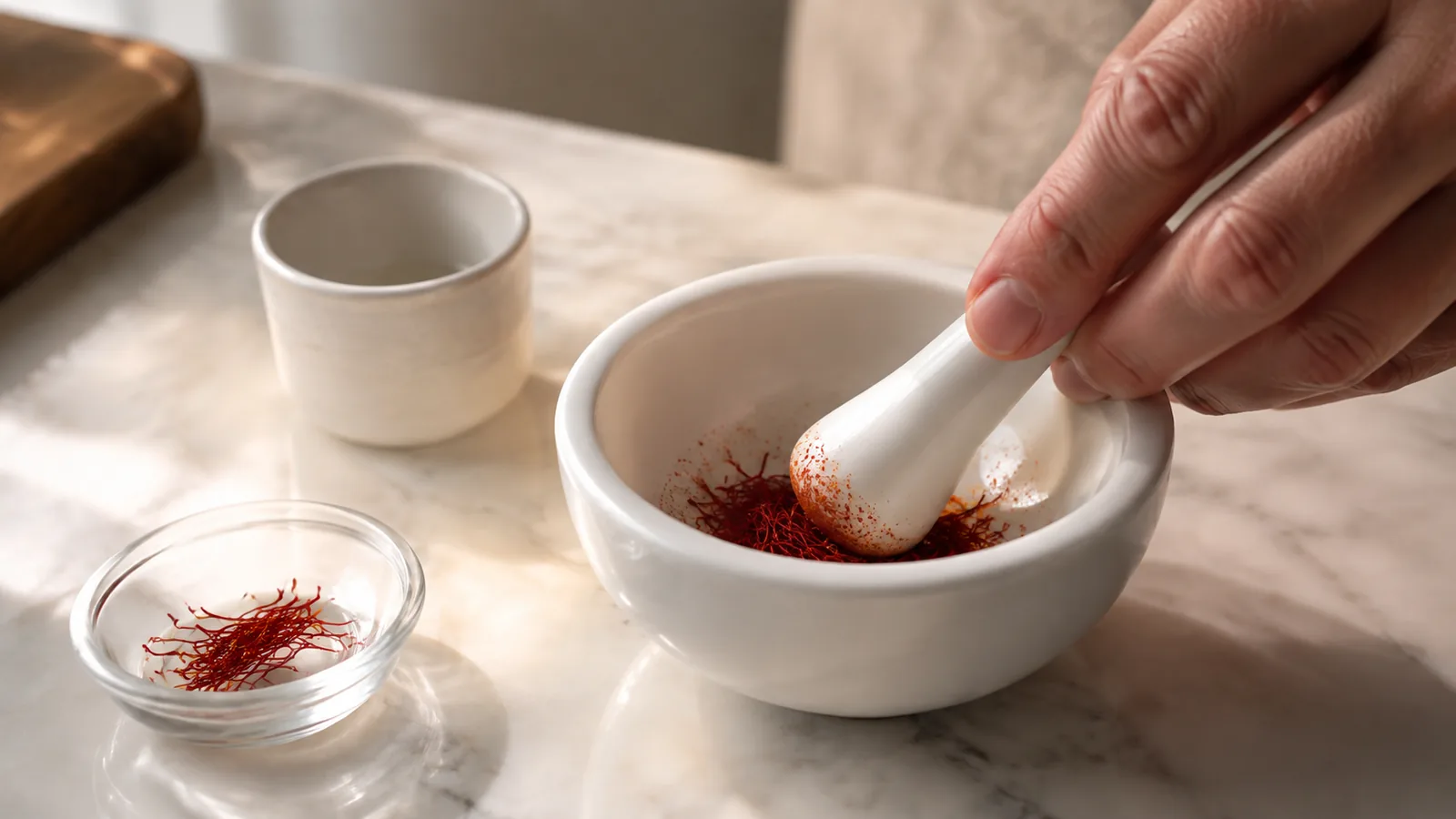
Grind the saffron threads with a small pinch of the measured sugar. Stir them into 2 tablespoons of the measured milk while it is warm, not boiling, and leave the covered cup for 10 minutes. A good infusion turns deep gold and smells recognizably of saffron.
If you plan to unmold the panna cotta, wipe six smooth-sided molds with the thinnest possible film of neutral oil. There should be no visible pool. Skip the oil when serving the dessert in glasses.
Step-by-Step Guide to Preparing Saffron Panna Cotta
Step 1: Activate the Gelatin
Put the cold water in a small heatproof bowl. Sprinkle the gelatin across the entire surface and leave it undisturbed for 5–10 minutes. The powder should absorb the water and become thick and spongy.
Set the bowl over a pan containing a little barely simmering water, using a bain-marie method. Do not let the bowl touch the water. Stir gently until the gelatin is clear, then take it off the heat. This separate step prevents dry granules from forming rubbery flecks in the cream.
Step 2: Combine the Milk and Saffron
Pour the remaining milk and the cream into a saucepan. Add the sugar and salt, then warm over medium-low heat while stirring. Stop before the mixture boils. Once it is steaming and the sugar has dissolved, stir in the saffron infusion.
Keep the rosewater out for the moment. Adding it after the pan leaves the heat preserves more of its aroma and makes the final strength easier to judge.
Step 3: Add Gelatin to the Milk
Remove the saucepan from the heat. Whisk in the dissolved gelatin, working around the base and corners of the pan. Stir for about 30 seconds, but do not beat air into the mixture.
Rub a drop between two clean fingers after it cools. If you feel a grain, pass the mixture through a fine sieve into a jug. Straining also catches any unusually coarse saffron pieces while leaving the color and aroma in the cream.
Step 4: Introduce the Cream
The cream is already warmed with the milk in this method, which reduces the risk of temperature shock or separation. Stir in 1 teaspoon of rosewater. Cool a spoonful for a minute and taste it; add the second teaspoon only if the fragrance is still too faint.
Remember that cold food releases aroma less readily than warm food. The mixture can smell quite fragrant in the pan yet taste calmer once chilled. Aim for a clear rose note, not the strongest possible one.
Setting and Serving Your Saffron Panna Cotta
Step 5: Pour into Molds
Divide the mixture evenly among the prepared molds or glasses. Let them stand for 10 minutes, then refrigerate uncovered until cool. Cover without touching the surface and chill for at least 6 hours. Eight hours or an overnight rest gives a more dependable set for unmolding.
Keep the cups level and avoid moving them during the first hour. A finished panna cotta should wobble as one piece; liquid movement in the center means it needs more time.
Step 6: Garnish and Enjoy
To unmold, dip only the outside of each mold in warm water for 5–8 seconds. Dry it, loosen the upper edge with a fingertip, cover with a serving plate and invert in one confident movement. Repeat the brief warming once if needed rather than forcing a knife down the side.
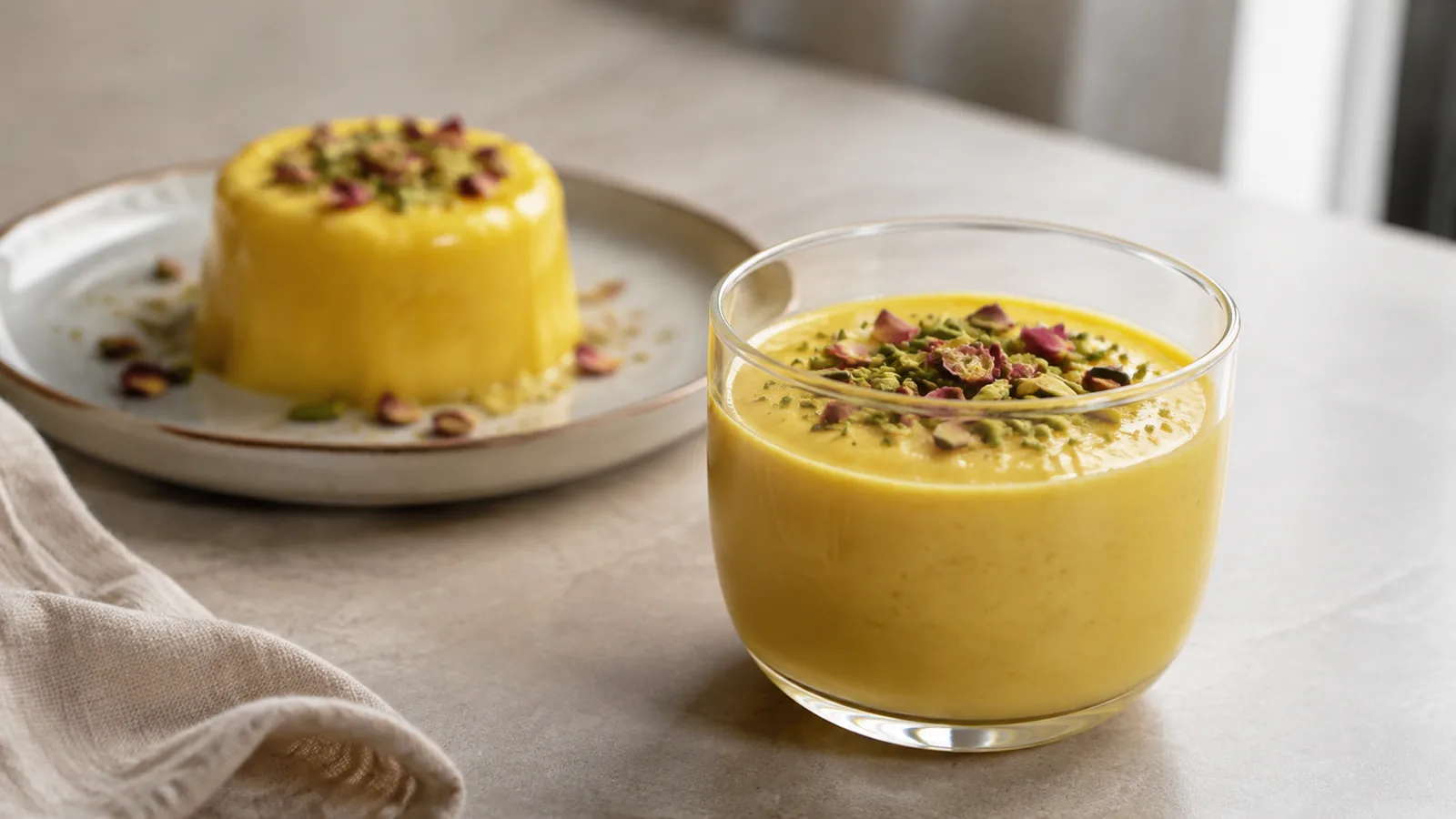
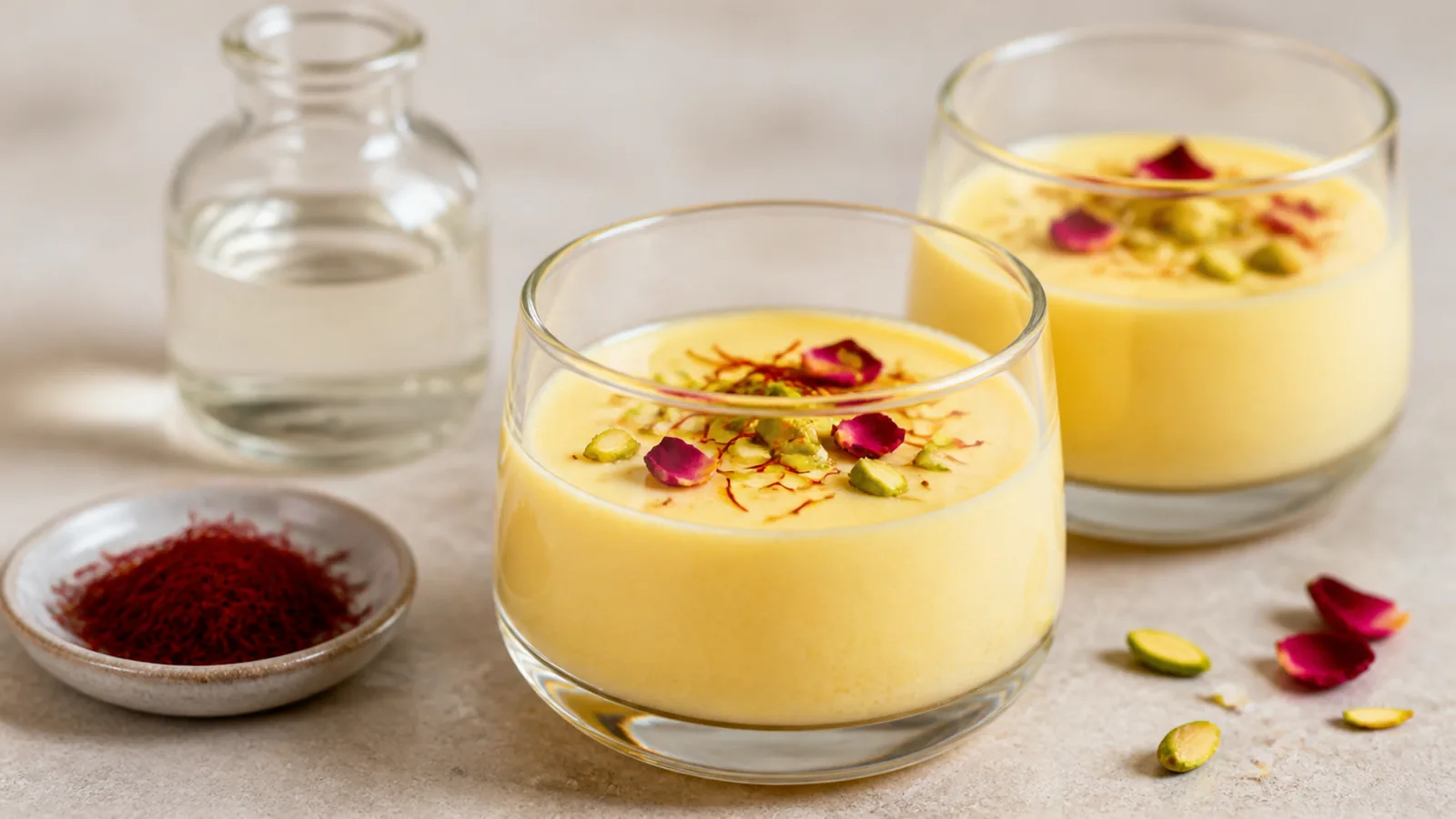
Finish with pistachio slivers and, if you like, two or three dried culinary rose petals. A few saffron threads can identify the flavor, but a heavy garnish competes with the dessert’s smooth texture. Serve chilled.
How to control the rosewater flavor
Food-grade rosewater should be used like an extract. Measure it rather than pouring directly from the bottle. If the brand is new to you, taste a drop diluted in a spoonful of milk before it enters the whole batch.
If the finished panna cotta tastes too floral, serve it with plain berries or a tart cooked berry compote. Do not try to correct an over-perfumed batch with more saffron; that makes both ingredients harder to distinguish. On the next batch, use half as much rosewater and taste before the second addition.
Useful fixes for texture problems
It did not set
Check the gelatin weight as well as the spoon measure, allow the full chilling time and make sure the mixture did not boil after the gelatin was added. Deep or oversized molds may simply need longer than six hours.
It became rubbery
Too much gelatin is the usual cause. Use 7 g for this quantity of dairy and level the teaspoon. If the panna cotta will stay in a glass, 2 teaspoons gives an even softer spoon dessert.
There are two layers
Very coarse saffron or pouring while the mixture is hot can encourage settling. Grind the threads finely, infuse them first and let the jug cool for several minutes. Give it one slow stir immediately before filling the molds.
Make it ahead and store it safely
Panna cotta is well suited to making the day before a dinner. Cover the cups once cool and keep them at 4°C/40°F or below. Add pistachios just before serving so they remain crisp.
Use the dessert within three to four days. That conservative limit follows official guidance for properly refrigerated prepared leftovers. Discard a serving that has remained at room temperature for more than two hours, or one with an unusual odor, visible mold or clear signs of spoilage.
A restrained finish tastes more luxurious
The appeal of saffron panna cotta with rosewater comes from precision rather than excess. A tender set lets the cream melt quickly, while a measured infusion keeps saffron recognizable beside the rosewater. Prepare it slowly, chill it fully and keep the garnish simple. The result feels polished because every flavor has a purpose.