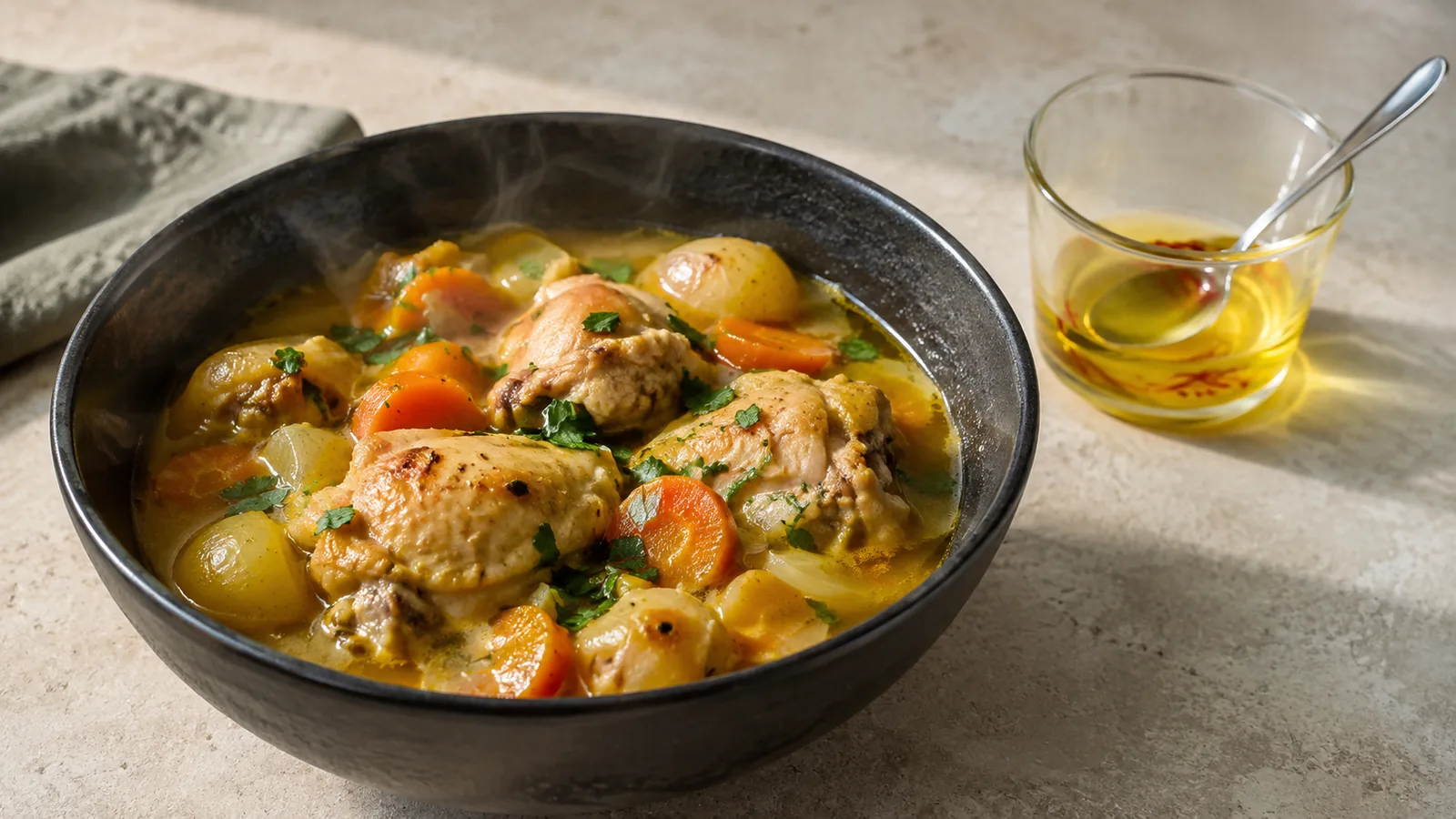
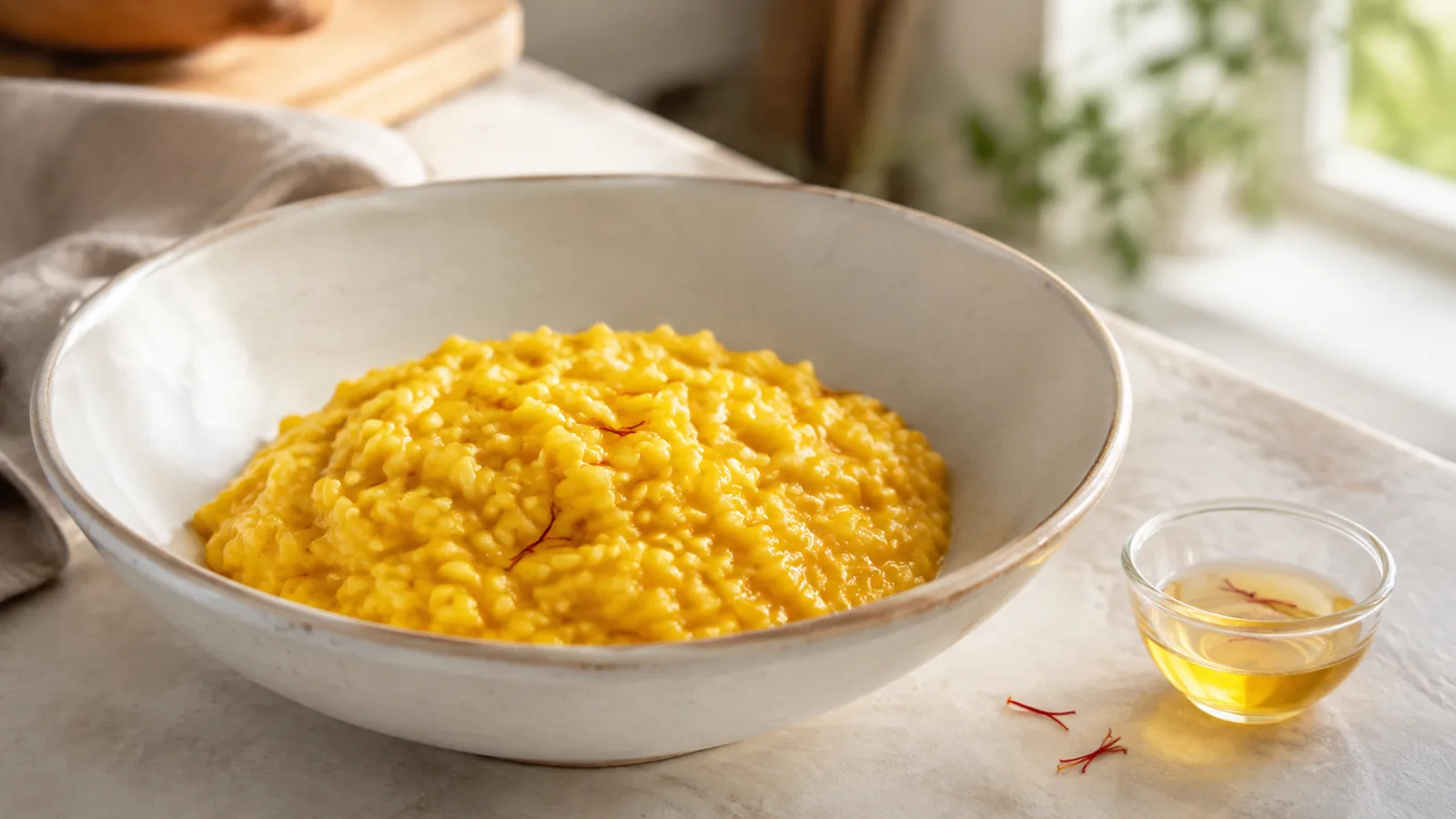
This saffron flake Esfahani recipe makes poolaki: thin, crisp Persian sweets traditionally associated with Isfahan. Each amber disc is light enough to serve beside tea, with saffron giving the candy a warm colour and delicate aroma.
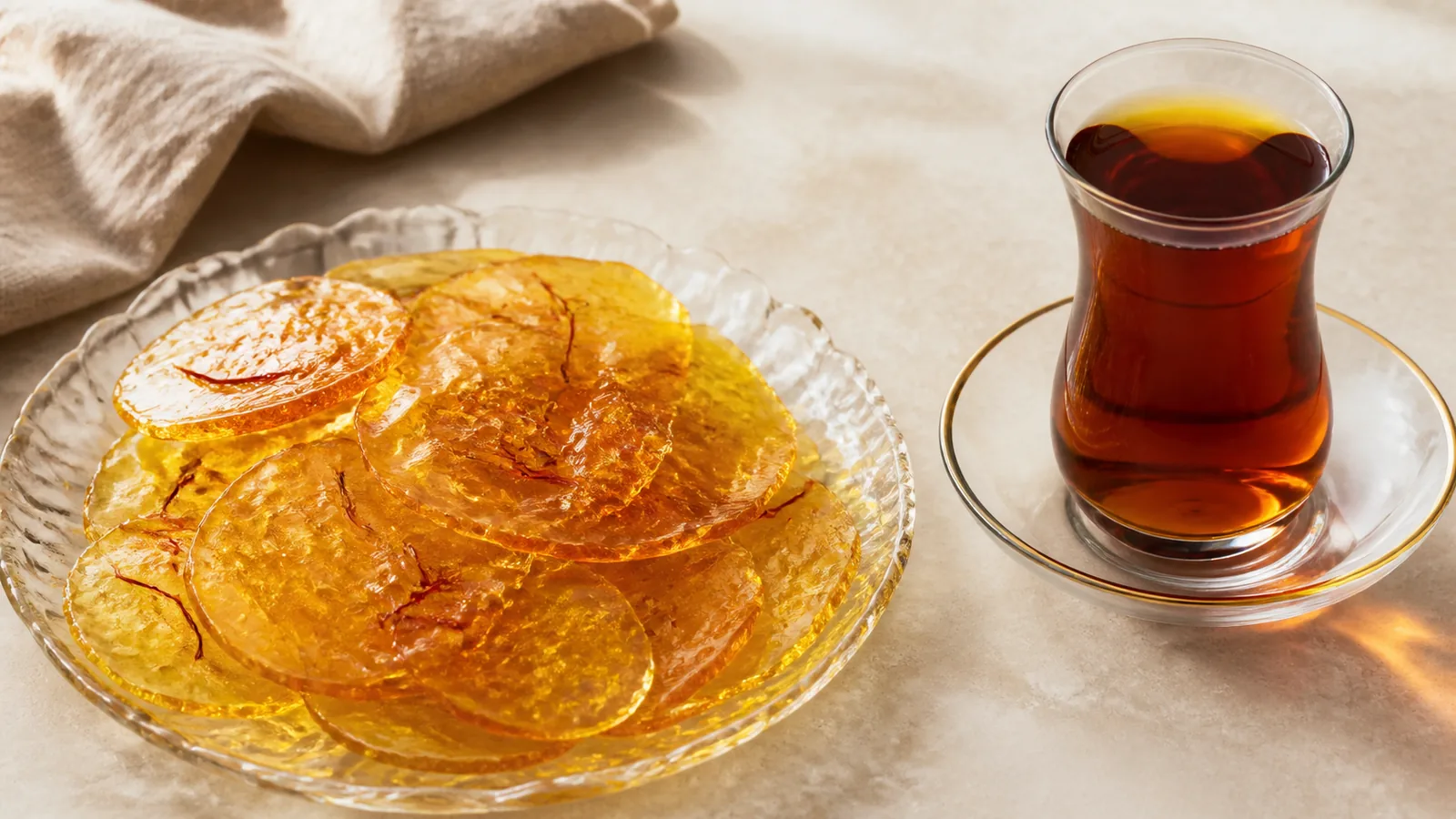
What is saffron poolaki?
Poolaki, sometimes written polaki or translated literally as “flake,” is a brittle sugar candy formed in small, thin rounds. The vinegar is not there to make the sweets taste sour. In this small amount it helps the syrup remain clear and reduces unwanted sugar crystals.
The recipe moves quickly once the syrup is ready, so prepare the tray and tools before putting the pan on the heat.
Ingredients
- 1 cup sugar (150 g)
- 1/2 cup water (80 ml)
- 1/4 cup grape vinegar (40 ml)
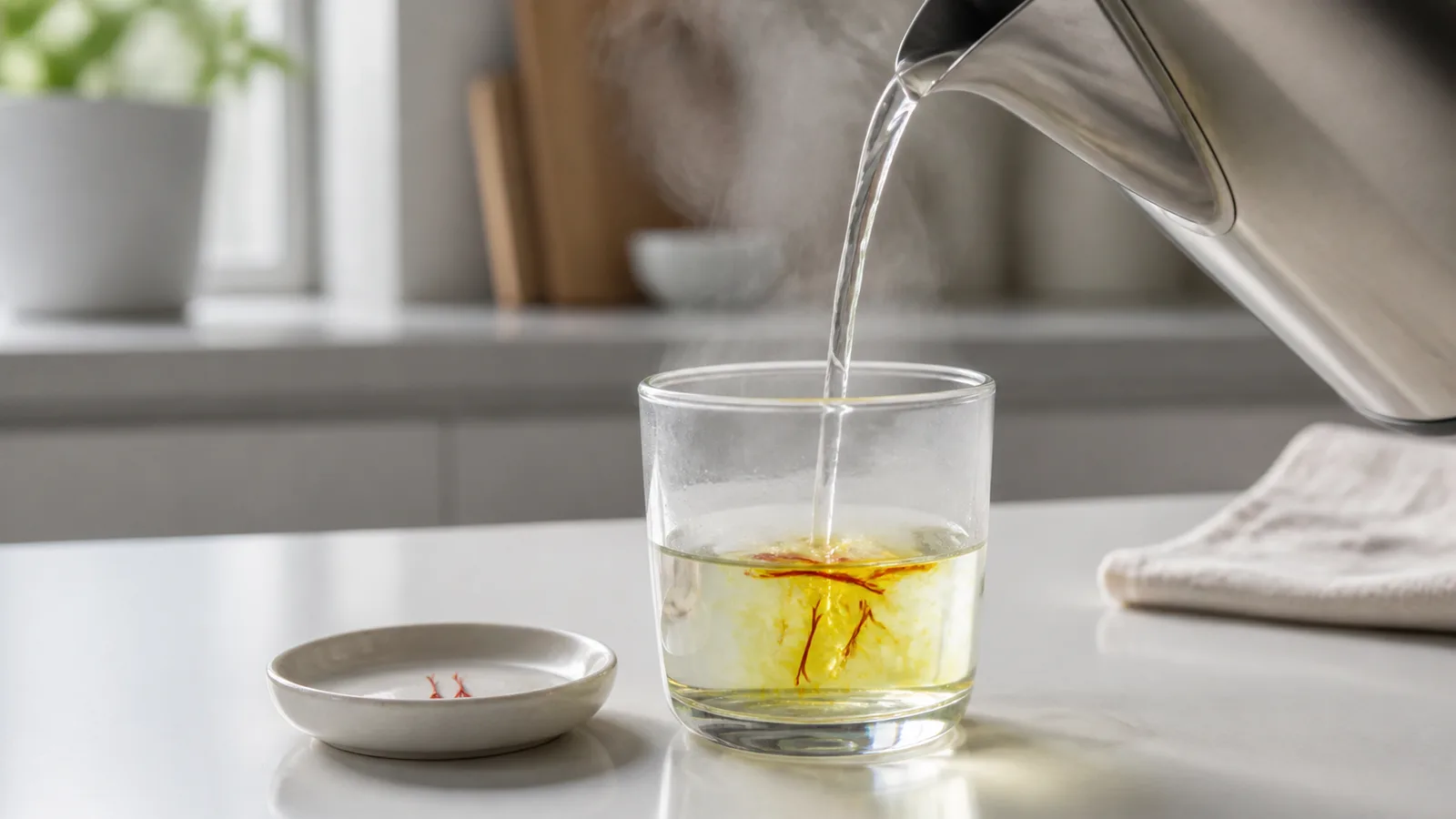
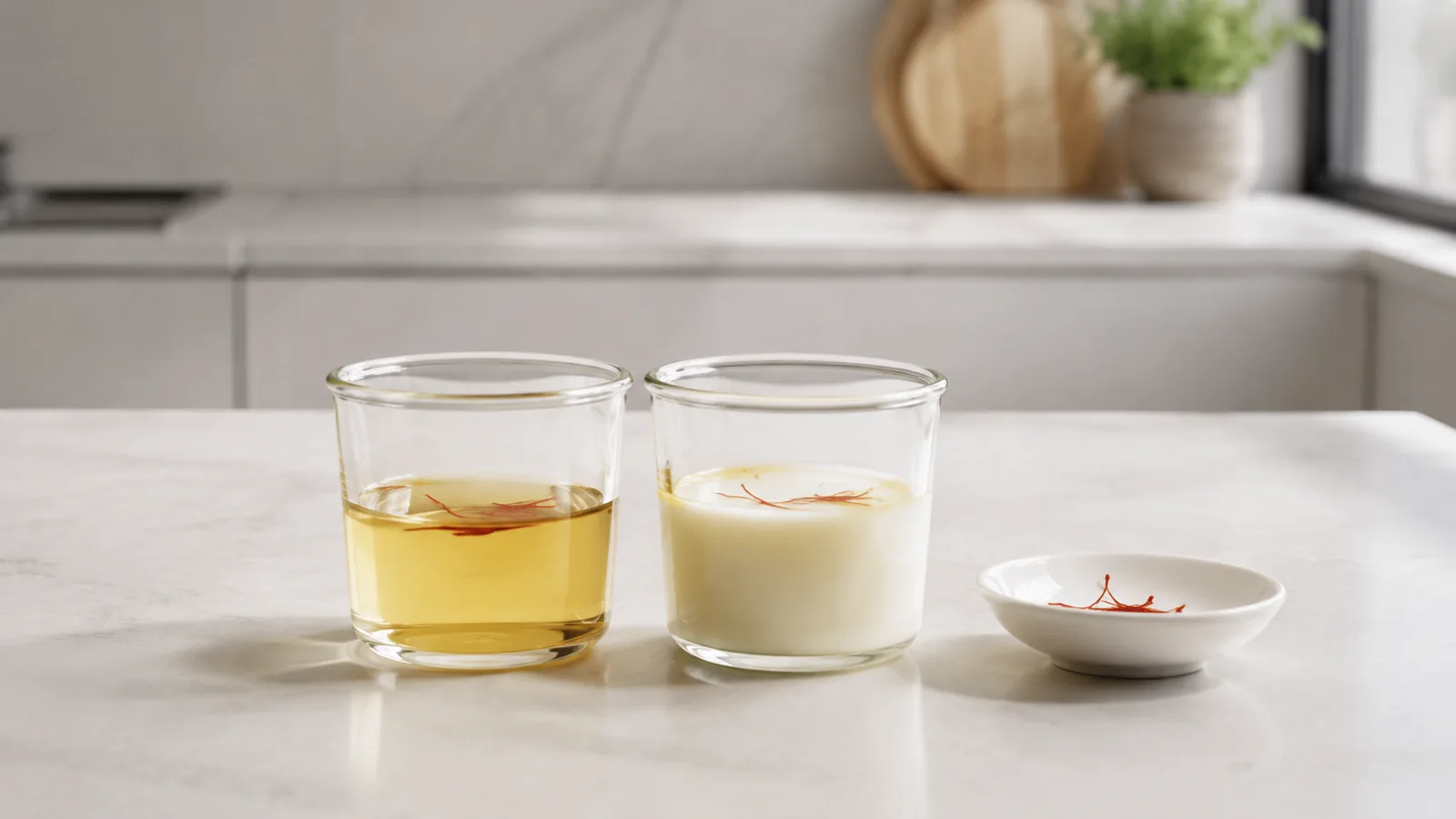
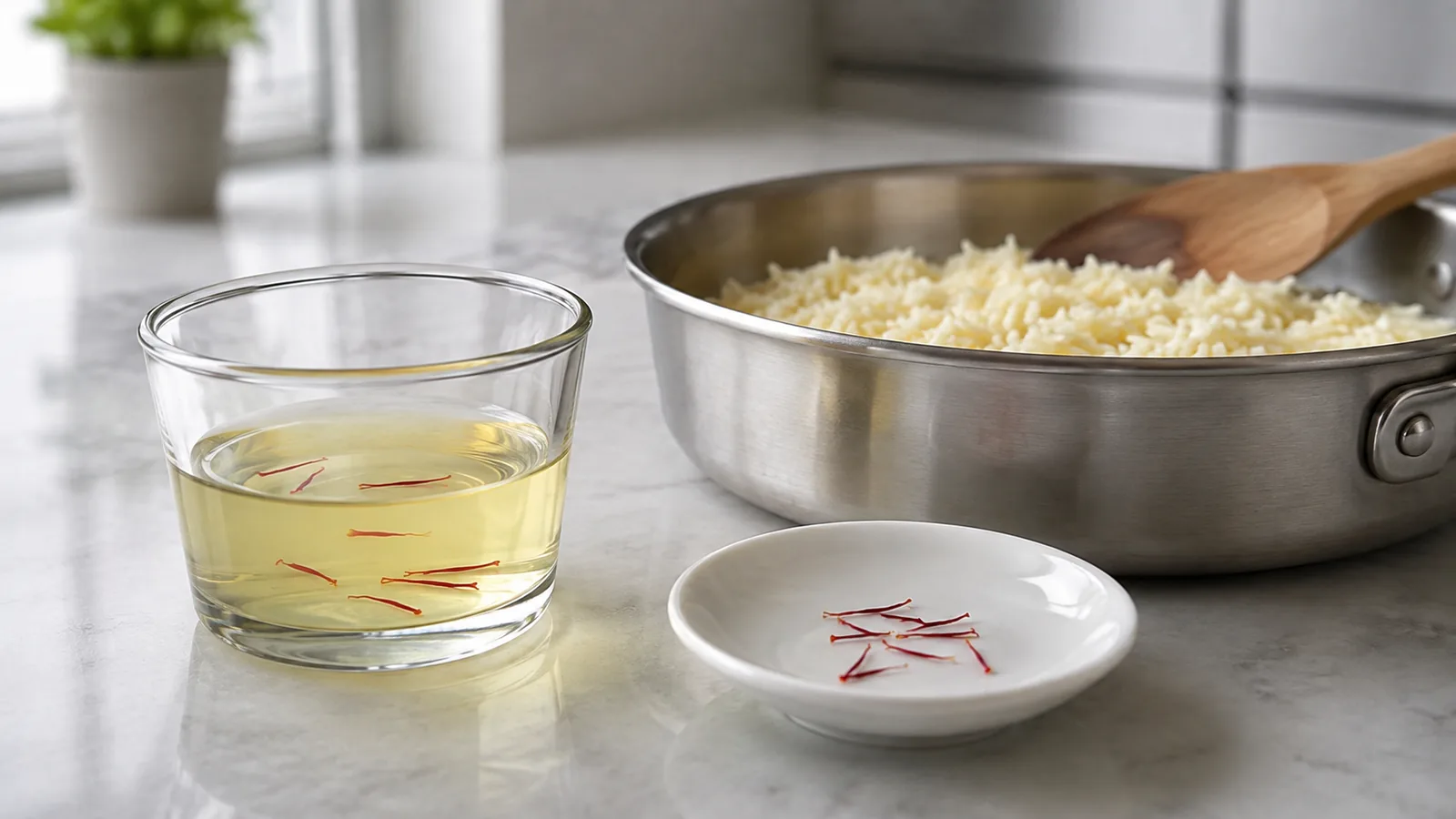
- 1 tablespoon hot saffron infusion (14 ml)
Equipment and preparation
- A small, heavy-based saucepan
- A metal spoon with a long handle
- A large baking tray lined with a silicone mat or lightly oiled baking paper
- A glass of ice water for testing the syrup
Set the prepared tray on a heatproof, level surface. Keep children and pets away from the work area: cooked sugar is far hotter than boiling water and clings to skin. Do not touch or taste the poolaki until it is completely cool.
Make the saffron syrup
Put the sugar, water and grape vinegar into the saucepan. Warm them over low heat, stirring gently only until the sugar has dissolved. Once the mixture begins to simmer, stop stirring. Agitating the syrup or scraping crystals from the side of the pan can make the candy grainy.
Add the saffron infusion and swirl the pan carefully to distribute it. If you are preparing the infusion from threads, our guide to brewing saffron explains how to extract the colour without burning the spice.
Test for a brittle set
Keep the syrup at a steady, gentle boil. Watch the colour as well as the texture: it should deepen to clear golden amber, not dark brown.
To test it, let one small drop fall from the spoon into the ice water. Wait a few seconds, then lift it out. The syrup is ready when the drop hardens at once and snaps cleanly instead of bending or feeling sticky. If it is still soft, boil for another 20 to 30 seconds and test again.
Take the saucepan off the heat as soon as the test turns brittle. Leaving the syrup on the stove too long makes it bitter and can scorch the saffron.
Shape the saffron flakes
Working carefully, drop teaspoon-sized portions of syrup onto the prepared tray. Leave space between them; each poolaki will spread into a thin disc. Aim for small, even spoonfuls rather than trying to pour one large sheet.
Let the sweets cool untouched until firm. Do not put the tray in the refrigerator, where condensation can make the surface sticky. Once the pieces release cleanly from the liner and snap when broken, transfer them to an airtight container.
How to store and serve poolaki
Separate layers with baking paper and keep the container in a cool, dry cupboard. Humidity is the main enemy of thin sugar candy; leave the lid open only long enough to take out what you need.
Serve one or two saffron flakes beside black tea or herbal tea. They are meant to be small and crisp, not thick like a boiled sweet.
Troubleshooting
- The poolaki is soft: the syrup did not reach the brittle stage. Return it to low heat and test again.
- It tastes bitter: the syrup cooked too long or the heat was too high.
- The candy is cloudy or grainy: crystals formed after the syrup began boiling. Avoid stirring and start with a clean pan.
- The discs run together: use smaller spoonfuls and leave more room on the tray.
- The surface turns sticky later: move the sweets to a truly airtight container and store them away from steam.
Molten sugar can cause a serious burn. If any spills, do not wipe it with bare skin; turn off the heat and let it cool before cleaning the surface.