


Productivity of saffron production with intelligent irrigation system depends on two decisions: how water reaches the root zone and when irrigation starts and stops. For the common question, which irrigation practice is preferred in saffron cultivation?, a three-year field experiment in Qaen, South Khorasan found drip irrigation produced the highest stigma yield and water-use efficiency among drip, sprinkler, furrow and basin methods. The best practice is still site-specific: pair an efficient delivery method with soil-moisture and weather-based scheduling rather than irrigating by a fixed calendar alone.
Kesar is another name for saffron, so the same irrigation principles apply when the topic is described as kesar production.
Saffron can survive dry summers, but that does not mean the actively growing crop should be kept under uncontrolled drought stress. Too little water at a sensitive stage can reduce flowers, dry stigma yield and daughter-corm development. Too much water can waste a scarce resource, exclude air from the root zone and increase disease risk. An intelligent system is useful when it helps a grower stay between those extremes and keeps a record of what happened.
What South Khorasan’s pilot system was designed to do
Mohsen Pouyan described saffron as a valuable Khorasan crop and an important Iranian export commodity. The original report said drought and the move away from crops with high water requirements had encouraged more saffron cultivation in Khorasan Razavi and South Khorasan. It mistakenly used “safflower” in one translated sentence; the subject was saffron.
Ebrahimi, identified as a faculty member associated with medicinal-plant research at University Jihad in South Khorasan, explained that low soil moisture could restrict saffron dry matter and economic yield. He argued for precise irrigation that would use water more efficiently without exposing the crop to damaging moisture stress.
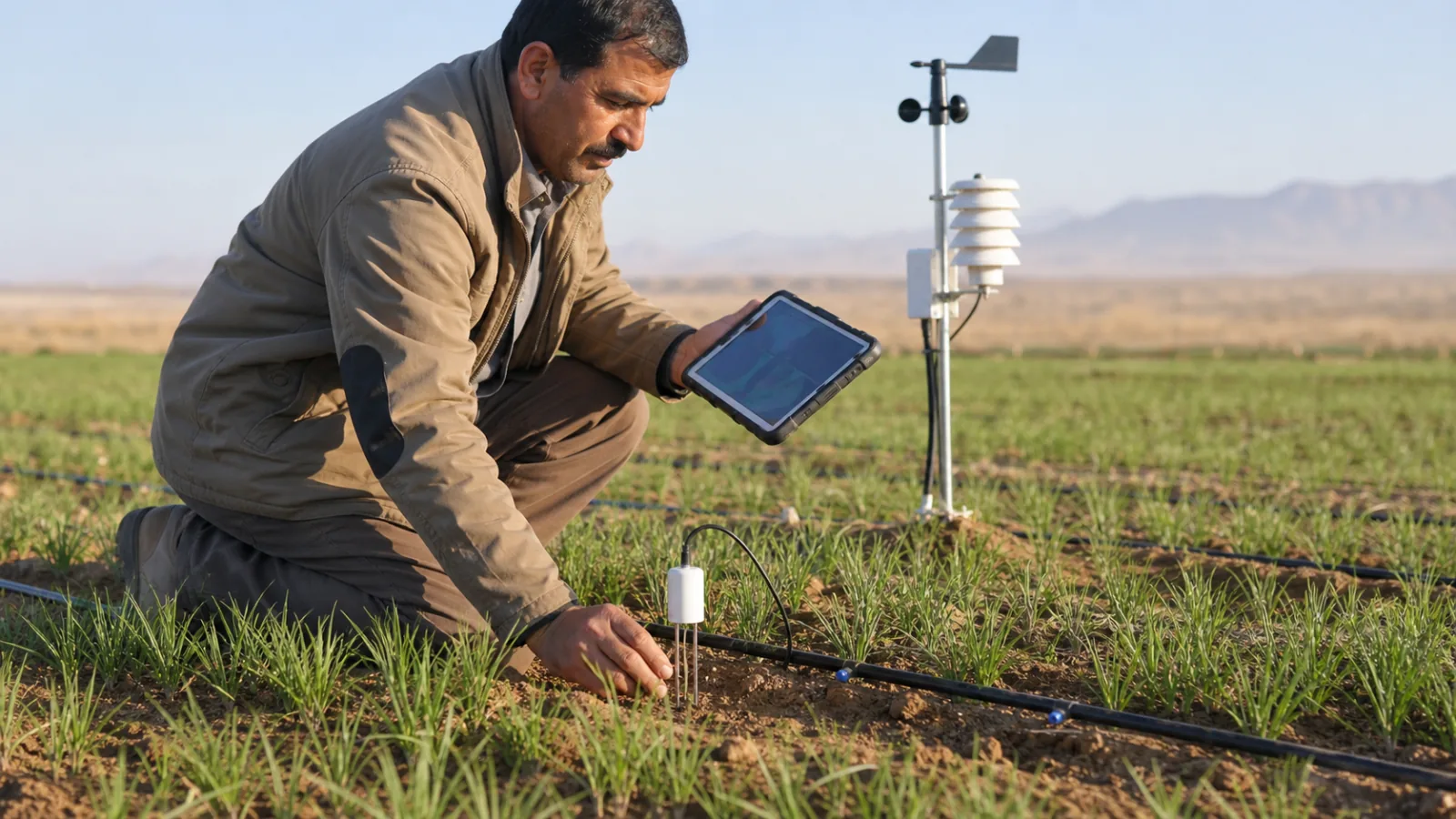
Research and information-technology teams within the University Jihad network then collaborated on what the report described as the first pilot intelligent saffron irrigation system in South Khorasan. The system combined soil-moisture readings with meteorological data and could start irrigation automatically when its programmed conditions indicated that the field needed water.
Which irrigation practice is preferred in saffron cultivation?
Drip irrigation is a well-supported choice for many saffron fields because it can place water near the corm root zone with less uncontrolled surface spreading. In the peer-reviewed Qaen irrigation-method study, drip produced the highest dry stigma yield and water-use efficiencies by the third growing season. The researchers still found a quality trade-off: sprinkler-irrigated saffron had somewhat higher crocin content in their conditions.
This result does not make one layout universally best. Soil texture, slope, salinity, emitter spacing, water quality, corm depth, rainfall and system maintenance all affect performance. Furrow or basin methods may behave differently on another field, and a badly designed drip system can leave dry pockets or concentrate salts.
Scheduling matters as much as hardware. A 2026 field study on soil-moisture-based saffron irrigation compared several moisture-deficit, tension and evapotranspiration strategies with rainfed farmer practice. In that study, irrigation at a 20-percent soil-moisture deficit improved flower and dry stigma yield while maintaining water productivity. It is evidence for measured scheduling, not a threshold to copy into every soil without local calibration.
What an intelligent irrigation system measures
The South Khorasan pilot was reported as collecting soil moisture and soil temperature together with solar radiation, wind speed and ambient temperature. These variables help explain how quickly a field is losing water and whether a sensor reading fits the wider conditions.
A practical system may include:
- more than one soil-moisture sensor placed at representative root-zone positions;
- a weather station or dependable nearby weather data;
- a controller connected to valves or pumps;
- a flow meter to confirm that commanded irrigation actually occurred;
- alerts, manual override and a dated log of readings and irrigation events.
A single sensor should not control a whole farm blindly. It may sit beside an emitter, in an unusually dry patch or at the wrong depth. Readings need to be checked against the soil by hand and against measured flow, especially when the system is first installed.
Remote monitoring is useful, but distance is not the main benefit
The pilot reportedly used radio communication and allowed commands from computers, tablets, smartphones and SMS. Ebrahimi said a saffron farm could be monitored and managed from about one kilometre away.
That range was a feature of the particular installation, not a general specification for intelligent irrigation. Terrain, antenna position, interference, mobile coverage and the communications equipment determine actual range. More important than distance is whether the system reports faults: a remote “on” command is of little value if a blocked emitter, empty source or failed valve goes unnoticed.
How to schedule water without stressing saffron
Saffron’s annual cycle changes the meaning of a moisture reading. The corm is dormant during the hot, dry part of the year, then resumes activity before flowering and continues vegetative growth through the cooler season. Local rainfall and soil storage determine how much supplemental water is needed at each point.
A preservation-first irrigation plan should therefore be built from field measurements:
- identify soil texture, effective root depth, salinity and how much water the root zone can hold;
- map the field and place sensors in zones that genuinely differ;
- measure emitter output and distribution uniformity before relying on automation;
- set provisional start and stop thresholds with local agronomic advice;
- inspect plants, corm-zone moisture and drainage, then refine the thresholds from records;
- compare water applied with flowers, dry stigma yield, quality and daughter-corm performance over more than one season.
The aim is not simply fewer irrigation hours. It is more marketable saffron and healthy replacement corms per unit of water, without shifting the cost into energy, maintenance or crop loss.
What the pilot could and could not prove
The historical announcement listed expected benefits: higher irrigation efficiency, less water loss, protection from drought stress, greater production efficiency, expanded saffron cultivation, higher farm income and increased value for South Khorasan’s strategic crop. It also connected the pilot with the Ministry of Agriculture Jihad’s work on modern irrigation systems.
Those are plausible objectives, not measured results in the report. It gave no control field, water-volume comparison, yield data, costs, failure rate or multi-season outcome. Automatic irrigation can only demonstrate productivity when those figures are recorded against a credible baseline.
For growers considering a system, our guide to saffron irrigation provides the wider crop-cycle context. The strongest use of “smart” technology is modest: deliver the right amount to a known root zone at a justified time, show that the water arrived, and leave evidence from which the next decision can improve.

![Exporting Saffron to Turkey + Price Guide [Complete 0 to 100]](https://img.rowhanisaffron.com/20260827003933/saffron-export-turkey-quality-inspection.webp)



