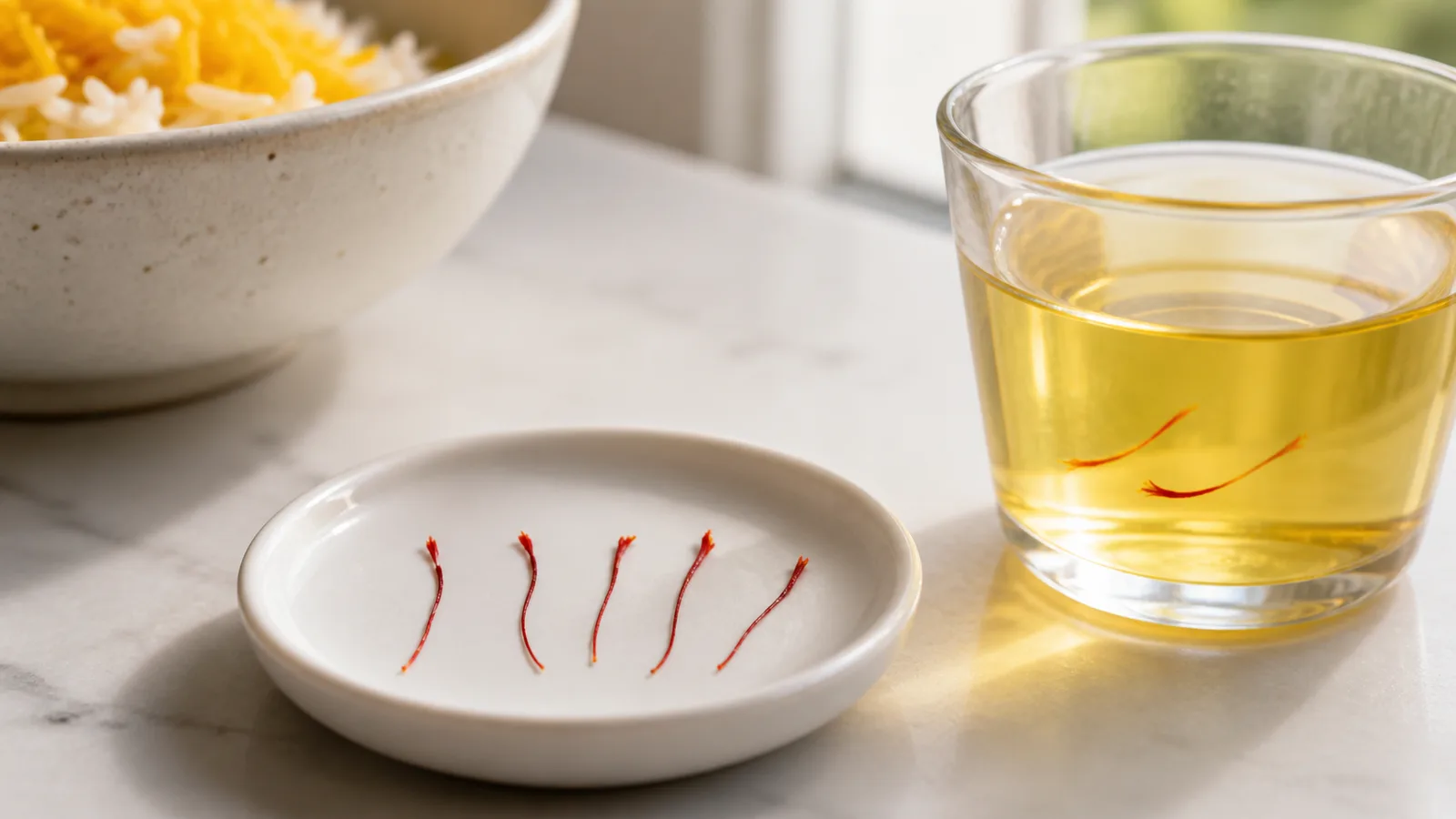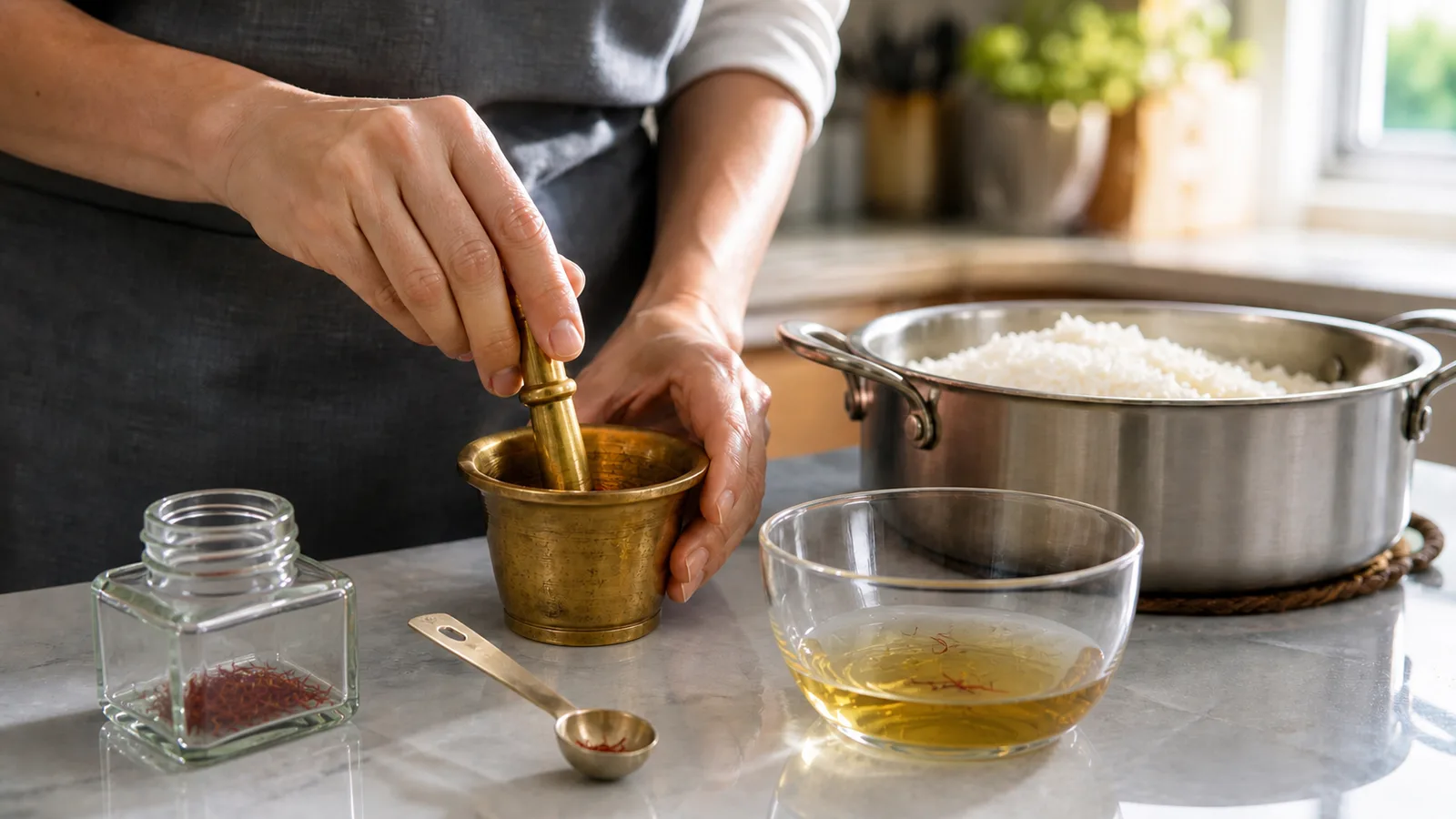
The best way to use saffron is to start with a small culinary amount, gently crush the threads, infuse them in a little warm water, milk, or broth, and add both the liquid and threads to the dish. Keep the container tightly closed, dry, cool, and dark. Food use, skincare, and standardized supplements are different contexts; one set of instructions should not be stretched across all three.
That is how to use saffron correctly in one paragraph. The exact amount and timing then depend on what you are making, how many people it serves, and whether you want colour, aroma, or both.
How is saffron used?
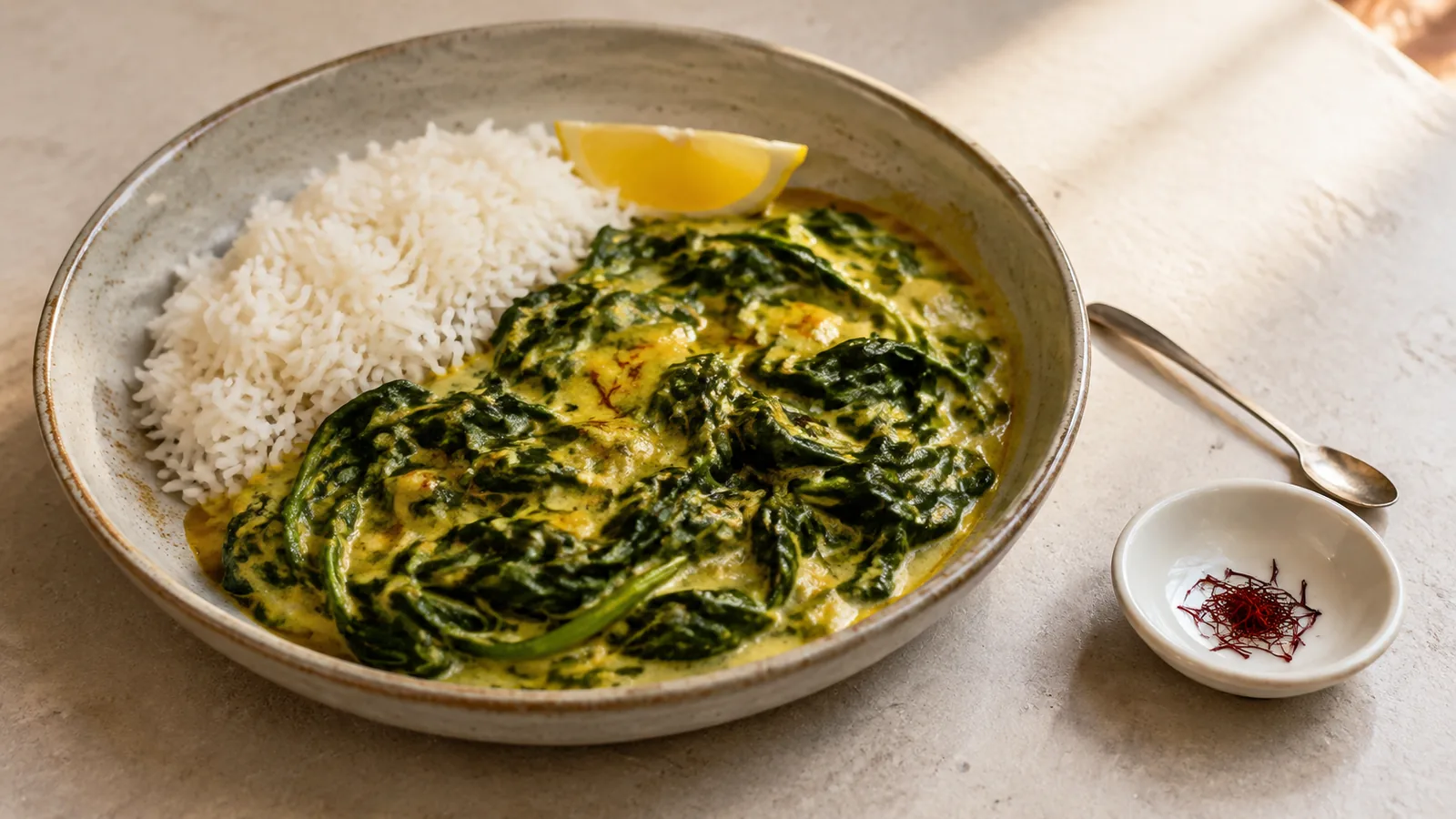
Saffron is used mainly as a colour and flavour ingredient. It brings a honeyed, hay-like aroma, a gently bitter edge, and a deep golden colour to rice, meats and seafood, stews, sauces, breads, desserts, tea, and milk. It appears in dishes such as Persian saffron rice, paella, biryani, risotto, bouillabaisse, and many sweets.
How to use saffron, saffron usage, and the usage of saffron all come back to the same practical sequence: verify the threads, measure for the recipe, extract them in a suitable liquid, add the infusion at the right stage, then store the remainder well.
How much saffron to use
There is no universal thread count per dish because threads differ in size and recipes differ in volume. Five to ten saffron threads can be a light starting point for an individual serving or a delicately flavoured drink; five to ten threads may be too little for a family-sized rice dish. A recipe written by weight is more repeatable than one written only by thread count.
Use less for a subtle dairy dessert and more for a large pot of rice, then take notes for next time. Too much can make a dish bitter and wastes an expensive spice. “A little goes a long way” is good culinary advice, but it is not a medicinal dosing rule.
How to infuse saffron
- Gently crush the measured threads between clean fingers or with a small mortar. Do not grind them into dust unless the recipe needs a fully dispersed powder.
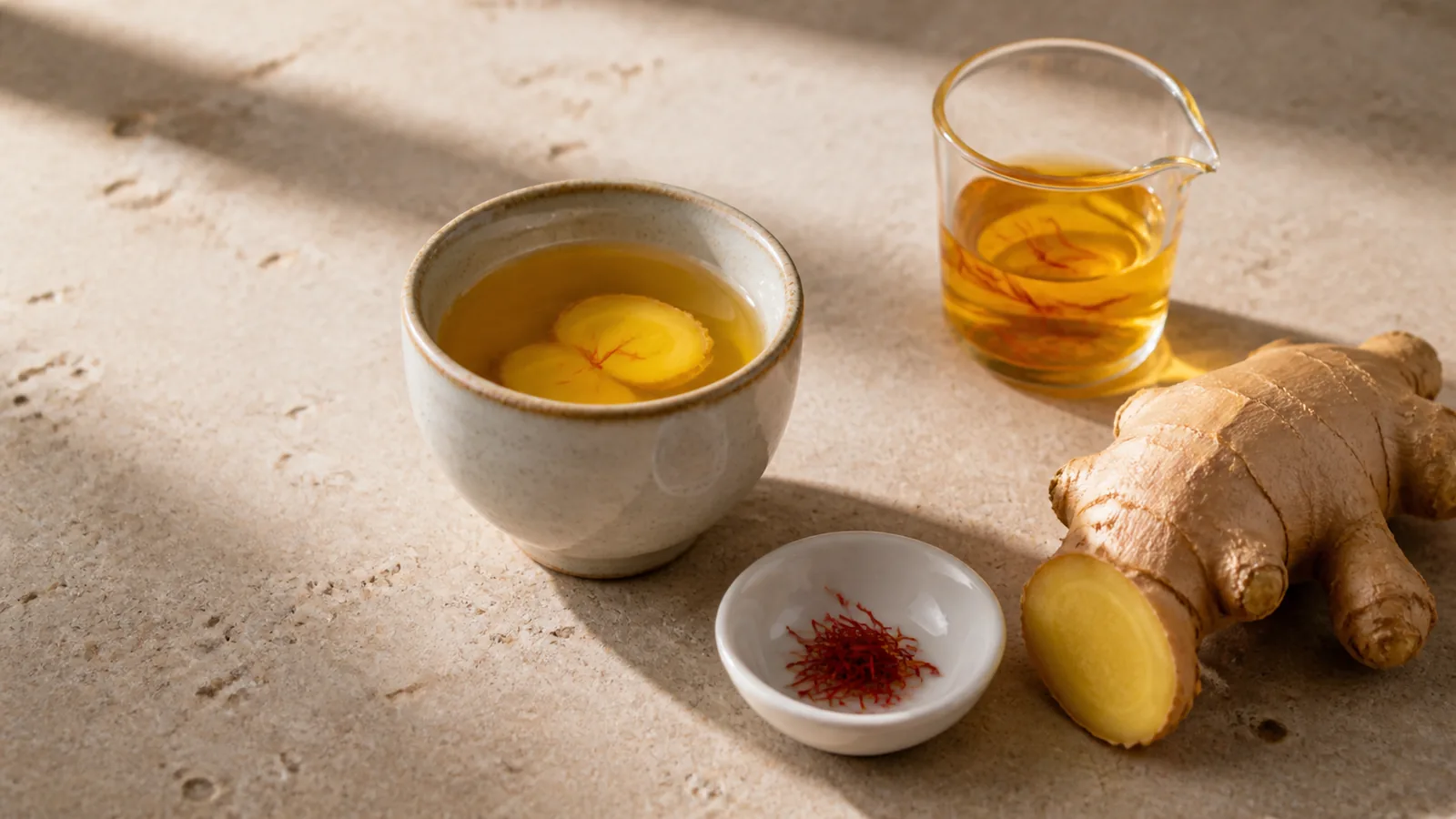
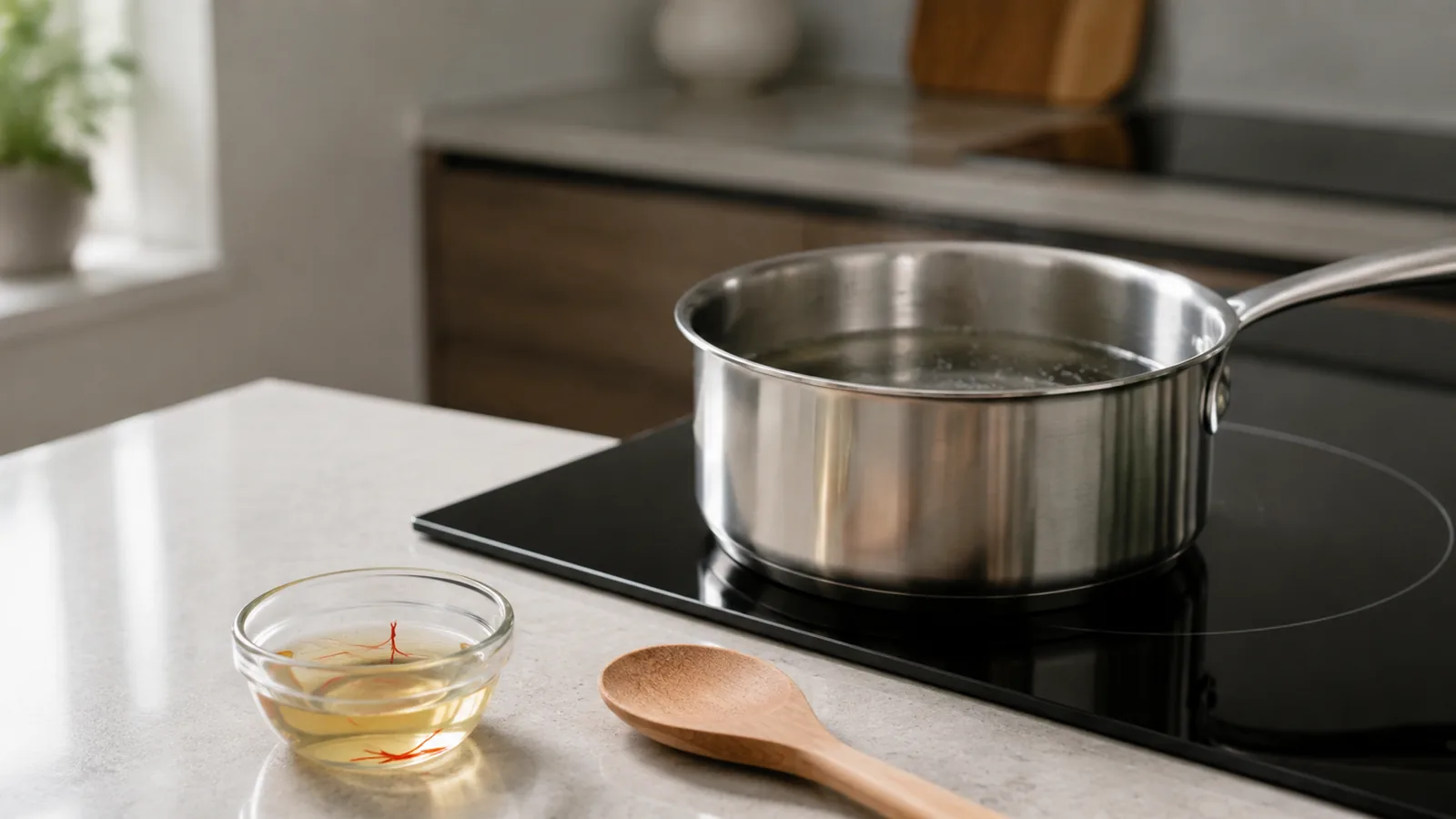
- Place the saffron in a clean cup and add a few tablespoons of warm water, warm milk, or broth.
- Let it stand for about 10 to 15 minutes. The liquid should turn golden and aromatic.
- Add the liquid and threads to the food so nothing is wasted.
Warm liquid makes colour distribution easier. A 2024 food-chemistry study compared water, oil, and mixed systems at different temperatures and times; water was particularly effective for several colour- and flavour-related compounds, while the oil phase behaved differently. That supports choosing the infusion medium for the dish rather than claiming one ritual extracts every “benefit.”
For a deeper explanation, see our comparison of saffron brewing with hot water and ice.
Do you add saffron before or after cooking?
When to use saffron in cooking depends on the dish. Usually, infuse it first and add the liquid early enough to distribute the colour but not so early that delicate aroma spends a long time over high heat. For rice, some cooks mix part of the infusion through the pot and reserve a little for the top. For a sauce or stew, add it once there is enough liquid to spread it evenly.
Cooking studies do not give one universal minute. One paper found prolonged boiling affected crocins and safranal, while another cooking model found several crocetin glycosides largely stable during 20 minutes of boiling. The recipe and the particular compound matter. In practice, avoid scorching dry threads and do not fry them hard in oil.
How to use saffron in cooking
Rice, paella, and biryani
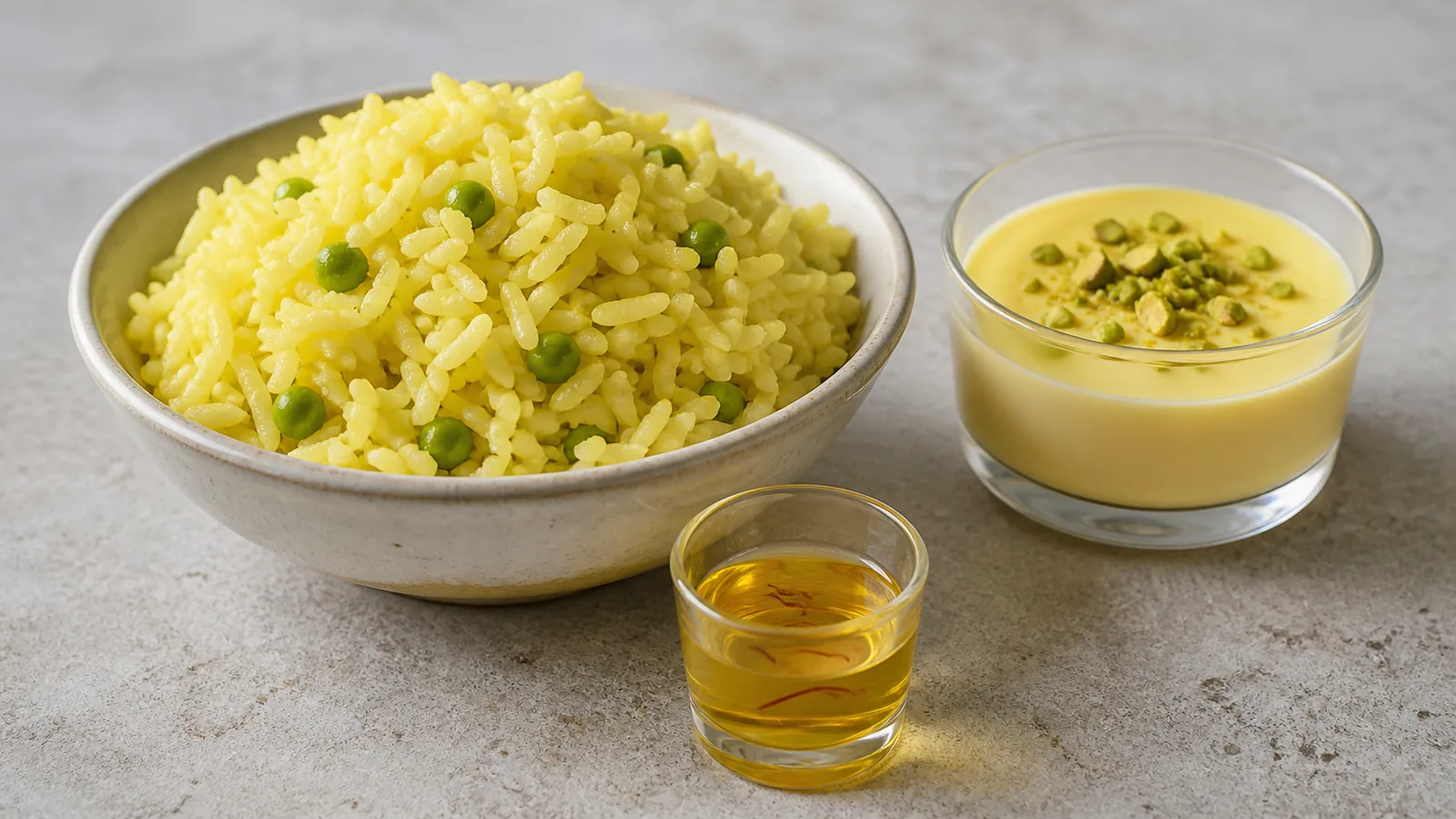
Bloom the threads, then add the infusion to the cooking liquid or near the stage directed by the recipe. Distribute it in portions if you want distinct golden and white grains rather than one flat colour. Our barberry saffron rice recipe shows the technique in a complete dish.
Milk, custard, and desserts
Infuse saffron in warm milk, cream, or a little water before adding it. Fat and water carry different aroma and colour compounds, so dairy is both an ingredient and an extraction medium. Add sugar for the recipe, not to “activate” saffron.
Soups, sauces, and bread
Use warm broth for savoury dishes. For dough or batter, mix the infusion with the liquid ingredients so the colour disperses. Dry threads sprinkled at the end can look attractive, but whole strands give less even flavour than an infusion.
Can you eat saffron threads raw?
Genuine food-grade saffron threads can be eaten in the small culinary amount used in a recipe. They are not poisonous merely because they are uninfused. Still, eating dry threads raw concentrates the taste in one spot and uses them less efficiently than blooming them in liquid.
Questions such as how do you eat saffron, how to eat saffron, how to eat saffron threads, how to have saffron, and how to consume saffron usually mean “what food or drink should carry it?” The simple answer is: add a measured culinary amount to a normal recipe or a lightly infused beverage. Kesar is another name used for saffron, so advice on how to consume kesar or how to eat kesar follows the same food-use principles.
People asking how to intake saffron are asking the same form question in different words. The use of saffron as food is best kept within a real recipe or drink; supplement use is a separate decision.
How to drink saffron
For a plain drink, steep a small pinch in warm water or milk for 10 to 15 minutes. Drink it for flavour, not as a guaranteed treatment. Honey, cardamom, or rose water can be added for taste if they suit your diet.
The best way to take saffron as food is whichever measured preparation fits the meal or drink. “Saffron consumption” does not need to become a daily wellness regimen.
How to take saffron supplements
Saffron supplements come as capsules, tablets, powders, and standardized extracts. They are not equivalent to culinary threads. If you are considering how to take saffron as a supplement, follow the exact product label and speak with a doctor or pharmacist about medicines, pregnancy or breastfeeding, conditions, and planned surgery.
A cited 2019 paper sometimes used to justify “around 30 mg per day” was a meta-analysis of trials for mild-to-moderate depression, not general dosing guidance for food, skin, digestion, antioxidants, or every health goal. Likewise, warnings framed as “more than 1 gram of saffron per day causes nausea or dizziness” should not be turned into permission to take anything below that amount. Product, extract, duration, and individual risk all matter.
The U.S. Food and Drug Administration notes that supplements can interact with medicines and are not approved for safety and effectiveness before sale in the same way as drugs. Pure-saffron wording does not remove that need for caution, and fillers, additives, or undeclared ingredients are separate product-quality concerns.
How to use saffron as medicine or for health benefits
Do not self-treat a condition by converting a research extract amount into thread counts. Studies of mood, sleep, or other outcomes test particular preparations in defined groups. How to use saffron for health benefits is a question for evidence about the specific outcome, not a single home dose.
Culinary saffron can be part of a varied diet. It should not replace diagnosis, medication, or care. If you want to discuss a standardized product for a medical reason, bring its label and your medicine list to a qualified professional.
Using saffron in skincare
Food-grade threads are not a finished cosmetic. Claims that a rose-water or milk infusion brightens skin, reduces pigmentation, or improves tone have not been established by a kitchen recipe. Aloe, honey, and saffron-infused oil also do not create a stable preserved face cream.
If you want saffron in skincare, choose a properly formulated and labelled facial product, patch-test it, and follow its directions. Our guide to homemade saffron face cream explains the emulsifier, preservative, pH, and contamination issues.
How to store saffron properly
Keep dry threads in a clean airtight container away from direct sunlight, moisture, and heat. A small opaque container in a cool cupboard is better than a clear jar beside the stove. Use a dry utensil and close the lid promptly.
Good saffron can keep useful colour and aroma for a long time, but “up to two years” and “best within one year of purchase” are quality rules of thumb, not universal safety guarantees. Follow the package date and storage instructions. Aroma fades gradually after opening.
How to use expired saffron
A date on a dry spice often relates to best quality, but the condition of the product matters. If saffron is dry, clean, normally scented, and only less aromatic, it may simply give weaker culinary results. Discard it if it is damp, moldy, contaminated, infested, smells wrong, or has been stored in a damaged container. Do not use questionable old saffron in food, skincare, or a supplement-like preparation.
A quick correct-use checklist
- Use genuine food-grade threads from a traceable source.
- Measure for the recipe; do not rely on a universal thread count.
- Bloom saffron gently in a suitable warm liquid.
- Add it where the dish can distribute its colour without prolonged harsh heat.
- Keep culinary, cosmetic, and supplement use separate.
- Store the remaining threads airtight, dry, cool, and dark.
You can browse our retail saffron for culinary use. Correct saffron usage is less about chasing maximum potency and more about using a good ingredient with the right method for the job.
Sources
- 2024 study of saffron infusion medium, temperature, and time
- Study of culinary processing time and saffron compounds
- Study of crocins and crocetin glycosides in cooking models
- 2019 meta-analysis of saffron preparations for mild-to-moderate depression
- U.S. Food and Drug Administration: dietary supplement benefits, risks, and labels