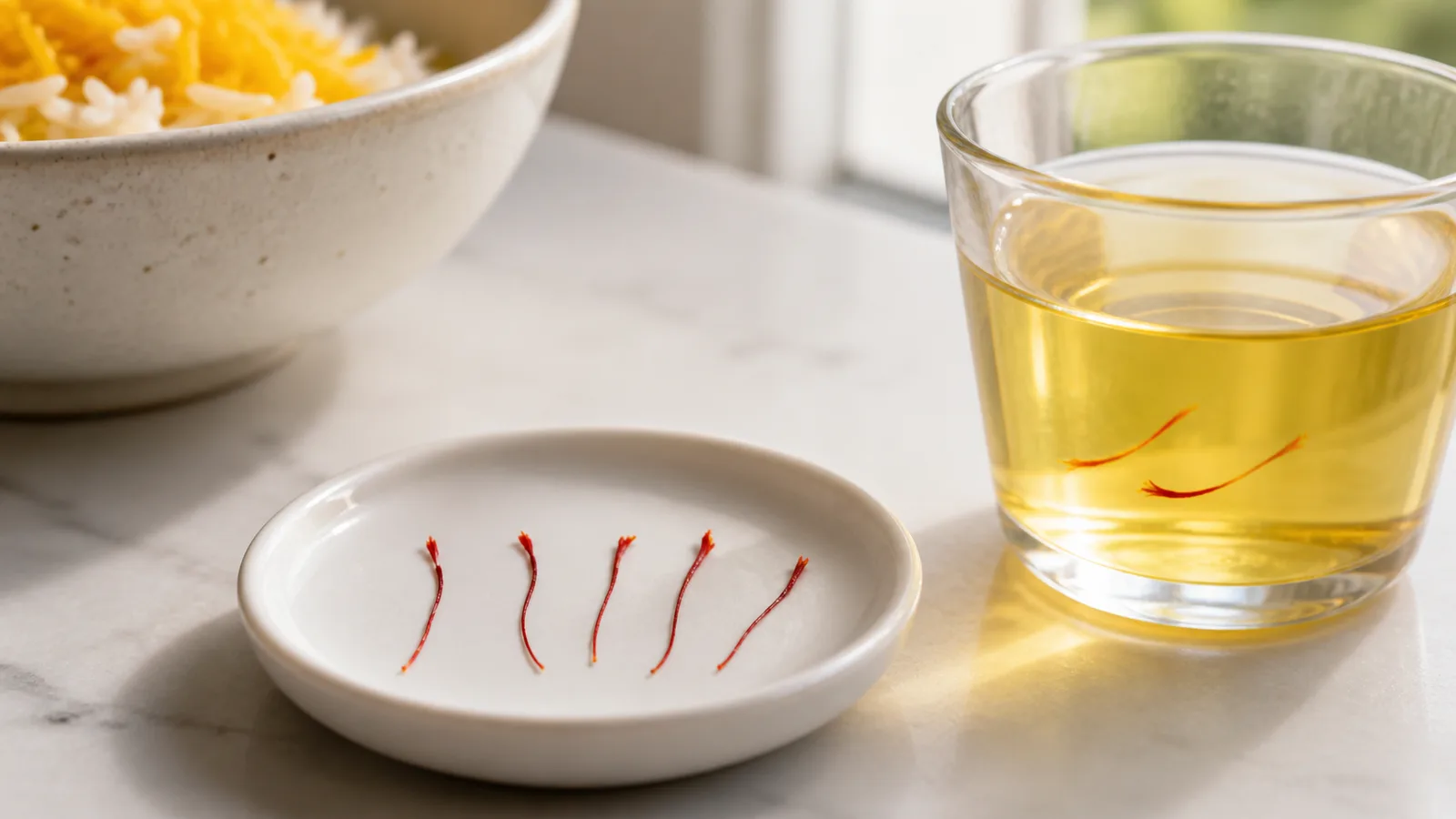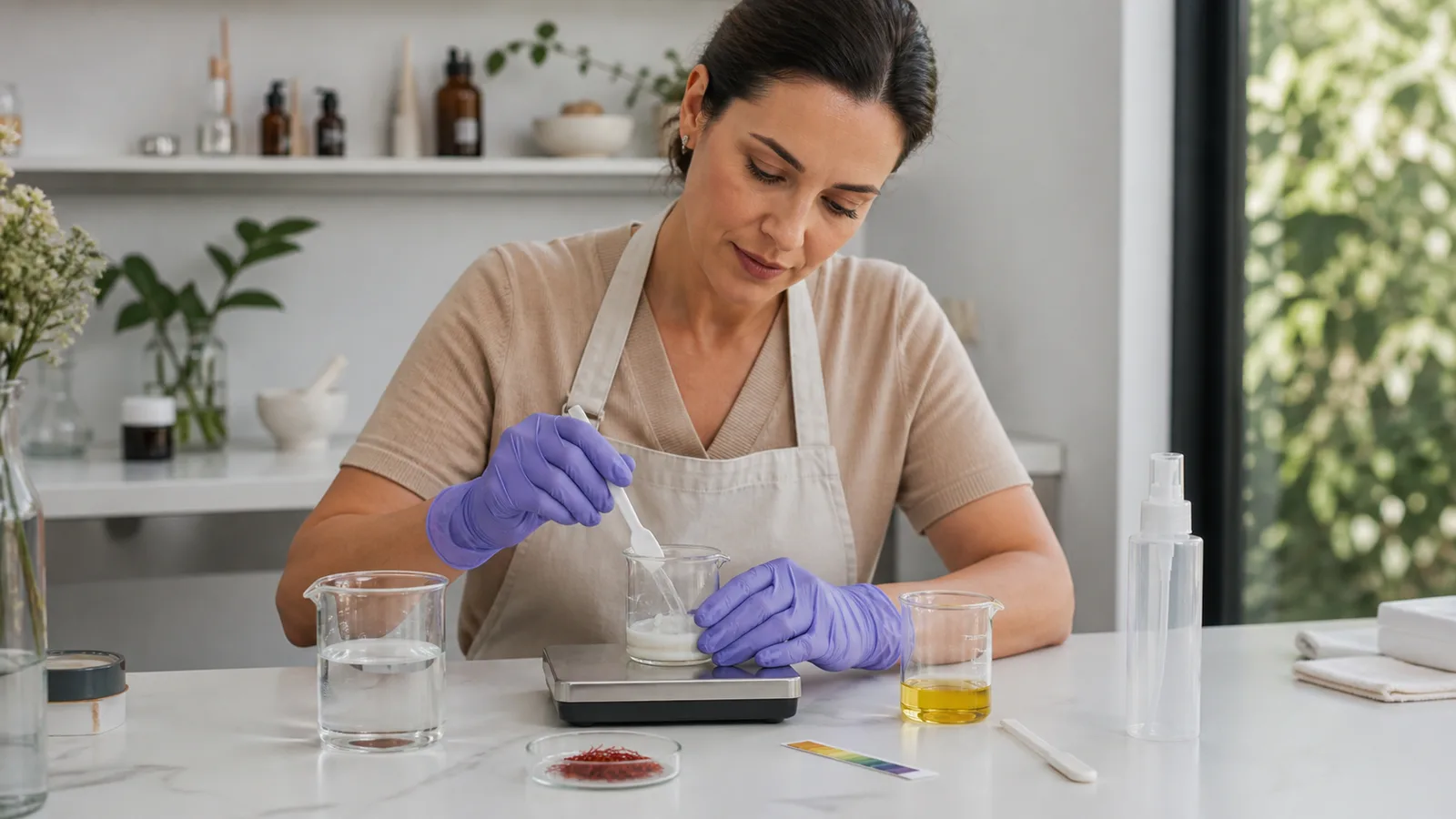
Making saffron face cream at home sounds simple, and you can combine saffron, aloe gel, oil, honey, and rose water in a bowl. The result, however, is not a stable face cream. It has no reliable emulsifier to keep oil and water together, no validated preservative system, no controlled pH, and no tested shelf life. Putting that mixture in a jar for later use creates a contamination risk.
So the responsible answer to how to make saffron face cream at home is not another easy storage recipe. A true cream is a cosmetic formulation. If you want saffron in daily skincare, the safer option is a finished, properly labelled facial product that uses a measured cosmetic-grade extract. If you want to understand why the common DIY recipe fails, the details below will help you judge it.
How to make saffron cream at home: first define “cream”
A cream is an emulsion: a water phase and an oil phase held together by an emulsifier. Because it contains water, it also needs a preservation system designed for the formula. A formulator then checks pH, stability, packaging compatibility, and microbial control. None of those jobs is performed by saffron, honey, aloe vera, coconut oil, or rose water.
A kitchen mixture may look creamy for a few minutes and then separate. Appearance alone cannot show whether microorganisms are growing, whether the preservative still works, or whether the pH suits facial skin. Refrigeration is not a substitute for preservation testing.
The popular saffron face-cream recipe, examined
The widely shared version uses:
- 1 teaspoon saffron threads;
- 2 tablespoons aloe vera gel;
- 1 tablespoon coconut oil or olive oil;
- 1 tablespoon honey, described as optional moisture;
- 2 or 3 drops of rose water, described as soothing.
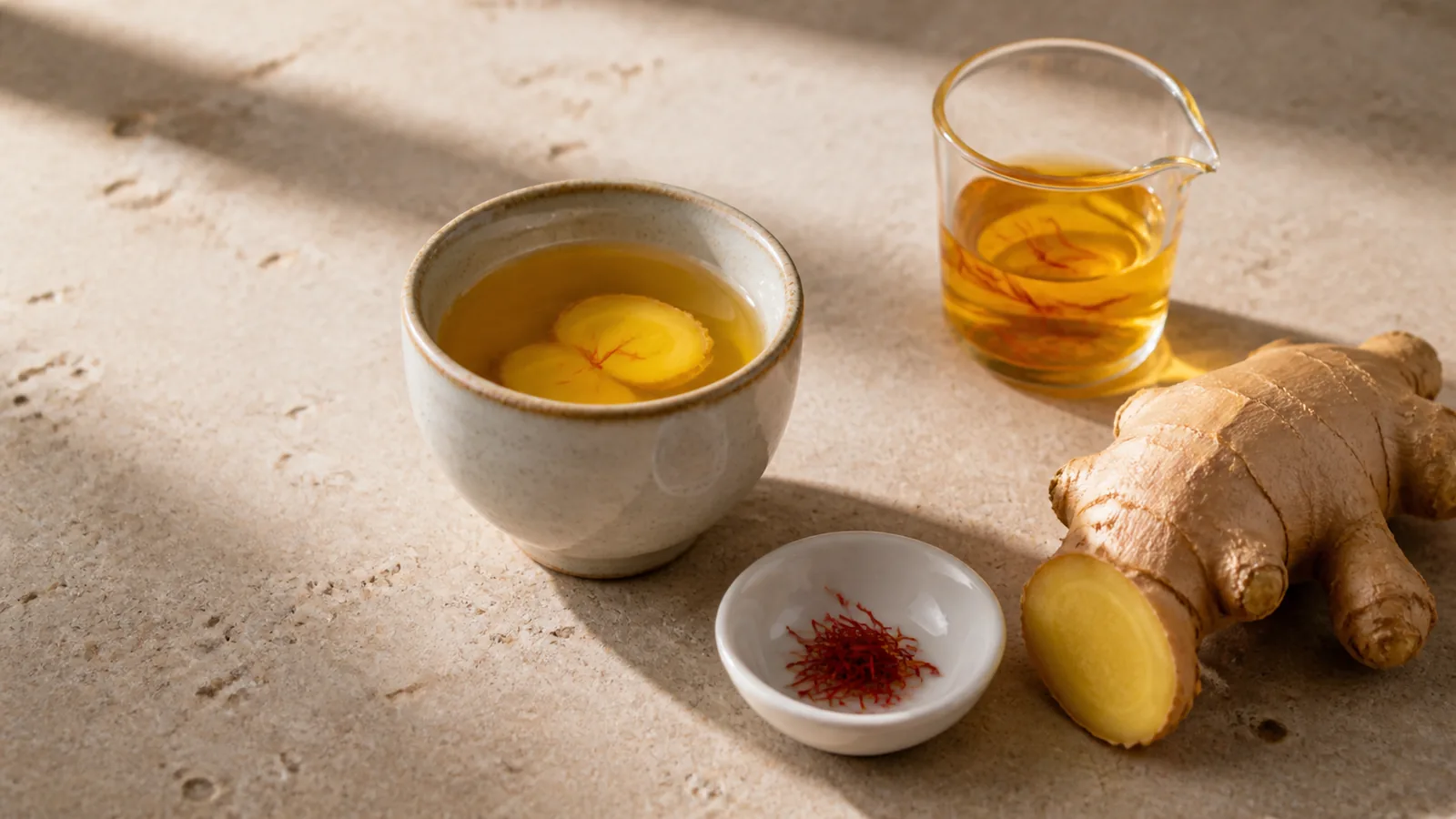
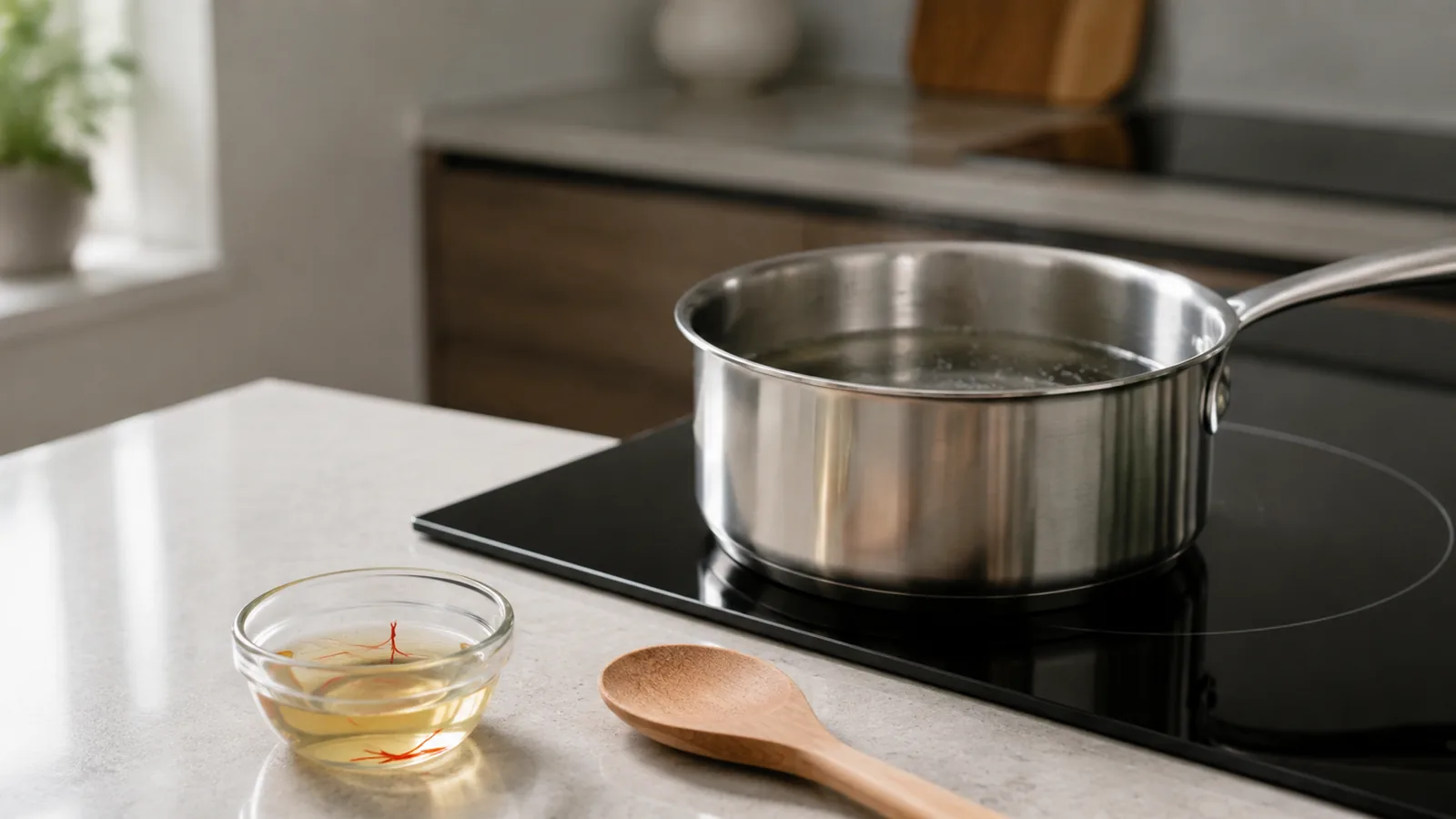
Its instructions say to soak the saffron in 1 or 2 tablespoons of warm water or rose water for 10 to 15 minutes. The coloured liquid is then mixed with aloe gel, oil, and honey until smooth, followed by another 2 or 3 drops of rose water. Finally, the mixture is transferred to a small jar for storage.
That last step is the main problem. Water, plant material, fingers, and a jar create opportunities for contamination. Oil and water also do not remain uniformly mixed without a suitable emulsifier. An unpreserved batch should not be stored and repeatedly applied to the face, even if it still smells and looks normal.
Why each ingredient needs more thought
Saffron threads
One teaspoon is a large culinary quantity and not a validated cosmetic concentration. Threads can stain the mixture yellow or orange, but temporary colour on skin is not evidence of brightening or reduced pigmentation. Food-grade saffron has not been manufactured as a sterile cosmetic active.
Aloe vera gel
A commercial aloe gel may already contain water, thickeners, preservatives, and pH adjusters. Adding other ingredients can dilute or destabilize that system. Gel taken directly from a plant introduces a different set of composition, irritation, hygiene, and storage questions.
Coconut or olive oil
Oil can reduce water loss from the skin, but coconut or olive oil will not turn water and aloe into an emulsion. Heavy oils may feel uncomfortable on acne-prone skin, and any oil can be unsuitable for an individual user. “Natural” does not mean non-irritating or non-comedogenic.
Honey and rose water
Honey may feel moisturizing, while rose water adds scent. Neither is a broad-spectrum preservative for this recipe. Rose-water products can also contain fragrance components or their own preservatives, so the label matters. Both ingredients can cause a reaction in susceptible skin.
Can the mixture be used fresh as a mask?
The original directions recommend applying it to the face and neck after cleansing, massaging upward in circular motions, leaving it for 20 to 30 minutes, rinsing with lukewarm water, and repeating two or three times a week. That schedule has not been clinically validated to brighten or reduce pigmentation, or to provide hydration, nourishment, rejuvenation, or a healthy glow.
Using a freshly mixed portion once and discarding the remainder avoids the storage problem, but it does not establish efficacy or remove allergy and irritation risk. If you decide to experiment despite those limits, do not make a jar, do not apply it to broken or inflamed skin, keep it away from eyes and lips, wash it off promptly if it stings, and discard every unused portion immediately.
Do not add lemon juice, essential oils, bleach, or an improvised preservative. A real cosmetic preservative must suit the entire formulation, concentration, pH, packaging, and intended use; it is not safely chosen by adding a few drops from a list.
Patch testing takes longer than 24 hours
A single 24-hour spot on the wrist or behind the ear can miss a delayed reaction. The American Academy of Dermatology recommends applying a new skincare product to a small test area twice daily for seven to ten days, using the normal amount and contact time. Stop if redness, itching, swelling, pain, discomfort, or another reaction develops.
Patch testing only assesses whether that small area reacts during the test. It does not prove that a homemade product is microbiologically safe, stable, or effective.
What the saffron skin research can—and cannot—support
Saffron contains crocin, crocetin, safranal, and picrocrocin, and laboratory studies explore antioxidant and anti-inflammatory activity. Broad claims that it is “rich in vitamins and minerals” do not establish a cosmetic effect. Nor do these findings show that this recipe is antibacterial, skin-brightening, or able to reduce dark spots and uneven skin tone.
One small human study evaluated a formulated cream containing saffron extract and avocado oil for 12 weeks. It tested a finished formula, not threads mixed with aloe, coconut oil, honey, and rose water, and it cannot isolate the contribution of saffron from the whole product. It is not evidence that a homemade cream gives a radiant, youthful glow.
A safer way to add saffron to skincare
Look for a facial product with:
- a complete ingredient list and responsible manufacturer;
- clear directions, warnings, batch information, and expiry or period-after-opening guidance;
- packaging that limits repeated finger contact, such as a pump where practical;
- a formula suited to your skin type and free from ingredients you already know irritate you;
- claims that describe cosmetic appearance rather than promising to treat disease.
Patch-test the finished product, follow its label, and introduce it without several other new products at the same time. For persistent acne, eczema, melasma, or changing pigmentation, see a dermatologist rather than trying to formulate a treatment at home.
Food saffron is not cosmetic raw material
High-quality, pure saffron matters for cooking, aroma, and authenticity. Our all-red saffron collection is sold as culinary saffron, not as a preserved or clinically tested skincare ingredient. Purity does not supply the missing emulsifier, pH control, safety assessment, or preservation system.
If you want to learn cosmetic formulation, use reputable formulation training, cosmetic-grade raw materials, precise scales, sanitation procedures, and appropriate testing. Until then, choose a finished face cream. It is less romantic than a DIY jar, but far more honest about what water-based skincare requires.