Saffron may improve some mood symptoms when taken as a standardized extract for several weeks, but the evidence is mixed and does not show that a few threads in food or tea work as an antidepressant. It is better viewed as a promising research subject or a possible complement discussed with a clinician, not a replacement for mental-health care.
That is the useful answer behind interest in saffron mood improvement. Trials have reported benefits on certain self-rated scales, while other outcomes have shown no clear difference. The product, amount, duration, participants, and way mood is measured all affect what a study can tell us.
Calling these findings saffron’s “mood-boosting properties” or a general contribution to mental well-being needs that context. A measured change on one questionnaire is not proof of an instant uplift or emotional balance in everyday use.
What does the current mood research show?
A 2026 systematic review and meta-analysis combined 34 randomized trials with 1,769 adults. Saffron supplementation improved scores on two self-report measures of depression and anxiety, but not on several clinician-rated or other mood scales. The review rated the evidence as moderate certainty and found substantial differences among studies.
Individual trials also show why a simple “yes” is incomplete. In a 2025 study of 202 adults with low mood, a 28-milligram standardized extract improved the primary depression score more than placebo over 12 weeks, but most secondary outcomes did not differ. Another 2025 trial in 51 adults found no significant effect on its primary combined depression, anxiety, and fatigue outcome.
These findings support further study. They do not prove that saffron works for everyone, that it has no side effects, or that a culinary infusion is equivalent to the extracts used in the trials.
How might saffron affect mood?
Saffron contains crocin, crocetin, safranal, and picrocrocin. Researchers have proposed several pathways involving oxidative stress, inflammation, and neurotransmitter systems. These remain proposed mechanisms, not a simple account of what happens after someone eats saffron.
It is especially easy to overstate serotonin, dopamine, and norepinephrine. They are involved in complex signalling, and a study outcome cannot be reduced to saffron “releasing feel-good hormones.” Our detailed article on saffron and serotonin levels explains why blood measurements, brain signalling, and a person’s mood are not interchangeable.
Can saffron reduce stress, anxiety, or depression?
The current evidence suggests standardized saffron preparations may help some adults with self-reported depressive or anxiety symptoms. That is not the same as establishing saffron as a cure, and the effect should not be generalized to every form of stress or emotional difficulty.
Some studies have compared saffron preparations with antidepressants, but that does not make culinary saffron an equal, side-effect-free substitute for prescribed medication. Trials can be small or short, use selected participants, and test particular extracts. Antidepressant decisions also involve diagnosis, response history, other health conditions, and careful monitoring.
Do not stop or change medication because of a saffron study or blog article. If low mood, anxiety, loss of interest, or sleep disruption persists or interferes with daily life, speak with a qualified health professional. Urgent thoughts of self-harm or suicide require immediate local emergency or crisis support.
How to use saffron for mood improvement
There are three distinct ways people encounter saffron. Keeping them separate prevents the research from being stretched too far.
Saffron in food
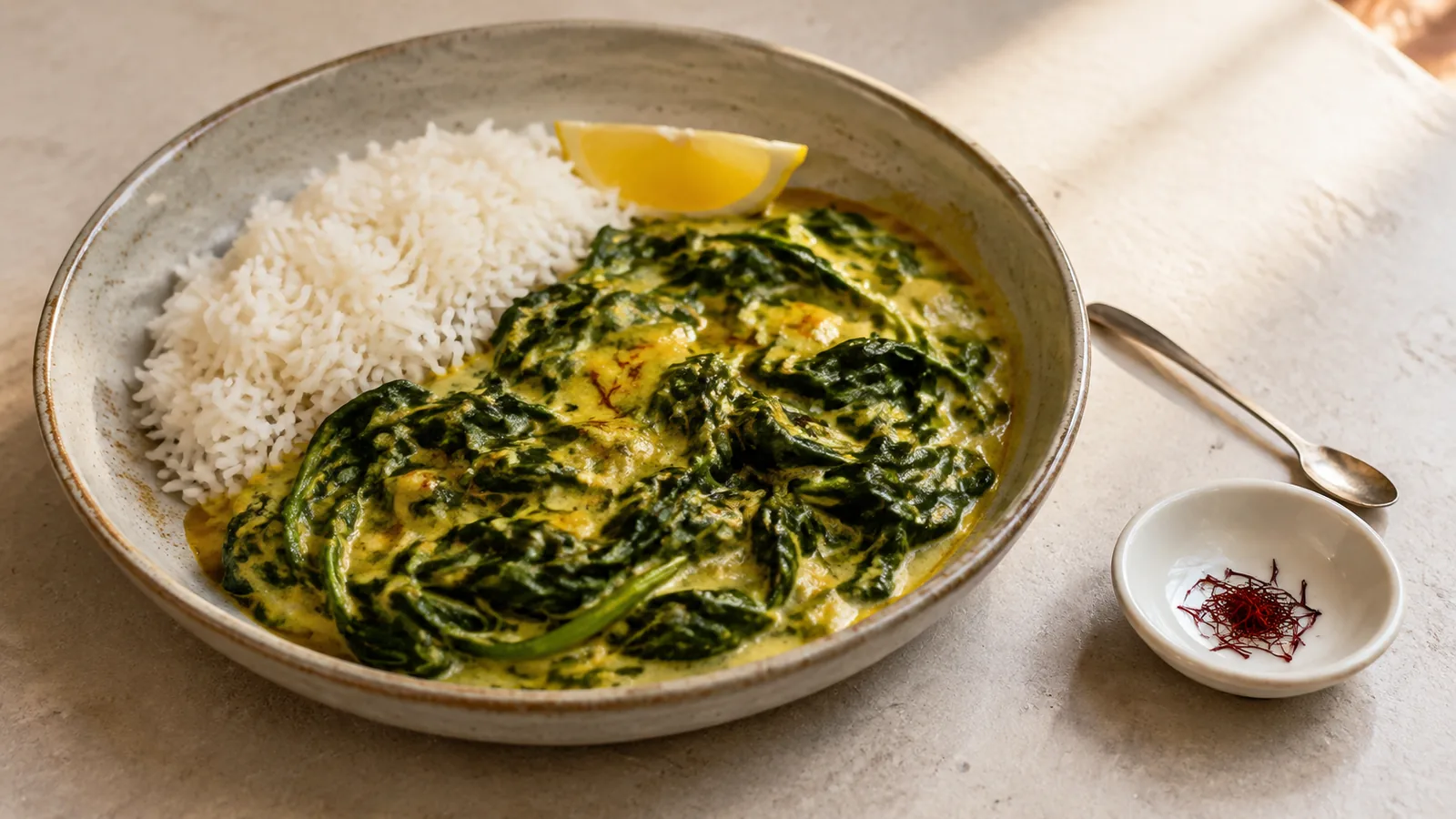
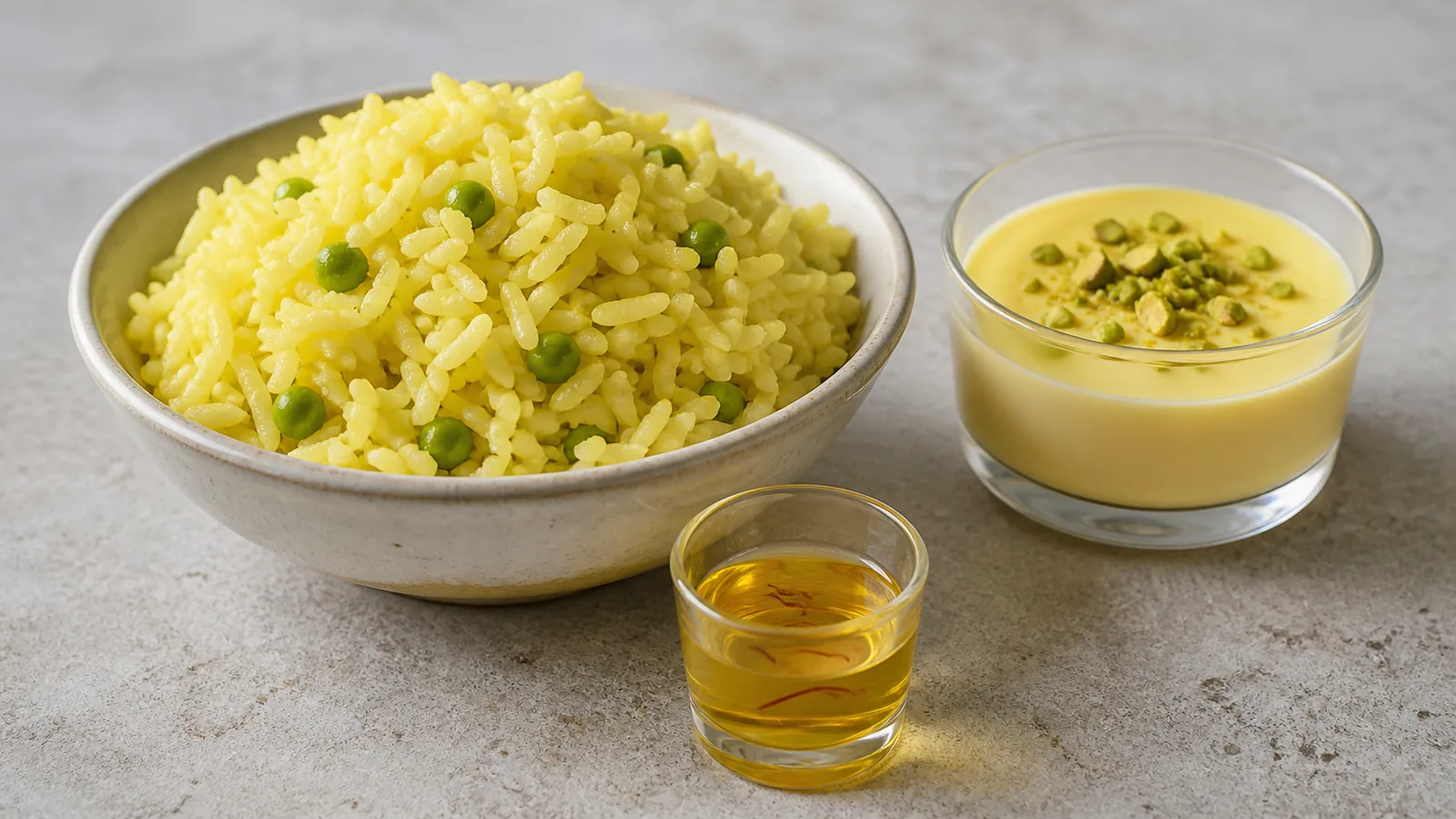
Using saffron in rice, soup, bread, or dessert gives colour, aroma, and flavour. A meal can certainly be enjoyable and socially meaningful. That experience is not evidence that the culinary amount treats depression or anxiety.
Saffron tea
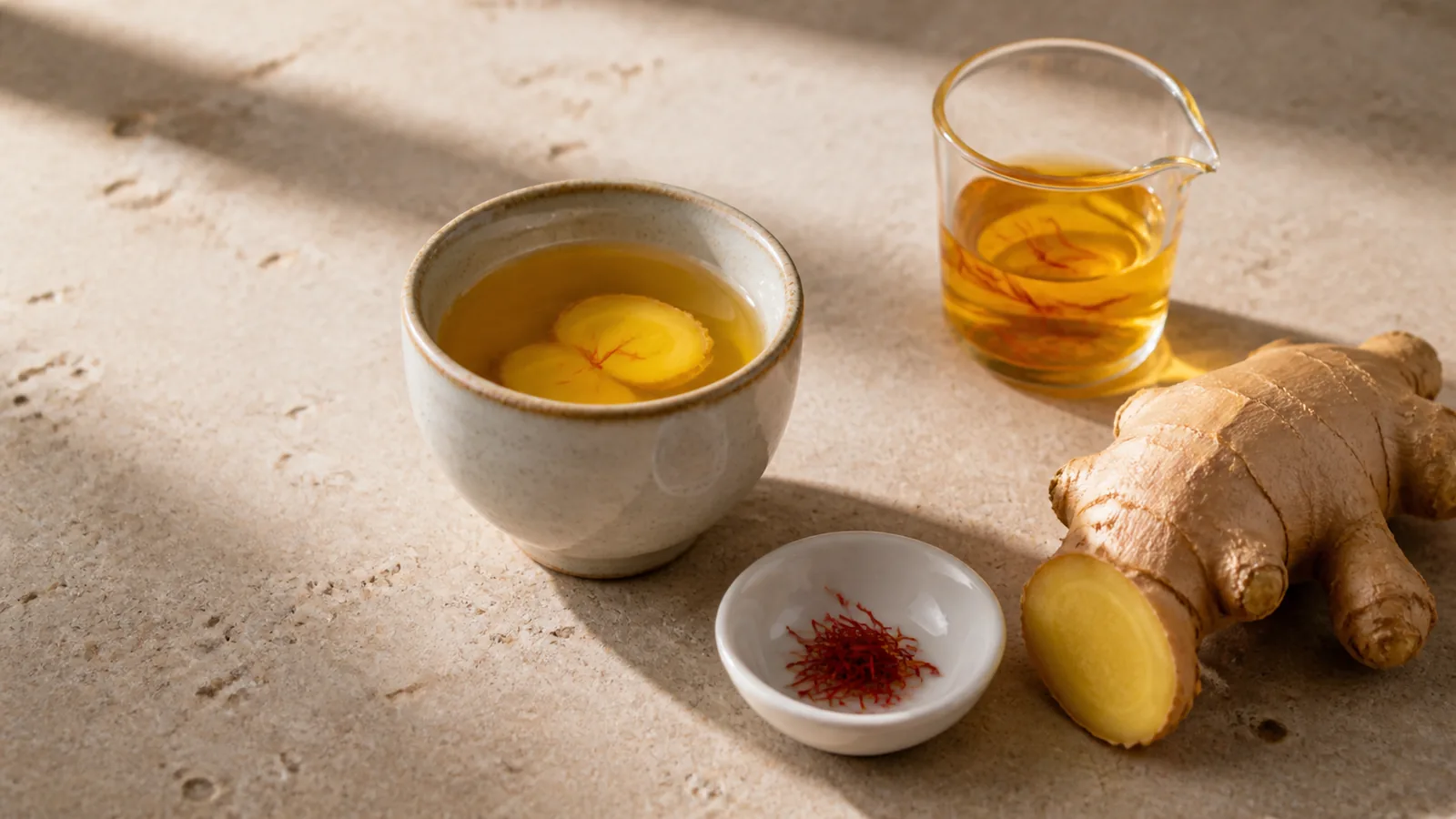
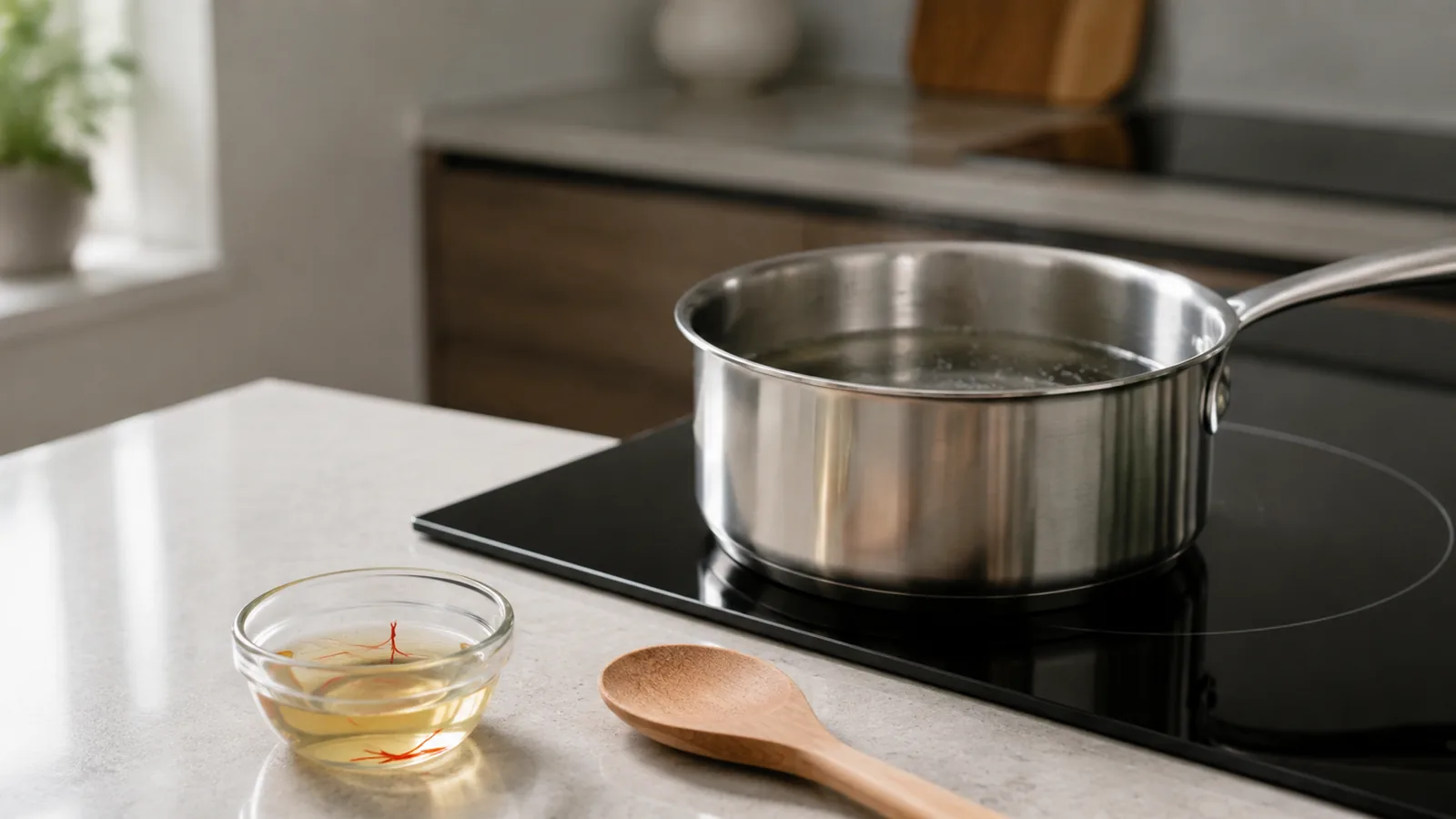
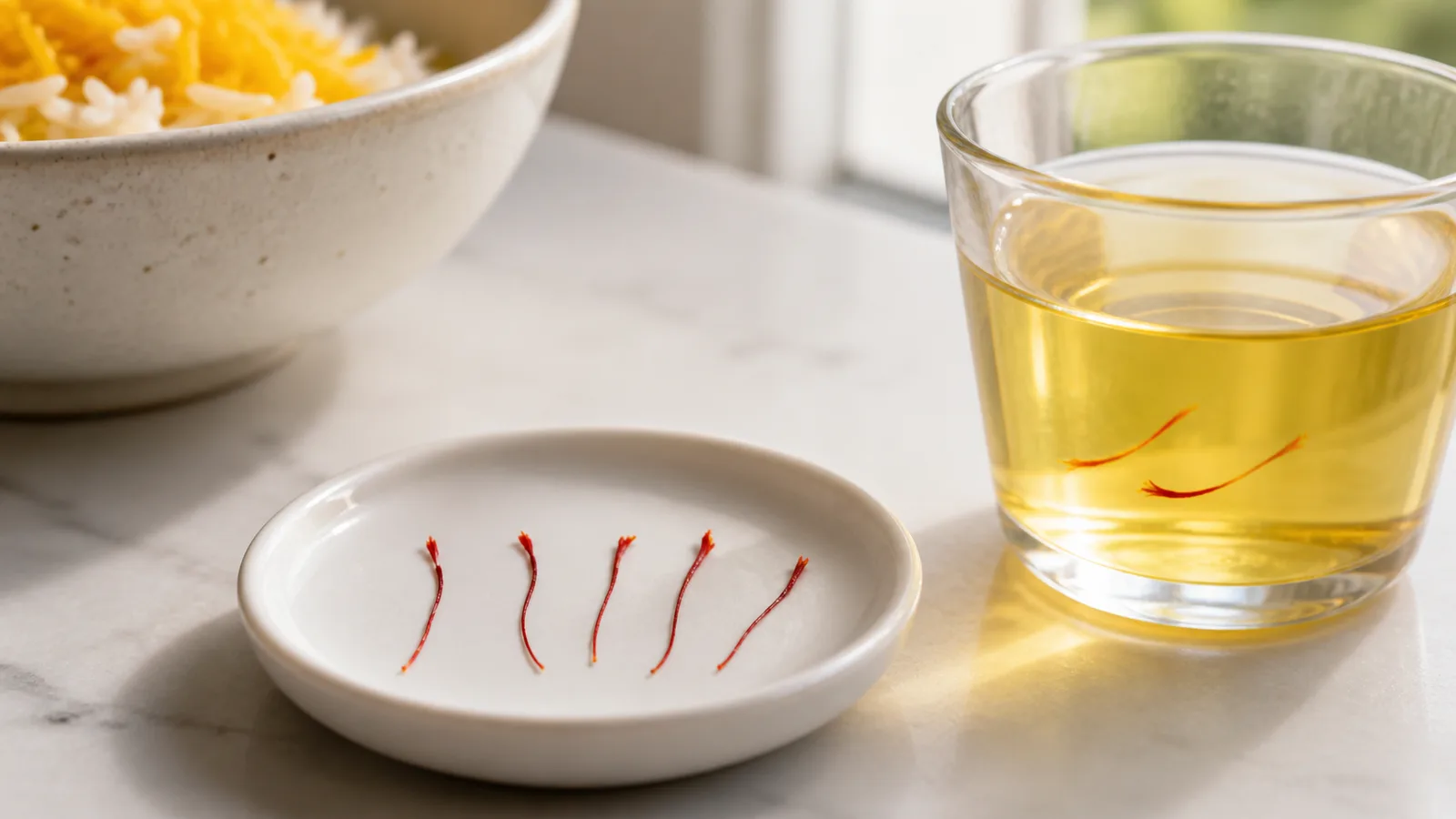
For a culinary tea, add three or four genuine threads to a cup of warm water or milk and allow 10 to 15 minutes for the colour and aroma to develop. Drink it because you enjoy it. There is no validated instruction to take saffron tea once or twice a day for a calming or uplifting effect.
Saffron milk at bedtime
Warm saffron milk can be a soothing personal ritual, especially if it replaces a caffeinated evening drink. The warmth and routine may feel calming, but the combination has not been shown to work as an immediate mood treatment or produce better sleep. Choose an unsweetened milk that suits your dietary and allergy needs.
Standardized saffron supplements
Capsules and tablets may contain a measured extract, which is closer to what many trials tested. Products are not automatically interchangeable, and a trial amount is not a universal personal dose. Follow the product label and ask a doctor or pharmacist whether the supplement is appropriate alongside your medicines and conditions.
You may see 30 to 50 milligrams described online as a typical daily dose for mood, with warnings framed around taking more than 1 gram of saffron per day. Neither figure should become personal dosing advice from a general article. Extract specifications differ, and safety depends on the product, duration, medicines, health history, and the person using it.
Safety and precautions
Culinary use is a different exposure from a concentrated supplement. Reviews of saffron studies most often report gastrointestinal symptoms and also mention nausea, dry mouth, reduced appetite, and headache. Dizziness is also discussed in saffron safety literature. “Natural” does not mean free of effects or interactions.
Talk with a health professional before supplement-like use if you:
- take prescription or over-the-counter medicines;
- are pregnant or breastfeeding;
- have a medical or mental-health condition;
- are preparing for surgery;
- are considering saffron for a child.
Stop and seek advice if a product causes a troubling reaction. The U.S. Food and Drug Administration also cautions that dietary supplements can interact with medicines and are not approved for safety and effectiveness before sale in the same way as drugs.
Choosing saffron without turning food into medicine
Buy saffron from a source that identifies the product clearly and protect it from moisture, heat, and light. Our all-red saffron collection is culinary saffron. High-quality threads can improve a recipe, but quality does not convert a food into a standardized clinical extract.
Saffron can still have a place in a balanced routine: cook with it, enjoy the aroma, and let meals offer pleasure and connection. For a mood condition, use evidence-based care and discuss any supplement as part of the full plan.
So, does saffron improve mood?
Possibly for some people and some symptoms when a standardized preparation is used over time. The best current evidence is encouraging but not uniform. Saffron tea, saffron milk, and saffron in meals have not been shown to deliver the same effect, and no form should be presented as a side-effect-free replacement for treatment.
Sources
- 2026 GRADE-assessed systematic review and meta-analysis of saffron supplementation for depression, anxiety, and mood
- 2025 randomized placebo-controlled trial of saffron extract in adults experiencing low mood
- 2025 randomized placebo-controlled trial of saffron extract and mood in adults with subclinical symptoms
- 2026 systematic review of adverse events reported with saffron monopreparations
- U.S. Food and Drug Administration: mixing medicines and dietary supplements