Saffron brewing methods do not need a winner for every kitchen. Hot water makes a usable infusion quickly; the saffron ice cube method works more slowly and can suit advance preparation. What matters is using the same amount of saffron and water when you compare them, then choosing the method that fits the dish.
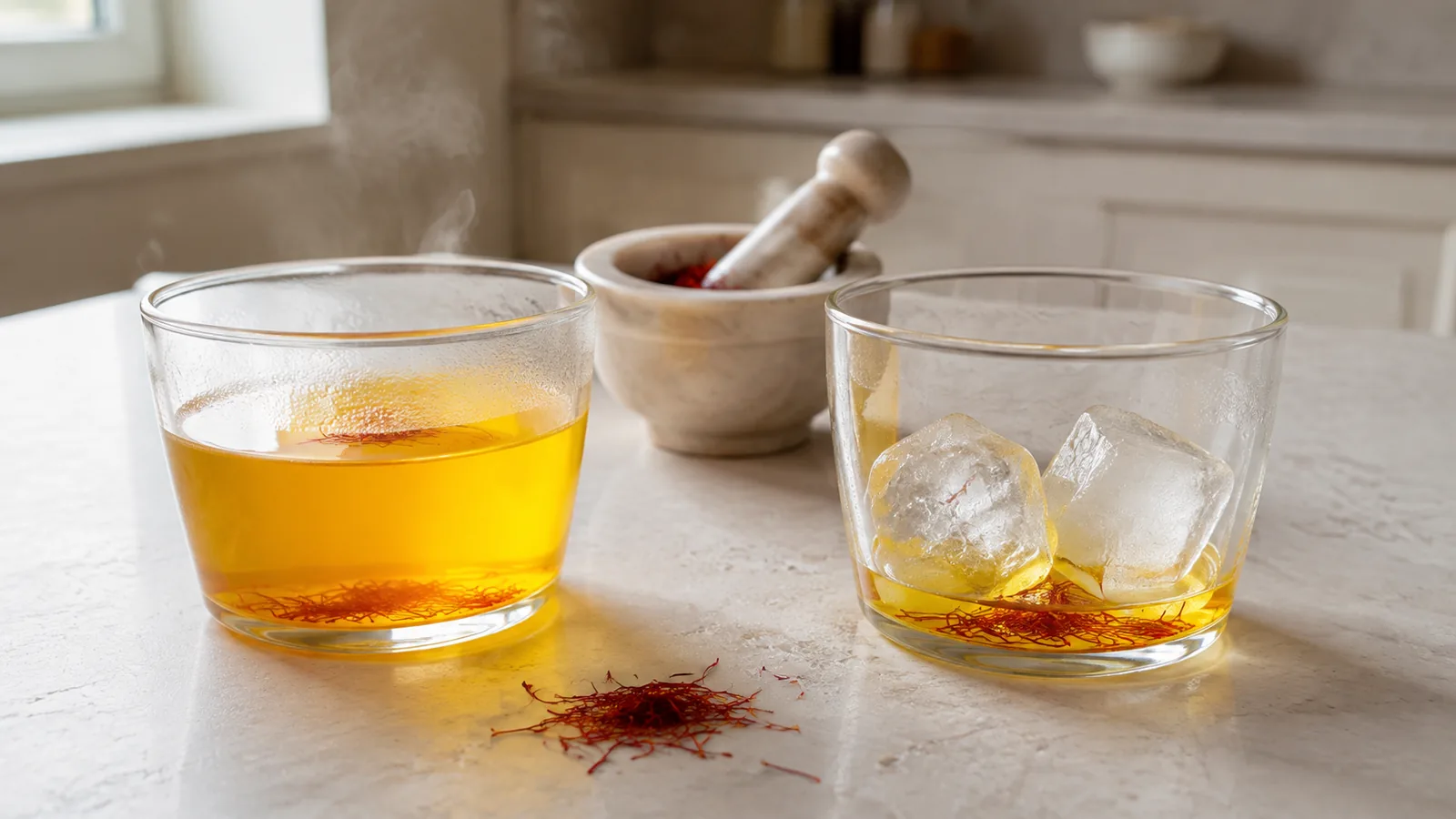
Saffron Brewing Methods: Comparing Hot Water and Ice
Both methods place lightly crushed saffron in water so its colour, bitterness and aroma can spread through a dish more evenly. The real differences are temperature, time and control. Hot water gives you a dependable saffron brew while the rest of dinner is cooking. Ice asks you to plan ahead and pay attention to how much water the cubes contain.
The claim that ice is always superior is too broad. So is the claim that very hot water ruins saffron on contact. Laboratory results vary with the compound measured, the temperature, the length of extraction and the liquid used. In a home kitchen, both methods can produce a similar depth of color and aroma when the threads, water volume and waiting time are sensible.
Start with a fair kitchen comparison
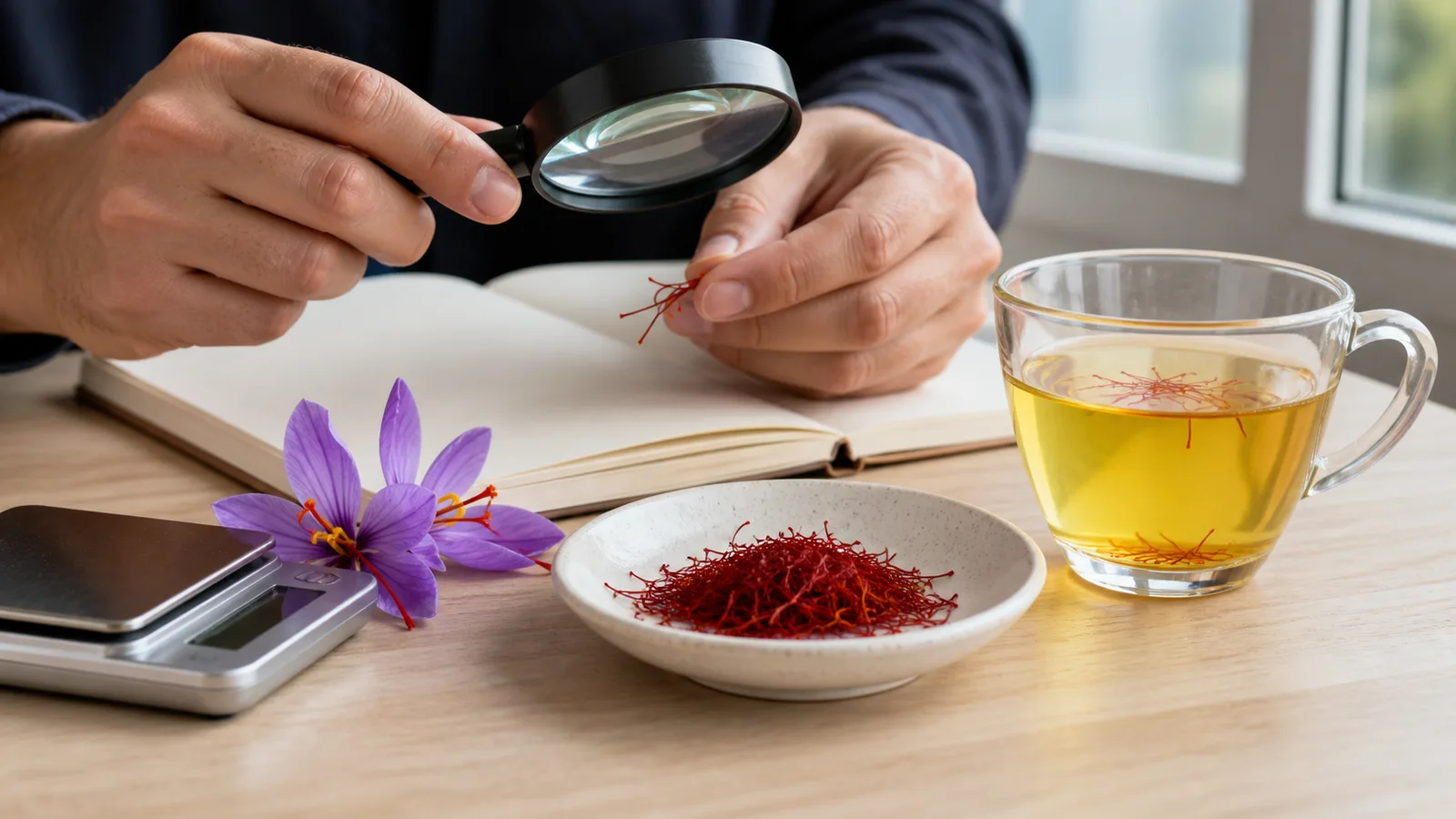
If you want to see the difference for yourself, divide one small batch of saffron between two identical heat-safe glasses. Use about 15 threads in each glass, crush them to similar-sized flecks and add 2 tablespoons (30 ml) water to each. Weighing the spice is even more accurate, but matching the threads closely is enough for an everyday comparison.
For the hot sample, use water at roughly 80–90°C (175–195°F). For the cold sample, weigh 30 g of ice or measure the water before freezing it. Ordinary ice cubes vary dramatically in size; three large cubes may dilute the spice far more than three small ones. Cover both glasses so dust stays out and aromatic vapour is not immediately lost.
Compare the colour, aroma and taste only after both samples have reached their intended steeping time. Looking at the ice bowl after ten minutes and the hot-water glass after ten minutes is not a fair test, because most of the ice may still be solid.
Brewing Saffron with Hot Water
For most cooking, saffron with hot water is the practical choice. It is quick, easy to measure and ready before rice, a sauce or a drink needs it.
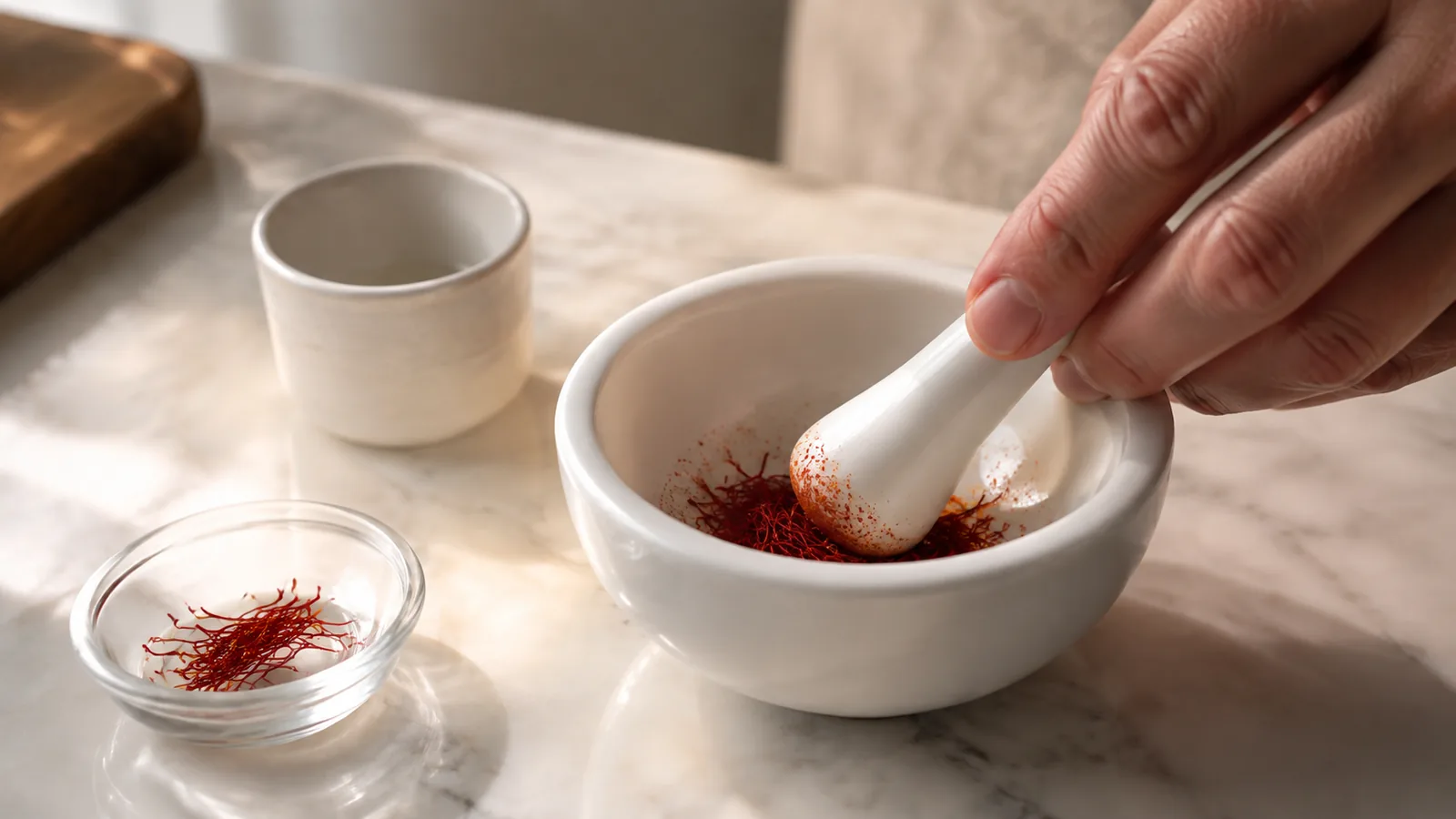
- Lightly crush the saffron in a small, clean mortar.
- Transfer it to a heat-safe cup.
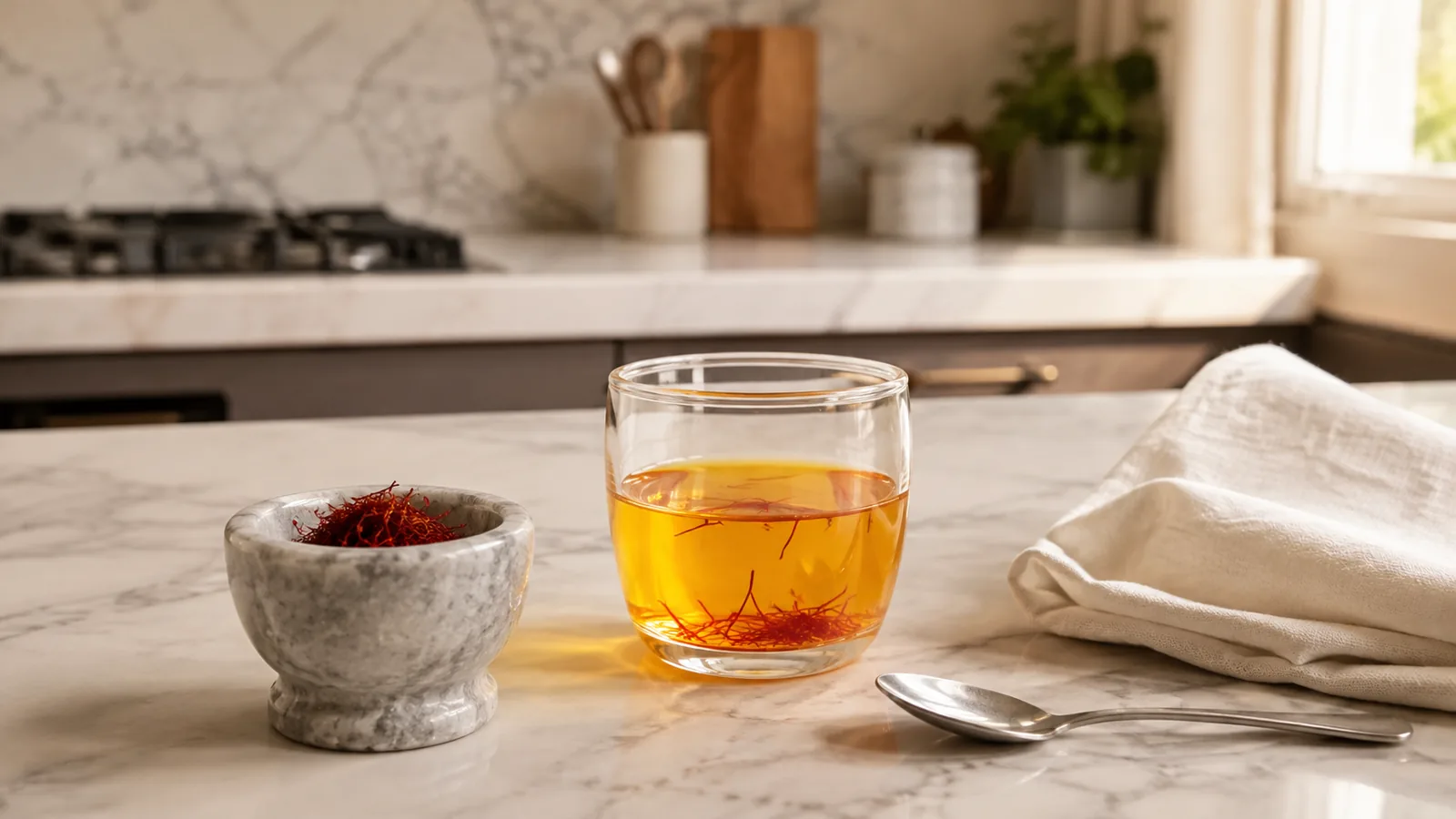
- Add a small measured amount of very hot water.
- Cover and steep for 10–15 minutes.
- Stir, then use the liquid and softened threads together.
A published infusion experiment found that hot water at 90°C recovered close to 80% of the measured crocetin sugar esters after five minutes and reached complete recovery under that study’s conditions after ten minutes. Cold water recovered much less in the same short interval. The experiment measured a particular preparation, not every possible recipe, but it supports the ordinary kitchen observation that heat makes a short infusion faster. The full methods and results are available in the peer-reviewed saffron infusion study.
You do not need a rolling boil, and you do not need to keep the cup over a flame. Pouring the water over the spice and covering it is enough. Prolonged boiling gives you less control over aroma and water volume without making the method more convenient.
The Saffron Ice Cube Method
The saffron ice cube method starts with dry crushed threads and plain ice. As the ice melts, the spice gradually meets cold water. This is different from freezing an already-finished infusion for later use, although both are sometimes called “saffron ice.”
- Put lightly crushed saffron in a small bowl.
- Add a measured quantity of ice made from clean drinking water.
- Cover the bowl and let the ice melt in the refrigerator.
- Stir after it has melted and wait another 15–20 minutes if the colour is still developing.
- Use the liquid and threads in the dish.
This method takes longer because solid ice must melt before all the saffron is surrounded by water. It can be convenient when you prepare dinner components in advance. It is not proven to create a universally “smoother” flavour, and a pale result does not necessarily mean the saffron is poor; too much ice or too little time may be the cause.
A 2024 culinary extraction study helps explain why simple slogans are unreliable. It found that time, temperature and whether the medium was water or a water-oil mixture changed the transfer of saffron compounds. Some crocins were well preserved at lower temperatures, while other measured components behaved differently. The tests did not compare a household ice cube with a covered kitchen cup, so they should not be presented as proof that one domestic ritual is always best. See the researchers’ temperature-and-time study for the exact conditions.
Hot water or ice: which should you choose?
Choose hot water when time matters
Use the hot method when the infusion needs to go into food within the next quarter-hour. It is the easier choice for a weeknight rice dish, tea, milk drink or sauce, and it gives you a repeatable result if you measure the spice and water.
Choose ice when you can prepare ahead
Use ice when a slow preparation suits your schedule and the extra chilling will not interfere with the recipe. Measure the ice rather than counting cubes, especially when the finished dish is sensitive to added water.
Do not combine them for a supposed thermal shock
Adding ice to a hot infusion cools and dilutes it; reheating the mixture reverses that change. You can combine hot and cold water if a recipe needs a particular final temperature, but there is no good reason to call this an automatically superior extraction. Consistent quantities and enough contact time matter more than a dramatic temperature change.
Grinding and choosing the saffron
The old advice that the ideal type is “Saffron Stem” is too absolute. Product names are not a substitute for looking at the threads and judging the actual batch. Use clean, dry saffron with a strong characteristic aroma and no visible moisture. An all-red batch may offer more colouring material by weight than a style containing substantial yellow portions, but origin, storage and drying quality also affect the result.
Light crushing exposes more surface area. A small mortar and pestle works well, but a clean metal mortar does not automatically burn saffron, and grinding saffron with sugar does not burn it either. A tiny pinch of sugar is sometimes used as an abrasive in a smooth mortar. It is optional, and it may be unsuitable when you do not want sweetness in the dish.
For a complete measured method, including water ratios and storage, see our separate guide to how to brew saffron. This page stays focused on comparing the two temperatures rather than repeating that whole guide.
How to judge brewed saffron
Good brewed saffron is usually clear golden yellow to orange rather than opaque or artificially red. Its aroma should be recognisable when you lift the cover, and a concentrated drop can taste floral and gently bitter. The exact shade depends on the batch, the quantity of threads, the fineness of grinding, the volume of water and the extraction time.
Do not judge the methods by colour alone. One sample may look deeper because it contains less water. Smell both at the same temperature if you are comparing aroma, since a warm glass releases volatile aromas more readily than a cold one. Taste only after the hot sample has cooled enough to match the other.
If the infusion is pale
Give it more time before adding more spice. Check whether an oversized ice cube or an unmeasured splash of hot water diluted it. If the threads remain mostly whole, press them more gently next time so the water reaches more surface area.
If it tastes harsh
The infusion may be too concentrated, the spice may have been heated for too long, or the dish may simply need less. Dilute a small test portion rather than changing the entire batch at once.
Using the infusion in food or a drink
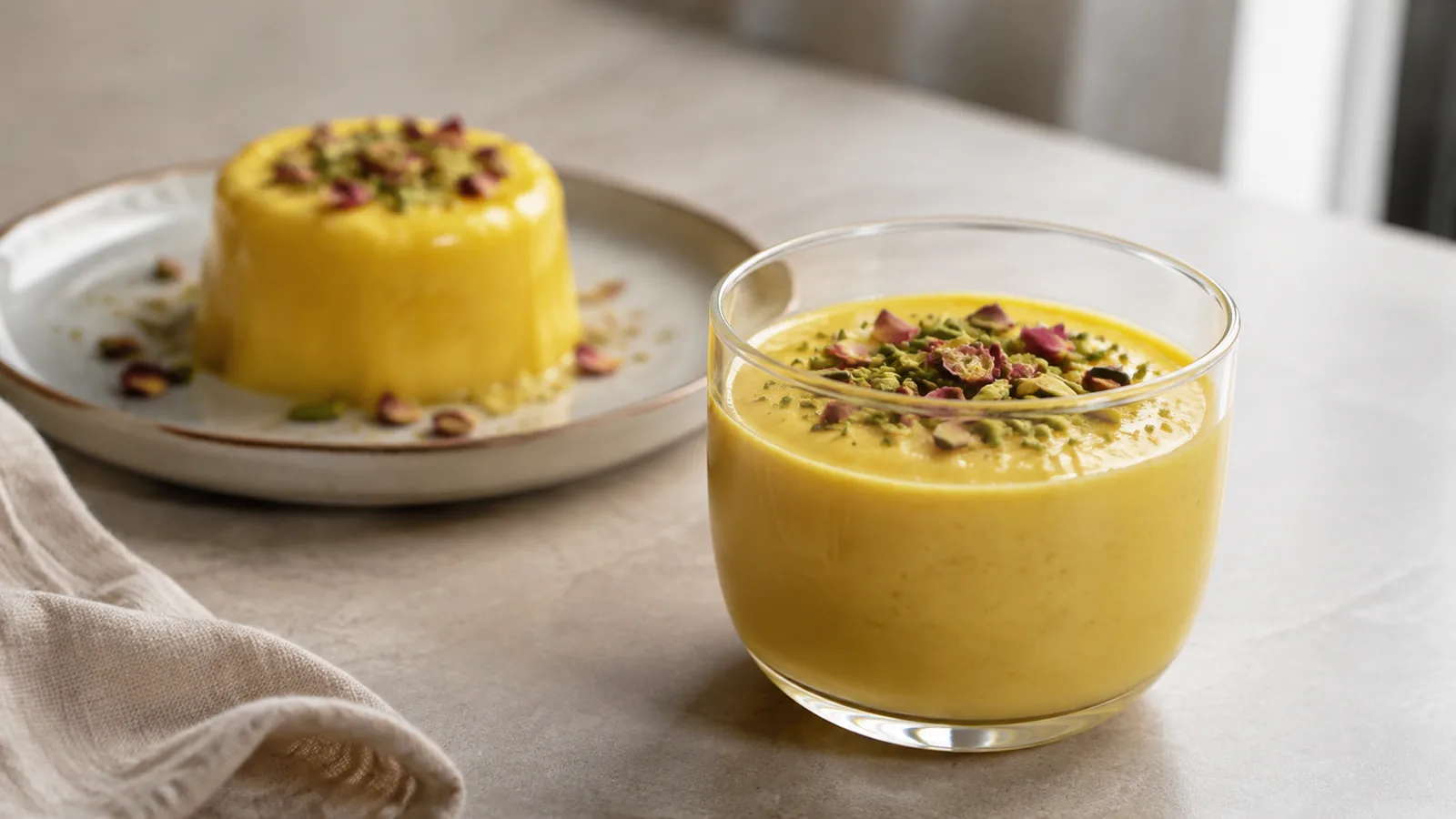
Add the prepared infusion where its water will not disturb the texture of the recipe. In rice, colour a small portion and fold or arrange it over the remaining grains. In a sauce or stew, add it late enough to protect the aroma but early enough to distribute it evenly. In milk and desserts, count the infusion as part of the recipe’s liquid.
For a simple saffron drinking method, make a modest culinary-strength infusion, dilute it to taste in water, tea or milk, and serve it as a flavoured drink rather than a concentrated supplement. This article does not prescribe therapeutic doses. More saffron does not automatically make a better drink.
Use a fresh infusion promptly. If you prepare it ahead, cover and refrigerate it. For longer storage, freeze measured portions of a finished infusion and label the container; our guide to brewing and storing saffron explains how to keep those portions useful.
Is saffron heating or cooling?
If “is saffron heating or cooling?” or “is saffron warming or cooling?” means the temperature of preparation, saffron can be infused either hot or cold. Hot water extracts quickly; ice takes longer. If the question refers to traditional ideas that classify foods as warming or cooling, those are cultural frameworks rather than a measurement of how a cup changes body temperature. They should not be used as medical instructions.
The practical conclusion
For most cooks, hot water is the best default because it is fast and repeatable. The ice method is a valid slower option when it suits the schedule. Keep the saffron and water quantities equal when comparing them, allow each method enough time, and choose by the finished dish rather than by claims that either temperature is universally superior.